
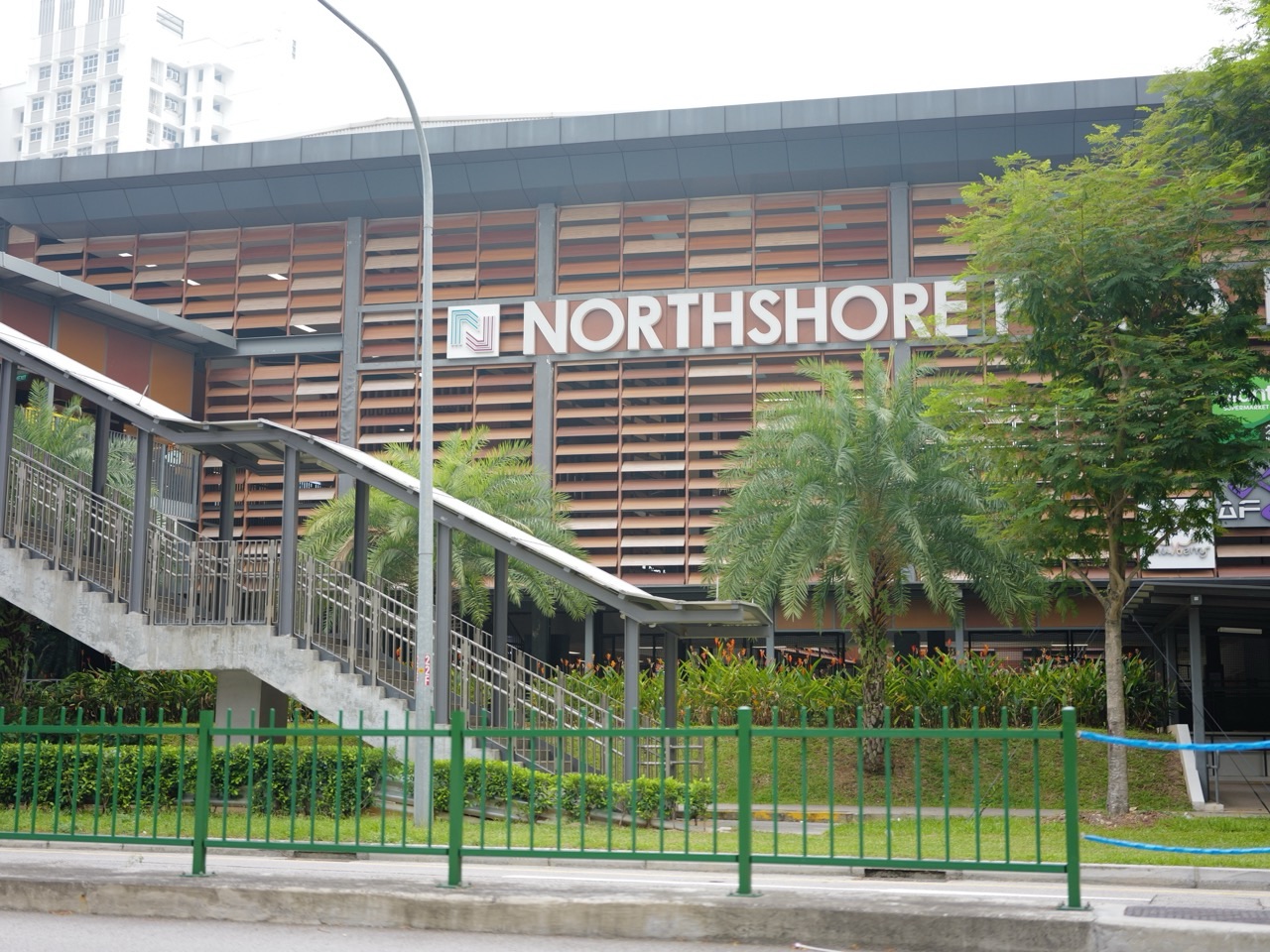
Why did HDB create a dragonfly pond in front of Northshore Plaza in Punggol, instead of covering the neighbourhood entirely with trimmed lawns and ordinary decorative plants? The design recognises that wildlife needs more than a green colour on the landscape plan. Dragonflies spend part of their life cycle in water, and different birds, butterflies and other animals need suitable food, shelter and connected habitats. Northshore’s planners used field observations of the area’s existing fauna to make habitats part of the estate’s design.
HDB’s Biophilic Towns account explicitly identifies a dragonfly pond in front of Northshore Plaza, along with butterfly gardens and bird sanctuaries, as habitat features informed by field studies. The Biophilic Town Framework was first applied in Punggol Northshore in 2015 and considers soil, water, flora and fauna, outdoor comfort and people together. A 2022 HDB publication adds that landscape corridors were arranged with ecological connections to Punggol, Coney Island, Pulau Ubin and the Straits of Johor in mind. The approach is about helping urban nature function, not a claim that every species automatically returns or that the pond can be used for swimming.
- Location: a designed dragonfly pond at Punggol Northshore, identified by HDB in front of Northshore Plaza.
- Why it exists: dragonflies require suitable aquatic habitat for their juvenile stage; adult dragonflies use surrounding vegetation and open areas.
- Planning process: HDB investigated existing local fauna before selecting habitats and planting.
- Wider network: butterfly gardens, bird-supporting vegetation, green corridors, rain gardens and common greens are related but distinct elements.
- Ecology: dragonflies are predators, and their aquatic larvae can feed on other small organisms including mosquito larvae.
- Important safety: an ornamental or habitat pond is not a swimming or collection area; never introduce insects, fish or chemicals into it.
- Disease control: dragonflies do not replace NEA mosquito surveillance and professional prevention of stagnant-water breeding.
- Sources: HDB’s Biophilic Towns and Northshore Experience, NParks’ dragonfly ecology and NEA’s mosquito guidance.
Why Punggol Northshore became a biophilic district
HDB’s Northshore was the first Punggol district to adopt its Biophilic Town Framework. This was not limited to planting extra street trees. It brought ecology, water management and the comfort of residents into the planning decisions.
The broader framework identifies soil, water, flora and fauna, outdoor comfort and people as connected dimensions. A pond fits into this approach because its water and surrounding plants can help create habitat while also shaping how residents experience their neighbourhood.
A successful biophilic estate is therefore not merely one with attractive greenery. The important question is whether the landscape has functions that support people and appropriate living organisms over time.
Why a dragonfly cannot live by lawns alone
A lawn can provide visual openness and recreation, but it does not necessarily offer suitable conditions for an animal with an aquatic juvenile stage. Dragonflies lay eggs in or near water, and their developing young live in aquatic environments.
NParks explains that dragonflies are commonly associated with freshwater bodies such as ponds and rivers because their larvae are aquatic. Providing an appropriate water habitat therefore addresses a need that a grassed field cannot satisfy by itself.
The lesson is to design around a species’ life cycle rather than its adult appearance. Seeing a flying insect tells only part of the story.
Why HDB studied local fauna before planting
HDB says its planners examined fauna species already present in the area through field studies. Those observations informed habitat creation, including the dragonfly pond, butterfly gardens and bird sanctuaries.
That sequence matters. Instead of buying a catalogue of attractive plants first and assuming nature would follow, the project considered what organisms might need and how an urban estate could support them.
Field observations are not guarantees. A survey records what was found under particular conditions; habitat design then aims to provide suitable opportunities. Long-term success requires separate evidence of actual use.
Why a pond is more than a water feature
A decorative water feature may be judged largely by how it looks and sounds. A habitat pond must also consider appropriate water conditions, vegetation, refuge and the needs of organisms at different stages.
That does not mean appearance is irrelevant. A well-designed ecological feature can also make a neighbourhood more engaging for residents.
The difference is in the priorities. The pond’s public value includes learning and biodiversity, while its ecological function requires more than an attractive reflective surface.
What dragonflies do before they can fly
Dragonflies undergo development that includes an aquatic juvenile stage. These young dragonflies, often called nymphs, live in the water and feed on suitable prey. They eventually emerge and transform into flying adults.
That change means one species uses different parts of the environment during its life. Water conditions matter to the juvenile, while airspace and vegetation influence the adult’s activities.
A student should not treat the flying insect as the whole organism’s ecological story. The most important habitat requirement may be hidden below the water surface.
Why the edge of the pond matters
Some aquatic insects need places where they can emerge from water and move into an adult form. Plants and other suitable structures around the edge can provide useful opportunities, depending on the species.

A pond surrounded by steep, unbroken, unsuitable hard surfaces may not provide the same possibilities as a carefully designed habitat with appropriate margins.
That is a general ecological principle, not a claim about the exact construction details of every part of the Northshore pond. A real assessment would inspect the approved design and the species present.
Why adult dragonflies need space
Adult dragonflies are active flying predators. Many hunt other insects and may use open areas, vegetation and perches as part of their behaviour.
A pond within a varied landscape can provide access to both aquatic habitat and nearby terrestrial features. Northshore’s green spaces can therefore complement the pond rather than compete with it.
It would be incorrect to say every dragonfly remains directly above the same patch of water all day. Animals move in response to resources, weather and their own life stages.
Why dragonflies are predators
NParks describes adult dragonflies as fast predators that consume various insects, including mosquitoes, while aquatic larvae also prey on suitable organisms.
Their ecological role helps students understand a food web: one species may be both a predator of smaller organisms and prey for other animals.
This is not a recommendation to introduce dragonfly eggs into public water. Managing urban biodiversity requires appropriate species, habitat conditions and public-health controls.
Why mosquito control remains a separate responsibility
The statement that some dragonfly larvae consume mosquito larvae can lead to the false conclusion that any pond containing dragonflies is free from mosquito breeding.
NEA explains that stagnant water in unsuitable settings can support mosquito breeding and recommends eliminating preventable breeding habitats, with professional treatment for locations that cannot be removed.
A managed ecological pond requires appropriate maintenance and public-health considerations. Dragonflies can contribute to ecological interactions, but they do not replace environmental inspection or guarantee that dengue-transmitting mosquitoes cannot occur.
Why residents should not add fish to the pond
A resident may think adding fish could make a pond more lively or reduce insects. But introducing animals can change the existing food web, compete with native species or damage a carefully designed habitat.
A public ecological feature belongs to its authorised manager. Residents should never release aquarium fish, turtles or other pets into it.
Observing an existing habitat is a better way to support learning. Improving biodiversity does not mean maximising the number of different animals people release.
Why litter can damage a pond
Plastic packaging, discarded food and other rubbish can enter water or obstruct its edges. That changes conditions for the organisms using the site.
A habitat pond should not be treated as a convenient place to throw unwanted objects or feed wildlife with human leftovers.
The practical responsibility is simple: use proper bins, do not disturb vegetation, and report hazards through the relevant estate or public-service channel.
Why pond water should not be touched or tasted
An ecological pond is not a source of drinking water. It may contain natural organisms, particles and other substances that cannot be assessed by appearance.
Children should not scoop water, catch larvae or taste plants during an unsupervised visit. A school science project can use official photographs and safe classroom materials instead.
Good environmental learning does not require physical contact with a public water habitat. The object of the visit is understanding, not extracting samples.
Why five biophilic dimensions are connected
HDB’s framework includes soil, water, flora and fauna, outdoor comfort and people. A dragonfly pond illustrates several at once: water supports aquatic organisms, planted edges shape the surroundings, and people may appreciate or learn from the habitat.
The same site also needs appropriate drainage, safety and upkeep. Treating one feature as a complete solution to every environmental concern would ignore those other dimensions.
A stronger explanation recognises relationships without declaring that all functions are identical.
Why a biodiversity feature should not be judged only by colour
A plant may look green and healthy while offering few useful resources to the insects or birds that the landscape is intended to support.
HDB’s species-informed approach involves selecting appropriate habitat and vegetation rather than treating any green surface as equivalent to any other.
The teaching lesson is that ecological quality is not a simple score based on how much green colour appears in a drone photograph.
Why a butterfly garden needs a different design
Butterflies also have multiple life stages, but caterpillars and adult butterflies often use plants in different ways. Their host and nectar plants are an important part of habitat planning.
HDB’s Life Storeys account describes the selection of host plants for existing fauna in Northshore, including the Weeping Willow as a host associated with the Leopard Butterfly recorded in surveys.
The butterfly garden complements the pond, but it is not merely a second name for dragonfly habitat. Different organisms need different environmental resources.
Why bird sanctuaries belong in the same network
Birds may need suitable vegetation for food, resting, shelter and nesting, depending on species. Their needs differ from those of aquatic dragonfly larvae.
HDB identifies bird-supporting habitats and green corridors among Northshore’s biodiversity measures. Such features form a mosaic of appropriate spaces rather than one isolated pond expected to serve every animal.
The project illustrates why a healthy urban landscape may contain several types of habitat that work together at different scales.
Why green corridors can connect habitats
Small isolated green patches may be difficult for some organisms to move between. A landscape of connected planted routes can create more opportunities for movement, depending on the species and surrounding barriers.
HDB’s 2022 account describes green corridors in Northshore placed with wider connections to Punggol, Coney Island, Pulau Ubin and the Straits of Johor in mind.
This is a planning intention, not a claim that a particular butterfly can cross every road or sea channel. Connectivity needs to be studied for the organisms involved.
Why the surrounding trees matter to a pond
Trees and shrubs can affect light, wind and the presence of birds or other organisms. They also provide landscape structure around water.
A pond surrounded by an appropriate mix of vegetation can function differently from an isolated tank in a paved square.
The exact species and arrangement still matter. Planting the tallest possible trees everywhere could create other constraints, so ecological design balances habitat, safety and outdoor comfort.
Why not every pond needs the same amount of sun
Sunlight influences water temperature, plants and biological activity. Some organisms prefer different levels of exposure at different stages.
A suitable ecological pond therefore requires site-specific planning rather than copying one uniform template to every new estate.
A child can discuss this through a simple drawing, but should not attempt to prune or remove public vegetation to make more sunlight reach the water.
Why a stormwater basin and a dragonfly pond are distinct
Rain gardens and bioswales help manage runoff quantity and quality as rain moves through the estate. A dragonfly pond is primarily described by HDB as a biodiversity feature.
The two can interact within the broader environmental landscape, but they should not automatically be treated as identical engineering systems.
The Waterway Ridges rain garden guide explains source-level stormwater detention. This article focuses on the pond’s life-cycle and habitat rationale.
Why a pond should not be described as an anti-flood wall
A small landscaped waterbody may hold water under ordinary conditions, but its presence does not establish the flood-protection level of surrounding buildings.
Coastal protection, stormwater drainage and ecological ponds have different functions and design criteria.
An article should not infer that the dragonfly pond prevents all Northshore flooding merely because it contains water or forms part of a green strategy.
Why a pond’s water level may vary
Rain, evaporation, drainage arrangements and seasonal conditions can affect the water level in a landscape feature, depending on its design.
A viewer should not conclude that a change in apparent depth is automatically a defect or that the pond’s management system uses one fixed water level at all times.
Specific conditions need professional observation. The public can report an unusual concern without entering the feature or altering its water supply.
Why the pond’s appearance can change over years
Plants mature, shade patterns change and natural populations fluctuate. Maintenance may also alter the visible landscape around a pond.
A 2015 design image, a 2022 publication and a 2026 photograph can truthfully show different appearances or activity.
The original habitat purpose remains a documented fact, while current biodiversity and condition require appropriately dated evidence.
Why site surveys are snapshots
A biodiversity survey records particular observations under a defined method and time period. Some species may be missed because of weather, season, behaviour or survey effort.
HDB used such studies to inform Northshore’s habitat plan. Their value is that design decisions were grounded in actual observations rather than arbitrary decorative choices.
But surveys cannot guarantee that all recorded species remain present or that the new pond will produce a particular species count.
Why a dragonfly sighting is not proof of breeding
Seeing a flying dragonfly near the pond establishes that an adult was present. It does not prove that the species successfully reproduced there.
Evidence of breeding would involve more specific biological observations, such as appropriate life stages, under a suitable survey method.
Children can learn to distinguish a confirmed observation from a broader ecological conclusion. This is a valuable form of scientific honesty.
Why no dragonflies seen is not proof of failure
A family may visit at an inconvenient time of day or during weather when few adults are active. One short observation can produce no sightings.
That does not establish that the pond has no ecological value or that the species never visits.
A proper assessment needs repeated and appropriately designed observation rather than a single disappointed ten-minute visit.
Why biodiversity does not mean maximising all species
Different environments have different natural communities. Adding unfamiliar species simply to increase a count can create ecological risks.
HDB’s goal was to support suitable fauna and habitats through site-informed design, not to turn the pond into a collection of every insect and fish available in Singapore.
The lesson is that ecological quality depends on appropriate relationships and conditions, not the largest possible unsupervised species list.
Why pond safety is a design responsibility
A neighbourhood habitat near shops and housing will be seen by people of different ages. Its surroundings need appropriate boundaries, visibility and maintenance.
An educational article cannot certify the exact safety provision of every current pond edge from a photograph.
Parents should supervise children and obey actual on-site signs. A wildlife attraction does not replace the ordinary need to keep people away from unsafe water edges.
Why HDB placed ecology close to everyday life
Northshore’s design puts some natural habitats near daily destinations rather than confining all nature to a distant nature reserve.
HDB describes this as an opportunity for residents to connect with and learn from the environment during ordinary life.
A family can benefit from observing a pond on a walk to the shops without treating the species as exhibits on demand. Everyday encounter is part of the value.
Why education should not disturb wildlife
A child may want to catch a dragonfly, remove a larva or pick a plant to examine its roots. Those actions can harm the habitat and may breach public-space rules.
Observation from an authorised path, a sketch and a verified species guide provide safer learning methods.
Respect for the living subject is part of scientific practice. The goal is to understand a system without damaging the very thing being studied.
Why using a phone camera needs care
A phone can record a dragonfly perched on vegetation, but getting closer can disturb the animal or put the photographer near unsafe water.
A useful photo caption should describe the visible insect and location only when supported. It should not invent a species name or claim that an image proves successful breeding.
Photography is evidence for what the camera actually recorded, not a shortcut to conclusions about an entire ecosystem.
Why a dragonfly should not be confused with a damselfly
Dragonflies and damselflies are both odonates, but they can differ in wing position, body shape and other characteristics. Casual observation can easily lead to confusion.
A beginner should consult reliable photographs and descriptions rather than assume every four-winged insect beside a pond is one named dragonfly species.
Identifying the broad group accurately can be a good learning outcome even without a precise species-level answer.
Why dragonflies can interest Primary Science students
The aquatic juvenile and flying adult stages provide a clear example of how an organism’s needs can change during development.
Students can draw the stages and discuss why a habitat must support more than the most visually obvious adult form.
The exercise teaches classification, life cycles and food relationships without requiring live collection or experiments on wild animals.
Why the pond is useful for Geography as well
A housing estate contains built and natural components that share limited space. A pond needs an appropriate location, safe access and consideration of the surrounding landscape.
HDB’s project illustrates how biodiversity can be part of high-density town planning rather than something added only after every road and block is fixed.
Students can examine the relationship among housing, shops, planted corridors and water without claiming access to restricted design plans.
Why the Northshore Plaza location matters
HDB’s official Biophilic Towns page identifies the dragonfly pond in front of Northshore Plaza. That places it near a major daily amenity rather than an isolated research compound.
The setting creates an opportunity for ordinary residents and visitors to encounter the landscape while travelling between shops and other neighbourhood services.
It does not mean the pond is inside the mall or that a person may enter it. Exact walking routes and access rules should be checked on site.
Why the Northshore virtual tour is useful
HDB’s Punggol Northshore On-Site Experience identifies the dragonfly pond as one of the estate’s visitor-learning hotspots.
Its virtual and augmented-reality features were designed to help residents discover environmental initiatives in the district.
A visitor should treat any older tour interface as historical or educational material and verify current availability, rather than assume every QR marker or digital function remains unchanged in 2026.
Why AR dragonflies are not wildlife counts
HDB’s virtual guide includes a game about finding four AR dragonflies. These are digital objects used for an educational interaction.
The number four in that activity is not an ecological population estimate for the pond or a count of dragonfly species recorded by researchers.
This provides a practical digital-literacy lesson: a gamified learning feature can be useful without its score representing a scientific survey.
Why the pond is part of a longer ecological plan
HDB’s biophilic research involved years of work with institutions including NParks, URA and NUS, as described in its publications.
The Northshore habitat features represent one local application of principles intended to inform later public housing.
Understanding the framework helps residents see why the pond is related to soil, water and planting decisions, rather than a one-off landscaping ornament with no wider purpose.
Why an ecological pond still needs maintenance
Plants may overgrow, water and drainage systems need appropriate attention, and the pond’s surroundings can accumulate litter or suffer damage.
A habitat feature is not self-maintaining simply because it contains living organisms. Professional oversight remains necessary to protect both ecology and public access.
Residents can report concerns without trying to clean the pond, treat insects or alter the vegetation themselves.
Why mosquito prevention is a community responsibility
NEA recommends removing preventable stagnant-water breeding sites around homes, including discarded containers and blocked drains.
That general household advice is distinct from management of a designed water habitat under appropriate professional controls.
Residents should not respond to worry about mosquitoes by dumping chemicals or fish into the Northshore pond. Follow approved reporting and mosquito-control measures instead.
A fictional pond-versus-lawn comparison
Imagine an estate with one grass lawn and no suitable freshwater habitat. A child sees no obvious place where an aquatic dragonfly nymph could develop.
Now add a properly planned pond and surrounding vegetation. The child can explain how the landscape offers a different type of habitat.
This is a conceptual comparison, not a promise that every new pond immediately becomes a successful dragonfly breeding site.
A fictional dragonfly life-cycle diagram
Draw an egg or appropriate early life stage, an aquatic nymph and a flying adult. Place each stage next to the type of environment it uses.
Ask whether a garden with only dry grass supports the whole sequence.
The exercise illustrates why knowing the adult animal is not enough to plan its habitat. Species-specific details still require authoritative biology references.
A fictional wildlife survey
A student observes three dragonflies during one short visit and declares that the pond contains exactly three individuals.
Another student explains that some animals may be hidden, absent temporarily or outside the observation area. The count records only what was seen under stated conditions.
The better report includes location, time, weather and uncertainty. It does not invent a total population.
A fictional mosquito question
A parent hears that dragonflies eat mosquitoes and asks whether the estate no longer needs mosquito-prevention measures.
The class explains the difference between a predator’s ecological role and professional public-health control.
The corrected answer recognises that NEA’s guidance on preventing breeding remains important and that managed ponds require responsible upkeep.
A fictional habitat map
Draw Northshore Plaza, the pond, nearby housing and green corridors in a simple classroom sketch.
Add hypothetical movement arrows for insects and birds, but label them as possible routes rather than recorded animal tracking.
Students learn that land-use plans can support connectivity while an actual ecological study is required to confirm the movement of particular species.
A fictional photo-verification activity
Show a photograph of Northshore Plaza’s exterior and ask whether it proves the pond’s current water quality, species composition or maintenance records.
The correct answer is no. It may provide location context while other evidence is needed for the ecological claims.
The exercise helps readers distinguish real geography from hidden environmental functions.
Teaching Guide: design for an insect’s whole life
Learning goal: explain why Punggol Northshore created a dragonfly pond and how aquatic and terrestrial habitat requirements interact.
Activity one: list what an adult dragonfly needs and what its aquatic nymph needs. Activity two: draw a pond with suitable surrounding vegetation, noting that the real design must be professionally managed.
Activity three: compare the functions of a dragonfly pond, butterfly garden, bird-supporting vegetation and rain garden. Activity four: separate the observation of a flying adult from evidence of successful breeding.
Activity five: read HDB’s Biophilic Towns page alongside NParks’ predator description and NEA’s mosquito guidance. Ask which source answers each question. Activity six: practise a wildlife observation using drawings and photographs only, without collecting animals or entering the water.
Transfer test: examine an imaginary new housing precinct and identify what evidence planners would need before choosing a particular habitat feature.
Frequently asked questions
Where is the Punggol Northshore dragonfly pond? HDB identifies it in front of Northshore Plaza.
Why was it built? To provide appropriate biodiversity habitat as part of HDB’s Biophilic Town Framework.
Why do dragonflies need water? Their juvenile life stage is aquatic.
Do dragonflies eat mosquitoes? NParks says adult dragonflies and aquatic larvae can prey on various insects, including mosquitoes or mosquito larvae.
Does the pond eliminate dengue risk? No. NEA mosquito-prevention and appropriate professional pond maintenance remain necessary.
May I release aquarium fish into it? No. Do not introduce animals or interfere with a managed habitat.
Does a sighting prove breeding? No. An adult sighting alone does not establish successful reproduction at that location.
Can children collect larvae for study? No. Use safe observation and authoritative learning material.
Are AR dragonflies a scientific wildlife count? No. They are part of HDB’s virtual learning feature.
Are all HDB estates designed with identical ponds? No. Specific ecological features depend on local habitat and planning conditions.
Your next step
For the local design evidence, start with HDB’s Biophilic Towns page and Punggol Northshore On-Site Experience.
For the biological mechanism, use NParks’ dragonfly predator guide and NEA’s mosquito-prevention guidance. The Northshore wind, shade and nature article covers general biophilic planning, while Why Punggol | Waterway Ridges Uses Rain Gardens covers a different water-management function.
The one idea to remember is that wildlife habitat must match the organism’s actual needs. Northshore’s dragonfly pond is useful because it considers the animal’s aquatic and adult stages inside a wider connected neighbourhood landscape.


