
Punggol students who entered Secondary 1 through PSLE Posting Group 2 (PG2) choose their Secondary 3 subjects through their own school’s subject-combination exercise. Under Full Subject-Based Banding, a student can study subjects at different G levels. Use your child’s current levels, Secondary 2 work and the school’s published options to see which upper-secondary combinations are available to them.
Start with two or three combinations your child would be willing to study. Look at the required subjects, any elective choices, the school’s criteria and the demands of a full week. The subjects and levels your child eventually sits for will be reflected on the Singapore-Cambridge Secondary Education Certificate (SEC). Later admission to a course will depend on the applicable requirements and your child’s results.
- PG2 describes Secondary 1 admission. The Secondary 3 decision uses current subjects, levels and school criteria.
- Open the school’s combination chart for the year your child enters Secondary 3, and use the row that applies to their current subject profile.
- Compare the whole package, including compulsory subjects, elective slots, coursework and any performance conditions.
- Ask about progression and bridging if your child wants to start a more demanding level in one subject.
- Rank combinations you would genuinely accept, then check the confirmed allocation and any school appeal deadline.
- Use the SEC syllabus for the year your child expects to sit the exam and the post-secondary requirements for the intake they may apply to.
Contents
- Work out which decision your family is making
- Read the year and the school before reading the subjects
- Learn to read a subject-combination chart
- Examine the kind of work each subject would add
- Test two possible combinations against an ordinary week
- Connect the choice to SEC and later options
- Submit your preferences and read the result carefully
- Questions families ask about Secondary 3 subject choices
- Related Punggol guides
Work out which decision your family is making
A family reading this with a Primary 6 child is getting a preview. The immediate decision for that child concerns Secondary 1 school admission, the Posting Group available and possible initial subject offers. Secondary 3 combinations come later. By then the child will have completed lower-secondary work that tells the family much more about their interests and readiness. A current school chart can show how a school describes its options, and the later chart issued to the relevant Secondary 2 cohort will govern the actual choice.
A family with a child already in Secondary 2 is making a decision about upper-secondary subjects. Begin with the child’s latest school report, a few marked assignments and the actual school briefing. The subject combination usually brings together subjects the student needs to continue and choices that may be available in specific packages. Some packages contain an elective slot with a defined list. Some subject choices depend on the student’s current level, recent results and places available. The exact structure comes from the school.
A family waiting for an allocation has a third decision. It can check what the school actually assigned, find out when a review or appeal is possible and prepare for the confirmed timetable. Write down which subjects and levels appear on the allocation and compare them with the original submission. This is the point at which an apparent difference becomes a useful question for the school. A preference expressed in a form, a school allocation and later entry to a course are separate outcomes.
Read the year and the school before reading the subjects
School notices often mention a year in the heading and another year for the submission. A notice for the 2027 Secondary 3 intake applies to a student making choices in Secondary 2 in 2026. If that student progresses to Secondary 4 in 2028 and sits the SEC then, the relevant examination guidance will be the 2028 guidance. For a student who later applies after receiving those results, the relevant admission intake would ordinarily be 2029. Check the actual progression and application timeline if the school advises a different route.
A child sitting PSLE in 2026 and entering Secondary 1 in 2027 is on a different timetable. They would ordinarily reach Secondary 3 in 2029 if they progress one year at a time. A published list for the 2027 Secondary 3 intake can help the family ask better questions at an open house. The offering, criteria and assessment documents for the later cohort will be published separately. This is a useful distinction when two siblings or friends share documents with similar titles.
Write the school’s name, the subject choice deadline and the Secondary 3 intake year on the same page. Save the school’s chart or notice with its date and record where the school posts updates. When you later open an image from a family chat, compare it against that record. If the dates or menu differ, ask the school which version the student should use. Make it clear to your child which choice is due now and which question can wait.
How Edgefield Secondary presents its choices
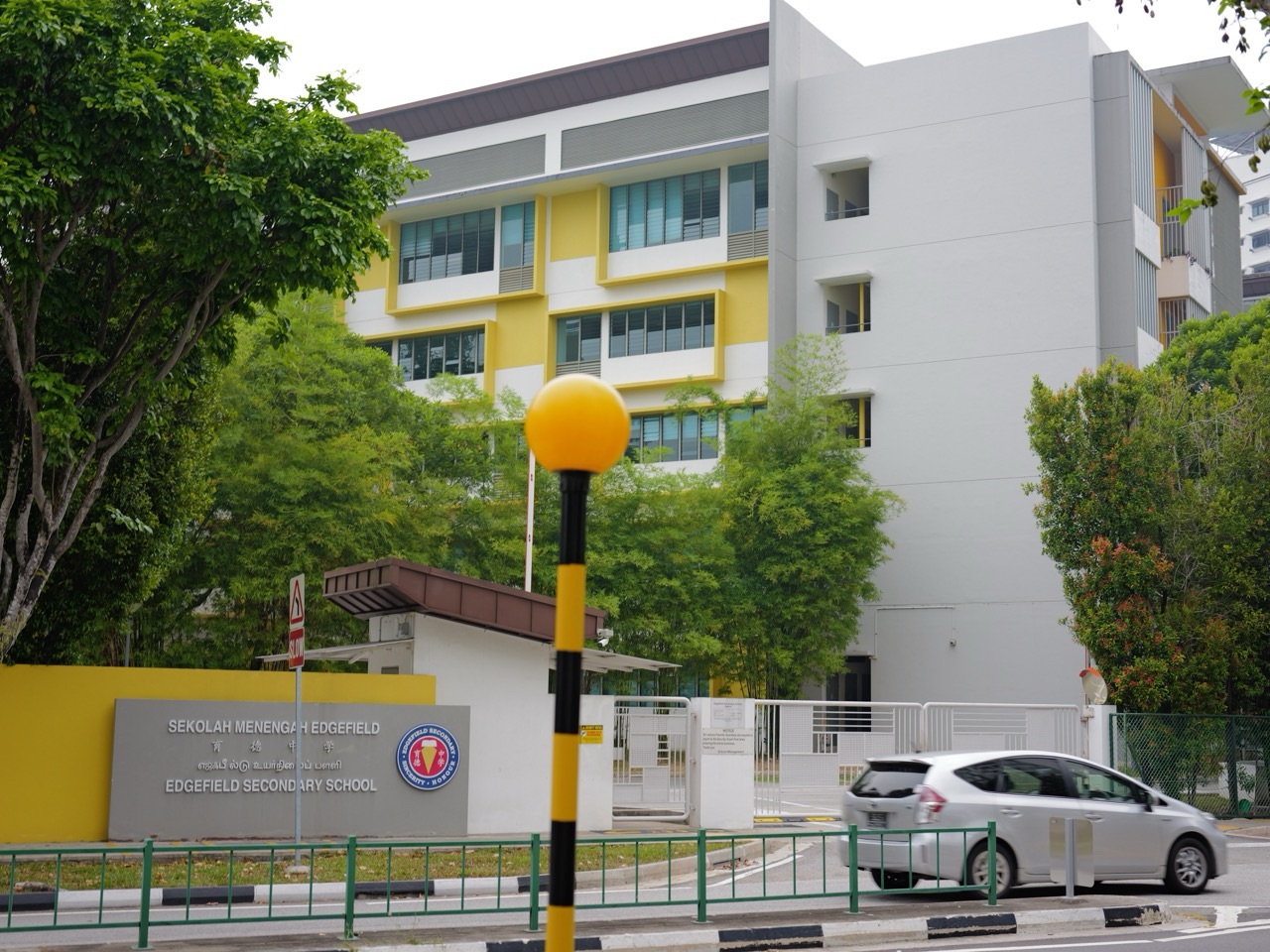
Edgefield Secondary School’s Year 3 page, updated in August 2026, contains separate image charts for students taking G3 subjects and students with different mixtures of G3, G2 and G1 subjects. This shows why parents should begin with the correct chart. Look at which groups the headings describe and which options are displayed within that group. Read the individual rows for required subjects and elective alternatives. If the school’s current briefing assigns the child a particular set of available options, compare it with the public chart and ask about any difference. Edgefield Secondary School Year 3 subject combinations.
A student who takes one G3 subject may have a mixed-level timetable. Ask whether that subject can continue at G3 within each of the combinations the child is considering. The answer may make one package better suited to the child’s strengths. If the student wants to move an individual subject to a more demanding level, ask separately which criteria govern the move and when the review can take place. This keeps the continuation question and the progression question clear.
How Punggol Secondary and Greendale handle the exercise
Punggol Secondary School’s portal for Secondary 2 students progressing to Secondary 3 in 2027 scheduled the selection for 23 to 30 October 2026. It listed the first allocation on 10 November and the final Secondary 3 grouping and allocation on 17 November after the appeal period. The school describes placement as depending on performance, meeting the stated academic criteria and the places available for an option. Families preparing for a later exercise should find the notice for their own year. Punggol Secondary School’s 2027 subject combination exercise.
Greendale Secondary School’s portal for the same Secondary 3 intake scheduled its exercise for 21 to 26 October 2026, the allocation release for 30 October and the appeal outcome for 6 November. Even for neighbouring schools and the same Secondary 3 intake, the sequence and dates differ. Take screenshots of the relevant submission confirmation if the school allows it, and use each school’s current communications to find the appeal process. Greendale Secondary School’s 2027 subject combination exercise.
At Yusof Ishak Secondary School, families can use the school’s Education and Career Guidance information to ask about making choices and researching later pathways. Use the combinations issued to the student’s own class and cohort. A counsellor or subject teacher can help the student relate those packages to the skills involved and the routes they currently want to explore. Yusof Ishak Secondary School Education and Career Guidance.
Learn to read a subject-combination chart
Look for the subjects the student will take in every eligible option. These commonly include core subjects such as English, Mother Tongue and Mathematics, with the actual level per subject determined under the school’s arrangements. Then read each package as a row from beginning to end. Check descriptions of Science and Humanities carefully. A bracketed pair such as Science (Physics, Chemistry) can refer to the two components of a single Science subject. Separately listed standalone subjects such as Physics and Chemistry are two subjects. The same care applies to a Humanities title with Social Studies and a named elective component. Confirm how each subject is counted and assessed when dealing with a particular package. SEAB SEC syllabuses for school candidates.
When the chart says to choose one of several items, circle the slot first and list the allowed choices inside it. If the child puts two subjects from the same slot on a draft, the school may need them to choose between the two. Sometimes the remaining elective choices vary by row. Ask for clarification if the chart leaves a question about a combination your child would actually choose. An explanation of the timetable can be more helpful than a general list of choices.
Then check each footnote for academic criteria and any condition on places or class size. An option can depend on a minimum result in a particular subject, the student’s wider performance or both. An attractive combination may be offered if enough students choose it or may have limited capacity. Make a second and third preference that the child can explain and would be prepared to take. Ask whether the school wants those preferences submitted at the same time and how it uses the ranking.
Practise reading two example rows
Imagine a fictional chart in which both rows contain English, Mother Tongue, Mathematics, Science and Humanities. Row A allows one additional subject from a list of two. Row B includes an additional subject as part of its package and offers no extra slot in that row. Your child likes one of the options in Row A and the fixed subject in Row B. Read the chart by following each row across the page. The family has two possible packages and needs to choose a preference between them. If the two subjects never appear together, ask the school about the options before writing them down as one package.
Next, look for the level shown beside every subject in each row. Suppose Mathematics is listed as G2/G3 in the example. Find out whether the wording means the school continues the student’s current level, whether it offers a choice under stated criteria, or whether the confirmed level will appear in a later individual notice. The same words and punctuation can be used differently across school materials. A teacher can clarify how the option works for your child.
Finally, use a line for the option code and a line for the actual subjects selected in it. Read both back before pressing submit. The child might have discussed “the Science one” at dinner and “option four” at school. Keeping the code, the subjects and the level together gives everyone the same record. If the school publishes an updated list before the deadline, compare the details your child intended to submit with the new version.
Distinguish a subject level from a subject selection
Changing a level for a current subject and adding a new subject are different requests. A student who is studying G2 Science and hopes to start G3 Science needs to ask about level progression in Science. A student considering an elective in a new area needs to ask about the package options and its eligibility conditions. A student considering both changes should ask how the school assesses them together and what to expect if both are approved.
When discussing a higher level, take more than one assessment to the conversation. Bring a school report, feedback from a recent task and one example of work completed independently. Ask the teacher what knowledge the new class would assume your child already has. Ask whether there is bridging work, when it is due and how the school helps the child catch up. If your child is already taking the higher level, ask how continuation is recorded or confirmed in the proposed package. Full Subject-Based Banding and the secondary school experience.
Examine the kind of work each subject would add
Spend time on what the child will read, write, calculate, make or investigate every week. The class label is a starting clue. An example from a school subject talk brings it to life. Ask the student what they noticed about the task and which part they would like to learn. Compare several types of work before deciding that two subjects described as demanding carry the same demands for your child.
English and Humanities
For English, look at whether the student can follow a longer passage, identify words that support an inference and organise a response for the requested purpose. This matters within English and in subjects where the pupil needs to read a precise instruction or explain evidence. If a piece of writing went poorly, identify whether the difficulty was finding a supporting detail, understanding the question, organising the answer or using clear sentences. The right practice depends on what actually happened on the page.
In Humanities, ask your child to analyse a short source, explain a pattern on a map or defend a reading of a passage. What evidence do they notice? Can they explain why it supports their claim? A student can enjoy a topic and still need to practise the written method used in the subject. In a subject briefing, ask whether the sample work is mainly source-based, analytical, comparative or practical, and what kind of reading students will be doing. If History and Geography are real choices for the student, compare a task from each before ranking them.
Mathematics and Additional Mathematics
Start with the current Mathematics work. Look at algebraic expressions, equations, graphs and multistep questions. Ask the student to explain why a transformation is valid and to check whether an answer makes sense. A student who can adapt a method when the question changes has valuable evidence of readiness. If they have been struggling, identify the precise part of the working that goes wrong. One difficulty with algebraic signs can be addressed more clearly than a belief that the whole subject is too demanding.
If Additional Mathematics is available within an eligible package, open its syllabus at the proposed G level. Ask what algebra and graph work the student is expected to use from the outset. Find out how the school assesses readiness and what the new class typically practises between lessons. Explore the official course page for any later path said to require Additional Mathematics. Course and subject prerequisites can differ. If the child is drawn to a technical field, one conversation with the Mathematics teacher and an Education and Career Guidance counsellor can make the immediate choice much clearer.
Science, practical subjects and coursework
With Science, separate interest in particular topics from the tasks used to learn them. A student may enjoy experiments and be keen to improve at describing observations and explaining a relationship in data. Another may enjoy explanations but want practice reading diagrams or planning how to test a claim. If the school offers combined and separate Science arrangements for the learner’s profile, read how each package distributes the science components across subjects. Ask about lesson time, practical work, assessment and the other elective choices that remain available.
In a coursework subject such as Art, Design and Technology or Nutrition and Food Science where offered, ask what the student develops over time, how milestones are set and which resources are used in school. An interest in the finished work is a good starting point. The day-to-day work may involve documenting trials, revising an idea and keeping records of the process. Ask the student to look at an example and describe how they would organise a week in which a milestone coincides with a written assignment. Hougang Secondary School’s 2027 subject briefings and coursework examples.
Test two possible combinations against an ordinary week
Draw up two real options from the school chart. For each one, put the subjects and levels in the first column and the reasons for choosing them in the second. In a third column, write the work the student will need to manage, including reading, practical work, projects and practice. In a fourth, write one question that could change the ranking. Have the child fill in the parts they know and let teachers clarify what is missing.
Then put the child’s current school day, Punggol commute, CCA, meals and normal bedtime on a weekly plan. Think about the journey home from a late CCA and the time a larger assignment usually needs to get started. Compare a week with coursework due and a week with several revision tasks. A student who wants a challenge in Science may welcome an increase in lab reporting and reading. See what they would shift in a week that already includes a CCA and a Humanities assignment. A credible plan gives the child time to do the work without having to guess how every evening will turn out.
If the student and parent want different combinations, write down why. The student may be worried about having several long projects at the same time. The parent may have heard that a particular elective is required for a future course. These are separate questions with answers that can be checked. Talk to the subject teacher about projects and confirm the published course prerequisites. If a requirement comes from an older relative’s route, record the year you looked up, the institution, and the exact entry requirement before treating it as relevant.
Three examples of what parents can ask
One student enjoys English and finds evidence in a source but often gets stuck manipulating equations. Their family can ask which Humanities options fit the current English level and bring a sample of algebra work to the Mathematics teacher. If the student is offered a package with a more demanding Mathematics subject, they can ask what bridging steps would be involved and whether their independent working supports the change.
A second student has become more confident in Science across several assignments. They can explain a simple experiment, interpret a graph and revise conclusions when important details were missed. Their family can ask how the school reviews a more demanding Science level, the subject combinations in which it is available and the expected practical workload. The school’s answer may depend on more than that student’s most recent assessment mark.
A third student likes making and revising prototypes and wants a technical elective. They can ask how coursework is paced, what students record and which kinds of materials or equipment the school uses. If two relevant electives share one choice slot, the student should rank them in genuinely different packages or select the one they prefer, depending on the school’s instructions. All three examples use the child’s newer work and interests as evidence for a specific question.
Connect the choice to SEC and later options
The Singapore-Cambridge SEC begins in 2027 and reports the subjects and subject levels taken. An upper-secondary combination therefore matters because it shapes the courses your child studies and the examinations they may sit. For the confirmed assessment structure, use SEAB’s school-candidate syllabus for the applicable year and G level. An older syllabus is useful for understanding the type of work. Assessment components, subject codes and implementation details should come from the correct examination-year document. SEAB overview of the Secondary Education Certificate.
Later course applications have their own rules. From 2028, MOE has announced a Post-Secondary Admissions Exercise for junior colleges, Millennia Institute, polytechnics and covered Higher Nitec programmes at ITE. Different routes use different subjects, levels, aggregate rules and course requirements. A student who is curious about a diploma or another route can look up one plausible course and note the course title, institution, applicable intake, required subjects, published grade conditions and how the aggregate is computed. Keep the date on that record and revisit it before applying. MOE announcement on the Post-Secondary Admissions Exercise.
If an admissions condition specifies a subject that is available at the current school, ask whether your child can include it in a package they are eligible to rank. If their plans are still open, use the school guidance to find a combination that develops the strengths they can already see and offers a level of challenge they are willing to sustain. A current route gives the child a question to explore. The confirmed later application will depend on results, availability and the rules in effect at that time.
Bring a course example to an Education and Career Guidance meeting
Choose one concrete course you and your child can discuss, and bring the official requirement with the intake year visible. Ask which part is a qualifying requirement and which part describes the results of applicants admitted in a previous exercise. If minimum course requirements include a specified subject group, ask which subjects from the student’s possible packages count toward it. The counsellor can help you read the language and may point out related courses with different combinations of requirements.
If the child is comparing two options for the same career interest, ask what they would be able to learn in each. A computing interest could lead a student to ask about Mathematics, problem-solving projects and opportunities outside an assessed elective. A design interest might lead to questions about coursework, drawing or using materials. Let a current interest guide which facts to gather, and choose from the combinations the school can deliver in the coming year. Keep the notes for a later conversation as the child learns which tasks they actually enjoy doing.
Submit your preferences and read the result carefully
Before submission, ask the child to explain the first choice and the next acceptable option. Record which subjects and levels go with each, check all conditions and keep the acknowledgement if it is provided. After release, read the actual subject list rather than relying on a familiar option number. Check the assigned Mathematics and Science levels, any elective choices the school allocated and the eventual booklist. If the decision follows an appeal, use the revised final allocation when buying materials.
If the child receives a different combination, ask the school which subjects or conditions differ, and whether an appeal or consultation is available. Follow the published deadline and instructions. Give the school evidence that speaks directly to the question, such as the relevant subject result or a misunderstanding about an option, and ask what is required. While awaiting advice, explain the assigned subjects to the child so they can see what their current plan involves. Punggol Secondary School’s 2027 booklists.
Questions families ask about Secondary 3 subject choices
Does a student who entered through PG2 have to choose an all-G2 combination?
Use the current levels and the combinations the school makes available to the student. The school may publish mixed-level packages and specific placement criteria. Ask how a subject already taken at G3 can fit into the offered timetable, or how the school assesses a move to a more demanding level.
Is choosing a subject on the form confirmation that my child will take it?
The form records preferences. The school confirms allocation after applying its criteria and considering places and timetabling. Check the allocation on the date your school gives and ask about a review or appeal if you have a specific concern.
What if my child wants a subject but has one weak area?
Bring a representative piece of work to the subject teacher and ask what improvement would show readiness, whether there is bridging work and when the school reviews it. Start with the school guidance. Extra practice or tuition can help with an identifiable gap, such as algebraic manipulation or explaining evidence, and the school’s allocation criteria still apply.
What should we do if the child has no clear career plan yet?
Explore one or two areas of interest with the school counsellor, then decide from the actual choices. Have the child name the tasks they look forward to, the skills they want to build and the demands they can manage. Check any course requirement that could change a current preference and revisit pathway questions closer to application.
Related Punggol guides
- PG2 eligibility and Secondary 1 entry
- G2 subjects, G3 opportunities and learning progress
- The Punggol Secondary School subject combination exercise for the 2027 intake
- How to compare Art, Design and Technology and Nutrition and Food Science coursework


