
A child posted to Secondary 1 through Punggol PSLE Posting Group 2 will join a mixed form class under Full Subject-Based Banding. The form class brings together students admitted through different Posting Groups for common lessons and shared school activities. Your child will also have subject classes that may bring together different classmates. Most levelled subjects initially follow G2 for a PG2 student, with the actual combination shown in the school’s subject notices and timetable. Full Subject-Based Banding and mixed form classes
The easiest way to picture the first week is to follow a single school day. Your child might begin with the form teacher, work with form classmates during Art and later join a different group for Mathematics. Each group gives the child a different opportunity to learn and make friends. Before school begins, help them find their form room, read the subjects and levels on the timetable, and practise whom to ask if they are unsure where to go. Punggol’s introduction to mixed subject levels
- A form class has students with different learning profiles. Classmates may have entered through PG1, PG2 or PG3.
- A subject class follows the timetable. A child can share one subject with a friend and attend another subject with a different group.
- There are six lower-secondary common subjects. They are Art, Character and Citizenship Education, Design and Technology, Food and Consumer Education, Music and Physical Education.
- Common lessons take up about one-third of lower-secondary curriculum time. The posted school will give the actual timetable and locations.
- Shared work helps students see one another’s strengths. An experiment, a design task or a team activity can give a quieter child a chance to contribute.
- Know whom to ask. Start with the form teacher for settling-in and class concerns, and the relevant subject teacher for questions about the work.
Contents
- The difference between a form class and a subject class
- What the six common subjects give students
- How a mixed class helps children learn across differences
- Questions to ask at four Punggol schools
- Help your child manage the change of classrooms
- The first month is about finding out what needs attention
- Frequently asked questions
The difference between a form class and a subject class
On the Secondary 1 timetable, a form class is the student’s regular group for shared parts of school life. It gives the child a form teacher or form-teacher team, a set of classmates to get to know and a familiar place to seek help. The exact occasions when the form group comes together depend on the school. Common lessons, form time and orientation activities can give a child repeated opportunities to speak to the same classmates across the week.
A subject class is the group a student joins for a particular lesson. English Language, Mathematics, Science and Mother Tongue Language can be taught at different levels. A student with G3 English and G2 Mathematics may meet one set of peers for English and another for Mathematics. Two friends in the same form class could take Science together and go to separate English lessons. Ask the posted school to explain where on its timetable it shows the subject, level, room and reporting arrangements.
Full Subject-Based Banding uses mixed form classes and gives each student a subject combination that can reflect strengths and learning needs. A PG2 posting generally gives G2 as the level for most subjects at the start. Eligible students can be offered specific subjects at a different level. For families who need the admission overview, school selection and subject-level questions can be understood using two documents. The Secondary 1 posting notice confirms the school and posting arrangements. The school’s subject information explains the timetable. Keep both close by during registration. Punggol guide to Secondary 1 posting
Follow one fictional Monday
Imagine Aisha has just started at a Punggol secondary school. She meets Lin and Hafiz during form time. In Design and Technology, the three try out different ways to build a stable object from the same set of materials. Later, Aisha and Lin go to G2 Mathematics while Hafiz has his Mathematics lesson elsewhere. Aisha joins another group for English, where she speaks to a student she has only seen in the corridor. At recess the three form classmates meet by the canteen. This is an example of how a day can feel, with times and arrangements set by the actual school.
When Aisha comes home, she remembers the project and forgets where her English class meets the following day. Her parent asks her to find that lesson on the school timetable and identify one person who may know the route. Aisha decides to ask the form teacher at the next opportunity. On the second day, she walks to the room with a classmate from English. The practical problem resolves once she knows both the location and a person to check with.
A similar day could feel different to another child. One student might remember every classroom and feel unsure where to sit during recess. Another could make friends quickly and struggle to keep track of deadlines coming from several teachers. Ask the child to walk you through the part of the day that felt awkward. A room problem, a friendship problem and a subject problem call for different kinds of help. Punggol parent guide to Full Subject-Based Banding
What the six common subjects give students
Students in mixed form classes spend about one-third of lower-secondary curriculum time together on the six common subjects. Each gives students a chance to see how classmates think, communicate and work with others. The following examples show what a contribution can look like. The school sets the actual assignments, grouping and materials. Lower-secondary common curriculum under Full Subject-Based Banding
Art and Music make different contributions visible
In an Art task, a group could try presenting the same neighbourhood scene with different colours, shapes or perspectives. One student may sketch ideas quickly. Another notices that a small design detail makes the scene easier to understand. A third can explain why the group changed its design after comparing two attempts. The finished piece gives each student a way to describe what they observed and how their choice affected the result.
In Music, a group rhythm task can expose a different set of strengths. Some students keep time confidently. Another student listens closely and can tell when the group is speeding up. A classmate may need time to become confident playing alone and still contribute by keeping track of the sequence. A parent can ask which part the child found most satisfying and what improved between the first attempt and the last. Those questions recognise the student’s role in the group and the skill they are practising.
Design and Technology and Food and Consumer Education put planning to work
Consider a design task in which a class makes a simple holder for a small object. A group must decide what the holder has to do, sketch alternatives, make a model, test it and consider a revision. A student who has a good idea about how the object will be used may add as much to the discussion as the student quickest with tools. A child can learn to ask a design question, explain a constraint and listen to the answer before committing to a plan.
In Food and Consumer Education, a group might plan how to prepare a dish within a fixed time while managing ingredients, workspace and clean-up. One student can check the order of steps, a partner can manage the time and another can help the group use ingredients carefully. If the job stalls, students may need to explain plainly what they need someone else to do. The same habits come up later when they divide work in another subject or organise an activity at home.
Physical Education creates opportunities to participate together
In Physical Education, classmates get to practise movement and take responsibility for a shared activity. During a simple team game, a child might learn to watch for an open teammate, call clearly for a pass or welcome a classmate into a role they can practise. Progress can include giving a partner clear encouragement, taking turns or trying a skill again after a mistake. Ask the child what made it easier for everyone to play and what they would change in a second round. A child with a question about equipment, access or an injury can use the school’s usual channel to ask what participation looks like.
Character and Citizenship Education takes in relationships and choices
Character and Citizenship Education is usually called CCE. The secondary syllabus covers identity, relationships and choices. Lessons and experiences give students opportunities to consider personal responsibility, respect, well-being and how they contribute to the community. A lesson might ask students to think through what they would do when classmates disagree, a group message embarrasses someone or a student has difficulty asking for help. Different answers can bring new information into the discussion and give students more than one way to respond thoughtfully. Punggol Secondary’s Character and Citizenship Education
For example, imagine a class chat is being used for a project and a student sends a photograph of a classmate’s unfinished work with a teasing caption. Students may suggest asking for the picture to be removed, checking in with the classmate or informing a trusted adult. The discussion can also look at what happens when someone forwards the photograph and how to ask permission before sharing it. These are decisions a Secondary 1 student may actually face when schoolwork and social life move between a classroom and a phone.
A Values in Action experience can extend that learning into a shared task. A group might observe where litter collects in a community space, listen to what users need and suggest a change it can act on. One student can record observations, another can ask the questions, and others can check that the solution fits what people said. Afterward the group can reflect on which decision helped, what the results suggest and what could be improved. Use the school programme for the activity details and its arrangements for your child’s year. Punggol Secondary School’s Character and Citizenship Education programme
How a mixed class helps children learn across differences
A mixed class gives pupils regular chances to work with classmates who approach the same problem differently. A student who reads instructions quickly may help a group get started. A classmate who takes longer to speak may spot an assumption the others missed. A pupil who is comfortable moving around the workshop might explain how to handle a tool safely under the teacher’s instructions. Students can see these strengths for themselves through the work they do together.
Being placed in the same class gives students a chance to build a relationship over time. Participation improves when students understand their roles, hear from quieter classmates and know what to do when instructions are unclear. Teachers may organise tasks so students have something specific to prepare before talking in a group. For parents, it helps to ask how the group decided who did each task and whether the child had a chance to try a new role. If one pupil always writes while the others make every decision, the teacher can help the group create a better way of sharing the work.
A parent can make the same principle practical at home. Ask, “Who helped your group change its mind today?” or “What did you do that someone else relied on?” A student might mention a classmate who asked for clarification when everyone else was trying to look confident. Another might remember who gathered the materials while the group was distracted. Over time, the child learns to recognise effort, listen to peers and distinguish between the different skills people bring to a task.
If someone uses the subject level to tease
Children may notice the G1, G2 or G3 codes on a timetable and make assumptions about one another. If your child brings this up, describe the actual subject demand in plain language. A student working at G2 in one subject may be learning at G3 in another. A friend who needs help with fractions may know how to organise a team. Use the name of the subject and its level when useful, then ask about something the child did or learned.
When teasing is repeated, write down what happened and when, along with the people or lesson groups involved. Listen to what the child wants the school to understand. Contact the form teacher or school’s designated support channel and ask how the concern will be addressed. A child can practise a simple sentence such as “Please use my name” or “I need to tell my teacher what happened.” If there is an immediate concern about safety, contact the school promptly. Punggol Secondary School’s student-support information
Questions to ask at four Punggol schools
Public programme descriptions are a way to ask precise questions on orientation or open-house day. The school can explain which activities are part of its current Secondary 1 timetable, how groups are made and what students need to prepare. The four examples below come from the schools’ published descriptions.
Edgefield Secondary School
Edgefield Secondary School’s Applied Learning Programme, Growing the Edgefield Mindset, includes inventive thinking and collaboration. A family can ask how a new student contributes in a first group project, how teams test an idea and what a teacher looks for in a student’s reflection. If your child enjoys planning and rarely speaks up in a group, ask how quieter contributions become visible. The answer may help the child identify a role they can try during a first class activity. Edgefield Secondary School’s Applied Learning Programme
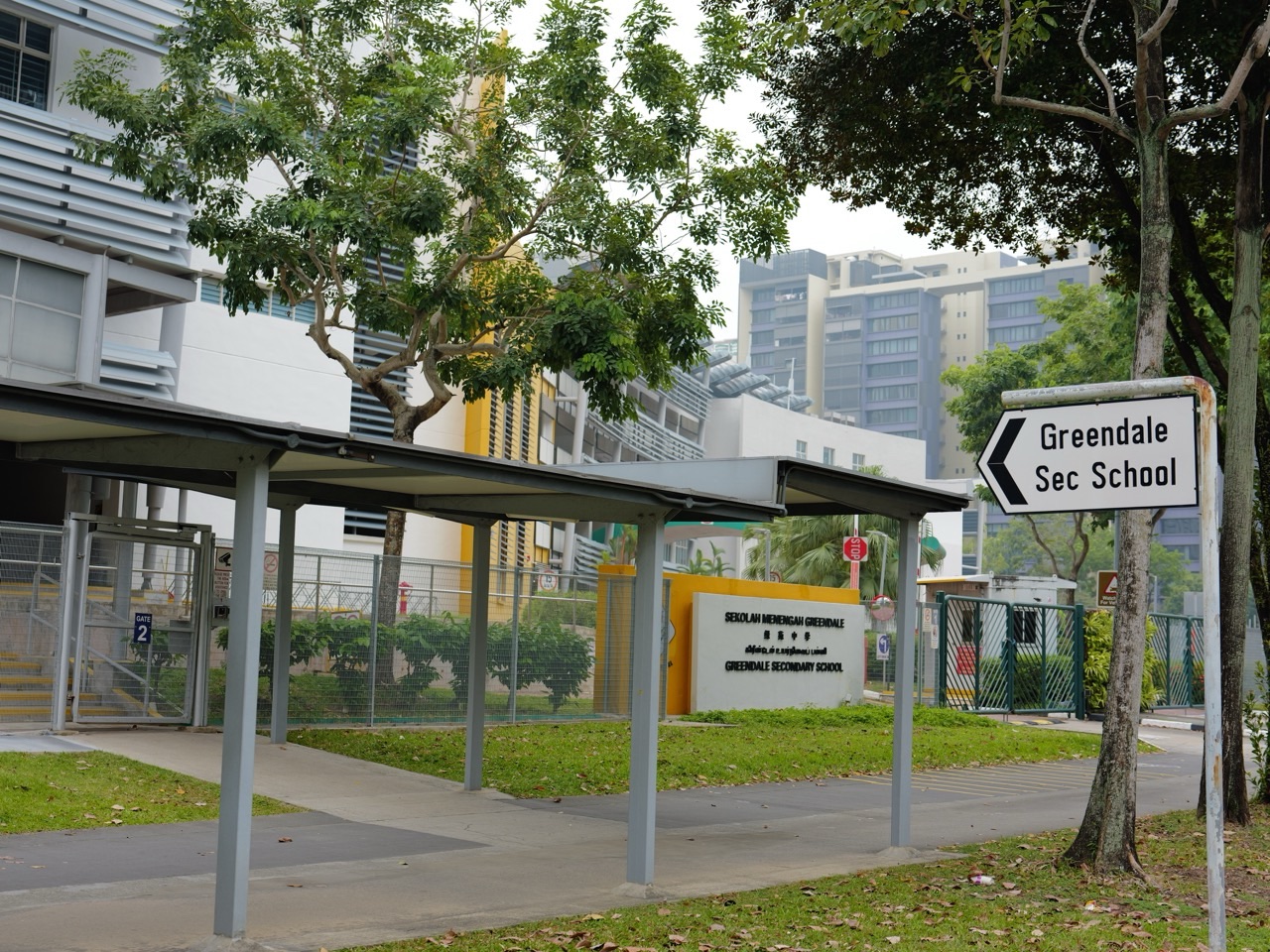
Greendale Secondary School
Greendale Secondary School describes Design, Technology and Engineering in its Applied Learning Programme and Outdoor Adventure Education in its Learning for Life Programme. Ask how a team prepares for an unfamiliar activity, whether pupils rotate roles and how the school helps someone who needs extra practice with the equipment or instructions. A student can ask how group members decide what to do when a first attempt needs revision. Greendale Secondary School’s distinctive programmes
Punggol Secondary School
Punggol Secondary School describes environmental sustainability and community and youth leadership in its signature programmes. Ask how a Secondary 1 class gets involved, what is done in school and what is done with community partners. A student interested in the environment might ask whether a project includes observation, designing a solution or explaining findings. If a child likes practical work and is building confidence with public speaking, ask how project roles help students gain experience in both. Punggol Secondary School’s distinctive programmes
Yusof Ishak Secondary School
Yusof Ishak Secondary School describes practical experiences involving sustainability, robotics and urban farming in its Applied Learning Programme. Families can ask how work is shared in a hands-on activity and what happens when some children arrive with more experience than others. Ask whether a child new to the equipment can build confidence with a first task alongside a peer. Let your child choose a question about what students actually make, observe or explain. Yusof Ishak Secondary School’s Applied Learning Programme
Help your child manage the change of classrooms
Read the real timetable together once the school issues it. Ask your child to find the first reporting place, identify the period in which they meet a subject group and point out any lesson that needs special materials. Some families find it useful to write the day, subject, room and equipment on one card for the first week. Check how the school issues updates and show the child where to find the current instructions. Then let the child lead the next evening’s check.
When the route changes between lessons, help your child work out a response they can remember. They can compare the room on their timetable against the school’s map or ask a teacher or staff member on the way. A child who knows how to ask one short question will often feel less worried about moving with an unfamiliar group. If the confusion keeps happening in the same period, ask the school whether there is a location change or an abbreviation the child has misunderstood.
For a Punggol family, a late CCA day can change which bus, LRT or walk home feels workable. Help the child check the trip after dismissal as well as the morning trip. Agree who they will contact if a session ends unexpectedly early or late and who is available as a backup. Leave time for a meal, schoolwork and sleep. During the first weeks it helps to pick one routine the child can take over, such as packing for PE or checking when a group assignment is due.
Use orientation to find a reliable point of contact
Orientation can give a student a chance to practise the school day while the teachers are expecting questions. Ask your child to remember the name of a form teacher and the location of a place where they can get help. If the school issues instructions through a registration page or Parents Gateway, save the current notice and check what your child receives directly. Let them explain which instruction applies to them. A child who can say where the class meets and how to learn about a change has a routine they can reuse.
Some students need particular support with loud spaces, classroom movement, written instructions or group participation. Share specific information with the school where it will help the child take part. For instance, “He can follow written directions and needs extra time to process a room change announced in a crowded corridor” gives a teacher a concrete starting point. Ask which staff member to check with and how the child can signal that they need help. At Punggol Secondary School, the support team includes counselling and support for students with special educational needs, and the school points families towards the form teacher or year head as a contact. Punggol Secondary School’s student support team
Put homework from multiple teachers in one place
Give your child a simple place to note each task and deadline. It could be a planner issued by the school, a notebook or a format the school already uses. Record the subject and assignment, then add the location of any worksheet and what the child needs to bring or submit. A group project can have an additional line showing who is doing which part. Before leaving school the child can check the earliest deadline and fill in any missing detail with a friend or teacher.
Several pieces of work can land on the same day. Ask which task needs quiet concentration, which requires materials from school and which depends on a classmate’s work. If the child is uncertain about one instruction, help them draft a short question during daylight hours and use the school’s usual process. A child who can plan this way will gradually get better at managing different subject groups and teachers independently.
The first month is about finding out what needs attention
During the first week, ask the child to tell you about one lesson they found easily and one part of the day they want to understand better. In the second week, see whether they can make that routine work with less help. Then look at a small piece of marked work or a project task together. If there is a recurring learning problem, ask the child to show precisely where they get stuck. Give the subject teacher that example and ask how to practise the skill. If the trouble shows up at the same point in the route between two classrooms, the practical arrangement may need attention first.
Imagine Nadia, another fictional student, who enjoys her form class and keeps taking the wrong exercise book to Mathematics. At first she and her parent write tomorrow’s subjects on a card. She then learns to check her book against the label on her timetable. By the third week she packs herself. Meanwhile, she keeps losing track of an instruction during Science explanations. Her parent asks her to choose one labelled diagram from her work and identify the confusing step. The Science teacher now has a specific question they can discuss with Nadia.
As new routines become familiar, make time to hear about friendships and interests. A useful end-of-week conversation can include a piece of work the child understands better and a moment when they felt included or helped someone else. Ask whom they would approach if next week’s timetable changes unexpectedly. If your child persistently withdraws from activities they usually enjoy, or repeatedly says they feel unsafe or excluded, speak with the school through its support channels and explain what you have observed. Punggol Secondary’s student support team
When a subject lesson feels too easy or too hard
Ask for a task the child remembers before deciding what kind of help they need. A student may say that Mathematics was easy because the class practised a familiar procedure. See whether they can use it in a new problem, explain why it works and check their answer independently. If they can do that consistently and would enjoy going further, ask the teacher what extension is available in class and when the school considers subject-level changes.
A student who says Science is too hard may be struggling to read the question, relate it to a diagram or write a complete explanation. Look at one example together and let the student choose the first place where the reasoning stopped making sense. A short conversation with the subject teacher can help the family decide whether to practise a particular skill, clarify how the class works or discuss the level at a suitable school review. If a child also feels left out of the subject group, share that concern with the appropriate teacher so the social and learning needs both receive attention.
Frequently asked questions
If two friends are in the same form class, will they have all their lessons together?
They may be together for common subjects and form time. Individual subject lessons can follow different arrangements when the friends have different subject levels. Encourage them to find the rooms on their own timetables and decide when they can catch up at recess or after a lesson.
Does the form class decide whether a child can take a subject at G3?
Subject-level offers depend on the relevant eligibility criteria and, for later changes, the school’s assessment. The form class gives a student a regular group for common learning. Ask the school about the specific subject, offer and decision date if you receive a notice about G3. Punggol Secondary’s guide to subjects at a more demanding level
Will every school list the same classrooms and subjects on its timetable?
The national framework provides the lower-secondary common subjects and the framework for subject levels. Each school gives its own timetable, rooms, programme dates and instructions. Start with the current notice your posted school sends during registration or orientation. If a paper copy differs from a newer update, ask where students should check for the current version.
What if my child is shy about speaking in the new form class?
Pick a small action that suits the child. They can introduce themselves to one person, ask a desk partner what materials are needed or read out one line their group prepared. A teacher can sometimes help a student take a manageable role in paired or group work. Follow up by asking what made the attempt easier and whom the child would feel comfortable speaking to the next time.
When should a parent contact a form teacher?
A repeated problem with finding a room, confusion with school routines, or a class relationship concern can be raised with the form teacher through the school’s usual channel. A question about a particular task or assessment can often go to the subject teacher. Include one clear example, when it happened and what the child has already tried. It gives the teacher a starting point for a response and shows the child how to seek help as the year goes on.


