
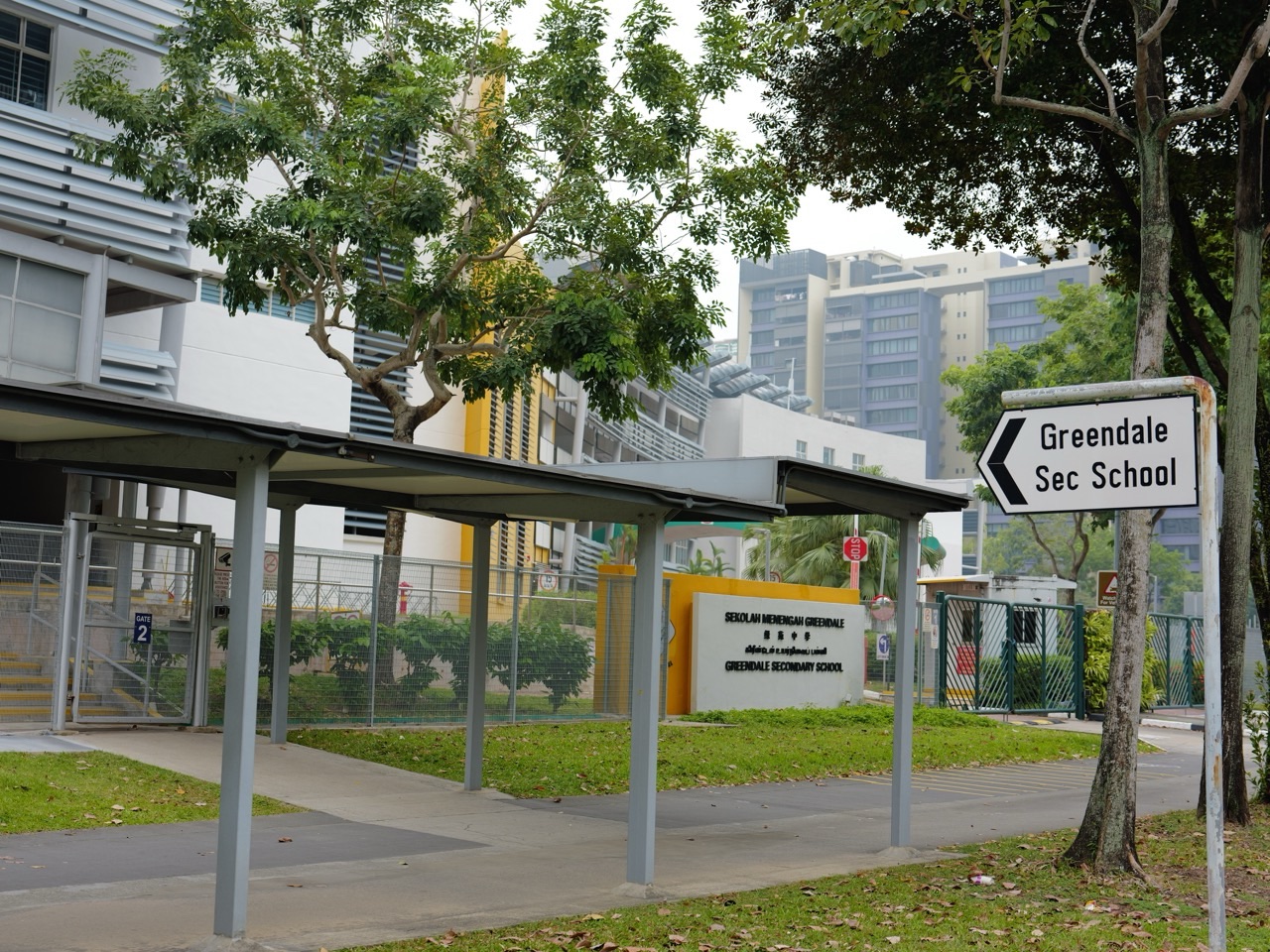
Greendale Secondary School at 51 Edgedale Plains is a Punggol option for families considering Secondary 1 through PSLE Posting Group 2 (PG2) for 2027. The 2026 intake’s reported PG2 score range was 21–23, with 23 the last posted score. For the 2027 exercise, use the relevant PG2 row in MOE SchoolFinder and the child’s actual eligibility. The new cut-off will emerge from this year’s applicants, choices and vacancies. MOE SchoolFinder profile for Greendale Secondary
Two Greendale programmes are worth looking at closely. The school’s Design, Technology and Engineering Applied Learning Programme introduces electronics, coding, design and prototyping. Its Outdoor Adventure Learning for Life Programme uses supervised activities to develop teamwork, judgement and confidence. Read what each programme involves, then check the child’s subject needs, co-curricular interests and door-to-school journey to decide where Greendale belongs on the preference list.
- Greendale Secondary is at 51 Edgedale Plains. Check the actual gate and the school-day trip from home.
- The reported 21–23 PG2 range is for the 2026 Secondary 1 intake, based on the 2025 PSLE.
- The Applied Learning Programme introduces Arduino, electronic outputs and prototyping. The school’s Secondary 2 description includes an SIT Community Challenge.
- Outdoor Adventure is the Learning for Life Programme. The school also lists a separate Outdoor Adventure Club as a CCA.
- Greendale’s 2026 open house took place on 14 November. Check the school for current information and the applicable 2027 registration notices.
- If posted to Greendale, check individual subject-level notices, the correct booklist, orientation instructions and the most recent timetable.
Contents
- Read Greendale’s 2026 score range before ranking for 2027
- What pupils do in Greendale’s engineering programme
- Outdoor Adventure in the Learning for Life Programme
- Tell the school-wide programmes, CCAs and DSA apart
- Check how a PG2 student would learn from week to week
- Use open-house materials and practise the Edgedale Plains journey
- If your child is allocated to Greendale
- Common questions from Punggol parents
Read Greendale’s 2026 score range before ranking for 2027
The reported range of 21–23 refers to students posted through PG2 for the 2026 Secondary 1 intake. The higher number, 23, is the reported score of the last student posted in that group. For a child with a score of 23, that is a match to the historical cut-off. A score of 24 is weaker than that historical cut-off. Asking what those scores would have meant last year helps a family build the shortlist. The current year’s outcome depends on the eligible pupils in this exercise and on the places available. Published 2026 historical score ranges for Greendale · SGExams 2026 cut-off compilation
Under MOE’s published eligibility framework, pupils with 23 or 24 are eligible for PG2. Pupils with 21 or 22 can choose PG2 or PG3, and pupils with 25 can choose PG1 or PG2. If the pupil is eligible for two groups, the group selected for S1 Posting applies across all the school choices in that submission. If you are weighing PG2 and PG3 at a score of 22, first compare the likely starting mix and the schools that make sense under each option. Use the PG2 row when preparing the PG2 list and the PG3 row when considering the PG3 list. Posting Group eligibility and subject levels · MOE’s Secondary 1 posting instructions
Use Greendale’s score history alongside the other schools on the list. Suppose a child with a score of 23 is drawn to Greendale after learning about the Outdoor Adventure programme and finding a journey they can manage. They can put it high on the list if it is one of their genuine preferences. They should also identify other schools that suit their needs and, where available, include two or three where their result is better than the published previous cut-off. If Greendale is closer than another school, ask the child if convenience is the deciding factor or if there is something about the school itself they particularly value. The aim is to fill the choice list with options they could all take seriously. Punggol guide to choosing six secondary schools
For practical comparison across several schools, keep one note for each with the relevant group and year, confirmed commute, subject questions and one or two reasons the child would like to attend. Greendale’s location and programmes are only useful if your child can picture the week that goes with them. Punggol’s guide to choosing secondary schools through PG2
What pupils do in Greendale’s engineering programme
Greendale calls its Applied Learning Programme Design, Technology and Engineering, or DTE. It connects a design-thinking process with coding and making things. Students can use cardboard modelling and learn about digital prototyping tools such as 3D printing and laser cutting. The programme draws on examples from the school’s hydroponics and aquaponics setup, giving the child a way to see how electronics or measurement can inform a real task. Greendale’s Design, Technology and Engineering programme
The most useful way for a parent to recognise the learning is to listen for the steps a child describes. A design starts with a particular need. The pupil has to decide how a proposed solution would work, make a first version, observe its behaviour and revise it. A small working device can give the pupil something specific to explain. For instance, “I thought the signal would change at this point, but the reading was different. I changed the condition and checked it again.” The sequence develops skills used in formal subjects too, including recording evidence, thinking about variables and explaining a decision.
Secondary 1 electronics and prototyping
The school’s published Secondary 1 description starts with basic coding and electronics using Arduino, a small programmable board. Examples include switching LEDs, sounding a buzzer and controlling a servo motor. The school describes applying Arduino learning to monitoring its hydroponics setup. It also introduces the effects that cleaner energy can have on the environment. A child can ask a teacher to describe a first project, which tools are demonstrated and how the pupils record and revise their work. Greendale’s lower-secondary ALP sequence
Consider an example a parent can discuss with a child. A group builds a model that should give a visible signal when a condition is met. They predict what will happen, then observe it. If the signal appears late or early, the pupils can compare the reading with their prediction and decide what to check. They can record which change they made so they can tell whether it helped. The example captures how a relatively simple project connects observation, programming and clear Mathematics or Science explanations. It is an illustration of a learning task. The teacher can confirm the assigned project for the actual class.
Prototyping introduces another kind of question. Suppose a pupil wants a part to fit into a narrow space. A sketch can help them decide on the dimensions. A model helps them check whether the shape is sturdy, fits and can be handled easily. When a pupil reports back on a project, ask them which change made a difference for the eventual user. The school can explain how tools are introduced and what pupils will use under its supervision. For a beginner, ask how teachers help students who have not programmed or modelled something before.
Secondary 2 interfaces and the SIT Community Challenge
Greendale’s Secondary 2 description takes the Arduino work further with Annikken Andee, which the school describes using to build a wireless interface on a mobile device. The page also mentions exposure to areas such as artificial intelligence and drones. One extra design question arises when the child’s project has a user interface. Someone new to the device should be able to understand what it does and choose an action without constant assistance. Testing the controls with a classmate helps a pupil notice where their own instructions are incomplete. Greendale’s Secondary 2 ALP outline
The school describes a Secondary 2 Singapore Institute of Technology Community Challenge in which students work with a community organisation on a design problem. Greendale’s description includes pitching proposals and hearing feedback about how workable they are. A parent can ask how pupils gather information from a community partner, what each person does and whether they have a chance to amend their design after a critique. Ask the school for the arrangements announced for the child’s cohort, since the brief and participation arrangements can vary.
Projects are a useful prompt for thinking about future subjects. A child who enjoys designing the object may be curious about Design and Technology; another may want to build more confidence with the calculations or coding. Ask what upper-secondary subjects and combinations Greendale offers for the actual cohort and what entry conditions apply. A project experience can help identify an interest. The school’s upper-secondary option list determines the examinable subjects the pupil can choose.
Ask which engineering experiences are available to the whole cohort
Greendale’s programme page describes an overseas STEM trip for selected students. Its Secondary 3 section also describes experiences such as career talks, workshops and learning journeys, and opportunities to participate in Advanced Elective Modules, with some competitions limited to selected students. These are useful questions to ask about the later years. A parent can ask which activities form part of ordinary lessons, which students may opt into and which have their own selection process. Confirm the school’s current schedule and arrangements if a particular experience is important to your child. Greendale’s full DTE programme outline
This also helps a child separate immediate interests from longer-term plans. A Secondary 1 pupil may want to find out how a sensor works. By Secondary 3, they may be drawn to the study of how that tool is used in a workplace, or they may have discovered a new interest. Ask the pupil to keep one early design sketch and note what they learnt from testing it. A piece of work they can explain is a useful starting point for a later discussion about subjects or activities.
Outdoor Adventure in the Learning for Life Programme
Greendale’s Outdoor Adventure Learning for Life Programme uses outdoor experience to develop students’ physical, social and personal skills. The school describes taking part in activities such as kayaking, climbing and orienteering, alongside learning about risk, leadership and working with others. Read those activity examples together with the school’s cohort notices. They will give the venue, programme and instructions that apply on each occasion. Greendale’s Outdoor Adventure Learning for Life Programme
A beginner may want to know how an unfamiliar activity is introduced. They might ask, “What do we practise before we do the full activity?” A parent can ask the school about preparation, supervision and the way it gathers information about an individual learning, health or accessibility need. If an activity worries your child, name the concern to the school so it can explain what the pupil will be asked to do and what arrangements are available.
Outdoor activities offer specific practice in making decisions together. In a navigation exercise, a group may need to compare how long two routes will take and decide how to keep the group together. A student can later describe which map information they used, how they knew they were at a checkpoint or what prompted them to reconsider a route. The same habits help with practical tasks in school, where a pupil may have to explain a plan to classmates and adapt when new information arrives.
There is room for a quieter pupil to contribute. They might be the one who spots an overlooked part of the instructions, checks everyone has understood the task or reminds the group to regroup at the next point. When speaking with a child after an activity, try asking which action helped the team. You may hear more about cooperation and judgement than you would from a question about how far or fast the pupil went.
Tell the school-wide programmes, CCAs and DSA apart
Greendale’s published CCA options give children a way to pursue an interest more regularly. Robotics and the Outdoor Adventure Club are two relevant examples. The Robotics page describes building experience across projects and reflecting on work through a portfolio. The Outdoor Adventure Club page describes progressive training in skills such as navigation, campcraft and expedition planning. Read the CCA descriptions and ask about the Secondary 1 allocation process, training days and the expected commitment. The CCA choice and the experiences provided through the school’s ALP and LLP are separate arrangements. Greendale Robotics · Greendale Outdoor Adventure Club
A student may enjoy a school-wide programme and choose a CCA in another field. If she enjoys explaining a prototype to others, she could be curious about a communication or performance activity as well as Robotics. Ask her to pick two activities she could do regularly. For each, find out how pupils try it, what happens if there is a trial or limited space and when practice is normally scheduled. A pupil can enjoy a weekly activity even when it was their second option. Greendale’s CCA information
The school’s published 2026 Direct School Admission (DSA-Sec) options were Design, Technology and Engineering, Leadership and Outdoor Adventure. The school describes its Leadership work through service and opportunities for pupils to take responsibility in school. A younger student thinking ahead can check the school’s current DSA programme descriptions and MOE’s instructions for their own year. Someone choosing schools through the regular posting process for the 2027 intake should use the actual posting instructions. For an already allocated DSA place, follow the school’s allocation and registration information. Greendale says students admitted through DSA commit to participating in activities related to their selected talent area through Years 1 to 4. Greendale’s DSA overview · Greendale’s student leadership programme
Check how a PG2 student would learn from week to week
PG2 is the route used for school admission. At the beginning of Secondary 1, most academic subjects usually start at G2 for a pupil posted through that group. An eligible pupil may take a more demanding level in a specific subject based on their PSLE subject result and the applicable offer. Another pupil, posted through the same group, may have a different combination. Follow the school’s instructions for the child’s individual levels. Greendale’s school FAQ on subject-level eligibility
If the family is comparing two schools for a child who might take a subject at a different level, ask each how the school explains subject allocations and where pupils go for the lesson. Greendale may be in the shortlist because of DTE, but the child will also study English, Mathematics, Science and other subjects. A practical reason to inquire about support is a specific difficulty. For instance, “My child can work through familiar arithmetic, but loses track when she needs to use a letter for an unknown. Where does she go if she needs to ask about a classroom example?” The school can describe the normal way a pupil gets help.
Read Greendale’s published homework and assessment policies for context. Its assessment page describes both using classroom evidence to guide teaching and using assessments to report what pupils understand at a given point. Its homework page asks pupils to record their assignments and describes the teacher’s role in using work for feedback. Ask for the current cohort’s schedule and instructions when the school issues them. An older description of assessment examples is less useful than the actual calendar for the child’s first term. Greendale’s assessment policy · Greendale’s homework policy
A project can give the family something concrete to talk about at home. For Mathematics, ask the pupil to explain a dimension or show how two measurements relate. For English, ask for a brief account of the problem, the proposed solution, the evidence and the improvement. If the child struggles with a concept, focus on the gap instead of the project itself. A student who can describe the steps clearly may still need practice using the same reasoning with unfamiliar numbers. A pupil who can build a good model may need some time to learn how to explain its purpose to a reader.
The school also describes Home-Based Learning as part of its blended learning approach and includes Student-Initiated Learning, through which pupils can investigate interests. Look for the school’s dates and instructions when they are available. A routine in which the child checks the assigned work and identifies a question to ask can make the home day easier to manage. Ask what method the school wants pupils to use if they cannot access an assignment or are unsure whether they have submitted it correctly. Blended Learning at Greendale
Ask about learning and wellbeing support before a difficulty grows
Greendale’s student support page identifies school counselling, special educational needs support, Education and Career Guidance, and a student health adviser. For a child who used a particular form of support in primary school, ask whom to contact and what information the school needs for the transition. A question about how the pupil would ask for clarification or manage an unfamiliar room can be more useful than an extended discussion of general policies. The school is the place to confirm the arrangements available to your child. Greendale’s student support contacts
If language arrangements matter to your shortlist, ask explicitly where the child would study the relevant Mother Tongue or Higher Mother Tongue, what level is offered for the intake and whether any lesson is held away from the main campus. An older school FAQ may describe a past arrangement, so a current answer is particularly important when the language class would affect an afternoon route. Record who confirmed the information and share the journey plan with the child once you have the details. Greendale’s official school FAQ
Use open-house materials and practise the Edgedale Plains journey
Greendale’s published 2026 open house on 14 November has passed. Its page still provides a way to see what was presented, including a school video, and describes the event’s subject areas, CCAs and opportunities to hear from school community members. For anything specific to the next intake, use the current school channel. Ask for practical details about the first DTE task, an introduction to an outdoor activity for beginners and the way a Secondary 1 pupil asks for subject help. Greendale’s 2026 open-house page
The school described its environment as Collaborative, Thinking and Safe in its open-house information. Turn those terms into questions about the experience your child may have. Ask how a group decides whose idea to try first, what pupils do when their first design fails and how a new student tells an adult about a problem. An account of an actual classroom practice can help the child imagine how they would participate. The answer can also give parents an idea of how to reinforce the same habits at home.
Greendale Secondary is at 51 Edgedale Plains. Punggol Secondary School is at 51 Edgefield Plains, a different address with a similar name. When saving the school in a map or communicating with a relative, include the correct school name and street, and use Greendale’s current instructions about reporting. If possible, try the trip from your home at the time the child would actually take it. Take account of the first walk, any waiting or change of service, and the final approach before deciding what the journey requires. Greendale’s official address and contact page · Punggol Secondary’s contact page
Try a second journey at around the time a CCA might finish, once you have checked the actual CCA schedule. If the child will walk or use public transport with a larger bag, ask them which route feels easiest and where they would go if it rains. The student should be able to explain which stop or landmark tells them they are close to the school and what to do if a regular service has been missed. For a school-choice decision, compare that travel experience with the ordinary week at another school you are considering.
Walk through the decision with a pupil
Imagine Aisha is considering Greendale because she likes drawing and making models. Her parent sees “Arduino” and wonders whether the school is best for a child who already codes. Aisha watches the school’s materials, identifies cardboard modelling as something she would like to try and asks how roles are shared in an engineering group. She compares the commute and confirms a CCA that interests her outside technology. Those observations help her decide how to rank Greendale even though she has yet to write her first program.
Another child, Marcus, likes outdoor teamwork and is unsure about climbing. He asks how beginners are introduced to the activities. His family also checks what homework and after-school travel might look like on a longer day. A family near Meridian or Coral Edge can use the school’s published transport FAQ as a starting point and check current services from its own address. Marcus can then weigh the full week alongside the programme that first attracted him. Greendale’s published directions
If your child is allocated to Greendale
Open the official confirmation and read the instructions for your child’s intake. Keep a note of registration, form-class information, any subject-level offer and the date by which the parent must respond. Check which messages are general and which name your child and ask for action. Continue using the current school notice if a message from a previous intake surfaces in a family chat. Greendale’s parent information page provides starting points for school resources, booklists and available support. Information for Greendale parents
Use the 2027 Secondary 1 booklist as directed by the school. The publicly visible Greendale booklist page consulted for this guide displayed 2026 lists, so check for the current upload or instructions before ordering. Confirm the individual level wherever a school item differs by G level. When in doubt about a subject or edition, ask the school before purchase. Save the booklist date and any later clarification so a sibling’s book or a forwarded shopping list can be checked against the actual requirement. Greendale’s booklist page
For orientation, ask your child to read the reporting address, time and items to bring, then practise telling a caregiver how the morning will work. Greendale’s student leadership page describes student leaders helping to plan Secondary 1 Orientation. The current intake notice tells you which activities are scheduled and the actual reporting arrangements. When the regular timetable arrives, let the child show how they will locate form-class time and any separate subject groups. One walk through the first morning on paper can make the timetable feel more manageable.
Common questions from Punggol parents
Should a child learn Arduino before joining Greendale?
The school’s public description gives basic coding and electronics as Secondary 1 learning. It introduces the tools through tasks pupils learn in the programme. If your child has never coded before, ask how the first class is organised and how newcomers get support. A child who has tinkered with simple electronics can bring that interest, and a child who prefers sketching or model-making can explore another part of the same design process.
Is the Outdoor Adventure Club part of the same allocation as the outdoor programme?
Greendale calls Outdoor Adventure its Learning for Life Programme and lists the Outdoor Adventure Club separately as a CCA. Check the programme notice for what the child’s cohort will experience, then use the CCA information for selection and commitments for the club. If the student would like to join, discuss the likely schedule alongside schoolwork and travel.
Does a PSLE score of 23 settle the choice?
It matches the reported PG2 cut-off for the 2026 intake. Eligibility, vacancies and the current posting exercise determine the result for 2027. Put Greendale in the family’s actual preference order after checking the commute, programmes and daily learning arrangements. Then complete a broad list of other eligible schools your child would genuinely attend.
How can my child keep track of changing after-school plans?
Use the school’s own timetable and CCA instructions, and check any notification for the date it takes effect. Agree on a simple way to tell a caregiver if a club meeting, project or activity changes dismissal. On a normal day, let the child consult the schedule and report the plan themselves. For a school-issued change, verify the message and resend the corrected meeting point or transport detail to whoever needs it.


