
Education and Career Guidance (ECG) is the process of helping a young person understand personal strengths, interests, values, possible education pathways and the skills needed to make responsible choices. A pupil who entered a Punggol secondary school through Posting Group 2 (PG2) can use ECG from Secondary 1 onwards; the original Posting Group does not determine a permanent career or exclude the student from meaningful exploration. MOE’s MySkillsFuture Student Portal for Secondary students includes career-interest profiling, a Pathway Navigator for Full Subject-Based Banding cohorts, course information, goals and a personal portfolio. The point is to discover and test possibilities, not to choose one occupation at age thirteen.
Local schools provide concrete starting points. Yusof Ishak Secondary’s official ECG page describes different objectives for Secondary 1 through 4 and individual counselling support; Greendale Secondary describes self-awareness in Secondary 1, career exploration during Secondary 2 and 3, and course planning in the graduating years. Punggol Secondary provides an ECG counsellor referral through its Student Support Team, while Edgefield includes future readiness, workshops, learning journeys and career talks in Character and Citizenship Education. Families should use the school’s actual current ECG timetable and support arrangements, while consulting official course requirements when a future option becomes more specific.
- PG2: A Secondary 1 admission group, not a career category or permanent academic identity.
- ECG purpose: Discover purpose, explore opportunities and build adaptability for future transitions.
- MySkillsFuture: The official student portal has profiles, interests, occupations, CourseFinder, Pathway Navigator and portfolio tools.
- Secondary 1: Learn interests, values, personality and skills; try a variety of school experiences.
- Secondary 2: Examine subjects and learning environments before upper-secondary combination decisions.
- Secondary 3: Explore industries and post-secondary institutions; collect genuine experience and reflection.
- Secondary 4/5: Verify actual SEC and admissions prerequisites, application channels, interviews and deadlines.
- Parent role: Discuss possibilities without forcing a fixed job title or assuming PG2 means a particular destination.
- Portfolio rule: Include authentic work and specific reflection; do not invent awards, skills or activities.
- Next step: Ask the pupil to save three interests and two possible course pathways, then prepare questions for the school’s ECG counsellor.
Definition lock: ECG is exploration, not an early career allocation
Posting Group 2 describes a pupil’s entry into secondary school under Full Subject-Based Banding. Individual subject levels then reflect learning demand in the relevant subject. Education and Career Guidance is a separate developmental process: a student learns about personal strengths, educational opportunities and work, and gradually becomes capable of making informed choices. These ideas interact, but they are not synonyms.
A parent may worry that a PG2 pupil has a narrow range of future routes. That assumption is premature. The actual SEC subject levels, grades, school programme and later admissions rules matter. A student may develop stronger Mathematics or Science readiness during lower secondary, or discover an interest in design or communication that was not visible during PSLE preparation. ECG should help the learner notice those changes and understand the choices they create.
At the same time, ECG cannot promise that every option remains open regardless of qualifications. It would be equally misleading to tell the teenager that academic prerequisites never matter. Good guidance combines ambition with accurate information: the student identifies a possible direction, learns what the programme requires, and decides which next learning step is realistic.
This article concentrates on the exploration process and MySkillsFuture tools. Separate PG2 articles explain the specific PFP, Higher Nitec, JC/MI and direct polytechnic criteria. The reader should not need to repeat every admissions calculation simply to learn how to discover interests.
The three ECG questions a family can use throughout secondary school
MOE’s ECG resources organise the journey around three helpful questions: Who am I? Where do I want to go? How do I get there? These do not have final answers at thirteen. Instead they guide a cycle of reflection, exploration and planning. The child may return to the same questions after a new school project, a disappointing assessment or an inspiring workplace visit.
“Who am I?” involves values, interests, personality and skills. A student might enjoy solving technical problems but dislike presenting publicly. Another might value helping people and enjoy writing. These are useful observations rather than fixed labels. The child can change through experience and instruction.
“Where do I want to go?” means learning about actual education and career options. The teenager should explore what a course teaches and what a worker does, not just memorise a fashionable title. “How do I get there?” then connects the direction with subject readiness, courses, activities and support.
The questions become increasingly precise with age. A Secondary 1 pupil may ask what a designer does; a Secondary 4 pupil may need to confirm a diploma’s English and Mathematics requirements. The process grows more concrete as evidence accumulates.

Secondary 1: learn to identify values and strengths
The first year is a poor time to demand a complete professional plan. A pupil is adjusting to new teachers, different classrooms, unfamiliar homework and mixed form classes. ECG at this stage should encourage curiosity. Yusof Ishak Secondary’s published objectives include understanding values, interests, personality and skills, as well as awareness of sectors and post-secondary pathways.
A parent can make the process conversational. Ask the child which school task was most satisfying, which problem was interesting even when difficult and what work felt meaningful. The answers may involve teamwork, making something, explaining an idea or helping another student. Record an example instead of simply declaring that the pupil is “creative” or “good with people.”
A student should be encouraged to try appropriate opportunities through ALP, LLP, CCA and school projects. The purpose is genuine experience, not collecting certificates. A pupil who discovers a love of robotics in a short school activity has gained information about interests. A teenager who tries performing arts and decides it is not enjoyable has also learned something useful.
A small reflection notebook is enough. There is no need for an elaborate professional résumé before the student has completed ordinary Secondary 1 activities.
The MySkillsFuture Secondary Student Portal
MySkillsFuture is an official digital resource for education and career exploration. Its current Secondary Student Portal FAQ describes sections for discovering personal interests, exploring occupations and industries, comparing education options, setting goals and building a portfolio. SchoolFinder and CourseFinder can be used for research; the Pathway Navigator is designed for students entering Secondary 1 from 2024 under Full SBB.
Students may be able to access the portal through school-provided account processes, including MIMS or approved login arrangements. The current FAQ notes that a form teacher can assist with account creation or resetting a forgotten password. Parents can explore some public information without logging in and can discuss the pupil’s account content with the pupil, subject to appropriate privacy and school arrangements.
Do not publish screenshots of the student’s portal profile, identification number or private reflections. The platform is intended to support the learner’s own development, not become a public performance dashboard controlled by adults. Encourage the teenager to explain one interesting discovery rather than demand access to every response.
A parent should recognise the difference between browsing information and making a formal application. Saving a course in MySkillsFuture is not applying for admission, and a career-interest result is not a qualification.
Discover Yourself: what the interest questionnaire actually tells you
The MySkillsFuture FAQ describes short and full career-interest assessments, including a full 66-item questionnaire and a shorter 18-item option. The results use the RIASEC interest framework: Realistic, Investigative, Artistic, Social, Enterprising and Conventional. A student may receive a combination of interest types that prompts further exploration.
These labels describe interests, not intelligence or guaranteed aptitude. A child who scores high in Investigative interests may enjoy research, but still need academic foundations for a particular Science course. A student with Social interests may value helping others but not necessarily enjoy every healthcare or teaching role. A profile suggests questions to explore; it should not be used as a permanent identity.
The student should answer honestly rather than choose responses that a parent believes will lead to a prestigious occupation. If the teenager finds two different interests equally appealing, that is not a problem. Many real jobs combine technical, creative and interpersonal work.
After receiving a profile, ask for three examples from school or life that fit it and one example that does not. This encourages the child to treat the result critically. A questionnaire cannot know the whole person, and the pupil should retain the freedom to test other possibilities.
Realistic interests: making and solving practical problems
A student with strong Realistic interests may enjoy working with materials, tools, equipment or physical systems. This could lead to curiosity about engineering, design, technical services, horticulture or other practical fields. The exact occupations should be explored individually because the label covers many very different workplaces.
Punggol provides familiar examples: transport systems, buildings, parks, digital infrastructure and equipment used in community facilities. The child can observe how these systems serve people and ask what kinds of workers maintain, improve or design them. This is an exercise in curiosity, not a promise that a named local employer will offer a student internship.
A useful school activity is to build, test or repair a simple approved project. Ask what measurements were needed and how the pupil knew whether the design worked. Practical interests become educationally valuable when combined with reasoning and safe procedures.
Parents should avoid interpreting Realistic interests as evidence that a child is incapable of academic work. Technical professions frequently require substantial Mathematics, Science, communication and documentation.
Investigative interests: curiosity needs evidence
A pupil with Investigative interests may enjoy understanding why something happens, testing ideas or interpreting data. Such interests can relate to Science, research, technology, social analysis or other fields. But the value lies in the type of questions the child likes asking, not a promise that the learner must become a laboratory scientist.
Ask the teenager to describe a claim they have checked or an experiment they found meaningful. Did they identify a variable, gather information and revise the conclusion? A student who can explain why a first idea was wrong is demonstrating learning. That skill matters more than memorising an impressive professional title.
The family can connect exploration to school topics. A water quality question may involve Science, Geography, Mathematics and careful reading. A study of public transport patterns may require data and recognition of limitations. These can be age-appropriate inquiries when supervised and based on safe, reliable information.
An Investigative profile should also be balanced against the student’s other needs. A pupil may enjoy experiments but struggle with written explanation; that is a specific skill to develop, not evidence that the interest result is invalid.
Artistic interests: creativity has many professional forms
Artistic interests can include visual design, writing, performance, media, music or other creative work. A teenager may enjoy drawing in spare time but need more experience before understanding the demands of a formal design or media course. ECG encourages exploration of real tasks rather than assuming hobby enjoyment guarantees professional fit.
Ask what the pupil likes most: generating ideas, making the work, revising details or sharing it with others. Those phases can correspond to different roles. Someone who enjoys scriptwriting may not enjoy technical production; another may love video editing but dislike presenting on camera. Each discovery provides useful information.
A small authentic project can reveal a great deal. The pupil could create an approved visual explanation of a school concept, reflect on audience feedback and revise it. The portfolio should preserve the student’s own contribution and disclose substantial help or AI use when relevant.
Parents should not dismiss creative careers as automatically insecure or romanticise them as effortless. Courses and jobs have real technical requirements, deadlines and competition. The correct approach is to research credible programme descriptions and actual skills.
Social, Enterprising and Conventional interests
Social interests often involve helping, teaching, communicating or supporting others. Enterprising interests may include persuasion, organising initiatives, leadership and influencing decisions. Conventional interests can involve structured information, reliability, records and systems. A real person may show more than one of these patterns, and a single job may require all three.
Consider a student who enjoys organising a community activity. The planning may involve Enterprising behaviour, the care for participants may reflect Social interest and the accurate schedule or budget may use Conventional skills. The child does not need to select only one label. The interest framework is a vocabulary for noticing preferences, not a box that determines destiny.
Parents can ask the student what part of the activity was satisfying and what part was difficult. Did the child like planning, persuading, helping or checking details? This makes the result specific enough to inform later choices.
Do not let one questionnaire result override the teenager’s actual experience. The pupil may grow more confident in leadership after practice or develop a new interest through a school ALP. ECG should remain flexible and evidence-led.
Explore occupations without believing one photograph
MySkillsFuture’s Secondary portal provides occupation and industry information, including descriptions of work, skills and related courses. Its FAQ states that the portal covers more than a thousand job roles across many industries. The student should use these resources to compare what people actually do, not merely choose the photograph that looks most exciting.
A useful occupation comparison includes daily tasks, skills needed, working conditions, typical collaboration and future learning. Ask the pupil to explain a difficult part of the work. A healthcare role may require careful communication and safe practice; an engineering role may involve repetitive troubleshooting; a media role may require several rounds of revisions.
Career information changes over time. A description is not a guaranteed job opening or salary offer in a future year. Students should check the date of the source and seek additional reliable information when deciding something consequential. The purpose at thirteen is broad understanding, not employment prediction.
Parents can discuss their own work honestly, including unglamorous tasks. A teenager gains a better picture of careers when adults describe how they solve problems rather than only job titles and pay.
What is Pathway Navigator for Full SBB students?
The MySkillsFuture Secondary FAQ explains that Pathway Navigator supports students from the Secondary 1 cohort of 2024 onwards who are following Full Subject-Based Banding. It helps them explore education routes from school towards later study. This is especially relevant to a PG2 pupil because the actual subject-level portfolio can vary rather than representing a single whole-student stream.
Pathway Navigator is an exploration tool, not an admissions guarantee. A student may select an area of interest and learn that particular subject qualifications are needed. The family should then check the current official requirements of the institution, because the navigator cannot replace a real offer or predict future vacancies.
Parents should distinguish a plausible route from a personal eligibility verdict. A secondary student may have years to strengthen a subject or make an approved upper-secondary choice. The tool can show what to investigate while the school advises what is actually available.
Use the navigator alongside the pupil’s current subjects and teacher feedback. That makes future planning grounded without turning every imagined pathway into a source of pressure.
Greendale Secondary’s staged ECG model
Greendale Secondary’s official ECG page provides a clear local example. In Secondary 1, its focus is self and career awareness: exploring interests, work values, skills confidence and target setting. Secondary 2 and 3 involve career exploration, with activities including career talks, subject-combination guidance, applied-learning modules, post-secondary experiences and potential work attachments. Graduating-year support becomes more specific about post-secondary planning and applications.
This progression is educationally sensible. A Secondary 1 pupil should not be required to complete the same detailed application plan as a Secondary 4 candidate. The information and choices available to the student differ. ECG can grow with the child as subject performance, interests and maturity change.
Greendale also publishes an ECG counselling service and resources. Families should check current access instructions, because counsellor availability and staff can change. A parent should not send a teenager’s private information to an old contact copied from a dated blog post.
A PG2 family attending Greendale can ask how the child’s current G-level subjects connect with the school’s career exploration activities. The purpose is understanding, not immediate selection of an occupation.
Yusof Ishak Secondary’s ECG journey by year
Yusof Ishak Secondary’s official ECG page distinguishes Secondary 1 self-awareness, Secondary 2 subject-combination decision-making, Secondary 3 exploration and portfolio development, and Secondary 4/5 application preparation. It names the idea of V.I.P.S.—values, interests, personality and skills—as part of understanding oneself. The school also describes career days, industry experiences and counselling support.
A Punggol parent can use this framework even if the child is enrolled at another school. It shows how a useful ECG programme changes its questions across the adolescent years. The pupil first identifies interests and skills, then investigates actual education options, then develops a portfolio and eventually applies under formal rules.
The school may arrange industry visits or learning journeys, but the public examples should not be interpreted as a promise that every pupil has identical access to every activity. Participation and scheduling can vary. Ask what the actual current cohort will experience.
The family should encourage the child to reflect after a career-related event. What surprised them? Which task seemed meaningful? Which assumption changed? Reflection turns a visit into information for future decisions.
Punggol Secondary: where to ask for an ECG conversation
Punggol Secondary School’s official Student Support Team page identifies an Education and Career Guidance counsellor and a route for students to request appointments. The page also describes support from counsellors, special-educational-needs personnel and welfare staff, serving different functions. A family should distinguish career planning from emotional or SEN support while recognising that a student may sometimes need more than one kind of assistance.
A useful ECG appointment begins with questions. “I enjoy Science and making things, but I am unsure what polytechnic courses involve” is a clearer opening than “Tell me the best job.” The adviser can help the pupil research realistic possibilities and relevant pathways. Students should prepare their actual subject levels and current interests rather than an imagined perfect transcript.
Counselling is not an administrative shortcut to a guaranteed diploma or JC place. The adviser can help with exploration and information, while admissions authorities enforce formal criteria and allocate actual places.
Check the school website for current booking details; do not assume that a staff member named in one academic year’s notice remains in the same role indefinitely.
Edgefield Secondary: future readiness and career exposure
Edgefield Secondary’s Character and Citizenship Education page includes future readiness among its goals. It describes career talks, workshops for students and parents, elective modules, visits to post-secondary open houses and guidance for future course applications. These experiences can help a young teenager connect school learning to a wider world.
A parent may find the link between Edgefield’s applied-learning activities and ECG particularly useful. A design challenge can suggest an interest in engineering or entrepreneurship. A community project might develop an interest in public service. The next step is not immediately choosing a career, but asking what related skills and courses exist.
The school’s programme information is a starting point. Families should ask which experiences are included in the current cohort and what additional opportunities require selection. A published school value or programme theme should not be translated into a guaranteed placement at a named institution.
A child who learns to explain a project and evaluate its outcome is already practising the reflective habits that make ECG useful.
Secondary 2: connect subject combination with interests
Secondary 2 is a natural point to make ECG more concrete because many pupils begin considering upper-secondary subject combinations. A PG2 student may have strong English but weaker Mathematics, or the reverse. Full SBB provides subject-specific arrangements where eligibility and school rules allow. The family should discuss what the pupil has demonstrated and which subjects the school actually offers.
Start with interests and then inspect realistic prerequisites. A teenager who enjoys technical design may need secure algebra and Science explanations. Another who enjoys social issues may benefit from careful Humanities reasoning and sustained reading. The student should understand that an appealing career name has a learning foundation.
Do not treat the interest questionnaire as an instruction to select every elective associated with one category. A pupil may enjoy art while preferring a different formal combination. Availability, workload and future routes still matter. The right subject selection is educationally appropriate and realistic.
If an important subject is missing from the school’s available combination, ask the school’s ECG and subject staff what alternative routes exist. Do not invent a timetable the institution cannot deliver.
Secondary 3: build a portfolio with integrity
By Secondary 3, some students begin preparing for aptitude-based admissions, projects, work exposure or interviews. MySkillsFuture’s Build Your Portfolio area allows learners to organise goals, activities, achievements, reflections and related information. A portfolio is valuable when it captures genuine development over time.
A useful item describes the project, the student’s specific role, the challenge, evidence of work and what was learned. A photo alone can be ambiguous; a long paragraph of promotional adjectives may be even less helpful. The pupil should explain decisions, errors and revisions. Authentic reflection reveals capability.
Avoid inventing employer connections, competitions, volunteer hours or certificates. An interview panel can ask questions that expose inconsistencies, and an admissions system may have formal declarations. Honesty serves both the application and the student’s personal development.
Not every hobby requires a formal portfolio. Some interests are worth having simply because they bring pleasure. Use a portfolio selectively for meaningful learning experiences that the teenager is willing to describe.
Secondary 4 and 5: shift from exploration to precise applications
As the pupil approaches SEC graduation, the planning questions become more specific. Which subjects and levels have actually been taken? What grades are likely or achieved? Which programmes have minimum subject requirements? What are the relevant PSE and Early Admissions Exercise procedures? Which official deadlines must be met? The family should now use accurate course information rather than broad inspiration.
The 2028 PSE changes are relevant to the first SEC graduates, but a younger student entering Secondary 1 in 2027 may apply several years later. Parents should avoid building a permanent plan from a policy summary that may be updated. Check the current year, course code and actual admission criteria.
A good ECG discussion includes alternative routes. A student may have one preferred diploma and two related interests. If a programme is unavailable, the family can explore another educational route without portraying it as a personal failure. Flexibility is not lack of ambition; it is informed planning under uncertainty.
The teenager should understand and own the actual application rather than relying on an adult to make unexplained choices.
A course description is more informative than a career stereotype
Parents sometimes say that doctors help people, engineers are good at Maths and artists are creative. Such statements are too broad to guide real decisions. Many occupations combine interpersonal, analytical, technical and organisational skills. The teenager should investigate what a worker actually does and what a course teaches.
Ask the child to open two official course descriptions and compare their first-year modules. Which subject seems interesting? Which requires a foundation the pupil has not yet developed? What is the likely form of assessment? The student may discover that two similar-sounding courses lead to very different daily activities.
When exploring occupations, ask what difficulties employees face. A person may love the idea of helping others but find the work emotionally demanding. A technical worker may need patient documentation and teamwork, not just calculations. An honest picture helps students decide what skills they want to develop.
The objective is not perfect prediction. It is learning how to ask questions that make a future choice better informed.
Use Punggol Digital District as context, not a promise
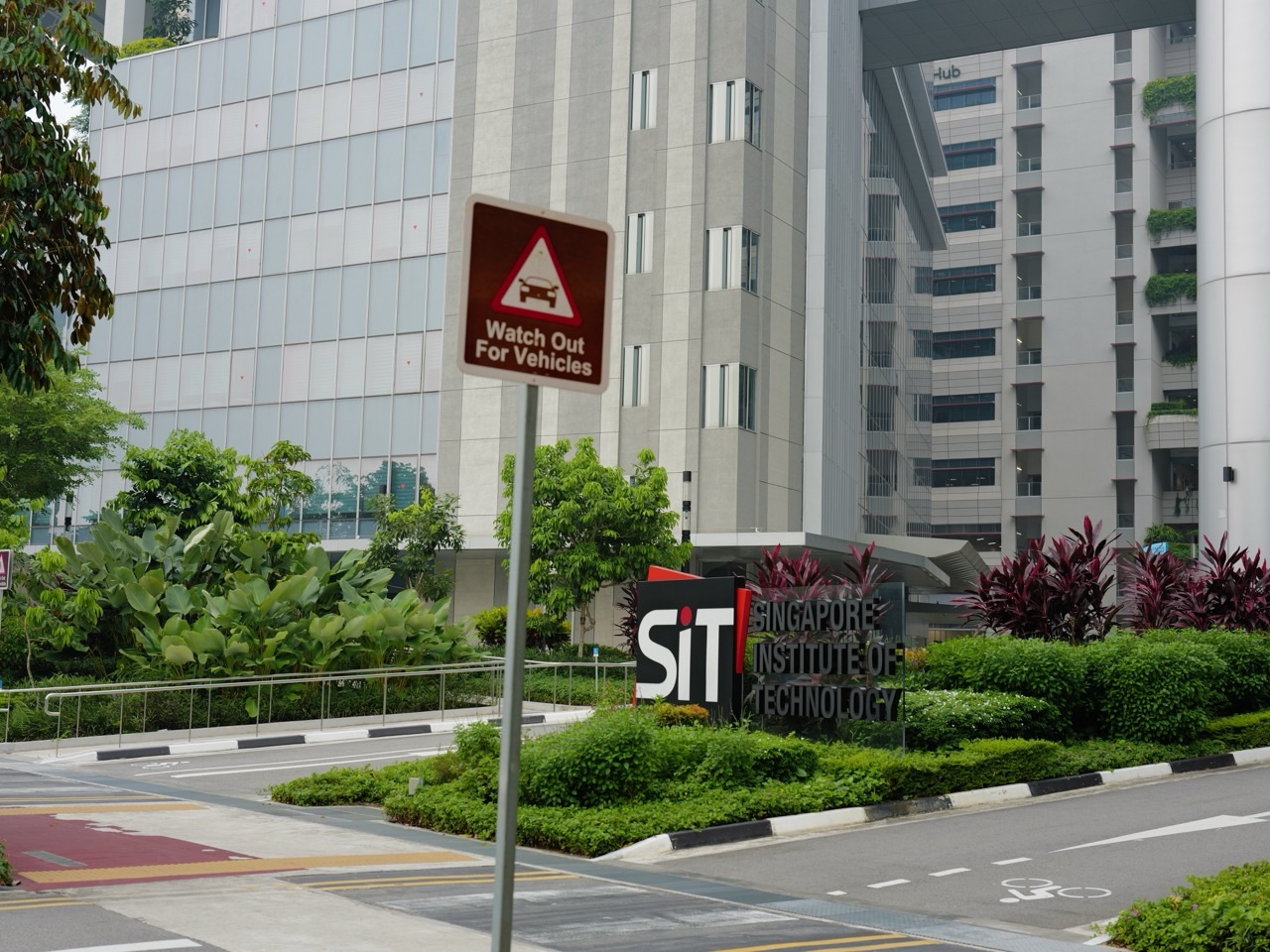
Punggol Digital District and the Singapore Institute of Technology campus provide visible examples of technology, education and work in a changing town. A student may be curious about digital systems, engineering, cybersecurity, design or sustainability because these areas are mentioned locally. That is a useful prompt for investigation, but mere proximity does not guarantee a student any placement, university admission or career.
A family could research what kinds of skills are relevant to one named industry, then compare those skills with subjects the child enjoys. A pupil interested in smart buildings might discover the role of sensors, data, mechanical systems and communications. The correct next step is to learn what professionals do rather than conclude that a nearby building creates a direct employment pipeline.
The student should use reliable sources from institutions and industry rather than speculative online claims about future salaries. Job markets can change over several years, and a thirteen-year-old has time to develop flexibility.
This local context makes ECG tangible while keeping expectations honest.
What work values can reveal
MySkillsFuture describes work-value profiling alongside career-interest assessments. Work values refer to what a person finds important in work, such as autonomy, achievement, helping others, creativity, relationships or lifestyle. Two pupils can be interested in the same subject for very different reasons. One may enjoy the independence of solving problems, while another enjoys the collaboration.
A parent can ask what made a school activity satisfying. Was it the successful result, a chance to help, the opportunity to lead or the ability to create something new? There are no universally superior answers. The purpose is to help the student recognise motivations that might influence future fit.
Work values can also change with experience. A teenager who enjoys competition may later place greater value on service, or the reverse. Do not treat a profile generated in Secondary 1 as a permanent adult work identity.
The goal is thoughtful self-awareness. A student who understands what matters to them can ask better questions about courses and workplaces.
The parent as a guide rather than a career allocator
Parents have valuable experience, but the world of work may have changed since they were students. A parent can explain personal work, financial responsibility and lifelong learning without assuming the child must follow the same path. MOE’s parent ECG guide encourages families to support exploration, help children set goals and identify trusted mentors.
A useful conversation might be: “What did you enjoy in that project? What was difficult? Which related job would you like to investigate?” That invites the child to think. “You are PG2 so you must choose this occupation” closes down exploration and misuses an admissions label.
There can be legitimate disagreements. A teenager may be interested in a career with unfamiliar training requirements, while a parent worries about employability or affordability. Research the actual course, costs and outcomes together. A factual conversation is more productive than an argument based on status.
The student should gradually own the plan. The adult’s role is to help evaluate information, protect wellbeing and discuss practical constraints.
A six-week ECG exploration exercise at home
In the first week, ask the teenager to list three school activities they enjoy and why. In the second, explore the MySkillsFuture interest and values tools with honest responses. In the third, choose two occupations and identify real daily tasks. In the fourth, use CourseFinder to research two related education pathways without trying to apply. In the fifth, speak with a teacher, mentor or ECG counsellor about one unanswered question. In the sixth, record what changed in the student’s view.
The schedule is an illustrative family exercise, not an MOE-required programme. It can be slowed down or simplified when homework and CCA are demanding. The purpose is to develop a repeatable research habit rather than a one-time declaration about the child’s future.
The child should be encouraged to disagree with an earlier interest profile if actual experience suggests something different. A good exploration process permits revision. That is evidence of learning, not a failure to be decisive.
At the end, save three short reflections and one next action in the student’s portfolio or private notes. There is no need for a glossy presentation.
How to prepare for an ECG counselling appointment
An appointment becomes more useful when the student arrives with a small number of questions. A Secondary 1 pupil may ask which school experiences could help explore a technical interest. A Secondary 2 pupil may ask how an upper-secondary subject combination relates to two possible pathways. A graduating pupil may need help comparing course requirements and application channels.
Bring the actual subject-level record when relevant. The adviser cannot accurately discuss formal eligibility if the family substitutes the original PG2 label for the current G2/G3 portfolio. A student with some G3 subjects has different possibilities from one with an entirely different combination. The school may advise on what options are available.
Parents should allow the teenager to speak first. The adviser needs to understand what the pupil genuinely enjoys, not only an adult’s preferred profession. If a student is nervous, prepare one sentence in advance about an interest and one question about uncertainty.
After the session, record the next research step, not merely an inspiring slogan. An appointment should lead to better decisions and information.
Three hypothetical PG2 ECG journeys
The quiet technical explorer. A pupil enters through PG2, enjoys hands-on electronics and is uncertain about future study. The family explores engineering and digital-system occupations, looks at relevant diploma modules and asks which mathematical foundations matter. The child learns that technical work combines reasoning, safety and communication, without being forced to choose a profession in Secondary 1.
The strong communicator. Another student enjoys English discussions and school service projects. A career-interest result suggests Social and Enterprising patterns. The family explores education, public communication and community-related work, then compares actual course requirements. The student learns that enjoying people is a useful interest, not a guarantee of any professional qualification.
The changing interest. A third pupil initially wants to become a designer, then finds a Science project unexpectedly enjoyable. The family updates the portfolio reflection rather than treating the change as disloyalty to an earlier plan. The teenager may explore fields combining design and scientific problem-solving. Changing interests is part of informed growth.
These cases are fictional and do not imply actual admissions or employment outcomes.
Common ECG myths parents should avoid
One myth is that a career-interest questionnaire identifies the one job a student must do. It does not; it provides prompts for exploration. A second is that PG2 decides the child’s lifelong pathway. The actual subject portfolio and later opportunities matter more. A third is that an impressive portfolio requires expensive external programmes. Genuine schoolwork and thoughtful reflection can be more informative.
A fourth myth is that a prestigious job title matters more than the work itself. A teenager needs to understand daily tasks and learning demands. A fifth is that choosing a course means the profession can never change. People continue learning, and some qualifications support several directions. The sixth is that every local digital-industry announcement creates a guaranteed job for Punggol students. Industry changes do not work that way.
The antidote is a process of self-awareness, exploration, verification and revision. Good guidance helps a student become capable of making decisions when circumstances change.
Frequently asked questions about PG2 and ECG
Does PG2 determine my child’s future career?
No. PG2 is a Secondary 1 admission group, not an occupation label or a permanent education ceiling.
When should Secondary 1 pupils begin ECG?
They can begin with broad self-awareness, exploration and school experiences in Secondary 1. Precise course applications come later.
What is MySkillsFuture for Secondary students?
It is an official portal for exploring interests, occupations, industries, education pathways, goals and portfolio reflections.
What is RIASEC?
It is a framework describing six career-interest patterns: Realistic, Investigative, Artistic, Social, Enterprising and Conventional.
Does a RIASEC result guarantee aptitude?
No. It describes interests and suggests areas to explore. Academic preparation, skills and real experience still matter.
What is Pathway Navigator?
It is a MySkillsFuture tool supporting education-route exploration for Full SBB cohorts from Secondary 1 in 2024 onwards.
Can parents use the portal?
Parents can explore public resources and discuss appropriate logged-in features with their child. Account access should follow school and portal rules.
Are career days the same at every Punggol secondary school?
No. Schools publish different ECG programmes, timelines and counsellor arrangements. Check the actual current school.
Does saving a course in the portal mean admission?
No. A saved favourite is research, not an application or offer. Formal entry rules apply separately.
Should a Secondary 2 pupil choose subjects only from a career quiz?
No. Consider teacher advice, actual academic readiness, subject offerings, student interests and current prerequisites together.
Do I need to pay for a professional portfolio service?
No. A genuine portfolio can be built from school projects, reflections and accurately documented achievements. Paid packaging is not a guarantee.
Where can a Punggol pupil seek advice?
Ask the school’s form teacher or ECG staff. Greendale, Yusof Ishak, Punggol Secondary and Edgefield publish relevant guidance and support information.
Your Next Step
Begin with three authentic interests, two questions about work and one MySkillsFuture exploration session. Ask the student to explain a favourite task, compare actual course descriptions and reflect on what they discovered. As the pupil progresses through secondary school, replace broad possibilities with evidence from real subjects and current admissions requirements. ECG succeeds when a young person becomes better at making informed decisions, not when an adult predicts one occupation early.
This is the PG2 education and career exploration guide. For exact PFP, ITE, polytechnic and JC/MI eligibility, use the separate route-specific articles. For choosing Secondary 3 subjects, use the existing PG2 combination guide. Each answers a different decision and avoids treating the teenager’s future as one generic pathway chart.
Official sources and related Punggol guides
- MySkillsFuture Secondary Student Portal: FAQ, interest profiles, Pathway Navigator and portfolio
- MOE: Journeying with Our Children, Supporting Their Aspirations
- Greendale Secondary: Education and Career Guidance
- Yusof Ishak Secondary: Education and Career Guidance
- Punggol Secondary: Student Support Team and ECG appointments
- Edgefield Secondary: Character and Citizenship Education, future readiness
- MOE CourseFinder
- eduKatePunggol: PG2 Secondary 3 subject combinations


