
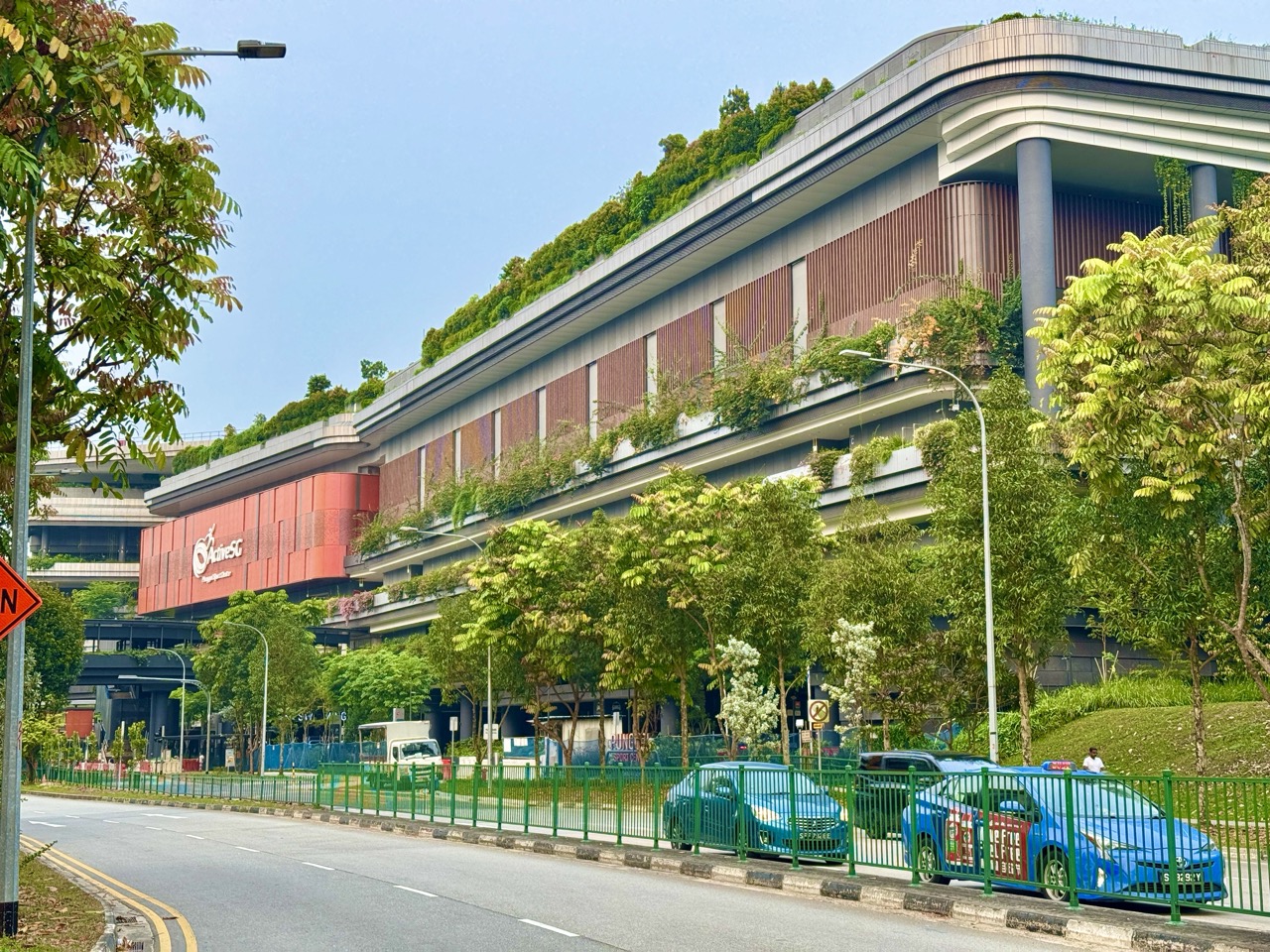
ActiveSG Punggol Sport Centre has a Team Sport Hall on Level 3 with a basketball-court layout, two volleyball-court layouts and retractable grandstand seating observed in a first-hand walkthrough dated 30 October 2026. The building is at 11 Sentul Crescent, Singapore 828656, near Sam Kee LRT and SAFRA Punggol. That does not mean the grandstand is permanently open for spectators or that a public basketball or volleyball match is scheduled today. The centre is still in a phased soft-launch period, with its wider official opening announced for 22 November. Before attending, confirm a named event, the organiser, spectator permission and any admission requirements.
When an authorised event is announced, the Team Sport Hall could give Punggol residents an enjoyable way to watch indoor sport from a proper spectator area. Watching a game is different from booking a court: spectators need to know which entrance to use, whether the grandstand has been deployed, where they may sit and how to behave around participants. This guide is specifically about attending an organised basketball, volleyball or comparable hall event, not playing in the hall or watching football at the separate stadium. It explains how to read an event notice, plan a visit with family and enjoy the tactics, teamwork and atmosphere of live indoor sport.
- Venue: Level 3 Team Sport Hall, ActiveSG Punggol Sport Centre, 11 Sentul Crescent, Singapore 828656.
- Reported configuration: one basketball layout, two volleyball layouts and a retractable grandstand, observed 30 October 2026.
- Event status: no specific public spectator event, ticket release or grandstand opening is confirmed by this guide for 1 November.
- Wider opening: 22 November 2026 announced for the complex; event admission is a separate question.
- First check: identify the named competition, organiser, match date, time, correct hall and authorised spectator conditions.
- Seating: do not assume a visible retractable grandstand is deployed or accessible for every court booking.
- Tickets: use an official organiser or authorised channel, and read re-entry, age and bag rules.
- Travel: Sam Kee LRT is nearby; follow event-specific gate and accessible-route instructions.
- Family plan: supervise children, prepare for crowd noise and allow safe exit time.
- Official resources: https://www.activesgcircle.gov.sg/ and https://activesg.gov.sg/

Definition lock: a spectator event is different from court hire
A spectator event is an organised activity in which viewers are explicitly permitted to attend and watch competitors. The organiser determines the match format, audience conditions and event operations. A court hire is a reservation for the hirer and authorised participants to use a playing surface. The existence of retractable seating beside a court does not convert every ordinary booking into a public show, and a player’s booking confirmation is not automatically a spectator ticket.
This difference is central to planning a visit to Punggol’s Team Sport Hall. A family may see a basketball court, a grandstand and a promising photo and imagine there is always something to watch. But a venue becomes a spectator destination only when a permitted event or session has been announced. The right first question is not where to sit; it is whether watching is authorised at that time.
What a first-hand walkthrough confirmed
A local on-site review published on 30 October 2026 described the Level 3 Team Sport Hall as containing a basketball-court layout, two volleyball layouts and a retractable grandstand able to accommodate a sizeable audience. These details establish that the hall is designed with team sports and potential spectators in mind. They do not establish seating capacity for any particular event or that the seats will be extended during casual practice.
Event organisers can change the hall configuration according to the sport and operating requirements. Part of the room may be used for a competition, training or another authorised activity. A person who arrives without an invitation or ticket cannot simply climb into the grandstand to see what happens. Respect the distinction between physical design and actual access.
What retractable seating means
Retractable seating consists of rows designed to extend or fold away so the space can serve different functions. When deployed under appropriate operating conditions, it may provide spectators with a designated view of the playing area. When retracted, the hall may prioritise another layout or activity. It is therefore misleading to treat the grandstand as a permanent, always-accessible row of public benches.
An ordinary visitor must not attempt to operate the seating mechanism, climb onto folded sections or enter behind safety barriers. Only authorised staff should prepare the system. If your event notice does not mention seating arrangements, ask the organiser. A venue with flexible infrastructure still has firm operational rules.
Why the Team Sport Hall is not the football stadium
The same regional complex includes a football stadium reported to hold about 5,000 spectators. That is a separate area with a different playing surface, event structure and spectator arrangements. The Team Sport Hall is indoors and configured for basketball, volleyball and potentially other authorised team activities. An event advertised at the stadium is not automatically held in the indoor hall, and an indoor game is not a reason to enter the stadium.
When arranging a group outing, share the complete venue name and level, not simply ‘Punggol Sport Centre’. A person may otherwise follow signs to the outdoor football area instead of Level 3. One small piece of naming precision can prevent a family from missing the first part of a match.
The hall is also different from badminton and tennis spaces
Level 3 also has an Indoor Sport Hall with badminton courts and sheltered tennis and pickleball courts according to the October walkthrough. These are distinct areas even though they are on the same broad level. The presence of people with racquets does not identify where a volleyball match or basketball event takes place. Each activity may require a separate booking or permit.
Check the event’s exact hall name. Do not walk into a badminton court to ask about basketball seating, or assume spectators may wander between venues once admitted. The sports centre is designed to host multiple activities at once, so clear wayfinding and respect for controlled access are essential.
Why a general opening date is not an event schedule
Punggol Sport Centre began a phased soft launch in late October 2026, with an official opening of the wider complex announced for 22 November. That does not guarantee a public match in the Team Sport Hall on opening day. Operational tests, bookings, competitions and public programmes have their own calendars. A facility can be ready for a future event before any organiser has published tickets.
Do not create a fictional opening-week tournament or tell readers that a named club will be playing at Punggol without evidence. A future-event guide can still be useful by showing families what to verify when the first programme appears. Honest uncertainty is better than an attractive invented schedule.
Find a named event before inviting relatives
An event notice should identify the organiser, sport, date, start time, venue and spectator arrangements. It may also explain ticketing, registration, age conditions, accessibility and any changes to the schedule. Check that ‘Punggol’ means this sport centre rather than a school hall or a different local venue. Some community sports announcements refer to regions rather than exact halls.
If a flyer is forwarded through WhatsApp, locate the organiser’s official posting before paying or arranging transport. Posters can circulate after dates change. Do not treat an undated screenshot as live confirmation. A reliable organiser matches the event name, actual venue and current attendance conditions.
An empty court is not a spectator invitation
People sometimes look through a window, see an unoccupied playing surface and assume they may enter the stands. But the hall may be between bookings, undergoing maintenance or awaiting a team. Security and operational restrictions can remain in effect even when nothing visible is happening. The physical absence of players does not establish public access.
Stay within permitted circulation routes and ask staff if you need directions. Do not slip through a gate behind a player or follow a cleaning team into the hall. A spectator visit begins with permission, not with successfully entering unnoticed. Respect for controlled areas helps the centre serve many users safely.
How tickets and free admission differ
Some school, community or regional sports events may be free for viewers, while others can require registration or paid tickets. No particular Punggol Team Sport Hall event is confirmed in this article, so it would be wrong to invent an admission fee or permanent free-seating policy. The organiser’s actual notice must determine whether and how you attend.
If an event is free, it may still impose capacity limits or require registration. If ticketed, check authorised payment channels and any seating terms. A normal MyActiveSG+ gym pass or court hire does not become an event ticket. Match the admission product to the activity and avoid paying through an unverified seller.
Avoid paying a speculative reseller
New venues can create excitement, and misleading event advertisements sometimes exploit that attention. Be suspicious of anyone offering secret early grandstand access or asking for a private bank transfer without a named organiser. A photo of the hall is not proof that the seller has tickets. A digital ticket screenshot can be duplicated.
Verify event details through the organiser’s official channel. Do not disclose passwords, one-time verification codes or sensitive account information. A family that cannot verify the event should not send money merely because seats look limited. The right response to uncertainty is to check, not rush.
Choose the right transport route
Sam Kee LRT is a useful transport reference for Punggol Sport Centre, near SAFRA Punggol and Punggol Waterway. Visitors coming from Punggol MRT may need to transfer to the relevant LRT service or choose another safe route. During the late-October soft launch, construction around parts of the precinct affected some pedestrian approaches. Current signs and event instructions should govern your route.
An event can change pedestrian flow compared with an ordinary gym visit. The organiser may identify a particular entrance or queuing zone. Do not assume the closest door in a map application is the one spectators are allowed to use. Allow enough time to find the proper gate and reach Level 3 without rushing through crowds.
Meet friends at a precise location
A message saying ‘meet at ActiveSG’ is too vague for a large multi-level sports centre. Choose a named public sign or an event-designated meeting point. Confirm who is carrying any tickets and how each person will contact the group if delayed. Avoid gathering across a doorway, lift entrance or access ramp while waiting.
This is especially important with children and older relatives. A group that starts together can enter calmly and avoid having someone wander through unrelated sports facilities searching for the right stand. Good logistics are part of enjoying live sport, even though they do not appear on the scoreboard.
Confirm that seating is actually deployed
A retractable grandstand may be folded away for certain sessions. A published description of the hall’s capacity cannot guarantee that the seating system will be extended for an ordinary game. The organiser should state whether spectators are allowed, where they should sit and whether any particular seating section is reserved.
If the seating is not open, do not pull chairs from elsewhere or sit on steps in a safety route. Ask staff whether another authorised spectator area exists. If the event is not open to viewers, accept that restriction. The grandstand’s design potential does not override the event’s actual rules.
The best seat depends on the event
A basketball game may be easiest to follow from a viewpoint that shows both baskets and the full flow of play. A volleyball game may reward a side angle that reveals the two teams’ formations and movement around the net. However, seat choice may be limited by assignment, accessibility, restricted sections or organiser arrangements. Do not promise a perfect view from a particular row without a seating plan.
Families should consider the ability of everyone attending. A small child may need a location where the adult can supervise comfortably, while a visitor with mobility needs may require a specific accessible route. Choose from authorised options rather than moving to blocked sections because they appear closer to the action.
Accessibility should be checked before booking
A modern regional sports centre is intended to serve a broad community, but the presence of lifts does not establish that every grandstand configuration is accessible in the same way. Ask the organiser about step-free entry, accessible seating, toilets, companions and any assistance requirements before purchasing tickets. The event’s exact layout may affect what is practical.
Do not assume an older relative can climb a long set of stand steps or that a wheelchair user can wait comfortably in a narrow aisle. Plan the full journey from transport to seat and back. Accessibility is a chain of practical decisions, not simply a label on an architectural drawing.
Bring only what the organiser permits
A small bag, transport card, water where allowed and required admission proof may be useful, but event rules govern what spectators may carry. Restrictions on outside food, large bags, tripods, banners and cameras can differ. There is no confirmed single permanent policy for every future Team Sport Hall event, so check the relevant notice.
Families with children may need tissues or personal essentials, and people with medical needs should plan appropriately. Avoid bringing heavy sports equipment as a spectator unless the organiser expressly allows it. The simpler the belongings, the easier it is to move through a crowd and keep aisles clear.
Why indoor sport can still be noisy
An indoor hall can amplify the sound of whistles, bouncing balls, shoes, announcements and spectators. A child who enjoys watching basketball on a phone may be startled by the real atmosphere. Prepare them for sudden cheering and explain that the noise rises and falls with the play. Some people may benefit from suitable hearing protection or a quieter authorised area.
Do not shame a child or adult who wants to leave early because the noise is uncomfortable. A good outing respects different sensory needs. If the experience becomes overwhelming, follow the venue’s permitted exit route rather than entering a restricted hallway in search of silence.
Learning basketball from the spectator’s viewpoint
A basketball spectator can see more than the ball. Look for how players spread across the court, move to create passing angles and respond when possession changes. A beginner viewer might choose one simple question: ‘Where does the player without the ball move next?’ The answer reveals teamwork that is not always obvious in a close-up video clip.
Do not feel you must know every technical foul before attending. Live sport is enjoyable when viewers understand enough to follow the broad story and remain curious. A child may begin by identifying the two baskets and the team colours. More complex ideas can develop across visits. The aim is appreciation, not a surprise examination.
How a basketball team creates space
Watch players move away from one another to open passing lanes. A player may pass, cut towards the basket or move to a different position to create an option. Defenders react by shifting and communicating. The space on court changes continuously even when the ball stays with one person. This is a practical lesson in coordinated decision-making.
A family can discuss one example during a break rather than shout instructions continuously. Ask the child whether a pass became possible because another player moved. The game begins to feel more meaningful when spectators notice those small choices. Avoid criticizing an athlete for a decision based on an angle you cannot fully see.
Why defence can be as interesting as scoring
A team defending well may force a difficult pass or prevent an easy shot without stealing the ball. Spectators can watch whether defenders stay between attackers and the basket, communicate and protect important spaces. This can make a low-scoring stretch engaging even when the crowd is waiting for a dramatic basket.
Explain that effective defence should remain within the rules and protect participants’ safety. A strong collision is not automatically evidence of good defending. Viewing live sport offers an opportunity to learn respect for structured competition rather than celebrate dangerous contact.
Learning volleyball from the stand
Volleyball becomes more understandable when you can see both teams’ positions. Notice the typical pattern of receive, set and attack or return. Players move into the right spaces before each contact and call to one another to avoid confusion. A newcomer can watch one team’s first touch throughout several rallies and discover how much the rest of the sequence depends on it.
Spectating is different from learning to play the sport yourself. You may see advanced techniques that are not appropriate for a novice’s first court session. Treat the match as inspiration and observation rather than a set of movements to copy immediately. The player’s performance reflects training and context that cannot be seen from the stand.
Watch how a volleyball setter makes decisions
The setter often helps direct a team’s next attack, deciding which teammate receives a usable ball. Watch how players communicate and change their positioning before the set. Sometimes the most important action looks modest because it gives another player the chance to finish the rally. This is a useful illustration of leadership through preparation.
Children can be invited to notice who helped the scorer rather than only who struck the final ball. The lesson is that a visible result often depends on several teammates. The same idea applies to school projects and family tasks. Live sport can be educational without requiring an adult to deliver a long lecture.
A scoreboard is a useful but limited story
Scoreboards tell spectators the points, periods, sets or time remaining according to the sport and competition. They do not reveal every important contribution on the court. A player may defend well without scoring, and a team may improve its coordination while still losing. A first-time spectator should learn the broad meaning of the numbers without allowing them to replace all attention to the play.
Ask the organiser or check an authoritative rules explanation if the format is unfamiliar. A school tournament may use different period lengths or a modified scoring system from professional competition. Do not assume every basketball or volleyball match follows the exact format shown on television. The event notice and officials determine the actual rules.
Why warm-ups are worth watching
If the organiser admits spectators before play, the warm-up can show how athletes prepare for the demands of the sport. Basketball teams may practise shots, passing and movement; volleyball teams may rehearse serving, receiving and attacking patterns. Warm-ups are not a guarantee that an individual athlete will perform well later, but they reveal the deliberate practice behind competition.
Do not enter the court to collect a ball or take a photograph during the warm-up. Players need clear space and concentration. A spectator’s role is to watch from authorised areas. The more carefully you notice preparation, the more you appreciate why training is not simply playing a match at full speed.
Understand substitutions and team communication
Players may move in and out under the rules of the competition. Substitutions can change pace, roles and team shape, and a coach may adjust tactics during a stoppage. A curious viewer can watch how teammates respond to a change without needing to understand every specialist term. The game develops through many small decisions.
Children sometimes think a substituted player has necessarily failed. Explain that tactics, fatigue and other reasons may influence a change. Respect for the participants helps create a positive spectator culture. Observing teamwork is more valuable than mocking someone who leaves the playing area.
What an official does at an indoor match
Referees and officials help the game follow its rules. They may judge fouls, boundaries, contacts, substitutions or time according to the sport. Spectators often see only one angle and may not understand every call. That uncertainty is normal. The proper response is curiosity and respect rather than immediate personal abuse.
If an adult is watching with a child, explain that competition requires agreed rules and people who apply them. A disputed decision can become a short conversation about fairness rather than permission to threaten an official. Public sporting events are more welcoming when disagreements remain within civil boundaries.
Cheer without making anyone feel unsafe
Enthusiastic applause can make a live event memorable. But cheering does not justify throwing objects, climbing over barriers, blocking other people’s views or directing discriminatory abuse at players. Follow the organiser’s conduct policies and any restrictions on drums, flags or banners. Different matches may have different supporter arrangements.
Children learn spectator etiquette by watching adults. If parents respond calmly to a missed shot or disputed point, young viewers see that competition can be emotional without becoming hostile. The best local sporting atmosphere is one in which families and other residents feel safe returning.
No one should stand in an exit aisle
Retractable seating and crowded entry routes require particular attention to safety. Aisles, stairs and exits must remain clear for ordinary movement and emergencies. Do not park strollers, bags or sports equipment where they obstruct circulation. If a seat or entrance is closed, follow the barrier and staff instructions rather than moving it yourself.
People may stop in a hallway to take photographs or look for friends. Choose a safe permitted waiting place instead. Ordinary crowd courtesy becomes especially important when a match finishes and many spectators move at once. A smooth exit is part of a successful event, not an afterthought.
Why photography needs permission
ActiveSG’s general published rules prohibit unauthorised filming and photography on its premises. A particular event may have separate permitted spectator arrangements, but do not assume that cameras, livestreaming or commercial recording are always allowed. Ask the organiser and follow staff instructions. Avoid photographing unrelated children or people in private contexts.
A memory does not need to become public content. You can keep a score note, discuss the best rally or take an authorised group photograph if permitted. Recording a whole match may involve event rights and privacy considerations. Good local reporting should not expose athletes or spectators without appropriate consent.
A first visit with a preschool child
A very young child may enjoy bright team colours and cheering but struggle to sit through an entire event. Check the organiser’s age and ticket rules, and consider whether the noise or duration suits the child. Bring permitted essentials and plan for breaks. The adult remains responsible for supervision throughout the visit.
If the child becomes restless, leaving early may be sensible. Do not send them alone to explore the building. A first sporting event is successful when it creates pleasant familiarity, not when a toddler endures every minute of a match. Small children can learn that sport involves taking turns and supporting people even if they cannot follow the rules yet.
Primary-school spectators can follow one player
A primary-school child can enjoy a match by choosing one player to observe for a few minutes. Ask where the player moves when they do not have the ball and how they help teammates. This is simpler than following every tactical change. If the child loses interest, return to watching the overall action rather than insisting on an elaborate learning activity.
Discuss the observation during a proper break. A child might notice that the quietest player made an important pass. That can teach respect for teamwork. The value of attending a real event is seeing people cooperate and recover from mistakes, not only watching highlight moments.
Secondary-school students and independent attendance
Teenagers may want to attend an event with classmates. They should verify the venue and official admission, plan a safe journey and know the time the match is expected to finish. If a ticket requires a particular identity or age condition, follow that rule. Adults responsible for the students should consider transport and any supervision requirements.
Students should not join arguments in the stands or leave the authorised public area to seek players’ autographs. A safe spectator experience teaches independence alongside responsibility. A young person who can verify a fixture, arrive at the right hall and return home as planned has practised useful real-world skills.
Older viewers and accessible comfort
Older residents may enjoy supporting young athletes or community teams but need a comfortable route from transport and suitable seating. Check the actual event’s accessible entrances, seating arrangements and toilet locations. A retractable grandstand may have configurations that differ from the building’s ordinary layout, so do not infer access from a generic architectural photograph.
Allow time for rest and movement. A companion can help without assuming the older person needs every decision made for them. The organiser should be asked about any necessary support before the event, not after the crowd has formed. Inclusive attendance depends on accurate practical information.
Heat, rain and indoor venues
An indoor sports hall may reduce exposure to rain, but a large facility still depends on transport access, ventilation and operating conditions. Do not assume every sheltered court is air-conditioned or that a storm cannot affect the event. The organiser may delay matches or change spectator access for safety reasons. Official updates should take priority over old event posters.
If weather becomes dangerous while travelling, choose an appropriate safe route or delay the journey. A ticket is not a reason to ignore lightning or flooding warnings. Responsible planning includes a willingness to change the outing when circumstances require it.
Haze and health considerations
Singapore’s air-quality advisories and personal health conditions can affect decisions about attending and exercising. Spectators may not be exercising, but they still travel, queue and sit in shared spaces. Follow current official public-health guidance and individual medical advice where relevant. A large new building is not proof that all environmental concerns disappear.
If someone becomes unwell during an event, seek assistance from authorised staff and follow emergency instructions. Do not block an aisle or force the person to continue watching. Personal wellbeing is more important than seeing the final point. A good event should remain enjoyable rather than become an obligation.
Food and drink must follow event rules
Some events may allow particular refreshments while others prohibit outside food and drinks within controlled areas. ActiveSG’s general rules restrict consumption inside facilities, so check the specific organiser’s arrangements instead of assuming stadium-style concessions are available in the Team Sport Hall. A child who needs food at predictable intervals may require a plan outside the restricted venue.
Do not leave bottles or wrappers in seating rows. Spills can make steps slippery, and abandoned rubbish creates extra work for staff. The simplest outing may include a meal before or after the game at a separately confirmed location. A live sporting experience should not depend on vendors that have never been announced.
What if the match is postponed?
An event can change because of weather, venue operations, team arrangements or other reasons. Check the organiser’s latest announcements before departure. If the match is postponed, any ticket refund or transfer rights depend on its specific terms. Do not invent a universal policy for a future Punggol hall event.
Tell everyone in your group promptly and avoid sending them to the centre merely to see whether the gate might open. A good organiser treats accurate communication as part of the outing. Postponement can be disappointing, but a clear explanation preserves trust and prevents unnecessary travel.
A short match-day plan that works for families
Begin by verifying the named event and whether spectators are authorised. Confirm admission and transport, decide on a precise meeting point, and leave time for the appropriate gate. Once inside, find the approved seats and explain basic safety rules to children. Watch with curiosity and respect, then allow extra time to exit. This is a framework rather than a fixed timetable because no particular event is assumed.
The sequence is deliberately simple. Families do not need to inspect every facility in the sports centre or add a gym session after the match. One confirmed activity is enough. If a child enjoys the experience, the family can look for future authorised programmes rather than promise the grandstand is always open.
A school sports club’s spectator plan
A school group may want to support classmates in a future indoor sports event. Such attendance should be coordinated under the school’s and organiser’s actual rules. Teachers or responsible adults must confirm the venue, entry conditions, student supervision and transport. A school badge or CCA membership does not automatically provide admission to every event in a public hall.
Students can learn respectful cheering, punctuality and observation of technique, but should not disrupt competitors with excessive filming or shouting. Afterward, a short reflection on teamwork and sportsmanship may be useful. The educational value comes from attending responsibly and noticing real play, not inventing a school competition simply because the hall is available.
A neighbourhood group attending together
A group of residents might want to support a local team when a relevant event is actually announced. The organiser can share the confirmed notice, explain whether tickets are needed and coordinate a safe meeting point. Avoid collecting money until admission is verified. Keep personal information private and do not assume an entire grandstand section can be reserved by a community chat.
Allow members to attend at their own pace and respect different comfort levels with crowds. Some people enjoy cheering loudly, while others prefer quiet observation. A good neighbourhood sports outing creates connection without pressuring everyone to behave identically.
Five misunderstandings to avoid
The first is assuming a visible grandstand is always deployed. The second is mistaking a court hire for spectator admission. The third is confusing the Team Sport Hall with the separate football stadium. The fourth is treating a general building opening as proof of a named competition. The fifth is inventing a ticket price from another venue. Each mistake can be avoided through an actual event notice.
These are not reasons to avoid the new hall. They are reasons to use it thoughtfully. A regional sports centre is exciting precisely because it can host many kinds of activity, but the actual programme and rules determine what a visitor may do on a specific date. Clear distinctions create better experiences.
Frequently asked questions
Where is the Team Sport Hall? The October 2026 walkthrough placed it on Level 3 of Punggol Sport Centre, 11 Sentul Crescent. Does it have spectator seating? A retractable grandstand was observed, but this does not mean seats are open for every game. Can I watch basketball there today? This guide does not confirm any named public event or spectator access on 1 November 2026. Do I need a ticket? Follow the specific event organiser’s admission conditions.
Is this the same as the 5,000-seat football stadium? No, it is a separate indoor sports hall. How can I find upcoming matches? Check official event organisers and SportSG announcements for named fixtures with Punggol as the venue. Can children attend? Read the event’s age and supervision conditions. Are photographs allowed? Only as permitted by the operator and event rights. What if the seating is retracted? Do not enter or operate it without authorisation.
Sources and your next step
The Level 3 hall layout and retractable grandstand are described in https://www.asiaone.com/singapore/activesg-punggol-sport-centre-soft-launch-free-gym-entry‘>AsiaOne’s 29 October report documents the phased opening and the announced 22 November official opening. https://www.activesgcircle.gov.sg/hubfs/6212555/ActiveSG%20Rules%20and%20Regulations.pdf‘>ActiveSG’s rules explain general facility conduct and filming restrictions.
Your next step is to find a named indoor sports event that expressly permits spectators, verify its hall and admission, and plan a calm visit. Do not arrive solely because the grandstand exists. For a different spectator experience, see 赞过:


