
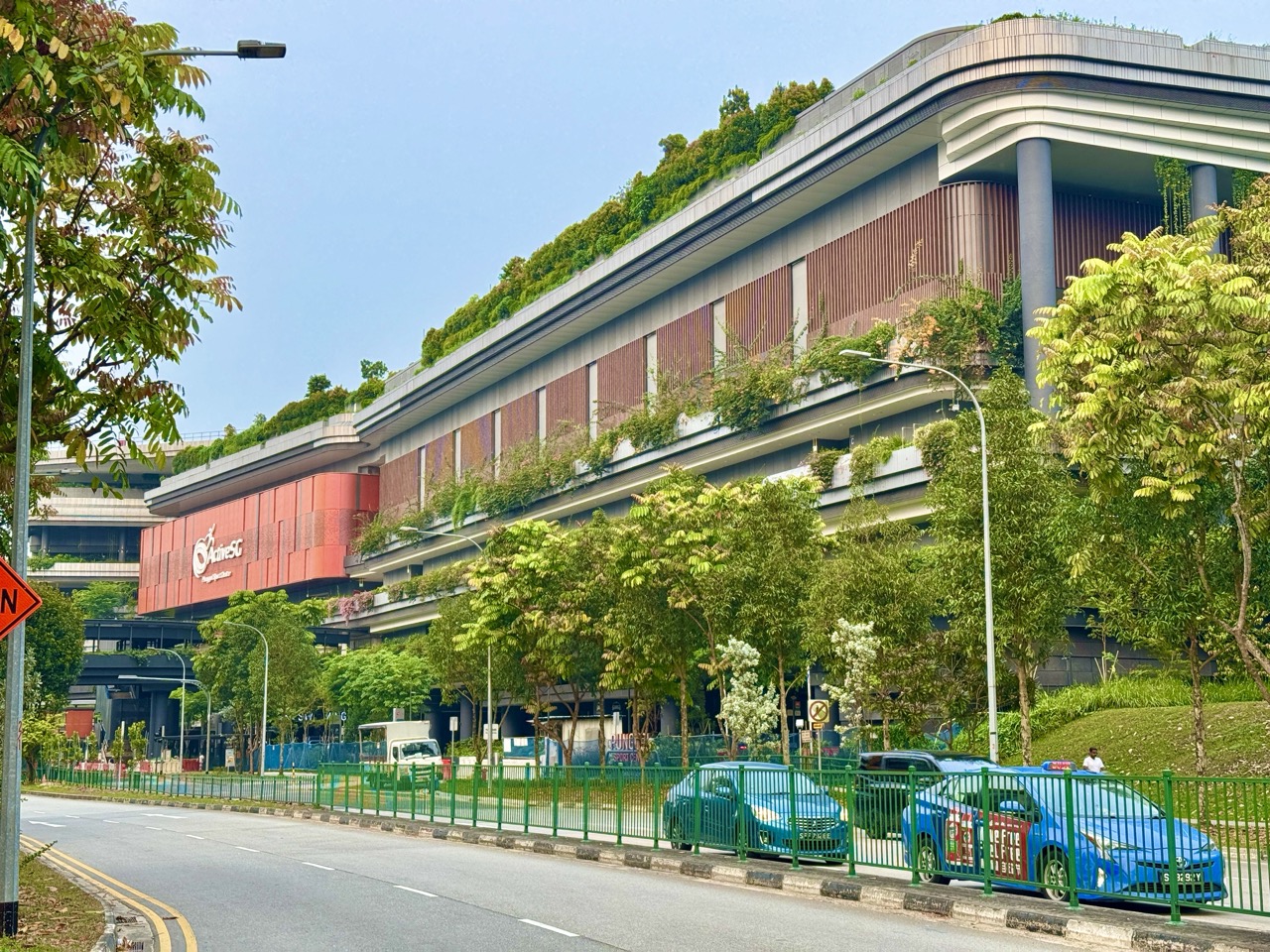
Children visiting ActiveSG Punggol Sport Centre can look for a climbing slope fitted with holds and ropes near the slides in the Basement 1 family-play area. A first-hand walkthrough published on 30 October 2026 described the climbing slope beside four slides, two of which descend from Level 1. The sports centre is at 11 Sentul Crescent, Singapore 828656, near Sam Kee LRT and SAFRA Punggol. The centre began a phased soft launch in late October; the existence of a structure does not guarantee unrestricted play every hour, so families must check its posted rules and current access before using it.
The slope creates an opportunity for a child to practise balance, careful foot placement, grip, coordination and deciding when to stop. That sounds simple, but it is different from racing down a slide: going upwards requires children to notice the next hold, plan a route, share space with people climbing ahead and manage uncertainty without being forced beyond their abilities. This guide is specifically about the rope-and-hold ascent, not the long tube slides or splash-water channels, which are covered separately. It offers a family-friendly first-visit plan built around safe play, patience, independence and realistic supervision.
- Venue: Punggol Sport Centre, 11 Sentul Crescent, Singapore 828656.
- Reported feature: climbing slope with holds and ropes near the Basement 1 slides, observed 30 October 2026.
- Opening context: the wider complex soft-launched in late October and was announced for official opening on 22 November.
- Public access: confirm play-space opening, closures and posted age, height or footwear restrictions onsite.
- Purpose: practise controlled climbing, foot placement, grip, sequencing, balance and turn-taking.
- Adult role: supervise actively, keep the landing and ascent clear, and adapt to the child’s actual abilities.
- Do not: climb slide exteriors, swing on unauthorised structures, pull ropes beyond intended use or crowd a struggling child.
- Bring: comfortable suitable clothes, appropriate footwear, drinking water, tissues and an optional dry change if water play is also planned.
- Distinguish locations: this is not the rope-climbing play structure at Waterway Point’s Happy Park.
- Operator: https://www.activesgcircle.gov.sg/; source visit: https://thesmartlocal.com/read/activesg-punggol-sport-centre/

Definition lock: a rope-and-hold slope is not a climbing gym
A rope-and-hold slope is a play structure where children can move upwards using designated footholds and handholds or ropes. It may offer a controlled climbing challenge within a wider playground. It is not automatically a roped sports-climbing wall, bouldering facility or supervised climbing class. The exact height, permitted use and safety surface belong to the actual structure’s design and posted instructions.
This matters because adults might see a rope and assume all familiar climbing techniques apply. A playground rope is not a belay line, and a decorative or stabilising element must not be treated as professional climbing protection. The correct activity is the one the structure was built for. Read the signs and observe how it is meant to be used. If you are unsure, ask identifiable staff rather than inventing rules.
What the October first-look actually showed
TheSmartLocal’s 30 October 2026 walkthrough described a family area in Basement 1 with four slides, including two longer slides coming from Level 1. It added that a slope with holds and ropes allows children to make their way upwards. That provides evidence for the feature’s existence, but not for detailed measurements, safety ratings, permanent opening hours or an exact age band.
Do not confuse a journalist’s observations with a technical manual. Families should not conclude that every child is allowed on the slope because a photograph shows it. Look for age, height, weight, supervision and footwear signs where available. During a phased soft launch, an area may temporarily close for maintenance, cleaning or commissioning. The useful plan includes a gentle alternative rather than insisting the structure must be open.
Where this climbing feature sits in the precinct
Punggol Sport Centre occupies a large multi-use development beside the waterway and SAFRA Punggol. The reported play structure is around the Basement 1 family area, separate from the gym on Level 2, sport halls on Level 3 and specialised areas higher up. The open family zone should not be mistaken for a controlled athletic training venue. Follow the current public entrance and wayfinding rather than wandering through restricted halls.
Sam Kee LRT is a useful transport reference, but the safe walking route and accessibility may differ during construction or operational changes. Share the full address with relatives and choose a meeting point before separating. The climb may take only a few minutes, yet arriving calmly matters. A parent who has already located toilets and a safe route home can concentrate on the child rather than on logistics.
Why climbing upwards is different from sliding down
Slides use gravity to carry the child down a shaped surface. Climbing asks the child to move against gravity, position the feet, choose handholds and coordinate their whole body. A feature where both activities are near each other can therefore offer different movement experiences. But the existence of a slide next to the slope does not mean a child should climb up the slide itself.
Teach the distinction in simple words: use the path marked for going up, and use the slide in its correct direction. Do not let children reverse a crowded slide because they enjoy climbing. Other users may descend unexpectedly and collide with them. A child can get the excitement of ascent without ignoring the intended traffic pattern of the play structure.
First look: identify the intended climbing path
Before a child steps onto a new slope, the adult should identify the visible intended entrance, route and safe exit. Look at the signs rather than imagining that every hold is part of a free-form climbing course. Pay attention to people already using the structure and whether the child can see a clear way to stop. Do not place yourself in the landing area of a slide merely to watch the climb.
A first-time child may benefit from observing another user from a safe distance. But copying a much older child is not always suitable. The younger climber may have shorter reach or less coordination. Explain that the goal is to move safely at their own pace. Familiarity often matters more than speed on the first attempt.
One foothold at a time
Climbing a slope requires the feet to find stable places. A child who rushes may miss a foothold or place weight awkwardly, especially if surfaces are wet or crowded. Encourage careful, controlled movement within the intended route and keep awareness of the next available support. Do not call instructions so rapidly that the child becomes distracted and looks away from the structure.
The adult’s role is to help the child recognise comfort and hesitation. If a foothold is too far, the child may need a different permitted route or to stop. Never insist that a younger climber stretch beyond safe reach to match an older sibling. A successful climb is the one the child completes with appropriate control, not the one achieved through pressure.
Hands are for control, not a tug-of-war
Designated holds and ropes may help a child maintain position while moving upwards. The child should use them as intended, not compete to see who can pull hardest. Swinging, jerking or hanging beyond the structure’s design can create danger and damage. Adults should also avoid taking a rope from a child in the middle of a movement unless necessary for immediate safety.
Explain that other children may need the same holds and ropes. A family cannot claim the whole slope indefinitely. If a child needs to rest, make sure they can do so without blocking others or remaining in an unsafe position. Sometimes stepping down by a permitted route is the better choice. The ability to pause is part of learning control.
How grip changes with wet or sweaty hands
Punggol’s climbing slope is near other family features, including outdoor water play. Wet hands may make some surfaces slippery, while heat and excitement can leave hands sweaty. Do not assume that a child arriving from the splash area can safely start climbing without checking the current equipment conditions and the operator’s rules. Dry hands when appropriate, look for visible moisture and avoid worn or damaged sections.
A child who cannot maintain a secure grip should stop. Do not apply powders, adhesives or grip substances to public equipment without permission. Those materials can affect the next user and the structure. The simple safety lesson is that friction and surface condition matter. This is a genuine scientific observation, but the public play zone is not a place for deliberate experiments that increase slipping.
Climbing is a sequence of decisions
A child approaches a hold, judges its position and decides how to move. The next movement depends on where the feet and hands are already placed. This makes climbing a useful experience of sequencing and spatial reasoning. Younger children may not describe the process in words, but they can learn it by repeating a manageable route with adult support.
After a safe attempt, ask what the child noticed: was one foothold easier to reach, or did taking time help? Avoid turning the outing into a lecture. A few carefully chosen questions can encourage reflection. The goal is to help the child make better decisions during play, not to produce a perfect climbing plan.
Why rushing the climb can slow everyone down
When children race to the top, they may crowd the same rope or overtake another climber on a narrow section. That can lead to tangled movements or a fall. Teach a waiting rule before the first turn: allow enough space for the child ahead to move safely and use an alternative activity if the area is crowded. Follow any posted maximum occupancy instructions.
Parents should model patient behaviour. Calling out that a child is too slow or demanding that another family hurry is unhelpful. A new playground can be exciting, especially during the first weeks after opening, but the feature belongs to all users. Calm turns make it more enjoyable and reduce the need for staff intervention.
Explain that stopping is a good decision
Some children are eager at the bottom and frightened halfway up. A good adult does not turn that moment into a public test of bravery. If the child becomes uncomfortable, follow the approved safe way to stop or descend, and seek assistance if necessary. Do not force them to release a hold or jump down because you want the turn to end quickly.
The experience can still be successful. A child may have learnt how the first few footholds work or discovered that a shorter climbing route suits them better. Confidence grows when children know they can speak up. A playground should encourage exploration without making withdrawal shameful.
The adult should supervise rather than perform the climb
Parents may instinctively want to hold a child throughout the ascent, but climbing beside or underneath them can obstruct other users or create new hazards. Follow the structure’s actual supervision guidance and position yourself where you can respond appropriately. Some children need more help, while others can manage an age-appropriate route with close attention. The correct arrangement depends on the child and the equipment.
Do not lift a child into an area they cannot reach or for which they do not meet posted restrictions. Assistance should make permitted play safer, not bypass the design. If a child requires physical support beyond what the public structure safely allows, choose another activity. Inclusion is important, but it cannot be achieved by ignoring the limits of the equipment.
Toddlers are not miniature schoolchildren
A toddler’s reach, attention, coordination and understanding of height differ from an older child’s. The fact that a child enjoys a small slide does not prove the climbing slope is suitable. Check the posted rules and actual design before approaching. The family may choose simpler ground-level movement or an approved younger-child feature instead.
Avoid comparing siblings. One child may climb quickly while another prefers watching water or moving along the ground. Both can have a pleasant outing. A parent can offer a safe choice rather than insisting every family member complete the same structure. The aim is suitable play, not a universal physical milestone.
Primary-school children can learn from repetition
A primary-school child may be able to try a permitted climbing route several times, noticing how better pacing and balance change the experience. Repetition can strengthen familiarity with body position without increasing the difficulty. Do not turn each attempt into a speed record. The child may benefit more from a controlled ascent than from rushing through a familiar route.
Afterward, ask the child to explain how they kept space from the person ahead or why they chose a certain hold. This helps connect movement to decision-making. A short conversation can create real educational value without treating the playground as tuition. Good reflection supports future independent judgement.
What older children should not do
An older or more confident child may be tempted to climb outside the marked route, leap between distant holds or swing on ropes to entertain friends. These activities can exceed the structure’s intended use. Explain that being physically able to do something does not make it permitted or safe. Equipment designed for many children needs predictable movement.
Parents should intervene early when behaviour becomes risky rather than wait for a collision. An older child can model responsible use for younger visitors by waiting, keeping feet in intended places and stepping away after finishing. Leadership at a playground is visible in courtesy, not spectacular tricks.
How to handle two children wanting the same rope
When siblings both want one rope, the adult can help them recognise that the equipment is shared. Agree on turns or use another permitted hold if the design allows it. Avoid physically pulling one child away during an active climb unless necessary for safety. The better time to establish the rule is before both have begun.
A simple language prompt can help: ‘You take this turn; your sister waits until you have moved clear.’ Children learn that a fair queue is part of play. This practical social lesson is just as useful as the physical movement. People enjoy public amenities when they trust others to respect turns.
Footwear makes a difference
A climbing slope may require particular footwear or restrict shoes depending on its surface and nearby water areas. Follow the posted rules. Check that any shoes being worn fit properly and that laces or straps are secure. Loose footwear can become a distraction when a child needs stable contact with a foothold. Do not assume wet shoes from splash play will grip safely.
If a child slips repeatedly, stop and reassess. Do not apply sticky substances to shoes or equipment to improve traction. A change of activity may be more appropriate. Physical play should be based on comfort and the actual conditions, not simply the child’s determination to reach the top.
Clothes should not catch on equipment
Loose dangling cords, heavy accessories, scarves and jewellery can become caught around ropes or holds. Dress children in comfortable clothing that allows movement without introducing unnecessary snagging risks. Check the facility’s safety signs for specific attire restrictions. Do not use handbags or backpacks while climbing if they interfere with balance or catch on the structure.
A parent can inspect clothing before the child begins, then step aside to keep the approach clear. Ordinary preparation often prevents the most avoidable mishaps. There is no need to buy expensive sport-climbing equipment for a public play slope unless the operator explicitly requires it. Use the structure as intended and avoid inventing gear requirements.
A five-minute first visit can be enough
For a young child who has never used climbing holds, a brief look and one manageable attempt may be plenty. Start with observing the route, confirming the rules and letting the child choose whether to try. If the child enjoys the first steps but prefers to stop, that is a sensible endpoint. There is no obligation to use every attraction because you travelled to Punggol Sport Centre.
A short outing is easier to fit between meals, naps and other household responsibilities. It also reduces the temptation to rush when the child becomes tired. The strongest first memory is often feeling safe while trying something new. A five-minute success can create more confidence than a long session dominated by pressure.
A fifteen-minute climbing and recovery plan
With a comfortable child and an open feature, an adult might allow a few controlled attempts separated by rests. Use time to notice how the child responds to crowding and height. The precise number of climbs depends on ability, age and the operator’s rules. Do not set a repetition target that pushes a tired child into poor decisions.
Between attempts, move to an appropriate place outside the flow of other users. Offer water when needed and discuss what the child found enjoyable. A small amount of thoughtful play is better than continuous effort until someone becomes frustrated or slips. The goal is repeated good movement rather than maximising turns.
A thirty-minute outing without crowding the slope
A family with half an hour might begin with orientation, let the child try the slope if suitable and include a separate permitted rest or walking activity. This prevents the structure from becoming the only source of enjoyment. If the slope is busy, the family can watch from a safe position or return later rather than joining an overcrowded queue.
Do not promise access to the neighbouring swimming complex as a fallback; swimming has its own admission and phased opening status. The same applies to booked halls and the gym. A flexible thirty-minute plan is valuable because it recognises that a public sports centre contains several different services, not one unrestricted playground.
The difference between climbing holds and professional belaying
Climbing gyms and outdoor climbing programmes may use harnesses, ropes and professional belay systems. The Punggol playground slope is reported simply as a structure with holds and ropes, not as a technical climbing installation. Parents should not attach their own harnesses, introduce knots or treat the visible rope as a safety belay unless the operator explicitly designed it for that purpose.
The educational benefit comes from age-appropriate movement on the intended structure. If a child becomes interested in competitive climbing or bouldering, look for a qualified and authorised programme separately. A public play slope can inspire curiosity without functioning as a substitute for specialist instruction.
Movement skills: balance
Balance involves maintaining a controlled body position as supports change. On a climbing slope, moving a hand or foot alters where body weight is supported. Children may notice that slow deliberate movement feels more stable than sudden rushing. Adults can use simple encouragement such as ‘find a comfortable place for your foot’ without dictating every movement from below.
A child who struggles with balance may need an easier permitted route, additional appropriate support or another activity. Do not turn a challenging slope into an unofficial rehabilitation exercise. The structure is a public amenity, and its use should remain within posted limits. Enjoyment and safety matter more than proving a particular level of skill.
Movement skills: coordination
Coordination is the ability to organise different body parts towards a purpose. A climbing route might ask the child to shift a foot, hold a rope and then reach with the other hand. That sequence becomes smoother through appropriate practice. It can be a meaningful form of physical play, but not every child will progress at the same pace.
Adults can observe whether the child becomes more deliberate rather than only faster. If the child repeatedly misses a hold, consider whether fatigue, reach or understanding is the issue. Offer a rest or an easier approved activity. Skill grows when the challenge fits the learner, not when every attempt is forced to completion.
Movement skills: spatial reasoning
Children also need to judge where a hold is relative to the next one and how much room their bodies occupy. They learn that a route is made of connected choices. This is a practical form of spatial reasoning rather than an academic test. A younger child may point to a preferred hold, while an older child may predict the next two steps.
After a safe attempt, invite the child to describe one part of the route. Do not demand a detailed diagram while the climbing structure is crowded. The best discussion may happen later over a drink. Everyday play can create useful language about direction, distance and sequence without becoming a formal lesson.
A small lesson about gravity
Climbing upwards requires work because gravity pulls the child’s body downwards. A child can notice that going up feels different from sliding down. Explain the idea in ordinary language: climbing needs controlled effort to raise the body, while a slide uses the downward pull of gravity along its surface. This is a helpful illustration, not a complete physics explanation of forces and friction.
The child does not need to measure forces or hang from a rope to learn the point. Ask which activity felt more demanding and why. This comparison connects the two nearby attractions while keeping their rules distinct. The intended ascent route is for going up; the slide must be used in its prescribed direction.
Teach children to read signs, not just follow crowds
A new sports centre may have temporary notices, age restrictions, height information or closures that change with operations. An adult can model reading before using equipment. If a child sees other people ignoring a sign, explain that following a crowd is not proof that the behaviour is permitted. Public safety depends on users recognising the authority of the actual operator.
For an older child, ask which symbols on a sign indicate danger, required supervision or a height restriction. They do not need to memorise the entire facility handbook. The habit of checking the rules before acting is useful across playgrounds, swimming pools, park connectors and sports halls.
What to do when the climbing slope is closed
An area may close for cleaning, repairs or crowd management. Do not step over a barrier or tell a child that they can quickly take one turn before staff notice. Explain the closure as an ordinary part of maintaining shared equipment. If a staff member provides a confirmed reopening time, you may adjust the plan; otherwise do not invent one.
Choose another independently permitted activity, such as observing the exterior or a short public-path walk if conditions allow. A disappointed child may need a moment to adjust. Being clear about what is and is not available protects trust. It also prevents one family’s insistence from creating safety problems for the next visitors.
Heat, rain and slippery conditions
Singapore’s weather can change the suitability of outdoor or partly sheltered play. Even if one part of the sports centre has a roof, wet surfaces and routes may become slippery. Follow lightning warnings and facility closures. Do not assume the structure is safe to climb immediately after rain simply because another child starts using it.
If the surface feels unusually hot or the child becomes fatigued, shorten the outing. Bring water and a simple rain plan for the journey. A safe family activity should respond to the conditions of the day, not a rigid schedule made at home. The building’s modern design does not eliminate ordinary weather risks.
Why a child should not climb while holding a phone
Some older children want to record themselves climbing. A phone occupies a hand and may draw attention away from holds or other users. Do not allow filming or other distractions that compromise safe movement, and follow the operator’s photography rules. Adults should not stand in a slide exit for the perfect camera angle or pressure a child to repeat a dangerous move.
A drawing, short conversation or photograph from a safe public position may be a better memory. Respect the privacy of unrelated children and families. A family outing is a shared public experience, not a studio where other people must move out of the frame. Good supervision deserves more attention than content creation.
Children with sensory sensitivities
Some children may dislike the texture of a rope, the height of the slope, crowded voices or the feeling of moving away from the ground. A parent’s job is not to force the child to tolerate every sensation. Allow observation from a safe position, explain what the equipment does and offer a small choice when appropriate. The child may decide to use a different feature.
Do not interpret hesitation as stubbornness or lack of courage. A child may need familiarity over several visits, or the structure may simply be unsuitable. The outing can still include enjoyable movement and time together. A welcoming public amenity is one where families feel able to make decisions based on the child rather than on other people’s expectations.
Accessible participation and honest limits
A slope with ropes and holds will not suit every child’s mobility or coordination needs. The presence of a new public facility does not guarantee that every play structure is independently accessible. Families should check accessible routes, age restrictions and the actual design. Do not lift a child onto a structure in a way that bypasses operator rules or creates an unsafe transfer.
Inclusion may involve choosing a different permitted activity nearby or appreciating the play area together without attempting the climb. Adults can ask the operator about accessible alternatives rather than making assumptions. The success of a family visit should be measured by comfort, participation and respect, not by insisting every child reaches the top.
Older siblings can be supportive without taking over
An older child may want to show a younger sibling how quickly they can climb. Encourage modelling of safe turn-taking instead of speed. The older child can describe a hold or remind the younger one to wait, but should not push, pull or lift them through a route they cannot manage. Supervision remains the adult’s responsibility.
Support can be as simple as celebrating a careful first movement or agreeing to try a smaller permitted challenge together. Family play becomes more enjoyable when experienced children give others space to learn. Cooperation is a more useful lesson than winning an imaginary climbing race.
Respect other families’ time and privacy
If the play feature is popular, limit repeated turns when people are waiting and keep personal belongings away from the approach. Do not block the route while discussing photographs or feeding children. A child who needs a longer break should move to an appropriate nearby area rather than hold the climbing path. These habits help others enjoy the same facility.
Privacy matters too. Avoid filming unrelated children or making comments about how quickly they climb. Each child may have different abilities or needs. The public structure is not a competitive ranking. A considerate atmosphere lets everyone try the activity at their own pace.
What to bring for the rest of the outing
Simple clothing, water and a towel may be enough for a short play visit. If the family also plans to use the nearby water-play feature, a dry change of clothes can prevent an uncomfortable journey home. Do not assume the sports centre supplies towels or dedicated changing facilities for every family feature. Check current public toilets and changing rules on site.
Travel through Sam Kee LRT or another appropriate route may involve stairs, crossings and walking. Give children time to settle after active play before returning to transport. A small snack in a permitted eating area and ordinary rest can help the outing end calmly. The practical preparation is about comfort, not purchasing specialised climbing gear.
An activity that teaches patience beyond sport
A climbing slope offers a natural sequence: wait, assess, move, check, continue and finish. Those behaviours are useful beyond play because they require planning rather than impulsive action. A child who learns to wait until the climber ahead has cleared the next section is practising consideration for others. A child who stops when uncertain is practising sound judgement.
Parents can highlight these lessons gently after the visit. Ask one question: ‘What helped you move safely?’ There is no need to turn every play experience into a lecture. A positive memory and a small new habit are already valuable outcomes.
Five real Punggol family situations
A family arrives during a crowded weekend. The child wants to climb immediately, but the adult helps them wait and check the signs. Another family brings a toddler and an older sibling; they choose different suitable activities rather than forcing the toddler onto a long climbing route. A third family finds the slope closed, and the parent explains that repairs protect users. These situations require practical decisions more than specialised knowledge.
A child who becomes frightened halfway up is helped to stop through the approved procedure rather than being hurried. An older child who wants to swing from a rope is reminded that the fixture must be used as designed. In each case, success is not measured by speed or height. The family practises safe choices, respect and communication.
A four-visit learning progression
On the first suitable visit, let the child observe and try a comfortable portion of the permitted ascent. On a later visit, notice whether they manage foot placement more confidently. A third outing might encourage verbalising a simple plan, while a fourth can focus on giving others space and stopping appropriately. These are optional family themes, not an official ActiveSG class or guaranteed access schedule.
Do not advance the challenge merely because another week has passed. A child may prefer to repeat the same manageable movement or choose another activity. Skill learning is not a deadline. Positive, safe repetition is a better objective than a dramatic jump in difficulty.
Frequently asked questions
Where is the rope-and-hold climbing slope? An October 2026 walkthrough described it near the four slides in Punggol Sport Centre’s Basement 1 family area. Is it a professional climbing wall? No, it was described as a play slope with holds and ropes, not a belayed climbing venue. Can all ages use it? Check the actual posted restrictions and supervision requirements before allowing a child onto it. Is it open every day? No permanent unrestricted schedule is confirmed here.
Do children need a harness? Follow the operator’s intended equipment rules; do not add unauthorised climbing gear. Can a child climb up the slides instead? No, use the designed ascent path and slides in their proper direction. What if it is crowded? Wait and preserve safe space. What if the child becomes frightened? Stop through a permitted safe route and obtain help as needed. Can younger siblings play nearby? Choose an approved age-appropriate option with responsible supervision.
Sources, status and your next step
The slope, ropes and slides were described in https://www.asiaone.com/singapore/activesg-punggol-sport-centre-soft-launch-free-gym-entry‘>AsiaOne on 29 October 2026. The https://edukatepunggol.com/2026/11/01/things-to-do-at-activesg-punggol-slides-outdoor-water-play-families/‘>our separate slides and water-play guide. This guide reflects information available on 1 November 2026.


