
Schools and education at Punggol include learning journeys that connect classroom ideas with arts, culture, heritage, public spaces and responsible citizenship. In Singapore’s Primary Character and Citizenship Education framework, cohort learning journeys are key student development experiences. Their educational value comes from a clear question before the visit, accurate observation during it and honest reflection afterward—not simply from the destination or the number of photographs collected. Punggol families can use the same approach for safe independent visits to local public places.
This guide explains how to prepare meaningful questions, read maps and official information, observe respectfully, protect privacy, keep simple evidence notes and help children reflect without inventing facts about the people or places they saw. It distinguishes a school-organised journey from a family outing and provides a four-week follow-up example. The specific destination, access requirements and school learning outcomes must be verified with the responsible school or venue. No claim is made that every Punggol school uses the same itinerary.
- Official context: cohort learning journeys are part of Singapore’s Primary Character and Citizenship Education development experiences.
- Prepare: one guiding question, one reliable source and one practical safety check.
- During the visit: distinguish observation, source explanation and personal inference.
- Record only a few relevant notes or sketches; photographs are not automatically necessary.
- For culture and heritage, identify whose perspective a source represents.
- Respect venue rules, staff, other visitors, accessibility needs and the environment.
- After the visit: discuss a changed understanding, a source and an unanswered question.
- Follow the school’s actual consent and supervision instructions for cohort programmes.
- For a home extension, use public local places without inventing the school’s activities.
- Success means the pupil can ask and investigate a new question independently.
Definition lock: learning journey, evidence and reflection
A learning journey is a planned experience outside or beyond ordinary classroom instruction, linked to an intended educational outcome and followed by sense-making. A field observation is what a learner actually notices under known circumstances. A source-backed statement is information attributed to an identifiable publication, display or speaker. Reflection is a deliberate review of what was learned, how the learner’s thinking changed and what should be checked next. A holiday outing may also contain learning, but an enjoyable destination is not itself evidence that these processes took place.
What a parent should know before the day
- Look at the school’s actual permission and logistical instructions rather than using generic travel advice.
- Confirm venue information from the institution responsible for the site.
- Give the child permission to notice something unexpected and revise an assumption.
- Choose a small notebook or another suitable response format without imposing excessive recording.
- Do not encourage interviews with strangers or unauthorised filming of other children.
- Make the reflection question clear enough that it can be answered with evidence after the trip.

1. A learning journey begins with a question, not an itinerary
An educational visit is not automatically a learning journey because it takes place outside the classroom. A child can travel to a beautiful location, collect photographs and return with little new understanding. The educational difference lies in purpose: a question worth investigating, carefully chosen observations and an opportunity to explain what changed afterward. In Singapore, cohort learning journeys form part of key Character and Citizenship Education student development experiences. These visits can connect children with arts, culture, heritage and national identity, but the specific itinerary belongs to each school.
Imagine a pupil visiting a heritage exhibition. A weak objective is simply to see everything. A stronger objective is to understand how daily life changed in one particular area and which objects or accounts provide evidence for that change. The learner then knows what to look for and why. They do not need to examine every display, copy every label or remember the colour of each gallery wall. Attention becomes more selective, and the visit becomes manageable rather than exhausting.
Teaching move: what the child needs to notice
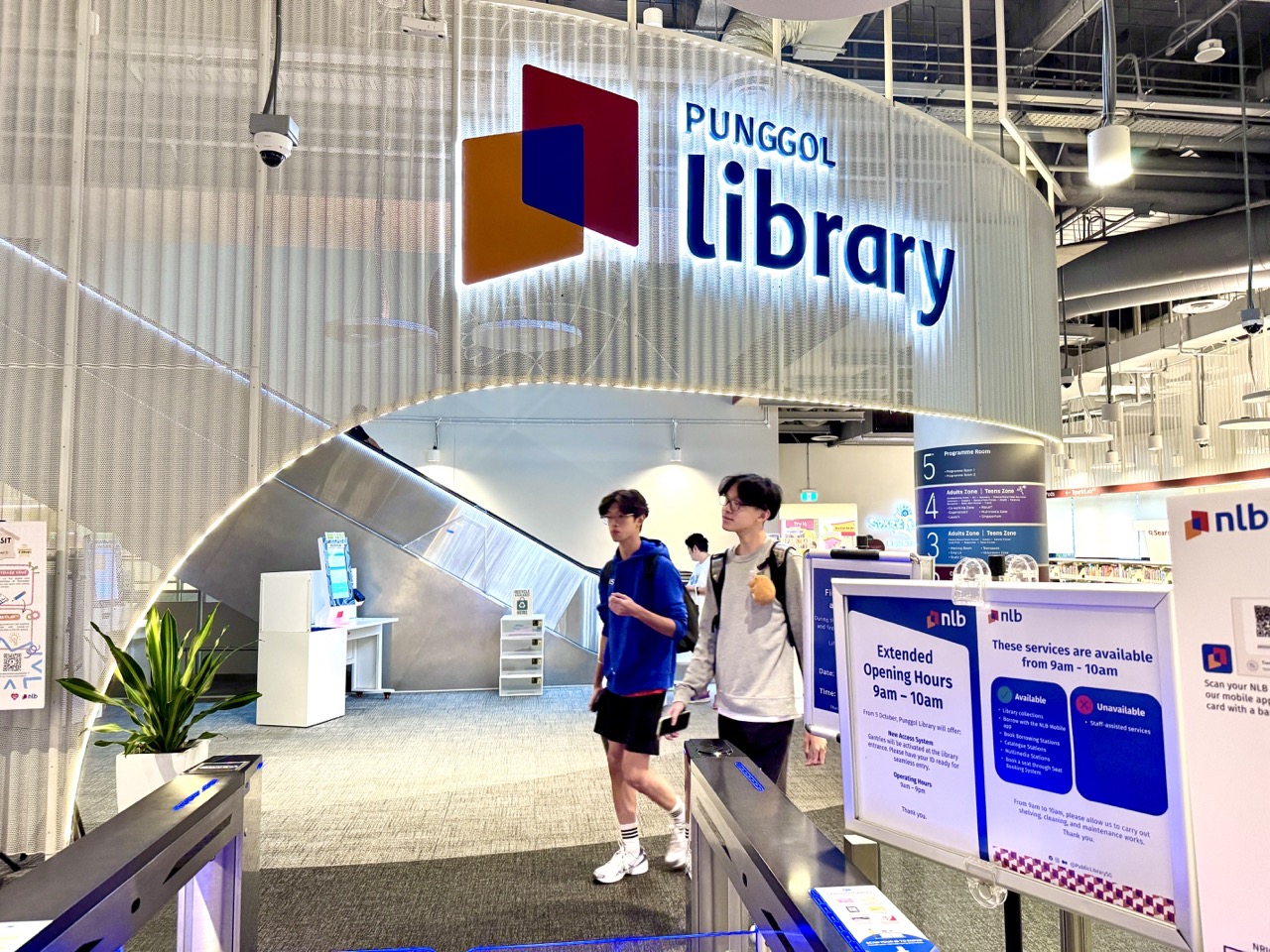
For families in Punggol, the same principle applies to an ordinary independent visit to the Punggol Regional Library, a neighbourhood park or a public information display. A good question might be, ‘How does this space help different people use it?’ The child could inspect signs, routes and facilities visible from public areas. They should not assume that a single photograph or one visitor’s behaviour provides a complete answer. A narrow question protects accuracy as well as curiosity.
Teachers may organise learning journeys around official curricular aims that are broader than the location itself. Parents should not replace those aims with a shopping list or pressure their child to produce a social-media highlight reel. Instead, ask what the class was expected to investigate and how it connects with the learning before and after the visit. If a child does not know the purpose, help them formulate a modest question rather than inventing the school’s intention.
Correct the assumption and transfer the method
An effective home starter is a two-minute conversation: ‘What do you already think? What would surprise you? What could you observe that might change your view?’ Write one response before the visit so the student can revisit it later. Predictions may be inaccurate, but they become productive when the child is encouraged to correct them honestly. This is the beginning of reflective learning, not a competition to make the best prediction.
The transfer test is simple. On a different outing, let the pupil identify the educational question without an adult supplying it. The new question should be narrow enough to explore ethically in the time available. A child who can choose a meaningful question has learned a planning skill that travels beyond one museum, library or Punggol neighbourhood walk.
2. Prepare with a source, a map and a realistic learning goal
Preparation does not mean reading every webpage about a destination. A short pre-visit brief should answer the practical essentials: where the group is going, what the learning purpose is, how the space may be used, and which current official information applies. For a school-organised visit, the school’s instructions control the arrangements. For a family outing, check the venue’s official site for access rules, opening information and any booking requirements rather than relying on an undated blog post.
Give the learner a three-part research sheet: one verified fact, one question and one limitation. A verified fact might concern the venue’s publicly stated purpose. A question might concern how displays communicate that purpose. A limitation might be that the pupil has not yet seen the exhibition, and therefore cannot judge its content. These distinctions keep students from treating anticipation as experience. They also encourage precise, evidence-based language.
Teaching move: what the child needs to notice
Maps should be read according to purpose. A transport map may show connections but omit walking hazards, a floor plan may show levels but not current lift availability, and a tourist illustration may emphasise attractions rather than accessibility. Teach children to identify title, legend, date and source before planning movement. A straight line on a schematic drawing does not guarantee the shortest or safest route in the actual environment.
Packing is part of responsible learning, not an opportunity to purchase specialised equipment. A suitable notebook, pencil, water and other items specified by the school may be enough. For a family trip, consider the child’s age, weather, comfort and accessibility needs. Do not assume that a phone with an active camera is required for participation. Sketches and written notes can preserve learning without photographing other children or strangers.
Correct the assumption and transfer the method
Families often overprepare by supplying a detailed answer sheet before the child encounters the place. The student then spends the visit searching for words that match the adult’s preferred conclusion. A better approach is to share enough background to understand the context while leaving room for discovery. Tell the child which statements are confirmed and which are hypotheses. The live observation should be allowed to complicate the initial story.
For a changed-context check, ask the pupil to prepare a short visit plan for a different public venue. Can they locate the responsible organisation, record one current source, identify a safe access question and choose one observation goal? The point is independence and verification, not having memorised the layout of a single building.
3. Separate observations from stories and guesses
One of the most valuable skills a learning journey can teach is the difference between what a child saw and what the child thinks it means. A display may contain a historical photograph, a caption, an artefact and a curator’s interpretation. Those are different forms of information. A careful pupil can describe the visible item, report what the caption says and identify an unanswered question without pretending that the exhibit reveals everything about the people who once lived with the object.
Use a small observation journal with three headings: ‘I noticed’, ‘The source explained’ and ‘I want to check’. This simple division prevents an impression from becoming an unsupported fact. For example, if a display shows an old household tool, the child may notice its shape and material. The exhibition text may identify its function. A new question could concern who used it and whether it was common. The question belongs in the final column until another source provides evidence.
Teaching move: what the child needs to notice
At a Punggol public space, a pupil may notice a sheltered walkway, tactile markings or signs in more than one language. Those are observable features. It would be an inference to say precisely why every designer chose them or how all users feel about them. A student can propose a reasonable explanation, but should acknowledge alternative possibilities and the limits of a short visit. Respectful inquiry avoids inventing other people’s motives.
Photography can help preserve a feature, but it changes the evidence. Cropping excludes surrounding details; perspective changes apparent distance; timing may make a space appear unusually empty or crowded. When photographing is permitted, ask the learner to annotate the frame: what is shown, what is outside it, and what additional evidence would be needed? A photograph of a public sign is often more appropriate than a picture containing recognisable children.
Correct the assumption and transfer the method
A common mistake is to copy impressive exhibition labels word for word and later claim to have developed an explanation independently. A better task is to read, look away, summarise the idea in original language and then return to the label to check accuracy. Where the project needs direct quotation, attribute it to its source according to the school’s instructions. The purpose is understanding and integrity, not the appearance of a thick notebook.
Ask the learner to try this method at home with an ordinary object or publicly available photograph. Can they write three direct observations, one source-supported fact and two questions that remain unanswered? If so, the journal method has transferred beyond the original destination. That is a meaningful learning outcome even without collecting a souvenir.
4. Arts, culture and heritage require careful listening
Singapore’s primary Character and Citizenship Education framework recognises cohort learning journeys as opportunities for children to explore Singaporean identity through arts, culture and heritage. A useful encounter with heritage asks not only what an object looks like, but also whose experience it represents, what sources explain its context and which perspectives may be missing. Children should be encouraged to remain curious while avoiding stereotypes about communities or simplistic stories that treat an entire culture as one uniform tradition.
A pupil may encounter an account of how a neighbourhood changed. The description could be an official timeline, a curator’s summary or a person’s memory. Each has value but different limits. A family member’s recollection can show how one individual experienced a period; it does not automatically represent everyone living in the district. Teach children to ask who is speaking, when the account was produced and what it can reasonably establish.
Teaching move: what the child needs to notice
Learning about cultural practices should not become a hunt for colourful costumes and exotic details. Ask what participants value, which contexts matter and how the practice is understood by those who take part. Where there is uncertainty, the child should consult reliable explanatory sources rather than invent a meaning from appearance alone. Respectful observation includes recognising that visitors are not entitled to interrupt performers or worshippers to obtain an answer.
Simple reflection can connect the visit to citizenship: ‘What did this account add to my understanding of Singapore?’, ‘Which different experiences appeared?’ and ‘What did I assume before learning more?’ These questions are more educational than a worksheet asking only for the names of three displays. The child is invited to revise a view, while the adult avoids requiring a predetermined emotional response.
Correct the assumption and transfer the method
Parents can help by sharing what they themselves learned, including one point they misunderstood at first. That models intellectual humility. It is reasonable for two people to notice different features and make different connections. A good family conversation asks for the evidence behind those perspectives rather than immediately announcing a correct personal reaction. Children learn that respect and critical thinking can coexist.
For transfer, the child might compare an official historical exhibition with a modern community notice. Can they explain how each communicates the identity of a place, what kind of source it is and whose viewpoint it foregrounds? The comparison connects heritage understanding with everyday media literacy without pretending that two completely different sources tell the same story.
5. A safe route is part of educational responsibility
A worthwhile learning journey must be safe and accessible enough for students to participate meaningfully. Educational enthusiasm cannot justify ignoring traffic, water edges, weather, venue restrictions or the needs of other people using public space. For a school trip, follow the school’s stated supervision, transport and emergency procedures. For a family outing, the adult should choose a route appropriate to the child and confirm current conditions rather than assuming a familiar place will always be unchanged.
Children can learn route-reading as a skill. Before moving, ask them to identify the next legitimate path, a safe waiting point and a feature that might require caution. In Punggol, shared paths may be used by pedestrians, cyclists and people using mobility aids. A learner should know when to walk, give way, pause and seek adult help. Do not make the child responsible for leading through a hazardous crossing merely to test independence.
Teaching move: what the child needs to notice
Accessibility should be considered before the trip rather than after a barrier appears. A step-free route, available lift, suitable rest point or alternative activity format may be essential for some participants. Parents should not guess at another child’s support needs or discuss private accommodations publicly. Instead, provide relevant information about their own child to the school through the appropriate channel and respect the decisions of qualified staff.
The weather can change what the group can safely do. A planned outdoor sketch may need to become an indoor discussion if heavy rain or lightning develops. A good lesson can still proceed through photographs from permitted sources or a paper-based comparison. The learning goal may be stable even when the physical format changes. Adaptation is an example of planning competence, not evidence that the visit has failed.
Correct the assumption and transfer the method
Teach one calm ‘pause and check’ routine rather than frightening children with endless accident scenarios. They should be able to notice a hazard, stop an unsafe action and ask for the appropriate adult. If someone becomes separated from the group, the school’s procedure takes precedence. Avoid giving universal directions that override the actual venue and supervision plan.
The independent test is a hypothetical route problem: a learner sees a direct path blocked by maintenance barriers and another permitted signposted route. Can they explain why continuing through the barrier is inappropriate even if the direct line looks shorter on a map? That reasoning can be transferred to travel, sports and school activities.
6. Collect just enough evidence to make the experience useful
Young learners can become so busy taking notes that they fail to experience the place. A more balanced plan limits collection to a few important observations matched to the original question. One labelled sketch, a short quote from a permitted display and a concise question may capture more usable evidence than forty photographs with no context. The task is to preserve meaning, not to create the largest possible digital archive.
A practical evidence card can contain four fields: place or source, date, observed feature and relevance to the question. The learner could record that a public sign uses both words and symbols, then explain how those elements might serve different readers. If the claim concerns actual user experience, the observation is not enough to establish that all visitors find the sign clear. The card should preserve that boundary.
Teaching move: what the child needs to notice
Teachers may legitimately require specific evidence for a curricular activity. Families should follow those instructions rather than substituting a private checklist. But when the visit is family-led, choose a manageable format that the student can complete independently. Younger children can draw and explain orally; older children may keep source notes and compare two interpretations. The mode should serve the learning aim and the pupil’s readiness.
Privacy is part of selecting evidence. A photograph can include a person’s face, badge, school uniform or location data. Before saving or sharing an image, ask whether those details are necessary for the question and whether consent exists. When in doubt, focus on objects or use a written description. Children should not be encouraged to record strangers simply because a worksheet asks for real-life examples.
Correct the assumption and transfer the method
A useful mistake to analyse is a copied fact without its date. A child writes that a venue provides a particular programme but cannot say which year the timetable belonged to. The correct next step is to find the responsible source, record the relevant date and determine whether the programme is current. Being able to correct this uncertainty is more important than decorating the notebook page.
After a different outing, invite the child to select the three pieces of evidence they would keep if they could save only three. Ask why those were necessary to answer the question. Prioritising evidence shows that the learner understands the purpose rather than collecting information indiscriminately.
7. Discussion after the visit turns impressions into learning
The journey is only one stage of an educational cycle. Children need a chance to connect observations with concepts, correct initial assumptions and consider new questions. A rushed ‘Did you have fun?’ conversation is pleasant but may stop at enjoyment. Better questions include ‘What was different from what you expected?’, ‘Which source changed your view?’ and ‘What could we investigate next?’ These encourage reasoning while leaving room for personal feelings about the experience.
Begin with a concrete description before asking for a broad reflection. A child who remembers one striking exhibit may not yet know what it teaches. Ask what the exhibit displayed, what the accompanying explanation said and how that relates to the original question. Then invite the pupil to identify an unresolved issue. This sequence moves from experience to interpretation without supplying the answer in advance.
Teaching move: what the child needs to notice
Comparisons can be powerful when handled carefully. If a school visit introduces one part of Singapore’s historical development, the child might compare that story with a public description of Punggol’s later development. The two places need not be identical. Ask which features differ because of period, purpose or context. The goal is not a superficial analogy but a justified understanding of change and continuity.
Reflection should allow uncertainty and disagreement. A pupil may leave a museum with mixed feelings or an unanswered question. An adult who insists that every learner say the experience was inspiring can discourage honest thought. A better response is to ask what evidence led to the feeling and whether there are multiple perspectives worth considering. Educational reflection is not an advertising testimonial.
Correct the assumption and transfer the method
One simple written format is ‘Before, I thought… During the visit, I noticed… Now, I think… I still need to check…’. Avoid treating this as a rigid script for every child. Some pupils may communicate more clearly through a sketch or a brief discussion. The essential requirement is that the child identifies a real change in understanding rather than merely repeating that the outing was enjoyable.
Try the same reflection structure after reading an unfamiliar article or viewing a school presentation. If the learner can explain which idea changed and what remains uncertain, the metacognitive skill is no longer tied to an excursion. It has become part of how they learn from evidence more generally.
8. A family trip and a school trip have different authority
A family may choose a public venue for curiosity and recreation, while a school learning journey has formal curricular, safeguarding, assessment and transport responsibilities. The two can complement one another but must not be described as interchangeable. Parents should check what the school has arranged, respect permission requirements and avoid independently joining or photographing a cohort event without authorisation. The school’s instructions, not a generic online checklist, govern a school-organised programme.
Families can reinforce learning without duplicating the entire itinerary. If a child visited a cultural institution with the school, a parent might ask for one observed feature and one idea discussed in class rather than immediately booking the same venue again. The child may benefit more from connecting the experience to a book or a safe conversation at home than from accumulating another ticket stub.
Teaching move: what the child needs to notice
Costs and logistics also matter. A high-quality educational question can be explored through a nearby public library display or a free publicly accessible space when appropriate, without assuming that expensive attractions are superior. Use current official information for any admission fee, opening time or access requirement. Do not publish guessed prices or guarantee access to a programme that may require registration.
Care should be taken with children who find crowded or unfamiliar places difficult. Before a family outing, discuss a realistic plan and a way to leave or rest. For school visits, communicate relevant needs privately and early. A suitable adaptation might preserve the learning goal while changing a route, timing or response format. An educational experience is worthwhile when participation is meaningful, not when every pupil does precisely the same thing.
Correct the assumption and transfer the method
Learning journeys also provide opportunities to practise courtesy: keeping pathways clear, listening to guides, handling exhibits only when allowed and respecting others’ space. These behaviours are not merely housekeeping. They help children understand that public learning occurs alongside other people with legitimate needs. Parents can demonstrate them without presenting themselves as venue staff or enforcing rules on strangers.
For a changed-context task, ask the student to compare planning a school visit with planning a family visit. Which decisions belong to the school? Which belong to parents? Which current facts must be checked in both cases? The comparison teaches responsibility and institutional boundaries, not simply travel preparation.
9. Build a four-week transfer cycle after the journey
A single visit can introduce a question, but understanding becomes stronger when the learner encounters the idea again in a different form. The first week may involve preparation and an observation. The second may involve reading a short reliable source about the same subject. The third could ask the child to compare perspectives or representations. The fourth should require an independent explanation of the underlying concept without the original worksheet.
Imagine a family exploring how public signs help visitors navigate. On the first day, the pupil sketches one sign in a permitted public area. A week later, they examine an official floor plan or a different type of directional sign. In the third week, they create a hypothetical improved sign and explain what makes it clearer. In the fourth, they inspect an unfamiliar sign and assess whether it communicates the necessary decision. The educational thread is visual information and public access, not the particular venue.
Teaching move: what the child needs to notice
Do not inflate the activity into a compulsory four-week project for every child. A busy Punggol family may only have time for two short conversations, and those can still support learning. The schedule is a framework for spacing experiences, not a claim about ideal dosage or guaranteed academic gains. Protect rest, sleep and ordinary play. The objective is a learner who can return to an idea thoughtfully.
A common weakness is measuring a journey’s success by the number of destinations visited. If a child cannot explain one meaningful observation after five attractions, there may have been too much stimulation and too little processing. A calmer, shorter visit with one focused question can generate stronger understanding. Encourage the learner to say what they can now explain, and where their evidence still falls short.
Correct the assumption and transfer the method
Parent reflection matters too. Adults can ask whether they allowed the child to make observations or dominated with facts and corrections. Did the discussion welcome uncertainty? Were the conditions manageable? Did privacy and safety rules remain intact? A family that adjusts its approach has modelled the same reflective habits it hopes to develop in the pupil.
Finally, give the child a wholly different subject, such as a public sports facility or a short historical reading. Ask them to formulate a question, identify suitable evidence and explain one possible follow-up. If the learner can reproduce the process independently, the learning journey has helped build a portable method for inquiry.
Four-week worked Punggol family example
A Primary 4 pupil chooses the question, ‘How do signs help visitors navigate a shared space?’ In week one, the child prepares the question and locates an official venue map. During a safe family visit in week two, the child sketches one publicly visible sign and records what it directly shows. In week three, they compare it with a different published sign and discuss which features serve readers. In week four, they assess an unfamiliar sign and propose an improvement while acknowledging what cannot be inferred without user testing. This is a hypothetical home activity, not an account of a named school’s programme.
Frequently asked questions
Are school learning journeys compulsory for every Punggol primary school?
MOE’s primary CCE syllabus identifies cohort learning journeys among key student development experiences for primary students, but destinations, schedules and arrangements vary by school. Check the actual school’s current notices for details.
What is the difference between a learning journey and a family excursion?
The school learning journey has planned curricular aims and school-controlled supervision and permissions. A family excursion can be educational through its own questions and reflection, but it does not replace the school’s programme.
Must children take photographs for a reflection?
No. A sketch, a dated observation or a careful written note may be sufficient for a family exercise. For formal school work, follow the teacher’s task and the venue’s photography rules.
What can Punggol parents ask after a learning journey?
Ask what the original question was, what the child noticed, which source supported an important idea and what remains uncertain. This is more useful than requiring a long description of every exhibit.
Can we use Punggol Regional Library for an educational visit?
The library can provide public learning opportunities, subject to its current services and rules. Verify opening, programmes and registration directly with NLB instead of relying on a generic article.
How should the child handle a questionable display claim?
Record the exact source and the concern, then check an appropriate authoritative reference with adult guidance. Avoid publicly accusing staff or posting an uncertain claim as a fact.
Does a learning journey automatically raise exam scores?
No. A journey can support subject knowledge, inquiry and citizenship understanding when designed well, but it does not by itself guarantee examination performance.
What if a child has sensory, mobility or other access needs?
Communicate appropriate information privately to the school for school trips; plan suitable routes and breaks for family visits. Avoid guessing another child’s needs or assuming that one format is accessible to everyone.
Your Next Step
Ask your child what one thing they would like to understand better before the next school or family visit. Help identify the responsible source, choose one safe observation and agree on a short conversation afterward. On return, ask what they learned, which claim is supported and which question remains unanswered. A useful learning journey should make the learner better at exploring the next unfamiliar place, not only more familiar with the first destination.
Official references and related Punggol guides
- MOE Primary Character and Citizenship Education 2021 Syllabus
- MOE Primary Curriculum
- MOE SchoolFinder
- NLB Punggol Regional Library
- Schools and Education at Punggol | Social Studies, Neighbourhood Inquiry and Civic Thinking
- Schools and Education at Punggol | Learning Science Through the Waterway, Weather and Local Evidence
- Schools and Education at Punggol | What School Spaces Teach Beyond the Classroom
Editorial reviewed 1 November 2026. Local visit illustrations are hypothetical. Venue conditions, fees, access arrangements and school schedules should be verified with the responsible organisation before acting. No school has been ranked or represented as delivering the activities in this article.


