
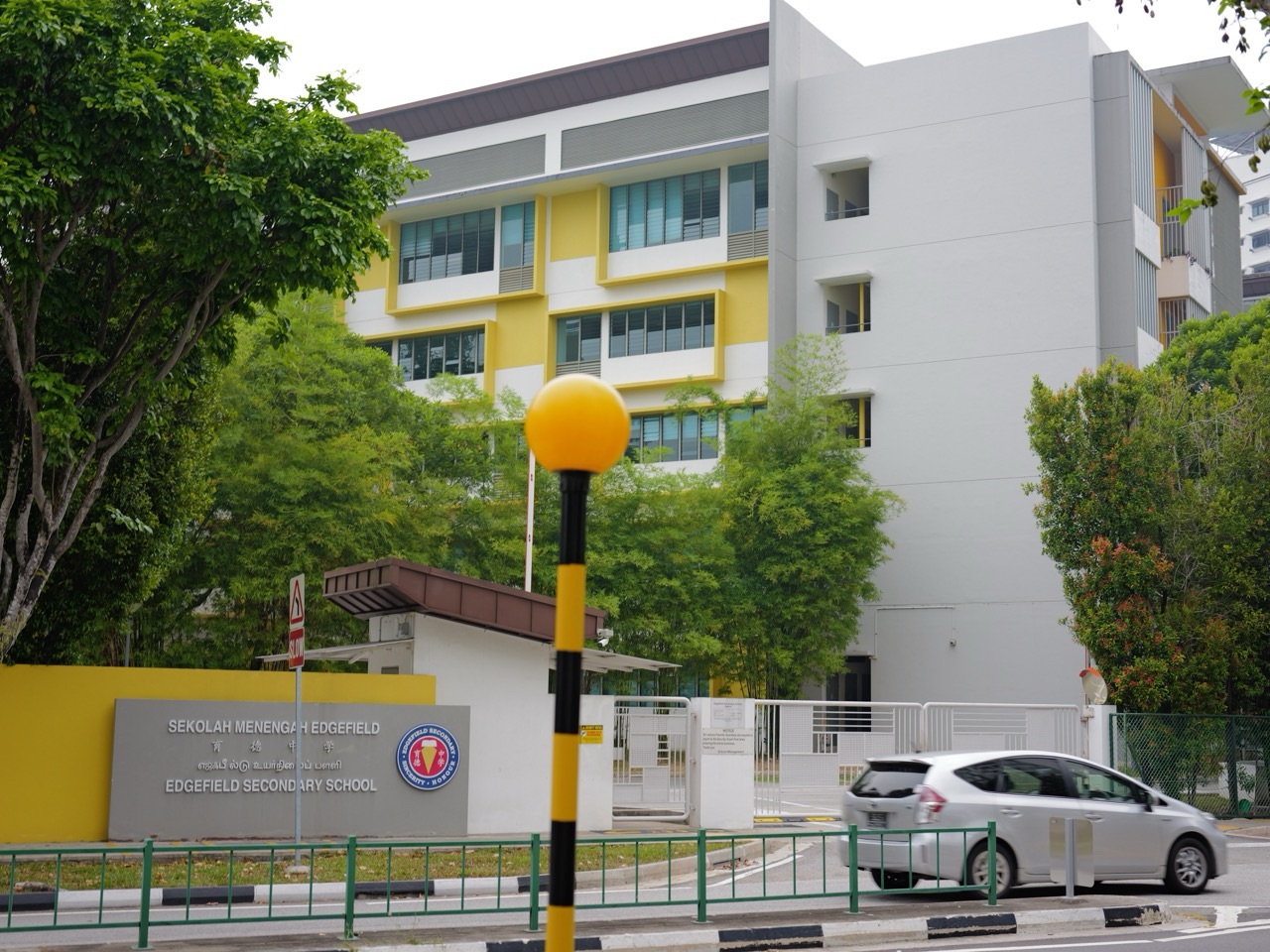
A PG3 student in Punggol enters Secondary 1 through Posting Group 3 and ordinarily starts at the G3 subject level under Full Subject-Based Banding (Full SBB). PG3 is the admission arrangement; G3 describes a particular subject’s academic level. From the 2024 Secondary 1 intake, the former Express, Normal (Academic) and Normal (Technical) streams no longer organise new mainstream secondary cohorts in the old way. Students can join mixed form classes, while their subject teaching follows the levels and offerings applicable to them.
This matters for families looking at Edgefield Secondary, Greendale Secondary, Punggol Secondary or Yusof Ishak Secondary. A form class is a community, not proof that every student studies English, Mathematics, Science or Mother Tongue at the same subject level. Parents should inspect the actual timetable, assessment expectations and school’s subject-level policies. They should also remember that the G3 standard is academically demanding, but good adjustment depends on learning habits and appropriate support, not on attaching an identity to a posting label.
- PG3 means Posting Group 3 for Secondary 1 admission after PSLE.
- G3 means General 3, a subject level broadly mapped from the former Express standard.
- PG3 entrants ordinarily start with subjects at G3; individual subject arrangements may later change under applicable rules.
- Full SBB has been implemented from the 2024 Secondary 1 cohort, replacing the former fixed stream structure.
- Mixed form classes bring students from different posting groups together; selected subjects are taught according to their applicable levels.
- Common curriculum subjects provide shared learning experiences across student profiles.
- Parents must check the school’s actual offerings, timetable, assessment rules and process for reviewing a subject level.
- The Singapore-Cambridge Secondary Education Certificate (SEC) begins from 2027 and reflects subjects at G1, G2 or G3.
- Read the child’s real work in English, Mathematics and Science before deciding whether additional help is useful.

Full SBB for PG3: a practical school and subject guide
1. Definition lock: PG3, G3 and Full SBB are three different ideas
The easiest explanation starts with three columns. In the first column is PG3, which describes the group used for Secondary 1 posting. In the second is G3, which describes the level at which a subject is studied. In the third is Full Subject-Based Banding, the structure that makes different subject levels possible within one more integrated secondary-school experience. Put those labels together and the system becomes much less mysterious.
Under the older arrangement, relatives commonly spoke of Express, Normal (Academic) and Normal (Technical) streams. The newer framework keeps appropriate academic demands but moves away from defining an entire class through one stream. G3 is academically the most demanding of the three General levels and is broadly mapped from the previous Express standard. Yet the student’s timetable, not a childhood label, describes the subjects actually being studied.
A PG3 child might join a form class with classmates admitted through other posting groups. They may share form-teacher time, CCA experiences and common curriculum activities while attending separate subject lessons according to their assigned levels. It is therefore misleading to look around the form class and assume that one seating plan describes one uniform examination pathway. Friendships and academic timetables no longer have to be the same grouping.
Parents can make a one-page subject record listing each subject, its current level, the teacher or school contact, the latest assessed strengths and the next useful action. Update it after official school decisions rather than relying on family gossip. That simple sheet is more informative than saying only that the child is a PG3 student.
2. The point of mixed form classes
A mixed form class is designed to give students with different learning profiles opportunities to belong to the same school community. Instead of putting an entire cohort into separate identities based only on an early examination, Full SBB provides common form-class experiences. Students can still learn English or Mathematics at appropriate subject levels, but they encounter a wider variety of peers during other parts of their week.
To a new Secondary 1 student, the distinction can feel odd. A classmate sits beside them during form time and perhaps Physical Education, yet appears in a different Mathematics classroom. This does not signal that someone has been transferred to a better or worse school. It reflects subject arrangements. Explain that kindly before the first school day so children do not invent embarrassing stories about one another.
Mixed classes can support communication and respect, but they are not automatic evidence that social differences disappear. Schools still need good routines, inclusive activities and teachers who explain transitions clearly. Parents can ask how orientation introduces Full SBB, how pupils find subject rooms and how the school handles teasing or status comparisons. These everyday practices determine whether the policy feels welcoming.
The useful family conversation is about what each student can contribute to shared work. A child who is strong in Mathematics may benefit from a classmate who is confident at presenting. Another may be good at organising a team or noticing the needs of someone left out. Subject levels matter in academic lessons, but they are not the complete story of human ability.
3. Common curriculum subjects and shared experiences
Under Full SBB, students have common learning experiences alongside subject-based grouping. MOE has described common curriculum subjects such as Art, Character and Citizenship Education, Design and Technology, Food and Consumer Education, Music and Physical Education at lower secondary levels, subject to the applicable curriculum arrangements. These experiences are not decorative breaks from ‘real’ learning. They teach practical judgement, creativity, collaboration, citizenship and care for oneself and others.
Imagine a class working on a design challenge about reducing waste. One student handles measurements quickly; another draws an excellent model; a third sees how the user might interact with the product. Their subject levels do not tell the whole group who will succeed. The task rewards observation, explanation, testing and revision. This is the kind of mixed competence that secondary school should help children develop.
Parents sometimes ask whether the common subjects count less because they do not all resemble a written examination. That question is understandable in a family worried about grades, but it misses their contribution. A child who learns to manage materials, follow safety instructions or discuss a difficult civic question is strengthening habits that also support academic work. Responsible participation is part of education, not an alternative to it.
Ask the child to show one piece of work from a common curriculum subject each month and explain what they learned from the process. Praise a specific decision or improvement rather than simply admiring the finished object. This approach makes cross-subject learning visible and shows that the child is valued for more than an English or Mathematics score.
4. What G3 English changes after Primary 6
G3 English asks students to interpret more demanding texts, distinguish what a writer actually says from what a reader assumes and support answers with evidence. The move from Primary 6 is not simply about learning longer words. Students need to manage inference, tone, summary, grammatical control and increasingly deliberate written structure. A child who reads fluently may still discover that interpreting a question precisely is a different skill.
Consider a comprehension question asking why a character hesitated. A weak response may describe what the character did next without addressing motivation. A stronger response identifies the relevant clue, explains its implication and avoids inventing details not supported by the passage. This is a useful example of G3 demand: not just more content, but tighter reasoning and expression.
Parents can help without turning every evening into a mock examination. Ask the child to summarise a short text in two sentences and point to the phrase supporting an interpretation. Let them compare two possible answers and explain which one is better justified. If the child cannot find evidence, return to the text rather than supplying the answer immediately. This builds the habit of checking claims.
When reviewing school feedback, separate language problems. Does the student misunderstand vocabulary? Misread a task? Organise ideas poorly? Run out of time? Each needs a different response. Additional English support is useful only when it targets the actual bottleneck. Copying model essays without explaining their structure often produces more pages than progress.
5. Why G3 Mathematics is a language transition
G3 Mathematics in lower secondary school moves more decisively from arithmetic to algebraic relationships, formal notation and multi-step reasoning. A Primary 6 learner may have understood ratios and percentages through diagrams, then feel unsure when unknown quantities are written as letters. The numbers did not become malicious; the language of the subject changed. The student needs to understand why transformations are valid, not merely remember a slogan about moving terms.
Take 3x = 21. A learner who understands equality can divide both sides by three and check that x = 7 satisfies the relationship. A learner who memorises a movement rule may cope with this question but struggle once signs, fractions or brackets enter. The more general habit is to explain each operation and verify that it preserves the equation’s meaning.
Ask the student to keep an error notebook with three columns: the original wrong step, why it was wrong and a corrected example of the same idea. A minus sign mistake and a misunderstanding of an exponent should not be lumped into a category called carelessness. Naming the actual misconception allows deliberate practice. The parent can ask for one corrected example rather than requesting thirty random questions.
Confidence in G3 Mathematics comes from understanding and retrieval. A student who can solve a worked example only while looking at the teacher’s notes has not yet mastered the idea. Close the notes, try a related problem and explain the steps. Then revisit it several days later. That pattern is more valuable than racing ahead to a chapter that depends on an unstable foundation.
6. G3 Science demands explanations, not just remembered keywords
At G3, students are expected to use scientific concepts to explain relationships, interpret information and, where applicable, reason from experiments or data. Remembering a phrase can help, but it is rarely enough when a question changes context. A student must connect the concept to what is observed and express a causal explanation clearly. This is different from reciting a list of definitions.
Imagine an investigation where a plant grows differently under two conditions. An answer should identify what changed, what was kept constant and what the observation can support. If another factor was not controlled, the claim may be weaker than it looks. This reasoning is useful well beyond one chapter because it teaches the child not to mistake correlation or a dramatic-looking result for proof.
Parents can practise asking ‘How do we know?’ instead of ‘Did you memorise the answer?’ When the student makes a claim, invite them to name the evidence and the scientific relationship. If the explanation is unclear, draw a labelled diagram or compare two scenarios. The aim is not to produce a perfect paragraph instantly; it is to build a logical chain that can later be expressed precisely.
School Science courses and combinations vary by year level and school arrangements. Do not promise that all children will take a particular upper-secondary combination because they entered through PG3. Use the actual school curriculum and forthcoming subject-choice guidance. Early lower-secondary learning should cultivate understanding across scientific ideas before the family turns every interest into a premature examination strategy.
7. Mother Tongue and Higher Mother Tongue are separate questions
Mother Tongue is an important part of the student’s curriculum, and families should confirm the actual level and language arrangement with the school. A learner’s strengths across English, Mathematics, Science and Mother Tongue may be uneven. The posting group does not justify assuming the child is equally fluent in all languages. Spoken confidence, reading comprehension, composition and examination technique can develop at different rates.
From the 2026 Secondary 1 intake, MOE expanded Higher Mother Tongue eligibility for students who performed strongly in the relevant PSLE Mother Tongue assessments, regardless of overall PSLE score, subject to the published criteria. Parents should check the exact official rule and the school’s offering rather than rely on an older understanding that Higher Mother Tongue follows only one overall academic route.
A child who enjoys speaking Mandarin, Malay or Tamil at home may still struggle with written explanations and formal vocabulary. Another may read comfortably but hesitate in oral discussion. These differences deserve precise teaching rather than a verdict that the child is simply good or bad at the language. Short daily reading, meaningful conversation and corrective feedback can be combined without making every interaction an examination.
Before requesting any higher or different level, ask whether the student has the required foundation and time. More demanding work can provide enrichment, but it also consumes energy in a week that includes several other subjects. The right programme is one that both stretches and supports the learner. An eligibility notice tells the family what may be possible; it does not remove the need for a thoughtful decision.
8. Humanities teach the child to argue with evidence
History, Geography, Social Studies and other Humanities learning give students tools for understanding people, places, decisions and consequences. The subject labels and combinations change across secondary levels, so families should follow the school’s current curriculum. What remains useful across them is the ability to read a source or dataset accurately, frame a claim and support it with relevant evidence.
A History source question can tempt students to copy the longest sentence in a document. A more effective answer identifies what the source shows, considers the question being asked and explains why a detail matters. In Geography, a graph may look familiar but tell a different story when the axis scale or unit changes. The child needs attention, not just memorisation of topic notes.
At home, try an ordinary discussion about a Punggol community decision: a new facility, a transport change or a shared public space. Ask who is affected, what evidence is available and what would count as a fair comparison. The aim is not to demand the adult’s preferred opinion. It is to demonstrate that sensible claims require reasons and that alternative explanations should be considered.
A PG3 student who learns to explain carefully in Humanities may become stronger in Science evaluation and English argument too. This is one reason not to teach every subject in isolation. The transferable skill is disciplined thinking. It helps the student deal with unfamiliar questions and also with the information they encounter online.
9. Different subject levels are possible but not a free-form menu
One of Full SBB’s key principles is that a student’s subject-level profile can reflect strengths and learning needs rather than being frozen for the whole secondary journey. However, a change is governed by MOE policy, school procedures, assessment evidence and available subject arrangements. It should never be presented as something parents can demand casually at any time or guarantee by purchasing tuition.
A PG3 child may begin with G3 subjects and later need a conversation about a subject that is persistently overwhelming. Another student from a different posting group may demonstrate readiness for more demanding work in a particular subject. The important point is that decisions should be subject-specific and evidence-based. An occasional disappointing score is not itself proof that a switch is the best educational response.
Families should look at work across time. Is a gap conceptual, caused by missed lessons, related to language comprehension or simply an isolated difficult assessment? What changes when the child receives focused explanation and practises independently? Can they cope with a fresh question without prompting? These observations can help a school conversation become more useful than a request based only on anxiety.
If a subject-level review is possible, ask about the formal criteria, timing, curriculum alignment and implications for later subjects and qualifications. Record the decision clearly. A different level may be appropriate for one subject while others remain unchanged. The flexibility exists to support learning, not to create a new competition over how many G3 labels appear on a report.
10. What happens when students move between form and subject classes
The school timetable may place a student with one form class for certain periods and with other students for subject lessons. Movement between rooms, different materials and teachers can initially confuse a twelve-year-old. Parents often focus on the intellectual demand of G3 while overlooking the practical challenge of keeping the correct notebook, locating the next room and remembering which assignment belongs to which teacher.
A useful first-week routine is to photograph or copy the official timetable, identify each subject’s materials and give files a simple consistent label. The student should be the person who checks the schedule, with an adult available to help when needed. Gradually transfer responsibility. Carrying a complete timetable is a more realistic achievement than trying to memorise every room number on the first day.
Suppose a child forgets their Mathematics notes once. Treat it as a routine problem, not a character flaw. Help them build a two-minute evening bag check and make it repeatable. If the same problem happens after several weeks, investigate whether the timetable is unclear, the storage system is overloaded or another support is needed. A correction should solve a problem rather than merely express annoyance.
Questions about particular mixed-class arrangements must go to the actual school. Not every school operates the same sequence or classroom logistics. General Full SBB descriptions explain the purpose; the local timetable explains the day. Families get the best results when they distinguish national policy from the practical procedures at their child’s campus.
11. Assessment should be treated as feedback, not identity
A G3 assessment measures performance on specified work at a point in time. It is not an oracle describing the student’s future potential. A first Secondary 1 test can expose a missing prerequisite, unfamiliar question style, weak time control or a simple misunderstanding of the teacher’s instructions. Parents who ask only ‘How many marks?’ often miss the information most useful for the next week.
Read the marked paper with a pencil. Circle errors that recur, distinguish conceptual errors from presentation errors and note any questions the child left blank through time pressure. Then ask the student to attempt a similar question again without looking at the answer. If the correction cannot be reproduced independently, more explanation or practice is needed. Merely agreeing with the answer key is not sufficient evidence of learning.
Use a small review cycle: diagnose one or two error families, reteach the principle, try fresh examples, practise retrieval and check again later. This helps prevent a pattern where the student improves only while a parent or tutor is beside them. Real progress appears when a related question can be solved independently after time has passed.
Schools use their own approved assessment structures and report formats within national guidance. Families should understand the school’s feedback language, weighted assessment arrangements and subject-level considerations without inventing an equivalence between a single school test and a future SEC outcome. Correcting the right habit matters far more than comparing raw marks across different schools.
12. The first twelve weeks: a sensible learning experiment
During the first two weeks, concentrate on orientation: how to reach school, manage a timetable, locate materials, submit work and ask for help. Academic readiness matters, but a child cannot study well when daily procedures are chaotic. Let the learner describe what went smoothly and what was unexpectedly difficult. Keep the family conversation curious and specific.
Over the next few weeks, inspect the earliest pieces of actual schoolwork. In English, look for the ability to support inference with evidence. In Mathematics, inspect algebraic working and negative signs. In Science, ask for clear causal explanation. In language subjects and Humanities, watch how the student reads instructions. Choose one skill per subject that would make the biggest difference rather than adding a mountain of generic worksheets.
By weeks six to eight, the family should be able to identify a stable weekly routine and early learning trends. Is the child starting work without constant negotiation? Are assignments recorded accurately? Is the CCA timetable manageable? If a repeated issue persists, contact the school or seek focused academic support. Do not assume the student will automatically grow out of every difficulty, but do not panic over every new challenge either.
Near the end of the first term, compare the child with their own starting point rather than with an imaginary ideal PG3 learner. Can they explain more, organise more and recover from errors more independently? Are sleep and social belonging reasonably protected? A stronger learning system is a better foundation for later academic demands than a temporary burst of study hours.
13. How Punggol school choice relates to a Full SBB timetable
Parents may compare the four Punggol mainstream secondary schools by programme, location and past admission reference. Full SBB adds another set of questions: which subjects and levels are available for the relevant intake, how are classes organised, how is learning supported and what formal choices appear at later year levels? Ask the school directly about arrangements that could affect your child’s actual subject profile.
At Edgefield Secondary, a family may ask how its applied learning emphasis connects to classroom explanations and collaboration. At Greendale Secondary, the family may explore its published technology and outdoor learning directions. At Punggol Secondary, environmental and leadership activities can offer a natural conversation. At Yusof Ishak Secondary, STEM and sustainability-related learning may appeal to some students. None of these programme descriptions alone determines admission or an individual timetable.
Look beyond the programme title. If a student is strong in Mathematics but struggles with language-heavy Science questions, how will teachers notice? Are there clear routes for parents to raise concerns? What does a student do when switching between form and subject classrooms feels difficult? How does the school explain subject levels to families without encouraging unnecessary status comparisons?
The answer will differ by school and year. The practical recommendation is to read a school’s official subject and curriculum notices, then compare the child’s needs against the real arrangements. A neighbourhood guide can help frame questions but should never replace current school decisions or national policy.
14. When extra academic support makes sense
Parents sometimes assume that every PG3 child must attend more tuition because G3 is demanding. That is not a learning diagnosis. A capable student with sound habits may need time to settle, access to teachers and independent practice rather than another weekly appointment. Another student may benefit from targeted help because of a specific English comprehension gap, algebra misconception or repeated Science explanation error.
The difference can be seen in the work. If a student knows a method but rushes, the plan may need checking routines and timed practice. If they cannot explain what an equation means, reteaching the concept takes priority. If they understand the solution while someone is guiding them but fail alone, independent retrieval and application matter. A tutor should explain which issue is being addressed and how success will be measured.
Small-group teaching can be useful when the tutor can observe each learner closely, notice wrong reasoning early and make students explain their steps. However, the group’s fit, actual class size, teacher expertise and home schedule must be checked; no format guarantees a grade. The family should know what is taught, what correction work is expected and whether there is time for rest.
The goal is not to maintain dependence indefinitely. It is to help the child recognise error patterns, choose a method, check a claim and ask useful questions. A successful support plan should gradually make the student more capable of doing these things without someone constantly standing over them.
15. A parent’s simple Full SBB reference card
Write five sentences on one card. PG3 refers to secondary admission. G3 refers to a subject level. The form class can be mixed. Subjects may be taken at levels suited to a learner under applicable rules. Future examination and pathway decisions depend on the student’s actual subjects and official criteria. This card will prevent many long, confusing family discussions.
Add an actual timetable only after school confirms it. List the teacher contacts and homework channel for each subject. Keep the last assessed work and one example of an error the student has successfully corrected. A reliable learning record helps a parent speak clearly to teachers and helps the child see growth rather than only raw scores.
Review this card once a term. Has a subject’s level formally changed? Is the child confident enough to explain a new problem? Has the timetable or CCA schedule made home learning too difficult? Is additional support solving the problem that justified it? These questions make school life manageable without turning every evening into a performance review.
Finally, remember why the system was built this way: students do not have identical strengths, interests or rates of development. Full SBB can create more flexibility, but its value appears only when families and schools use that flexibility thoughtfully. An informed PG3 household should understand the structure and then return its attention to the child in front of it.
Frequently asked questions
Does a PG3 student have an Express-stream class?
No. PG3 is an admission grouping used under Full SBB, and the old fixed secondary streams were removed for new Secondary 1 entrants from 2024. G3 subject level is broadly mapped from the old Express standard, but the form class and actual subject arrangements are not the same thing as the former stream structure.
Do all students in a mixed form class take the same Mathematics?
Not necessarily. A mixed form class is a social and common-curriculum arrangement; subject lessons are organised according to the levels and school offerings applicable to learners. Check the school’s actual timetable instead of inferring academic levels from a form-class roster.
Can someone in PG2 study a G3 subject?
Yes, eligible students can offer particular subjects at more demanding levels within MOE and school rules. This is one of the distinctions that makes Full SBB more flexible than a single fixed stream. Details must be verified for the individual and the year.
Does G3 mean the hardest homework in every subject?
G3 is the most academically demanding General subject level, but assessment design and homework volume are separate matters. Actual workload depends on subject, school programme, topic, teacher instructions and the learner’s readiness. Measure the child’s real schedule before making assumptions.
Does PG3 guarantee a particular upper-secondary subject combination?
No. School offerings, subject-choice criteria, the student’s performance and later decisions determine the options. PG3 identifies admission, not a promise that the learner will automatically take any desired Science, Humanities or Additional Mathematics combination.
What should parents do after a poor first G3 test?
Examine the marked work, identify repeated error types, reteach the relevant idea and test an independent retry. Consider the child’s adjustment and the school’s feedback. One mark should not trigger a verdict about identity or an immediate demand to change levels.
Do mixed classes mean every subject is taught at the same level?
No. That would remove the subject-level flexibility the system is designed to offer. Common learning experiences and subject-specific learning can coexist. The right question is which periods are shared and which depend on subject level at the school.
When does SEC replace the old examinations?
From 2027, the Singapore-Cambridge Secondary Education Certificate replaces the separate N- and O-Level certifications for the relevant cohorts. The certificate reflects subjects and subject levels, and families should read the applicable SEAB and MOE guidance for exact requirements.
Your next step
Ask the school for the child’s actual subject-level record, current timetable and process for discussing learning difficulties. Keep PG3 and G3 conceptually separate. Watch the student solve fresh questions, explain reasoning and manage the school week. The best sign of progress is not a label on a form but clearer, more independent learning.
Official sources and further reading
Singapore Ministry of Education’s Full Subject-Based Banding microsite: https://www.moe.gov.sg/microsites/psle-fsbb/ . MOE’s explanation of mixed form classes and post-secondary pathways: https://www.moe.gov.sg/microsites/psle-fsbb/assets/infographics/full-subject-based-banding/Secondary%20School%20Experience-and-Post-Secondary-Pathways-today-versus-under-Full-SBB.pdf . 2027 SEC announcement: https://cos.moe.gov.sg/2024-announcements/ . Higher Mother Tongue 2026 policy: https://cos.moe.gov.sg/2025-announcements/ . Local context: https://edukatepunggol.com/2026/10/18/understanding-education-system-punggol-secondary-schools-full-sbb-sec-2027/ . Check the student’s actual school for current implementation.
Independent parent guide, policy context checked 1 November 2026. No fixed improvement outcome is implied. Properly taught kids shine a bright light into the future.


