
How PG1 works at Punggol is not simply a matter of choosing the secondary school with the most impressive historical cut-off point. Posting Group 1 is used to facilitate Secondary 1 admission under Full Subject-Based Banding, while most academic subjects for PG1 entrants usually begin at the G1 subject level. The right school is one in which a student can learn at an appropriate starting level, receive timely help, participate fully in CCAs and school life, and travel to and from safely. School culture, actual support arrangements and the child’s interests matter as much as the admissions table.
Punggol families can begin by researching Edgefield Secondary School, Greendale Secondary School, Punggol Secondary School and Yusof Ishak Secondary School, then broaden their shortlist where another school’s location or offerings suit the child better. Verify current Posting Group and subject availability in MOE SchoolFinder rather than assume every school offers every option. Consider the school’s teaching, transition support and everyday travel before using the six school choices. This guide supplies a practical evaluation process, not a ranking or a promise of admission.
- PG1 meaning: an S1 admissions Posting Group, usually linked to an initial G1 level for most subjects; students are not separated into permanent old-style streams.
- First check: the child’s official Posting Group eligibility, and which schools offer the relevant options in that year’s MOE admission exercise.
- Four Punggol mainstream schools to research: Edgefield, Greendale, Punggol Secondary and Yusof Ishak Secondary.
- Five quality tests: access to help, appropriate teaching demand, sense of belonging, manageable travel and meaningful activities beyond exams.
- Useful documents: MOE SchoolFinder, S1 posting guidance, current school sites, open-house information and the child’s latest learning evidence.
- Six choices: include schools the family genuinely prefers and would accept; interpret historical score ranges carefully, with a balanced shortlist.
- Caution: examples of programmes and routines below reflect published information available in 2026 and must be rechecked for the student’s actual intake.

Start with school fit, not a league table
When a parent says, “Which is the best secondary school for PG1 in Punggol?” the useful answer begins with a better question: “Best for which child, with what needs, at what stage of learning?” A teenager who thrives through active projects may experience a school differently from one who loves languages, team sport or quiet study. Another student may need a predictable routine, a trusted adult and patient guidance while adjusting to secondary school. A single number cannot describe these needs.
This does not mean academic standards are unimportant. It means the standard must be taught in a way that allows the child to make progress. A school can be academically serious and still offer strong pastoral support, differentiated teaching and opportunities to discover new strengths. Parents should look for concrete explanations rather than slogans. Ask teachers how students who cannot follow an early lesson receive help. Ask how progress is communicated, which school programmes are accessible, and what is expected of parents. Useful answers describe processes and examples, not merely values printed on banners.
Posting Group and subject level have different jobs
PG1 is primarily an admission arrangement and a guide to the levels at which a student starts Secondary 1. G1 names the demand of a subject. Under Full SBB, secondary students join mixed form classes and may take different subjects at appropriate G1, G2 or G3 levels. The exact subject options depend on eligibility, school provision and review processes. A parent comparing schools should therefore avoid asking only whether a school “has PG1.” Ask how the school actually supports the student once admission is completed.
Consider two daily experiences. A student might join a mixed form class with pupils offering several subject combinations, then attend Mathematics at the level offered and share character education or an activity with classmates from other backgrounds. Later that day, the student may participate in a CCA where skill, reliability and friendship matter more than the initial Posting Group. This is the learning environment parents should examine. Treating the child as a fixed category misses the opportunities built into the modern secondary-school structure.
Four mainstream secondary schools within Punggol
The four mainstream secondary schools generally included in Punggol local guides are Edgefield Secondary, Greendale Secondary, Punggol Secondary and Yusof Ishak Secondary. Their addresses, current admission offerings and programmes should be checked in MOE SchoolFinder and the schools’ official websites. A list of four is a local orientation tool, not an instruction that all six school choices must come from Punggol. Families can, and often should, consider suitable nearby schools when travel and programmes justify it.
Use local school names as starting points for questions, not as a ranking exercise. What kind of projects do pupils build? How are students supported when they find a subject difficult? Are there CCAs that the child wants to attend consistently? What does the school expect on an ordinary weekday? Are there staff members or systems through which a Secondary 1 student can seek help? The comparison becomes more useful when the family stops collecting promotional adjectives and starts describing the actual experiences a child would have.
Edgefield Secondary: ask about innovation and character learning
Edgefield Secondary School’s published programme information describes its G.E.M., or Growing the Edgefield Mindset, Applied Learning Programme. The school associates it with creative problem-solving, entrepreneurial mindsets and future-ready skills. Its Learning for Life Programme also includes character education through sports, anchored on Taekwondo. These are interesting entry points for families whose children value hands-on learning, resilience, creative thinking or structured physical activity. The correct question is whether the current programmes and participation arrangements suit the particular student.
An open-house conversation at Edgefield might focus on how a student who is less confident academically can contribute to a collaborative project, how teachers scaffold complex tasks, and how learning from mistakes is encouraged. For Taekwondo-related character education, parents could ask what participation looks like at the relevant year level and what adjustments are provided when needed. Do not assume a programme described on a website automatically functions as a remedial service, offers a specialised pathway to all children, or guarantees a competitive outcome. Ask for specific, up-to-date examples directly from the school.
Greendale Secondary: examine design and outdoor learning
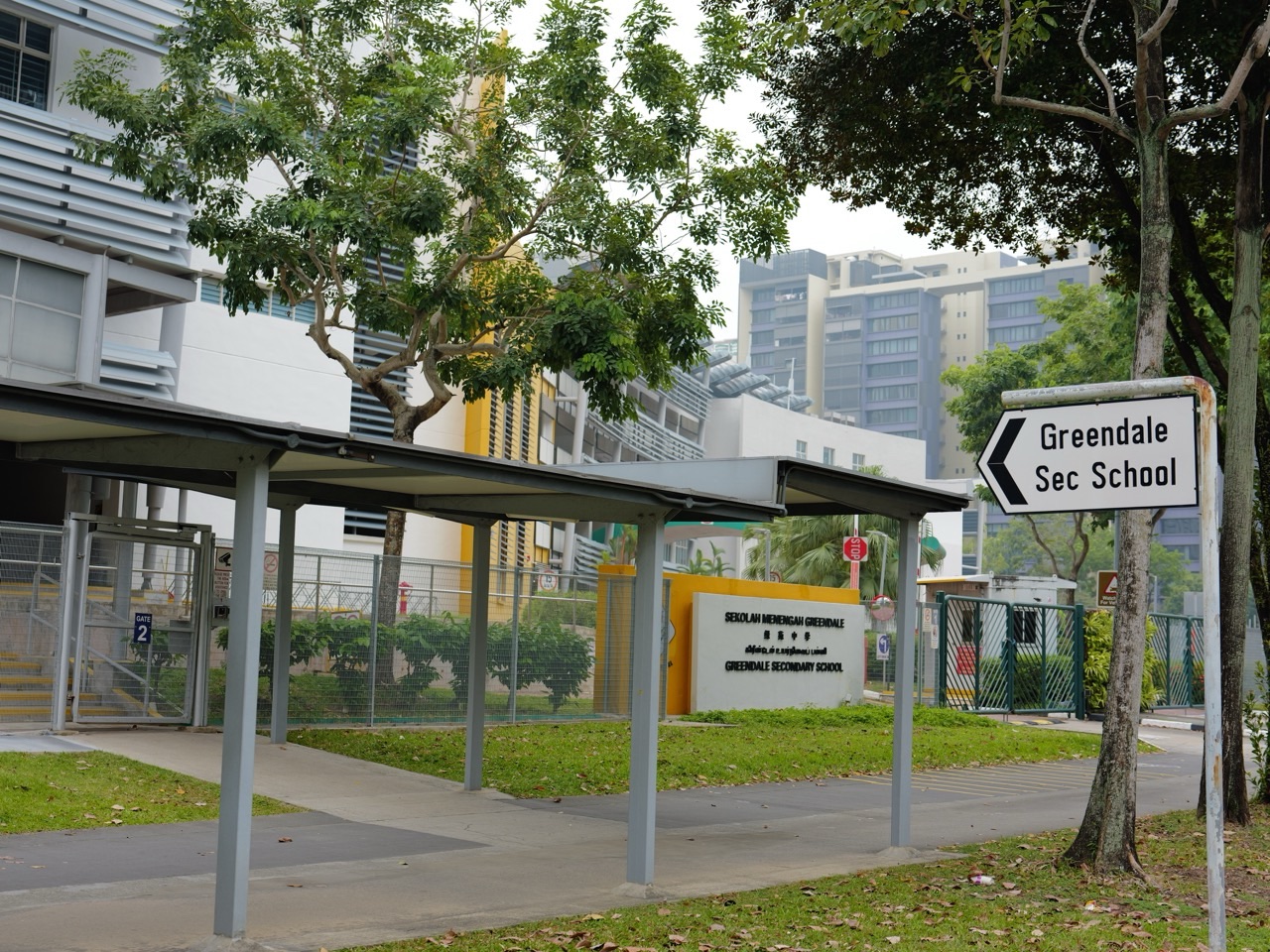
Greendale Secondary School publicly describes a Design, Technology and Engineering Applied Learning Programme that includes designing, coding and building. Its Outdoor Adventure Learning for Life Programme emphasises learning through experience, teamwork, resilience and risk awareness. A child who enjoys practical challenges, making things or developing independence outdoors may find these themes appealing. But suitability requires more than liking a poster about robotics or kayaking. The family should ask how activities fit the timetable, which components are cohort-wide and which require selection.
For a PG1-eligible student, an important question is whether the school makes it possible to contribute meaningfully even when academic writing or Mathematics is still developing. Does the child have opportunities to ask questions, test an idea, learn a practical routine and demonstrate what was learned? Parents should also discuss the demands of physical activities, safety arrangements and access for pupils with particular needs. This produces a more grounded picture of school life. The presence of an attractive programme is a reason to investigate, not automatic evidence that Greendale is the right choice for every learner.
Punggol Secondary: connect learning, environment and community
Punggol Secondary School presents an Applied Learning Programme linked to Environment Education and a Learning for Life Programme in Community and Youth Leadership. Its public academic information has also described Mathematics learning experiences such as Math Trails, Games Day and peer tutoring. These details are useful because they point beyond examination preparation toward real-world problems, collaboration and contribution. A parent can ask how the school connects basic academic understanding with practical activity and how students receive support when a concept has not yet become secure.
Imagine a child who finds a printed word problem difficult but becomes engaged when asked to measure, observe or explain a practical problem. An environmental project may offer another route to curiosity and communication, although it does not replace systematic teaching of reading and numeracy. Ask teachers how they bridge the two. Also ask how student leadership opportunities are made available across different learner profiles, including quieter children and those new to the school. Leadership should not be understood only as holding an official title. Helping a peer, completing a community task and keeping commitments can be valuable signs of growth.
Yusof Ishak Secondary: investigate STEM and leadership pathways
Yusof Ishak Secondary School, located in Punggol, publishes information about its STEM- and sustainability-related learning, together with leadership development. Families can use those themes as starting points for questions about project work, responsible technology use, student voice and collaborative learning. The current school website should be the reference for exact programme names, availability and participation requirements. A child interested in design, digital tools or community projects may enjoy the themes, but parents must discover how the school supports the foundations needed to participate.
At a school visit, focus on the ordinary learning experience. Ask for examples of how Secondary 1 pupils learn to manage assignments, how students at different subject levels collaborate, and how teachers help children who need a little longer to process instructions. Explore CCAs rather than assume the headline STEM emphasis is the only meaningful experience. A school can help a teenager discover an unexpected interest through sport, arts, service or a technical club. The family should understand the whole environment instead of choosing solely from one attractive programme description.
SchoolFinder is a filter, not a substitute for judgment
MOE SchoolFinder is the appropriate starting point for checking schools, location, subjects, CCAs and admission-related reference information. Families should choose the relevant secondary-school filters and confirm the applicable Posting Group details. It is important to distinguish a school existing in Punggol from that school offering the exact admission option or subject level the child requires in the relevant year. A third-party school list may be helpful for discovery, but official MOE information must anchor the actual admission decision.
A useful SchoolFinder session has a specific objective. Start by identifying schools the child is eligible to consider, then screen them for essential subject options and location. Make a shortlist and open the schools’ own websites to investigate the learning environment. Write down unknowns to ask during open houses or direct enquiries. Avoid treating a long list of filters as a score ranking or a prediction engine. The tool can answer what is listed; parents must still decide what is important to their own child’s everyday learning and development.
Understand historical cut-off points correctly
Previous-year PSLE Score ranges describe the actual pupils admitted during an earlier S1 posting exercise. Those historical ranges may help estimate how competitive a school has been in a given Posting Group. They are not guaranteed future cut-offs, and they are not a direct measure of teaching quality. A Punggol family should record both the Posting Group and the year attached to any number. It is particularly easy to misunderstand a screenshot with three different group values when the year and column headers have been removed.
Suppose one school has a historical PG1 cut-off that appears accessible for a child’s score, while another has a smaller numerical cut-off and was more competitive that year. That information should influence how realistic the shortlist is, but it cannot settle the school choice on its own. The current cohort’s preferences and places will create a different outcome. Follow MOE’s recommendation to use all six choices with a suitable range of historical score profiles, including schools whose previous ranges suggest greater admission margin. Never tell a family that an old figure is a promised seat.
The commute is part of the curriculum
The school journey begins before the first lesson. A student who has to change trains, queue for a bus and walk a long distance may arrive more tired than a child with a straightforward route. An extra twenty minutes each way can influence sleep, breakfast, revision and participation in CCAs. This does not mean the nearest school is always best. It means travel has an educational cost that parents should compare honestly with the benefits of a more distant programme.
Test actual routes on ordinary weekday mornings where feasible. Include the walk from home to station, waiting time, transfers, crossing points and the school gate, not just the travel time shown between two MRT icons. Repeat the exercise for a late CCA afternoon and for rain. A comfortable route in weekend sunshine may be different in a crowded weekday peak. Teach the child what to do when a service is delayed or a usual route becomes unavailable. Independence is safer when it has been rehearsed rather than assumed.
A Punggol LRT map is not enough
Punggol is served by an MRT interchange and LRT network, but children do not travel only between station names. The last segment of a journey can include stairs, sheltered walkways, road crossings and waiting areas. A home close to a station may still have an awkward route to a school. Another home further from the town centre may have a simpler bus connection. Parents should compare door-to-gate journeys rather than pronounce one part of the estate more convenient for every household.
Build a small route card for each shortlisted school. Note the normal morning option, the return route, a backup journey and where the child can safely seek help if something goes wrong. Identify the location of the nearest appropriate pick-up point without assuming parents can drive every day. Ask the school about dismissal times on ordinary days and typical CCA arrangements, which may change. A sustainable route is one the teenager can eventually handle with growing confidence and reasonable safety, not one that only works when an adult is constantly available.
Learning support must be described, not advertised
Many schools rightly say they care about every child. A parent evaluating PG1 suitability should ask how that care translates into teaching. What happens when an early diagnostic task identifies a gap? Are there clear channels for students to ask for help? How does the school communicate persistent concerns? What support does a subject teacher provide during class, and what additional help may be available? Do teachers coordinate when a child is struggling with several subjects at once?
An effective answer need not involve an expensive or elaborate programme. It might be an explicit correction routine, a useful feedback method, timely conversations with families, planned scaffolding or appropriately targeted support. The parent should be alert to the difference between occasional encouragement and a process that helps the student understand and repair an error. Ask for examples without demanding private information about other children. The key question is whether the child can make progress using a realistic amount of available support, not whether the school can promise that nobody will ever struggle.
Mathematics support: look beyond worksheet quantity
A PG1 student may enter Secondary 1 with different kinds of Mathematics needs. One child knows arithmetic facts but struggles with word problems. Another can use a calculator but has fragile number sense. A third understands a method when demonstrated yet cannot begin independently. The same answer sheet can hide these differences. When asking schools about Mathematics, look for diagnostic thinking: how teachers notice the precise reasoning step that goes wrong and decide which foundational idea to revisit.
At home, test the principle with a simple task: compare two prices after a discount, explain why a fraction is larger, or estimate whether an answer is reasonable before calculating. Ask the child to describe the method rather than only say the result. If the explanation cannot be reconstructed without adult prompting, that is evidence for teaching, not an occasion for criticism. A school that values clear reasoning and correction can make these foundations stronger. The goal is transfer into unfamiliar problems, not a large pile of exercises completed by copying a pattern.
English support: comprehension drives other subjects
Even where a child can pronounce words accurately, long instructions may be difficult to process. Science questions, humanities explanations and project briefs all depend on reading. A parent should ask how English teachers develop comprehension, vocabulary and expression, and how other subject teachers support the language needed for their disciplines. This is not a demand for every subject to become an English lesson. It is recognition that misunderstanding instructions can look like misunderstanding content.
Use a small reading task to observe the child’s approach. After a paragraph, ask what the main idea is, which sentence provides evidence, and which word changed the meaning. If the child repeats individual lines without explaining the connection, teach that step gently. Ask the child to summarise a real school notice, too. The aim is functional literacy and confidence in explaining ideas. When comparing schools, ask what happens when a student cannot understand task language and how pupils are encouraged to seek clarification rather than silently abandon the work.
Student support includes relationships and belonging
A student who has just completed PSLE faces a new social environment. Secondary school brings unfamiliar classmates, changing groups, new teachers and increased independence. Some children settle quickly; others are quiet, anxious or overwhelmed by the pace. A parent investigating school fit should ask about the Secondary 1 orientation, form-teacher relationships, peer support and the method for reporting bullying or exclusion. Those questions are as legitimate as asking about academic results.
Children do not always explain distress in adult language. A sudden reluctance to attend school, persistent headaches before the journey, retreat from friends or a pattern of missed assignments may signal different issues. Families should listen without jumping to conclusions and use the school’s appropriate communication channels when needed. Ask how early concerns are noticed and whether the school helps students develop respectful friendships and safe digital habits. A learning environment is only supportive if the child can participate without fear of humiliation.
If a child has additional learning or access needs
Some students may need additional arrangements related to learning differences, disabilities, attention, communication, mobility or other educational needs. Parents should avoid assuming that an attractive programme or a nearby school automatically provides every required resource. The first task is to understand the child’s documented needs and the services, accommodations or facilities that are actually available. MOE’s published guidance points families toward careful school selection when specialised support is relevant.
A practical meeting or enquiry can ask how teachers adapt tasks, what accessibility arrangements exist, which staff coordinate support, how parents share relevant reports and how transition information is handled. This should be done with respect for the child’s privacy and dignity. Do not rely on vague assurances or unsupported statements about a school’s ability to handle a specific condition. Families sometimes need specialist advice about appropriate schooling routes. The priority is a safe, inclusive and educationally effective environment, not simply securing a familiar school name.
Co-Curricular Activities reveal a child’s other strengths
CCAs may be where a child first experiences leadership, teamwork, creativity or persistent practice outside an exam. When comparing schools for PG1, examine the actual range of CCAs and the school’s arrangements for student participation. Does the child want sport, performing arts, uniformed groups, a club or a particular technical activity? What is the commitment? When do activities end, and how will the child travel home? An attractive CCA brochure only becomes useful after these practical questions are answered.
Avoid making a child’s CCA choice another high-pressure status project. A student with an emerging interest may benefit from learning basics, making friends and attending regularly before considering competitions or leadership appointments. Ask what beginners can learn and how pupils are supported when they are new. Some CCAs have selection or capacity rules, so no parent should assume a preferred activity is guaranteed solely because it appears on a website. Treat CCAs as serious learning opportunities, but keep the whole weekly load realistic.
What to notice during an open house
An open house is a chance to observe details that rarely appear in an admissions spreadsheet. How do student guides respond when they do not know an answer? Do teachers explain subject-level options carefully? Are the spaces orderly and welcoming? Can you see evidence of student work at different stages of development, not only competition trophies? How do pupils describe ordinary homework, friendships and help from teachers? The answers may reveal more about culture than a polished presentation.
Prepare a short list of essential questions and a second list of nice-to-know questions. Ask the child to choose at least two they genuinely care about. After visiting, each family member should write three observations independently before discussing them. This helps prevent one enthusiastic adult from dominating the interpretation. Use current information only: a 2026 open house tells you what the school chose to present then, while programme arrangements for a later cohort must be confirmed again. Useful school research is a dated record, not a memory of a good first impression.
Twelve questions worth taking to school staff
A good parent enquiry is specific enough that the school can answer it meaningfully. Ask how Secondary 1 pupils are oriented; how mixed form classes are organised; how G1 subject lessons are structured; whether a child’s eligible higher-level subject options are discussed; what teachers do when foundational gaps persist; how parents receive feedback; what channels pupils use for help; what early reading or numeracy support exists; how CCAs are allocated; what typical late dismissal involves; how wellbeing concerns are handled; and how the school reviews progress.
Do not expect a representative to answer every operational detail immediately. It may be appropriate to direct a question to a subject head, year head or official school resource. Note the answer and the date. A school that says “please check the current information with the relevant department” may be more reliable than someone who casually guarantees future admission, a CCA place or a subject-level promotion. Good decision-making rewards verified detail. It does not reward people for sounding completely certain in situations where rules or schedules can change.
Worked comparison: the nearest school versus the right-fit school
Suppose a Punggol family can reach one school in a short walk but the child is excited by a specific activity offered at another school that takes a longer journey. It would be simplistic to declare the nearest school best, yet equally simplistic to ignore the daily travel cost because of one programme. The family can compare how important the activity is, whether participation is available, how the child handles travel, and whether the schools’ academic and social support are a good fit.
A useful solution is a weighted conversation, not a mysterious scoring formula. Make three priorities non-negotiable: eligibility, safety and the child’s ability to learn. Then compare additional preferences such as CCA, culture and convenience. Ask what the child would trade and what cannot reasonably be traded. A student may choose the longer commute with enthusiasm and manage it well; another may find that journey drains the energy needed to participate. The family should not mistake its own preference for the child’s readiness.
Worked comparison: a famous programme versus reliable support
Imagine that one shortlisted school has a very attractive technology programme. The family assumes that this alone makes it ideal because their child loves gadgets. But when they ask practical questions, they discover the child is more interested in drawing and inventing than in sustained coding. Another school may offer an environment in which the child can explore design, join a relevant CCA and develop literacy and Mathematics gradually. Which is better cannot be settled by a programme name.
The correct research method is to ask what students actually do, who can participate, how beginners are taught and whether the programme still operates in the same form for the prospective intake. Try a modest project at home: ask the child to design a useful object and explain its function, trade-offs and materials. The child may show the kind of thinking that matters. A school is not a catalogue of prestigious labels; it is a community and a daily learning experience. Choose for sustained growth, not marketing vocabulary.
Build a school comparison sheet without inventing precision
Give each shortlisted school one page. Use fields for current MOE eligibility, historical score range with year, subjects, learning support questions, CCAs, school culture evidence, door-to-gate travel, late-day arrangements and outstanding uncertainties. A note such as “teacher explained a concrete support process on 14 November” is more meaningful than “10/10 caring school” without evidence. Avoid pretending that all educational qualities can be reduced to a single numeric score.
On the final page, write six school choices in the child’s genuine preference order and check every eligibility condition again. MOE’s tie-breaking rules make choice order matter when certain candidates are otherwise tied, but the exact allocation procedure should be followed from current official instructions. A family should aim for schools it would be comfortable accepting, with a sensible range of admission competitiveness. If a school has become unsuitable after research, replace it. The list is a commitment to possible daily life, not a competition to display impressive names.
How to speak to a child about PG1 school selection
Young teenagers notice the language adults use. If parents constantly speak of “weak schools,” “low groups” or “wasted potential,” the child may begin secondary school expecting humiliation or failure. Explain instead that PG1 is a posting route and G1 is a curriculum level, while school is a place to grow academic skills, friendships, practical abilities and character. Every student should be encouraged to work seriously and to seek challenge at a pace that makes learning possible.
Invite the child into the decision without transferring all responsibility to them. Let them identify subjects they enjoy, activities they want to try, routines they can manage and circumstances that make them nervous. Parents should handle verification of eligibility, travel and official deadlines. Ask the child to rank schools after visits rather than merely accepting an adult’s list. Where opinions differ, explain the trade-offs in terms the child can understand. Participation in choosing a school can be a first exercise in responsible independence.
After posting, measure the school choice by progress
The school-choice exercise ends when a place is allocated, but education continues. During the first term, check whether the child knows whom to ask for help, can follow the timetable, is making friends, and is learning to correct mistakes. A student may initially be exhausted by the new routine; that does not necessarily mean the school was the wrong choice. Look for patterns over time and seek constructive conversations with teachers if difficulties persist.
A useful progress measure is not “Are you top of the class?” Ask what was hard last month but is now manageable. Did the child understand a word problem independently? Prepare for CCA without reminders? Finish a reading task and explain it? Speak to a teacher about a misunderstanding? These are visible signs of growing capability. A family may still need to respond to serious concerns or seek formal support where warranted, but everyday progress deserves attention. School fit is tested through life, not confirmed by an admissions letter.
Questions parents often ask
Is there one best Punggol secondary school for PG1?
No single school is necessarily best for all PG1-eligible pupils. Check current eligibility, subject availability, learning support, programmes, CCA preferences and travel. A local school may fit one student well and be unsuitable for another.
Can we use only the four schools within Punggol?
No. Families can research schools beyond the town if they are eligible and those schools suit the child. The six choices should reflect real preferences, practicality and a sensible range of historical admission competitiveness.
Are a school’s historical cut-off points a quality ranking?
No. Historical ranges reflect previous admission outcomes for particular Posting Groups. They do not establish superior teaching, student wellbeing or future admission guarantees.
Does a school’s Applied Learning Programme guarantee participation for all pupils?
Not necessarily. Schools have different arrangements across levels and programmes. Ask the school which elements are cohort-wide, optional or selective and whether they will apply to the child’s intake.
Should a parent prioritise distance over every other consideration?
Not automatically. Consider the value of the school’s learning environment and programmes alongside actual daily and late-CCA travel. Test the route before deciding.
What if the child needs additional support?
Discuss specific educational and access needs with relevant professionals and the schools. Ask about actual resources, transition arrangements and available support. A general description of school culture is not a substitute for confirming necessary provision.
Official sources, school pages and next reading
Use MOE SchoolFinder, MOE Secondary 1 Posting and MOE Full SBB for current admission and subject-level rules. Review the school pages for Edgefield’s Applied Learning Programme, Edgefield’s Learning for Life Programme, Greendale’s design and engineering programme, Greendale’s outdoor programme and Punggol Secondary’s school information. Check Yusof Ishak Secondary’s current school site for its programmes. For local overviews, see Punggol’s four secondary schools and the Punggol S1 posting guide.
This guide reflects information available in November 2026. Programme descriptions, DSA areas, school activities, subject offerings and historical score ranges can change. Verify everything consequential with MOE and the school for the child’s admission year. The practical next step is to create the school comparison sheets, visit or contact suitable schools and choose six options that make sense for the student who will actually attend.


