
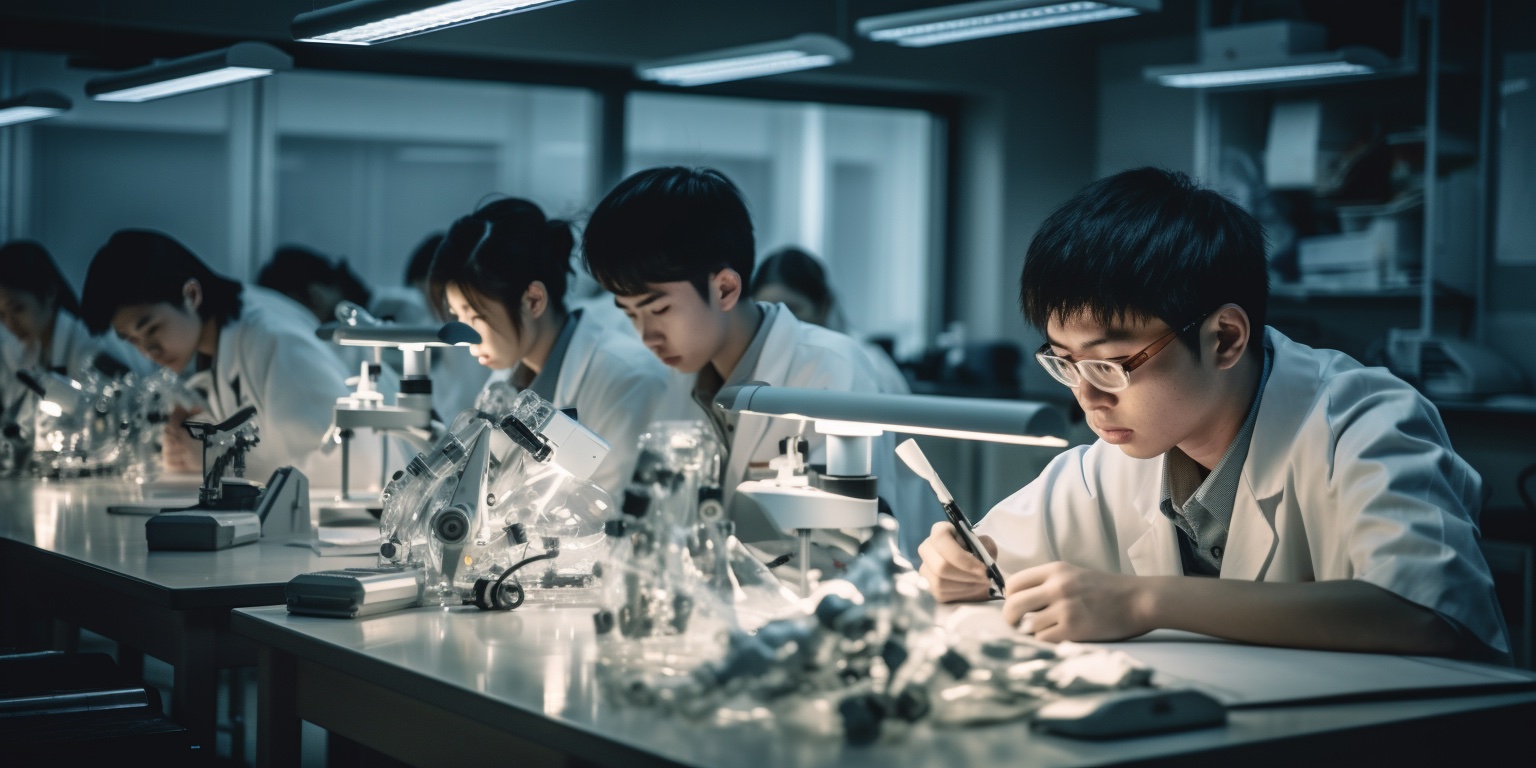
A Punggol student entering secondary school through Posting Group 2 (PG2) may encounter more structured Science laboratory lessons than in Primary 6. The most important preparation is not to memorise advanced chemical procedures or buy private experiment kits, but to understand school safety instructions, measurements, variables, observations and evidence-based conclusions. PG2 is a posting group; the individual Science level may be G2 or another confirmed level under Full Subject-Based Banding. Every practical activity must follow the actual school’s teacher instructions, authorised equipment and safety rules.
At Edgefield Secondary, Greendale Secondary, Punggol Secondary or Yusof Ishak Secondary, a new learner should know when laboratory entry is permitted, why protective equipment is required for some tasks, how to report a spill or breakage and how to record a measurement with its unit. Singapore’s lower-secondary G2/G3 Science syllabus emphasises systematic inquiry, accuracy, precision, scientific integrity and safety. This parent guide explains the thinking that makes practical lessons productive without giving instructions for unsupervised experiments with chemicals, heat, electricity or biological materials.
- PG2 and G2: the first is for admission; the second describes an individual subject’s level.
- Safety first: enter, handle equipment and conduct activities only under school authorisation and supervision.
- Read the brief: identify the question, method, controls, data required and safety warnings.
- Measurement: select the appropriate instrument, record values and units accurately.
- Observation versus inference: describe what happened before explaining why.
- Variables: recognise the factor changed, response measured and conditions held comparable.
- Errors: learn why accuracy, precision, zero error and parallax are not interchangeable.
- Scientific writing: link evidence to an explanation and state important limitations.
- Next step: practise interpreting a teacher-approved example and asking one clear question.
Definition lock: school laboratory work is not an entrance-group test
Posting Group 2 is part of Singapore’s system for assigning Secondary 1 places. Under Full Subject-Based Banding, students can take different subjects at different G1, G2 and G3 levels according to the applicable conditions. The original posting group is not a designation of which pieces of school apparatus a child is trusted to use, nor a permanent prediction of scientific ability. A learner’s practical activity depends on the school’s curriculum, the subject level, the lesson and the teacher’s safety instructions.
Parents sometimes worry that a child entering through PG2 will be excluded from genuine experimental learning. That fear misreads the educational framework. Scientific inquiry develops careful habits in every learner: observation, evidence, reasoning and responsible treatment of people and materials. An individual lesson may be simpler or more demanding according to the syllabus, but the underlying standards of honesty and safety remain important. The appropriate first question is what the child is expected to learn and how the teacher will help them do so.

Why secondary Science includes practical thinking
Science is more than a collection of facts to memorise. The Ministry of Education’s lower-secondary G2/G3 syllabus describes scientific knowledge as something developed through observation, experimentation, analysis, imagination and critical reasoning. Students learn that evidence may be quantitative or qualitative, that interpretations must be justified and that conclusions can change when new information appears. A practical lesson gives pupils experience with the challenges behind a clean textbook diagram.
A student may discover that a real measurement is not exactly the value expected. That is not an automatic failure. Instruments have limits, procedures require care and repeated observations can differ. The educational task is to record what actually occurred, evaluate the method and explain how reliable the evidence is. A learner who understands that science can be uncertain in precise ways is developing a deeper skill than one who simply memorises the result the teacher hopes to demonstrate.
The first laboratory rule: follow the actual school instructions
Singapore secondary schools publish laboratory safety instructions, but the assigned school and supervising teacher determine the rules for the specific room and activity. Published school guidance commonly says students must not enter a laboratory without a teacher’s permission or presence, must not conduct unauthorised experiments, and must report accidents or damage promptly. These principles are more important than any home video purporting to show an exciting trick with chemicals.
Ask the child to read their own school’s safety instructions and explain the reason behind them. A laboratory contains equipment and materials that cannot be handled like stationery. Running, eating, tasting substances or improvising procedures can create hazards. A teenager who does not understand an instruction should stop and ask the teacher before acting. Following directions is not the opposite of scientific curiosity. Safe conditions make careful observation and genuine inquiry possible.
Understand why protective equipment matters
Safety goggles, suitable clothing and other protective measures may be required for tasks involving chemicals, heat or possible splashes. The school’s rules specify which protection is needed and when. Do not assume the child should choose equipment independently from a generic online picture. A parent can explain the principle: protective measures reduce exposure to foreseeable hazards, and the correct equipment must match the activity.
A school may also require hair to be tied back, bags to be placed away from work areas or particular footwear. These arrangements are not cosmetic. They prevent ordinary movement from becoming a risk. Check the school’s published requirements and remind the student that classmates’ safety matters too. A pupil who sees another student behaving unsafely should seek teacher help rather than trying to manage an unsafe situation alone.
What to do if something spills or breaks
A broken piece of glass or an unknown spill is not a problem a student should hide or improvise around. The correct response is to stop, alert the supervising teacher immediately and follow the teacher’s directions. School safety guidance emphasises reporting accidents, breakages and spillages promptly, including incidents that appear minor. Students should not independently touch potentially hazardous debris or substances or attempt a procedure they have not been authorised to perform.
Parents can reinforce this response through an ordinary conversation: ‘If something goes wrong, whose job is it to help?’ The answer is the teacher or responsible laboratory staff, not a classmate who guesses what to do. Some children conceal errors because they fear punishment. Explain that honest, immediate reporting is part of being scientifically responsible. A hidden problem can become a larger hazard; prompt communication protects everyone.
Read an experiment brief before touching the apparatus
A practical lesson has a question, materials, an intended procedure, observations and a form of conclusion. Students should be able to state the purpose before beginning. If the question is to compare a property under different conditions, the learner should know what varies and what remains comparable. If the lesson is about measuring a quantity, the student should know which instrument is appropriate. A procedure written in a lab sheet is not permission to depart from the teacher’s instructions.
Ask the child at home to explain a completed, safe, school-approved exercise using only the written brief. What was the question? What was measured? Which safety instructions were important? Which result was observed? These questions practise understanding without repeating the physical experiment outside school. This is particularly useful when parents are unfamiliar with modern equipment or do not have a safe supervised laboratory setting.
Observation is not the same thing as explanation
An observation describes what the student directly notices or measures: a colour changed, a temperature reading increased or a material changed state, depending on the actual classroom activity. An inference proposes a reason for the observation. A scientific explanation connects the evidence with relevant concepts. Students often write a memorised explanation before they have accurately recorded the observation, causing their answer to report what ought to happen rather than what actually happened.
Use a purely hypothetical example about a graph showing temperature over time. Ask the child to state the numbers first, then describe the trend, and only then consider explanations. If the data fall while the student expected them to rise, the correct response is not to alter the values. Instead, examine whether the measurement, model or initial expectation needs further investigation. Honesty comes before an attractive conclusion.
The importance of units
A measurement without a unit is often incomplete. A temperature reading, distance, time interval or mass has a meaning that depends on how it was measured and reported. The lower-secondary Science syllabus discusses the use of appropriate instruments and SI units within inquiry. A student should therefore write the value and unit together, check the question’s expected notation and avoid switching between units without a deliberate conversion.
A simple schoolwork check might ask whether a value of ‘5’ means five centimetres, five seconds or five grams. Without context, the answer is impossible. This demonstrates why units are not decorations added after calculation. They are part of the physical claim. Students who learn to track units also strengthen Mathematics reasoning, especially when interpreting graphs, converting measurements and calculating rates.
Choose an instrument for the quantity, not for appearance
Different instruments are designed for different measurements. A ruler is appropriate for some lengths, a balance for mass, a timer for intervals and a measuring cylinder for certain liquid-volume measurements, according to the teacher’s activity. The student’s task is to understand why the chosen instrument matches the required quantity and what limitations the instrument may have. The most complicated apparatus is not always the best choice.
Parents can practise the selection concept using pictures and written descriptions without providing physical lab equipment. Ask which quantity must be measured, what unit would make sense and whether the instrument’s range or scale would be suitable. The child should learn to explain the choice. A measurement may look precise on a screen while still be inappropriate for the question. Reasoning about instruments helps students treat data as evidence gathered through a method rather than numbers appearing from nowhere.
Accuracy and precision answer different questions
The MOE G2/G3 lower-secondary syllabus distinguishes accuracy and precision. Accuracy concerns how close a measured result is to the true value; precision concerns how close repeated measurements are to one another. A set of readings can be tightly clustered yet consistently displaced from the true value because of a systematic error. Conversely, readings may vary widely but average near a reference value by chance. The two concepts should not be used as synonyms.
Consider an invented example in which repeated readings are 12.2, 12.2 and 12.3 units while a well-established reference is 14.0 units. The readings are close to one another but not close to the reference. This is a hypothetical numerical illustration, not an actual experiment. Ask the learner what the pattern suggests and which further checks would be needed. The goal is to interpret data, not to claim certainty about the cause without investigating the measurement process.
Parallax is a reading problem, not a strange formula
Parallax error can occur when a graduated scale is viewed from an inappropriate angle, causing the reading to appear displaced. Students sometimes memorise the word without understanding the physical source of the problem. A teacher can demonstrate correct scale reading using safe approved apparatus and the proper eye position for that instrument. Parents can reinforce the idea by discussing diagrams of viewing positions rather than recreating an experiment with hazardous materials.
The practical lesson is that a number can change because of how it was read, not because the measured object changed. Ask the child to identify where the reading position is shown in the classroom diagram and why it matters. The same care can help with measuring cylinders, rulers and other graduated equipment when appropriate. Correct observation requires attention to the measurement process as well as the final digits.
Zero error and why equipment checking matters
A measuring instrument may show a non-zero value when it should register zero. This is a zero error. The lower-secondary syllabus includes recognition of this condition, and some tasks may require learners to account for it under the school’s instructions. The important concept is that an instrument can contribute a consistent offset to measurements. A display that looks precise does not prove the reading is accurate.
At home, use a written illustration: a hypothetical scale always reads two units too high. If an object appears to measure twelve units, what is the possible corrected value under the stated assumptions? The answer may be ten units, but the correction is valid only if the instrument behaviour has been established. Students should not decide on their own to recalibrate or interfere with school equipment. The teacher is responsible for supervising appropriate checks.
What is an independent variable?
In a fair investigation, an independent variable is the factor deliberately changed to examine its relationship with an outcome. The dependent variable is the response measured, while controlled variables are important conditions kept comparable. The terms can seem abstract, especially if the student learns them as a list. A better method is to begin with the question: what are we changing, what result are we checking, and what must not vary in an uncontrolled way?
Use a harmless paper-based hypothetical scenario, such as comparing how different formats of printed instructions affect completion time among fictional readers. The wording, group and measurement method would matter. No real experiment with people is required to understand the variables. The child can label the roles and describe possible confounding factors. This helps build the habit of thinking about fair evidence before collecting numbers.
Why changing several factors is a problem
Suppose a fictional investigation changes both the size of a printed label and the lighting conditions, then observes that reading speed changes. Which factor caused the difference? The design may not be able to tell. If several things vary at once, the evidence becomes harder to interpret. This illustrates the purpose of controlled variables. A student should explain which factors would need to remain comparable in order to investigate one relationship more clearly.
Real experiments can be complex, and perfect control is not always possible. Good scientists acknowledge that limitation instead of claiming more than the method establishes. A lower-secondary learner can practise this judgement by reviewing a sample experimental design and identifying one feature to improve. The exercise strengthens reasoning without conducting an unsafe activity. What matters is the causal logic, not the spectacle of the apparatus.
Qualitative and quantitative evidence can work together
Qualitative observations describe characteristics such as appearance, texture or a visible pattern when such observations are appropriate and safe. Quantitative evidence records numerical measurements or counts. The G2/G3 lower-secondary Science syllabus recognises both kinds of evidence. A good report uses the form that answers the scientific question. A number alone may hide an important change in appearance, while a vague phrase such as ‘quite warm’ may be inadequate when a temperature measurement is required.
Teach the student to describe precisely without pretending to have more information than was recorded. If the lesson produced a series of temperatures, give the actual values and units. If only an observable change was recorded, report it faithfully. Do not invent a table of measurements later just because the conclusion sounds more scientific with numbers. The credibility of the report depends on correspondence between method, observation and written account.
A neat table should be read before it is filled
Many practical assignments use tables. The headings should identify the measured quantities and relevant units, while the entries should reflect the actual observed values. A student who copies a friend’s table before conducting or reviewing the approved activity loses the chance to understand where the data came from. Encourage the child to interpret the structure: what does each column represent, why are there repeated readings and how will the values support the question?
If the teacher supplies fictional practice data, label them as supplied data rather than claiming the student measured them personally. Where measurements are missing or unclear, ask instead of guessing. A blank cell can be a more scientifically honest record than a fabricated number. The student’s responsibility is to preserve the evidence accurately so that any subsequent graph or conclusion rests on a trustworthy record.
Graphs help reveal trends but can also mislead
A graph can make changes over time or relationships between variables visible. The axes, units, scales and source data should be stated clearly. Students should not draw a dramatic line merely because the worksheet seems to invite one. A graph based on a small dataset may show a pattern in the observed points without establishing a universal law. The student should be able to explain what the graph shows and what it cannot show.
Consider a hypothetical cooling graph with temperatures of 50°C, 44°C, 40°C and 37°C at five-minute intervals. The readings are illustrative only. They support the statement that recorded temperatures fell across the selected period, but they do not independently establish how every liquid cools under every condition. Ask the child to identify the trend, interval and units before proposing an explanation. The best graph-based answer links visible data to an appropriately limited conclusion.
Avoid treating a model as the actual experiment
A diagram or video of a laboratory activity can be useful for preparation, but it is a representation. It may show ideal equipment, simplified movement and perfectly smooth changes that real observations do not reproduce. A school experiment uses actual apparatus under real conditions. Students should distinguish what they saw in the demonstration from what they personally measured or what the teacher provided as reference data.
This distinction is especially important when learning from online educational videos. A clip may show a result without the full safety setup or controls. Parents should not encourage children to recreate chemical or heating demonstrations at home on the strength of a short video. Use the media to discuss the scientific idea, then follow the school’s supervised practical instructions. Understanding can be strengthened without physical reenactment.
Why an unexpected result may be valuable
Students sometimes panic when a result differs from the textbook example. They may think a low mark will follow unless they replace their readings with the expected answer. That is the opposite of scientific integrity. The correct approach is to record the observed result and consider potential explanations under teacher guidance. Perhaps the instrument was used incorrectly, the procedure had an uncontrolled condition or the initial assumption was incomplete. A conclusion should reflect what is known.
An unexpected observation does not always prove a new scientific theory either. One unusual reading may be an error or an outlier. Ask which repeated measurements, checks or alternative explanations would help distinguish the possibilities. The student should learn to tolerate uncertainty without becoming careless. A careful ‘we cannot determine the cause from these data alone’ is sometimes the most scientifically responsible answer.
The laboratory report is an argument from evidence
A useful report states the question or aim, describes the approved method at the appropriate level, presents actual observations or supplied data and explains the conclusion. The exact format is set by the teacher. Some school tasks require evaluation of limitations or improvements, while others emphasise specific measurement skills. Students should read the task brief rather than paste a generic template into every report.
The core reasoning is consistent: if the conclusion says one factor affects another, the evidence must support that relationship. If the experiment did not isolate the factor, the limitation should be acknowledged. If the student used units incorrectly, the interpretation may fail. Ask the child to point to the data that support each sentence. This habit connects Science with careful English writing and mathematical representation. A polished report is not one with the longest vocabulary but one whose claims are justified.
Scientific vocabulary should clarify, not decorate
Terms such as variable, accuracy, precision, inference and hypothesis help students express precise ideas. They are not words to scatter into every answer for extra marks. Ask the child to define a term in ordinary language and use it in a relevant context. If a learner calls every unusual measurement an ‘experimental error’, ask what kind of error they mean and which evidence supports that diagnosis.
A small glossary can help. Record the term, a clear definition, a diagram or example from schoolwork and one possible misunderstanding. Revisit the term a few days later without showing the notes. A learner who can explain parallax or controlled variables with a fresh example has stronger understanding than one who can recite a dictionary definition but cannot apply it. The goal is language that improves scientific reasoning.
The student should learn to ask permission and clarification
Independence in a science laboratory does not mean acting without supervision. It means reading instructions, recognising uncertainty, following safe procedures and asking for help at the correct moment. A student who notices a damaged item, unclear label or unexpected situation should stop and alert the teacher. Parents can reassure children that asking is an appropriate part of responsible laboratory work, not evidence of poor intelligence.
Role-play the question using only ordinary conversation: ‘I am not sure which measurement should go in this column; could you explain?’ or ‘I noticed the apparatus is damaged; what should I do?’ These are practical school communication skills. Do not rehearse hazardous procedures or invite the teenager to handle equipment without authorisation. Safe decision-making depends on knowing the boundaries of one’s responsibility.
What parents can do safely at home
Parents can support scientific reasoning with school notes, drawings, graphs, data tables and harmless everyday observations that do not require special apparatus or risky procedures. Ask a child to interpret a printed graph, identify variables in a hypothetical scenario or explain why a conclusion overstates the evidence. Discuss units and the difference between observation and inference. These activities develop the cognitive habits behind practical science without introducing chemical or electrical hazards.
If a teacher has assigned home activities, follow the exact instructions and safety guidance. Avoid supplementing them with social-media ‘science hacks’ involving heat, pressure, sharp tools or unknown substances. A child who enjoys experimentation deserves the right environment and supervision. A parent can nurture curiosity through questions, reading and responsible observation while leaving laboratory procedures to trained school staff.
One Punggol-inspired example: interpreting temperature data
A fictional student, Farah, receives a table showing temperature readings at regular intervals. Her task is to describe the pattern and explain what additional information would be needed to judge the reliability of the measurements. She first writes that the sample ‘lost heat quickly’. Her parent asks her to identify the actual values, units and time interval, then question whether ‘quickly’ has an agreed reference. She revises the sentence to describe the measured decline across the recorded period.
Farah also notices that the table contains only one reading at each time point. She therefore cannot claim high precision from repeated trials. The example is fictional; it does not report a real experiment or actual readings at Punggol Waterway. Its purpose is to show how observation, units and limitations create a more accurate scientific explanation. Good learning often involves making a claim narrower so that it becomes defensible.
Another example: a student misreads a scale
Imagine a fictional learner, Daniel, who reports the wrong volume because he interprets a marked scale from an unsuitable viewing position in a classroom illustration. His teacher explains the reading method for the actual apparatus during a supervised lesson. At home, Daniel’s parent uses only the diagram and asks him to identify why the original interpretation was unreliable. He then practises with a different printed scale.
The second example is important because it tests whether Daniel understands the cause rather than memorising a particular picture. If he can explain why viewing position matters and read the new diagram correctly, the learning has transferred. This fictional story is not an instruction to handle a laboratory measuring cylinder unsupervised. It shows how a parent can reinforce the intellectual part of a school practical through ordinary discussion and safe printed material.
A two-week readiness routine before laboratory lessons
In the first days, ask the student to read the actual school safety rules and describe who supervises the laboratory. Next, practise interpreting a simple investigation question, identifying the changed and measured variables, and reading units from a printed table. Later, discuss accuracy, precision and one source of measurement error using diagrams. End with a short written conclusion supported by hypothetical data. Each activity can be completed without special equipment or hazardous substances.
This is an optional home-learning sequence, not a replacement for school orientation or an official practical programme. The child may encounter topics in a different order. Use the teacher’s current notes and keep the work proportional to the student’s readiness and timetable. If a concept remains unclear, record one specific question for the Science teacher. Better understanding of the purpose and method can make a supervised practical lesson more meaningful when it occurs.
What a small-group tutor should and should not do
A tutor can help a student interpret a practical question, read experimental data, explain variables and produce a reasoned written conclusion. Close feedback is useful when the child confuses observation with inference or misreads units. The teacher or tutor should ask the student to explain a new example independently. That develops scientific thinking and confidence beyond copying a model answer.
However, tutoring should not promise unauthorised access to school laboratory facilities or encourage a child to recreate potentially hazardous experiments at home. The school’s supervised practical instruction remains essential. A good educational intervention complements that instruction with clear conceptual teaching and safe practice on paper or approved materials. The purpose is to create a student who understands scientific evidence and respects laboratory rules, not one who collects spectacular experiments for an online video.
From the school laboratory to responsible everyday observation
Science also exists outside the laboratory. A Punggol resident might notice changes in clouds, temperature, plant growth or the use of public spaces. These observations can inspire questions, but they do not automatically become reliable experiments. Weather changes, time of day and other uncontrolled factors can influence what is seen. A student should label casual observations honestly and avoid making strong causal claims without suitable evidence.
If visiting Punggol Waterway Park with family, follow NParks park etiquette, stay on permitted paths and observe wildlife from a safe distance. Do not collect animals, take water samples, approach nests or conduct unauthorised tests. Responsible observation builds curiosity and respect. Laboratory science and outdoor awareness share a commitment to evidence, but their methods, permissions and safety boundaries are different.
Official sources and the next step
Read MOE’s G2/G3 Lower Secondary Science Syllabus for the national emphasis on inquiry, evidence, measurement and safety. Published Temasek Secondary School laboratory safety guidance and Serangoon Garden Secondary laboratory rules illustrate common principles, but the assigned Punggol school’s own instructions take priority. For the separate G2 Science subject and syllabus choices, see What is G2 Science.
This guide concentrates on preparing for supervised laboratory learning rather than comparing school programmes or predicting SEC exam formats. Your next step is to ask the child to read the actual school’s laboratory instructions and explain three things: when to stop and seek help, how to record a measurement with its unit, and how an observation differs from a conclusion. Those habits support both safety and good scientific thinking.
Frequently asked questions about Secondary 1 G2 Science practical learning
Does PG2 mean my child cannot use a Science laboratory?
No. PG2 is an admission group. School practical learning follows the curriculum, confirmed subject level, teacher supervision and local safety procedures.
Should a parent buy chemicals or burners for home practice?
No. Do not recreate hazardous school experiments at home. Use safe paper-based data, diagrams and teacher-approved activities to support understanding.
What is the most important first laboratory rule?
Follow the assigned school’s instructions, enter or work only with authorisation and supervision, and ask the teacher when unsure.
What should a child do after a spill or breakage?
Stop, notify the supervising teacher immediately and follow their directions. Do not improvise clean-up of unknown materials.
What is the difference between accuracy and precision?
Accuracy concerns closeness to the true value; precision concerns agreement among repeated measurements.
What is parallax error?
It occurs when a measurement scale is read from an inappropriate viewing angle, affecting the apparent position of the reading.
What are controlled variables?
Important factors held comparable so that the effect of the chosen independent variable can be investigated more clearly.
Can one unexpected result prove a new law?
No. Consider measurement limits, repeatability, alternative explanations and how much evidence the investigation provides.
What should a Science practical conclusion include?
A claim that answers the question, relevant observed data or supplied evidence, the scientific explanation and important limitations.
How can parents help without a laboratory?
Practise reading diagrams, selecting variables, checking units, evaluating hypothetical data and explaining reasoning with the student’s current school notes.
Editorial note, 1 November 2026: Science safety procedures, lesson activities and reporting formats must be confirmed with each school. Fictional students, measurements and investigations are illustrations, not claims of actual experiments. This guide intentionally gives no instructions for unsupervised hazardous activities.


