
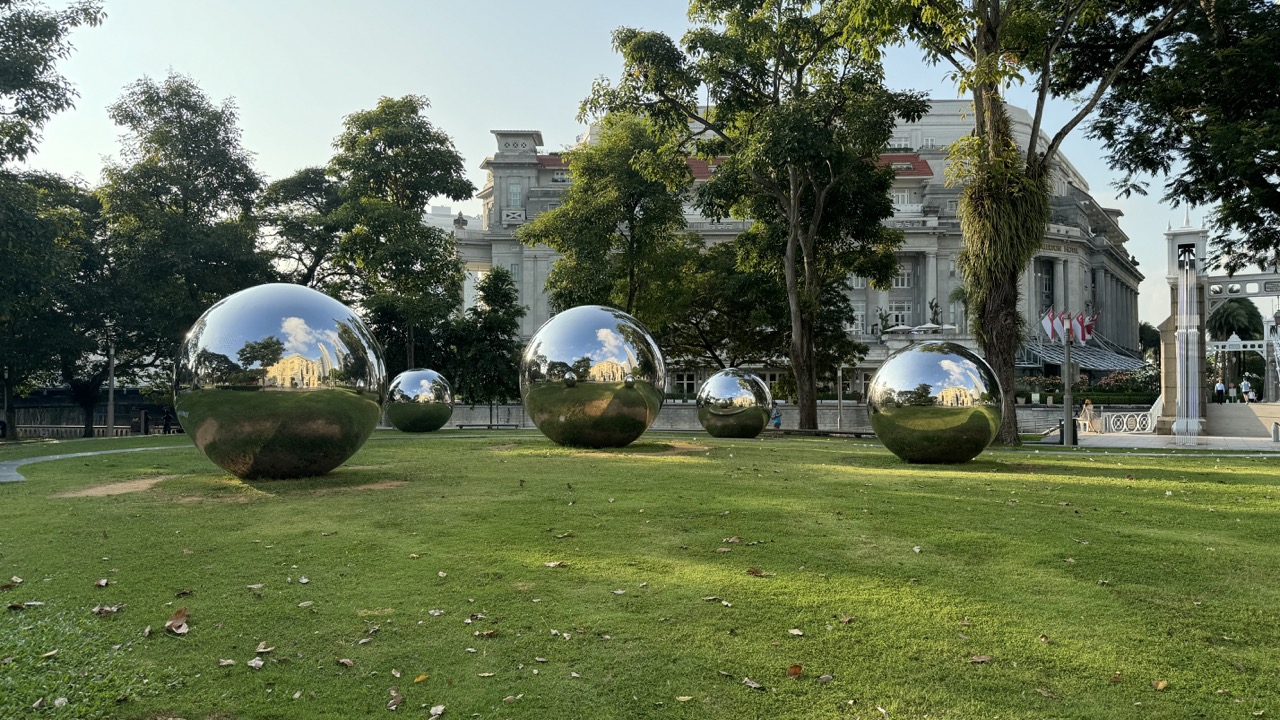
How PG1 works at Punggol for Art and Music is not determined by whether a student takes English or Mathematics at G1, G2 or G3. Posting Group 1 is the Secondary 1 admission route under Full Subject-Based Banding (Full SBB), while Art and Music are among the common lower-secondary curriculum subjects taught in mixed form classes. Students can observe and discuss artworks, communicate ideas through artistic choices, listen attentively, create musical responses and develop confidence through appropriate collaborative tasks. These subjects provide another way for pupils with different academic profiles to learn together, discover their strengths and practise careful thinking.
For parents choosing a Punggol secondary school for 2027, the first practical step is to examine the school’s current Art and Music learning experiences rather than assume every campus has the same instruments, specialist programmes or showcase opportunities. MOE’s 2024 Lower Secondary Art syllabus and its Primary and Lower Secondary Music syllabus provide national curricular guidance; school activities, equipment and teaching sequences still differ. Parents can support creativity through safe observation, sketching, listening and discussing how an idea changes after feedback. They should not replace the child’s work with adult drawings, expect every student to perform publicly or confuse common Art and Music lessons with selective higher-level programmes or CCAs.
- PG1 is not an arts category: it is an admission Posting Group. Art and Music are common lower-secondary learning experiences under Full SBB.
- Art learning: observe thoughtfully, investigate visual ideas, experiment with materials appropriately, make choices, explain meaning and reflect on outcomes.
- Music learning: listen, create and perform, with understanding of musical elements, expression, context and collaborative participation.
- Mixed form-class benefit: students share artistic tasks and can recognise different strengths without being ranked by academic subject level.
- Family practice: keep a small visual notebook, discuss an artwork, describe what a musical pattern does and revise one authentic creative attempt.
- Local exploration: school displays, public art, library resources and suitable Singapore arts events can inspire discussion, subject to programme availability.
- Safety and privacy: use materials appropriately, respect hearing levels, do not record classmates without permission and credit creators.
- School-choice checklist: verify Art and Music teaching, CCA selections, enrichment, accessibility and current programme requirements.
- Future choice: the common lower-secondary curriculum does not automatically guarantee admission to Art Elective Programme, Music Elective Programme or any upper-secondary examination subject.

Creative learning is not reserved for students with high marks
A child who struggles to interpret a long English passage may nevertheless notice subtle changes in a visual image. Another who is quiet in class might recognise a musical rhythm immediately. A third may be confident singing but uncertain drawing. None of these observations provides a complete assessment of academic readiness, yet all reveal possibilities for meaningful learning. Art and Music let children demonstrate different kinds of attention, expression and practice.
The key educational opportunity is not to label someone a “creative child” as though academic learning no longer matters. It is to notice that abilities are varied and can strengthen one another. Discussing an image requires precise language. Composing a pattern requires planning and revision. Comparing two performances involves evaluation. Artistic work is thoughtful work. Parents who understand this can encourage exploration without pressuring the child to produce a gallery-worthy result every lesson.
Why mixed form classes matter in Art and Music
Full SBB allows students to offer academic subjects at different levels while learning common curriculum subjects together. Art and Music are part of the lower-secondary shared curriculum, along with Design and Technology, Food and Consumer Education, Physical Education and Character and Citizenship Education. Such classes provide regular opportunities for students with varied academic strengths and interests to interact as a community.
Imagine a class designing a simple visual message. One child communicates through striking imagery, another writes a clear caption and another notices that the text is hard to read against the background. The result improves through different contributions. In Music, one student may keep the pulse, another suggest a change in texture and a third listen carefully for balance. Shared learning is meaningful when every pupil has a role, not merely when the timetable places them together.
Art and Music are different subjects with related habits
Art often works through visual forms such as drawing, painting, design, photography, sculpture or mixed media, depending on the lesson. Music works through sound, including listening, creating and performing. Their materials and specific concepts differ, but both involve observation, intention, experimentation, decisions and reflection. A student learns to ask what an artistic choice communicates and how someone else might experience it.
Parents should not expect the same assessment format in both subjects. A visual work might be accompanied by sketches and an artist’s explanation, while a Music task might involve listening, practical participation or a short creative response. The school’s actual rubric determines how achievement is assessed. At home, focus on understanding the process rather than comparing the number of pages or the apparent sophistication of the final result.
The purpose of lower-secondary Art
MOE’s Lower Secondary Art teaching syllabus, implemented from the 2024 Secondary 1 cohort, supports artistic processes, visual awareness and learners’ ability to create and respond to art. Students can explore experiences, people, places and ideas through visual work. The aim is broader than drawing something accurately from a photograph, although careful observation can be part of the learning.
A family might begin with the question, “What did you notice?” before asking whether a drawing looks good. The child could explain why a subject was placed in the centre, what colours create a particular mood or which detail attracts attention. This develops visual literacy. The student learns that images make choices, just as written texts make choices. Understanding those choices helps them become more thoughtful creators and viewers in an image-rich world.
Looking carefully is a learned skill
Students often glance at an artwork and respond “nice” or “boring”. Those feelings are valid starting points, but they are not explanations. Ask what is actually visible: shapes, lines, textures, colours, space and relationships between objects. Then ask what the viewer thinks the choices communicate. Separate description from interpretation so the child knows which claim is directly supported and which requires a reason.
Try looking at a familiar public mural or a suitably reproduced artwork. Ask the learner to describe three visual features without judging them. Next, invite one interpretation and ask what feature supports it. A second viewer may notice something different. The purpose is not to declare that all interpretations are equally convincing. It is to show that art discussion can be evidence-based and open to respectful comparison.
Sketchbooks are places to think, not perform
An Art sketchbook can show trials, experiments, questions and changes of direction. Parents sometimes want every page to be beautifully finished, but that defeats part of its function. A rough drawing may capture an observation that later becomes the basis for a stronger piece. An annotation might explain a problem the student encountered. The sketchbook is useful because it preserves thinking.
Encourage the child to date an entry and state what they were trying to discover. If a drawing looks awkward, ask what part is most difficult and whether another viewpoint would help. Do not redraw the page for them. The value lies in the learner’s attempt and revision. Over time, the student may see progress in line, proportion or composition. That evidence can build confidence more effectively than a parent’s repeated declaration that every drawing is perfect.
Why copying a reference is not the same as developing an idea
References help students study techniques, subjects and artistic choices. But presenting another person’s work as original is misleading. A learner should understand when an image is a source of inspiration, a study of a technique or material that requires attribution. The school’s academic-integrity and copyright rules apply to assignments. Parents should help students record where an image came from instead of teaching them to hide it.
A useful exercise is to compare a reference with the student’s own work and ask what changed: composition, viewpoint, subject or message. If the project requires an original response, encourage genuine decisions rather than superficial alterations. This is especially important when digital tools make copying or transforming an image easy. Creativity involves considered choices, not merely applying a filter and claiming authorship.
Colour can communicate but does not have one universal meaning
Students may hear that a particular colour always means one emotion. Such formulas are too rigid. Colour associations depend on culture, context, contrast and the rest of the composition. A bright red object can communicate excitement in one setting and caution in another. Ask the student how a chosen palette works in the specific image and what alternatives might do differently.
A safe exercise uses coloured pencils or a simple drawing tool. Produce two versions of a small design with different colour relationships and compare the effects. The child should explain what changed and why. This is not a test of whether the learner has guessed the one correct emotion. It develops the ability to make and evaluate visual decisions. Clear reasoning matters more than repeating symbolic labels without context.
Composition helps a viewer know where to look
Composition concerns how visual elements are arranged. A drawing may contain many good details but leave the viewer uncertain about its main subject. Ask what should attract attention first and how size, contrast, position and spacing can help. These are practical questions that connect Art with design and communication.
Imagine a student creating a poster for a fictional community reading day. If the date is tiny and the decorative picture dominates, the design may fail to communicate essential information. Ask what the audience needs and which elements deserve emphasis. This is a useful Art task even for a student who does not consider themselves talented at illustration. Thoughtful composition helps images serve a purpose. It also transfers to presentation slides, diagrams and project displays.
Materials should be chosen for an artistic reason
Different media produce different marks, textures and effects. Pencil, charcoal, watercolour, collage and digital tools may support different intentions, where they are offered and suitable. A child should learn that the material affects the outcome and may require a different technique. The goal is not to buy the most expensive set of supplies. It is to understand what the task requires and use available materials responsibly.
At home, simple pencils and paper can be enough for observation and planning. Follow age-appropriate safety guidance; some paints, solvents and cutting tools should not be used without appropriate supervision. Ask why the student selected a particular method and whether the result matches their intention. A messy experiment can still teach something important. Parents should value reflection as well as finish.
Art criticism should be specific and respectful
A peer who says “your drawing is bad” gives little useful feedback. Constructive criticism identifies what the creator intended, which features are effective and what might be improved. Teach students to ask questions rather than issue personal judgments: “Which area do you want the viewer to notice first?” or “Would a different contrast make the text clearer?” This makes revision more likely.
The creator also has a responsibility to listen without treating every suggestion as an attack. They can accept, test or explain why they are keeping a choice. Good critique becomes a conversation about the work, not the person’s worth. Such habits matter in a mixed form class where students have different levels of confidence and experience. The classroom should make experimentation safer, not turn artistic attempts into opportunities for ridicule.
A local art walk can develop visual literacy
Punggol’s public architecture, landscaped spaces, community displays and signage can provide opportunities to notice design and visual messages. A family might compare the shapes used in two buildings or discuss why a sign is easy to read. These are observations rather than claims that the places are officially part of a school’s Art programme. The learning activity should be respectful of public rules and the privacy of other people.
A child can sketch a building detail from a public viewpoint, then ask which shapes or patterns recur. Avoid entering restricted spaces or photographing identifiable people for publication without consent. When discussing a public artwork, establish its creator, date and context from an appropriate source if those facts matter. Art appreciation becomes stronger when learners combine close looking with accurate information rather than inventing an artist’s intentions.
Why Music belongs to every child’s education
Music offers a way to organise, express and understand sound. A student can learn to listen attentively, recognise patterns, participate in a group and create a short musical idea even without years of private lessons. MOE’s Primary and Lower Secondary Music syllabus describes learning through Listening, Creating and Performing, alongside connections with culture and experience. These are educational processes, not simply a rehearsal for a concert.
Parents need not assume that every student must become a vocalist or instrumental performer of high standard. A listening task can involve identifying contrasts or changes in musical elements. A creating task may involve making a short original pattern. Performing can include appropriate participation in a class activity. The exact equipment and expectations should be confirmed with the school. The foundation is musical understanding and engagement, not comparison with a trained professional.
Listening is more than hearing a familiar tune
A teenager may enjoy music all day yet find a structured listening task difficult. Focused listening asks what is happening in the sound: whether the pulse is steady, what changes, whether one layer becomes louder or whether the texture becomes denser. The student should use language suited to the lesson rather than guess from vague emotion alone.
A parent can ask the child to describe an original rhythm or a very short recording for which the family has appropriate permission to use. Discuss what repeats, what changes and how the pattern is organised. Avoid reproducing copyrighted material in public uploads. The learning objective is to notice elements that were previously overlooked. As listening improves, students can discuss more complex works with greater precision and appreciation.
Rhythm gives structure to time
Rhythm involves the arrangement of durations and accents, while pulse provides a regular reference in many musical contexts. Students can explore the difference through a simple original clapping exercise or classroom task. The aim is to understand a relationship rather than imitate a complicated performance perfectly. Ask where the pattern repeats and whether a change affects the listener’s expectations.
A safe home activity can be a short, quiet original rhythm created by the learner, using hands or spoken syllables. Keep the volume considerate of neighbours and do not require expensive equipment. Let the student explain the pattern and vary one element. This develops attention, sequencing and self-correction. These are transferable habits, though Music should be respected as a subject in its own right rather than valued only because it might help Mathematics.
Melody and expression involve choices
A melody can create a recognisable musical idea through pitch and timing. Students may investigate how a phrase rises, falls, repeats or changes. They can also consider how dynamics, tempo or articulation alter expression, according to the syllabus and available activity. A child who cannot yet read complex notation may still make meaningful observations and creative choices.
A teacher can introduce notation or instruments at an appropriate stage. Parents should not assume that the school provides one specific instrument to every student. Ask what the child’s actual lesson involves and what practice is expected. A learner may benefit from singing, listening or using a school-approved digital tool. The objective is understanding the music being made, not pretending that a particular technique or performance level is compulsory for all PG1 pupils.
Creating Music is a process of trial and revision
When a student creates an original short musical idea, the first version may be repetitive or awkward. That is not necessarily failure. The child can listen back, identify what they intended and make one change. Maybe the phrase ends too abruptly or a repeated section needs contrast. A simple reflection turns the activity into deliberate creation.
If recording is allowed, use the child’s own original material and follow school privacy rules. Do not record classmates or upload performances without permission. Families should also be mindful of neighbours and safe listening volume. An authentic attempt that the student can explain provides stronger evidence of learning than a polished track produced entirely by an adult or generative tool. Creativity becomes educational when the learner understands the decisions.
Ensemble learning teaches attention to others
Music is often collaborative. Students may need to follow a leader, keep time with peers or adjust their contribution so the group can perform cohesively. The task is not simply to play louder to prove individual ability. Listening to others is a practical skill that helps the ensemble work.
A parent can ask what role the child had and how they knew when to enter or stop. If a rehearsal went badly, what changed in the next attempt? Such questions encourage reflection without making every mistake humiliating. Students with different musical backgrounds may contribute at different levels. The teacher’s task is to create a suitable learning experience, while the family can reinforce patience, preparation and respect.
The relationship between Music class and Music CCA
A common Music class is different from joining a choir, band, orchestra or other performing arts CCA. Common lessons are part of lower-secondary curriculum arrangements. A CCA may involve selection, longer rehearsal commitments, performances and LEAPS-related participation. School offerings vary. A student may enjoy Music lessons without wanting a performing arts CCA, or they may find the CCA a meaningful extension.
Parents should ask about the actual CCA list, auditions or trials, costs and after-school schedule rather than assuming that a good Music grade guarantees a place. Conversely, a student who is still developing basic musical skills might benefit from an available beginner-friendly activity. The decision should reflect interest, safe participation and a realistic weekly routine. Musical growth does not need to become a competition for certificates alone.
Art class and Art CCA are also distinct
A student who enjoys common-curriculum Art may become interested in an Art Club or another creative CCA if the school offers one. But the CCA and the national subject curriculum are different arrangements, with different time commitments and potential opportunities. Selection or capacity may apply. An attractive example of a student’s work at an open house does not establish that every incoming pupil will complete the same project.
Ask the school which opportunities are cohort-wide, which are optional and how students can explore interests beyond normal lessons. A local art exhibition or community programme may also inspire the child, but outside participation is not automatically counted as school CCA activity. Understand the actual rules. A family makes better decisions when it separates appreciation, formal coursework, enrichment and selective programmes instead of treating them as one undifferentiated pathway.
The National Arts Council can provide wider exposure
Singapore’s National Arts Council supports school arts learning through schemes such as the Arts Education Programme, which provides curated arts experiences, and the Artist-In-School Scheme, which supports artist-school partnerships. According to its 2026 public information, the programme seeks to support meaningful exposure and appreciation. These initiatives do not mean every Punggol school automatically offers the same artist, visit or performance in a particular term.
At an open house, a parent can ask whether the school participates in arts events or partnerships and what the student experience actually involves. If the family explores an event independently, check ticket conditions, age appropriateness and accessibility. The important educational outcome is not collecting photographs of venues. It is helping the child observe, interpret and discuss something they encounter. A short thoughtful conversation after an exhibition can be more valuable than rushing through several displays.
Comparing artworks builds thinking without requiring agreement
Choose two images that the family may lawfully view and ask what is similar or different in their visual choices. The works may represent the same subject in distinct ways. Ask how composition, perspective or colour changes the impression. The student should support their response with observable details and recognise uncertainty about the creators’ intentions.
Do not insist that the child must prefer the work an adult considers more sophisticated. Preference is a useful starting point when supported by reasoning. A child can say “I prefer this one because the clearer contrast makes the subject easier to notice,” while another viewer may have a different interpretation. Learning to articulate a response respectfully is part of visual literacy. It also helps students discuss advertising images and online media more critically.
Comparing musical interpretations teaches nuance
Two performances of a similar musical idea can feel different because of tempo, dynamics, articulation, instrumentation or context. Students can learn to describe those differences rather than say only that one sounds better. Use school-provided material or recordings that the family is entitled to access. A structured question might ask which performance uses a faster tempo and how that affects the listener’s experience.
The aim is not to reproduce copyrighted audio in a public video or to turn home learning into a technical lecture. A child may begin with ordinary language, then learn appropriate musical terminology. Encourage them to say what they actually heard and acknowledge which details they are uncertain about. This is the musical equivalent of evidence-based explanation: observations support interpretations.
Digital Art and generative AI need clear ownership
Digital drawing tools can help students explore colour and composition. Generative AI can also produce images quickly. But speed and polish do not prove that the child developed an idea. If a school assignment permits AI assistance, students should follow disclosure rules, check outputs and maintain authentic ownership of the work they claim. An AI-generated picture should not be silently submitted as an original hand-drawn study.
Parents can teach a useful distinction: using a tool to test colour options is different from asking it to produce the entire assessed outcome. Even when AI is allowed, the child should explain what they contributed and what they verified. Do not upload identifiable schoolmates, private briefs or other protected information into external systems without authorisation. Responsible creativity includes honesty about sources, tools and permissions.
Cultural context matters when appreciating music and art
Singapore’s arts reflect many cultural traditions, histories and contemporary influences. A student may encounter visual patterns, instruments or performance practices that are unfamiliar. Encourage curiosity and accuracy rather than treating one example as representative of an entire culture. Ask where a work comes from, who created it and what reliable information is available about its context.
It is possible to enjoy a work without fully understanding it, but educational discussion should distinguish observation from conjecture. If the child wants to know why an artist made a particular choice, seek a trustworthy description rather than inventing an intention. Respecting creators and communities is part of arts education. This approach connects creative learning with citizenship in a diverse society.
Creative confidence does not require public exhibition
Some students enjoy making work privately and feel uncomfortable displaying unfinished pieces. Others love performing in front of people. Neither preference alone determines creative ability. Schools may have legitimate presentation or assessment requirements, but parents should distinguish those from the expectation that every hobby must become public. Help the child develop confidence through manageable tasks and respectful feedback.
A small family conversation about a drawing or original short musical phrase can be enough. Ask what the student intended and what they learned. If they want to share it, discuss consent and audience. Avoid posting a teenager’s work and identity without permission. The goal is to create an environment where trying something new is safe enough for genuine experimentation. Creative growth is undermined when every attempt must be judged immediately by a public audience.
A four-week creative learning routine
Week one can focus on visual observation: sketch a safe everyday object and describe three features. Week two can involve an original small visual composition and a revision after feedback. Week three can focus on listening: identify repetition, contrast or a change in a short permitted musical example. Week four can invite an original rhythm or simple creative response and a reflection on the process.
This is an illustrative family routine, not a replacement for the school’s Art or Music lesson plan. It requires little equipment. Keep sessions manageable and let the student explain their own work. Do not force the two subjects to produce the same evidence. A visual sketch and a musical reflection use different forms of expression. The common principle is observation, intention, feedback and improvement.
Worked example: a poster with beautiful but unreadable lettering
Imagine a fictional Punggol student, Jia, designing a poster for a school reading activity. Her illustration is colourful and carefully rendered, but the event details are small and difficult to find. Her first reaction is that the poster must be good because it looks attractive. A teacher asks what the audience needs to know and which element should attract attention first.
Jia revises the arrangement so the essential information is visible while keeping the expressive drawing. She compares the before-and-after versions and explains her decision. The improvement is not simply that an adult told her to make letters bigger. She has learned about purpose, hierarchy and the viewer’s experience. This is an authentic Art-and-communication outcome that can transfer to presentation slides, signs and digital media.
Worked example: the student who plays faster instead of together
Imagine a fictional Secondary 1 student, Ray, who feels confident performing a short rhythm but repeatedly speeds up when classmates join. He thinks demonstrating speed will prove his ability. The teacher asks him to listen to the group’s pulse and notice where his part no longer aligns. He tries again more attentively and learns that successful performance involves coordination.
A parent can reinforce the lesson by asking what changed rather than praising speed or criticising the student personally. Ray’s reflection might state, “I listened for the shared pulse before starting my next phrase.” The growth is specific and observable. He has learned a musical skill and a wider collaborative habit. The lesson does not depend on a competition result or a particular admission group.
What parents should ask at a Punggol school
Families researching Edgefield Secondary, Greendale Secondary, Punggol Secondary, Yusof Ishak Secondary or nearby schools can ask how lower-secondary Art and Music are taught, what facilities are available and how beginners are supported. Ask whether the school offers particular CCAs, arts experiences or specialist programmes and whether selection requirements apply. Always verify the current programme list and do not assume a school that mentions innovation also offers a specific advanced Art course.
Look at student work with curiosity about process. Are there sketches, revisions and explanations, or only finished pieces? Do teachers describe participation by students with varied experience? How are collaborative contributions recognised? These questions reveal the quality of learning more clearly than a polished display alone. School fit also includes the child’s full schedule, friendships, transport and academic needs. Art and Music should be part of an informed whole-school decision.
How Art and Music can support other subjects
Art can strengthen observation, visual communication and the ability to organise information. Music can develop attention, pattern recognition, disciplined practice and listening to others. These connections are educationally useful, but parents should not promise that learning a musical instrument will automatically raise Mathematics marks or that sketching guarantees better Science results. Transfer requires deliberate reflection and appropriate application.
A simple link might involve a student drawing a clear Science diagram or using careful listening during an oral-language exercise. Ask which habit from Art or Music helps and why. Then test it in the new context. This is the same principle that underlies good study skills: a method becomes powerful when the learner understands when to use it. The arts remain worthwhile in their own right even when no measurable benefit appears in another subject’s grades.
Art pathways later in secondary school need official checks
Some students may later be interested in upper-secondary Art, Higher Art, Music or Higher Music, or special arts programmes. Such options have eligibility, school offering and sometimes admission or selection requirements. Common lower-secondary Art and Music do not automatically confer places. Parents should compare the pupil’s authentic interest with the actual routes available, rather than promise a future SEC subject based on one successful school project.
MOE provides information on the Art Elective Programme and related pathways. Families should consult current guidance and school subject-combination rules before making consequential decisions. A pupil who enjoys creative work can still investigate a wide range of futures, including design, communication, engineering or other fields, but these routes have different academic requirements. The strongest early preparation is genuine practice, observation, literacy and responsible exploration.
Frequently asked questions about PG1 Art and Music
Are Art and Music taught only to PG1 pupils? No. They are among the common lower-secondary curriculum subjects taught through mixed form-class arrangements under Full SBB, subject to school timetabling.
Does a student need prior lessons to participate? Common curriculum subjects are intended as school learning experiences, though exact tasks vary. Ask the school how it supports students with different prior exposure.
Is Art about drawing beautifully? No. Observation, ideas, communication, materials, decisions, explanation and reflection matter as well as practical technique. Follow the school’s actual assessment criteria.
Is Music the same as joining the school band or choir? No. Common Music lessons and performing arts CCAs are different arrangements. CCAs may have trials, selection and additional commitments.
Can parents submit an AI-generated image as their child’s work? Only according to the school’s rules, with any required disclosure. The child must not misrepresent another creator’s work as their own.
Do Art or Music guarantee a later advanced subject or career? No. Later subject and programme options depend on school offerings, selection, eligibility and actual results. Early lessons are valuable without such guarantees.
Official sources and connected Punggol reading
Use MOE Full Subject-Based Banding, MOE’s Lower Secondary Art syllabus, MOE’s Primary and Lower Secondary Music syllabus, National Arts Council Arts Education Programme and MOE SchoolFinder. See PG1 mixed form classes, PG1 CCAs and LEAPS 2.0 and PG1 Design and Technology for related education questions.
This guide reflects information available in November 2026. School activities, programme selection and later examinable subject offerings can change. A useful next step is to let the child choose one artwork or musical idea, describe what they notice, explain a creative choice and make a small independent improvement.


