
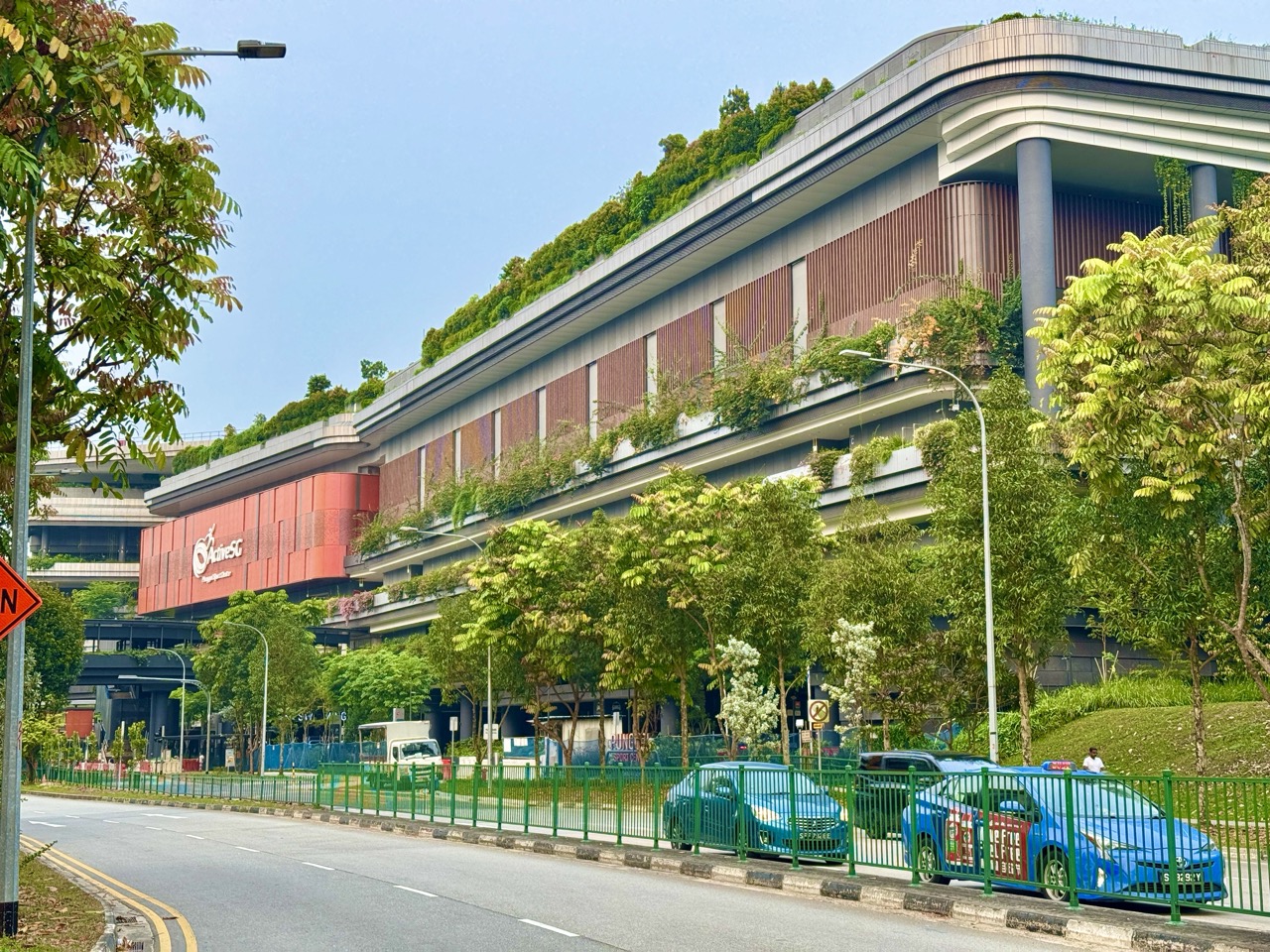
ActiveSG Punggol school learning visits for 2027/2028: Punggol Sport Centre at 11 Sentul Crescent can provide a useful context for learning about physical education, safety and community sport, but a school must obtain the appropriate permissions before bringing a class for an activity, tour or event. The centre began phased public operations on 27 October 2026, with gym and selected courts opening before every planned facility. A personal court booking is not an authorised school excursion or exclusive hall hire.
MOE’s Physical Education syllabus was implemented from 2024 for primary students and 2025 for secondary and pre-university levels, and focuses on Physical Activity, Outdoor Education, and Physical Health and Safety. SportSG separately publishes organisation and school-concession facility rates; these do not guarantee a Punggol school slot. This guide helps teachers plan a curriculum-linked group visit, obtain real venue confirmation and protect students without inventing school programmes or opening dates for 2027–2028.
- Venue: Punggol Sport Centre, 11 Sentul Crescent, Singapore 828656, near Sam Kee LRT
- Three visit types: permitted observation, approved coached participation, or authorised event attendance
- Curriculum: connect objectives to movement, outdoor education, safety, values and lifelong participation
- Booking: use the operator’s actual school or organisation process—not personal court reservations as a shortcut
- Student protection: responsible staff, supervision, safeguarding, accessible participation and privacy
- Costs: verify school-concession eligibility, the exact venue and all additional charges
- Weather and transport: follow official safety advisories and plan group movement realistically
- 2027–2028: recheck facility availability, approval and school-specific procedures
The educational value of a sports centre is not the number of pupils who can stand in front of it for a photograph. It is the quality of the movement, observation, reasoning and reflection students can safely undertake within the permissions actually granted.

Definition lock: a learning visit is not a public sports booking
A school learning visit is an organised educational experience with a clear purpose, responsible staff, necessary permissions and a safe programme. That differs from one teacher buying an ordinary court slot under a personal account and arriving with a whole class. A reservation provides only the permitted facility use described in its terms.
Teachers may want students to observe public sports infrastructure, practise movement in a supervised approved session or attend an announced sporting event. These are three different models with different costs, logistics and supervision. Not every model is automatically available at Punggol Sport Centre.
Begin with the intended learning outcome, then contact the relevant venue or event operator to establish whether the group can actually attend.
The venue and what had opened in October 2026
Punggol Sport Centre at 11 Sentul Crescent, Singapore 828656, began a phased soft opening on 27 October 2026. The gym and selected sports courts were operational while some pools, stadium and specialist amenities required separate public access checks. Teachers should not assume every area in a six-level development can be used for a student activity.
The complex stands near Sam Kee LRT and the independently operated SAFRA Punggol clubhouse at 9 Sentul Crescent. Their facilities cannot be combined into a single school outing without separate permission and actual reservations.
A responsible itinerary names the exact facility, entrance and booking status. Architectural descriptions help with context but do not establish a school visit slot.
The current MOE Physical Education framework
MOE’s 2024 Physical Education syllabus began implementation at primary level in 2024 and at secondary and pre-university levels from 2025. It identifies Physical Activity, Outdoor Education, and Physical Health and Safety as interconnected areas for learning in, about and through movement.
The framework emphasises movement competence, healthy lifestyle practices, safety mindset, core values and enjoyment. This offers a stronger justification for a carefully designed educational experience than the claim that a new building is impressive or students need to leave school for fun.
A proposed Punggol learning visit should make a genuine connection with the syllabus while recognising that the official curriculum does not grant automatic access to an external venue.
Three legitimate models for an educational outing
An observation-focused learning journey might explore public wayfinding, accessible routes and how a community centre supports active living. A coached activity needs an approved instructor, equipment and facility reservation. Attendance at a sporting event requires the organiser’s admission rules, ticketing and student supervision.
The models can be educationally valuable in different ways. Observing an event may teach sportsmanship and operations; a guided movement session may build a specific skill; a site-oriented inquiry may develop community awareness. But they cannot be treated as equivalent bookings.
Select one defined model before applying for approval. A vague instruction to ‘visit ActiveSG Punggol’ leaves too much uncertain.
Primary students: keep learning concrete
Primary-school children often learn well through familiar examples and guided observations. A teacher could discuss why pathways have crossings, how sporting spaces are shared or what respectful behaviour looks like during a small supervised game. The learning should be matched to age and current abilities.
A complex investigation with many measurements can overwhelm younger students, particularly when the venue is crowded or transport is unfamiliar. Clear questions, a manageable route and short reflection tasks often serve the educational objective better.
Do not assume every Primary 1 or Primary 2 child has identical stamina or confidence. Build appropriate rest and supervision into the experience.
Secondary students: reasoning about public sport
Secondary students may be ready to compare how a venue balances public recreation, tournaments, safety and accessibility. The new regional sports development offers a practical context for discussing civic resources and the trade-offs involved in allocating limited halls and courts.
A student might ask why a court is unavailable during a major event or how a group booking differs from an individual slot. These questions connect sport with resource management without requiring access to restricted areas.
Set an inquiry question that can be answered through permitted observation and published information, not through interviewing unsuspecting patrons or disrupting operations.
Pre-university students: analyse with appropriate evidence
Older students may want to study sports participation, public infrastructure or event organisation. A disciplined project begins by identifying a question, suitable publicly available evidence and limitations in the data. National SportSG survey statistics can add context but do not directly describe every Punggol user.
A team could compare the intended uses of a regional centre with the separately advertised booking products. Another might examine accessibility and public transport planning. These are analytical tasks that do not demand private access to athletes’ health records.
Explain what a data source can and cannot support. A field visit should not become an excuse to collect personal data without a legitimate purpose.
A lesson objective must be observable
Teachers can make learning more effective by stating what students should notice or explain after the experience. A vague objective such as ‘appreciate sports’ can be improved by asking students to identify three respectful shared-space behaviours or explain why a public venue may need different booking categories.
Objectives should reflect the activity actually authorised. A student cannot be assessed on swimming technique if the visit only observes the outside of a closed pool. Similarly, an imagined stadium match cannot be promised as a future learning resource.
Keep outcomes modest, clear and meaningful. Good teaching starts with available evidence, not with a publicity photograph.
Permission precedes travel
Teachers should obtain the school’s required internal approvals and the external operator’s explicit agreement where a group activity requires it. A public entrance does not confer permission to conduct a formal class, place equipment, collect data or use a restricted sporting area.
Explain the date, size and nature of the proposed group, requested activity and needed support when contacting SportSG. School leaders can then assess whether the arrangement is appropriate under their own procedures.
Do not buy multiple personal bookings as a shortcut around organisation or school permissions. The proper booking route depends on the actual use and venue policy.
School concessions need exact eligibility
SportSG’s ActiveSG Corporate Rates page includes school-concession columns and definitions of qualifying schools and junior colleges. These are not universal discounts for anyone teaching children. The venue, time and event category also affect the actual available rate.
The published table includes different charges for ordinary court use and longer sports hall or stadium event hire. A school must not assume the national rates mean Punggol’s hall is available at that price for the requested day.
Request a dated confirmation for the exact school, sports facility, programme and payment. A 2026 national price schedule is not a guaranteed 2028 quotation.
The importance of group numbers
A full class and an ordinary public court may not fit together. Staff should check the number of students, permitted participants, available floor space and whether the programme can be conducted safely. Organised sports can require additional people for supervision or instruction.
A group of forty students should not appear at a court intended for only a small number of players and expect staff to accommodate everyone. Rotations and waiting areas must also comply with venue conditions.
Choose the activity and grouping based on actual capacity and staffing. Do not invent a standard teacher-to-student ratio; use the school’s applicable policies and the organiser’s requirements.
Travel planning from different schools
Punggol schools have varying distances and connections to Sentul Crescent. Some may use public transport, while others may need an approved arranged vehicle. The route should be selected using the real school starting point, group size and students’ needs.
Young children moving in a group require clear supervision at road crossings, station access and boarding. A person responsible for counting participants should know when the group begins, changes transport and arrives at the venue.
Use current transport details and allow time for unexpected delays. A planned start time that assumes every child can arrive exactly as the train stops is not practical.
Sam Kee LRT is a reference, not the whole journey
Sam Kee LRT serves the surrounding area, but the walk from the station to a particular Sport Centre entrance still requires attention to paths, crossings and any temporary diversions. Students carrying sports equipment or using mobility support may need more time.
Staff can undertake a route check where appropriate, considering weather and accessible alternatives. The group should not occupy shared paths so widely that other public users cannot pass.
Give students simple movement instructions and meeting points. A safe group arrival should feel calm rather than rushed.

What teachers should pack and what students should not
Pack only materials relevant to the authorised learning task, such as simple note sheets, necessary participant information handled securely and sport-specific clothing if required. The provider should clarify which equipment is supplied. A learning visit does not justify bringing heavy or hazardous demonstration items without permission.
A coached class may require non-marking shoes, water, towels and suitable attire. An observation visit may not require the same kit. Asking all students to carry rackets when no court has been booked creates avoidable confusion.
Give parents and students an accurate checklist based on the real programme rather than copying another venue’s requirements.
Child handover and supervision
An organised student activity should specify which teachers or authorised adults are responsible during travel, registration, activity and departure. A facility employee running ordinary operations does not automatically become the supervising adult for an entire school group.
Before departure, students should know the expected conduct and whom to approach if separated or unsure. Staff should understand how attendance and group movement will be managed under school procedures.
Do not leave younger children unattended in changing areas, corridors or near equipment. A calm handover is part of safe educational planning, not merely administration.
Qualified coaches and the limits of the venue
A sports complex may supply courts and equipment, but that does not mean every session includes technical coaching. For a school hoping to teach a new sport, confirm whether an appropriate qualified instructor is actually part of the approved programme or must be arranged separately.
Some activities involve specialist safety requirements beyond a general PE teacher’s ordinary familiarity. Schools should respect the governing body’s procedures and the approved provider’s requirements, particularly around controlled water or projectile sports.
Do not imply that any trained teacher can use a specialist range simply because the school has obtained a general venue pass.
Swimming trips need independent approval
Swimming is a distinct safety and supervision decision. Punggol’s swimming complex was not available for ordinary public swimming during the late-October 2026 initial opening, so a school should check its actual current operating status before proposing lessons or observation.
A school water activity also needs appropriate qualified supervision, participant assessment and venue permissions. It cannot be run under the assumption that lifeguards take over all responsibilities from school staff.
Do not advertise a Punggol swimming learning journey until the operator confirms the named programme or facility. An operating alternative may be more appropriate.
Stadium and competition access is conditional
Punggol’s regional development includes a planned football stadium, and the Team Sport Hall can host organised competitions. Access to these spaces may be allocated to event organisers or authorised athletes rather than ordinary walk-in school groups.
A school wishing to watch a tournament should follow the event’s actual spectator and group admission rules. A formal sports event may have controlled entrances and match-specific timing that differ from a recreational venue visit.
Confirm the specific event before writing a student itinerary. A historic 2026 competition does not establish a 2028 fixture.
Safe Sport is part of the lesson
SportSG’s Safe Sport framework provides guidance on respectful conduct and protection from harassment or abuse in sporting environments. Schools can introduce age-appropriate expectations about boundaries, communication and reporting concerns without suggesting misconduct has occurred at the Punggol centre.
An external coach should have suitable professional behaviour and an appropriate safeguarding process. Teachers should ensure students know the responsible adults and how to ask for help if an interaction feels uncomfortable.
Follow school and operator procedures. A healthy lesson combines technical safety with an emotionally respectful atmosphere.
Accessibility is an educational responsibility
A school group may include students with mobility, vision, hearing or sensory access needs. The venue’s general accessibility label does not answer the details of a specific room, playing surface or class. Inclusive planning begins with actual participant needs, expressed privately and respectfully.
Ask the operator about the approved step-free approach, appropriate changing facilities and whether the instructional format can support necessary adaptations. A student should not be reduced to a passive observer merely because the organiser failed to ask about access.
Where a programme cannot provide suitable support, choose an appropriate alternative. Inclusion is demonstrated through practical participation rather than a claim on a poster.
Photographs and children’s privacy
Schools may want photographs for reflection or publicity, but students, staff and unrelated public visitors have legitimate privacy interests. Photography should follow school consent processes, venue rules and applicable privacy guidance. Restricted or changing areas should not be treated as photo opportunities.
A student media team should also avoid publishing location-linked personal information or recordings of strangers without a sound purpose. An attractive facility does not authorise unlimited data collection.
Choose the minimum images needed for the learning purpose and store them through approved school channels rather than personal group chats.
Observation is not permission to interview strangers
A class studying community participation may be tempted to ask gym users about exercise habits or health. Those questions can intrude on private matters, particularly when students are working near a public facility without a formal research arrangement.
A better beginner inquiry may use publicly published SportSG data, visible non-identifying infrastructure or information supplied with permission by the operator. If interviews are genuinely necessary, the school should establish consent and a suitable process first.
Teach students that research ethics matter. A strong investigation respects the people whose shared public space is being studied.
A science connection without invasive testing
Students can discuss movement, friction, balance and trajectories conceptually through permitted demonstrations and classroom follow-up. A court can be a helpful context for thinking about forces, but the teacher should not assume permission to place sensors, run experiments or change the venue setup.
For example, students could compare how a ball’s path might change under different hypothetical conditions, then develop a safe classroom investigation. The sports visit sparks questions without becoming an unauthorised live laboratory.
Keep physical experiments appropriate to the setting and obtain permission for any actual equipment or measurements. Learning value does not override public safety.
Mathematics: make the court a reasoning context
Sport provides intuitive opportunities to discuss dimensions, ratios, statistics and scoring. A court diagram can support ideas about geometry without requiring students to trespass across reserved playing areas or measure surfaces while others are using them.
A teacher could ask learners to compare the geometry of two published standard court diagrams, identify which information is missing or explain why a score cannot prove a team’s overall quality. This strengthens reasoning beyond memorising a sporting fact.
Use authorised educational sources for dimensions and scoring rules. Do not present an estimated court length taken from a photograph as a verified measurement.
Civics and public resource allocation
A regional sports centre is a public resource serving different types of users. Students can explore why a hall might be allocated to a tournament on one weekend and public court bookings on another. This connects physical education with civic thinking and fairness.
The lesson should avoid simplistic conclusions that an unavailable court means a facility has failed. Space, staffing, maintenance and competing legitimate needs can affect scheduling. Students can learn to distinguish decisions from their own assumptions.
Ask learners to propose a fair use principle and defend it with evidence. The objective is understanding public resources, not demanding immediate access to restricted areas.
Outdoor education and the local environment
MOE’s PE curriculum includes Outdoor Education and encourages meaningful interaction with the surrounding environment. The wider Punggol waterway and transport setting can support a discussion of responsible outdoor activity, shared-path behaviour and environmental care.
This does not permit a school to launch watercraft into the waterway or run an unauthorised outdoor programme. Teachers should identify lawful public areas and follow their own school safety procedures.
Students can learn by observing crossings, public signs and how different users share space. An appropriate local learning experience does not require expensive equipment.
Heat, haze, rain and safety decisions
Weather in Singapore can affect journeys, outdoor activity and even use of sheltered venues under certain advisories. A school should have an authorised plan for changing or cancelling the visit rather than treating the booking as a reason to continue despite unsafe conditions.
Students and supervising adults should know where weather notices come from and which school or operator representative makes the final operational decision. The plan should include transport changes and communicating with families when necessary.
Follow NEA advisories, venue instructions and school policies. Do not promise automatic refunds or rescheduling unless the actual booking terms provide them.
First aid and emergency readiness
An organised activity should identify who is responsible for emergency response and how the venue’s procedures connect with school processes. Staff should know the correct meeting and assembly areas for the actual approved activity rather than inventing one from a map.
Students may need age-appropriate reminders to inform an adult when they feel unwell or become separated. Teachers should avoid placing responsibility on student helpers beyond their capabilities.
Serious medical emergencies in Singapore may require calling 995. Ordinary sporting education does not replace professional medical assessment or approved emergency training.
How to price an educational group visit
SportSG publishes corporate and school-concession rate categories, with differences between individual court hire and exclusive event use. Schools must check whether their organisation is eligible and whether the desired facility is available for the intended educational purpose.
Transport, approved instructors, equipment, additional staffing and contingencies may add costs. A single court-hour rate is therefore not a complete budget for a learning journey involving many students.
Use a dated quotation and obtain the required internal approvals before collecting money. Do not claim that every Punggol school automatically receives free exclusive hall use.
A simple pre-visit teaching sequence
Before the visit, teach basic context: the difference between a public booking and an organised event, the chosen sport’s safety rules and the questions students will investigate. Tell students which areas they are authorised to enter and what conduct is expected.
A short pre-visit worksheet can include three observable questions rather than an exhausting checklist. Explain how answers will be gathered respectfully and what students should do if something is uncertain.
Good preparation leaves room for curiosity while preventing students from wandering into unsafe or restricted areas to find answers.
The on-site lesson without disruption
At the venue, one adult can confirm the group with the operator while responsible staff supervise students according to the approved plan. The educational activity should follow the agreed route and finish within the permitted period.
Small groups may be useful for reflection or skill activities when the operator and school policies permit them. Students should not block other users or treat a working gym as a classroom for unannounced interviews.
Keep transitions and explanations concise. A learning journey should be respectful of the public facility that is hosting it.
The post-visit reflection that actually teaches
After returning to school, students can explain what they observed, what evidence supported their conclusion and which questions remain unanswered. Reflection turns a trip into learning rather than a collection of photographs.
A Primary student might describe safe shared-path behaviour; a Secondary student might evaluate how facilities serve different users; an older student could analyse the limitations of published sport participation statistics. These responses correspond to different developmental stages.
Do not reward invented observations that the student could not have made. A careful statement that access was restricted is still useful evidence.
What to check for the 2027 school year
By 2027, Punggol Sport Centre’s operating mix may differ from its first soft-opening week. Schools should obtain current information about the specific hall, class, event or observation route before considering an excursion approved.
Review MOE and school requirements, costs, accessibility and current SportSG venue rules. A previous school’s successful visit does not automatically grant another class permission under different dates or terms.
Keep the actual correspondence and date of verification. A durable local article should support sound planning without advertising unannounced school programmes.
What to check for the 2028 school year
In 2028, a teacher may teach a different class, the venue may be hosting new events and programme availability may have changed. A previous itinerary can provide inspiration but should not be reused without checking its core permissions and safety assumptions.
An effective visit remains linked to clear curriculum aims, real access, respectful group conduct and a meaningful reflection. The novelty of a new building will matter less than what students can genuinely learn.
Update venue details, published rates and current operator contacts. Responsible educational planning starts with today’s evidence, not a remembered 2026 announcement.
Frequently asked questions
Can a Punggol school bring a whole class to the Sport Centre?
A formal group visit or activity should be agreed with the relevant operator and approved under the school’s procedures. An individual’s court booking does not automatically authorise a class event or guided facility tour.
Does MOE’s PE syllabus require a Punggol Sport Centre visit?
No such requirement should be inferred. MOE’s 2024 syllabus provides learning aims for physical activity, outdoor education and physical health and safety; external experiences must be chosen and approved for a genuine purpose.
Are there school concession rates?
SportSG publishes school-concession categories in its corporate rates schedule. Eligibility, venue configuration, dates and event use must be confirmed for the specific booking.
Can teachers organise a swimming lesson at the new pool?
Only with confirmed pool operation, permitted access, appropriate qualified supervision and relevant school approvals. The wider centre’s gym opening did not establish all swimming access.
Can a group watch a sporting event?
It depends on the actual event’s admission, group, ticketing and spectator rules. A previously held tournament does not guarantee future public admission or fixtures.
What about students with disabilities?
Ask about the exact accessible route, facilities, activity adaptation and supervision before the visit. A generic description of a modern building does not prove every programme is suitable.
Can students interview gym visitors or record them?
Not simply because the venue is public. Obtain appropriate permissions and respect privacy, school policies and the operator’s rules. Publicly available data may be a better learning resource.
What should teachers verify in 2028?
Current venue access and permissions, transport, class capacity, school policies, safeguarding, prices, weather plans and the actual curriculum objective.
Official curriculum, booking and related Punggol reading
- MOE 2024 Physical Education syllabus, primary through pre-university
- SportSG ActiveSG school-concession and organisation hire rates
- SportSG Dual-Use Scheme: public free-to-play school fields (a separate programme)
- ActiveSG: genuine age-specific sports programmes and registration routes
- SportSG national exercise participation survey, distinct from local facility counts
- SportSG official facility closure notices
- MyActiveSG+ public court and programme bookings
- Safe Sport Commission: reporting and safeguarding
- eduKatePunggol: event attendance and Team Sport Hall operations
- eduKatePunggol: children’s suitable sport and parent planning
Your next step
Write one educational objective and decide whether the intended activity is observation, guided sport or an official event. Then seek the correct school and facility approvals, verify access and safety arrangements, and plan a short evidence-based reflection after the visit.
Editorial review: 1 November 2026. This is an educational planning guide rather than a claim that SportSG or MOE has approved a particular 2027–2028 school excursion. School policies, venue permissions and fees must be checked for every actual visit.


