
A Punggol polytechnic graduate considering work in 2027 or 2028 can explore the SkillsFuture Work-Study Post-Diploma (WSPostDip) route, which combines full-time employment with structured training towards an advanced, specialist or other recognised post-diploma qualification. Official SkillsFuture information describes programmes generally lasting 12 to 18 months, depending on the sector and course. Applicants normally need to be Singapore Citizens or Permanent Residents within three years of graduating from a polytechnic or, for eligible full-time National Servicemen, their Operationally Ready Date. Individual course and employer requirements still apply.
The practical question is whether the particular employer, training award, workplace and timetable suit you. A Punggol resident cannot assume that the course is taught at SIT Punggol, that the job is within Punggol Digital District or that every applicant will receive the advertised sign-on incentive. Singapore Polytechnic’s 2026 examples include work-study specialist diplomas in artificial intelligence, building information modelling, cybersecurity and food science, with specific application windows that have already closed for some intakes. Check fresh 2027 and 2028 notices with the polytechnic and participating employer before applying.
- What it is: A post-diploma work-study arrangement for eligible polytechnic graduates, combining employment, facilitated learning and workplace mentoring.
- Typical duration: About 12–18 months according to the official scheme overview; particular qualifications and course schedules may differ.
- Who may qualify: Singapore Citizens and Permanent Residents within the prescribed three-year graduation or ORD window, plus any course-specific entry rules.
- Award: A stated post-diploma qualification or professional certification; confirm the exact name and awarding institution.
- Salary: Paid full-time employment with a participating company, subject to its actual contract and terms.
- Incentive: The published S$5,000 sign-on incentive applies to eligible fresh Singapore Citizen graduates under specified conditions, not automatically to all applicants.
- Where to study: The teaching institution and class location are specific to the programme; do not confuse them with the nearby SIT university campus.
- Where to work: The hiring company’s assigned reporting address must be confirmed; a Punggol address is never guaranteed by the programme.
- Best next step: Compare one actual course, one participating employer and one alternative career route using written evidence.
A practical choice after a polytechnic diploma
Imagine a Punggol graduate who has completed a diploma in business information systems. They want to start earning money but are not ready to decide on a university degree. A full-time job might provide income and real projects, while a conventional part-time course might provide a certificate but no guaranteed employer connection. A Work-Study Post-Diploma is designed to link these aims through a structured programme and a participating employer. It is not merely an online course taken after work.
The attraction is understandable: an opportunity to move from school into paid practice, learn with a supervisor and work towards an additional qualification. Yet the programme is a substantial commitment. A graduate might face a long commute, a structured workplace training plan, assessed coursework and ordinary employment responsibilities simultaneously. Before accepting, the candidate should know what the day-to-day job will involve. A fashionable diploma title is not enough.

Definition lock: Work-Study Post-Diploma is not ITE Work-Study Diploma
A Work-Study Post-Diploma is a pathway intended principally for eligible polytechnic graduates to deepen skills through an employer-linked post-diploma programme. An ITE Work-Study Diploma is a different formal route primarily for eligible ITE graduates and selected in-service candidates, with its own admissions criteria, course structure and qualifications. A Work-Study Degree integrates university learning and company training under a separate scheme. The names are similar, but the awards are not interchangeable.
This distinction matters because an applicant can waste months applying to a programme for which they do not hold the feeder qualification. A Higher Nitec holder seeking a diploma should not simply assume eligibility for a polytechnic post-diploma. Likewise, a polytechnic graduate should not assume an ITE scheme is the right progression route. Start with the award you already hold and the new award you actually want. Then verify the corresponding official programme.
What the official SkillsFuture WSPostDip overview says
The SkillsFuture page describes Work-Study Post-Diploma as an opportunity for recent polytechnic graduates to enter jobs related to their disciplines of study. Participating employers recruit and develop local graduates through industry-relevant learning, workplace mentorship and formal training. The published broad duration is 12 to 18 months. Outcomes can include a specialist or advanced diploma, a relevant WSQ qualification or another recognised certification, depending on the specific course.
Notice what this description does not say. It does not guarantee that every course accepts all polytechnic diplomas, that every employer recruits throughout the year, or that the salary exceeds a particular figure. It does not guarantee a promotion when the course ends. Those outcomes depend on the actual role, performance, qualification and employer. A programme overview is a useful map, but the individual course page and job offer contain the decisive conditions.
The three-year eligibility window after graduation or ORD
For the published WSPostDip route, eligible applicants are Singapore Citizens or Permanent Residents within three years of graduating from the polytechnics, or within three years of ORD for eligible full-time National Servicemen. That is a general scheme rule, not the complete eligibility checklist for each programme. Individual courses may require a relevant diploma discipline, interview, employer endorsement or other prerequisites.
If you completed a diploma some time ago, calculate the relevant dates accurately. Do not assume a course will waive rules just because you are motivated, and do not write a false graduation date to appear eligible. If your circumstances are unusual, ask the course administrator for an authoritative explanation. If the scheme is not available, other part-time qualifications, degree routes or employer training may still deserve consideration.
Work-Study does not mean a free choice of employer
The employer connection is central to the scheme. The training and job are linked through participating companies and the programme’s selection process. A candidate may need to be shortlisted and accepted by both the provider and the employer. Singapore Polytechnic’s current course pages explain that selected applicants attend interviews and successful candidates are employed by participating organisations before joining the programme.
This means a student cannot assume acceptance simply because they meet an academic entry criterion. Employers still assess fit, available openings and job requirements. The correct application is not a demand for a place. It is an honest presentation of skills and readiness for a specified role. Read which steps are required and who confirms the employment offer.
What a useful training plan looks like
A well-designed work-study arrangement identifies workplace tasks, learning outcomes and the academic learning that supports those tasks. A technical learner might study data validation, then apply supervised methods to authorised workplace records. A business learner might study service processes and analyse fictional or approved data. The work should progress towards greater competence rather than repeat the same unreviewed routine for a year.
Ask who acts as the workplace mentor, how often progress is reviewed and how assessment evidence is collected. A trainee should know what happens when a project changes or a supervisor leaves. This is not being demanding; the programme is sold partly on the value of structured workplace learning. If an employer cannot explain the mentoring arrangement, record it as a point requiring clarification before acceptance.
Why the course title can be misleading without its actual modules
A specialist diploma labelled “Artificial Intelligence” may cover applied data work, deployment or model principles rather than qualifying every graduate to work independently as a research scientist. A qualification in building information modelling may cover coordination and information management rather than confer professional architect registration. A cybersecurity course may strengthen risk and technical understanding but not authorise access to a client’s live systems.
Read the module list and identify the assessed work. Ask which tools you will practise under supervision, which decisions remain outside your authority and whether the award matches employers’ stated requirements. A clear course description makes it easier to judge whether the learning is genuinely relevant. A broad technology label alone cannot do that.
A real 2026 example: Singapore Polytechnic’s AI route
Singapore Polytechnic published a Work-Study Post-Diploma Specialist Diploma in Data Science (Artificial Intelligence) with a course period beginning 19 October 2026 and ending in September 2027. The published registration period was 1 June to 31 August 2026, so it is not an open application window on 1 November 2026. The programme combines classroom or asynchronous learning with structured on-the-job training at participating companies.
The significance for a Punggol graduate is that an authentic course page names dates, training format and employer selection conditions. It does not mean the next intake will use the same dates. When planning for 2027 or 2028, search the new intake notice and ask the provider whether the programme will recur. Do not encourage someone to submit an application against an old window simply because a page remains online.
Another real example: building information modelling
Singapore Polytechnic also describes a Work-Study Post-Diploma Specialist Diploma in Building Information Modelling Management. Its listed 2026 intake had a one-year structure, evening learning sessions and work-based training with a participating employer. The published class pattern was not an instruction that all future work-study programmes follow identical hours. It was a concrete example of why a resident should read the timetable before making a commitment.
A Punggol worker with family duties might find scheduled evening sessions manageable; another might find them difficult after a long shift. Even where the employer is close to home, classes may be at Singapore Polytechnic or elsewhere rather than Punggol. You cannot calculate the true weekly workload from the company name alone. Map workplace, classroom and home separately.
A third example: applied food science
Singapore Polytechnic published a Work-Study Post-Diploma Advanced Diploma in Applied Food Science with a 2026–2028 course period and structured work-based learning. The programme targets relevant graduates and deals with food product innovation, processing and food safety or quality management. It illustrates that post-diploma work-study is not confined to computing or the Digital District’s technology marketing themes.
Punggol residents should search for programmes that genuinely match their diploma and interests. A local food-related company might be relevant, but only an actual participating employer vacancy establishes a possible placement. Do not infer that every nearby central kitchen, food outlet or laboratory participates in the course. Sector interest is different from confirmed recruitment.
Specialist diplomas, advanced diplomas and professional certificates
The name of the award matters for future applications. An advanced or specialist diploma issued by a polytechnic is not necessarily equivalent to a university degree, a professional licence or a different institution’s certification. Some WSPostDip schemes may lead to specific WSQ Specialist Diplomas, while others use their own institutional awards. A candidate should record the formal title and awarding body accurately.
When an employer asks for “degree or equivalent,” do not automatically assume a post-diploma meets that condition. The recruiter or professional regulator must define the actual criteria. Likewise, an institution may grant credit or advanced standing for selected future studies subject to admission rules, but an award does not guarantee university entry. Good planning follows written eligibility, not a broad assumption about qualification prestige.
The published sign-on incentive is conditional
SkillsFuture’s official overview describes a S$5,000 sign-on incentive for most programmes for eligible fresh Singapore Citizen polytechnic graduates within the specified three-year window. The word “most” matters. Residents who are Permanent Residents or are outside the relevant conditions should not include the incentive in their budget without verifying eligibility. The timing and repayment conditions may also be material.
Do not add a possible incentive to salary and call it guaranteed monthly pay. Ask the programme administrator how the benefit is processed, which terms apply and what happens if someone withdraws or fails to complete training. A household budget should start from the written employment offer and confirmed allowances. Conditional support belongs in a separate column until authorised.
Cash salary comes from the actual employer
The general WSPostDip page says participants receive paid full-time employment with participating companies. But no single salary applies across all occupations, employers or cohorts. A technical role involving shifts may have different arrangements from a weekday business-operations position. A role in manufacturing can have different location and safety requirements from an office role.
Read the written contract for basic pay, fixed and variable components, work hours, overtime where applicable, probation, leave and notice. A recruiter may describe career progression, but a future increment should not be counted until the company has actually committed to it. Being in a recognised work-study pathway does not eliminate the need for ordinary employment due diligence.
Sponsorship and repayment questions
A work-study programme may include fee support and employer contributions, but the precise financial arrangements should be checked with the awarding institution and employer. Some sponsorship agreements contain additional employment commitments, early-exit rules or repayment provisions. The existence of a government-linked scheme does not mean every employer uses identical contractual terms.
Ask for the separate sponsorship agreement if one exists. What happens if you resign, fail a module, change roles or the employer reorganises? Who pays fees if a required training component is deferred? Does the agreement distinguish salary from a training incentive? Avoid signing because another student says the bond is “standard.” You need to understand your own documents.
Why the actual worksite matters in Punggol
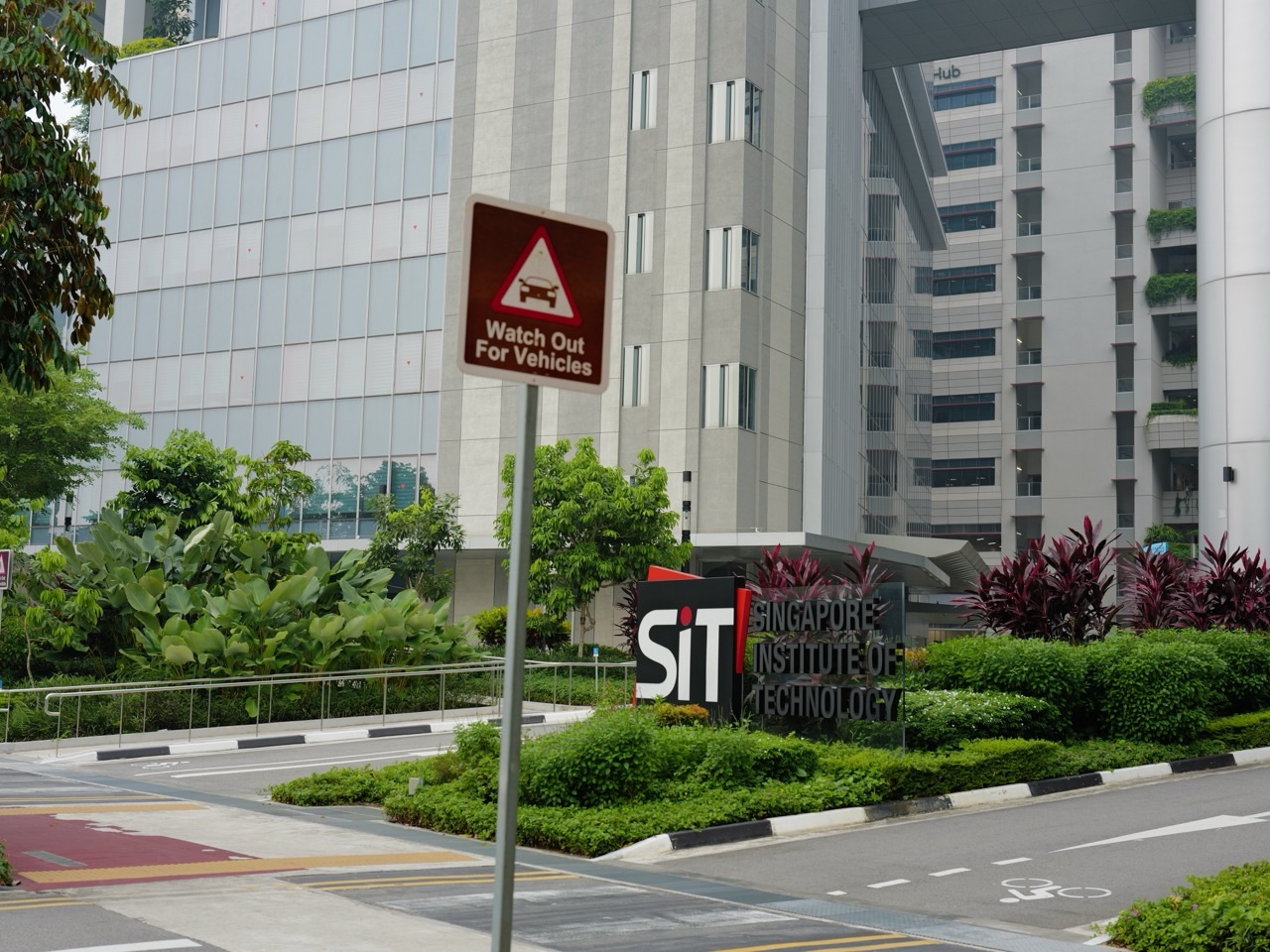
Punggol Digital District and SIT’s campus create a visible local education-and-industry environment. But a Work-Study Post-Diploma may be administered by a different polytechnic and delivered with an employer elsewhere in Singapore. The existence of the SIT campus does not make every polytechnic programme a SIT qualification or guarantee that trainees report near Punggol Coast.
Ask where the main worksite is, whether you rotate among offices, where classes take place and how often face-to-face attendance is required. A company with a Punggol project may still employ trainees at its headquarters or customer locations. Use the actual agreement, not a district directory, to determine where the job is based.
Build a two-location commuting plan
A work-study participant may travel from home to work on most days and to a polytechnic campus on some evenings or scheduled training days. That is a different timetable from a single destination job. Record the full journey, including LRT or MRT waiting, walking and worksite access. Test the route during the hours you would actually travel, not only at midday.
Then estimate time for coursework, meals and rest. If you care for children or elderly parents, check the care handover for class evenings. Even a valuable qualification can become difficult when every week leaves too little time for assignments. It is better to identify a scheduling conflict before employment begins than to discover it midway through assessed training.
A good programme should connect academic work with real work
Ask whether workplace projects count towards assessment and how supervisors protect confidential information. A project involving actual business data may require restricted storage, approval and careful reporting. A student should not copy client records into a personal portfolio or public AI service simply to meet a coursework deadline. An authorised educational submission may have its own safeguards and rules.
The strongest learning occurs when the trainee can explain how a classroom concept was used under appropriate workplace supervision. An example might involve checking data quality, documenting a process or testing an approved system. The trainee should also explain the limits of the work. Polished presentation without genuine understanding is not competence.
What employers may expect from applicants
A participating employer is choosing a future employee, not only a student. It may review communication, teamwork, punctuality, technical foundations and willingness to learn. A graduate with a modest but honest project can be more credible than someone who exaggerates experience. Prepare examples from internship, coursework or authorised prior employment, specifying your personal contribution.
If your diploma subject differs from the target course, ask about eligibility rather than disguising the difference. The feeder qualification and employer’s requirements may be non-negotiable. A careful applicant researches both rather than sending the same generic CV to every programme in a catalogue.
Work-Study Post-Diploma versus a conventional full-time job
A conventional job may provide immediate income and development without the assessed structure of a post-diploma programme. This can be attractive to someone who already has relevant skills or who needs a flexible schedule. The work-study route may offer stronger structured learning, a qualification and mentor support, but it also adds academic obligations and programme conditions.
Compare real offers and real courses. Do not compare a hypothetical best-case future salary from work-study with an actual conventional salary in hand. Evaluate basic pay, hours, training, commute, contract and how each route supports your longer-term interests. A good decision can favour either path depending on the person.
Work-Study Post-Diploma versus university study
A university degree provides a different educational route and may be required for particular occupations. A Work-Study Post-Diploma provides a more direct integration of employment and focused post-diploma development for eligible applicants. Some graduates may later pursue degree study, while others may continue specialist employment. Neither is universally superior.
If you have a confirmed university offer, compare the academic route’s prerequisites and costs with the full commitments of work-study. Do not assume a WSPostDip award can be transferred automatically into a degree. Where the SkillsFuture overview mentions possible advanced standing, it states that receiving programmes have their own conditions. Ask the institution for the actual recognition terms.
Work-Study Post-Diploma versus a short course
A short course might address one specific skills gap with a smaller commitment. It may not require an employer and may award a certificate of participation or competence rather than a formal post-diploma qualification. This can be appropriate for someone employed in an existing role who needs one tool or method. But it cannot substitute for the structured programme if a recognised post-diploma award is the goal.
Always read what the certificate means. “Data analytics course” can describe widely differing levels. A candidate should ask what will be assessed, how long training lasts and whether employers recognise the award. Fancy names do not remove the need to inspect actual learning outcomes.
A fictional Punggol graduate in information technology
Aaron, a fictional graduate, completed a diploma with modules in programming and databases. He searches for WSPostDip courses because he wants to work and study instead of immediately choosing a degree. He sees an AI specialist diploma and assumes it guarantees a junior AI engineer job near Punggol Coast. Reading the course page reveals that employer placement and worksite must be checked separately.
He builds a small, non-confidential testing portfolio, compares authentic participating-company vacancies and asks about class days. He also checks whether the 2026 intake is already closed. He discovers that the programme might suit him, but only after reviewing the actual employer and timing. The useful result is evidence-based planning rather than a promise of admission.
A fictional operations graduate with family duties
Mei, another fictional Punggol resident, has a business diploma and contributes to care at home. She wants a paid route to improve operations skills. A potential work-study role has reasonable daytime hours, but classes run on evenings when she normally provides family support. She asks whether the timetable is fixed and whether another approved arrangement is possible.
Her decision depends on actual care coverage and employer flexibility. If no sustainable schedule exists, a part-time qualification or suitable conventional job may be more realistic. That does not mean the Work-Study Post-Diploma is bad. It means the value of an award must be considered alongside a person’s responsibilities and ability to complete it successfully.
A fictional graduate after National Service
Farid completed a polytechnic diploma, served full-time National Service and is checking whether the published eligibility window runs from his ORD. He finds the general SkillsFuture rule and then verifies the programme’s detailed criteria with the provider. He does not assume that every course restarts its clock in precisely the same manner without confirmation.
Farid prepares a CV describing genuinely permitted responsibilities and his earlier diploma projects. He avoids releasing sensitive service information and checks the legal employing entity for each role. He uses the programme’s official route and keeps conventional job applications open until an actual offer exists. His approach protects both accuracy and timing.
A five-column comparison sheet
Use five main columns: course and award, employer and worksite, training schedule, pay and financial obligations, and career fit. Under each, record the exact source and date. For example, identify whether a detail comes from an official course page, a job advertisement, an email from the employer or your own assumption. Leave uncertain details marked “not confirmed.”
This is better than assigning every opportunity an imaginary rating out of ten. An unconfirmed worksite can be decisive if your family depends on a short commute. A small difference in headline salary may matter less than an extensive repayment provision. The worksheet helps you notice the facts that actually change the decision.
Four-week preparation schedule
During week one, identify your diploma qualification, graduation or ORD date and two relevant courses. In week two, read their official award descriptions, modules, eligibility and latest intake information. In week three, investigate participating-company vacancies and prepare a truthful application. In week four, compare employment and learning terms before making any commitment.
This is a preparation routine, not a promise of programme admission within four weeks. Some intakes open only at specific times and employers shortlist candidates on their own schedules. If the window has closed, use the time to strengthen relevant skills or consider other employment. Do not invent a 2027 date from the previous year’s calendar.
Common mistakes to avoid
The first mistake is applying to a polytechnic graduate scheme without verifying the feeder qualification. The second is confusing SIT’s Punggol university campus with whichever polytechnic delivers the programme. The third is counting a conditional incentive as guaranteed salary. The fourth is assuming an employer is in Punggol because it works in an industry present at the Digital District.
A fifth mistake is failing to read study schedules or financial terms. A sixth is calling all work-study awards degrees or professional licences. A seventh is submitting confidential employer data as coursework without authorisation. Each can be avoided through a careful check of the programme, employer and written documents.
What changes in 2027 and 2028?
Employers, intakes, courses and schedules can change. The 2026 Singapore Polytechnic pages are useful evidence of what has been offered, but they are not guarantees that identical places will be open in 2027. New jobs may emerge at Punggol Digital District, but hiring numbers and worksite assignments require verification at the time. Treat forecasts as context rather than admission or employment promises.
Your transferable skills will remain useful: accurate communication, disciplined documentation, ethical data handling, careful technical practice and the ability to learn under supervision. Invest in those foundations while waiting for authentic programme details. The best strategy adapts to actual opportunities rather than relying on a static list of courses.
Frequently asked questions
Is WSPostDip intended for polytechnic graduates?
Yes. The published SkillsFuture Work-Study Post-Diploma overview primarily targets eligible recent polytechnic graduates. The exact qualification and employer conditions depend on the particular programme.
Does the programme give me a university degree?
No. It leads to the specific post-diploma qualification or certification named by the provider. Any future degree admission or credit recognition is subject to separate rules.
Can I join after NS?
Potentially, if you meet the relevant citizenship, ORD-window and course requirements. Verify your actual dates and feeder qualification with the provider.
Will my employer be in Punggol Digital District?
Not automatically. The programme is national, and participating employers and polytechnic teaching locations vary. Confirm every reporting address.
Does every trainee receive S$5,000?
No. The published sign-on incentive is conditional and applies to specified eligible fresh Singapore Citizen graduates for most programmes. Check individual terms.
Is the training always 12 months?
No. The broad scheme describes approximately 12 to 18 months, with course-specific differences. Follow the actual published programme schedule.
Must I stop other job applications while applying?
No general scheme description establishes that obligation. Maintain accurate applications until an actual offer or contractual requirement changes your position.
Will I receive an automatic salary increase at graduation?
No. Future pay and progression depend on performance, role and employer arrangements. Do not treat a possible increment as promised pay.
Are there bonds or early-exit conditions?
They may depend on the employer and sponsorship arrangement. Request and understand the actual documents before accepting.
What if the application window is closed?
Check the provider’s next confirmed intake, consider suitable conventional work or another qualification, and do not reuse expired dates.
Official references and connected Punggol guides
- SkillsFuture: Work-Study Post-Diploma overview, eligibility and benefits.
- Temasek Polytechnic: Work-Study programme application guidance.
- Singapore Polytechnic: Data Science (AI) 2026 intake example.
- Singapore Polytechnic: Building Information Modelling Management example.
- Singapore Polytechnic: Applied Food Science example.
- MOM: Understand your employment contract.
- eduKate Punggol: ITE Work-Study Diploma and 2027 intake.
- eduKate Punggol: Assess training and mentorship before accepting work.
- JTC: Punggol Digital District industry context.
Your next step
Start with your exact polytechnic diploma and graduation or ORD date. Choose one authentic WSPostDip course, check its latest intake and employer requirements, then compare the written job, class schedule and costs with at least one conventional employment option. A Work-Study Post-Diploma can be valuable precisely because employment and structured learning are connected, but that connection is meaningful only when the course, employer and timetable actually fit you.


