
If you live in Punggol and want to earn a salary while qualifying for more responsible work in 2027 or 2028, a structured Work-Study Diploma may be worth comparing with a conventional full-time job or classroom-based course. ITE’s Work-Study Diploma is an employer-linked programme with a nationally recognised diploma, paid employment and a substantial amount of supervised workplace learning. For the 2027 intake, ITE’s official admission page, updated 30 October 2026, lists online applications from 2 November 2026 at 9am until 26 February 2027 at 6pm. Eligibility and places must still be confirmed through ITE.
The main decision is not whether the words “earn and learn” sound attractive. It is whether the qualification, employer, actual workplace, study timetable, employment contract and any commitment after the course match your life and desired career. ITE’s current information describes a generally 2.5-year apprenticeship-based Work-Study Diploma, with approximately 70–80% on-the-job training and 20–30% off-the-job learning. It also explains that partner companies hire candidates before programme enrolment, that salaries differ among employers, and that some employers may impose post-training bonds. This article shows exactly what a Punggol applicant should check.
- 2027 application window published by ITE: 2 November 2026, 9am, through 26 February 2027, 6pm; confirm any subsequent changes directly.
- Programme to examine first: ITE Work-Study Diploma, not a generic private “apprenticeship” advertised online.
- Indicative structure: usually 2.5 years; 70–80% workplace training and 20–30% ITE-based learning; course-specific variations apply.
- Typical applicant route: relevant Nitec or Higher Nitec qualification, qualifying residency status, applicable entry requirements and a participating employer.
- Employment sequence: check the course, apply for an available partner-company job, pass employer selection and be hired before enrolment.
- Money questions: contractual salary, CPF, employer-sponsored course fees, applicable incentives, possible bonds and any repayment or exit conditions.
- Punggol questions: actual workplace address, travel to ITE classes, shift hours, mentor availability and whether a vacancy is genuinely local.
- Alternative pathways: a conventional job, polytechnic Work-Study Post-Diploma, Work-Study Certificate or Work-Study Degree where eligible.
- Essential warning: no course, district announcement or advertised incentive guarantees admission, a particular employer or a future salary.
The decision behind “work and study at the same time”
A young person finishing ITE may face a difficult but ordinary choice. They want a monthly income, yet they also want a qualification that could support later progression. Full-time study may involve opportunity costs; starting work immediately may make it harder to return to structured learning later. An employer-sponsored Work-Study Diploma offers a particular response: the worker studies through a course designed around real job responsibilities and remains employed during the programme.
That does not mean the programme is automatically right for every applicant. You must be interested in the actual occupation, able to sustain its timetable and comfortable with the contract. Some trainees discover that the occupational demands are more substantial than they expected. Others discover that the employer’s worksite is much farther from home than its corporate address suggests. A strong decision is made before signing, when you can still compare alternatives clearly.

Definition lock: Work-Study Diploma, apprenticeship and an ordinary job
A Work-Study Diploma is a defined education-and-employment pathway delivered with participating employers, not simply any job offering informal training. In the ITE programme, trainees work as full-time employees while completing structured learning and assessment towards a qualification. An ordinary full-time role may offer useful training, but it does not automatically lead to an ITE-issued diploma. Conversely, enrolling in a stand-alone classroom course does not automatically make a learner an employee of a sponsoring company.
The term apprenticeship describes learning practical work through structured experience and guidance. It is a helpful description of the ITE arrangement, but not proof that every advertised apprenticeship has the same curriculum, pay, qualification or protections. Always name the actual provider, programme and award. When a recruiter says “we will train you,” ask whether this means an accredited Work-Study programme, ordinary onboarding or a private training contract with different conditions.
What ITE confirmed for the 2027 application period
ITE’s admission page was updated on 30 October 2026, shortly before the application window. It states that online applications open on Monday, 2 November 2026 at 9am and close on Friday, 26 February 2027 at 6pm. It also identifies the iStudent Portal, WSDip Connect Portal and education-and-career coaching resources as routes for applicants. An application window does not mean that every course or company will accept unlimited candidates throughout that period.
Treat these dates as an important planning signal rather than a reason to rush into the first available job. Check course-specific requirements, employer participation and your documents before applying. Once the exercise is under way, use the live ITE portal for changes or clarification. A website screenshot captured in October may not show subsequent announcements. For 2028, do not reuse the 2027 dates; obtain that intake’s new official schedule when published.
Who may be eligible for an ITE Work-Study Diploma?
ITE’s 30 October 2026 guidance describes a route for fresh and in-employment ITE graduates who are Singapore Citizens, Permanent Residents or eligible Long-Term Visit Pass Plus holders. Applicants generally need a relevant Nitec qualification with GPA of at least 2.0 or a relevant Higher Nitec. In-service workers nominated by their employers may qualify through a separate experience-and-qualification route, including specified literacy and numeracy criteria. Each course has its own feeder requirements.
Do not interpret that summary as an admission guarantee. You must check the qualification relevant to the specific programme, any interview or employer screening, and the actual vacancies available. If you have a non-feeder qualification or fall short of a usual entry requirement, the ITE FAQ explains that appeals may be considered in appropriate cases but are not guaranteed. Ask ITE directly rather than paying a private organisation that promises it can bypass published admission rules.
If you are liable for National Service, check your situation first
The current ITE admission page explicitly tells NS-liable male applicants to check deferment eligibility with the Central Manpower Base. Only those eligible for deferment can be enrolled under the stated rule. This is important because an applicant’s academic and employer suitability do not override National Service requirements. A family should not sign a training or employment arrangement in reliance on a deferment that has not been confirmed.
If you are approaching ORD or have completed full-time NS, check the programme’s current timing and any relevant administrative requirements. Do not rely on an older FAQ when a newer admission notice provides additional conditions. Your enrolment plan must be consistent with your official obligations and the employer’s start date. An honest date is better than promising that everything will be arranged later.
How the employer selection actually works
ITE’s FAQ says participating-company vacancies for each course become available through WSDip Connect during intake exercises. Applicants can choose preferred jobs and submit a resume. Companies contact shortlisted candidates, and successful applicants must pass employer interviews and be hired as full-time employees before enrolment. In other words, passing a general academic eligibility check is not the same as receiving an employment offer.
That sequence changes the way you should prepare. You need a CV suitable for the actual job, not merely an expression of interest in studying. You should be able to explain your relevant projects, practical skills, work discipline and reasons for choosing the occupation. You also need to assess the employer. A Work-Study Diploma is a long enough commitment that the workplace, mentor and duties deserve careful investigation before you accept.
A 2.5-year commitment is different from a short course
A programme measured in years will influence your monthly schedule, household budget and ability to change direction. ITE describes the standard WSDip as a 2.5-year apprenticeship-based course, with some course-specific variation. The training proportions show that most learning occurs at work, while a smaller but important part is taught and assessed away from the workplace. You are not just taking evening lessons after an unrelated day job.
Ask for the actual timetable. How often do you attend ITE? Which campus is involved? Are learning days fixed or arranged in blocks? What happens during peak work periods? Can shifts change? What must be submitted for assessment? Do not extrapolate from another trainee’s schedule in a different course. A healthcare programme and an engineering programme can differ in the way workplace and academic requirements are organised.
Why Punggol residents must confirm the workplace address
ITE has industry partners across Singapore. A programme’s existence does not mean that the employer is based in Punggol, even if the occupation sounds relevant to Punggol Digital District. A company may operate from several offices or technical sites and recruit trainees for one specific location. Confirm the legal employing entity and ordinary reporting address through the actual vacancy and written offer.
For a Punggol resident, check the journey from home to the worksite and separately the journey to required ITE teaching sessions. The employer might be accessible from Punggol Coast MRT, but classroom instruction may be at another campus. Or the office may be elsewhere in Singapore entirely. A route that is manageable once a week may become exhausting when repeated across demanding shifts. The location should be investigated before the contract, not after.
Why Punggol Digital District matters without guaranteeing placements
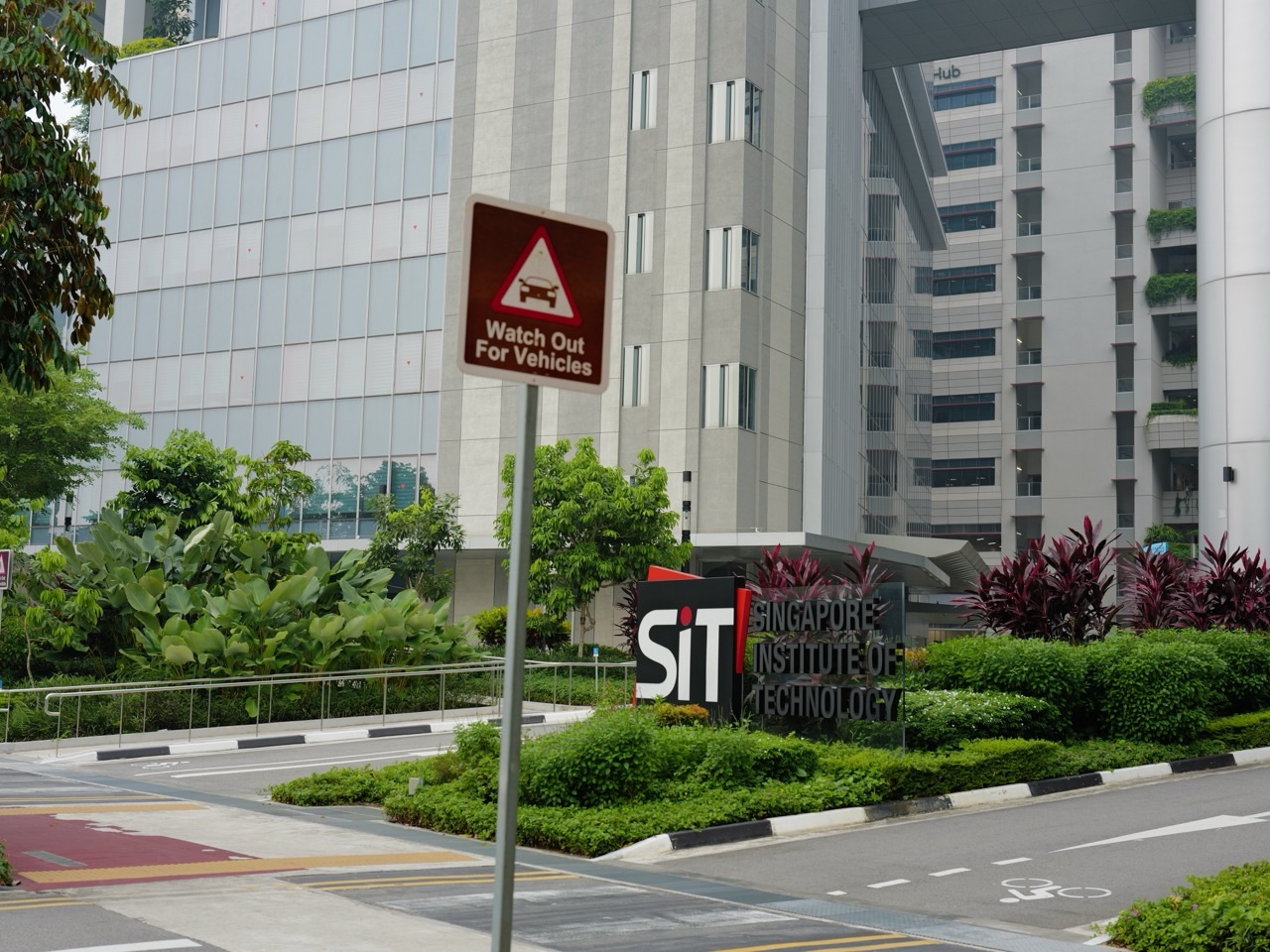
JTC’s Punggol Digital District combines business space and the Singapore Institute of Technology campus in a technology-oriented precinct. It provides useful context for digital, engineering, cybersecurity and smart-city occupations. But it does not establish that a particular ITE Work-Study Diploma partner company is hiring on a specific floor in 2027. A district projection of future employment is not a course vacancy list.
A useful method is to start with the official Work-Study programme and employer vacancy, then check whether its location is near Punggol. Do not start with the name of a district and invent a programme or placement to match it. A good employer outside Punggol with structured mentorship may offer better training than an unrelated nearby job. Proximity can improve sustainability, but the quality of learning and contractual terms remain central to the decision.
Compare four pathways without mixing up their awards
The first route is an ITE Work-Study Diploma, designed around a nationally recognised diploma and full-time employment at a partner company. Another is a Work-Study Certificate, which has its own modular award and is not automatically the same as completing a full diploma. A polytechnic Work-Study Post-Diploma is generally aimed at eligible diploma graduates taking advanced or specialist development. A Work-Study Degree involves an eligible university pathway with integrated workplace learning.
All four have eligibility, award, duration, employer and admission requirements that should be read separately. Never assume one scheme’s incentive or sponsorship applies to another. If you already hold a polytechnic diploma, the best pathway may differ from that of someone with Nitec. If you are choosing a first post-secondary qualification, ordinary full-time ITE or polytechnic education could also be appropriate. Start by defining your real starting qualification and desired outcome.
Does the employer really pay for the course?
ITE’s Work-Study Diploma information describes full course-fee sponsorship by participating employers. The FAQ says trainees are not required to pay programme fees and the course fees are borne by employers. This is an important benefit. But the absence of tuition fees paid by the trainee does not mean that every associated personal cost disappears. Transport, meals, equipment and time may still require budgeting.
It also does not automatically mean that you can leave at any moment without contractual consequences. Some companies require a post-completion commitment, and ITE’s FAQ specifically warns applicants to review bonds, exit requirements and any liquidated damages. Make the distinction between “employer pays fees” and “all possible exit costs are zero.” Read the actual contract, ask for clarification and obtain independent advice if a substantial obligation is unclear.
Sign-on incentives are conditional, not an extra salary
ITE’s current programme page describes a S$5,000 sign-on incentive for eligible fresh Singapore Citizen ITE graduates from relevant courses within the specified period after graduation or ORD. It also describes an ITE Progression Award CPF Ordinary Account top-up for qualifying learners under separate conditions. Those measures may be valuable, but they are not general payments promised to every applicant and should not be added casually to monthly wages.
Verify citizenship, age, course, graduation timing, programme status and any other applicable criteria. Check how and when the relevant benefit is paid and what happens if the trainee withdraws or employment ends. ITE’s FAQ notes circumstances in which a received Work-Study Diploma sign-on incentive must be returned following termination or resignation. That detail changes the household’s risk calculation and deserves attention before the payment is treated as spendable money.
Read the bond before you celebrate the job offer
A training bond or post-completion service commitment may be included by some participating employers. ITE says relevant details should be available with the job description in WSDip Connect. Do not assume that every employer uses a bond or that every bond has identical terms. Ask when the commitment starts, how long it lasts, what conduct triggers repayment and how the amount is calculated.
Write down what happens if you resign, fail assessments, become unable to continue, or the employer changes its operations. Some events may be governed by the contract and programme rules rather than ordinary expectations. A student should not sign a document containing a serious financial obligation without understanding it. If an employer says the terms are standard, that does not answer the question of what they mean in your specific case.
The exit clause is as important as the joining instructions
ITE’s FAQ explains that trainees whose employment ends must follow agreed exit requirements, including notice and any applicable liquidated damages. It also says ITE should be informed so that the programme’s status can be processed. This is different from merely deciding to stop attending a voluntary evening class. Employment and education are linked, so leaving the job can affect the academic pathway.
MOM’s termination guidance explains ordinary principles about notice periods and salary in lieu of notice for employment contracts. However, a training agreement may contain additional matters that need separate examination. Do not assume that paying salary in lieu of notice automatically disposes of every programme obligation. Seek written clarification from the employer and ITE before making a decision with significant consequences.
What if the employer closes, restructures or changes the role?
A long programme spans changes in business conditions. ITE’s FAQ describes circumstances where it may facilitate a trainee’s transfer when an employer ceases operations, restructures or gives valid reasons for release, subject to another employer accepting the trainee. That is different from a trainee having an automatic right to change companies whenever a commute becomes inconvenient.
The FAQ specifically cautions that transfers sought purely for personal reasons may not be accepted. For a Punggol resident, this makes the initial location decision particularly important. Before accepting a faraway worksite, test the commute and confirm the academic schedule. Hope that you can move to a Punggol company in the second year is not a responsible contingency plan.
How to assess whether the occupation fits you
Begin with the ordinary tasks, not the diploma title. If the pathway is in customer experience, are you willing to handle difficult enquiries and maintain accurate service records? If it is in engineering maintenance, do you understand the safety, shift and technical demands of that field? If it is in data operations, do you enjoy checking inputs and resolving errors, not just making attractive dashboards? Real work contains routine tasks as well as exciting projects.
Ask a prospective employer what a trainee does in the first month, after six months and near graduation. The answer should show progression appropriate to the occupational pathway. A good learning plan moves from observation through supervised practice towards more independent work, within safety and competence limits. If nobody can explain training outcomes, investigate further before signing a multi-year commitment.
Why the mentor is central to the value of the programme
The workplace portion is substantial, so the quality of supervision matters. Ask who mentors trainees, how feedback is provided and what happens when a new employee struggles with a task. The mentor does not need to be available every minute, but the trainee should know how to access appropriate professional guidance. In technical work, supervised competence and safety procedures are especially important.
A workplace can advertise interesting technology while offering little time to explain it to beginners. Conversely, an ordinary operations team with careful documentation and strong supervision can teach valuable professional habits. During interviews, listen for concrete descriptions of learning rather than general phrases about a “fast-paced environment.” You are choosing a place to work and learn, not merely a name to put on your CV.
Learn what assessment actually requires
A nationally recognised diploma implies structured assessment, not just attendance. Ask what the major assessment methods are, how workplace projects are supervised, and who confirms completion. In some roles, evidence may include practical demonstrations, documented projects or other course-specific evaluations. The provider should explain the actual requirements rather than expecting applicants to infer them from another course.
Do not submit confidential company information in a personal portfolio without authorisation. Work-based learning requires appropriate handling of customers, equipment, intellectual property and workplace records. If a trainee struggles to meet an assessment requirement, ask early what support, remediation or formal options are available. Waiting until the final months can make an ordinary gap much harder to repair.
Check working hours alongside study hours
Full-time employment and structured study consume a real weekly timetable. Ask whether the employer uses shifts, how off-the-job learning is scheduled and what happens during public holidays or periods of high demand. A trainee working unusual hours may face a different routine from someone in a fixed weekday office role. Avoid assuming that “study time” is always an evening class or always part of a paid working day.
A responsible employer should be able to explain how the programme is arranged in ordinary practice. Verify the written employment hours and any approved training calendar. Include time for assignments, rest and commuting. If you already work part-time elsewhere or care for family members, check whether the combined schedule is actually feasible and whether other employment is permitted under your contract.
Punggol transport: do the two-journey test
Map two different routes: home to the normal worksite, and home or workplace to the ITE teaching location when required. Test realistic travel times at the expected hours, allowing for walking, waiting and transfers. An employer may be easy to reach from Punggol Coast, yet the classes may require a substantial trip to an ITE campus elsewhere. Only the actual timetable tells you the total burden.
Include the return journey on late shifts and days with assignments. Public transport frequency and route choice can affect how much sleep and study time remain. A programme that looks convenient because the employer is in northeast Singapore may not be convenient if the classes and shifts fall on difficult days. If the arrangement is demanding, decide whether the long-term qualification makes the load worthwhile before committing.
Compare offers with a transparent decision worksheet
For each potential programme, record the award, duration, full-time salary, working hours, normal location, classroom location, course sponsorship, sign-on incentive eligibility, progression, post-completion commitment and exit terms. Write “not confirmed” rather than filling gaps with optimistic guesses. Ask the employer and ITE about any missing facts. A small worksheet can prevent a persuasive headline from overwhelming the details.
Give particular attention to two columns: the work you will actually do and the qualification you will actually earn. An attractive salary in a field you strongly dislike may lead to a difficult long-term experience. A lower-paying role with stronger learning may or may not justify the difference. Compare actual offers, not imagined outcomes. The best choice is grounded in your goals and household circumstances rather than somebody else’s favourite sector.
A hypothetical comparison between two employers
Imagine a fictional ITE graduate offered two suitable sponsored programmes. Employer A is close to home but has irregular shifts and an extended post-completion commitment. Employer B requires a longer commute yet provides a clear fixed training schedule and mentoring plan. Neither can be declared better without the applicant’s priorities and full written conditions.
The applicant should check how the shift arrangement fits travel and family commitments, what training is provided, and what financial consequences exist if the programme ends early. If an employer’s documents are incomplete, the next step is a request for clarification, not an immediate acceptance based on a salary figure. This case illustrates decision-making, not real job offers from actual Punggol companies.
A hypothetical applicant coming from Nitec
A fictional Nitec graduate has a qualification related to information technology and a GPA meeting the general threshold. That makes it reasonable to examine appropriate feeder pathways, but the learner still must check course-specific eligibility, employer screening and available positions. They decide to read three genuine vacancy descriptions before investing time in interview preparation.
Their CV describes a real school project, accurate troubleshooting habits and a clear willingness to learn under supervision. They do not present classroom experience as paid engineering employment. They compare companies by job duties and mentorship rather than assuming any course containing the term “AI” will lead to a glamorous salary. The progression decision becomes a matter of evidence rather than marketing language.
A hypothetical applicant coming from Higher Nitec
Another fictional applicant holds a relevant Higher Nitec and already has supervised customer-service experience. The ITE general entry rules differ from Nitec in how GPA is treated, but the learner must still meet the specific feeder and company requirements. They interview for a pathway whose occupational duties they understand and ask about workplace projects, class schedules and any bond.
Their family initially focuses on the idea of employer-funded studies. They later realise the long-term commitment and total travel time need equal attention. They ask for the written documents, calculate the actual weekly schedule and discuss what happens if circumstances change. The family is not rejecting an opportunity; it is protecting the decision from avoidable surprises.
An in-service adult worker may have another entry route
ITE’s current page describes an in-service route for qualifying workers nominated by an employer. This route can involve equivalent learning-and-numeracy credentials, a minimum age, relevant full-time work experience and strong employer endorsement. It is not an automatic pathway for anyone who has worked for two years. The detailed requirements belong to the programme and applicant’s situation.
A Punggol adult already in technical or service work might ask whether their current employer participates in suitable training. Employer nomination is a material part of the route. If the employer is not participating, the worker should not assume that ordinary performance alone creates a right to sponsorship. Check realistic alternatives, including part-time recognised courses, rather than leaving stable employment before a new route is confirmed.
How the diploma might support later progression
ITE states that WSDip graduates who meet specific admission criteria may apply for further academic pathways, including various university and post-diploma programmes. Eligibility to apply is not guaranteed admission. A diploma may improve a person’s range of options, but each institution decides how its entry requirements apply. An applicant should not take out loans or sign a long bond solely on the assumption of automatic university entry later.
Career progression is also not automatic. Industry demand, work performance, further competence and available roles matter. Ask the employer about real examples of responsibilities assumed by graduates, while recognising that past examples do not guarantee your own future. A useful programme should strengthen skills and demonstrate work, not simply provide an impressive certificate title.
Consider ordinary employment as a valid alternative
A person may receive a conventional job offer with strong supervision and competitive conditions while also considering a Work-Study Diploma. The ordinary role may be better if the applicant already has the qualification needed and wants experience without a multi-year training commitment. On the other hand, the Work-Study route may be more valuable where formal qualification and workplace mentoring fill important gaps.
Do not compare an imaginary future Work-Study salary with a real current employment offer. Examine what is confirmed in both cases: start date, compensation, training, actual duties and long-term flexibility. If neither option is sufficiently clear, further research is preferable to a hasty signature. Planning for 2027 or 2028 should preserve real alternatives, not manufacture a false choice between lifelong learning and earning income.
A four-week application preparation routine
In week one, verify your qualifications, residency status, National Service position where relevant and the exact intake information. Shortlist programmes based on actual feeder requirements and occupations. In week two, review the relevant participating-company roles as they become available. Prepare a truthful CV and examples of relevant experience. In week three, ask detailed questions about hours, supervision, fees, bonds and worksite addresses. In week four, attend authorised interviews, compare written conditions and make a considered decision.
This is a preparation model, not an official deadline. The 2027 online application period extends over several months according to ITE’s latest notice. Individual employers may have different recruitment timelines. You should use the live portal for the definitive steps. If the company has not confirmed acceptance, do not describe yourself as enrolled. If classes have not begun, do not assume you can abandon other commitments without consequence.
Documents and questions to prepare before applying
Collect accurate educational records, contact details, a current CV and relevant evidence of projects or supervised work. Ask ITE what documentation your particular course needs. Do not upload private employer, customer or National Service data into a public portfolio. The point is to show your readiness and ability to learn, not to impress through volume.
Prepare questions for the employer about salary, workplace, shifts, mentor, study timetable and assessment. Prepare questions for ITE about course eligibility, award, duration, progression and what happens if an employment arrangement changes. Keep a written note of responses and the date they were provided. If statements from a recruiter conflict with official programme guidance, resolve that inconsistency before signing.
Mistakes that cost applicants time and money
One mistake is applying to a course whose feeder qualifications are unsuitable while overlooking more realistic routes. Another is treating an incentive as salary that everyone receives. A third is failing to read the bond because the employer pays course fees. A fourth is assuming that a worksite will be in Punggol because the company belongs to a digital-industry network. All four mistakes can be prevented by checking the official programme and written employer documents.
A fifth mistake is deciding that the diploma guarantees a degree later. A sixth is accepting a timetable that is impossible alongside family or transport commitments. A seventh is trusting a private recruiter who demands a fee for supposedly guaranteed entry. A verified government education route does not require you to pay an unknown person to manufacture eligibility. A slower decision with evidence is usually better than a rushed commitment with missing terms.
When you should seek advice before signing
If you cannot understand an exit clause, are being asked to repay a substantial sum, or see inconsistencies between the employer’s statements and ITE’s published information, seek clarification before accepting. ITE’s Education and Career Coaches can assist with pathway questions, while MOM provides official guidance on employment terms. Where a significant contractual dispute is possible, appropriately qualified independent advice may be worth considering.
Do not assume the employer will explain every consequence automatically or that a generic online answer can interpret your entire contract. Obtain the actual documents and ask questions that name the relevant provisions. Keep copies of signed terms and official correspondence. This protects the learner and makes future misunderstandings easier to resolve.
Frequently asked questions: Punggol Work-Study choices for 2027–2028
Can I apply for the 2027 ITE Work-Study Diploma now?
ITE’s 30 October 2026 page states the online period begins 2 November 2026 at 9am and ends 26 February 2027 at 6pm. Confirm the live window and course-specific steps before applying. Do not assume a general opening guarantees company vacancies.
Is the Work-Study Diploma a paid job or just a course?
ITE describes its WSDip trainees as full-time employees of participating companies while working towards a nationally recognised diploma. Specific employment terms must be checked with the company.
Is the course always 2.5 years?
The standard programme is described as 2.5 years, with course-specific variations. ITE’s FAQ identifies nursing as a longer example. Verify the actual award and duration of your selected programme.
Will I pay tuition fees?
ITE’s current programme information says partner companies sponsor the course fees. You should still check personal costs, contract obligations and any conditions concerning programme exit.
Is every trainee entitled to a S$5,000 incentive?
No. The published incentive has specific eligibility conditions, including citizenship, relevant programme background and timing. Confirm entitlement and repayment conditions rather than treating it as guaranteed cash.
Is a training bond compulsory?
ITE says some employers may require a post-completion commitment. Read the individual company’s terms and ask about duration, repayment and exit conditions.
Can I change employers halfway through because the commute is too far?
Do not assume this is possible. ITE’s FAQ describes specific circumstances for facilitated transfers and warns that personal reasons such as travel inconvenience may not be accepted.
Can I join if I have only a Nitec qualification?
Potentially, if the relevant Nitec GPA and course-specific feeder requirements are met and a participating employer accepts you. Check the particular programme; general eligibility alone does not secure enrolment.
Will I study at SIT in Punggol?
Not simply because you live in Punggol or because the Digital District includes SIT. ITE WSDip has its own academic and employer arrangements. Confirm the actual teaching location and do not confuse ITE with SIT’s distinct programmes.
Does completing WSDip guarantee university admission?
No. ITE identifies potential academic progression routes subject to the admissions criteria of the receiving institution.
Will I receive a guaranteed salary increase in 2028?
No. Actual salary and progression depend on the employer, your contract, role, performance and conditions. A course benefit or general forecast should not be represented as a pay guarantee.
Is this the same as a Work-Study Certificate or a polytechnic Post-Diploma?
No. They have different admission profiles and awards. Use official programme descriptions and compare eligibility, duration and employer arrangements separately.
Official references and related eduKate Punggol reading
- ITE: 2027 Work-Study Diploma admissions, eligibility and application window — last updated 30 October 2026.
- ITE: Work-Study Diploma overview — employer sponsorship, programme structure and progression.
- ITE: Work-Study Diploma FAQ — employer selection, bonds, exit arrangements and transfers.
- ITE: Work-Study Diploma in Customer Experience Management — example of a specific programme whose entry requirements must be checked.
- SkillsFuture: Work-Study Post-Diploma — distinguish the polytechnic-graduate route.
- MOM: Termination with notice — employment-contract principles; training terms may require separate checks.
- JTC: Punggol Digital District — local industry context, not proof of work-study placements.
- Career at Punggol 2027/2028: Your First Civilian Job After ORD — complementary planning for NSFs.
- Career at Punggol 2027/2028: A 30-Day Job Search Plan — interview, contract and application advice.
Your next step
Choose one real programme and read its current ITE entry requirements, then find the participating employers when the intake portal makes them available. Ask for the salary, site address, mentoring plan, teaching timetable and full exit terms in writing. If the route matches your qualification, interests and responsibilities, it can be a meaningful way to earn while learning. The strongest 2027–2028 career plan for Punggol is not the one with the grandest title: it is the one whose details you have verified and whose commitments you can sustain.


