
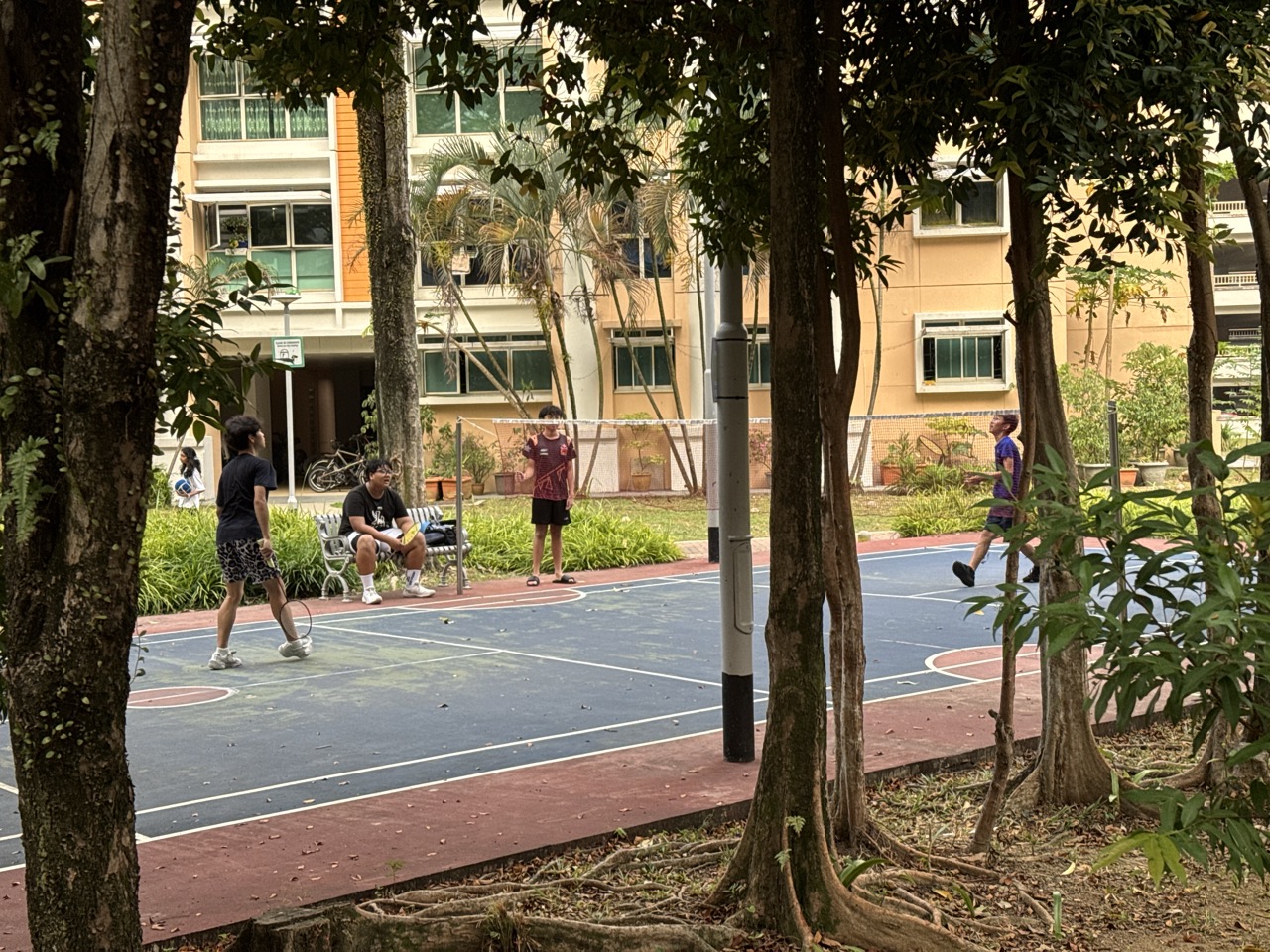
ActiveSG Punggol is a useful new place for residents to exercise, but the correct sports plan changes when there is rain, thunder, lightning, haze or strong heat stress. Punggol Sport Centre at 11 Sentul Crescent entered soft-launch operations on 27 October 2026, with formal opening announced for 22 November. The gym and selected court bookings became available during the soft launch, while other facilities, including swimming areas, needed separate status checks. Before choosing indoor badminton, sheltered tennis, outdoor exercise or a gym visit, look at the live facility listing and the relevant weather and air-quality notices.
The safest starting rule is straightforward: lightning means stop and seek appropriate shelter for affected outdoor activities; high heat stress calls for less outdoor exertion and longer breaks; unhealthy haze calls for reducing or avoiding certain outdoor exertion according to the current NEA advice and the participant’s vulnerability. Heavy rain and wet surfaces can make some courts unsafe even without lightning. A paid booking does not override safety or venue instructions. Check MyActiveSG+ for facility availability, MSS lightning information, heat-stress observations and official haze readings before departure.
- Punggol venue: 11 Sentul Crescent; exact sports spaces and opening stages differ.
- Lightning: stop affected outdoor activity, follow staff instructions and seek substantial shelter without waiting for heavy rain.
- Heat stress: use the official Wet-Bulb Globe Temperature (WBGT) advisory, not air temperature alone.
- Haze: use NEA 24-hour PSI guidance to plan ahead, one-hour PM2.5 guidance for immediate outdoor decisions, and more cautious advice for vulnerable people.
- Rain: wet or slippery surfaces, visibility and access routes matter even when lightning has not been detected.
- Indoor option: check that the gym or court is actually operating; indoor spaces are not automatically completely free of haze or weather effects.
- Swimming: do not presume a pool is publicly open because other parts of the complex have started operating.
- Booking: follow Sport Singapore’s terms for cancellations or operator closures; never assume all weather problems qualify for an automatic refund.
- This guide: hazards, family decisions, equipment, examples, four-week planning and frequently asked questions.
Why a weather guide belongs in the Punggol sports series
Punggol is built around a waterfront, residential estates and public transport routes. Residents can combine a trip to the new Sport Centre with walking, cycling or a family outing along the Waterway, but that combination introduces changing outdoor exposure. Conditions during the journey can differ from conditions inside a sports hall. A person may see a dry court on a photograph while thunderstorms are building nearby, or may leave home under moderate air-quality conditions and encounter a new advisory before exercise begins.
The new centre also creates an information problem. A press report may describe facilities designed for badminton, tennis, swimming, gym workouts and field sport. Those descriptions do not confirm that every activity is publicly available on the chosen day. Facility readiness and environmental safety are two separate tests. You must pass both before deciding that a session is suitable.
This guide therefore uses a practical sequence: verify the sport is actually available, identify the hazard, choose a proportionate response, and keep a safe alternative. It does not offer a blanket promise that any particular venue is safe in every kind of weather.
Definition lock: what counts as safe sport planning?
Safe sport planning means deciding whether the proposed activity, venue, participants and conditions fit together without exposing people to avoidable danger. It includes physical hazards such as lightning or slippery surfaces, environmental factors such as haze and heat, and interpersonal concerns such as pressure to keep playing when someone feels unwell. The answer depends on the real circumstances. A calm indoor gym session for one adult is not the same as a long outdoor football practice for twenty schoolchildren.
The word “safe” should not be treated as a guarantee of zero risk. Even a well-run facility and sensible activity can involve ordinary uncertainties. Responsible planning uses official warnings, operator instructions, individual readiness and the option to postpone. If the risk cannot be managed, changing the plan is a success, not a failure.
For families, the objective is confidence. Children should learn to recognise when the environment demands a different choice rather than assuming sport is valuable only when nobody ever cancels it.
First verify the specific facility’s operating status
The Punggol Sport Centre soft launch began in late October 2026, and official opening was announced for 22 November. Early reporting described the gym and some racket-sport bookings as active, while Punggol Swimming Complex did not yet have the same public access. That distinction must remain visible in any guide that readers may encounter months later. Do not imply that a pool is open from the fact that its water appears in a video.
Open MyActiveSG+ and inspect the correct sport, date, venue and time. Punggol Sport Hall, Punggol Sheltered Courts, the gym and the swimming complex are distinct listings or products. If an activity is unavailable, select a genuinely operating alternative or postpone. Do not hold a private game on a surface simply because you can physically enter the general complex.
Venue staff may impose restrictions for maintenance, competition or weather. A booking confirmation is not a permanent waiver of subsequent safety notices. Follow the current instructions at the facility.
The four main environmental hazards are different
Lightning, heat, haze and rain cannot be reduced to one general rule such as “play if it looks fine.” Lightning is an immediate electrical hazard that can occur away from heavy rainfall. Heat stress arises when environmental and personal conditions make it difficult for the body to shed heat. Haze involves air pollutants and exposure over time, with risk influenced by activity intensity and health status. Rain can reduce visibility, make surfaces slippery and be associated with thunderstorms.
Each hazard needs its own information source and response. The lightning information service helps identify lightning risk. WBGT addresses environmental heat stress better than air temperature alone. NEA’s PSI and PM2.5 advisories address air quality. The facility operator decides how its particular surfaces, fixtures and operations are managed.
A thoughtful sports plan is therefore a set of decisions, not a single weather-app icon. A sun symbol is not proof that heat exposure is low. A sheltered roof is not proof that lightning is irrelevant. A dry afternoon is not proof that haze is absent.
Lightning: why you must stop outdoor play
Lightning is unpredictable and potentially severe. The Meteorological Service Singapore explains that lightning strokes can occur several kilometres from storm clouds, sometimes affecting locations where a thunderstorm is not directly overhead. Therefore, waiting until rain becomes heavy is not a suitable lightning policy. Singapore’s public lightning information service and myENV alerts help people monitor nearby risk, but venue staff and direct signs of a storm also matter.
Sport Singapore’s sports safety and health checklist advises cancelling or postponing outdoor sport if there are signs of lightning. If thunder or lightning threatens, stop affected play and seek appropriate substantial shelter promptly. Avoid standing beneath isolated trees, remaining on exposed fields or continuing to hold metal sports equipment outdoors.
A family should not treat unused court time as a reason to take that risk. The booking may be inconvenient to lose, but safety comes first. Contact the operator about any applicable procedure rather than negotiating with the weather.
How to use lightning information correctly
The official Meteorological Service Singapore lightning information service displays recent detected lightning activity, with notes about the detection system and its limitations. A recent-strike map is valuable, but it is not a personal warranty that a named court will remain safe for the next hour. Use it alongside the forecast, venue instructions and the visible situation. The myENV app can also provide location-based advisories to users who enable them.
A coach or parent should decide who monitors weather before the session. Constantly asking every child to check a phone is not a reliable system. One responsible adult can review official updates and communicate a clear stop or postpone instruction. If a venue has its own operating procedure, follow it.
Do not invent an exact number of safe minutes after the last flash unless an applicable official or facility protocol establishes the rule. An article should direct readers to current local guidance, not substitute a universal countdown guessed from another jurisdiction.

Why an open shelter is not always enough
During a thunderstorm, people may instinctively rush toward the nearest roof. But a small open-sided shelter, exposed pedestrian bridge or isolated tree may not provide the protection of a substantial building. The safest action depends on the available proper shelter and guidance from the venue. If you are at a managed sports facility, follow the designated shelter and evacuation instructions rather than improvising a meeting point beneath an attractive architectural feature.
Parents should explain this before a sports session. Children may associate rain protection with lightning protection, even though the hazards are not identical. A covered seating area that keeps a backpack dry is not necessarily an appropriate place to stay during nearby lightning.
Allow time for the group to move safely. Do not send people rushing across slippery surfaces to retrieve equipment. Once play has stopped, the equipment can wait until the operator considers access safe.
Rain: the hidden issue of surface conditions
Heavy rain may make a path, entrance or outdoor court slippery. Even when no lightning is detected, wet surface traction and visibility can change the safety of movement. A tennis player who normally changes direction quickly may slip on water or debris. A cyclist travelling to the venue may need to adapt to puddles and reduced braking grip. A parent carrying a child may need more time on stairs and ramps.
Look at the actual surface and obey any closure or maintenance notice. Do not try to dry a large public court yourself, improvise unauthorised repairs or remove barriers. A sheltered court may offer protection from direct rain while exposed edges or surrounding walkways remain wet. Distinguish a playable, approved surface from a merely visible one.
Some rainy-day activity can still be possible in an appropriately operating indoor gym or sports hall, but the fact that an alternative is indoors does not create an entitlement to use an unbooked space. Check access first.
Heat stress: what the WBGT number means
Singapore’s weather service uses Wet-Bulb Globe Temperature, or WBGT, as an environmental heat-stress measure. It accounts for factors including humidity, wind and solar radiation as well as temperature. A day at a familiar air temperature can feel much more demanding under high humidity or direct sun. This is why sports organisers should not make decisions from the ordinary air-temperature number alone.
The MSS heat-stress page describes low, moderate and high levels, and provides guidance for prolonged outdoor activities. The published general advisory uses below 31°C WBGT for low, 31 to below 33 for moderate, and 33 or above for high. At moderate levels it calls for reducing outdoor activity and taking regular breaks; at high levels it calls for minimising outdoor activity and taking more frequent or longer breaks.
Those categories describe environmental exposure, not a personalised medical clearance. Individual factors such as fitness, acclimatisation, clothing and health status still matter. A parent should never push a child to meet an exercise target simply because a screen does not show the highest warning.
How heat changes an outdoor sports session
Imagine a family booked an afternoon outdoor racket-sport session during a period of moderate heat stress. Instead of following a plan written the previous evening without adjustment, they can review the official advisory, reduce strenuous play, include more recovery time and consider a safer alternate time where available. If high heat stress is recorded, minimising outdoor exposure becomes the guiding principle. Some sessions should be shortened, postponed or shifted indoors only when an appropriate indoor option is genuinely permitted and available.
People do not respond identically to heat. A parent with a stroller, an older adult walking slowly and a competitive teenager doing repeated sprints can face different practical exposures at the same location. Do not design the day solely for the strongest athlete.
An adjustable plan recognises that exercise remains useful even when it is less intense. In difficult conditions, choosing shorter, gentler activity may be more responsible than attempting the full competitive schedule.
Hydration, rest and warning signs
Provide access to water, appropriate breaks and cooling opportunities during exercise. There is no single quantity of water that is correct for every person in every situation, so avoid prescribing a universal number without considering professional guidance and individual needs. Encourage participants to recognise unusual symptoms and to stop when they feel unwell. Dizziness, confusion, collapse or other severe symptoms warrant prompt appropriate assistance rather than a motivational speech.
The organiser should know the venue’s emergency procedures and how to contact staff. For participants with relevant medical conditions, follow tailored professional advice. Do not assume that an electrolyte drink or cooling towel cancels the risks of strenuous activity in high heat.
Most importantly, do not reward people for hiding discomfort. A safe exercise culture allows a participant to sit down, ask for help or end a session without teasing. Protecting that choice makes future participation more likely.
Haze: the difference between PSI and PM2.5
Haze decisions can become confusing when two air-quality numbers appear on a phone. The 24-hour Pollutant Standards Index, or PSI, supports planning and longer exposure guidance. The one-hour PM2.5 information helps evaluate immediate air conditions for near-term outdoor activity. NEA’s advisories explain how to interpret them for different groups and situations. They are not interchangeable readings that should be compared as if the numbers use identical units.
For an outdoor session tomorrow, start with the latest 24-hour PSI forecast and relevant health advisory. On the day itself, inspect the current one-hour PM2.5 personal guide. Consider duration, intensity and whether participants include children, older adults, pregnant people or individuals with relevant lung or heart conditions.
In October 2026, Singapore experienced periods of unhealthy haze. That history matters because a Punggol sports plan should not assume every day has normal air quality. It does not justify claiming that the PSI is unhealthy at the exact moment someone reads this article. Always use live information.
How the NEA haze advisory affects exercise
NEA’s Managing Haze guidance advises healthy persons to reduce prolonged or strenuous outdoor exertion when the 24-hour PSI is in the unhealthy range of 101–200, with more cautious recommendations for elderly people, children, pregnant people and those with chronic heart or lung conditions. At very unhealthy readings, prolonged strenuous outdoor exercise should be avoided, with vulnerable groups advised to minimise or avoid outdoor activity according to the advisory. The exact guidance should be read in its latest official version.
The crucial distinction is between exposure and mere presence outdoors. A brief necessary journey, a gentle stroll and an hour of vigorous sport are not the same. NEA considers the duration and intensity of the activity as well as the person’s health status.
Do not instruct participants to “run through the haze” to improve resilience. Air pollution is not a useful training stimulus. A more responsible plan modifies, postpones or relocates activity based on the applicable guidance and available safe facilities.
Do not assume indoor sport removes all haze concerns
An indoor gym may reduce some outdoor exposures, but it does not automatically guarantee clean air. Indoor particulate concentrations can depend on ventilation, filtration, nearby openings and building operations. NEA notes that particulates can accumulate indoors in certain conditions. The appropriate response is to follow official advice and the facility’s current procedures rather than presenting an indoor court as completely risk-free.
A family considering a gym visit during hazy conditions should check the operator’s operational status and whether the activity suits the participant’s needs. Someone with symptoms or relevant health conditions may require professional medical guidance. An indoor booking should not be used as an excuse to ignore an official advisory that applies to that person’s circumstances.
For an organiser, the communication should be precise: “We are considering a suitable indoor alternative, subject to availability and current guidance,” not “Everybody is safe indoors whatever the PSI.” Accuracy protects trust.
What about the Punggol swimming complex?
Punggol’s planned swimming facilities are a major part of the Sport Centre’s public appeal, including the much-discussed infinity-edge pool. Yet in the late-October 2026 soft-launch phase, swimming-complex general access had not been confirmed in the same way as gym and certain court uses. A parent should not treat a pool photograph or the planned formal opening as evidence that their family can buy a swim ticket for a specific day. Check the live pool listing.
Swimming also has its own weather and supervision risks. Outdoor water use can be interrupted by lightning or other hazards, and staff instructions take precedence. Children need appropriate supervision even where lifeguards are present. A swimmer’s confidence in the water does not make an unsafe-weather decision acceptable.
If the pool is unavailable, do not simply improvise water activity in a waterway or decorative feature. Choose a properly operating, authorised swimming venue or a different land-based activity.
Indoor courts and the difference between sports
Indoor badminton and table tennis can be attractive alternatives when outdoor surfaces are wet, provided the spaces are operating and correctly booked. Yet they still have safety requirements: suitable shoes, proper spacing, controlled equipment use and responsible attention to the surrounding players. A crowded indoor environment may require a different intensity or programme from an empty outdoor court.
Sheltered tennis or outdoor pickleball courts may be partly protected from direct weather but still affected by rain, humidity, slippery approaches or lightning risk. Read the actual listing instead of treating the word “sheltered” as an all-weather guarantee. If staff declare a space unsafe, the fact that one part remains dry does not authorise continued play.
A robust plan names its fallback sport beforehand. Families who enjoy several activities can adapt, but an alternate court still requires a legitimate booking. A parent cannot take over an indoor space because an outdoor reservation was disrupted.
Travel to the venue is part of exposure
The sport itself may last an hour, but the journey exposes participants to weather. Some residents can walk from nearby blocks; others may use the LRT, bus, bicycles or a longer route. When showers are heavy, lightning is nearby or haze advisories worsen, the travel leg deserves a separate decision. Do not assess safety only from the weather at the court entrance.
A child might be travelling with a parent across a pedestrian route that becomes slippery. An older adult may need a route with lifts or a sheltered waiting area. Cyclists must consider braking conditions, visibility and whether it is appropriate to ride at all. The smartest choice may be to postpone an optional trip.
For family organisers, communicate the arrival plan early. If the weather changes after departure, participants need one reliable message about whether to continue, return home or meet at a designated safe place. Clear communication prevents unnecessary exposure and confusion.
What equipment and footwear matter in wet weather?
For a booked indoor court, follow the venue’s shoe requirements and keep wet footwear from making the playing surface slippery. Bring a towel where appropriate, but do not treat it as permission to walk across polished indoor courts in soaked shoes. For outdoor sport, footwear should suit the actual surface and provide appropriate traction. Damaged soles, loose laces and unfamiliar equipment can increase the chance of a fall.
Water bottles, basic protection from rain during the journey and a dry place for belongings may help, subject to venue rules. Avoid leaving bags where people could trip. Do not bring improvised electrical devices into wet areas or attempt to modify sports lighting or drying equipment.
The highest-value equipment decision is often preparation rather than purchase. Check what the venue requires, use what you already own if suitable, and avoid expensive products marketed as magical solutions to weather hazards.
Children need a different weather conversation
Young participants may be eager to keep playing even when tired or uncomfortable. Parents should teach them to recognise thunder, excessive heat, poor air quality and wet surfaces as reasons to seek adult guidance rather than as challenges to overcome. Explain what to do if a coach or organiser calls a stop. Children should know where to wait and who will collect them.
For school-age participants, distinguish resilience from unnecessary exposure. Resilience can mean preparing carefully, communicating calmly and adapting when circumstances change. It does not mean refusing water breaks or running during lightning alerts. A teacher or parent who models sensible decisions builds a useful habit that can transfer into PE, CCAs and everyday life.
If children have relevant medical needs, obtain appropriate individual guidance and keep necessary information with the responsible adults. Do not publish their medical details in an event chat.
Older adults and vulnerable users need tailored decisions
A sports plan suitable for a healthy young adult may not be appropriate for every older participant or someone with a lung or heart condition. NEA’s haze advice differentiates vulnerable groups, while heat-stress effects can vary by health, acclimatisation and activity level. Individuals should follow current official advisories and their healthcare professionals where relevant. Do not use age alone to assume someone cannot exercise, but do not erase important differences in risk either.
Offer comfortable timing, safe routes, access to rest, and flexibility to stop. Activities can be enjoyable without being strenuous. A supportive family might choose a shorter indoor or shaded activity where it is genuinely available and appropriate, or postpone when conditions are adverse.
The principle is respect for individual capability. Nobody should be pressured to prove fitness by ignoring warnings or by competing with a person with very different circumstances.
People with asthma or other relevant conditions
A person who experiences breathing symptoms or has a chronic respiratory condition may need particular caution during haze or exertion. NEA’s public advisory identifies people with chronic lung and heart disease as groups requiring more careful exposure decisions when air quality deteriorates. The appropriate response depends on the individual and should be guided by their clinician when personal advice is needed.
An organiser does not need to ask participants to disclose diagnoses to the entire group. Instead, invite private communication about necessary adjustments and make it clear that participants can decline, reduce intensity or leave without embarrassment. If someone develops concerning symptoms, stop the activity and obtain appropriate help.
This guide is not a substitute for medical diagnosis, treatment or individual clearance. It supplies the public information needed to ask better questions and to avoid making a harmful promise about universal safety.
When should a booked session be postponed?
Do not wait for a crisis to make a plan. Before the session, identify the main weather risks and the activity’s operating requirements. If lightning threatens outdoor play, stop. If heat is high and the exercise is prolonged outdoors, follow the current guidance to minimise exposure or choose an alternative. If the haze advisory calls for reduced or avoided exertion, make the necessary adjustments. If wet surfaces become unsafe or staff close an area, do not play on it.
The organiser should communicate the decision, keep booking details and follow the operator’s procedures. This is not the same as claiming an automatic refund. Public sports facilities may have different terms for voluntary cancellation and operator-directed closure. Check ActiveSG’s FAQs and the current terms relevant to the booking.
A postponement can feel inconvenient, especially when children are excited. Explain it simply: the activity can be repeated on a better day; avoidable environmental hazards should not be treated as part of the game.
Understanding bookings, cancellations and refunds
Sport Singapore’s published terms of use set conditions for facility bookings and payment. Voluntary cancellation after payment does not necessarily produce a refund, while an operator-initiated cancellation may be handled through replacement or refund arrangements. Official customer-service guidance also addresses exceptional scenarios. The exact current rules should be checked for the selected product; do not rely on a stranger’s anecdote as a universal entitlement.
Keep the confirmation reference, booking holder details and relevant notices. If a court closes because of weather, follow venue instructions and contact the official service for any applicable next step. If the participant simply changes their mind because the forecast looks uncertain, the situation may be treated differently from a venue closure.
The financial inconvenience of a booking must never determine the physical safety decision. Budget planning and weather planning should work together, but safety comes first.
Do not use an unavailable indoor court as a backup
A tempting plan is to say, “If the outdoor tennis court is wet, we will move into the indoor badminton hall.” This may be impossible or unauthorised. The two spaces may have different bookings, layouts, equipment and users. A group with one reservation cannot automatically occupy another facility. Nor does a swimming-complex ticket, once available, reserve gym access.
A legitimate indoor backup means a real available space for the correct activity, obtained according to the current booking terms. If that option is not available, the alternative may be a different day or a safe activity at home rather than a spontaneous switch. Avoid purchasing multiple speculative reservations unless that is financially acceptable and permitted.
The better risk plan keeps expectations modest. Participants should know that weather may require a postponement even when the group very much wants to play.
A five-step decision routine for families
Step one is availability: is the exact Punggol facility operating and legitimately bookable at the chosen time? Step two is environment: what do the official lightning, heat and air-quality sources say, and are surfaces and travel routes suitable? Step three is participants: what are the ages, abilities, vulnerabilities and supervision needs? Step four is response: continue as planned, reduce intensity, move to a genuine approved alternative or postpone. Step five is communication: make sure everyone understands the decision and any next action.
Use this sequence before leaving home and again if conditions change during the session. A printed checklist is useful, but a short conversation can work just as well. The value lies in asking the questions consistently.
This routine also prevents two common errors: cancelling every optional activity at the first sight of clouds, and carrying on recklessly because a booking has already been paid for. Decisions should follow evidence and proportionate guidance.
Case study one: a family badminton hour under changing weather
Four relatives have a booked indoor badminton slot at Punggol Sport Hall. The afternoon forecast shows thundery showers. They confirm that the indoor hall is operating and that the booking remains valid. They still review how they will travel safely, particularly because younger children are accompanying them. If lightning is present during an exposed walking section, they do not rush across an unsafe route simply to preserve the first few minutes of play.
When they arrive, venue staff instruct users about any access or closure issues. The family follows those instructions rather than assuming an indoor booking gives them the right to enter regardless of conditions. If the hall remains available and travel is safe, a short indoor session may be possible. If it closes, the family follows the official cancellation procedure.
The lesson is that indoor sport can be a reasonable choice in some rainy conditions, but it does not remove the need to check the journey, venue and active warnings.
Case study two: a teenager planning outdoor sport during haze
A secondary-school student wants a strenuous outdoor court session after school. The parent checks the 24-hour PSI and current one-hour PM2.5 guidance. If NEA advises reducing strenuous outdoor exertion for the relevant circumstances, the parent adjusts the plan. Depending on conditions and availability, that might mean lighter activity, a suitable indoor option, or postponement. The student is not told that motivation can somehow cancel inhaled pollutants.
They also consider homework and recovery. An optional sports session need not be an all-or-nothing contest between exercise and health. A lower-intensity safe alternative may preserve the habit without adding avoidable exposure. If the person has relevant respiratory concerns, tailored medical guidance takes priority.
The educational point is that decisions can be reasoned from evidence. Read the advisory, consider the activity, choose the response and explain it. That is stronger than following an unverified claim on social media.
Case study three: a parent and older relative on a hot day
A family wants to combine a sport-centre visit with a long Waterway walk. The weather service reports high heat stress for prolonged outdoor exposure during the planned time. Instead of treating the original walking target as compulsory, the family adjusts. They may shorten outdoor time, use more rest, choose a more suitable period or decide on a genuinely available indoor activity if appropriate. The older relative’s comfort and any individual health advice are considered.
The parent does not promise that shade alone makes any duration safe; the relevant advisory and personal conditions still apply. Water and rest are important, but they are not a licence for unlimited exertion. The family can continue to enjoy being active without treating every outing as a fitness test.
A well-managed day preserves the possibility of doing another activity next week. The aim is a sustainable active life, not winning one afternoon against the sun.
How to make a four-week weather-aware sports plan
In week one, choose a sport and examine whether it needs outdoor exposure, specialist access or a paid booking. Learn where official weather and facility notices are found. In week two, organise a modest session and practise checking the forecast and live venue status in advance. In week three, test an alternative plan: what would you do if the court were wet or if the air-quality advisory changed? In week four, review whether the routine was actually sustainable.
Record disruptions without labelling them failures. If two outdoor sessions were postponed for lightning, the plan may need more flexibility, not more determination to ignore warnings. If heat regularly affects the chosen time, find a safer schedule. If the gym is crowded at your preferred hour, examine whether a different operating time suits you.
Consistency is built through intelligent adaptation. A sport routine that can respond to weather and family obligations is more durable than one that requires ideal conditions every week.
Common mistake: confusing forecast certainty with risk management
Forecasts are probabilistic and environmental conditions can change quickly. A family may see a rain icon and assume every activity will be cancelled, or see sunshine and assume there is no heat or haze risk. Both are simplistic. The better approach is to monitor relevant official information and decide based on the activity and conditions near the time of play.
Lightning detection shows recent activity but cannot guarantee the next hour. A heat observation describes the environment but not an individual’s tolerance. An air-quality forecast supports planning but does not replace live immediate readings. These tools are valuable precisely because they inform judgement rather than abolish uncertainty.
When a parent communicates a decision, it helps to distinguish observed facts from assumptions. “The venue has announced an outdoor closure” is different from “I think the court may be wet.” The former is an operational instruction; the latter is a reason to check further.
Common mistake: using yesterday’s advisory today
A long-form article remains online after the publication day, while environmental readings can change hourly. Never use an old haze headline as the current PSI. Similarly, a screenshot of yesterday’s heat-stress map or lightning display should not determine today’s exercise. The correct habit is to open live official information on the day you intend to participate.
This article is dated 1 November 2026. It draws on authoritative methods and advisories rather than printing today’s readings as though they will remain correct indefinitely. The Punggol sports centre’s operating status can also change as the phased opening progresses.
For online publishers, date and source are essential pieces of honesty. A good local guide helps the reader find a current answer instead of disguising an old answer as a permanent fact.
Frequently asked questions
Is Punggol Sport Centre completely open from 27 October 2026?
No blanket conclusion follows from soft launch. The gym and selected courts were reported operating, but different spaces required separate checks. Formal opening was announced for 22 November.
Can I play sheltered tennis when lightning is nearby?
Do not treat a sheltered court as automatically lightning-safe. Follow official alerts and the operator’s stop-play instructions for the affected outdoor activity.
Does rain always cancel an indoor badminton booking?
Not automatically. Check the venue’s current operational status, travel safety and any restrictions. Severe weather may still affect access.
Is the weather temperature enough to assess heat risk?
No. WBGT incorporates humidity and solar radiation along with other factors; consult the official heat-stress advisory.
Should children play strenuous outdoor sport during unhealthy haze?
NEA issues more cautious advice for children during unhealthy haze. Check the latest official guidance and adapt or postpone accordingly.
Is a gym guaranteed clean-air shelter during haze?
No. Indoor pollutant conditions vary. Follow the applicable official health advice and operator instructions.
Does an ActiveSG court booking guarantee a refund after rain?
Do not assume an automatic refund. Check whether the operator cancelled the facility and follow current official booking terms.
Can I switch to an unbooked indoor court if an outdoor one closes?
No automatic right to another court follows from a separate reservation. Use a valid booking and comply with staff instructions.
Is Punggol’s infinity pool available for public swimming?
Its availability must be checked separately. In the late-October soft-launch phase, the pool had not been confirmed as generally available for public entry.
Where can I read the latest Singapore lightning, heat and haze information?
Use MSS lightning information, MSS heat-stress updates, NEA haze or myENV, and the venue’s current notices. Links are provided below.
Official sources, reading and your next step
For current facility access, use MyActiveSG+ and ActiveSG’s official questions and answers. For lightning see the Meteorological Service Singapore lightning service and Sport Singapore’s sports safety checklist. For heat use MSS Heat Stress and Learn About Heat Stress. For air quality use haze.gov.sg, NEA Managing Haze and the 31 October 2026 dated advisory. For Punggol’s actual soft-launch timeline, consult the 29 October 2026 opening report.
Your next step
Before your next Punggol workout, check the exact sport booking, the live environmental guidance, your journey and each participant’s needs. Choose whether to proceed, reduce exertion, move to a genuinely available approved option or postpone. If conditions change, reassess rather than following yesterday’s plan mechanically.
Editorial note: Prepared 1 November 2026. This independent guide does not replace Sport Singapore operating instructions, NEA/MSS live advisories or personalised medical advice. Facility status, weather conditions and booking rules can change.


