
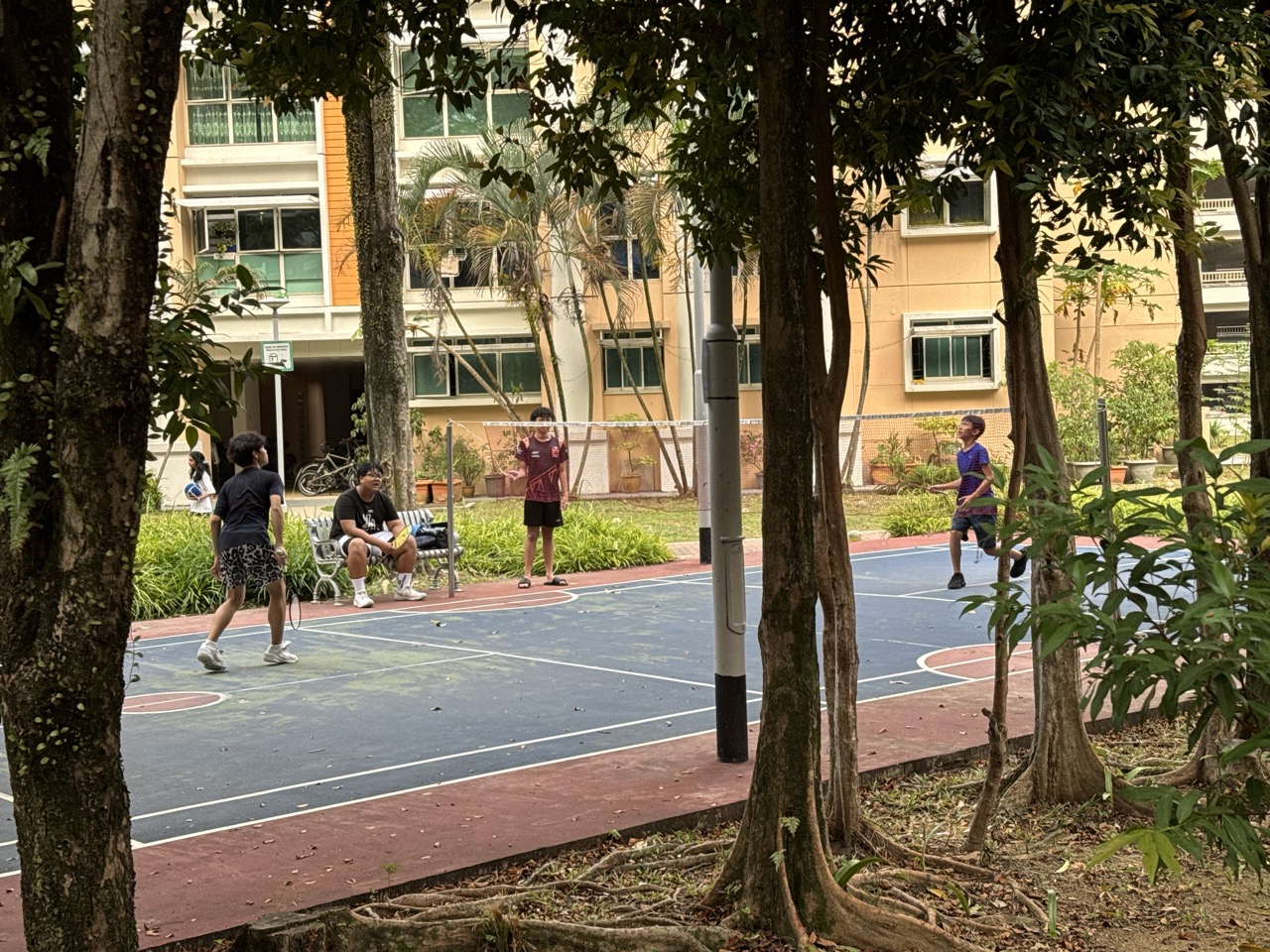
Badminton and pickleball are practical ActiveSG Punggol activities to plan for 2027 because selected court facilities at the new Punggol Sport Centre entered operation during its late-October 2026 soft launch. Reports from 27–30 October identified bookable badminton, indoor and outdoor pickleball, tennis and table tennis areas at 11 Sentul Crescent, but actual 2027 availability still depends on MyActiveSG+. The official opening of the broader centre was reported for 22 November 2026. A court being listed does not mean a suitable time is free, and it does not guarantee coaching or equipment rental. Check the exact sport, venue name and confirmation before your visit.
This guide focuses on how to use a booked court well. A family or group that has only sixty minutes should not spend forty of them deciding who serves. We show how to select badminton or pickleball for different participants, structure a useful beginner session, organise doubles rotation, build movement and control, keep games welcoming, and progress from casual play towards regular practice. Booking mechanics, tournament rules and standalone beginner definitions already have their own eduKatePunggol guides; here the point is a realistic plan that turns one court-hour into healthy, enjoyable and repeatable activity.
- Venue: Punggol Sport Centre, 11 Sentul Crescent; use the exact court label displayed by MyActiveSG+.
- Late-October 2026 reports: badminton, pickleball, tennis and table tennis areas were among early bookable facilities; check again for 2027.
- Book or ballot through the official MyActiveSG+ web platform and read the facility’s current permitted-use rules.
- Badminton beginner aim: reliable gentle serve, basic positioning, controlled contacts and cooperative rallies.
- Pickleball beginner aim: underhand serve, bounce sequence, safe non-volley-zone behaviour and partner communication.
- One-hour structure: set-up and warm-up, focused practice, cooperative play, short games, safe cool-down and exit.
- Choose doubles when the group’s skill and comfort make shared play enjoyable; rotate partners fairly.
- Bring your own suitable racket, shuttlecocks or balls unless the operator clearly confirms otherwise.
- Never assume a school hall, sheltered court and specialised racket court use the same booking or activity rules.
- Rates and 2027 court calendars can change; compare the actual price and confirmation screen.
Updated 1 November 2026. Selected courts are reported operational during the sport-centre soft launch; the status of any single 2027 session, coaching programme or court layout must be checked against the actual booking page.
Why a new court matters only when people actually play
Punggol has long had residents willing to play badminton or try pickleball, but access to a convenient court can determine whether a game happens at all. The new regional centre changes the local possibilities: people may be able to organise a session before work, after school or during a weekend without travelling as far as before. That does not make every option instantly available. The October 2026 soft launch came in phases, and even a functioning sport hall can be fully booked at popular times.
The useful question for 2027 is therefore not “How many courts were announced?” but “Which playable session can our group reliably obtain, and what will we do once there?” Decide the sport and the learning objective, identify a realistic date, assign someone to manage the booking and ask all players to arrive prepared. Convenience creates opportunity; planning turns it into exercise. A small group that returns every fortnight can gain more than one crowded promotional visit.
Badminton or pickleball? Select for the players
Badminton uses a shuttlecock that slows rapidly and encourages changes of height, distance and movement. Pickleball uses a perforated ball and paddle, with a smaller court and distinctive rules about serving and the non-volley zone. Neither is universally easier; each asks something different of a player. A complete beginner may enjoy the social rhythm of pickleball doubles, while a family with badminton experience may feel more comfortable rallying with a shuttle.
Choose based on motivation, physical readiness, available equipment and the court listing, not what is fashionable. Some players enjoy overhead badminton strokes, while others prefer a game built around consistent placement and patient rallies. If the group includes a nervous beginner, cooperative play may be more successful than a competitive match in either sport. One confirmed venue, two clear reasons for playing and a plan matched to the participants are enough for a good start.
Understand exactly which facility you booked
MyActiveSG+ may distinguish a sport hall from a sheltered court and distinguish indoor from outdoor pickleball. These are not interchangeable descriptions. A badminton court cannot automatically be used for tennis, and the availability of a floor marking does not authorise every game. Read the sport type, facility name, location, session duration, permitted participants and current booking conditions. If you have doubts, ask the operator before bringing a group.
For Punggol, late-October reports described Punggol Sport Hall for badminton and indoor pickleball, sheltered areas for outdoor pickleball and tennis, and a table-tennis area. That is a useful starting map, not a promise that every configuration remains unchanged next year. Check the live product at the time of purchase. A school hall under the Dual-Use Scheme may have a different entrance and set of rules. Booking the right surface is the first safety and courtesy decision of the session.
MyActiveSG+ is a reservation tool, not a coaching guarantee
A court booking reserves use of a facility under the operator’s stated conditions. It does not automatically provide an instructor, partner, racket, balls or an organiser to keep score. That distinction catches out new groups that see a sport name and assume a complete activity package is included. A programme booking, by contrast, may involve instruction, set dates and other terms. Decide which product you need before clicking payment.
SportSG’s published MyActiveSG+ help has described peak-hour ballot windows beginning fourteen days ahead and instant availability for certain off-peak slots twelve days ahead. Rules can change, so treat those as context and check the current interface for 2027. The sensible organiser keeps the confirmation, makes sure everyone knows the start time and has a backup if the slot is not allocated. Do not invite six people to a game that is still only a ballot application.
A 60-minute badminton session with a reason to exist
An ordinary court-hour can work well with a simple structure. Use the first few minutes to check the court and warm up, then practise a clear element such as short serves, high clears or gentle cooperative rallies. Move to a small-sided game where players apply that element. Finish with a brief enjoyable match, retrieve all shuttlecocks and leave the court promptly. The suggested proportions are illustrative; respect the actual booking length and each participant’s readiness.
For beginners, learning is easier when one purpose is visible. If today’s task is serving into the correct area, do not also demand perfect smash technique. Encourage players to notice whether the shuttle travels where intended and whether they recover to a sensible position. The group can keep score in a short game without allowing points to dominate every conversation. A purposeful session feels satisfying even if nobody wins a full match.
A 60-minute pickleball session for first-timers
Begin by explaining the boundaries, safe movement and which people are on which side. A few minutes of gentle paddle-ball control help complete newcomers become comfortable. Then practise an appropriate serve and the required bounce sequence before introducing simple cooperative rallies. Only once players can sustain a little control should the group move into short doubles games. Stop to explain a rule when it becomes relevant rather than reading a long rulebook aloud at the net.
Pickleball’s non-volley zone, popularly called the kitchen, is one of the ideas players must understand before playing competitively. It is not an invitation to stand dangerously close to another player or swing a paddle through occupied space. Teach court awareness and communication alongside the rule. If a participant is struggling, reduce pace and make the next rally cooperative. The activity’s social benefit comes from shared participation, not from repeatedly exploiting the newest player.

Warm-up as a movement rehearsal, not a ritual
A warm-up should prepare players for the specific movement they will perform. For racket sports, that may involve gradually increasing walking pace, making comfortable changes of direction and rehearsing easy racket movements without exhausting the shoulders. The exact routine depends on age, experience, physical capability and professional advice where appropriate. Do not assume that forcing deep stretches or jumping immediately into hard smashes is necessary just because the court-hour has begun.
For a family, a friendly two-minute game of controlled passes can ease people into the activity, provided it is safe and suited to their level. Explain that the warm-up is a chance to check footwear, clear loose belongings and notice how the body feels. A child who complains of pain or an adult returning from injury needs a different decision from someone who simply feels stiff after sitting. Practical readiness beats ceremonial enthusiasm.
The first badminton skill: contact you can repeat
Beginners often want to smash because it looks dramatic. Yet the ability to make a controlled contact repeatedly creates far more playable rallies. Introduce a comfortable grip with guidance when needed, a simple starting position and gentle feeds that allow the learner to experience timing. Focus on the quality of contact rather than how loudly the shuttle is hit. Once the basic touch is reliable, distance and directional control can develop.
A useful drill involves two partners trying to keep a gentle rally alive for a few contacts without counting winners. The person feeding the shuttle has an important teaching role: provide reachable opportunities rather than surprises. If the rally breaks down, identify whether the problem was position, timing, flight or communication. Do not correct all four at once. One small adjustment that remains available during a game is more valuable than a collection of instructions that nobody remembers.
The first pickleball skill: a calm, legal serve
A new pickleball player can become so preoccupied with hitting hard that the serve becomes unreliable. The early objective should be a repeatable legal motion and a ball that begins the rally. Check the current official rules or follow a qualified instructor; do not rely on arguments between beginners about a rule they remember from a video. Once a gentle serve lands consistently, players can explore placement and the next movement.
Practice under manageable conditions. Give each participant enough attempts to notice the relationship between body alignment and the ball’s direction. Partners can retrieve balls safely and provide a simple observation, such as whether the serve reached the intended area. Avoid competing over speed. It is possible to improve significantly during one quiet court-hour without producing a spectacular winner. The satisfaction comes from turning an uncertain start into a dependable first action.
Footwork and court awareness: the overlooked foundation
Racket sports are not just games of swinging arms. A player needs to read the ball or shuttle, move toward a useful position and recover without colliding with a partner. Badminton may demand quick forward-backward transitions; pickleball often rewards patient balance and well-timed positioning. In either case, good movement begins with watching and anticipating rather than sprinting at everything. Beginners benefit when drills remain slow enough to make safe decisions.
Place a few imaginary targets on the court and have learners move between them without striking a ball. Add a gentle feed only when the pattern makes sense. Ask players to notice whether they remain balanced and whether they can stop comfortably. This is especially helpful for mixed-age groups, where one person may cover ground more quickly than another. The teaching aim is useful decision-making, not an identical running speed.
Doubles partners need a language
Many beginners believe doubles simply means two individuals playing singles on the same side. In practice, a pair must communicate about short shots, deep shots and who takes a ball in the middle. Without a shared language, both players may swing or neither may move. The simplest habit is to agree on brief, calm calls and avoid blame when a ball is missed. A constructive pair learns from collisions of intention before they become collisions of people.
Before starting, decide how to rotate serving responsibilities and what each partner should do after a return. During practice, pause occasionally and ask, “Who expected to take that?” Then choose a clearer convention. Do not assign the newest player a permanent role of retrieving mistakes. The point of a family or community session is that everyone gains opportunity. Reliable communication often improves a doubles game faster than buying a more expensive racket.
Serving practice without turning it into punishment
A player who keeps missing serves needs a task they can control, not a lecture about concentration. Divide the challenge: check the starting position, understand the required motion and practise contacting the shuttle or ball consistently. Then add the target. This progression is particularly useful for children, who may struggle when adults demand technique, direction and competitive success simultaneously. The organiser can make the drill cooperative by counting a group total rather than individual failures.
For instance, each player attempts a short sequence of gentle serves and says one thing that became more reliable. A coach may choose a more sophisticated technique, but a recreational group’s job is to create safe, respectful practice. The same general principle transfers across badminton and pickleball: repeat a specific action, observe the result and adjust one variable. Good practice is not the same as mindless repetition.
How to keep rallies alive at different skill levels
Mixed-ability groups need flexible rally rules. Two experienced players can be tempted to accelerate immediately, leaving the beginner with little contact and no reason to return. Instead, agree on a cooperative round in which the objective is to make the ball or shuttle playable for a partner. Slow feeds, clear calls and patient recovery allow everyone to contribute. Once that becomes comfortable, add a competitive round for players who want it.
This arrangement is not charity; it teaches control. An experienced player who can place an easy shot on demand possesses a useful skill. The beginner learns to anticipate and recover without constant panic. A family can choose one common success target, such as sustaining several comfortable exchanges, and celebrate achieving it together. Competition can follow, but it should not monopolise the session if the group’s purpose is recreation and learning.
Short games make better teaching tools
Full-length matches are enjoyable, but they may be too long for a group with uneven experience or limited court time. Short games can isolate a lesson: begin each rally with a controlled serve, encourage communication, or award a point for a patient rally rather than a powerful winner. Explain any modified scoring as a friendly practice rule, not an official competition rule. When players later play formal games, revert to the rules that apply.
A useful routine alternates one short practice game with one brief discussion. Ask what helped the group sustain play and what confused people. Keep explanations short enough that the court does not become a classroom of standing listeners. This is a Punggol family recreation activity: movement should remain central. The organiser’s skill is making each minute playable while ensuring new players understand what success looks like.
Fair rotation when four, five or six people arrive
Four people fit naturally into many doubles arrangements, but five or six require an agreed rotation. Decide before the first game how long each round lasts and when waiting players join. A fair system does not keep the weakest person on the bench or allow the strongest pair to monopolise the court. Consider a short time-based rotation rather than relying entirely on whoever wins. Respect the facility’s participant limits and the actual number allowed under the booking.
Waiting players can help track scores or observe a particular skill, but they should not occupy adjacent courts or interfere with other users. If too many friends want to play, booking another legal slot or dividing into separate days may be better. Organising sport is a small exercise in community fairness. People return when they feel invited, included and confident that their time will be respected.
Choosing equipment without buying the entire shop
A new player does not need an expensive complete kit to discover whether they enjoy a game. They do need equipment appropriate to the sport, safe court shoes where required, and supplies that the venue does not guarantee. A badminton racket and shuttle are not substitutes for a pickleball paddle and ball. Check whether the operator rents or supplies anything before assuming it will be waiting at the court. Equipment availability may vary across programmes.
A family can begin with simple recreational equipment of reasonable quality and upgrade only when a recurring need becomes clear. For children, grip size, manageable weight and control are more meaningful than an elite athlete’s brand. Mark personal items discreetly and bring a bag that keeps loose objects off the playing surface. The best first purchase is one that supports repeated, safe play rather than a dramatic photograph.
Recognising a better player: control beats power
Improvement in racket sports is easy to misjudge because powerful shots attract attention. A player who hits one spectacular smash but misses eight ordinary returns may not be contributing as much to a friendly doubles game as the person who serves consistently, moves into space and keeps rallies alive. Useful progress involves technical control, court reading, communication and fair decision-making. Recreational players should measure what they can repeat under ordinary conditions.
Try a simple observation after several sessions: can the player return more reachable shots, make fewer avoidable service faults and help partners stay organised? Those changes are more meaningful than a single lucky point. A coach may add detailed technical assessment for learners pursuing competition, but the recreational group can use plain language. “Our rallies last longer and everyone has more turns” is an excellent practical outcome for a new ActiveSG habit.
How badminton and pickleball differ for the body
Badminton can involve explosive movements and overhead strokes, particularly as skill rises. Pickleball can involve frequent lateral adjustments and repeated short rallies close to the net. These descriptions are broad tendencies, not prescriptions for individuals. Both sports require attention to footing, adequate space, sensible effort and recovery. Different ages and abilities can participate, but pace and format should match the players rather than the reputation of the sport.
Someone returning after a long inactive period may start with gentle cooperative play and shorter rounds. A fitter player might include deliberate movement drills, but the aim remains quality rather than uncontrolled fatigue. If a person experiences pain, dizziness or unusual symptoms, they should stop and seek appropriate advice. Enthusiasm for a new Punggol venue should not override sensible personal limits.
Families with primary-school children
Children often like the immediate social nature of racket games, but their physical reach and attention span may differ from adults’. Use appropriate equipment, brief instructions and plenty of successful contacts. A younger learner might start by striking a stationary or softly fed object in a structured activity, while an older child may be ready for cooperative rallies and simple scoring. The parent’s job is to create an encouraging environment, not to ask the child to imitate a televised final.
Avoid making the family match a referendum on school performance or discipline. A child may enjoy a game even while developing skill slowly. Celebrate making a good call, giving a partner another chance, or following a rule without argument. Those habits build the social value of sport. If you enrol in coaching, verify age eligibility and instructor suitability instead of assuming that a group class will accept all siblings together.
Teenagers: making sport a routine after lessons
Secondary-school students may benefit from a predictable physical activity that is not another graded academic task. Racket games allow them to meet friends, practise coordination and build responsibility for time and equipment. However, school schedules, CCAs and examinations make regular bookings harder than they appear. Choose a frequency the teenager can maintain without sacrificing sleep or overloading the week. One dependable session can be more useful than three ambitious sessions repeatedly cancelled.
Encourage teens to participate in planning. They can check the booking, invite the correct number of players and set an agreed meeting point. Teach them to handle cancellations fairly and to respect people sharing public spaces. A teenager who learns to organise a pleasant game is gaining practical life skills alongside movement. The aim is healthy independence, not another competition over who improved fastest.
Older beginners and intergenerational pairs
Some families want grandparents, parents and children to share a court. That can be a memorable activity when designed around the people present. Begin with cooperative exchanges and manageable movement rather than expecting everyone to chase difficult shots. Ask each participant what feels comfortable and do not interpret cautious play as lack of interest. Comfortable footing and safe boundaries matter more than producing a full formal match.
A mixed-age pair might use a gentle serve, a modified recreational scoring rule and frequent breaks. Make clear when a practice rule differs from the sport’s official rules. If anyone has mobility concerns or a relevant health condition, seek suitable professional advice before adopting vigorous movement. The achievement is a safe shared experience. Punggol’s sporting spaces can support community life only if sessions are welcoming to people at different stages.
From casual court play to a weekly training cycle
A weekly cycle should change one small thing at a time. Week one might establish basic contact and comfort; week two might emphasise serving; week three positioning; week four communication in doubles. The next month can revisit these skills under slightly more realistic rallies. The dates are an illustration, not a guaranteed coaching syllabus. If the group meets irregularly, repeat an earlier objective rather than forcing progression simply because a calendar page has changed.
Keep a brief record of what the group attempted and what would be useful next time. Ask players whether they want social play, technique coaching or competitive matches. These are related but different goals. A group that says “We want to laugh and move together” may not need a rigid training regime. A player seeking advanced technical development may benefit from a qualified coach. The right plan respects both ambition and enjoyment.
How to choose a coach or structured class
A court reservation lets a group play independently; a coached session should bring suitable instruction, feedback and safeguarding. Before paying for a programme, verify the provider’s identity, the instructor’s relevant background, age and skill requirements, group size, lesson location, fees and cancellation conditions. Ask what students will actually learn and how the coach adapts when abilities differ. The word “academy” in an advertisement does not automatically establish an ActiveSG affiliation.
For children, inquire about supervision and how parents communicate concerns. For adults, ask whether the session is genuinely suitable for beginners or expects prior experience. A trial lesson or clear written description can prevent disappointment. The goal is not to find the most dramatic promise; it is to find a programme that matches the participant’s level and makes improvement observable. Verify official ActiveSG programmes through its own channel.
Using the court booking fairly
Public courts are shared community resources. Arrive close to the allocated start time, leave at the proper end, return equipment to its owner and keep the surrounding walkways clear. A late arrival does not automatically extend the booking. Neither does an empty neighbouring court confer permission to use it. Check the venue’s specific cancellation and transfer rules before inviting another group to take over a reservation.
Fairness also applies to the booking process itself. Don’t make speculative reservations merely to hold several desirable times when your group can only use one. Follow the current ballot and payment rules, and release a slot through permitted channels if plans change. Good public-sport habits help make a busy regional centre work for everyone. The activity begins before the first rally and continues until the last shuttle has been picked up.
What if peak-hour bookings are difficult?
Demand for after-work and weekend sessions can be intense. A family should not assume that a new hall instantly eliminates scarcity. Consider an off-peak time where practical, a different operating venue, a smaller group with easier availability or a different sport on that day. The aim is to preserve an activity habit, not to spend every week frustrated by the same full calendar. School-facility dual-use sessions may be alternatives but have their own booking and access conditions.
For example, a group could make one preferred Punggol ballot attempt and prepare a second lawful option at an established hall. Only send invitations once the actual session is secured. If the reservation fails, use the same time for a walk or another confirmed activity rather than improvising play in an unsuitable public area. Flexibility is a skill in organising community sport, and 2027 planning should include it from the start.
A fictional family badminton hour
Imagine the Lim family, an illustrative example with two adults and two children. The adults can play recreational badminton but the children are newer. After confirming a booked court, the family spends a short period warming up and making gentle feeds. Instead of beginning with a competitive doubles match, they work in pairs on short rallies. The children are encouraged to aim for control and communication, while the adults practise making shots reachable.
Midway through the session, they try a friendly short game with simplified scoring clearly labelled as practice. Everyone has a chance to serve. Afterwards, each child describes one action they can perform more consistently, and the adults note what made the game fun. The family leaves on time and checks whether the next visit should involve coaching. The outcome is not a medal; it is four people who want to play again.
A fictional first pickleball gathering
Four neighbours in Punggol want to try pickleball. None has played before, and one is returning to exercise after a long break. They check the live venue product to confirm that it is a pickleball slot rather than a badminton booking. Before arriving, they agree to keep the first session cooperative. They bring suitable paddles and balls, check the court rules and learn the serve and bounce sequence at a manageable pace.
They rotate partners so the least experienced player is not isolated. When confusion arises about the non-volley zone, they pause and consult the proper rule rather than arguing. At the end, each person says whether the next session should be another gentle social game or an instructor-led introduction. That question matters more than the score. A new activity succeeds when the group leaves feeling capable of returning, not embarrassed by inexperience.
Rain, heat and the difference between sheltered and indoor
Singapore’s weather can interrupt outdoor sport, and a sheltered court is not identical to a fully indoor hall. Wind, wet surfaces, lightning warnings and facility closures can change whether it is sensible or permitted to play. Follow SportSG’s venue instructions and weather-related closures. Do not improvise continued play in an area the operator has closed. Check the actual facility label, not just the assumption that all courts at a new centre are protected from rain.
Indoor courts may offer more stable conditions for some drills, while sheltered areas may still experience changing wind and moisture. Players should protect equipment and personal safety accordingly. If a session is cancelled, first look up the operator’s policy rather than assuming an automatic refund or rescheduling. A reliable activity plan includes the possibility of a weather disruption without turning it into an argument on the day.
Sport etiquette: making the new Punggol centre pleasant
A regional facility brings together people who may have very different experience levels. Some are competitive, some are learning, and others are simply finding time to move. Respect queue systems, court boundaries, staff directions and shared amenities. Avoid loud personal criticism and do not leave used equipment or litter behind. Keep photographs focused on your own group and respect the privacy of people who have not agreed to be recorded.
The centre is not a private club simply because residents feel proud of its opening. When a younger player makes a mistake, model patience; when an older participant needs more time, give it without mockery. When an argument arises about a line call, use an agreed method to resolve it calmly. People judge a community sporting place not only by its floor and lighting but by how welcome they feel when they arrive.
Beyond the first month: measuring real progress
New venues attract curiosity, but curiosity alone does not create a lasting routine. Review the group’s activity after four to six visits. Are bookings and travel manageable? Do players turn up on time? Is the activity appropriately challenging without overwhelming anyone? Are people improving at specific skills and having enough fun to continue? These questions reveal the difference between a novelty outing and a sustainable habit.
You can measure practical progress with simple observations: more sustained cooperative rallies, fewer unclear calls, more consistent serves and better recovery between points. Avoid turning the measures into punishments. If someone wants a more competitive route, explore properly organised coaching or clubs. If the group prefers social play, keep that outcome as the priority. Sport is valuable precisely because different people can find different, legitimate reasons to return.
Frequently asked questions about Punggol racket activities
Are courts at Punggol Sport Centre open? Late-October 2026 reports described selected badminton, pickleball, tennis and table-tennis bookings during the soft launch. Confirm your chosen 2027 slot in MyActiveSG+.
Does a court booking include lessons? Not unless the product explicitly says so. A reservation and an instructor-led programme are different purchases.
Is pickleball identical to badminton? No. The equipment, ball behaviour, rules and some court-use arrangements differ.
Can families play mixed-ability doubles? Yes where permitted and suitable, especially with cooperative practice and fair rotation.
How early should I ballot? SportSG’s published help has described a fourteen-day peak ballot and twelve-day off-peak instant-booking system; check the current live process before acting in 2027.
Are school halls interchangeable with the new sport hall? No. Read the specific venue, sport permission and access information.
What if someone does not have a racket? Ask the operator or programme provider what is supplied; do not assume rentals exist.
What should beginners do in their first hour? Warm up, practise one reliable contact or serve, keep rallies cooperative, play a short game and leave promptly.
Official sources and related Punggol guides
- MyActiveSG+ official facility booking and programme portal
- ActiveSG official ballot and instant booking help
- SportSG’s published 2026 sport-centre development plans
- October 2026 Punggol soft launch and opening report
- Late-October independent report of court listings and pool status
- eduKatePunggol badminton, pickleball and tennis court guide
- eduKatePunggol beginner pickleball rules and court guide
- eduKatePunggol community sports booking and operator guide
Editorial scope: this is a session-planning and player-development guide, not an official 2027 court calendar. Times, prices, ballot rules, lessons, permitted equipment and weather closures remain subject to the venue’s current instructions.


