
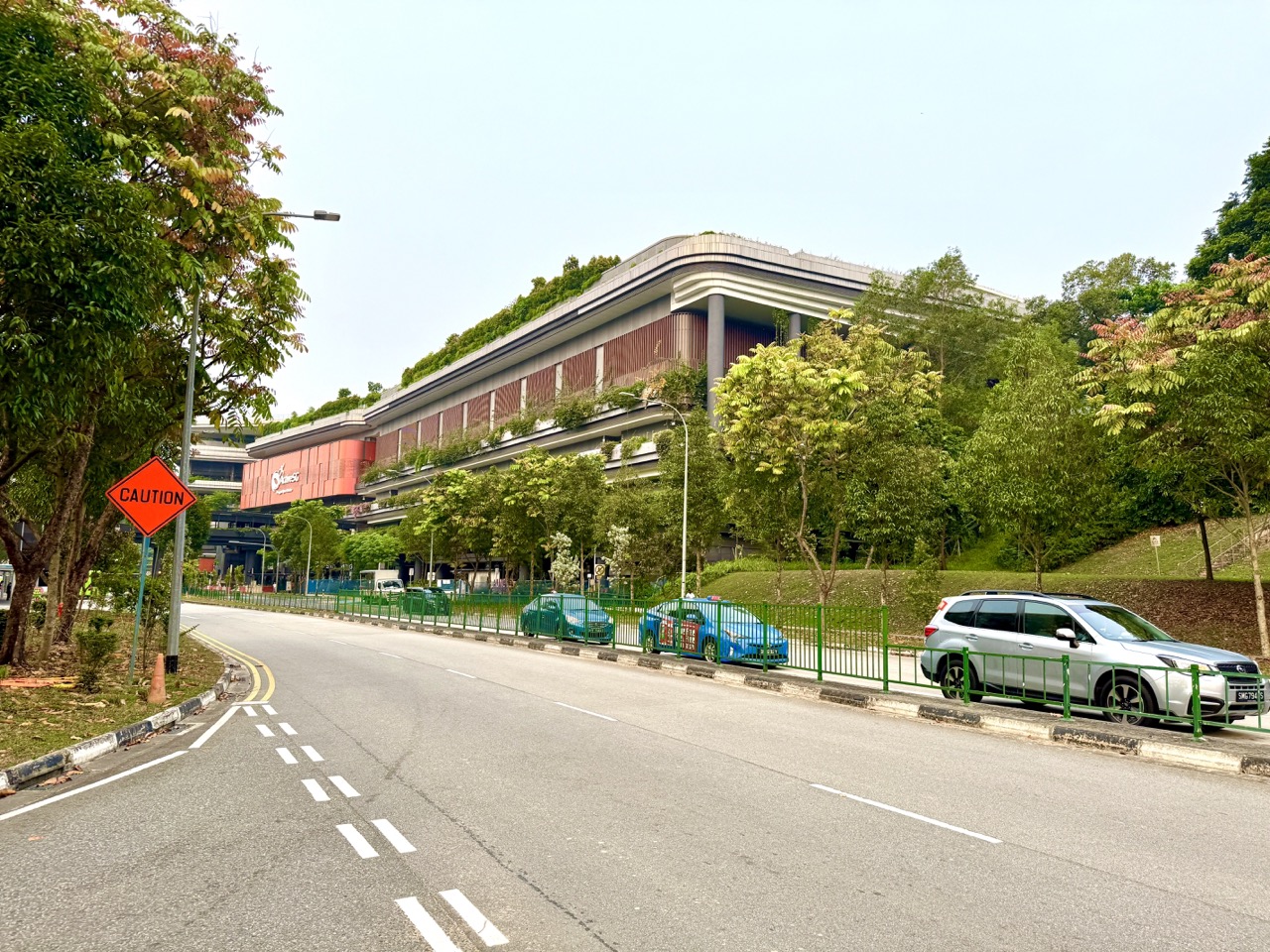
ActiveSG Punggol 2027/2028 and eco-sustainability: Punggol Regional Sport Centre at 11 Sentul Crescent was designed as a vibrant, eco-sustainable sports and lifestyle destination beside My Waterway@Punggol. It began phased public operations on 27 October 2026 with a gym and selected courts. However, an eco-sustainable design aim is not automatically a verified Green Mark certification, an audited carbon-neutral claim or proof that every planned feature is fully operational.
SportSG’s Sports Facilities Master Plan describes the centre as part of a wider network of accessible public sports facilities, while the project manager’s description expressly uses the phrase eco-sustainable. HDB’s Punggol Eco-Town information explains the 4.2km waterway and surrounding landscape. This guide separates those grounded plans from uncertain solar, water, carbon and opening claims for 2027–2028.
- Location: Punggol Sport Centre, 11 Sentul Crescent, Singapore 828656, near Sam Kee LRT
- Verified concept: described by its project team as an eco-sustainable sports and lifestyle destination
- National plan: SportSG aims for better access to suitable sports facilities near homes by around 2030
- Waterway: HDB’s My Waterway@Punggol is 4.2km long
- Green mobility: use lawful public paths, LRT and appropriate cycling connections where practical
- Resource claims: do not invent solar output, water recycling, Green Mark rating or net-zero status
- Visitor habits: reduce litter, maintain equipment, respect shared spaces and avoid unsafe waterway entry
- 2027–2028: verify current operating facilities and any actual published environmental performance
Punggol’s sporting infrastructure is interesting not because it has a green-looking facade, but because it can connect public recreation with a living waterfront town. The strongest explanation is also the most careful: show what is planned, what is observable and what has genuinely been measured.

Definition lock: eco-sustainable is an aim, not an audited result
An eco-sustainable sports development aims to reduce unnecessary resource use and support healthier surroundings while providing valuable public facilities. The phrase is an intention or design aspiration unless supported by evidence of actual energy, water, materials, maintenance or operational outcomes. A building’s landscaped appearance does not prove a quantified carbon saving.
Rider Levett Bucknall’s project description calls Punggol Regional Sport Centre a vibrant eco-sustainable sports and lifestyle destination. That is useful evidence of the project’s purpose, but its website does not by itself establish a certified environmental performance score or guarantee that every planned environmental feature has been commissioned.
This guide separates what designers intended from what residents can verify. It explains how sport, transport, waterway ecology, shared public spaces and everyday behaviour can connect without inventing a Green Mark rating or emissions figure.
The site is a new public sporting anchor
Punggol Sport Centre is at 11 Sentul Crescent, Singapore 828656, near Sam Kee LRT and adjacent to SAFRA Punggol at 9 Sentul Crescent. It began phased public operations on 27 October 2026, with its gym and selected racket courts available before every aquatic or specialist facility became generally bookable.
A large regional centre can host several sports close together, reducing the need for some residents to travel to distant facilities. Yet the environmental impact of a complex depends on many factors, including construction, upkeep, electricity, water and how people travel.
Residents should appreciate the convenience without assuming all sports are operating or that environmental outcomes have already been measured and published.
The Sports Facilities Master Plan context
Sport Singapore’s Sports Facilities Master Plan aims to expand and rejuvenate accessible, quality sporting infrastructure. Its stated direction includes having a majority of quality sports facilities within a ten-minute walk of homes by around 2030. This is a national target rather than a claim about the travel time of every current Punggol resident.
The same plan specifically identifies the Punggol Regional Sport Centre as a regional facility integrated with the waterway and co-located with SAFRA. Its role is not limited to the biggest events; it can support everyday participation through public sports facilities.
Evaluate the development against its actual available services and local connections. The more useful question is whether residents can conveniently reach a legitimate activity and return regularly.
A regional centre does not replace neighbourhood sport
The Sports Facilities Master Plan includes national, regional, town and neighbourhood layers of sports infrastructure. A large centre may be appropriate for competitions and specialist facilities, while smaller courts or open spaces close to housing blocks can serve short daily activities.
From a sustainability perspective, concentrating everything into one large destination might increase travel for people living farther away. Neighbourhood activity options remain valuable because a brief walk to a nearby permitted space may be easier than a multi-stage journey to a landmark building.
Choose the facility that fits the activity and journey rather than assuming the newest regional centre is automatically the best choice for every outing.
Why Punggol Waterway changes the setting
HDB describes My Waterway@Punggol as a 4.2km man-made waterway integrated with the surrounding eco-town. Its landscaping and public promenades create recreational space close to homes, bringing walking, cycling and environmental awareness into everyday life.
The Sport Centre’s location beside this wider network makes it possible for residents to combine sport with time in a public waterfront environment. This is valuable, but the waterway’s design does not create general permission to swim, launch a kayak or enter any restricted water.
Keep public access and environmental protection together. Enjoy permitted routes while respecting water-edge barriers, current rules and the people who share the promenade.
The North-Eastern Riverine Loop is broader than the centre
URA’s June 2026 guide identifies the 26km North-Eastern Riverine Loop linking Punggol Park, Punggol Point Park, Punggol Waterway Park and Sengkang Riverside Park. The network provides context for the wider region’s outdoor recreation opportunities.
That figure is a published route-system description, not a guarantee that a family can walk the entire loop from the sports centre without diversion or that every segment is suitable for a child or wheelchair user. Conditions and precise connections must be checked on the actual day.
Use the loop as a source of ideas and choose a manageable lawful segment. A long route is not automatically the healthiest or most environmentally responsible choice for every person.
The Punggol Digital District is another nearby system
Punggol Digital District brings together business premises and SIT’s campus around Punggol Coast and Punggol Way. URA’s plans emphasise walkable public space and transport integration. The district and public Sport Centre sit within the wider town, but they are not one building or one interchangeable booking service.
An employee might combine commuting with a public sports visit, while a student might use campus activities instead. The environmental case for a journey depends on its actual route and choices, not the fact that both destinations have Punggol in their names.
Check whether a walking, cycling or public-transport connection is genuinely practical before using it as evidence of greener travel.
Sam Kee LRT as a practical access option
Sam Kee LRT is an important public-transport reference for the Sentul Crescent area. Residents arriving through the wider network may be able to avoid a dedicated car trip, but actual convenience depends on home location, service status and the final pedestrian route.
A person with young children or mobility needs should not be judged for choosing a different safe travel mode. Public transport can support lower-car routines for some families while creating difficulties for others.
Give readers realistic route-planning advice rather than invented travel-time or emissions figures. An environmental guide should not hide the practical barriers that shape people’s decisions.
Walking can connect ordinary life and sport
A short walk from home or the LRT to a suitable activity creates movement before and after the formal session. This is a simple benefit of local sports provision and can make an outing feel less like a separate chore.
However, the path must be appropriate. Heavy rain, exposed crossings, heat or a difficult route may alter what is safe and comfortable, especially for children and older people. The shortest route may not be the best accessible route.
Choose permitted walking paths and respect crossing signals. Convenience, safety and repeatability matter more than a symbolic claim of completing an entirely car-free day.
Cycling is useful only with safe end-of-trip planning
Punggol’s cycling and park-connector network provides possibilities for active travel. A visitor who cycles to sport should check the permitted route, appropriate parking or racks and whether the facility provides lawful end-of-trip arrangements.
Do not assume that a bicycle can be taken through a sports hall, secured to landscaping or left at a random emergency exit. Parking and circulation rules protect everyone, while shared paths require care around pedestrians.
Plan bicycle storage before the visit rather than inventing the number of available racks. A sustainable commute must also be a safe and responsible one.
The difference between a green roof and a published rating
Architectural imagery for the regional sports development shows planted terraces and landscaped elements. Such design features can contribute to a visually greener urban environment, but an artist’s impression is not proof of the final installed specification or measurable environmental performance.
A reader may see greenery in a photograph and conclude the building has achieved a certain Green Mark certification. Unless an official current certificate is available, that is an unsupported leap.
Report what the original photograph truly shows and separate visible planting from audited performance. Credible environmental reporting is precise about the kind of evidence used.
Solar panels: never infer output from a rendering
Some project imagery shows roof areas with features that resemble solar-panel arrays. That can suggest a design concept, but it is not enough to establish final installed capacity, electricity generation, maintenance status or the share of power used onsite.
A Punggol education article should not publish invented kilowatt figures or claim the whole sports centre is powered by solar energy without an operational source. Singapore’s general solar policies also do not prove that a specific building has commissioned panels.
Only include quantitative solar details if an authorised operator or published technical report verifies them. Until then, explain the difference between a concept image and measured generation.
Energy demand is more than lighting
A regional sports complex can use electricity for lighting, ventilation, pumps, air-conditioning and equipment. Different facilities have different profiles; a swimming complex may have water-treatment requirements that a badminton hall does not. It is inaccurate to treat the building as a single simple electrical appliance.
Energy-efficient design can help manage demand, but real performance depends on equipment selection, occupancy, operating hours and maintenance. A public architectural description is not a measured meter reading.
Ask what operational information the owner actually publishes. A responsible guide explains the potential categories without claiming precise savings for Punggol.

Why efficient lighting matters
Sports halls need appropriate lighting for play, safety and events. Efficient lights and sensible controls can reduce unnecessary use when implemented properly, but savings depend on the actual fixtures, operation and required brightness. A darker sports hall is not automatically a better environmental solution if visibility becomes unsafe.
Public users can support sensible use by respecting booking hours and leaving spaces when permitted sessions end. They should not interfere with building controls or switch off systems needed for safety.
Technical maintenance belongs to the operator. Citizens can appreciate careful operation without guessing the exact electricity reduction.
Ventilation, cooling and sporting comfort
Singapore’s warm and humid climate makes ventilation and temperature management important in sports buildings. Air-conditioning, natural airflow and other design approaches have different trade-offs depending on use, safety and indoor conditions.
An observer should not assume a hall is fully naturally ventilated or that a closed facade guarantees air-conditioning. The actual system may vary between the gym, courts, corridors and other areas of the complex.
Use operating information where available and report comfort observations as observations rather than engineering certification. Individual visitors should follow the facility’s safety and health rules.
Pools introduce water and energy questions
A swimming complex requires water quality and treatment management, and may have pumping and other operational systems. Punggol’s planned pools were a prominent feature of development publicity, but the October 2026 initial soft opening did not establish unrestricted public access to every pool.
An article should not invent the complex’s daily water consumption, recycling percentage or filtration technology simply because such ideas are common in sustainable architecture. The responsible operator is the source for site-specific facts.
When the pools are confirmed operational, families can support appropriate use by following hygiene and facility rules. Resource efficiency and swimmer safety must both be respected.
Waterway ecology and public recreation
Punggol’s waterway connects recreation with a real managed urban environment. HDB’s eco-town material describes landscaping and freshwater vegetation features within the wider Punggol planning context, while the promenades provide everyday opportunities for people to observe nature.
A sports centre near water must be understood as part of that setting, not as a general invitation to enter the water, feed animals or discard food into the canal. Unauthorised activities can damage the surroundings or create safety risks.
Use official waterways and parks guidance to understand permitted recreation. Respect water-quality management and avoid littering along the edge.
Stormwater is a real design question
Rainwater management matters in Singapore because intense rainfall can affect outdoor spaces and drainage. Sustainable urban planning may consider how surfaces, greenery and engineered systems handle runoff, but the specific systems installed at Punggol Sport Centre need technical evidence.
A landscaped terrace does not automatically prove that a rainwater harvesting tank exists, that the building recycles a defined volume or that all drainage impacts have been eliminated.
Teach the difference between general engineering principles and verified project details. When no operator figures are published, explain the uncertainty instead of inventing them.
HDB’s Eco-Town and the sports complex are not identical projects
HDB’s Punggol sustainability programmes include features in residential precincts and public open spaces, such as greenery, rainwater systems and the waterway itself. The presence of these measures in the wider estate does not mean each one is installed in the new sports centre.
An author who copies the features of Treelodge@Punggol into a Sport Centre article could accidentally attribute residential technologies to a different building. That is a factual error even if the technologies sound environmentally positive.
Keep the project names and operators distinct. Use HDB for eco-town background and the responsible Sport Centre team for building-specific claims.
Heat and shade along public access routes
Greenery and shade can make outdoor movement more comfortable in a tropical town, especially near long pedestrian routes. URA and HDB describe the value of integrated green spaces, but an individual visitor should still expect changing conditions across exposed crossings and open areas.
A short walk to the sports centre may feel different at noon and in the evening. Children, older adults and people with particular health circumstances may need more comfortable timing or rest options.
Choose a realistic route and monitor weather. Sustainable design is helpful when it supports safe repeatable use, not when people feel compelled to endure unsafe heat.
Use weather advisories rather than personal guesses
Thunderstorms, haze and high temperatures can change outdoor sports plans and facility operation. A sheltered area may still be affected by an official closure notice. A person’s belief that the venue has a green design does not override operator safety instructions.
An event organiser should check NEA information and SportSG closure notices, then communicate changes clearly. Keeping a reasonable alternative prevents the group from forcing outdoor activity simply because it was planned.
A sustainable sports routine adapts to conditions. Avoid needless travel to a closed venue and respect legitimate safety decisions.
Bring a refillable bottle when appropriate
One practical way visitors can reduce disposable packaging is to bring a suitable reusable water bottle where permitted. However, users should not assume that every room has a drinking fountain or that bottles may be brought onto all playing surfaces.
Check the venue’s actual rules and facilities. Keeping adequate hydration is more important than insisting on a particular container when it is not suitable or allowed.
A small repeatable habit is more meaningful than a dramatic sustainability slogan. Wash reusable bottles appropriately and carry them safely without obstructing others.
Avoid unnecessary single-use packaging
Sports outings can create waste through snack wrappers, disposable drink cups and packaging from newly purchased equipment. Families can plan sensibly by bringing only what they need and disposing of waste in the correct bins.
Not every piece of packaging belongs in a recycling bin, and contaminated food containers can cause problems. Singapore’s national recycling guidance should be checked rather than assuming every material with a recycling symbol is accepted locally.
Clean up after the session and avoid leaving litter around courts, seating or waterway edges. Environmental care begins with ordinary behaviour.
Food and responsible post-game habits
After playing sport, families may buy meals at nearby outlets, but the environmental benefit of any food choice cannot be determined from a simple stereotype. Transport, packaging, food waste and personal needs all affect the decision.
Bring a reusable container where accepted and safe, avoid ordering more than needed, and consider convenient local options that minimise unnecessary extra travel. Do not make nutrition claims or moral judgements about what another visitor eats.
The practical aim is to enjoy a meal and reduce avoidable waste without compromising food safety or creating unrealistic expectations.
Equipment reuse can reduce unnecessary purchases
A first-time badminton or pickleball player does not need to buy professional equipment before trying the sport. Borrowing suitable equipment where permitted, maintaining what one owns and repairing usable gear can help avoid waste.
Not every sports product can be safely repaired, particularly where protective functions are involved. Damaged equipment needs competent assessment and replacement when appropriate.
Choose quality and suitability over impulse purchases. A long-term sports habit does not require new shoes, rackets or accessories for every session.
Responsible disposal of damaged sports gear
Sports items may contain mixed plastics, textiles, rubber, metal and composite materials that are not necessarily accepted through ordinary household recycling. Placing an entire worn racket or damaged shoe into a generic blue bin without checking may not achieve the intended environmental benefit.
Look for current legitimate collection or repair schemes, and avoid leaving broken items in public sports spaces. An abandoned object can become both litter and a hazard to other users.
Recycling claims should reflect real local acceptance rules rather than assumptions. Preventing unnecessary purchases can be easier than disposing of complex equipment later.
Shared public courts are a form of resource use
A community court supports many users across the day. Booking an appropriate slot and finishing on time allows others to enjoy the same infrastructure. The environmental logic includes better use of facilities already built, but there is no need to invent a precise emissions saving for one booking.
An unused reserved court may represent a missed opportunity for other people. Organisers can plan realistically, avoid holding slots they cannot use and follow official cancellation rules.
Fair access is both a social and practical sustainability consideration. Do not use automated booking tools or unauthorised resale to monopolise scarce public facilities.
The importance of maintenance and lifespan
Building sustainability does not end when construction is completed. Equipment maintenance, replacement cycles, cleaning, safe operations and long-term usefulness all influence how well public facilities serve residents over time.
A venue that remains safe and attractive for many years can offer value, but an independent article cannot calculate its full lifecycle impact without relevant technical data. Residents can support proper upkeep by reporting damage and using equipment as intended.
Do not attempt personal repairs to electrical, structural or sports machinery in the name of sustainability. Report problems through the actual facility operator.
Sport for all ages is also social sustainability
Public sports infrastructure can contribute to community wellbeing when activities are available across ages, abilities and backgrounds. A sustainable place is not only efficient in energy terms; it also needs to be useful and accessible to the people it was built to serve.
A family may choose walking, a public gym or a gentle racket game, while a person with disability may require a specific adapted programme. The actual service and access conditions matter more than broad declarations of inclusivity.
Support fair sharing, appropriate pricing and respectful conduct. Social usefulness is part of the development’s public purpose without being a substitute for environmental measurement.
Disability access and sustainable planning
Accessible routes, lifts, appropriate changing facilities and communication support help people return to a venue independently. A building that is difficult to use can create practical barriers even if its facade is green.
However, access is room-specific. A modern public development does not automatically provide every adaptive sport or specialist coach on every day. Participants should confirm needs with the operator before booking.
An accurate local guide gives real options and distinguishes planned inclusivity from the availability of a named programme.
School learning opportunities without trespassing
Teachers can use public information about Punggol’s eco-town, the Sports Facilities Master Plan and the local waterway to teach sustainability and civic responsibility. A classroom can compare design goals with what an observer can verify from permitted public areas.
That does not give students permission to enter restricted plant rooms, climb roofs, photograph security areas or inspect electrical equipment. A formal school visit requires the relevant venue and school approvals.
Good inquiry begins with a precise question and authorised evidence. A surprising amount can be learned from a legitimate site observation and official documents.
A simple environmental evidence checklist
When someone claims that the Sport Centre saves energy or water, ask what measure is being used, which period is covered and who verified it. A percentage without a baseline is difficult to interpret, and a certification claim should name the actual scheme and current status.
Separate project renderings, design intentions, press releases, operator specifications and independent measured outcomes. They offer different kinds of evidence. A visually appealing photograph does not supply missing technical figures.
This discipline is useful for students and residents who want to understand sustainable public infrastructure without amplifying unsupported promotional claims.
Avoid claiming carbon neutrality
A project may be described as eco-sustainable without being certified carbon neutral or net zero. Those terms make far more specific claims about emissions boundaries and accounting. An unsupported statement that Punggol Sport Centre produces no carbon emissions would mislead readers.
Construction, operation, visitor travel and equipment can each contribute to environmental impacts. A full accounting requires method, data and verification that cannot be inferred from nearby trees.
Use the actual published description and disclose what remains unknown. Accuracy is more valuable than making the project sound perfect.
The relationship with urban biodiversity
Punggol’s waterway, parks and green connections provide opportunities to observe plants and wildlife. Visitors can support these environments by staying on permitted paths, avoiding litter, and not disturbing nesting or feeding animals.
A sports centre close to nature is not a licence to enter sensitive areas for a photograph or organise unsanctioned activities along the bank. Wildlife and public safety deserve consideration alongside recreation.
Use NParks and other official guidance where needed. Enjoy biodiversity without assuming every open-looking shoreline is intended for access.
Events can increase waste and transport demand
A sporting tournament may attract participants from across Singapore and require additional equipment, seating, signage, water and waste management. A well-organised event can bring community value, but the environmental footprint should not be ignored.
Event planners can use reasonable public-transport guidance, avoid unnecessary single-use materials and work with the venue on permitted cleanup arrangements. Temporary facilities should not block public movement or damage landscaping.
Do not invent environmental certification for an event because it occurs in an eco-themed complex. Organiser actions and evidence matter.
The SAFRA neighbour adds choice but not shared rules
SAFRA Punggol is physically close to the public Sport Centre, and a family may combine separate activities in the area. The buildings have different operators, bookings and waste-management arrangements. A visitor must not treat them as one unrestricted facility.
Shared proximity can support a pleasant outing without requiring a long journey elsewhere, but the environmental effect depends on actual travel and spending choices rather than an assumption of automatic savings.
Check each operator’s entrance, payment and rules. A respectful visitor follows the correct conditions at both places.
What 2027 should measure
By 2027, more parts of the regional development may be operational and new programme information may be available. A responsible sustainability update should verify the actual facility opening, access and any official environmental performance claims.
Do not continue describing a pool as closed without checking, but do not describe it as public merely because it was planned. The same discipline applies to energy systems and environmental certification.
Keep the source date and distinguish current operation from historic design intention. A trustworthy guide improves as verified information becomes available.
What 2028 should measure
By 2028, the public value of the Sport Centre will depend on whether residents can use it comfortably, safely and repeatedly, while its environmental performance depends on real operational management. A future article should not copy unsupported solar or water-saving figures from a concept image.
Look for actual published energy, water, maintenance or certification information before making quantitative claims. When no numbers are available, discuss general principles without fabricating a result.
Residents can still make meaningful contributions through responsible transport, shared-space behaviour and reduced waste. Sustainability does not require pretending that all outcomes are already known.
Frequently asked questions
Is Punggol Sport Centre officially carbon neutral?
This guide does not claim that. Project professionals describe an eco-sustainable design aim, but an audited carbon-neutral certification or measured net-zero outcome would require specific current evidence.
Does the roof have operating solar panels?
Do not conclude that from architectural renderings alone. Only an authoritative installed-system or performance record can establish capacity and generation.
What does the Sports Facilities Master Plan say about Punggol?
SportSG identifies Punggol’s regional sports complex as part of its national facilities strategy, integrated with the local waterway and adjacent SAFRA clubhouse.
Is Punggol Waterway 4.2km long?
HDB describes My Waterway@Punggol as a 4.2km man-made waterway. That does not mean every sports-centre visitor must walk the whole route or may enter the water.
Can I swim or kayak directly from the Sport Centre?
Do not assume so. Public water activities require actual operating facilities, approved providers and their entry and safety rules. A waterfront location is not automatic water access.
How can visitors reduce waste at sport?
Use appropriate reusable items where permitted, buy only needed equipment, dispose of litter properly and follow the operator’s recycling and hygiene rules.
Is walking or cycling always best for everyone?
Travel should fit safety, mobility needs, weather and the actual route. Public transport and active travel can be useful, but no individual should be shamed for a necessary alternative.
What should a 2028 sustainability update verify?
Actual operating amenities, published green certification if any, audited energy or water information, safe routes and current public facility rules rather than design intentions alone.
Verified project sources and related Punggol reading
- Rider Levett Bucknall: Punggol Regional Sport Centre eco-sustainable project description
- SportSG: Sports Facilities Master Plan and Punggol regional complex
- MCCY: national, regional, town and neighbourhood sports facility development
- HDB: Punggol Eco-Town and 4.2km My Waterway@Punggol
- URA: North-Eastern Riverine Loop and Punggol recreation, June 2026
- URA Master Plan 2025: neighbourhood sport and water-edge recreation
- URA: Punggol Green between MRT and Sam Kee LRT
- SportSG: current sports-centre closures and operational checks
- eduKatePunggol: current Punggol Sport Centre access context
- eduKatePunggol: school inquiry and curriculum-linked venue visits
Your next step
Choose a real activity at the sport centre and one responsible way to reach it. Use public transport, walking or cycling when safe and practical; follow the actual facility rules; and distinguish real measured environmental performance from appealing design intentions.
Editorial verification: 1 November 2026. Project descriptions and public plans support the eco-sustainable ambition, but this article does not invent audited Green Mark, net-zero, solar, rainwater or energy-saving performance figures. Future 2027–2028 facilities and operational claims require independent official updates.


