
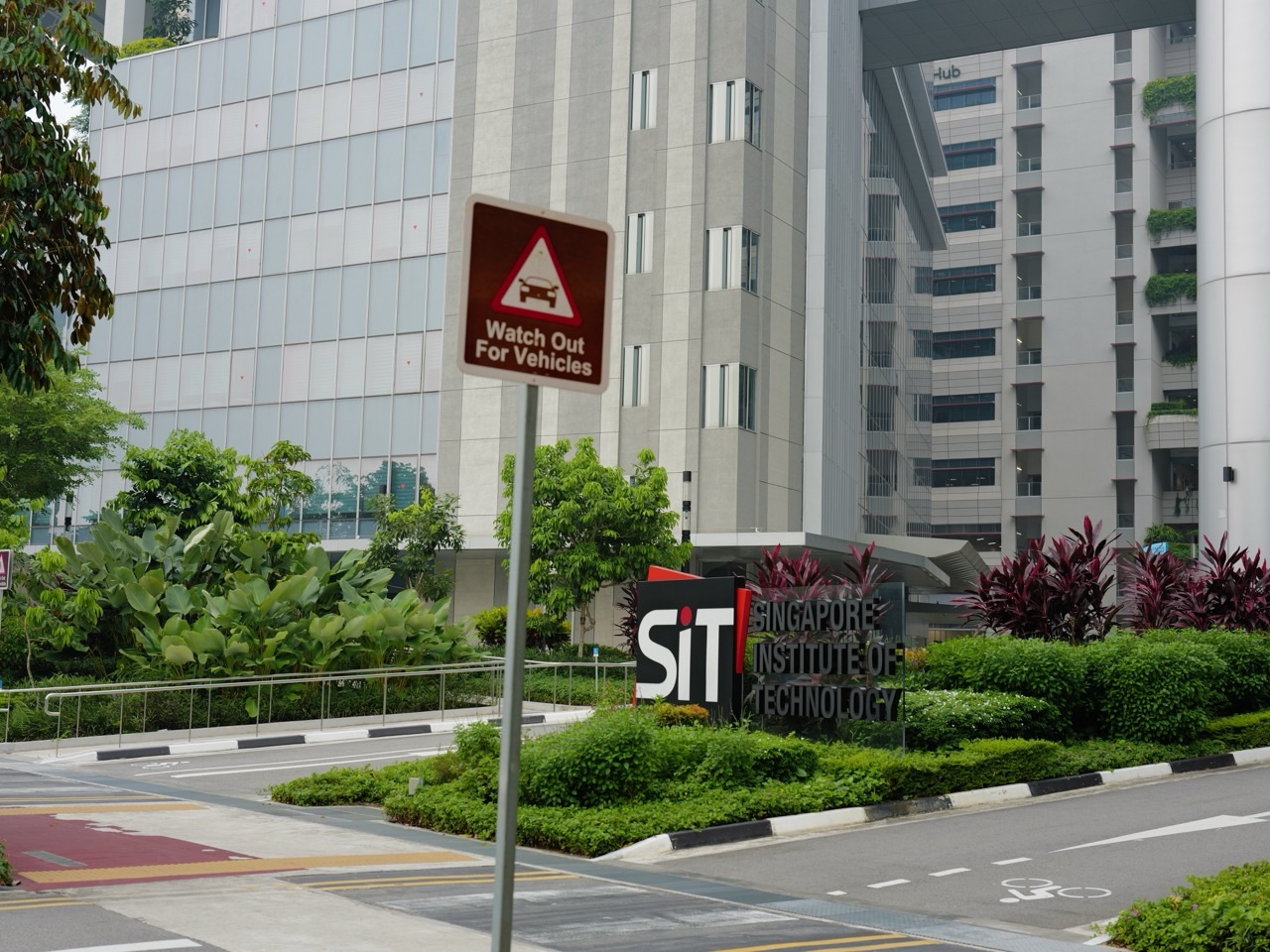
Why would a public transport station be built and then remain closed to passengers for almost two decades? At first, that sounds like a planning mistake: a completed railway station is supposed to serve commuters, not wait behind closed doors. Yet the story of Teck Lee LRT station (PW2) in Punggol shows a deeper relationship between infrastructure and the development of a town.
Teck Lee is on the Punggol LRT West Loop. It was constructed in the era when the Punggol LRT network began operation in 2005, but unlike the other West Loop stations, it was not brought into passenger service then. On 15 August 2024, the Land Transport Authority finally opened Teck Lee for commuters, as the new Singapore Institute of Technology campus and Punggol Digital District created more reasons to travel to the surrounding area.
The important question is not simply how many years the station remained closed. It is why transport infrastructure and land use must develop together. A railway station can be physically ready before the neighbourhood around it has enough destinations to make that stop useful. Eventually new homes, campuses, workplaces and transport links can change the calculation.
This article explains the Teck Lee story in straightforward language, including the exact opening date, what the station connects, why the wider Punggol network matters, how to distinguish a built facility from an operating service and what students can learn from planning a city for future demand. It is not a timetable, a station-exit directory or a claim that a particular planning decision had only one cause.
The answer in 50 seconds
The Land Transport Authority announced on 31 July 2024 that Teck Lee LRT station would begin operations on 15 August 2024. It identified the station’s location along Sentul Walk and explained that the opening would improve access to the new SIT Punggol campus and the business park within Punggol Digital District. Covered linkways were part of the arrangements to help people travel between the station and those destinations.
The station had existed without passenger service for roughly nineteen years, since the original Punggol LRT era. Its opening was coordinated with broader changes in northern Punggol: bus Service 84G/W had been operating since 23 June 2024, and Punggol Coast MRT opened later that year, on 10 December 2024.
The simple explanation is that transport demand changes as a town grows. Infrastructure can be provided ahead of future development, but an operating station becomes more useful when the destinations and passengers it was intended to serve are actually there. That is a planning principle, not proof that a single factor alone explains every year of Teck Lee’s closure.
Why a train line and its stations are not the same decision
A railway line is a connected system of track, vehicles, power, signalling and operational control. A station is an access point allowing passengers to join or leave that system. A track can pass an area even when the station at that point is not open to passengers.
This distinction explains why Teck Lee could be visible within a working LRT network while remaining unavailable for boarding and alighting. The railway performed its functions for other stations; Teck Lee did not yet provide passenger access.
A common misunderstanding is that a closed station must mean the entire stretch of track is unusable. That is not necessarily true. The status of the track and the operational status of a station are different questions.
For students, the lesson is that a transport network contains components with separate operating statuses. A road can exist before its adjacent development opens. A bus stop can be constructed before a service is introduced. The dates need not be identical.
Why Punggol’s West Loop was planned for a growing town
The Punggol LRT was designed to connect residential neighbourhoods with Punggol MRT on the North East Line and the bus interchange. LTA describes the system as comprising East and West loops around the town.
A light-rail network serves short local journeys differently from a full MRT line. The MRT provides longer regional connectivity, while the LRT helps distribute that access among local neighbourhoods.
When Punggol’s West Loop was being planned, the town’s land uses were still developing. Some areas had homes or facilities ready to use; others were expected to change over time. The presence of a future station site did not mean a mature destination already existed beside it.
This is one reason it is important to read an old masterplan as a planned network, not as a guarantee that every labelled station will begin service on the same date.
What made Teck Lee unusual
Teck Lee became notable because it was a completed but unopened passenger station for such a long period. Other stations on the West Loop entered service while it remained out of public use.
By 2024, news reporting described it as the last unopened station on the West Loop, and LTA confirmed the exact launch date once the opening arrangements were ready.
An unused-looking station naturally attracts speculation. People may imagine financial losses, engineering problems or dramatic secrets. But a responsible explanation starts with verifiable evidence: the station’s existence, the dates and LTA’s stated reasons for opening it to serve growing northern-Punggol destinations.
The longer delay is historically interesting, but it should not be exaggerated into unsupported claims about its operating condition, original cost or a single concealed cause.
Why a station needs people and destinations
Imagine a station surrounded mainly by land that has not yet been developed for daily activity. Few people may need to board or alight there. Now imagine the same site after a university and business park begin operating nearby.
The station’s potential demand changes, even though the coordinates of the tracks remain similar. Students, employees, visitors and other travellers may begin making journeys that previously did not exist.
This is the basic connection between land use and transport demand. The places people need to reach influence how useful a station becomes. Transport access can also make a place easier to develop, creating a relationship in both directions.
A station that is physically attractive but disconnected from real destinations is not as useful as one linked to genuine daily trips.
Why the SIT Punggol campus mattered
The Singapore Institute of Technology’s Punggol campus was developed within Punggol Digital District. It brings students, lecturers, professional staff, visitors and activities into the northern part of the town.
Those users may travel from different parts of Singapore rather than live immediately beside the campus. Some journeys combine the North East Line, Punggol LRT, buses and walking connections.
LTA’s July 2024 announcement explicitly identified access to SIT as a reason Teck Lee’s opening would improve connectivity. That is stronger evidence than merely observing that the university and the station happen to be near each other.
However, the campus’s presence does not mean every train arriving at Teck Lee carries only SIT students or that every university building is equally close to the same exit.
Why the Digital District mattered too
Punggol Digital District brings business-park facilities, industry activity and other services into the same northern area as SIT. JTC’s development aims to support collaboration between education and industry.
A business district generates trips for employees, service providers, meetings, visitors and deliveries. These are not identical to student journeys, but they can increase the number of people needing access to the area.
LTA specifically connected Teck Lee’s opening with the business park as well as the SIT campus. That makes the opening an example of an access point serving multiple nearby destinations.
It would be misleading to claim that a published long-term job target proves the exact number of passengers using Teck Lee today. Passenger demand must be measured separately from development aspirations.
Why two nearby destinations create a stronger transport case
A station used by only one institution may face different travel patterns from one serving an entire mixed-use district. A university has academic schedules; a business park may have office hours and visitors; surrounding amenities add other trip purposes.
The combination potentially creates a broader pattern of usage throughout the week. The actual profile depends on who is present and how they travel.
For planners, this illustrates why several connected land uses can make transport infrastructure more relevant. A station can support a network of everyday activities rather than one isolated building.
That is also why practical walking links to the destinations matter. The railway stop alone is not the final stage of the trip.
Why covered linkways were included
LTA’s announcement stated that covered linkways would connect Teck Lee with the business park and SIT. In Singapore’s tropical climate, rain and strong sun can make the walking portion of a journey uncomfortable.
A covered route can reduce some exposure and make a short transfer more usable. The actual degree of shelter depends on the particular route and weather conditions.
A shelter is not proof that every destination is connected continuously under a roof, and it is not a guarantee of safety during lightning or severe storms.
The important design principle is first-and-last-mile accessibility: the station is only useful when passengers can reach and leave it appropriately.
Why a campus journey is more than an LRT ride
A student attending a lesson at SIT must reach a specific building and room. Getting off at Teck Lee may be one part of that route, but the final walking connection still matters.
The exact campus block, entrance, accessibility conditions and operating arrangements should be checked through SIT and current transport information.
For an unfamiliar visitor, the phrase “take the LRT to Teck Lee” is not quite a complete direction. It identifies the rail stop but does not tell the person how to reach the correct classroom or office.
This is a useful lesson for children learning to navigate a city: the destination is the real activity location, not just the nearest station name.
Why bus Service 84G/W was another part of the plan
Teck Lee’s opening did not occur in isolation. LTA reported that bus Service 84G/W began operating on 23 June 2024 as a bidirectional circular service connecting several northern-Punggol corridors.
The bus service complemented the LRT and other transport improvements. A passenger might prefer a bus because of the starting point, walking distance or destination even when a railway station exists nearby.
This reinforces an important principle: a growing district may need several transport modes, each serving different route patterns.
A rail opening should not be treated as proof that every bus route has become unnecessary. Journey choices depend on the complete trip.
Why the new Punggol Coast MRT was complementary
Punggol Coast MRT opened on 10 December 2024, extending the North East Line beyond Punggol MRT. It serves the developing northern district from a different position in the rail network.
Teck Lee LRT and Punggol Coast MRT therefore provide distinct access points and connections. The LRT connects with the local West Loop, while the MRT offers direct regional travel along the North East Line.
A commuter’s best choice depends on the actual origin and destination. Someone may find Teck Lee more convenient; another may be better served by Punggol Coast.
These two station openings should be distinguished chronologically. Teck Lee opened in August 2024. Punggol Coast opened in December 2024.
Why an opened station still needs operational integration
A station opening involves more than unlocking doors. It must have suitable passenger information, safe access, equipment, staffing or supervision arrangements, maintenance procedures and compliance with the system’s operational requirements.
The LRT’s automated railway environment does not eliminate these responsibilities. Passenger service requires reliable doors, communications, platform safety and integration into the wider network.
Without official construction and commissioning records, a public article should not invent a precise technical list of the tests Teck Lee underwent. The broader engineering principle is clear: a physical station becomes a public service only when it has been prepared for safe operations.
This is another reason built and opened are different milestones.
Why a long delay is not automatically proof of waste
A building or station that waits for later development may appear expensive relative to immediate usage. But evaluating a long-term infrastructure decision requires information about original planning, construction costs, expected growth, alternatives and the consequences of building later.
There can be genuine costs associated with early provision. There can also be advantages from coordinating rail construction before the surrounding area is densely built.
It would be misleading to declare the Teck Lee decision either a perfect success or a definitive failure based only on the number of years the doors remained closed.
The responsible conclusion is narrower: Teck Lee became an example of infrastructure whose public use arrived later than its physical construction, illustrating the relationship between long-range planning and actual urban growth.
Why building before demand can sometimes help
Imagine a fictional district where a railway corridor will eventually pass under several new roads and buildings. Constructing all necessary rail infrastructure after the area is fully occupied might involve more disruption or complicated works.
Providing some infrastructure earlier can preserve future options. A system may be designed with stations or capacity that become useful as development proceeds.
This is a general planning rationale, not a claim that it was the only reason Teck Lee was completed early. Real decisions involve many technical and financial considerations.
A student should compare the cost of early provision against the cost and disruption of late installation rather than assume one timing strategy is always best.
Why building too early also creates trade-offs
An unused facility still occupies land and may require inspection, security and maintenance. Money invested in it is unavailable for other needs during that period.
If expected development changes or never occurs, the anticipated benefit may be delayed or reduced. Forecasts are imperfect, and infrastructure planners have to make decisions under uncertainty.
These trade-offs matter because it is easy to celebrate long-term foresight without recognising the costs of waiting. Equally, it is easy to criticise delay without considering what later construction could have involved.
A careful evaluation treats both sides seriously and asks what evidence would be needed to compare them.
What makes a long-range forecast difficult
When planning a new town, authorities must estimate future residents, workplaces, schools and travel demand. Those estimates depend on economic conditions, housing schedules, land use and changes in behaviour.
A plan made years earlier cannot predict every later event exactly. Some developments arrive in phases; others change scale or purpose.
A useful transport forecast therefore considers scenarios rather than pretending the future is certain. Infrastructure can be flexible, and opening decisions may be revisited as conditions change.
Teck Lee’s history is a concrete example of why time belongs in every discussion of the network, not only distance and capacity.
Why the West Loop still worked while Teck Lee waited
The Punggol LRT West Loop served other stations and passengers before Teck Lee opened. That reminds us that a transport system can have a functioning core while one access point remains unavailable.
For commuters, the practical impact of an unopened station depends on whether their particular journey would use it. Someone travelling between other stops may still benefit from the existing network.
For planners, the distinction is between network-wide operation and local station activation. These are related but not identical decisions.
For students, a diagram showing one inactive node on an otherwise connected loop demonstrates how complex systems can operate in stages.
Why the LRT is not the same as the MRT
The Punggol LRT provides neighbourhood distribution and connects with the larger Punggol MRT interchange. The North East Line carries commuters across a much wider geographical corridor.
The two systems use different vehicles, service patterns and operating considerations. A commuter may transfer from one to the other as part of a single trip.
Teck Lee’s usefulness is therefore partly dependent on the interchange and the broader travel network. Someone heading from another town to SIT may use the MRT and then a suitable connection.
Understanding those layers helps families plan complete journeys instead of comparing two station names without context.
Why train direction still matters on the West Loop
A loop is not a single straight line with a train always travelling directly to the next desired stop. Commuters must check the current service direction and sequence of stations.
Teck Lee being on the West Loop provides a useful map reference, but it does not tell a passenger everything about the train arriving at a given moment.
LTA and SBS Transit publish the official route and operating guidance. Temporary changes or service arrangements should be checked rather than guessed from an old blog screenshot.
For children learning independent travel under appropriate supervision, the key habit is to confirm the destination and service information before boarding.
Why a station’s code is useful
Teck Lee is labelled PW2 on the Punggol LRT system. The code provides a compact reference that can be used on maps and service information.
A code reduces ambiguity when several place names sound similar. It can also help learners locate a stop quickly within a particular transport network.
But memorising PW2 is not the same as knowing how to reach a destination. The traveller must still identify the correct loop, service and final walking route.
A child can practise matching code, name and position on a current official map. This is a simple form of information literacy.
Why Teck Lee’s location matters geographically
LTA identifies Teck Lee as being along Sentul Walk, with access to the new SIT campus and the Digital District business park. It occupies a different part of town from the older central Punggol MRT interchange.
The surrounding land use has changed markedly as northern Punggol developed. A person looking at an older satellite image or route guide may see different buildings from those available today.
That is why date and map context matter. A historic source can be useful for understanding what was absent, while current maps are needed for a present-day journey.
A well-written article must not mix a 2010 description of surrounding vacant land with a 2026 list of present facilities as though both describe the same moment.
Why development can make a station suddenly seem central
For years a station may appear peripheral if few people have a reason to visit nearby. Once large education and employment facilities open, the same location can become a recognised access point.
That change is not mystical. It follows changes in the number and distribution of destinations, travel patterns and surrounding walking routes.
A student might compare two maps: one before SIT and the Digital District developed, and one afterward. The station remains in the same physical place, but the relationship between it and important destinations changes.
The lesson is that the usefulness of infrastructure depends on the environment around it, not merely the quality of the equipment itself.
Why maps can conceal the passage of time
A current railway map shows Teck Lee as an operating stop. It does not tell every viewer that the station spent many years closed to passengers.
A historic rail map may show the stop differently, perhaps marked as unopened. The maps can both be accurate for their dates.
This is a useful lesson in reading evidence. A map is a snapshot of a network at a particular time, not a full history of how it developed.
Students should check publication dates before comparing maps and avoid labelling older maps as erroneous simply because they describe earlier conditions.
Why opening dates should be stated precisely
A phrase such as “Teck Lee finally opened recently” becomes less informative as years pass. A precise date remains useful: 15 August 2024.
LTA’s official announcement was published 31 July 2024, before the opening. A later report can confirm that passenger service actually began.
These dates have different roles. One records the announcement; the other records the service milestone.
The same distinction matters with other Punggol projects: a proposed launch, completed construction, commissioning and actual passenger operation can all occur on different dates.
Why future transport plans should be read cautiously
Authorities sometimes announce plans for new services, trains, depots or stations years before completion. Those dates and scope may be updated as work progresses.
A resident deciding how to commute today should rely on currently operating routes and official service information. A future project can inform longer-term thinking but should not be treated as already available.
Teck Lee illustrates this distinction particularly clearly because a built station was not the same as a usable station for so long.
The larger lesson is to keep planned, built, tested and open as separate statuses in every transport article.
Why a station opening can affect housing discussions
Transport access is one of the factors households may consider when deciding where to live. A nearby station can change the convenience of some journeys.
But the opening of Teck Lee does not establish a guaranteed rise in nearby property prices. Housing markets depend on many factors, including home characteristics, supply, affordability and household preferences.
A family should evaluate whether the station actually improves its regular routes rather than rely on broad promises about resale value.
The practical benefit is access. Financial claims require their own evidence.
Why a university’s transport access affects learning
A student may miss an early lesson if the journey requires several unpredictable transfers. Reliable access can reduce some logistical burdens around attendance and commuting.
Teck Lee’s opening gives SIT commuters another way to reach the northern campus area. That is useful infrastructure, although the best route depends on the specific student’s starting point and the building they need.
A station cannot improve academic results by itself. Learning outcomes depend on teaching, effort, health and many other factors.
The educational value here is understanding that accessibility supports opportunity without guaranteeing success.
Why the Digital District needs more than trains
A business and university district also relies on pedestrian paths, suitable roads, deliveries, utilities, public spaces and facilities. The transport system is only one layer.
Teck Lee provides rail access, while bus services and the later Punggol Coast MRT add other connections. Walking links determine whether these modes are practical for the final section.
This is why a district should not be judged merely by the number of stations within its boundary. The full network must support the actual daily activities taking place there.
Transport infrastructure works best as part of coordinated development.
Why an automated LRT still needs people
The Sengkang-Punggol LRT is an automated railway system. Automation does not mean operations require no human oversight, maintenance or passenger support.
Station facilities need upkeep, trains require inspection and the operating network must respond to faults and unusual conditions.
The long-unopened Teck Lee station makes this distinction visible. The presence of automated track and equipment was not sufficient by itself to provide an operating passenger facility.
Technology is useful only within a managed service, and a service requires much more than an available machine.
Three worked scenarios
Scenario one: a student travelling to SIT
A student has a class in a specific SIT building. The student compares current routes via Teck Lee and Punggol Coast, including the final walking connection.
They use official transport and university maps rather than assume one station is universally faster. They also allow time to find the correct building on their first visit.
The lesson is that opening a new station creates an option; it does not remove the need for door-to-door planning.
Scenario two: a resident reads a 2018 article
A Punggol resident finds an older blog post calling Teck Lee “an unopened station”. The statement may have been accurate in 2018, but it is outdated for present travel.
The resident checks LTA’s 2024 opening announcement and updates their understanding. They do not assume the older writer was necessarily dishonest.
The lesson is that information can become obsolete when the underlying infrastructure changes.
Scenario three: a child designs a fictional town
A child draws a railway station beside land reserved for a future university. At first, almost nobody uses it. Later, the university and business park open, and travel demand rises.
The child is asked whether the station should have been built early, built later or opened in stages. There is no single answer without cost, construction and demand information.
The lesson is that public infrastructure planning involves trade-offs and uncertainty.
A simple Mathematics lesson on travel time
Suppose a fictional journey previously included a 12-minute connection after arriving at an interchange. A new local station reduces the final connection to four minutes but adds three minutes to the rail ride.
Under those invented assumptions, the new journey is five minutes shorter for that traveller. But it may not be shorter for a different person with another origin or destination.
Now include a variable waiting time. The comparison changes again. Students learn that total journey time includes rail, transfers, waiting and walking.
These numbers are teaching examples, not measured Teck Lee journey times.
A simple graph lesson on opening a station
Draw a railway loop with five nodes. Mark one node physically present but closed to passengers. Passengers cannot start or end their journey there, even though trains may pass along the wider route.
Now mark the node open. The network gains another entry and exit point. Nearby fictional destinations can become accessible through the railway.
The exercise shows that the tracks did not need to appear out of nowhere for the network’s usefulness to change.
This is the difference between infrastructure existence and passenger accessibility.
Why the opening can be considered a planning milestone
Teck Lee’s August 2024 opening coincided with the emergence of major northern-Punggol education and business destinations and other transport improvements.
A milestone is not proof that the surrounding district has finished developing. It indicates that one part of the system reached a meaningful stage.
Future activity may change how many passengers use the station and what kinds of journeys are common. That is normal in a growing town.
The station therefore illustrates a phased development process rather than a single event that permanently completes the story.
What local history adds to this explanation
Punggol has evolved from older rural and coastal land uses into a dense town with new housing, education and industry infrastructure. The long-unopened station sits within that broader transformation.
A child who sees a railway stop today may assume it was always active. Learning its history reveals that transport facilities and neighbourhoods can be developed on different timelines.
That is a more sophisticated view of urban change than simply comparing an old photograph with a new one.
The lesson is that the history of a town includes decisions about when to make infrastructure available, not only when to build it.
Mistakes residents should avoid
Do not say Teck Lee is still closed. It began passenger service on 15 August 2024. Do not confuse its opening with Punggol Coast MRT’s December 2024 launch.
Do not claim that the surrounding developments had no transport access before the station opened. Buses and other connections existed, and the available routes changed over time.
Do not invent a precise dollar cost for the period of closure or state that one unsupported technical defect explains the delay. Do not treat every planned transport project as already operational.
Finally, do not assume Teck Lee is the best station for every SIT or Digital District destination. Check the complete current route.
Frequently asked questions
Where is Teck Lee LRT station?
LTA identifies it on Sentul Walk in northern Punggol, on the Punggol LRT West Loop.
What is its station code?
PW2.
When did Teck Lee open?
15 August 2024, as confirmed by LTA.
How long was the station unopened?
It remained closed to passengers for roughly nineteen years after being built in the original Punggol LRT era.
Why was it opened in 2024?
LTA linked the opening to improved access for SIT’s Punggol campus and the business park within Punggol Digital District.
Was the entire Punggol LRT closed before that?
No. The LRT network served other stations while Teck Lee remained unavailable for passenger service.
What is the relationship with bus 84G/W?
LTA described the bus service, introduced on 23 June 2024, as complementary to Teck Lee and other northern-Punggol transport improvements.
Is Teck Lee the same as Punggol Coast MRT?
No. Teck Lee is an LRT stop on the West Loop. Punggol Coast is an MRT station on the North East Line, opened on 10 December 2024.
Is Teck Lee always the fastest way to SIT?
Not necessarily. It depends on origin, specific destination, transfer and current services.
What should visitors check before travelling?
Current LTA and SBS Transit information, route direction, access conditions and the precise SIT or business-park location.
A practical commuter checklist
- Locate Teck Lee (PW2) on the current West Loop map.
- Identify your exact destination in SIT or Punggol Digital District.
- Check the current LRT service direction before boarding.
- Compare the full journey with alternatives via Punggol Coast MRT or buses.
- Account for walking and transfers rather than only train stops.
- Use current station signs and operator notices.
- Check accessibility and covered-route details for the actual destination.
- Do not rely on articles written while Teck Lee was still closed.
- Allow sufficient time for unfamiliar campus buildings.
- Respect restricted university and business premises.
Teaching Guide: when should a station open?
Learning goal. The learner explains how transport demand can change as new destinations appear, why infrastructure may exist before passenger operation, and why planning decisions involve uncertainty.
Activity one: make a timeline. Mark the original Punggol LRT era, the long period when Teck Lee was unopened, its 15 August 2024 opening and Punggol Coast MRT’s 10 December 2024 launch.
Activity two: draw a network. Put Teck Lee on a fictional LRT loop, initially marked closed for boarding. Ask what changes when the stop becomes available.
Activity three: add demand. Place a hypothetical university and business park beside the station. Ask which new groups of passengers might use it.
Activity four: compare opening strategies. Consider building all facilities early versus installing or activating them later. Ask what information is needed to compare construction cost, disruption and demand.
Activity five: plan a full trip. Draw a journey including walking, LRT, MRT and the final campus approach. Ask why a station label alone does not finish the journey plan.
Activity six: check sources. Give the student a 2018 statement that Teck Lee is unopened and a 2024 LTA announcement. Ask how to reconcile both without pretending time stands still.
Transfer test. Present an imaginary new town with a school not yet built and a planned bus stop. Ask how the same infrastructure–land-use reasoning applies.
Parent checkpoint. A strong explanation is: “Teck Lee existed before there were enough nearby reasons to open it to passengers. It opened when the new university and Digital District made the connection useful, but the full planning decision also involved costs and other considerations.”
Related eduKatePunggol guides
The existing History of Punggol | Teck Lee LRT and Infrastructure Waiting for the Future covers the historical milestone. How to Get to SIT Punggol Campus focuses on practical campus travel. Why Punggol | The LRT Has Two Loops Instead of One Line explains the neighbourhood network’s structure.
This article asks a distinct question: why did a station built years earlier become useful as nearby land use changed? It explains the mechanisms of phased transport development and passenger access rather than duplicating a timeline or travel directory.
Official sources and further reading
- Land Transport Authority: Teck Lee LRT Station to Start Operations, 31 July 2024
- LTA: Rail network information
- SBS Transit: Transport service information
- JTC: Punggol Digital District
- eduKatePunggol: Teck Lee LRT historical guide
- eduKatePunggol: How to Reach SIT Campus
The one idea to remember
Teck Lee proves that a physically built station and a useful passenger service are not the same thing. Its opening on 15 August 2024 shows how transport access can become more important as a town gains new universities, workplaces and daily destinations. The wider planning lesson is to design infrastructure with the future in mind while staying honest about costs, demand and timing.


