
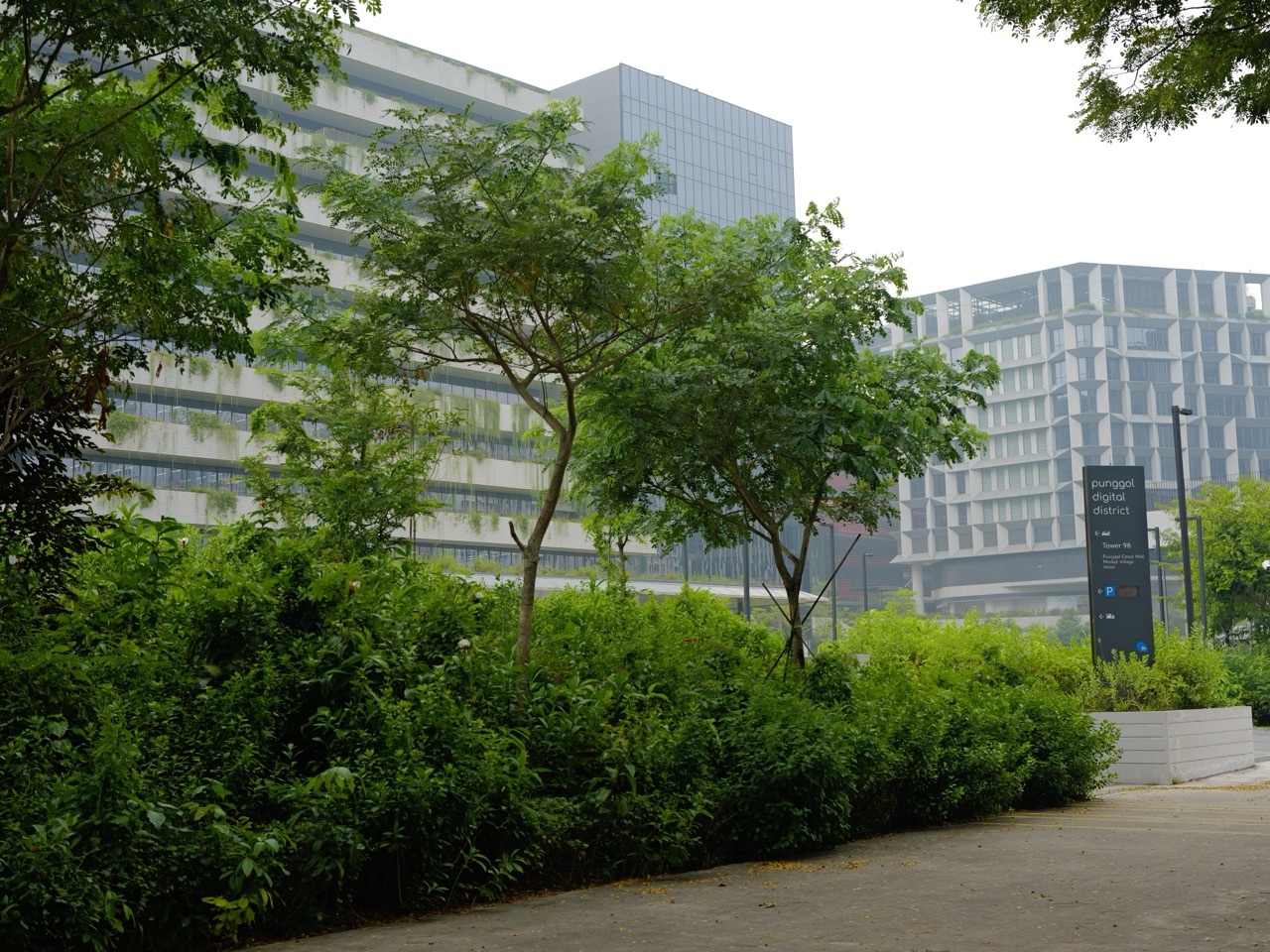
Why would a modern district need a single digital operating platform when its buildings already have their own computer systems? A lift controller can move people between floors. A security system can manage access. A cooling plant can deliver chilled water. A car park can register vehicles, and a delivery robot can navigate a corridor. If each of those systems works, what is missing?
At Punggol Digital District, the missing piece is often coordination. Different machines may use different software, data formats and communication protocols. A security gate and a lift may both be sophisticated, yet neither automatically understands what the other is doing. A cooling system may know its load, while another system knows when a building is nearly empty. Without appropriate integration, useful information can remain trapped in separate silos.
JTC and Singapore’s Government Technology Agency developed the Open Digital Platform, or ODP, to address that challenge. It connects district-management systems through common interfaces and provides an integrated operational view. JTC reported on 9 July 2026 that the platform aggregates real-time information from more than 20,000 sensors and various systems at Punggol Digital District and supports a digital twin—a computer representation of the physical district.
This article explains why Punggol Digital District needs an operating platform above the individual building systems, how information from sensors can become useful, why a digital twin is not the same as a video game, what interoperability means for lifts and robots, and why data security and human oversight remain central. It is not a promise that every experimental robot is already delivering parcels or that the word “open” gives everyone unrestricted access to operational data.
The answer in 50 seconds
Punggol Digital District’s Open Digital Platform is a government-developed smart-city operating system connecting facilities such as cooling, lighting, security, car parks, lifts, doors and other estate services through authorised data and control interfaces.
JTC and GovTech describe two major capabilities. One is interoperability—helping systems from different providers exchange relevant data and coordinate appropriate actions. The other is the digital twin, which uses a model of the district together with sensor information to support monitoring, historical analysis and testing of possible changes before they are introduced into the physical environment.
JTC’s July 2026 announcement describes data integration from over 20,000 sensors, plus the opportunity for partners to develop and test solutions. The purpose is to make a complex district easier to operate and improve efficiency, not to create a machine that magically runs itself.
The core idea is: each building system performs a job; the platform helps different systems work together.
Why a building can be smart but the district still disconnected
Imagine a building with a capable lift system, electronic access controls and efficient air-conditioning. Each service might perform its assigned task effectively.
But suppose the lift has no approved way to receive useful information from another building’s authorised delivery-robot service. Or the cooling manager cannot see changes in occupancy across a connected group of facilities. Each system remains locally capable while opportunities for coordination are lost.
That is the problem of separate technology silos. A silo is not necessarily bad at its own job. It becomes limiting when information that could help another authorised process cannot be shared or understood.
Punggol Digital District was planned with multiple users, buildings and utility systems, making the integration problem especially relevant.
What ‘interoperability’ means in ordinary language
Interoperability means different systems can exchange information and work with it appropriately. The systems do not have to use identical hardware or be built by the same manufacturer.
Think of two people speaking different languages. They may each understand their own tasks perfectly, yet they need a translation method to communicate. In technology, that translation may involve common standards, interfaces and software that interprets messages.
JTC describes the ODP’s Open Standard Multiprotocol Middleware as an important part of connecting technologies with different communication arrangements.
That technical name points to a simple purpose: make systems able to cooperate without assuming every component was built in exactly the same way.
Why ‘middleware’ has a practical job
Middleware is software that helps other software or devices communicate. It sits between systems and manages suitable exchanges, rather than replacing every underlying machine.
A lift still needs its safety controller. A building’s cooling plant still requires pumps and chillers. A security gate still has access rules. Middleware can help share authorised information or requests among them, but it does not abolish the specialised systems.
This is important because a district cannot safely use one universal command to operate everything. Different infrastructure has different safety, ownership and technical requirements.
The useful role of middleware is to provide a controlled layer of communication across those boundaries.
Why the word ‘open’ does not mean unrestricted access
The term Open Digital Platform can be misunderstood. “Open” in this context refers to interoperability and the ability for authorised systems, businesses or researchers to work through appropriate interfaces and standards.
It does not mean every commuter can download private building records, unlock a door, redirect a robot or control a lift from a phone. Data sharing must follow the permissions and operational controls of the relevant systems.
JTC’s project requirements describe an abstraction layer through which selected functions can be accessed by appropriate applications. The word selected matters: access is not identical for every participant.
For students, this is a valuable digital-literacy lesson. An open technical interface can still require authorisation, security and limits on what a user may do.
Why a district needs shared definitions
Different systems may label similar information differently. One might record a temperature in degrees Celsius, another in a different unit. One may timestamp readings in one format, another in a second format.
If the platform simply combines those values without checking their meaning, it can produce misleading results. A useful integrated system needs reliable definitions, metadata, timestamps and understanding of data quality.
JTC describes how the ODP connects heterogeneous systems through shared protocols. That is an engineering response to a problem deeper than drawing several charts on the same screen.
The principle is that information cannot be coordinated reliably until its meaning is clear.
Why sensors alone do not create a smart district
A sensor measures or detects some condition: movement, temperature, power use or another variable, depending on the device. A district may contain thousands of them.
But a large number of measurements is not automatically useful. Sensors can fail, report noisy values or observe conditions that do not answer the real operational question.
JTC’s 2026 announcement says the ODP aggregates data from more than 20,000 sensors and various systems. That figure describes integration scale. It does not mean each sensor provides a uniquely useful insight or that 20,000 human beings are being personally tracked.
The value comes from interpreting reliable observations, linking them with relevant systems and acting through authorised operational processes.
Why a temperature reading needs context
Suppose one sensor reports a temperature of 28 degrees Celsius. What does that tell us? Not enough by itself.
Was the sensor indoors or outdoors? When was the measurement recorded? Is the device calibrated? Is 28 degrees normal for that location? Does the relevant system need to change anything?
An operating platform can help associate data with location, timing and system information. But a dashboard showing a number still needs context and appropriate interpretation.
A student should learn to ask where, when, how and why before treating a sensor value as a decision.
What a digital twin is
A digital twin is a computational representation of a physical asset or system connected with data that can help users inspect, analyse or simulate aspects of the real environment.
At Punggol Digital District, JTC describes a virtual three-dimensional model linked with sensor and operational data. It can help users visualise the district and study historical or simulated conditions.
A digital twin is more than a static architectural model, because relevant information can be associated with its parts. But it is also not a perfect duplicate of every atom, person or event in the real world.
Its accuracy and usefulness depend on model assumptions, available data and the questions being asked.
Why a digital twin is not simply an attractive 3D map
A 3D map can help a visitor recognise buildings and routes. A digital twin can add operational context: system states, sensor values, maintenance information and possible future scenarios.
For example, an authorised operator might inspect how a cooling or facility system is represented within the model. A researcher might analyse historical patterns or test a proposed solution in a virtual setting.
The model therefore becomes an interface between physical infrastructure and relevant digital information.
But an attractive animation does not establish that the simulated outcome is correct. The model must be validated against real systems and updated as the district changes.
Why a digital twin needs real-time data
A building model created in 2020 may show a layout, but the real district changes: occupancy shifts, equipment conditions vary and new facilities open.
Connecting live sensor information can help the model reflect selected current conditions. That makes it more useful for monitoring than a static drawing.
JTC identifies real-time visualisation as a key feature of the ODP-powered twin. The word real-time should be interpreted within the actual systems’ update rates and operating arrangements, not as a guarantee of zero delay.
A physical event and its digital representation may not be perfectly simultaneous. Reliable operation requires understanding that limitation.
Why history is useful as well as live information
An immediate sensor reading shows a current condition. Historical data reveals what happened over time and can help identify patterns.
A cooling manager may compare usage across days. A facilities team may look for recurring anomalies. A researcher may study how an intervention affected energy demand.
JTC’s July 2026 announcement describes access to historical data for predictive-model training and simulations within the ODP environment.
This matters because decisions based on a single moment can be misleading. A system that was unusually busy for one hour may behave very differently on other days.
The principle is compare the present with relevant history before deciding that something has changed meaningfully.
Why simulation should come before real-world testing when possible
Testing a new control method directly on a busy building can create disruption or safety risks. A virtual model allows developers to explore some consequences before modifying live infrastructure.
GovTech explicitly identifies risk-reducing virtual simulation as a benefit of the ODP, while JTC describes virtual test-bedding for prospective technologies.
This does not mean simulation removes all risk. A model may omit unusual conditions or represent them imperfectly. Real-world testing still requires appropriate approval, safety measures and monitoring.
The more precise claim is that virtual testing can reduce some kinds of risk and improve preparation, not guarantee a flawless live deployment.
Why a simulated successful robot is not a deployed robot
A delivery robot might navigate a virtual building successfully. That shows something about the simulated model, the robot logic and the test conditions.
The real district may contain unexpected pedestrians, wet surfaces, temporarily closed lifts or other complications. A live robot also needs permissions to interact with doors, gantries and elevators.
JTC’s 2026 announcements describe partnerships and testbeds intended to bring robotics into the physical district. An MOU or future pilot should not be reported as proof that every proposed service is already operating.
A disciplined article separates planned, tested in simulation, piloted live and fully deployed.
Why different robot fleets need coordination
Imagine two delivery robots from different companies approaching the same narrow lift lobby. If both assume they have priority, the result could be congestion or conflicting requests.
A district platform may help authorised fleet systems coordinate access to shared infrastructure. JTC has described the ODP’s prospective role as a traffic controller or marshaling layer for multiple robots.
But this is a capability under development and testing, not a promise that all robots in Punggol are centrally controlled by one system today.
The useful principle is that shared spaces need shared rules, even when some of their users are autonomous machines.
Why lifts require strict controls
A lift is safety-critical infrastructure carrying people and goods. A robot may be able to request a lift through an approved integration, but that does not mean a third-party application can bypass the lift’s built-in safety controls.
An appropriate interface must respect the equipment’s operating limits and authorised functions. Commands should be validated and subject to governance.
JTC’s descriptions of robotic integration highlight lifts, gantries and doors as possible connection points, but not as systems available for unrestricted experimentation.
For students, this is a fundamental engineering lesson: interoperability does not eliminate safety boundaries.
Why doors and gantries make the problem more complicated
A robot moving through one corridor may be relatively simple. Reaching a destination across several buildings can require permission at doors and gantries, route changes and shared lift access.
Each component may come from a different provider with different protocols. A coordination layer can reduce some friction by providing appropriate interfaces and state information.
Yet access control remains necessary. A robot should not be authorised to open a door simply because its software sends a technically valid message.
This illustrates the difference between a command that a system can understand and a command that the sender is allowed to issue.
Why the district cooling system is a useful example
Punggol Digital District has an ENGIE district cooling network that supplies chilled water to connected facilities. Its technical operation involves temperatures, flows, demand and maintenance.
The ODP can exchange relevant information with the cooling system and other building systems to support coordinated management. That is different from the ODP physically producing the chilled water.
The cooling plant, pumps and pipes perform the thermal function. The digital platform provides an information and integration layer.
This distinction prevents one of the most common errors in smart-city writing: treating the software platform as if it replaces the physical infrastructure it helps coordinate.
Why lighting and occupancy can be connected
A building’s illumination and cooling needs may vary with use. If a suitable system has reliable information about occupancy and operating conditions, it may be able to reduce unnecessary energy consumption.
JTC’s ODP descriptions give examples of adjusting lighting and equipment when spaces are unused, within appropriate operational controls.
However, a building should not switch off essential safety lighting just because an occupancy estimate is low. The safety and usability requirements remain primary.
The correct principle is adjust nonessential consumption responsibly, not eliminate necessary services whenever a sensor reports no movement.
Why the car park belongs in the same operating picture
Car parks involve entry, exit, traffic flow, occupancy and sometimes security or payment systems. Their data may help a district understand movement patterns and available facilities.
GovTech identifies car parks among the systems that ODP can integrate. Coordination may make some operational activities more efficient, subject to the appropriate interfaces and rules.
But a car-park system does not become unrestricted public data simply because it joins the platform. Vehicle-related information can involve privacy and operational concerns.
The wider lesson is that a smart district coordinates ordinary infrastructure as well as technologies such as robots or digital twins.
Why the ODP is not the same as a smartphone app
An app may show a user information or allow a particular service request. The ODP is a deeper infrastructure layer supporting data exchange, control interfaces, monitoring and simulation across district systems.
A mobile app might be one consumer of selected authorised services, but it is not the platform itself.
JTC’s technical requirements describe an abstraction layer and selected system access. This is closer to the infrastructure behind many applications than to one icon on a home screen.
For students, the distinction is similar to the difference between a web page and the servers, databases and network protocols that make the page function.
Why JTC and GovTech developed it together
JTC manages industrial estates and develops places such as Punggol Digital District. GovTech develops digital systems and capabilities for Singapore’s public sector.
A smart district needs both knowledge of physical estate operations and expertise in digital platform architecture, integration and cybersecurity.
JTC and GovTech’s joint development of the ODP reflects that relationship. Physical facilities and software cannot be designed entirely independently if the purpose is cross-system coordination.
The lesson is that complex projects often require different institutions to contribute complementary capabilities.
Why the platform has an opportunity to become a living laboratory
A living laboratory tests solutions in an environment where actual people and organisations carry out everyday activities. Punggol Digital District is designed to support technology companies and researchers developing relevant smart-city applications.
The ODP can provide appropriate data interfaces and simulation tools, subject to agreements and permissions, allowing innovations to be studied before and during authorised trials.
This differs from a closed laboratory where every variable can be controlled. Real buildings have changing occupancy, weather and operational needs.
The advantage is realistic feedback. The challenge is protecting normal users and essential services while experiments occur.
Why the July 2026 Panasonic partnership matters
On 9 July 2026, JTC announced that Panasonic was the first partner to use the ODP to develop and test smart facility-management solutions in Punggol Digital District’s live urban setting.
The announcement described the platform’s integrated data and digital-twin capabilities as resources supporting this work. That gives a concrete example of the ODP being used for industry collaboration rather than existing only as a diagram in planning documents.
But the announcement is not proof that every proposed solution has completed live deployment. It records a partnership and testing activity.
For a reader following future developments, that distinction is essential: a signed collaboration can mark genuine progress without constituting an outcome evaluation.
Why the number 20,000 needs a label
JTC reports data from more than 20,000 sensors and various systems integrated into the ODP. A large figure can create the impression that the platform knows everything happening in the district.
It does not. The number refers to sensors or sensing infrastructure, not people. Sensors have defined locations, coverage, variables and limits.
One sensor may detect temperature, another a system status or another relevant condition. The usefulness of the data depends on its quality and authorised interpretation.
A strong article always writes more than 20,000 sensors, not “20,000 citizens being watched” or “20,000 robots operating.” The noun attached to a number matters.
Why ‘50% less manpower’ is a target, not a proven result
GovTech’s May 2026 product information describes ODP ambitions including 50% less manpower and 30% lower energy consumption compared with relevant conventional management approaches.
These are stated aims. They must not be presented as verified savings already achieved by every building or operator across Punggol Digital District.
To evaluate realised performance, analysts would need an appropriate baseline, defined operating scope, measured energy use and information about manpower tasks. A target without its denominator is easy to misunderstand.
The correct editorial language is aims to, is designed to or targets, unless measured evidence is available for a specific outcome.
Why a shared dashboard can still show misleading numbers
A dashboard is an interface for presenting information. If the underlying readings are wrong, delayed or mislabelled, an attractive display can make those errors seem authoritative.
An effective operating platform therefore needs attention to data quality, sensor health, timestamps, units and the meaning of each metric.
Managers must know whether they are viewing live data, a historical replay or a simulation. Those are different modes and should not be confused.
The lesson is that visualisation is not verification. A number displayed in a three-dimensional model must still be supported by a reliable source.
Why cybersecurity becomes more important when systems connect
An isolated system has one set of interfaces and risks. Connecting many systems creates additional opportunities for useful coordination, but it can also expand the consequences of unauthorised access or a compromised component.
A digital operating platform therefore needs strong identity, authentication, authorisation, monitoring and technical safeguards appropriate to the criticality of each connected service.
The public sources establish the ODP’s integration purpose but do not expose every security design detail, and an educational article should not speculate about private vulnerabilities.
The correct principle is that integration must increase useful cooperation without turning every subsystem into an open door.
Why not all data should be available to all users
A facilities engineer may need equipment temperatures and maintenance alarms. A delivery robot may need a permitted route and lift-access status. A researcher may need aggregated data for a simulation.
Those roles do not require identical access to every dataset. A system can grant selected permissions according to legitimate need and policy.
This is the meaning of role-based or purpose-limited access in general terms. The exact ODP implementation details require official technical documentation.
For students, the lesson is that sharing relevant information is different from sharing everything with everybody.
Why privacy matters in a district used by real people
Punggol Digital District contains workers, students and visitors. Some operational systems may handle information related to movement or access.
A useful smart-city platform should consider privacy, consent where applicable, data minimisation and appropriate safeguards rather than treating every possible dataset as a public resource.
It would be irresponsible to claim that ODP tracks named individuals continuously without verified evidence. It would also be irresponsible to assume that every integrated system has no privacy implications.
The responsible answer is to distinguish documented capabilities from unsupported surveillance claims and refer precise questions to the platform operator’s official policies.
Why human operators are still necessary
Software can automate tasks and combine information, but physical facilities require people to assess unusual events, maintain equipment, set policy and respond to emergencies.
A digital twin may highlight a possible problem. A facilities team may need to inspect and confirm the condition. A robot may require intervention if its route becomes unsuitable.
GovTech describes improving management efficiency, not eliminating all human responsibility. The proposed manpower target must not be interpreted as a promise that nobody will be employed to operate the district.
The right relationship is technology supporting accountable people, not a city without anyone responsible for the consequences.
Why a platform needs reliable handoffs
Suppose a sensor reports that a cooling pump is behaving abnormally. The platform may display the information or notify an authorised system. Someone or an approved workflow then needs to assess the cause and decide what to do.
If the warning is ignored, the presence of the platform has not solved the problem. If the system acts without adequate validation, it could create another risk.
An effective operational process includes detection, interpretation, decision, action and verification. The platform can assist several stages, but each requires appropriate roles.
This is a useful model for students because it connects software design with real-world accountability.
Why the digital twin cannot perfectly predict emergencies
A simulation uses a model. The model may include past data and assumptions about weather, occupancy or equipment behaviour.
Unexpected events can fall outside those assumptions. A rare equipment failure or unusual crowd pattern may behave differently from the predicted scenario.
That does not make simulation useless. It means results should be treated as informed estimates or tests, not guarantees.
Good engineering combines simulation with live monitoring, safety margins and procedures for conditions that the model did not anticipate.
Why historical playback can help investigate problems
JTC describes historical playback as one of the ODP digital twin’s capabilities. An authorised analyst may be able to review how selected systems behaved before and during an event.
For example, a facilities team might compare relevant time-series information around a reported equipment fault. That can help reconstruct a sequence and identify what further inspection is needed.
But playback is limited to the information actually recorded. It cannot recover data that was never collected or prove every cause automatically.
The skill is interpreting the sequence carefully while acknowledging gaps and uncertainty.
Why an autonomous delivery pilot needs more than a robot
A robot may navigate a corridor in a controlled demonstration. A real delivery service requires dispatching, access rights, safe interaction with pedestrians, lift coordination, obstacle handling and a way to respond when it cannot complete a task.
JTC’s 2026 robotics initiatives describe testing in the live district and using ODP to connect innovations with infrastructure such as lifts, gantries and doors.
An article should not claim that every proposed robotic service is already available to every Punggol household. Authorised pilots and public services have different statuses.
The educational lesson is that a technology product becomes useful only when its supporting workflow is complete.
Why a platform can support environmental goals
District cooling, lighting and other building services consume energy. An integrated platform may help identify when demand is lower, when equipment is underperforming or when resources can be managed more efficiently.
GovTech and JTC identify energy optimisation as a primary ODP purpose. The mechanism depends on obtaining relevant data and using it appropriately.
Yet software alone cannot remove the physical limits of energy systems. A chiller still uses electricity; sensors still require power; buildings still need safe temperatures and lighting.
The realistic sustainability claim is that better information and coordination may reduce avoidable consumption, subject to design and actual performance.
Why one operating system cannot replace specialised engineering
A smart district includes civil works, electrical systems, air-conditioning, security, fire safety, lifts and information technology. Each field has professional standards and requirements.
An integrated digital layer can communicate with these systems, but it does not make their specialised design unnecessary. A cooling engineer still needs to understand heat transfer. A lift technician still needs to maintain machinery. A cybersecurity specialist still needs to protect interfaces.
This is the difference between coordination and competence in every domain.
For children, a useful analogy is an orchestra conductor: the conductor coordinates musicians but does not turn a violin into a trumpet or abolish the need for skilled performers.
Why the platform differs from HDB’s Smart Hub
Punggol Northshore’s HDB smart-estate projects include sensors and analytics for common-area lighting, parking and other residential services. Punggol Digital District’s ODP integrates a separate set of mixed-use district systems developed through JTC and GovTech.
The two approaches share general principles of sensing and management but are not one identical platform operated under the same arrangements.
A resident should not assume that every Northshore HDB corridor light is controlled directly by PDD’s ODP. Such a claim requires specific integration evidence.
The distinction helps prevent smart-city terminology from merging several different institutions and technologies into one imaginary universal network.
Why the Open Digital Platform is not an internet service for residents
People may hear the word “platform” and expect an app that can be downloaded for ordinary household use. The ODP is primarily an integration and operational system for authorised district services and participating partners.
Some applications or public-facing benefits may be built using its capabilities, but the core infrastructure is not the same as a general social-media account or broadband subscription.
JTC’s official information explains access to district data for businesses and students through appropriate arrangements. That should not be read as permission for unrestricted use of every operational function.
The important distinction is between underlying infrastructure and individual services built upon it.
Why open standards can support future innovation
New buildings, devices and applications may be developed after the original platform was designed. A system based entirely on one vendor’s private communication method can make future integrations difficult.
Open or documented standards can reduce some compatibility barriers. JTC’s multiprotocol middleware approach aims to connect systems using different communications technologies.
But standards do not eliminate every integration cost or security risk. New devices still require testing, authorisation and maintenance.
The value is that the district can have a more adaptable foundation rather than needing to rebuild every connection whenever a new suitable technology appears.
Why 2026 matters in the project’s timeline
Early JTC stories described plans and development of the ODP. By 2026, official announcements discussed the platform as a working integration resource supporting partners and district-wide data.
The 9 July 2026 Panasonic collaboration is one milestone. Other JTC initiatives announced in 2026 describe robotics testbeds and the later-phase development of LaunchPad @ PDD.
A reader should distinguish an early intention from a later documented capability or partnership. It would be inaccurate to treat every 2026 proposal as a completed public service, just as it would be inaccurate to call the platform purely hypothetical when official sources describe operational integration.
Clear dates help preserve that distinction.
Why a mixed-use district is a demanding test environment
PDD combines university facilities, industrial and business spaces, public circulation, retail and transport access. The occupants have different schedules, safety needs and operational responsibilities.
That makes integration more complex than connecting five identical devices in one private laboratory. A lift may serve several authorised users. A corridor may be shared by workers, visitors and future robots. Buildings may need different cooling patterns.
A successful platform must understand those differences rather than enforce a single simplistic rule everywhere.
This is one reason the project is useful for research: the real-world interactions reveal problems that isolated demonstrations may miss.
A fictional example: two systems that cannot communicate
Imagine a fictional office where the access-control system records a valid entry, while the lift system has no approved way to receive a destination request. The visitor still needs to operate the lift through ordinary controls.
Adding an authorised integration interface could allow selected information to be exchanged, but only if permissions and safety requirements are satisfied.
The example demonstrates interoperability, not a claim that every PDD lift has already implemented automatic personalised floor selection.
A strong student will identify the missing communication layer and the need for authorisation rather than assume that connecting two computers automatically makes the process safe.
A fictional example: cooling demand changes
Suppose a building’s cooling demand is normally high during teaching hours and lower when the rooms are unoccupied. The operating platform receives suitable information from approved building systems.
An authorised control process may use this information to adjust nonessential output within comfort and safety requirements. Energy savings would need to be measured against a comparable baseline.
This is a fictional teaching example, not a verified description of a particular SIT classroom’s control settings.
The lesson is that better information can support more appropriate operations, but the platform must respect the actual building’s requirements.
A fictional example: testing a robot route
A delivery robot is expected to travel from a lobby through a corridor and into a lift. In the virtual model, developers simulate a narrow passage and a door that requires permission.
The simulation identifies a potential conflict before live testing. The team adjusts the plan, then seeks the appropriate approvals for any physical trial.
The lesson is that a digital twin can help discover problems earlier, but a simulated success is only one stage of deployment.
The correct progression is design → simulate → review → approve → test safely → verify.
A fictional example: a dashboard alarm is wrong
A sensor reports an unusually high temperature because it is faulty. The dashboard displays the value. If an operator immediately assumes the building is overheating, they may make an unnecessary intervention.
A better process checks the sensor’s status and compares relevant evidence before acting. A critical hazard may still require prompt action, but the response should be governed by appropriate safety procedures.
This illustrates why data quality and reliable handoffs matter. A platform that connects many systems can amplify useful information—or an error—unless controls are in place.
Why students should separate data from decisions
Data describes observations or recorded conditions. A decision chooses what action to take based on goals, constraints and evidence.
A temperature reading, for example, is not a command to shut down a chiller. The correct response depends on context and the equipment’s operating requirements.
ODP-like systems can provide both data exchange and authorised control functions, but those layers should be understood separately.
This is a valuable foundation for learning artificial intelligence. A model can recommend an action without having an unrestricted right to perform it.
Why privacy rules belong in the design, not only in a policy PDF
Privacy and access controls cannot be solved solely by asking users to behave responsibly after a system has been built. Technical design must support appropriate permissions, logging and limitations.
A platform serving several organisations should be able to distinguish their roles and the functions they are allowed to access. Sensitive data should not be shared simply because integration would be convenient.
The exact controls are technical and policy matters managed by the relevant institutions. A public article should not pretend to audit security measures it has not inspected.
The lesson is that trustworthy integration requires governance and architecture together.
Why accountability becomes more important as automation expands
When one system triggers an action in another, it must be clear which component initiated the request, which authority permitted it and how the result was checked.
Without that clarity, an unexpected outcome can be difficult to investigate. Operational logs and well-defined responsibilities help establish what occurred.
JTC’s wider aspirations around integrated robots and building services make such principles particularly relevant. The exact implementation details remain the responsibility of the operators.
The broader point is that automation should make actions traceable rather than mysterious.
Why the same model may be useful elsewhere
GovTech’s 2026 product information describes ODP deployments at the JTC Summit and Woodlands North Coast before its wider application at Punggol Digital District and discusses ambitions for broader use.
That shows the approach is not conceptually limited to one neighbourhood. Common integration problems appear in many managed estates and public buildings.
However, copying software to a new site does not make the physical systems identical. Each estate has different equipment, permissions, data and operational needs.
The transferable lesson is the architecture of interoperability, not an expectation that one template will work without adaptation everywhere.
Why residents should distinguish PDD from the whole town
Punggol Digital District is a defined development, not a name for every HDB block, school, park or shopping centre in the broader Punggol planning area.
Its ODP serves selected connected district infrastructure. The existence of a digital platform there does not prove that all Punggol traffic lights, residential doors or personal devices feed data into it.
This boundary matters for accurate reporting and privacy conversations. Saying “PDD systems can exchange authorised data” is different from claiming “every device in Punggol is connected to one central AI”.
The strongest explanation respects the actual scope of the project.
Why smart infrastructure needs plain English
Terms such as *digital twin*, *middleware*, *interoperability* and *Internet of Things* can make a project sound inaccessible.
But the fundamental questions are familiar. What information is needed? Where does it come from? Can two systems understand each other? Who is allowed to act? How do we know the result was correct?
A child can understand those questions long before learning advanced coding. Plain language reduces confusion while still allowing technical precision.
A public article should therefore explain the mechanism before listing impressive acronyms.
Common misunderstandings
One mistake is calling ODP a single app installed on everyone’s phone. Another is assuming the word open means unrestricted access to data and infrastructure controls.
A third is treating the digital twin as a perfect live copy of every event. A fourth is declaring that more than 20,000 sensors means 20,000 named people are tracked.
Another mistake is confusing partnership announcements with completed public robot-delivery services. A sixth is repeating 50% manpower or 30% energy aims as measured results already achieved universally.
Finally, do not assume that an integrated platform replaces qualified engineers, security rules, maintenance or the physical systems it coordinates.
Frequently asked questions
What is the Open Digital Platform?
A government-developed smart-district operating system integrating selected facilities, data and control functions across Punggol Digital District.
Who developed it?
JTC and GovTech Singapore.
Why is it needed?
Different building systems use different technologies and protocols. ODP helps them exchange relevant information and coordinate authorised operations.
What is middleware?
Software that connects and translates between other software or devices, allowing approved information or commands to pass between systems.
What is a digital twin?
A computer model of the district linked with relevant information that supports visualisation, analysis and simulation.
How many sensors are involved?
JTC said in July 2026 that ODP aggregates real-time data from over 20,000 sensors and various systems at PDD.
Can anyone use the platform to control lifts?
No. Access to operational functions requires appropriate authorisation and safeguards. “Open” does not mean unrestricted.
Does it operate the district cooling plant directly?
It can integrate with cooling systems for relevant monitoring and coordination, but the physical plant remains a specialised engineered service.
Are robots delivering to every resident already?
No such universal claim follows from the official announcements. JTC describes partnerships, simulations and authorised pilots with different implementation stages.
Has the platform already achieved 30% energy savings?
GovTech describes an aim of 30% lower energy consumption. Realised savings need appropriate measured evidence and a defined comparison.
A practical reader checklist
- Identify the ODP as a district integration system, not a household app.
- Separate its functions from the underlying lift, cooling and security equipment.
- Understand that sensors measure selected conditions, not everything.
- Distinguish live data, historical playback and simulated scenarios.
- Treat digital-twin output as a model that requires validation.
- Do not equate open standards with unrestricted control or public data.
- Recognise that robot demonstrations and live services have different statuses.
- Read ambitious targets as targets unless outcome evidence is available.
- Respect the defined boundary of Punggol Digital District.
- Use JTC and GovTech sources for verified platform details.
- Keep cybersecurity, privacy and human accountability in the explanation.
Teaching Guide: make different smart systems communicate
Learning goal. Students should explain why a district might need software connecting several building systems, what a digital twin does and why integration must be secure and reliable.
Activity one: build three systems. Draw a lift, a security door and a cooling plant. Give each its own data and controls. Ask which information one system might legitimately need from another.
Activity two: introduce different languages. Give the fictional systems different message formats. Ask why they cannot communicate automatically. Add a middleware layer to translate messages.
Activity three: add permission. A delivery robot requests that a restricted door open. Ask why the system should check authorisation even if the message format is correct.
Activity four: create a digital twin. Draw a simple 3D-style building diagram with fictional sensor readings attached to rooms. Explain why it is more useful than a static map but not a perfect record of reality.
Activity five: add a history function. Show readings from several imaginary hours. Ask what patterns appear and which other information would be needed to explain them.
Activity six: simulate a failure. A lift is unavailable. Ask how an authorised robot delivery process should respond without attempting unsafe control commands.
Activity seven: evaluate a headline. Give the learner a target such as “30% less energy consumption”. Ask what baseline and actual measurements are needed before claiming that the target has been achieved.
Activity eight: introduce human oversight. Ask who is responsible when sensors give incorrect readings or the proposed action conflicts with safety requirements.
Transfer test. Compare the district with a school that has separate attendance, library and room-booking software. How might legitimate integration help, and which personal information should remain protected?
Parent checkpoint. A strong explanation is: “The platform helps different building systems share the information and commands they are allowed to exchange. It can model and test changes, but it still needs trustworthy data, security and people responsible for the result.”
How this article fits in eduKatePunggol
The existing Why Punggol | Digital District Buildings Share One Cooling Network explains the physical chilled-water utility. What to Expect for Punggol 2027 | Smart Grid, Sensors and AI covers specific district technologies and emerging plans. Why Punggol | SIT and Digital District Share the Same Neighbourhood explains the education–industry geography.
This article owns a separate question: why do distinct smart buildings, utilities and robotic systems need an integration layer to share information and coordinate appropriate actions? It explains the ODP’s architecture and safeguards rather than repeating energy infrastructure or forecasting particular future devices.
Official sources and further reading
- JTC: The Open Digital Platform, Digital Backbone of PDD
- GovTech: Smart City Tech and the Open Digital Platform, May 2026
- JTC: Panasonic Partnership Using ODP, 9 July 2026
- JTC: Open Digital Platform Requirements and Integration
- JTC: LaunchPad PDD and Robotics Testbeds
- eduKatePunggol: Why Digital District Buildings Share Cooling
The one idea to remember
Punggol Digital District does not become smart merely by filling its buildings with sensors or robots. The hard part is helping different systems exchange trustworthy information and coordinate authorised actions without compromising safety, privacy or accountability. The Open Digital Platform is designed to provide that connecting layer, while the real-world infrastructure and the people responsible for it remain essential.


