
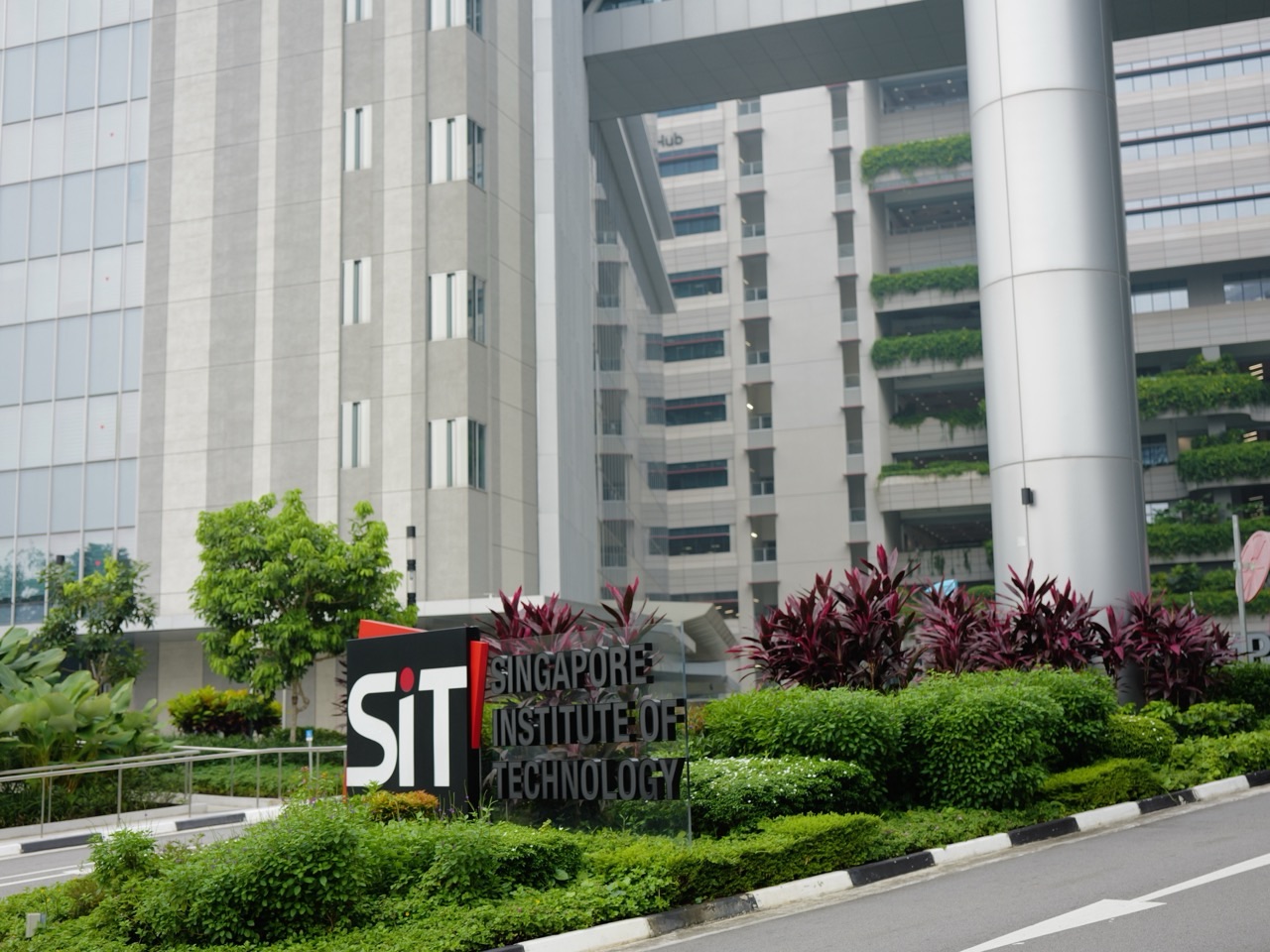
Punggol Events 2027 includes an important specialist software-development pathway at Singapore Institute of Technology. SITLEARN’s official catalogue advertises Modern Software Engineering Practices for January–April 2027, in a 3+ month blended learning format combining online study, live consultations and in-person sessions at SIT Punggol Campus. A separate legacy booking catalogue lists 4 January–11 April 2027 for the SJ2002C Specialist Certificate. Its current detailed individual course page, however, says “There are no upcoming course runs at the moment.” Those are three different publication signals and must not be turned into a promise of an immediately bookable January place. Current detailed course page.
Did you know? This is an 18-credit programme combining Agile Development, DevOps and Lean UX Research (9 credits), Full Stack Secured Development (3 credits) and an Agile Development Capstone Project (6 credits). Learners practise building usable and appropriately secured web applications in teams and presenting their work. SIT also says participants may sit for Professional Scrum Master I (PSM I) after course completion, but that is not an automatic professional certification or guarantee of passing.
The current detailed fee table gives S$9,868.86 including GST, with conditional after-funding amounts of S$2,960.66 or S$1,149.86 for specified eligible categories, plus a separate S$54.50 one-time non-refundable matriculation charge. Applicants should have at least basic familiarity with object-oriented programming and web development. This guide, checked 30 October 2026, explains the course and its real booking uncertainty so Punggol residents can plan training without inventing admission, class dates or employment outcomes.
Official 2027 window, 18 credits, software modules and fee table
- Programme: Modern Software Engineering Practices
- SIT identifier in older booking catalogue: SJ2002C
- Provider: Singapore Institute of Technology, SITLEARN
- Current specialist catalogue: January–April 2027 planning window
- Older booking catalogue: 4 January–11 April 2027 scheduled window
- Current individual Course Runs: No upcoming runs listed
- Verified live application deadline: None currently shown on individual page
- Blended learning: Self-directed online, online consultations and in-person assessment
- Catalogued in-person site: SIT Punggol Campus, 1 Punggol Coast Road
- Module 1: ICT2503C Agile Development, DevOps and Lean UX Research (9 credits)
- Module 2: ICT2504C Full Stack Secured Development (3 credits)
- Module 3: ICT2505C Agile Development Capstone Project (6 credits)
- Academic total: 18 credits
- Week 1–11 activity: Self-directed online learning
- Week 1–13 activity: Synchronous online consultations
- Week 14: In-person poster presentation, 9am–6pm listed for its session
- Assessments: Tests, practical tests, assignments, reports and presentations
- Attainment: 75% attendance and pass all credit-bearing assessments
- Intended professional roles: Software engineer, DevOps engineer, UX engineer, web developer
- Recommended prerequisite: Basic object-oriented programming and web development
- Current full GST-inclusive fee: S$9,868.86
- Eligible 70% funded example: S$2,960.66
- Eligible enhanced-funded example: S$1,149.86
- Separate one-time matriculation: S$54.50, non-refundable
- PSM I: Course may prepare learner to sit certification, not an automatic award
- Degree stacking: Specified SIT CSM routes, subject to eligibility and admission
- Current main programme source: SIT Modern Software Engineering
The 50-second guide to the January 2027 software course
SIT advertises Modern Software Engineering Practices for January–April 2027, and an older official booking catalogue gives the more precise 4 January–11 April period. But the current individual SITLEARN page says no upcoming course runs. Therefore an exact open January enrolment, current deadline and confirmed individual classroom cannot be asserted. The programme is a three-module, 18-credit Specialist Certificate on Agile, Lean UX, DevOps, secure full-stack development and a team capstone. Its full GST-inclusive price is S$9,868.86, with conditional subsidies. Applicants need basic programming and web-development background, not only an interest in AI. The right first step is confirmation of the new course run.
Why three official date sources need careful interpretation
The general SIT specialist certificate catalogue says Jan–Apr 2027. SIT’s older courseforindividuals catalogue publishes 4 Jan–11 Apr 2027 for the named modern software engineering certificate. The individual current detailed course page says no upcoming run is available in its Course Runs section. These statements may reflect different stages of scheduling and enrolment. A reader should not declare the course cancelled or open without checking with SITLEARN. Use the published period for planning, but request a genuine admission link and confirmed deadline before committing.
Why a current booking panel matters more than a cached Apply Now
Search-engine pages and legacy course catalogues can retain dates or application controls after arrangements change. The current individual programme explicitly reports no upcoming run. That is meaningful to a resident deciding whether to apply today. Registering interest for a future intake is not the same as acceptance into the old January timetable. The university may issue new dates, but a public blog should not invent them or reuse the 23 November deadline from a different SIT micro-credential. Programmes with similar study periods can have separate admission statuses.
What does modern software engineering mean?
Software engineering is not simply producing code that appears to work on one person’s laptop. Real applications need requirements, design, testing, accessibility, security, maintainability and responsible change over time. Modern methods often emphasise feedback from users and cross-functional teams, with smaller improvements released and evaluated iteratively. The SIT course combines technical full-stack development with ways of organising and improving that work. A successful learner should be able to justify why a solution meets real needs, not merely show an attractive interface at the end of the term.
Why Agile is more than holding meetings
Agile approaches aim to improve the ability to learn and respond while developing useful software. They are not a promise that teams can skip planning, ignore documentation or release unreliable changes every day. A team can call its meetings “Agile” while still failing to understand users or complete work consistently. SIT teaches Agile principles and practices such as Scrum and Kanban, so learners should examine how those tools support actual delivery. The core objective is useful feedback and disciplined adaptation, not adopting fashionable terminology to sound modern.
Scrum in ordinary language
Scrum is a framework for managing complex work through defined accountabilities, events and artefacts. It encourages teams to make progress visible and inspect their results regularly. But using Scrum language does not guarantee productivity, and a poorly prepared team can still deliver a weak product. A learner should understand which problem each practice addresses and how it interacts with technical development. SIT’s course includes Scrum as part of a broader Agile foundation; it is not a promise that every participant automatically becomes a certified professional Scrum Master after attendance.
Kanban and making work visible
Kanban approaches commonly use a visual representation of work and attention to how tasks move through the system. A team may learn that too many simultaneous tasks cause delays even when everyone appears busy. A useful board shows the current state and helps identify where work is blocked. But a coloured board alone cannot solve technical debt, unclear requirements or inadequate review. The goal is to improve flow through evidence and collaboration. SIT includes Kanban as one of several approaches, not the single mandatory method for every employer.
What is DevOps?
DevOps refers broadly to practices that improve collaboration and the reliable delivery and operation of software. It can include automation, testing, deployment processes, observability and shared responsibility. The term does not mean deleting quality checks or giving every developer unrestricted production access. A responsible team designs permissions and review steps suited to the software’s impact. The course introduces DevOps principles so learners can understand how development connects to operations rather than treating the application as finished when the first version is uploaded.
Why developers should care about operations
A program may pass tests in a developer’s environment but encounter problems with real users, different data or production systems. Monitoring, recovery procedures and clear incident ownership help a team respond appropriately. An application that frequently fails can damage trust even when it has attractive new features. Modern software engineering therefore considers how a solution will be run and maintained after release. SIT’s full-stack and DevOps teaching connects those concerns. Course attendance is not permission to deploy software into a real organisation without its approval.
Continuous integration is not magic
Continuous integration generally involves combining changes and checking them systematically, often using automated tests. It can reveal some problems earlier, but it does not prove a program is completely correct or secure. Tests are only as useful as the behaviours they cover and the conditions in which they run. A responsible developer still needs design review and appropriate human judgement. SIT’s modern software emphasis helps learners understand automation as part of engineering discipline, rather than a replacement for responsibility or understanding.
What is Lean UX research?
Lean User Experience, or Lean UX, concerns learning about users’ needs through suitably focused research and feedback during product development. A team should avoid assuming that a visually impressive screen is automatically easy to use. It can test whether people understand a task, where they hesitate and what they expect the application to do. The process should respect consent and privacy. SIT’s first module combines Lean UX research with Agile and DevOps, showing that software design is both a technical and human problem.
Why user research belongs before expensive features
Imagine a fictional school-support website whose creators want to add advanced animations. Actual parents, however, struggle to find an essential form. Better research may reveal that improving navigation matters more than another decorative feature. This is a hypothetical product problem, not a report about a named Punggol website. The lesson is to ask which user outcome is failing before choosing a solution. A responsible software team can use proportionate feedback, usability testing and careful observation to avoid spending effort on attractive changes that do not solve the real problem.
Usability is not the same as popularity
An interface may attract clicks yet still confuse people who need to complete a serious task. Usability evaluation can examine whether the intended user understands the process, makes avoidable errors or requires assistance. The right measures depend on the application. For a booking or education site, accurate completion may matter more than time spent browsing. SIT’s UX component teaches learners to connect feedback with design decisions. It does not mean any one test proves the application is accessible or appropriate for all possible users.
Accessibility matters in digital services
Users differ in vision, hearing, mobility, language and device access. A design that works for one student on a large monitor may fail on a smaller phone or with assistive technology. Modern software engineering should consider relevant accessibility requirements and evaluate products with appropriate users and tools. This is a professional principle rather than a claim that the SIT module teaches every accessibility standard in full. A software solution becomes genuinely useful when people can achieve the intended task without unnecessary barriers.
ICT2503C: the nine-credit Agile and UX module
The first module, ICT2503C Agile Development, DevOps and Lean UX Research, carries nine credits—half of the programme’s total eighteen. That signals substantial attention to how teams design and manage software work, not just technical coding. Learners should be prepared to discuss user needs, team decisions and the evidence behind a proposed change. The exact learning activities and assessment rubrics belong to SIT. The public module name establishes scope, not the precise week when every practice is introduced or a requirement to use one proprietary project-management platform.
What does full-stack development mean?
A full-stack application includes aspects of what users interact with and the services or systems that support the experience behind the scenes. Front-end work might involve forms and navigation, while back-end work may involve authorised data processing, business logic and integration. The boundaries vary by product. SIT’s course teaches modern web technologies and application structures in this context. A developer needs to understand the relationship between components rather than assume adding a framework automatically produces a secure or user-friendly solution.
The front end must make valid actions understandable
An interface should clearly explain what a user is doing, which information is required and what happens when a form is submitted. Confusing error messages or hidden choices can lead to repeated mistakes. A front-end developer should consider keyboard use, readability, small screens and accessible feedback. The course’s UX teaching is relevant because the technical interface and user experience are inseparable. A page that looks polished but submits incorrect information is not a successful digital service. Testing should cover actual tasks rather than only the appearance of the screen.
The back end needs responsible design
A back-end service may validate requests, manage permissions and interact with data. Those functions can affect privacy and reliability. Good engineering asks who may call an operation, what information is necessary and how errors are handled without exposing sensitive details. The right design varies by application and must be evaluated under current security practices. This article does not provide code for bypassing access controls or claim that any particular framework guarantees safety. The SIT module’s aim is to connect secure development with overall product design.
Why secure development is a central module
The programme includes ICT2504C Full Stack Secured Development, worth three credits. Its title makes security part of the application-building process rather than an optional checklist added at the end. A learner may need to understand input validation, access control, responsible data handling and the importance of testing, subject to the actual syllabus. A secure system also depends on configuration and ongoing maintenance after deployment. Course completion does not certify a real employer application as penetration-tested or legally compliant; those require separate appropriate evidence and authority.
Personal data and software engineering
Web applications may process names, contact details, login credentials or student records. Such information should be handled only for legitimate purposes and under appropriate organisational permissions. In Singapore, developers and operators should consult current Personal Data Protection Commission guidance where personal data is involved. A classroom project can often use synthetic data to avoid exposing real people. Good technical skill includes understanding what information should not be copied into public repositories or AI services. A functioning program is not ethically sound merely because it accepts the data supplied.
Why secrets should not appear in published code
Credentials, API keys and private configuration can create serious risk if copied into a public repository or shared casually. A professional developer needs approved methods for managing access and sensitive information. The particular procedures vary by organisation and current tools; a general article should not pretend to audit them. This is part of the broader secure software mindset. A student may produce an impressive demonstration, but should not inadvertently expose a live account while doing so. The organisation’s approved development environment and instructions take precedence.
Testing should reflect actual use
A program that passes one demonstration may still fail when a user submits unexpected input or the network is unavailable. A meaningful testing strategy considers relevant normal cases, errors and important boundaries. Some tests can be automated, while others require human evaluation and security review. SIT explicitly includes implementing a modern software testing strategy among its learning outcomes. The quality of tests matters more than a high count of trivial test cases. A test suite should support confidence in an intended application, not serve as a decorative number on a project slide.
What is technical debt?
Technical debt is a way of describing the future cost that can arise when shortcuts or unresolved design issues accumulate. Not every quick decision is bad, and sometimes a temporary solution is appropriate. The important question is whether the trade-off was understood, documented and managed. A team that always adds features without addressing maintainability may find later changes increasingly difficult. Modern software practices encourage iterative improvement while maintaining reliability. SIT’s focus on design documentation helps learners make decisions that can be understood by future colleagues.
Design documentation is not paperwork for its own sake
Documents can explain how components relate, what assumptions guided the design and which constraints matter. Too little documentation leaves future maintainers guessing; too much obsolete documentation creates confusion. Useful records should be accurate, accessible and updated when changes occur. A developer should be able to justify the software structure and communicate it to teammates. The university explicitly describes design documentation as part of the programme. This does not mean every learner must produce a particular proprietary template; the correct output follows the actual assignment requirements.
ICT2505C: the six-credit capstone project
The third module, ICT2505C Agile Development Capstone Project, carries six credits. Learners work in teams to design and develop a usable digital solution over iterative sprints, then demonstrate what they built and learned. A capstone should connect user understanding, development, testing and communication. The real project topic and team arrangements are determined by SIT. The public page does not promise that every participant will create a commercially deployable app or keep exclusive intellectual-property rights. Those matters need appropriate project rules and confirmation.
Why a team project is more demanding than a solo demo
Several people working on one application must coordinate responsibilities, agree on interfaces and handle conflicting ideas. Version control, review and clear communication matter as much as individual coding speed. A good team should understand which features have been completed, what has been tested and what remains uncertain. The capstone’s iterative approach creates opportunities to learn from problems rather than conceal them until final presentation. Employers may value the resulting experience, but the existence of a course project does not guarantee that the team can independently operate every enterprise-grade system afterward.
The in-person poster presentation
SIT’s teaching plan lists self-directed learning in weeks 1–11, synchronous consultations in weeks 1–13 and an in-person poster presentation in week 14, with 9am–6pm shown for that session. This is important to working adults planning leave. A poster presentation is not automatically a public ticketed exhibition or a guarantee that visitors can attend the campus. It is an assessment-related course activity. The exact 2027 date and reporting room need confirmation because the current individual booking panel does not list an active run.
Why the blended timetable still demands discipline
Self-directed video learning can offer flexibility, but assignments, online consultation and a capstone still require sustained work. A learner may need to debug code, discuss user research with teammates and prepare a presentation alongside existing responsibilities. It would be unrealistic to enrol simply because recorded lessons are available any time. The course’s broad January–April window should be evaluated against work, caregiving and other study commitments. A responsible applicant asks how much weekly project time is typical and what happens when assessment deadlines conflict with their schedule.
The full S$9,868.86 GST-inclusive price
The current individual SITLEARN page lists S$9,868.86 including GST. An older booking catalogue displays a lower S$9,054 number for the same course family. The difference is arithmetically consistent with nine-percent GST, but the current detailed provider table should be used for budgeting. Do not treat the legacy base amount as proof of a cheaper 2027 invoice or a special offer. The actual learner’s payable amount depends on approved funding and university rules. A Punggol residential address does not create a neighbourhood course discount.
How the conditional funded fees work
SIT’s fee table shows S$2,960.66 for specified eligible 70%-funded categories and S$1,149.86 in its stated enhanced-funding category. Those are published scenarios rather than a guarantee that a particular user qualifies. Citizenship, residency, age and course approval affect eligibility. A learner may have SkillsFuture Credit or employer support, but these need their own checks. An honest household budget starts from the full fee and uses only confirmed subsidies, rather than assuming the lowest number because it appears on a web page.
The matriculation fee is separate
The university charges an additional S$54.50 one-time non-refundable matriculation amount. Added to the published S$2,960.66 conditional category, the simple sum is S$3,015.16; added to S$1,149.86, it is S$1,204.36. These are arithmetic illustrations and not final invoices. A learner should ask exactly when payment occurs and what the refund or withdrawal conditions are. Travel, devices or additional personal study costs may also matter but should not be invented as official charges without evidence.
The part-time training allowance is conditional
SIT describes a potential S$300 monthly SkillsFuture Mid-Career Training Allowance for qualifying Singapore citizens aged forty and above, subject to employment history, attendance and SkillsFuture Singapore approval. It is not guaranteed to all applicants and is distinct from reducing the course fee. The actual learner should check whether they qualify and when the scheme would pay. Do not budget the allowance as confirmed income before approval. This programme is a blended micro-credential, not the separate full-time SNAIC course with its different stipend and attendance rules.
Consequences of failure or withdrawal
SIT warns that a participant who fails or drops out without a valid reason may need to repay the subsidy received. That makes initial readiness important, especially when a learner’s current programming and web-development skills are limited. Someone who cannot meet the schedule should clarify academic support and withdrawal rules before committing. A heavily subsidised course is not risk-free simply because the up-front payment is smaller. Study time, assessments and financial terms should all be understood before enrolling, not discovered after a project deadline has been missed.
Object-oriented programming is an assumed foundation
The course says a well-prepared student should be familiar with object-oriented programming, such as in C++, C#, Java or Python, and with basic web development. That differs from a fully introductory computer-literacy programme. An applicant who has never written any code may struggle with full-stack implementation and capstone collaboration. SIT should advise whether additional preparation is necessary. A learner can practise small applications and explain their logic as a readiness check, but the public page does not prescribe an exact entrance exam. The emphasis is competence, not collecting programming-language names.
Who should consider the programme?
SIT names software engineers, DevOps engineers, UX engineers and web developers as relevant roles. A working professional building or maintaining digital services may find the focus on Agile, usability and secure application design particularly relevant. The course is not exclusively for people already using one named development framework, but it does expect technical familiarity. Anyone aiming for a career transition should compare current skills with the syllabus rather than assume three months of tuition guarantees a job. Employers may also value demonstrated projects and relevant experience beyond a certificate.
Professional Scrum Master I is not automatically awarded
The individual course says a learner may directly sit for the Professional Scrum Master (PSM I) certification upon completion. That is not the same as receiving the external credential automatically or having its exam fee definitely included. A prospective learner should verify the certification provider’s current requirements, examination conditions and any separate cost. The SIT Specialist Certificate has its own assessments and attendance rules. Different credentials should not be merged into one promotional claim. A Scrum framework can also be applied responsibly without treating a badge as proof that every project will succeed.
The Specialist Certificate is eighteen credits, not a full degree
Completing the course under SIT’s requirements can lead to a Specialist Certificate with 18 stackable academic credits. The university describes possible progression toward Applied Computing and certain engineering or Technology and Management routes under admission conditions. This does not automatically award a bachelor’s degree or guarantee acceptance into every route. Different funding arrangements can apply once a learner formally enters a degree. The SIT Applied Computing CSM pathway offers a useful official description. A learner should verify eligibility before building a long-term qualification plan around one micro-credential.
How this differs from SIT Machine Learning
The Machine Learning January–April 2027 guide covers supervised learning, unsupervised learning and recommendation systems in Python. Modern Software Engineering Practices focuses instead on the end-to-end process of producing usable and secure web applications, including Agile team methods and UX research. Both can be valuable to a software professional, but they teach distinct skills and have different current enrolment-panel status. The machine-learning course has an active published November deadline; this page currently says no upcoming software-engineering run. Do not assume both accept applications together.
How this differs from Ethical Computing and Data Analysis
The Ethical Computing and Data Analysis guide describes foundation-level topics including Python, statistics, computer systems and ethics. Modern Software Engineering is a specialised course for learners with some programming and web-development familiarity. A person needing basic Python skills may find the foundation pathway a more appropriate preparation than jumping directly to full-stack capstone work. Both can contribute credits under relevant SIT rules, but academic progression should follow actual competence and the university’s eligibility guidance.
How this differs from the SNAIC full-time AI programme
The SIT x NVIDIA SNAIC AI Programme is a six-month full-time technical training and industry-attachment programme whose January 2027 applications have already closed. Modern Software Engineering is a blended 18-credit micro-credential, with different fees, assessment and no advertised S$4,000 stipend. They should not be confused because both involve software and AI-adjacent career skills. A resident should compare ability to study part-time, technical background and the qualification actually earned rather than choose based on a familiar technology label.
A fictional Punggol website project
Imagine a small Punggol service organisation wanting to improve online appointment booking. A team could research how users find the booking form, make a modest design change, build the authorised application, and test whether it works on common devices. The most valuable success measure might be accurate completion, not simply more page views. This is a hypothetical project, not an SIT assignment or a claim about any named local business. It illustrates how Lean UX, full-stack design, security and Agile development work together to address a real user need.
A fictional education-platform example
A hypothetical education platform may provide children with reading resources and teachers with authorised progress information. A developer must consider accessibility, permissions and the accuracy of what is displayed. A secure back end might control appropriate access, while the front end makes the task understandable. The project team should test with suitable users and keep private student data protected. This illustrates the course’s relevance without implying SIT grants participants access to private school records or approves a specific educational app. Responsible software depends on both technical work and governance.
Why one impressive portfolio does not guarantee employment
A capstone project can demonstrate collaboration, technical thinking and practical implementation, but recruiters still assess individual capability, prior experience and the needs of a particular role. The course does not promise job placement, salary increases or acceptance into a named engineering team. A learner should be able to explain what they personally contributed, which trade-offs were made and how the result was tested. Honest documentation is more valuable than a polished screenshot of an application whose limitations cannot be explained.
Where the Punggol campus appears in the 2027 listings
The SIT Applied Computing specialist catalogue explicitly identifies SIT Punggol Campus for in-person components of the January–April programme family. Its address is 1 Punggol Coast Road, Singapore 828608. However, the individual Modern Software Engineering page currently has no active Course Runs entry with a confirmed 2027 classroom. It would be wrong to invent a building, poster-presentation date or permanent lab access. Applicants should request the actual joining schedule when the intake opens and book any required in-person sessions through authorised arrangements.
The right questions before registering interest
A prospective learner should ask SIT whether the legacy 4 January–11 April 2027 window remains planned, when applications will open, what the official closing date will be and where the in-person poster session takes place. They should verify object-oriented programming readiness, current funding and the non-refundable matriculation amount. Ask how capstone teams are organised and whether a particular external PSM I examination fee is included. Register interest through the university if no live course run exists, but do not describe that action as confirmed admission.
Frequently asked questions
When? The current catalogue says January–April 2027; the older course catalogue lists 4 January–11 April. Can I book now? The current detailed Course Runs panel says no upcoming runs. What is taught? Agile, Scrum, Kanban, DevOps, Lean UX, secure full-stack development and a capstone. Credits? Eighteen across 9-, 3- and 6-credit modules. Full fee? S$9,868.86, with conditional S$2,960.66 or S$1,149.86 and S$54.50 matriculation. Technical background? Basic OOP and web development. Does PSM I come automatically? No. Does a Specialist Certificate equal a bachelor’s degree? No. Are all lessons in person? No, the model is blended.
Official sources and Punggol links
Primary current programme: SIT Modern Software Engineering Practices, supporting the three modules, course assessment, fee and current no-upcoming-runs status. 2027 period and campus: SIT Applied Computing Specialist Certificates. Older January–April dates: SIT legacy individual course catalogue, which should not be mistaken for current open admissions. Academic route: SIT Applied Computing CSM. Related Punggol coverage: Machine Learning 2027, SNAIC AI Programme 2027 and Punggol Events. Checked 30 October 2026, with admissions and venue pending university confirmation.
Final thought: modern software is defined by reliable outcomes
Modern Software Engineering Practices is an officially advertised January–April 2027 SIT specialist learning option that connects Agile teamwork, user experience, secure application construction and capstone work. Its current registration panel does not confirm an open January run, and the older exact dates must be treated as planning information until verified. A resident should consider the S$9,868.86 full fee, conditional funding, previous programming experience and genuine assessment workload. The best outcome is software that meets real user needs and remains understandable, maintainable and accountable—not merely a fast demo or a certificate title.


