
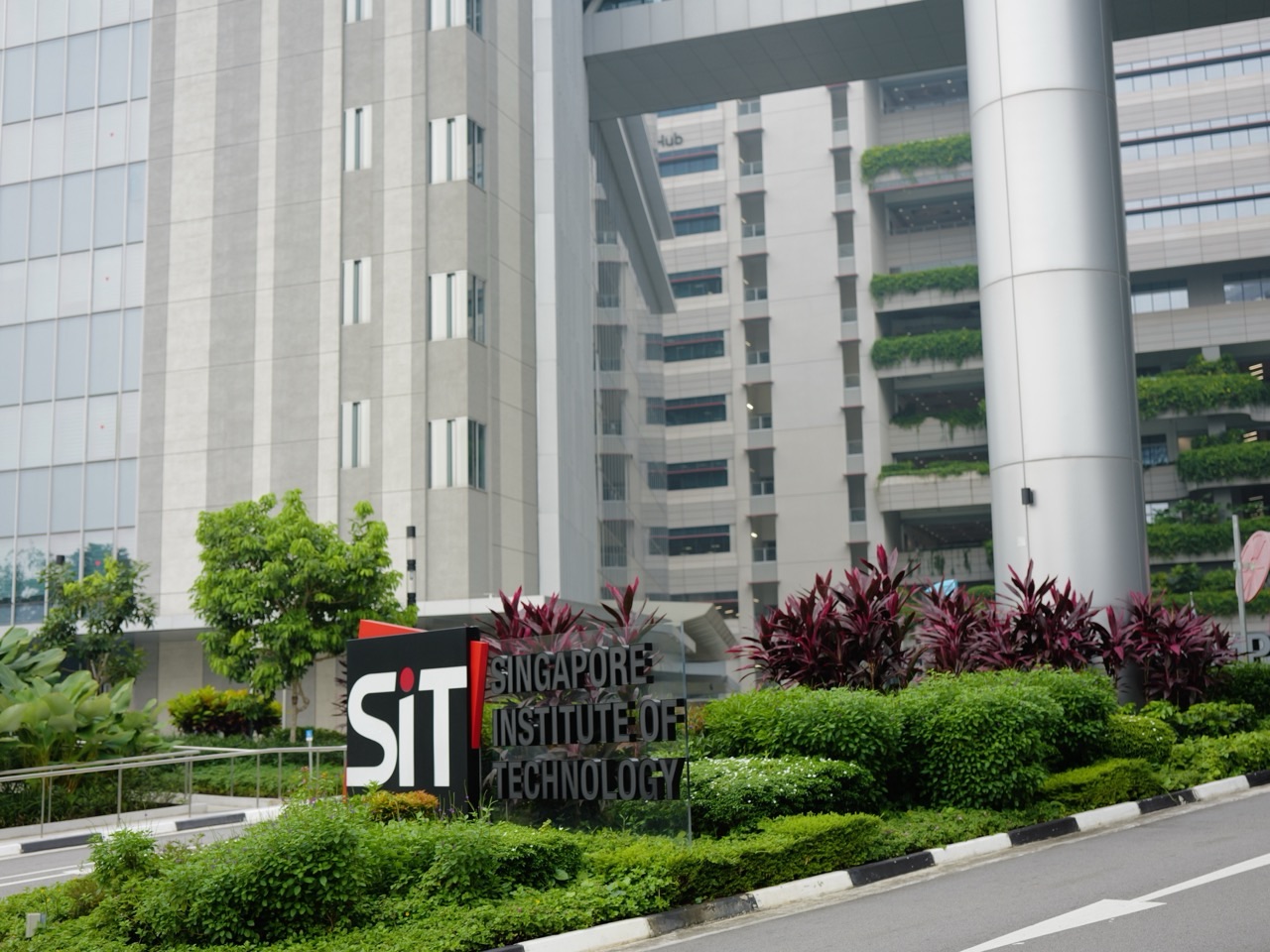
Did you know? Singapore Institute of Technology’s official SITLEARN catalogue advertises Ethical Computing and Data Analysis for January–April 2027, as a blended micro-credential with some in-person learning at SIT Punggol Campus. It covers computer ethics, systems, Python and applied statistics. The programme can produce an 18-credit Specialist Certificate subject to attendance and passing its assessments. Official 2027 course catalogue.
Important admission caveat: The separate detailed module page currently says “There are no upcoming course runs at the moment” even while the catalogue shows the January–April window. Therefore no precise January start day, application deadline or immediately bookable seat is confirmed. Registering interest is different from final enrolment.
The full published programme fee is S$9,868.86 including GST. The page illustrates conditional payable amounts of S$2,960.66 and S$1,149.86 for eligible groups, and lists an additional S$54.50 non-refundable matriculation fee. The workload is roughly 13 weeks with at least nine hours of independent study weekly. This guide was verified 28 October 2026.
Official programme details
- Course: Ethical Computing and Data Analysis
- Provider: Singapore Institute of Technology, SITLEARN
- Catalogue 2027 period: January–April, precise dates to be confirmed
- Detailed page booking: No upcoming course runs currently
- Venue: Blended online/selected in-person SIT Punggol Campus, 1 Punggol Coast Road
- Modules: Ethics & Professional Conduct (3 credits); Computer Systems (3); Python Programming (6); Applied Statistics (6)
- Total credits: 18
- Teaching plan: 13 weeks, at least 9 hours weekly self-directed learning
- Full fee: S$9,868.86 including GST
- Conditional 70% payable amount: S$2,960.66
- Conditional enhanced funding amount: S$1,149.86
- Separate matriculation: S$54.50, one-time and non-refundable
- Certificate: 75% attendance and pass all credit-bearing assessments
- Assessment: Quizzes, Python assignments/projects and final written exam
- Prerequisite: Basic digital literacy and pre-university mathematics; no prior computing knowledge needed
- Official detailed source: SIT micro-credential page
Why this is a Punggol Events 2027 opportunity
This is an officially advertised professional-learning window for the new year, not a festival or public lecture. Some activities take place at SIT Punggol Campus while much of the learning is remote. The institute’s catalogue gives a January–April 2027 period, but the individual enrolment page currently has no upcoming run. An event guide should report both facts. Anyone planning work leave or funding needs the actual timetable and admission confirmation before acting.
What does ethical computing mean?
Computing ethics asks whether technology is used fairly, responsibly and with appropriate protection for people. A program can work perfectly according to its instructions yet still be unsuitable if it exposes personal information or excludes important users. SIT includes the digital divide, privacy, information security and professional conduct. These ideas help a developer consider the consequences of design choices before releasing a tool.
Ethics is not only legal compliance
A business may have a legal right to process certain information while still needing to ask whether collecting it is necessary. Professional conduct can involve identifying consequences that a minimal compliance checklist overlooks. The course teaches ethical reasoning alongside technical skills. For real legal obligations in Singapore, consult current official PDPC guidance and qualified advisers where appropriate.
The digital divide
A digital service may work well for someone with reliable broadband and modern equipment yet be hard to use for another person. The divide can concern access, digital skills or disability-related barriers. Responsible computing considers the users who might be excluded by default assumptions. This is relevant to Punggol families, students and businesses, but the course does not promise to solve every inequality through software alone.
Computer systems and operating environments
One three-credit module covers computer architecture, operating systems and tools for working with machines, including Bash and GNU utilities. A beginner learns that software runs in an environment with permissions, files and resources. Understanding these foundations can help learners diagnose ordinary technical problems. Students should practise only on authorised systems and avoid changing workplace or other people’s computers without permission.
What Python teaches
Python is a programming language that can help automate routine tasks and analyse data. SIT covers data types, functions, control structures, lists, dictionaries, files and object-oriented concepts. A learner who has never programmed can begin with small examples but must still practise and test code. The programme is not a two-hour prompt-writing tutorial; it expects participants to understand how programs work.
Data types and careful reasoning
A value stored as text is different from the same digits stored as a number. That distinction can change whether arithmetic works correctly. Learning data types helps students make the relationship between real-world information and computer representation explicit. Good programming begins by asking what each value means, which operations are valid and how to recognise a mistake.
Functions, repetition and program structure
Functions allow a defined task to be reused instead of duplicated in several places. Loops can repeat approved work, and conditions can distinguish cases. These features are powerful because they make a program perform many steps consistently. They also make mistakes repeat consistently when the instructions are wrong. Learners need to test small components rather than trust output merely because the code ran without an error message.
Why NumPy and pandas appear
SIT names NumPy and pandas as Python libraries for numerical and tabular work. They can make calculations and data organisation more convenient, but their output still depends on data quality, units and the analyst’s choices. A technically successful calculation can be misleading when records are incomplete or collected in a biased way. Responsible analysts document assumptions instead of treating a polished table as self-evident truth.
Applied statistics and uncertainty
The six-credit statistics module covers probability models and numerical and graphical ways to describe data. Learners practise drawing conclusions while recognising uncertainty. A chart cannot establish causation merely because two trends look similar. Statistics should help people judge evidence, not give an unsupported claim a scientific-looking appearance. The course links analytical methods to practical computing work.
A simple mean-and-median example
Imagine fictional data points 2, 3, 3, 4 and 18. Their mean is 6 while the median is 3. Neither number is incorrect, but each tells a different story. A report using only the mean could suggest a “typical” value much higher than most observations. This illustrates why the choice of statistic matters and why a responsible analyst checks the distribution before describing results.
The four modules and academic credits
The course comprises ICT1505C Ethics and Professional Conduct (3 credits), ICT1506C Computer Systems (3), ICT1507C Programming Fundamentals in Python (6), and ICT1508C Applied Statistics (6). Together they provide 18 credits subject to completion. These are not four unconnected short workshops. The learner is assessed across a defined micro-credential pathway.
Thirteen weeks really requires planning
The teaching schedule describes thirteen weeks and at least nine hours weekly for independent learning. That implies at least about 117 hours over thirteen weeks at the basic estimate, before individual learning speed and other scheduled activities. Beginners may need additional practice for debugging and mathematics. A working adult should set aside recurring study time rather than assuming the course can be completed during a few spare evenings.
Blended does not mean entirely remote
The official delivery includes self-paced online material, virtual Q&A and assessments, with some in-person activities. A briefing and final examination are described as on-site, while precise times remain to be confirmed. Do not tell applicants every class is at Punggol Campus or that they never need to travel. The actual joining timetable must come from SIT for the specific intake.
Who is the course for?
SIT describes a foundation programme for adults seeking entry-level IT skills or a transition into computing. It says no prior computing knowledge is necessary, but assumes basic user-level computer familiarity and pre-university Mathematics. A parent should not confuse this with a short youth holiday coding camp. People with substantial digital-literacy gaps should enquire about preparation before committing.
Assessments and certificates
The programme includes quizzes, programming work or projects and a final written exam. SIT requires at least 75% attendance and passing credit-bearing assessments for the Specialist Certificate. Payment alone does not guarantee completion. Ask what is assessed online and what requires campus attendance. A person whose work schedule prevents an exam should resolve that conflict before enrolling.
Eighteen credits are not a degree
The Specialist Certificate may stack toward specified SIT degrees under the university’s competency-based pathway. But 18 credits do not equal a completed bachelor’s degree, and eligibility for a degree involves separate admission and programme requirements. SIT describes a five-year validity period for stacking credits. Ask which pathway your background supports before assuming automatic progression.
Understanding the published fee table
The complete published price is S$9,868.86 inclusive of GST. Eligible categories are listed at S$2,960.66 or S$1,149.86, while unfunded learners face the full price. These are conditional categories, not individual funding decisions. A Punggol residential address does not qualify someone automatically. Obtain a personal quotation from SIT before applying financial credits or arranging employer sponsorship.
The S$54.50 extra charge
The individual course page identifies a separate one-time, non-refundable matriculation charge of S$54.50. If added to the published S$2,960.66 payable category, the arithmetic sum is S$3,015.16; for the S$1,149.86 category it is S$1,204.36. These are illustrative totals, not confirmed invoices. The actual approved funding and fee collection arrangements belong to SIT.
Funding and training allowances
SIT discusses possible use of SkillsFuture Credit and a S$300 monthly part-time training allowance for eligible applicants meeting age, work-history and scheme conditions. An allowance is different from a reduced course invoice and is not automatic. The page warns that failing or withdrawing without an accepted reason may affect subsidies. Applicants should read the current conditions before relying on an allowance for household budgeting.
Career relevance without job guarantees
Python, computer systems and statistics can support entry-level computing and analytical tasks. Ethics helps make those capabilities responsible. But a certificate does not guarantee employment, a salary increase or admission to a particular employer. A learner can improve prospects by building accurate small projects, documenting their reasoning and checking actual job requirements. Practical competence and experience matter alongside formal completion.
A safe practice project
A beginner could analyse a fictional table of household expenses using Python, calculate basic statistics and manually verify a few results. Such an exercise develops skills without exposing real customer or student records. SIT’s actual coursework may differ. The central habit is to state what the dataset represents, check for missing values and avoid drawing conclusions beyond the evidence.
Compare with other SIT AI training
The Agentic AI for Operations guide covers a shorter professional course on workflow control, while Agentic AI for Legal concerns liability and contracts. Ethical Computing and Data Analysis instead builds programming and statistics foundations across thirteen weeks. Choose the programme closest to the skills needed rather than assuming all AI-related courses teach the same content.
The live-registration question
The general SIT catalogue shows a January–April 2027 window; the individual course page says no upcoming runs. No precise deadline or available seat can be established from that combination. Registering interest may help obtain updates, but an applicant should wait for an actual offer and verified timetable before treating plans as final.
Frequently asked questions
When? January–April 2027 is the advertised catalogue window, not a confirmed booked date. Duration? About thirteen weeks. Content? Ethics, computer systems, Python and applied statistics. Credits? Eighteen. Full fee? S$9,868.86 plus separate S$54.50 matriculation. Funding? Conditional published S$2,960.66 or S$1,149.86. Experience? No prior computing knowledge required, but digital and mathematical readiness expected. Certificate? Attendance and passing assessments required.
Official sources and next action
Read SIT’s individual Ethical Computing and Data Analysis page and its 2027 specialist-certificate catalogue. Check the actual admissions timetable, eligibility, funding and assessment dates with SITLEARN. Related local context: Punggol Education 2027 computing pathways and Punggol Events. Verified 28 October 2026.
Final thought
This micro-credential is relevant to residents who want to build practical computing skills with ethical awareness. The Jan–Apr 2027 intake window is published, but the detailed page does not confirm a bookable course run. The important first step is to verify admission; the second is to understand the real study, exam and financial commitments. A useful programme should strengthen both technical ability and the judgement to use it responsibly.


