
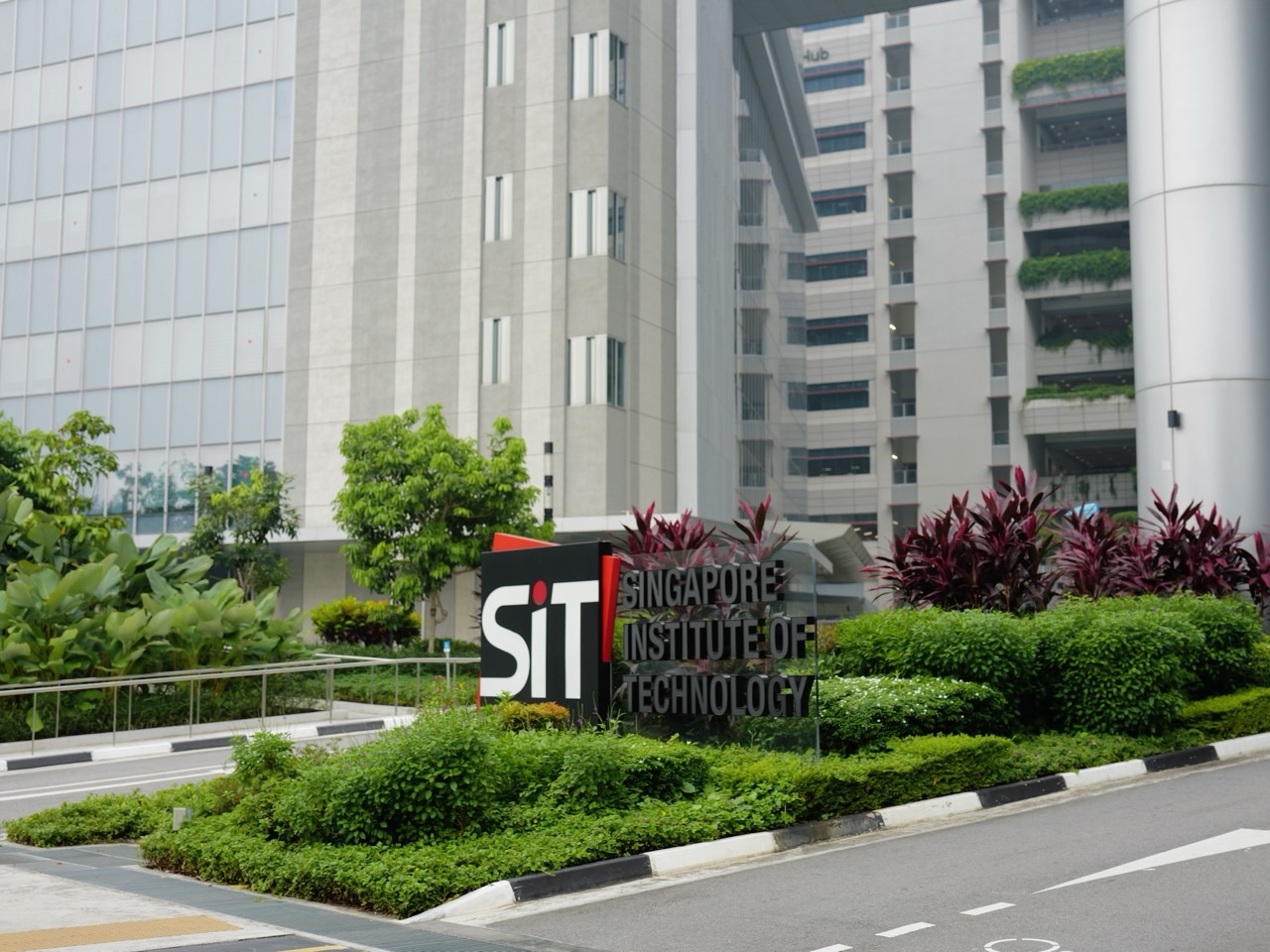
Punggol Events 2027 includes a professional maritime technology course with a strong connection to Singapore’s maritime industry. Singapore Institute of Technology’s Marine Automation and Autonomous Systems is advertised in its engineering catalogue for January–April 2027, as a blended 18-credit Specialist Certificate involving online learning and selected in-person engineering laboratories at SIT Punggol Campus, 1 Punggol Coast Road. It teaches how sensors, shipboard controls, networks and systems engineering support reliable marine automation and appropriately governed autonomous vessel systems. Official SITLEARN course.
Did you know? The course combines Marine Sensors and Instrumentation (ENG2244C, 6 credits), Marine Automation Systems (ENG2245C, 6), Marine Systems Integration (ENG3241C, 3) and Autonomous Marine Systems (ENG3242C, 3). Participants study shipboard operating contexts, PLC and SCADA, marine communication networks, integrated bridge monitoring, the V-model of systems engineering, cybersecurity and regulatory constraints on autonomous operations. Assessment comprises practical demonstrations, assignments and an integrated team project. The final certificate requires 75% attendance and passing all credit-bearing assessments.
The current application status is not confirmed as open. Although SIT’s engineering catalogue advertises Jan–Apr 2027, the individual detailed Course Runs panel says “There are no upcoming course runs at the moment.” No exact January start, deadline or bookable seat should be invented. The published full fee is S$10,006.20 including GST, with conditional eligible amounts of S$3,001.86 or S$1,165.86, plus a separate S$54.50 non-refundable matriculation fee. This guide was checked 30 October 2026 and explains the realistic career, safety, study and funding choices for Punggol residents rather than suggesting the university is offering a public ride on an autonomous boat.
Official 2027 marine automation intake, academic credits and full fees
- Course name: Marine Automation and Autonomous Systems
- Provider: Singapore Institute of Technology, SITLEARN
- Engineering catalogue period: January–April 2027
- Individual current Course Runs: No upcoming course run
- Exact first day, application deadline and vacancy: Not confirmed
- Study format: Blended online self-paced learning, live lectures, Punggol-based laboratories
- In-person centre: SIT Punggol Campus, 1 Punggol Coast Road, Singapore 828608
- Teaching pattern: Weeks 1–14 self-study, online lecture and in-person tutorials/labs; individual times TBC
- Assessment period: Weeks 7–14, including project presentation, timings TBC
- Module ENG2244C: Marine Sensors and Instrumentation, 6 credits
- Module ENG2245C: Marine Automation Systems, 6 credits
- Module ENG3241C: Marine Systems Integration, 3 credits
- Module ENG3242C: Autonomous Marine Systems, 3 credits
- Credits: 18 in total
- Technical topics: Shipboard sensors, electrical instrumentation, industrial networks, PLC, SCADA, systems integration, autonomous operations
- Systems method: V-model requirements, verification and validation
- Intended learners: Marine, electrical, electronic, mechatronics, automation and integration engineers
- Preparation: Marine systems, electrical circuits, basic feedback/control, drawings, pre-university mathematics and physics
- No prior PLC programming as a universal absolute prerequisite: SIT says helpful concepts matter; confirm individual readiness
- Certificate: 75% attendance and passing all assessed modules
- Assessment: Demonstrations, assignments and integrated automation team project
- Full fee: S$10,006.20 including GST
- Conditional eligible 70% charge: S$3,001.86
- Conditional eligible enhanced charge: S$1,165.86
- One-time non-refundable matriculation: S$54.50
- Academic stacking: Engineering or Technology and Management degrees under separate SIT rules
- Primary source: SITLEARN Marine Automation and Autonomous Systems
The 50-second answer for Punggol residents
SIT advertises Marine Automation and Autonomous Systems for January–April 2027, with four modules totalling eighteen credits. This specialised maritime-engineering credential covers sensing, marine control, PLC/SCADA, system integration and the governance of autonomous operations. The full published tuition is S$10,006.20, with conditional funding and separate matriculation. No active Course Run currently appears on the individual page, so a confirmed application deadline, start day or seat cannot be asserted. The university’s Punggol campus hosts relevant laboratories when the programme runs. It is for technically prepared working adults, not a casual family boat demonstration or a promise of automatic maritime employment.
Why maritime technology belongs in the Punggol 2027 calendar
Singapore has a substantial maritime ecosystem, and engineers working in shipboard electrical, automation and systems roles may live far from the facilities where they work. SIT’s Punggol campus provides a local educational opportunity even when the careers involve ports, vessels or companies elsewhere. The official page relates its course to maritime digitalisation and national industry priorities, but the listing does not announce that autonomous vessels will begin operating in Punggol Waterway in January 2027. A local guide should connect relevant training to residents without inventing a public test, voyage or waterfront event.
What is marine automation?
Marine automation uses suitable instrumentation, controls and computing to assist the operation and supervision of shipboard systems. The systems can include monitoring and coordination of permitted equipment under specific safety and operational rules. A controller can help regulate a process, but human operators and professional engineers retain defined responsibilities. The course teaches how the components fit together, not how to take command of an unfamiliar vessel. Responsible learning begins with a clear distinction between classroom simulation, authorised laboratory work and live maritime equipment subject to regulation.
Autonomous does not mean uncontrolled
An autonomous system may perform selected tasks with limited human intervention, but it still needs a defined operating purpose, appropriate oversight, safeguards and compliance with applicable maritime requirements. The fact that software can issue an action does not mean it is authorised to do so in every situation. SIT’s module covers levels of autonomy, monitoring, cybersecurity and regulatory constraints. Learners should not equate autonomy with the absence of people or accountability. A real vessel requires qualified design, validation, permits and operational arrangements beyond a university demonstration.
Why this is a distinct Specialist Certificate
The programme has four modules with credits 6 + 6 + 3 + 3 = 18. Marine sensing and automation receive substantial foundational attention, while systems integration and autonomous operations connect the technical work to complete solutions and professional oversight. Completing all modules under assessment rules may earn the Specialist Certificate, which can later be stacked under eligible SIT pathways. A participant should not mistake those four subjects for four bachelor’s degrees or assume each demonstrates independent competence to certify a real vessel without supervision.
Marine Sensors and Instrumentation
The ENG2244C six-credit module focuses on obtaining trustworthy information from sensors and instrumentation in appropriate shipboard operating contexts. Measuring movement, electrical signals or equipment conditions is not as simple as reading a number. Sensors have ranges, error sources and operating constraints. A device suitable for a laboratory may not automatically be suitable in an actual marine environment. SIT’s teaching connects signals and instrumentation with real engineering requirements. The professional goal is knowing what information a sensor can support and what assumptions need verification.
Signal transmission and reliability
Measured information may travel through cables, interfaces and data networks before reaching a monitoring screen or controller. A reading that arrives late, is corrupted or has lost its context can lead to poor decisions even when the original sensor worked correctly. A responsible engineer needs to understand the signal chain and what reliability is required for the intended function. SIT explicitly addresses signal transmission principles and sensor integration. This general explanation is not a wiring guide for shipboard safety-critical circuits; actual changes require appropriate certification and authorisation.
Why the marine environment changes equipment decisions
Shipboard equipment can face operational conditions and constraints different from an ordinary office. Engineers need to establish which environmental, power and safety standards are relevant to the specific vessel and installation. A consumer sensor advertised as “waterproof” is not automatically marine-grade for a critical use. The programme uses authentic shipboard contexts to teach judgment about instrumentation. It does not promise that all classroom components meet the full requirements of every real vessel. Qualified assessment and applicable classification rules govern real installations.
Marine Automation Systems
The ENG2245C six-credit module develops an understanding of automation and control in vessel systems, including communication and human–machine interaction. A participant may consider how several measurement inputs support appropriate automated actions under defined constraints. The actual learning includes PLC/SCADA concepts, which should be practised on approved training equipment. A graduate should understand the relationship among sensors, logic, monitoring and operators, but course completion is not a licence to bypass a ship’s protective systems or update a live controller without an authorised engineering process.
What is a PLC?
A programmable logic controller, or PLC, is a computing device used in many industrial control applications. It can process appropriate inputs and control permitted outputs under an engineered design. The exact hardware, redundancy, permissions and safety requirements differ by application. A PLC is neither an ordinary personal computer nor a universal guarantee of reliable operation. SIT teaches PLC-based marine automation so learners understand its place in a larger system. A classroom exercise should remain within supervised equipment, and no unauthorised access to live maritime controllers is appropriate.
What is SCADA?
Supervisory Control and Data Acquisition, or SCADA, concerns monitoring and supervisory interaction with suitable industrial systems. It can collect status information and help authorised personnel observe processes and respond under approved arrangements. A display showing green indicators is not independent proof that every underlying device is healthy. Relevant data quality, interface clarity, access rights and escalation procedures matter. SIT includes SCADA in its curriculum because operators and engineers need an integrated understanding of human supervision. This guide does not provide techniques for changing protected SCADA settings or exploring live networks.
Why PLC and SCADA are complementary
A PLC can perform defined control tasks close to equipment, while a SCADA environment may present status and supervisory functions across a wider system. The exact relationship depends on how the vessel’s systems are designed. Neither replaces the need for qualified engineering or clear operator authority. A training course should help learners recognise where each function sits and how information passes between them. In real work, the approved architecture and security requirements govern which components can communicate and which changes are allowed.
The interface is part of marine safety
A bridge or engineering display can contain a great deal of information. If important warnings are difficult to recognise or if controls are confusing, the interface may contribute to mistakes. Human-centred design should help authorised staff understand system status, limitations and appropriate action. The course includes ship control, monitoring and integrated bridge system principles. This does not mean every attendee will be trained to navigate a vessel; it means technical professionals need to understand how information and control are presented to responsible operators.
Integrated bridge systems in the learning outcomes
The official page names integrated bridge systems as part of shipboard automation design. A bridge brings together information and controls used in navigating and managing a vessel under professional procedures. Integration can reduce fragmentation but may also create dependence on common components or interfaces. An engineer should understand what data are authoritative and what happens when a system is unavailable. The course does not authorise learners to take over bridge operations or certify navigation equipment merely because they studied a related architecture.
Communication networks across a vessel
Shipboard systems need appropriate ways to exchange data, but their networks may have stringent operational and safety requirements. An engineer must consider reliability, security, timing and interoperability. The course teaches marine network designs and industrial communication protocols, though the particular standards and configurations depend on the real system. A classroom example should not be copied directly into a live installation without qualified review. A technically connected device can become a risk if it transmits information without the appropriate permissions or reliability evidence.
Why network segmentation matters
Not every device should have unrestricted access to every other system. A design may separate functions to limit unintended interaction, improve security and support manageable operations. The right arrangement depends on vessel design, standards and operational needs. The educational principle is that connectivity should have a justified purpose. SIT discusses cybersecurity and network architecture because marine digitalisation introduces both opportunities and attack surfaces. This article deliberately avoids instructions for probing shipboard networks or bypassing security; real systems must be operated only by authorised personnel.
Marine Systems Integration
The ENG3241C three-credit module addresses how multiple subsystems become a coherent, maintainable and verifiable whole. An individually correct component does not guarantee that an integrated system works as intended. Timing, interfaces, data conventions and responsibility for failures may create new challenges. SIT uses V-model systems engineering to help learners connect requirements and design to testing and validation. This is a distinct professional skill from simply wiring parts together or demonstrating one device. The whole vessel context matters.
What is the systems-engineering V-model?
The V-model is a framework that relates system requirements and design decomposition to corresponding verification or validation activities. In broad terms, engineers specify what the system should achieve, design its components and then check whether those requirements have been met in an appropriate way. The diagram alone does not guarantee success. The value comes from traceable evidence and a disciplined understanding of scope. SIT teaches the V-model in marine integration so that learners can explain how a technical solution was justified and tested rather than rely only on a successful demonstration.
Requirements should be testable
A requirement such as “the system must be reliable” is too vague to evaluate without clarification. A useful engineering requirement identifies what behaviour is needed and under which relevant conditions, with suitable evidence of compliance. The correct numerical performance measures depend on the system and applicable standards; they cannot be invented by a general events article. SIT’s emphasis on systems engineering is important because ambiguous requirements can create disagreement between suppliers, designers and operators. A learner should be able to ask what exactly is meant before design choices become difficult to change.
Verification versus validation
Verification asks whether a system meets its stated specification under appropriate tests, while validation considers whether the system is suitable for the actual intended need and context. A product could meet an incomplete specification yet still be poorly suited to its users. Both questions matter. For an autonomous marine system, professional teams must also consider external regulations and operational safety. The course teaches integration and testing concepts rather than promising that a student project receives a marine classification certificate or regulatory approval.
Why a project can fail despite correct modules
Suppose a fictional vessel-monitoring prototype has a sensor working correctly and a display showing accurate information, but the communication between them fails during a relevant condition. Each component may pass a standalone test while the integrated service remains unsuitable. System-level testing seeks to discover such gaps. This is a general illustration, not a real vessel incident or SIT assignment. The underlying lesson is that the interactions among parts are themselves part of the engineering problem and need suitable validation.
Autonomous Marine Systems
The ENG3242C three-credit module covers designing architectures for autonomous operations while considering different levels of autonomy, safety, cybersecurity, monitoring and regulation. The ability to automate navigation-related or operational decisions does not eliminate legal and professional responsibilities. The programme’s focus is architectural and engineering competence, not permission to run an unmanned craft on public waterways. A learner should understand how automation is monitored, which decisions remain human and what evidence a regulator or operator may require.
Why autonomy is a spectrum
A system may assist a human operator, undertake particular well-defined tasks or operate with greater independence under conditions. Different forms of autonomy create different expectations for monitoring and intervention. It is misleading to categorise every technology as simply manual or fully autonomous. SIT discusses different levels of autonomy so learners can recognise that engineering controls and responsibilities must match the actual capability. No one level is automatically appropriate for every vessel, environment or mission. The correct choice depends on the intended operation and applicable maritime authority.
Dynamic positioning as a learning context
The course mentions support for dynamic positioning operations, which involve maintaining a vessel’s position or orientation under suitable controlled arrangements. Such systems require specialised engineering and qualified operation. The training uses the topic to connect sensors, control networks and integrated automation, not to provide open instructions for operating or modifying a live dynamic-positioning system. Students should understand why reliable measurement and well-tested controls matter. A classroom micro-credential is one stage in professional development, not certification for unrestricted control of actual vessels.
The cybersecurity question grows with autonomy
A vessel with more connected systems may need stronger management of access and communications. Security is not only an IT concern when digital signals can influence physical equipment. Appropriate roles, approved software updates, protected interfaces and incident response can matter. The actual architecture must be assessed under relevant marine and organisational requirements. SIT integrates cybersecurity into its autonomous-marine outcomes because functional behaviour and protection cannot be considered separately. A student should not use training to attempt unauthorised experiments on operational shipboard systems.
Why regulatory requirements cannot be assumed
Singapore’s maritime operations are subject to applicable law and professional regulation, and other jurisdictions may impose different conditions. The course situates autonomous operations within safety and regulatory requirements, but does not grant approvals on its own. A programme about vessel autonomy is not evidence that a particular ship has received permission for a specific operation. For authoritative maritime rules, consult current Maritime and Port Authority of Singapore information and appropriately qualified advisers. A course website is educational, not a substitute for a permit or actual ship-classification process.
Singapore maritime policy as context, not a promised project
SIT’s course description refers to Singapore’s Next Generation Port ambitions and maritime decarbonisation as wider industry drivers. Those policies help explain why autonomous and connected systems matter. They do not imply that students will automatically intern at a particular terminal, operate a vessel in 2027 or obtain a government job. The university controls the learning activities and the industry determines actual hiring and project opportunities. A Punggol resident can appreciate the career context while keeping concrete promises limited to the published course.
Energy efficiency and safety are separate dimensions
Automation can help observe and manage operations in ways that may improve efficiency under suitable circumstances. But an energy-saving idea is not automatically safe or compliant. Engineers should evaluate its effect on reliability, systems integration and the vessel’s operational requirements. The course’s maritime digitalisation context invites attention to sustainability and safety together, not a universal claim that autonomous ships use a fixed percentage less energy. Real benefits require measured evidence from the actual design and operating conditions.
A fictional shipboard sensor problem
Imagine a training simulator displaying inconsistent measurements from two authorised practice sensors. An engineer should investigate data quality and understand whether the sensors are measuring comparable quantities under the same conditions, rather than blindly choose the lower number. A qualified team may need to review the instruments and model. This safe fictional example illustrates why sensors and system integration are studied together. It is not a diagnosis of any real ship, and it provides no procedure for overriding safety-critical equipment.
A fictional maintenance coordination case
An engineering team may discover that one subsystem’s software update changes the format of information received by another. Even if both versions work independently, their integration may need additional verification. The responsible process documents requirements, performs authorised testing and confirms readiness before use. This is a hypothetical example rather than a real maritime incident. It shows why systems-engineering and communication skills are valuable in addition to individual programming expertise. A small interface mismatch can matter when several systems must work reliably together.
The blended fourteen-week learning plan
SIT’s detailed table identifies weeks 1–14 for self-directed recorded material, online lectures and in-person tutorials or labs at Punggol Campus. Assessments and an integrated project presentation occur during weeks 7–14, with exact timing marked TBC. The general catalogue advertises January–April 2027, but the current individual booking panel does not confirm an actual start day. A working adult should plan for sustained technical study and selected campus attendance without claiming every weekday is a compulsory visit. Confirm the real timetable once SIT opens a run.
What the assessment involves
SIT lists a demonstration for Marine Sensors and Instrumentation, another demonstration for Marine Automation Systems, assignments for Marine Systems Integration and Autonomous Marine Systems, plus an integrated automation system team project. These formats test more than passive video viewing. A learner may need to show working understanding and explain design choices. The final Specialist Certificate requires at least 75% attendance and passing all credit-bearing assessments. Course participation alone does not confer the award, and a team project is not a commercial vessel certification.
Who can realistically prepare?
The official intended learners include marine, electrical, electronic, mechatronics, instrumentation, automation and control engineers, along with professionals shifting into maritime digitalisation. The assumed background includes shipboard systems, fundamental circuits, signals, basic controls, technical drawings, pre-university mathematics and physics. The FAQ says prior PLC programming is not absolutely required, but an understanding of electrical or control concepts helps. This is a technically demanding programme. A person without the foundations should ask SIT about preparation rather than enrol merely because the course title mentions autonomous technology.
Does a diploma automatically guarantee admission?
The broader Competency-based Stackable Micro-credential pathway is designed to accommodate working professionals and diploma holders, but each course and degree route has specific academic conditions. An applicant should provide accurate education and work history and seek direct university guidance about eligibility. Being interested in maritime AI is not enough to establish readiness for an eighteen-credit programme. Likewise, previously attending a short automation course does not automatically satisfy all mathematics or engineering assumptions. A suitable application should be based on the person’s actual preparation and current programme rules.
The published S$10,006.20 fee
The current individual SIT page lists S$10,006.20 including GST as the full amount. Its published funded examples are S$3,001.86 for specified eligible 70%-funding categories and S$1,165.86 for the enhanced group. These figures do not guarantee a particular applicant’s invoice. Citizenship, residency, age, approval and current scheme conditions matter. A Punggol home address is not a separate subsidy category. The full cost should be evaluated with study time, transport and employment commitments instead of assuming the lowest advertised number applies automatically.
Add the matriculation fee accurately
SIT separately states a one-time non-refundable S$54.50 matriculation fee. Adding it to the hypothetical S$3,001.86 funded amount gives S$3,056.36, while the lower S$1,165.86 category plus matriculation gives S$1,220.36. Those are arithmetic planning examples, not approved invoices. A student might also need travel or other personal arrangements, but the course page does not publish a compulsory personal PLC or shipboard equipment purchase. Ask the provider what is supplied during supervised labs rather than invent a kit cost.
Training allowance and its conditions
SIT describes a possible S$300 per month part-time Mid-Career Training Allowance for eligible Singapore citizens meeting age and employment-history conditions, subject to SkillsFuture Singapore approval. Such support is not a guaranteed salary or automatic reduction of tuition. The page also mentions applicable SkillsFuture Credit and potential consequences if a learner fails or drops out without valid reason. A responsible applicant verifies individual eligibility, the actual course run and disbursement rules before putting any amount into a household budget. A programme advertisement cannot replace an official personal funding decision.
The financial risk of withdrawing
The university FAQ warns that a learner who fails or leaves without an accepted reason may be required to repay course-fee subsidies. This makes technical and time readiness important. A three-plus-month part-time programme can involve meaningful project work, fixed labs and assessment milestones. Someone with uncertain shifts or caregiving commitments should understand the obligations before enrolment. A funded price does not make the course risk-free or justify abandoning other responsibilities. If preparation is lacking, discussing a later intake can be more sensible than relying on subsidies to reduce the immediate invoice.
What the eighteen credits mean for a degree
The university identifies stacking routes toward Electrical and Electronic Engineering, Infrastructure and Systems Engineering, and Integrated Studies in Technology and Management with a Supply Chain specialisation, subject to the formal rules for each route. Eighteen credits are not a complete bachelor’s degree. The SIT CSM pathway describes a five-year validity period for stacking, with further admission requirements. A learner may also keep the standalone Specialist Certificate without pursuing a degree. Before planning a long qualification pathway, ask which specific credits the target programme recognises and how degree-level funding works.
How this differs from Sensing and Actuation
The SIT Sensing and Actuation January–April guide teaches measurement, feedback control and embedded systems using a self-balancing robot. Marine Automation adds shipboard systems, marine networks, integrated bridge and autonomous-vessel regulatory context. Both contain sensing and control, but the applications and assumed knowledge differ. Their current registration panels also differ: Sensing and Actuation has a published active January date and deadline, while the Marine Automation page currently says no upcoming run. Do not transfer one course’s 23 November application deadline to this one.
How it differs from Marine Electrical Systems Design
SIT’s engineering catalogue separately advertises Marine Electrical and Electronic Systems Design for May–August 2027, focused on shipboard electrical, propulsion, navigation and communication integration. Marine Automation and Autonomous Systems is advertised for January–April and centres more on sensors, PLC/SCADA, systems integration and autonomy. A professional may need both domains, but they are not the same academic module or automatically one enrolment. A marine electrician seeking power-systems design could have different objectives from an automation engineer responsible for monitoring and control.
How it differs from general Software Engineering
The SIT Modern Software Engineering Practices guide focuses on Agile teamwork, secure full-stack web development and UX. Marine Automation uses software within physical vessel equipment and industrial control environments. A web-development skill may help with interfaces but is not enough by itself to design shipboard automation. Marine engineering also demands appropriate electrical, physical, regulatory and integration knowledge. Choose based on actual professional responsibilities rather than assuming that every type of programming is equivalent.
The SIT campus is not an autonomous boat attraction
The learning site is SIT Punggol Campus, 1 Punggol Coast Road, Singapore 828608 for relevant in-person labs. The university listing does not announce a public vessel demonstration or permission for unregistered visitors to operate marine devices. A laboratory may contain training equipment and simulations rather than an actual seagoing ship. The exact rooms and attendance times are TBC until official course arrangements. Parents seeking a family maritime outing should not confuse this professional micro-credential with public museum or coastal activities.
What Punggol families can learn from the topic
The course illustrates how Mathematics, Physics and computing contribute to real engineering: signals convey information, models make predictions, controllers guide permitted actions and tests establish whether a design meets requirements. A Secondary pupil can appreciate these concepts without needing to handle shipboard controls or attend the professional programme. Safe educational discussions might explore how a sensor differs from an actuator or why reliable communication matters. A qualified instructor must oversee any physical technology activity, and a blog should not encourage experiments on real vessels or restricted infrastructure.
The current booking-status reality check
The university’s engineering certificate catalogue advertises January–April 2027 for Marine Automation and Autonomous Systems, but the individual detailed page says no upcoming course runs. Neither establishes a final first day or application cut-off. A resident can use the 2027 window to prepare an enquiry and review fee possibilities, but should wait for an actual run before claiming admission. An interest form is not a reserved place, and the course’s general Apply Now navigation may not correspond to a currently available booking.
A prospective applicant’s checklist
Read the SITLEARN Marine Automation page and the engineering catalogue. Ask when the intended 2027 intake becomes bookable, which admission requirements apply and where labs take place. Review your electrical, computing, physics and shipboard knowledge. Obtain the final fee and appropriate funding approval, including matriculation. Request the fourteen-week timetable and fixed assessment days before arranging leave or shifts. If the programme is not available, ask for a genuine later run rather than assume a January seat. Any learning project must use approved lab systems and data.
Frequently asked questions
When? The catalogue advertises January–April 2027. Bookable today? The individual page says no upcoming runs. Credits? Eighteen across four modules, with 6/6/3/3 credits. Content? Marine sensors, PLC/SCADA automation, systems integration and autonomous vessel design. Location? Blended, with SIT Punggol Campus labs. Full fee? S$10,006.20 plus S$54.50 matriculation. Funded amounts? Conditional S$3,001.86 or S$1,165.86. Is prior PLC programming mandatory? SIT says not universally, but strong electrical and engineering fundamentals are important. Does it license autonomous vessels? No. Is a maritime job guaranteed? No.
Sources, comparison and final verification
Primary university course: Marine Automation and Autonomous Systems, supporting modules, engineering preparation, delivery, assessment, fee table and current booking status. 2027 catalogue: Engineering Specialist Certificates, supporting the Jan–Apr window and Punggol labs. Qualification context: SIT CSM Pathway. Related Punggol articles: Sensing and Actuation, Modern Software Engineering and Punggol Events. Verified 30 October 2026; the university controls admission, classroom and timetable changes.
Final thought: autonomy requires verifiable engineering
SIT’s Marine Automation and Autonomous Systems programme is a genuine advertised 2027 professional-learning pathway that connects practical sensing, PLC/SCADA, integrated ship systems and the responsible design of autonomous operations. Its eighteen credits and substantial fee deserve careful preparation. The current registration panel does not establish an open January run, so confirm actual admission before paying or arranging travel. The deeper lesson is that complex automation becomes useful only when the measurements, human responsibilities, safety requirements and verification evidence work together.


