
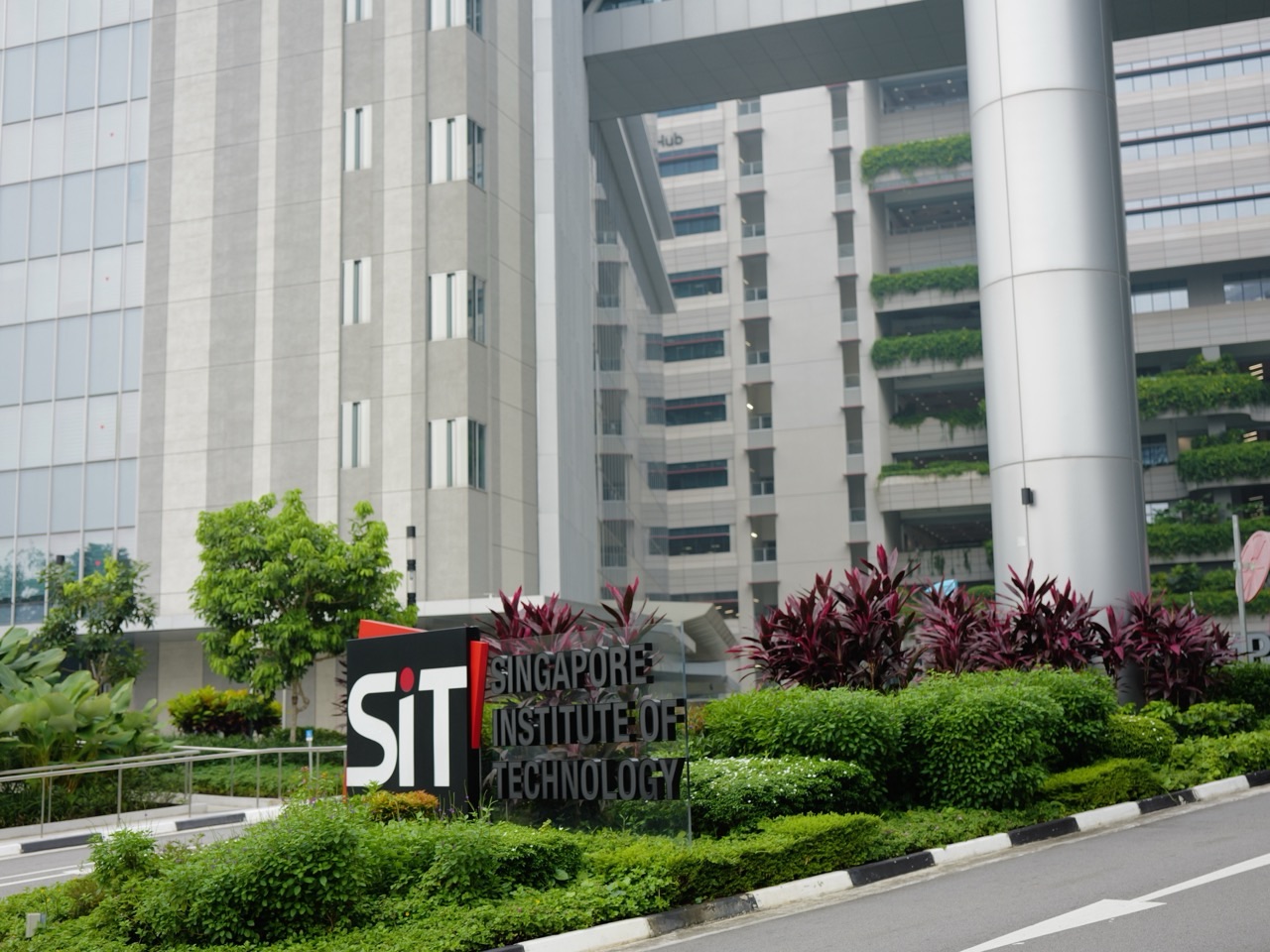
SIT Relief Systems – Design Considerations is officially scheduled for 18–19 February 2027, from 9am to 6pm on both days. The Singapore Institute of Technology’s SITLEARN module is CHE6030N03, a two-credit part of the Graduate Certificate in Process Safety Operations. Its professional purpose is to help people understand why equipment that may be exposed to excessive pressure requires correctly engineered protection, inspection and maintenance. This is one of Punggol’s published 2027 university-learning opportunities, though the specific teaching venue still requires organiser confirmation. Official SIT course.
Did you know? An industrial relief device is not simply another valve that a person can install and forget. Its safety function depends on a qualified assessment of relevant scenarios, design suitability, the system it connects to, and continued inspection and upkeep. SIT’s syllabus references API 520/521, good engineering practice, testing and discharge consequences. These are specialist responsibilities; this article explains the concepts without offering design calculations, set points or procedures for altering a live pressure system.
Booking status matters: SIT publishes the 18–19 February 2027 teaching dates, but its separate Course Runs panel currently says “There are no upcoming course runs at the moment.” Therefore the dates are confirmed as published planning information, not a claim that a place can be purchased today. The course’s full published price is S$1,744 including GST, with conditional funded examples of S$523.20 and S$203.20 for eligible learners. This Punggol Events 2027 guide was checked 29 October 2026 and identifies the correct fee, scope, pathway and unresolved admissions details.
Course facts: date, fee, eligibility and booking status
- Programme: CHE6030N03 Relief Systems – Design Considerations
- Provider: Singapore Institute of Technology (SITLEARN)
- Published 2027 dates: Thursday–Friday, 18–19 February
- Daily training hours: 9am–6pm
- Total course duration: Two scheduled training days
- Learning pathway: Graduate Certificate in Process Safety Operations, one of eight modules
- Academic credits: Two of eighteen required by the whole certificate
- Live booking status: Current SIT Course Runs panel says no upcoming runs
- Application deadline: None confirmed for the February 2027 intake
- Course venue: Not independently identified for an open run; confirm with SIT
- SIT main campus address: 1 Punggol Coast Road, Singapore 828608
- Full course fee: S$1,744 including GST
- Eligible 70% funded price published: S$523.20
- Eligible enhanced subsidy price published: S$203.20
- Audience: Engineers, operations staff, plant managers, safety advisers and risk practitioners
- Learning themes: Overpressure protection, relief-system evaluation, inspection, maintenance and relevant API standards
- Assessment: Credit-bearing assessment plus written portfolio
- Certificate: At least 75% attendance and passing the assessment
- Deadline discrepancy: Individual course page says one month for portfolio; pathway says two weeks
- Authoritative source: SIT CHE6030N03
The 50-second summary for Punggol residents
SIT has published 18–19 February 2027 for a two-day course on industrial pressure relief system design. The full fee is S$1,744, before applicable eligible funding. The course belongs to an eight-module process-safety certificate pathway. However, the current booking panel does not show an available February run, and a precise classroom or application deadline has not been verified. The responsible next step is to ask SITLEARN to confirm admissions, venue, fee and portfolio deadline. The module teaches professional safety judgement; it does not certify an individual to alter industrial relief equipment without the qualifications and approvals their job requires.
Why this topic is part of Punggol Events 2027
A local events calendar does more than list festivals and children’s classes. An officially scheduled university module can matter to adults planning workplace learning, budgets and professional qualifications. SIT’s contact campus is in Punggol Digital District, and the university provides relevant continuing education for people across Singapore. The existence of a pressure-safety course does not indicate that a particular Punggol building has a dangerous pressure system or that the event is open to public spectators. Its local relevance is the educational opportunity, not an invented neighbourhood emergency.
What is overpressure?
Industrial equipment can be designed to operate within specified pressure limits. Overpressure is a condition in which the relevant pressure exceeds an intended or allowable level. Such conditions can create serious consequences depending on the equipment, contents and circumstances. Professionals must understand credible ways a system can depart from intended operation and the safeguards protecting it. This article keeps the discussion conceptual; no pressure values, valve settings or hazardous operating instructions are supplied. A real design requires authorised engineering evidence and adherence to current applicable rules.
Why a pressure vessel is not just a container
A pressure vessel and connected system may store or process material under conditions that require specialist design, inspection and protective arrangements. Its integrity cannot be assessed simply from external appearance or a label. Loads, operating conditions, material properties and the design basis may all matter. SIT’s course treats relief systems as one part of a broader process-safety framework. A community article should not imply that residents can assess the safe capacity of industrial equipment by sight or that a short training module replaces qualified statutory checks.
The purpose of a relief system
A properly engineered relief system can be part of an installation’s protection against certain unwanted pressure conditions. The protection objective is more complex than having a device marked “safety”. Professionals need to consider the whole arrangement, the scenarios in scope and consequences when the device operates. SIT specifically highlights system requirements and what happens after a device discharges. The course is useful when it helps managers ask whether the stated protection has been evaluated and maintained, not when it encourages unsupervised adjustment of equipment.
A relief device does not remove the need for prevention
A protection system can mitigate some consequences without preventing every initiating event. An organisation still needs suitable controls, monitoring, maintenance, operating procedures and professional supervision. Treating a relief device as a complete substitute for safe design would misrepresent its role. Process safety uses layers of measures where necessary, with each measure’s purpose and limitations documented. The course’s broad learning aim is understanding the relationships rather than offering one component as a magical guarantee of safety.
Why a scenario assessment comes before equipment selection
Professionals should first understand the relevant possible conditions and what protection is required under the applicable design framework. Selecting a component based only on price or a supplier’s broad marketing claim may overlook the actual system. SIT’s syllabus explicitly refers to determining the applicability of overpressure scenarios. That does not mean every imagined scenario is equally credible. Proper evaluation depends on reliable engineering information and relevant technical standards; such assessment belongs to suitably qualified personnel with access to real operating records.
What does “required relief rate” mean?
The course description includes determining the required relief rate, a technical quantity relevant to assessing protective performance under a defined scenario. In ordinary language, it concerns whether the system’s intended protection can meet a properly identified demand. It cannot be established by guessing from an unrelated piece of equipment or multiplying arbitrary numbers from an internet article. The course teaches professional evaluation rather than permitting the public to calculate their own safety-device capacity. A real analysis must use the applicable standard, approved assumptions and competent engineering review.
Why size and suitability are different questions
A component can be physically large yet unsuitable for a specific installation. Its performance also depends on how it interacts with connected equipment and the intended conditions. This is why SIT includes both selection and capacity evaluation in its learning outcomes. An engineer should be able to document the relationship between the chosen device and the system’s design requirements. A simple photograph or catalogue diameter is not sufficient evidence. This guide intentionally avoids any formula or sizing procedure for hazardous industrial pressure protection.
What happens after a relief device operates?
A device responding to an unwanted condition can change what is happening elsewhere in the installation. The course explicitly asks learners to consider hazards if a pressure-relief device discharges. A system may need appropriate downstream arrangements, containment, monitoring and organisational response. It is not enough to assume that once a device opens, all risks disappear. The specific engineering provisions depend on the real installation. The reader’s useful insight is to examine both the protective action and the consequences of that action.
Why the discharge pathway is part of safety
A relief device is connected to a wider physical system. Professional assessment considers the safe handling of the resulting flow or release under relevant circumstances, rather than evaluating a valve in isolation. Inadequate coordination could undermine a protective measure even where the device itself meets a product standard. SIT’s discussion of system evaluation supports a systems view. This article deliberately does not describe how to route, vent or discharge hazardous industrial materials; those decisions must be made through qualified site-specific engineering processes.
Testing, inspection and repair are separate responsibilities
The official learning outcomes list testing, inspecting and repairing relief devices. These terms refer to different professional activities. An inspection may seek evidence of condition, while testing and repair can have further technical and safety requirements. Neither should be undertaken by an unqualified person simply because they attended a classroom workshop. Work may require permits, isolation arrangements, approved maintenance procedures and qualified specialists. The key learning principle is that a device must remain suitable throughout its service life, not merely at installation.
Why inspection frequency cannot be guessed
SIT includes establishing an appropriate inspection timetable among the module outcomes. The correct approach for a real installation may depend on its service, applicable standards, past performance and other professional considerations. It would be misleading to claim that all pressure-relief devices in Singapore need the same universal annual interval. A manager should seek evidence that the relevant programme has been determined, documented and followed. This is a planning and governance issue, not just a calendar reminder.
What should a manager ask about maintenance records?
An authorised manager may ask whether critical devices are identified, whether maintenance is documented and whether overdue actions are escalated. Those questions do not require them to manipulate hardware. A strong record can indicate when work occurred, who was responsible and what further review was needed, subject to site rules. Simply having a checklist does not prove a device performs as intended. Actual evidence must be evaluated by qualified personnel. Good course outcomes often involve better oversight questions, not immediate physical interventions.
The importance of a clear equipment identity
Industrial plants can have many components that look similar. Confusing records or device identities could undermine the ability to trace safety-critical work. A responsible management process links approved documentation, equipment identifiers and maintenance actions to the actual installation. The specifics belong to the plant’s authorised system. From an educational standpoint, readers can understand why information quality matters as much as a technical component. An outdated or mismatched record can make the intended protective arrangement harder to verify.
Why mechanical integrity is a continuing obligation
A facility changes over time through wear, maintenance, new components and operating changes. Something that was appropriate at commissioning may need re-evaluation when relevant conditions change. Process safety therefore includes ongoing integrity management rather than a one-time sign-off. Relief-system requirements can connect with inspection, change management and equipment records. A learner should ask when a modification triggers qualified review and what evidence demonstrates continued suitability. These are organisational responsibilities, not permission to replace devices independently.
API 520 and 521: why the references matter
SIT explicitly introduces the format, structure and use of API 520 and API 521. These are industry technical standards associated with pressure-relieving systems. Their proper use depends on the current edition, scope and relevant regulatory or contractual requirements. A course may teach how to navigate them, but a short blog article should not reproduce design procedures or imply that mentioning their names confers compliance. For real installations, the applicable standards must be consulted in full by competent professionals.
Standards do not automatically have the same legal status everywhere
SIT also references OSHA and Recognized and Generally Accepted Good Engineering Practices, often abbreviated RAGAGEP. The OSHA context is associated with United States regulation, while Singapore has its own legal and professional framework. A learner should understand what a standard represents, which edition applies, and whether its requirements are directly binding, contractually adopted or used as technical guidance in a particular setting. Avoid describing every international standard as an identical Singapore statutory obligation.
What is RAGAGEP in ordinary language?
RAGAGEP is a concept used in process-safety discussions to describe recognised and generally accepted sound engineering practice. It is not a single universal book containing every engineering answer. A professional must identify the relevant technical source and justify its appropriateness to the actual equipment and operating conditions. A manager should ask what evidence supports a design or maintenance decision rather than accept “industry practice” as an explanation without documentation. SIT’s course introduces the term so learners can interpret such professional claims responsibly.
Why the latest standard edition matters
A technical document can be amended as engineering knowledge and expectations evolve. A design reference prepared for an earlier project may need careful review before reuse, particularly if the equipment, conditions or applicable code has changed. A responsible team records the editions and assumptions under which its assessment was made. This does not mean every standard update applies retroactively to every installation. The applicable rules and transition arrangements must be assessed by qualified people. The central habit is disciplined version control rather than uncritical copying.
What “inherently safer” means in the wider pathway
Other Process Safety Operations modules discuss inherently safer design, an approach that considers whether a hazard can be reduced through fundamental system choices rather than solely through added protection. Relief systems are important, but a professional should still examine whether the wider design and operations reduce the circumstances in which an emergency safeguard might be demanded. The specific decisions are complex and must be authorised. The course series helps learners connect device-level protection with broader risk management, not treat them as competing ideas.
Why independent layers should be assessed, not just counted
Multiple controls can provide defence, but only when their intended functions and dependencies are understood. Two protective devices that rely on a shared failure-prone element may not offer the independence a simple diagram suggests. SIT’s separate Layer of Protection Analysis module on 8–9 April 2027 examines those ideas more systematically. CHE6030N03 focuses on relief systems and their professional design requirements. A good reader should see the connection without concluding that every relief device qualifies automatically as an independent protection layer.
A hypothetical oversight scenario
Imagine a fictional industrial organisation that has replaced some equipment during a scheduled turnaround. A manager asks the qualified engineering team whether the existing relief-system basis has been reviewed for the changed configuration. The team follows its approved change-management process and documents the outcome. This example illustrates responsible oversight, not an instruction to change any set point or device. The useful question is whether a modification might affect assumptions and whether the correct people have evaluated it before operation resumes.
The cost of treating a protective device as a commodity
A procurement team might compare quotations only on unit price while overlooking certification evidence, intended conditions or maintenance support. A safer purchasing process includes the technical specification and accountability required by the organisation. The lowest price alone cannot establish suitability. Engineers and purchasing staff need to communicate so commercial decisions do not undermine technical requirements. This is a general governance example; the article does not endorse any supplier or identify a specific device for an industrial site.
When a repair should be escalated
A technician or operator may discover a discrepancy between equipment records and observed conditions. The appropriate response is to follow the organisation’s established reporting and isolation arrangements, not improvise a repair. The exact safety procedure depends on the plant and must be managed by authorised staff. SIT’s emphasis on inspection and repair helps learners understand why findings need ownership and appropriate closure. Good safety culture makes it possible to raise a concern before an unresolved item becomes a serious problem.
Who should attend the February workshop?
SIT names managers, engineers, operators, safety advisers and risk practitioners. Those roles share responsibility for different parts of safe industrial operation. A design engineer may focus on technical assumptions; an operator may know how the system behaves in practice; a safety adviser may review risk controls. The workshop can help them develop a common vocabulary, but does not remove differences in professional authority. A resident interested only in basic household safety will not necessarily need a specialist pressure-relief module.
What the named teaching team tells us
The university identifies Associate Professor Lim Kok Hwa and Thia Cheong Meng, a principal risk consultant with substantial process-industry experience, in its teaching team. Those profiles support the module’s professional orientation. They do not guarantee a particular instructor teaches every minute or that the course provides a personal consultancy assessment of an employer’s equipment. SIT can change teaching arrangements, so accepted participants should use current joining information for any question requiring individual guidance.
The February 18 and 19 dates are firm as published, not as bookings
SIT’s detailed schedule table lists 18–19 February 2027, 9am–6pm. It also shows an earlier August 2026 run. The latter is historical and should not be mistaken for this year’s booking. The Course Runs section currently has no upcoming session, so a calendar listing does not establish successful admission. A person requiring employer leave should seek a live confirmation rather than reserve a place informally. No current February application closing date is shown on the reviewed record.
Where will it actually be taught?
The university’s public contact address is 1 Punggol Coast Road, Singapore 828608. That location explains the interest of Punggol residents in SIT programmes, but the individual course’s currently empty Course Runs section does not specify a teaching room or confirm that the workshop meets at the main campus. Training could be arranged according to SIT’s actual course logistics. Ask the provider where participants report and whether any additional technical site visit is included. Do not invent a laboratory or venue from the institutional footer.
The S$1,744 full fee and conditional subsidies
The official fee structure says S$1,744 including GST. The displayed eligible 70% categories show S$523.20, while the stated enhanced-funding category shows S$203.20 payable. Other applicants may face the full amount. These are published categories, not evidence that the reader personally qualifies. Funding decisions depend on the current scheme conditions and actual application. Living in Punggol does not produce a neighbourhood discount. Obtain the real quotation before making financial commitments.
A simple two-employee training budget
Suppose an employer has two people who are each actually approved for the published S$523.20 fee category. The basic combined tuition would be S$1,046.40, before work cover, travel or assignment time. That is conditional arithmetic, not an SIT group discount. The employer should also consider what the learners will do afterward, such as reviewing documentation ownership within authorised procedures. A funded course can be worthwhile, but a small invoice alone does not prove useful workplace learning.
UTAP and professional recognition require individual checks
SIT says the course is Union Training Assistance Programme (UTAP) supported. It asks relevant registrants to provide WSH Officer or Professional Engineer information when seeking applicable SDUs or PDUs. Such professional units and assistance are subject to their own conditions and cannot be universally promised. An applicant should verify each scheme with the appropriate body and obtain a final payable amount. Course participation also does not create professional registration or authorise work that requires separate qualifications.
The assessment continues after the two days
SIT requires at least 75% attendance, passing a credit-bearing assessment, and submitting a written portfolio for a Certificate of Attainment. A person meeting attendance but not passing may receive a Certificate of Participation. A two-day classroom programme can therefore require subsequent work, which should be included in a realistic calendar. A portfolio may include professional reasoning, but participants should never reveal confidential plant information without proper authorisation. The university controls the actual assessment brief.
Two official sources disagree on the portfolio deadline
The CHE6030N03 individual module page says the written portfolio is due within one month of the module. The Process Safety Operations pathway says within two weeks. Both are current university publications. This guide does not declare one period correct on the basis of convenience. Ask SIT for the binding deadline for the February 2027 cohort, ideally in the formal joining or assessment instructions. The difference is important for employed learners scheduling post-class work.
Two credits versus the complete graduate certificate
CHE6030N03 carries two credits. SIT’s broader Process Safety Operations series totals eighteen credits across eight modules, and requires all eight Certificates of Attainment for the full graduate certificate. A learner can study individual modules under the provider’s rules without completing the entire pathway. Neither the two-day workshop nor its single Certificate of Attainment automatically equals the graduate credential. Decide whether your goal is a particular safety competency or a sustained multi-month qualification.
Comparison with January Process Safety Concepts
The previously published Process Safety Concepts guide covers 8 January 2027 and introduces industrial hazards, management systems and safety barriers. Relief Systems, in February, narrows the focus to one important protective system and the professional standards used to evaluate it. The programmes can complement one another, but a place in January does not automatically register someone for February. Each has separate fees, teaching requirements and possible booking limitations.
Comparison with Fire and Explosion Prevention
SIT also schedules Fire and Explosion Prevention on 28–29 January 2027. That course introduces hazardous-area assessment and equipment-protection concepts. CHE6030N03 deals specifically with the professional design and maintenance of relief systems. Neither course is an all-purpose industrial safety licence. Learners should choose topics that correspond to actual responsibilities and involve the right specialists when applying what they learn.
The role of Layer of Protection Analysis
SIT publishes CHE6011N03 Layer of Protection Analysis for 8–9 April 2027, with the purpose of assessing whether safeguards are appropriate under defined hazard scenarios. A relief system may be considered during broader risk evaluations, but whether a specific device satisfies the criteria of an independent protection layer requires evidence and professional assessment. Do not assume every protective component receives the same credit. The two modules address related questions through different depth and methods.
What a student should ask before committing
An applicant can begin by checking whether the course matches a real responsibility: approving technical documentation, managing equipment integrity, understanding an existing design basis or reviewing professional reports. Ask which background knowledge is expected and whether the course includes a suitable practical component. The public listing offers an overview, not a personalised skills assessment. A learner should be comfortable with the technical nature of the subject and ready to complete its credit-bearing written work, not treat it as a general campus tour.
A supervisor’s useful post-course outcome
After completing the module, a supervisor might be better equipped to ask whether relief systems have current documentation, whether qualified inspections are planned and what happens when a defect is found. Those are useful management questions. But a short course does not empower a new learner to re-engineer a pressure system or approve hazardous work independently. Real decisions remain with authorised technical staff and applicable regulators. Good professional education improves how responsibly people use expertise, not the number of unchecked actions they perform.
Safety and the public: no unverified local incident
A Punggol events article about relief systems should not imply that residential water pipes, community facilities or SIT buildings are unsafe. The module concerns process-industry systems and general professional skills. No evidence reviewed for this event identifies a new local pressure-safety incident or specific defective installation. Residents can appreciate why engineers study these topics without treating the syllabus as an emergency announcement. For actual public safety information, refer to the relevant authorities rather than speculate from a course title.
Frequently asked questions
When? 18–19 February 2027, 9am–6pm. Bookable now? The current SIT Course Runs panel says no upcoming runs. Full fee? S$1,744, with conditional S$523.20 or S$203.20 funding categories. Venue? Confirm with SIT; the university’s Punggol address is not a confirmed classroom. What is taught? Relief-system design considerations, overpressure protection, inspection and API 520/521 context. Assessment? Attendance, credit-bearing work and written portfolio. Portfolio deadline? One month on the module page versus two weeks on the pathway page; ask SIT. Qualification? Two credits toward an eighteen-credit eight-module certificate.
The applicant’s verification checklist
Open SITLEARN CHE6030N03 and the Graduate Certificate pathway. Confirm whether 18–19 February is accepting registrations, ask for the actual venue and application cut-off, and obtain an individual funding quote. Request the correct written portfolio submission deadline and clarify any expected technical background. Verify professional-unit or UTAP rules separately when relevant. If the course is unavailable, ask about genuine later dates rather than assuming that the published schedule includes a vacant seat. Do not apply classroom concepts to live hazardous equipment without the necessary authorisations.
Primary sources and connected local reading
SIT individual module: CHE6030N03 Relief Systems – Design Considerations, establishing the 18–19 February schedule, fee table, learning outcomes, assessment and no-upcoming-run notice. SIT certificate architecture: Process Safety Operations, establishing eight modules, eighteen credits and the two-week portfolio wording. Related Punggol guides: Punggol Events, Process Safety Concepts, and Fire and Explosion Prevention. Verified 29 October 2026; SIT controls current admissions and any later amendments.
Final thought: a protective system must be supported by evidence
SIT’s 18–19 February 2027 Relief Systems course is a concrete published professional-learning opportunity. Its deeper lesson is that a device cannot be declared safe merely because it exists, was originally purchased from a recognised supplier or appears on a drawing. Professionals need a defensible design basis, suitable standards, evidence of maintenance and clear organisational responsibility. The date and fee are published, but admission and the portfolio deadline need confirmation. A worthwhile outcome is better oversight and more accurate engineering questions, not an unsupported claim of newly acquired authority over hazardous installations.


