
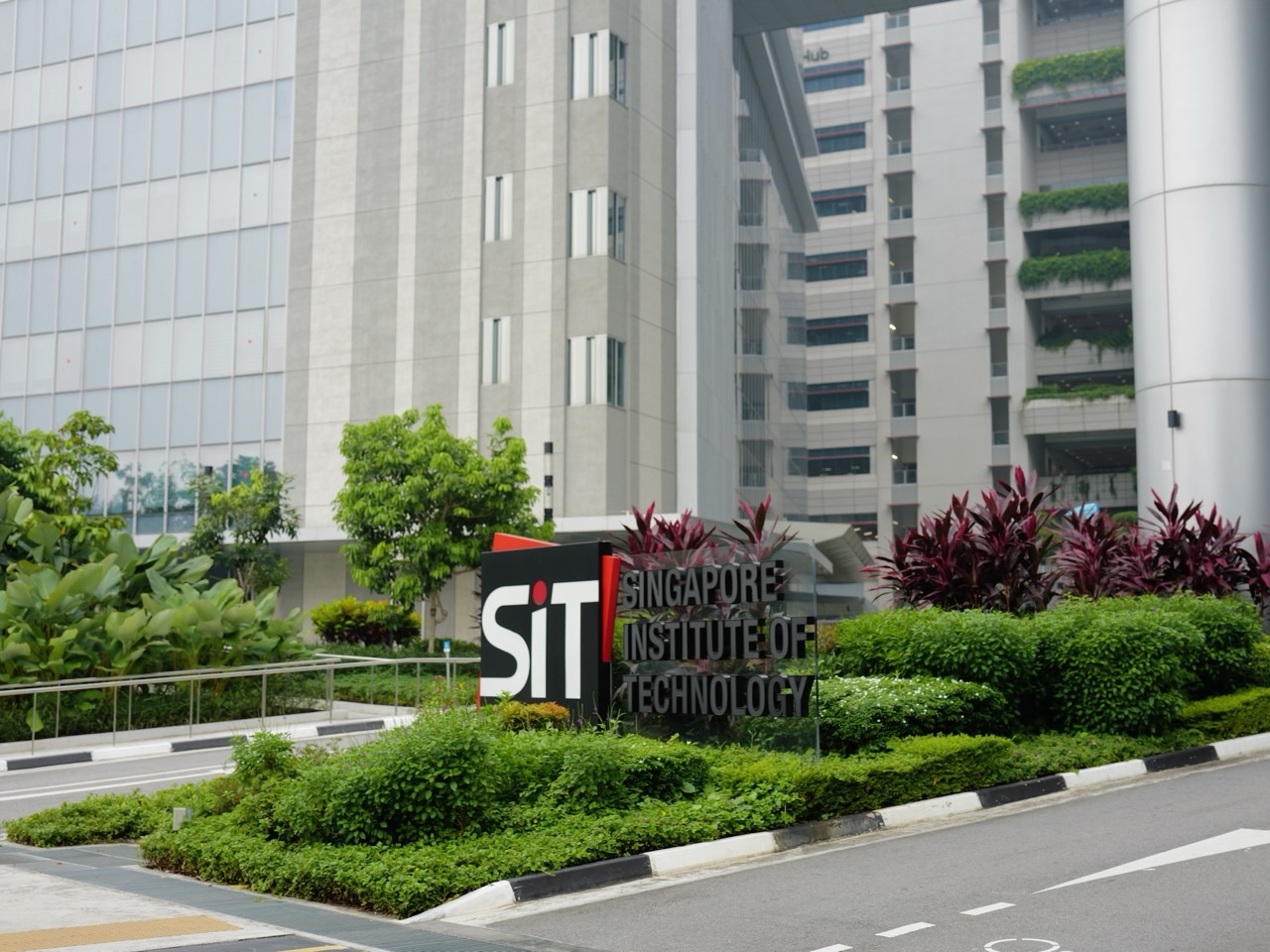
Punggol Events 2027 includes a professional education pathway that begins with a fundamental safety question: what systems help prevent serious incidents in industrial operations? The Singapore Institute of Technology’s SITLEARN programme publishes CHE6030N01 Process Safety Concepts for Friday, 8 January 2027, 9am–6pm. It is the first of eight modules within the Graduate Certificate in Process Safety Operations pathway. Official course details and the university’s 2027 module calendar provide the dates.
Two booking cautions matter. The individual course’s Course Runs panel currently states “There are no upcoming course runs at the moment”, despite the January 8 date in its syllabus and the wider pathway. Therefore the course is officially scheduled, but this is not confirmation of an open bookable place or a known application deadline. SIT’s university contact is 1 Punggol Coast Road, yet the individual module record does not independently confirm the specific teaching venue. Applicants should verify both before arranging work leave or travelling.
The full course fee is S$872 including GST, with conditional funded figures of S$261.60 and S$101.60 for eligible categories. The single-day module covers process safety management, industrial hazards, risk assessment, inherently safer design and the layers of safeguards used to reduce harm. This guide, checked 29 October 2026, explains those ideas for working Punggol residents while carefully separating learning from the authority to operate or modify hazardous equipment.
Official January 2027 course facts and booking status
- Course: CHE6030N01 Process Safety Concepts
- Provider: Singapore Institute of Technology, SITLEARN
- Official date: Friday 8 January 2027
- Advertised hours: 9am–6pm
- Duration: One scheduled training day
- Series position: First of eight in Process Safety Operations
- Credits: Two in the 18-credit graduate certificate pathway
- Current booking panel: No upcoming course runs at the moment
- Verified application deadline: No specific January cut-off confirmed
- Training room/venue: To be confirmed with SIT; university’s contact campus is 1 Punggol Coast Road
- Full fee: S$872 including GST
- Eligible 70%-funded published charge: S$261.60
- Eligible enhanced-funded published charge: S$101.60
- Audience: Engineers, plant operators, managers, safety advisers and risk practitioners
- Subjects: Process safety systems, hazards, prevention/mitigation, safeguarding, incidents
- Assessment: Credit-bearing, with separate written portfolio requirement
- Attendance: At least 75% plus passing assessment for Certificate of Attainment
- Portfolio due: Individual page says within one month; pathway says within two weeks; confirm
- Primary reference: SIT CHE6030N01
What a Punggol resident needs to know first
SIT has published 8 January 2027 as the training date for its one-day Process Safety Concepts module. The subject is relevant to people who work in process industries, technical maintenance, safety and industrial management, including residents who commute to worksites elsewhere in Singapore. The full listed fee is S$872, with conditional subsidies. But the detailed page currently shows no upcoming bookable course run, and the particular teaching room is unconfirmed. The immediate action is to ask SIT whether the scheduled intake will open and obtain the actual venue and deadline, not to assume a confirmed seat.
Why industrial process safety is different from ordinary safety
Workplace safety often includes preventing slips, trips and routine injuries. Process safety focuses especially on preventing serious incidents associated with hazardous industrial systems, including loss of containment, major fires and other high-consequence events. A workplace may have an excellent record for minor injuries yet still need strong protection against low-frequency catastrophic failures. These are not competing objectives. A well-run organisation attends to everyday occupational safety and the integrity of its process equipment, controls and operating systems.
What is meant by loss of containment?
In industrial language, containment refers to keeping materials within the systems intended to hold or transport them. A loss-of-containment event can create risks to people, property or the environment depending on the material and circumstances. The SIT course discusses this concept in the context of prevention and protection. It is not a course for ordinary residents to experiment with pressure vessels or chemicals. Professionals investigate potential failures through appropriate design, operations, maintenance and formal oversight rather than informal trial and error.
Why the module leads an eight-course sequence
SIT’s Process Safety Operations pathway lists eight modules adding to 18 academic credits. Process Safety Concepts, with two credits, appears first on 8 January 2027. Later modules examine fire and explosion prevention, engineering for safe operations, relief systems, hazard analysis, protection layers, human factors and quantitative risk. A broad foundational day can provide a common language before learners consider those specialist subjects. The sequence is published by the university, not an instruction that every attendee must register for all eight immediately.
What is a process safety management system?
A management system connects safety responsibilities, information, procedures, training, reviews and corrective action so the organisation can work in a consistent way. A policy printed on a wall cannot prevent an incident by itself. The important test is whether the process is understood, followed, checked and improved. SIT explicitly teaches why process safety management systems are needed. A good learner should ask who owns each risk, what evidence demonstrates a safeguard works and what happens when operating circumstances change.
The difference between a hazard and a risk
A hazard is something with the potential to cause harm. Risk involves the likelihood and consequences of a harmful outcome within a defined context. A dangerous material may be present under tightly controlled conditions, or its controls may be inadequate. Identifying the hazard alone does not settle the whole risk assessment. Similarly, labelling a site “low risk” without explaining assumptions does not make it safe. Professional analysis requires evidence and current context, which a one-day introductory module can help participants recognise.
What the course means by industrial hazards
The published syllabus covers hazard causes and impacts involving chemicals, plant systems and field operations. Such risks may involve equipment, human actions, environmental conditions or failures across several layers of defence. The course uses industrial accident case studies to explain why those interactions matter. This article discusses the concepts rather than procedures for handling dangerous substances or changing live equipment. Actual industrial tasks require competent staff, appropriate permits and compliance with site-specific operating instructions.
Why industrial incidents are studied
Historical incidents provide lessons about weaknesses that may not be obvious during normal operations. They can reveal how equipment, organisational decisions, communication and safeguards failed in combination. But a case study is not a template for producing the same conditions. A professional should examine what evidence investigators used, which controls were absent and which recommendations are transferable to a different site. SIT advertises real industrial incidents as teaching material; the exact cases chosen remain the instructor’s responsibility.
Prevention and mitigation are different
A preventive safeguard seeks to stop an unwanted event occurring; a mitigative safeguard aims to reduce harm if the event occurs. Both can be important because prevention may not be perfect. The course introduces these layers at a conceptual level. A manager should not assume that installing one sensor, alarm or protective device eliminates every possible hazard. Each safeguard needs a defined purpose, appropriate reliability and a clear relationship to the actual risk being controlled.
What does inherently safer design mean?
Inherently safer design asks whether a hazard can be reduced through the basic design or operation rather than relying solely on additional protective measures. The principle is relevant early in a plant’s life but can also inform carefully controlled improvements. Applying it to a real industrial system requires engineering analysis, approvals and awareness of unintended consequences. The course introduces this style of thinking, not a set of unsupervised instructions for altering chemicals, process conditions or equipment. A safer conceptual choice must still be validated in context.
Risk controls across a plant lifecycle
SIT identifies process safety requirements from conceptual design through operations, maintenance and modifications. Risk management is therefore not an activity completed once before a plant opens. New equipment, changed materials, ageing components or revised procedures can affect the original assumptions. A management system should make it clear who reviews changes and what evidence is required. Understanding this lifecycle perspective helps learners avoid the misconception that obtaining an initial approval guarantees safe operation forever.
What is a management-of-change question?
Imagine a fictional facility planning to replace an important component. Before accepting it, responsible professionals should determine whether the replacement changes system behaviour, maintenance arrangements or applicable safety assumptions. This is an example of controlled change assessment, not a recommendation to modify any real plant. The important habit is to ask what has changed and whether previous approvals and controls still apply. The precise process belongs to the organisation’s authorised technical and safety management system.
Safety-critical equipment requires ongoing attention
The course discusses equipment and systems that play important roles in protecting operations. Safety-critical items may need appropriate inspection, testing, maintenance and clear ownership. The existence of a device does not establish its availability or fitness for a particular task. A manager should know how reliability is assessed and how unresolved deficiencies are handled. This is why process safety includes recordkeeping and accountability, not just engineering calculations at the time of installation.
Why alarms and trips are not interchangeable
The syllabus introduces process alarms and automatic protective functions. An alarm may inform an operator of a condition that needs attention, while an independently designed protective function may have a different role. Their safety performance and assumptions are not identical. Professionals should understand what the system is intended to do and how it is verified. This article intentionally does not provide operational set points or engineering bypass procedures. Those belong only to authorised, site-specific work.
Emergency isolation and protective systems
SIT also names emergency isolation, pressure safety, gas detection and fire-protection concepts. These are examples of safeguards that may help reduce serious harm under specific conditions. It would be misleading to imply every facility needs exactly the same equipment or that a short course allows participants to specify, repair or certify it independently. Professional decisions depend on the particular hazards, current standards and trained personnel. Learning the vocabulary helps managers ask informed questions when evaluating a safety case.
Why no single safeguard is enough
A layered approach recognises that one control may fail or become unavailable. However, layers should not simply be counted without checking how independent and effective they actually are. Two systems that depend on the same vulnerable power source may not provide the independence a superficial diagram implies. SIT’s wider pathway includes a specialist Layer of Protection Analysis module in April. Process Safety Concepts introduces the underlying idea so learners understand why multiple barriers need evidence rather than decorative checklist ticks.
What standards appear on the syllabus?
SIT names OSHA 1910.119, SS 506 Part 3, IEC 61508 and IEC 61511 among the standards and references introduced. These come from different regulatory or standardisation contexts, and they are not universally interchangeable rules applicable to every Singapore household or business. Professionals must verify the edition, legal status and relevance to a particular facility. An overview of a standard is not the same as certification under that standard. The course helps learners orient themselves before deeper technical study.
Why standards need version control
Technical documents and legal frameworks can be amended over time. A checklist based on an outdated edition might omit a current expectation or apply a provision incorrectly. A responsible team records which edition, scope and operating context governs its analysis. SIT’s January 2027 schedule is a useful moment to review those sources, but it cannot freeze future rules. For real work, follow relevant regulators, professional bodies and authorised company processes rather than relying solely on an old classroom slide.
Singapore’s major hazard installation context
Singapore has a regulated environment for industries with significant hazardous materials. Specific obligations depend on the facility and applicable laws, including the Workplace Safety and Health framework and relevant major-hazard rules. The course is relevant to professionals facing those responsibilities. It does not mean every business in Punggol or every university building is a major hazard installation. A local address cannot establish regulatory status without evidence.
Who should consider taking the module?
The official audience includes engineers, operators, managers, safety advisers and risk practitioners. Those roles can bring different strengths to a classroom: an operator may understand practical work patterns; an engineer may focus on design assumptions; a manager may be responsible for resource decisions. A useful programme helps those groups share a precise language of hazards and safeguards. Someone seeking ordinary household fire safety information may find public SCDF guidance more appropriate than a specialist credit-bearing course.
Does one day make someone a safety professional?
No. The course introduces essential ideas and includes an assessment, but competency for a particular hazardous operation requires relevant education, training, experience and authorisation. Completing CHE6030N01 does not automatically allow a person to inspect or modify industrial safety systems, sign engineering plans or approve statutory compliance. Such activities have separate professional and regulatory requirements. The value of one day is to build understanding and identify where further specialised learning is necessary.
The scheduled Friday and the work-leave question
SIT’s official schedule specifies Friday 8 January 2027, 9am–6pm. A working participant may need employer approval, a replacement colleague for critical duties and travel time. Some processes cannot be left unattended while the responsible employee attends a course. Because the individual booking panel has no confirmed upcoming run and the location is not independently listed for this module, the applicant should not make irreversible arrangements yet. First establish the active intake and joining instructions directly with SITLEARN.
Why Punggol Campus needs separate confirmation
SIT’s institutional contact address is 1 Punggol Coast Road, Singapore 828608. However, the individual CHE6030N01 page does not clearly identify a 2027 teaching venue or room in its current Course Runs section. It would be wrong to promise that every lesson is physically at the Punggol campus simply because SIT is based there. Ask whether teaching is at the main campus, another authorised facility or a different delivery arrangement. This distinction matters to a resident planning the journey.
The complete full-fee table
SIT lists S$872 including GST. Published eligible categories show S$261.60 for certain 70%-funded participants and S$101.60 in the specified enhanced-funding category. Learners outside applicable funding groups may pay the full amount. These figures describe potential entitlement rather than a personal subsidy already granted. Citizenship, residency, age and current scheme conditions may matter. A Punggol home address does not create a special rate. Ask SIT to confirm the actual payable invoice.
A hypothetical two-worker training budget
If two eligible employees were each approved at S$261.60, their simple tuition total would be S$523.20 before travel and staff-cover costs. That is a conditional arithmetic example, not a group discount or an actual approved invoice. An employer should also define a learning objective, such as helping staff review how hazards and safeguards are documented. Training value depends on improved capability and accountable practice, not simply the percentage of government funding attached to the course.
Union Training Assistance Programme and professional units
The university describes this as a UTAP-supported course. It also asks applicants to identify their registered WSH Officer status for applicable SDUs or Professional Engineer registration for PDUs. These points are not universal entitlements for all learners. Membership, recognition and funding rules must be checked with the relevant organisations. Do not promise a specific net out-of-pocket fee based on multiple supports without obtaining individual eligibility decisions. A professional unit also does not replace any statutory licence requirement.
The attendance and assessment conditions
The individual page says a Certificate of Attainment requires at least 75% attendance, passing a credit-bearing assessment and submitting a written portfolio within the specified period. A Certificate of Participation is described for people meeting attendance but not passing. A one-day class may still involve post-class work, so participants should ask exactly what must be submitted. Paying and attending are not sufficient to guarantee the certificate. The detailed assessment brief comes from SIT.
One-month versus two-week portfolio discrepancy
There is an important documentation inconsistency. The individual CHE6030N01 page says the written portfolio should be submitted within one month of the module. The overall Process Safety Operations pathway says within two weeks. Because these are both official SIT sources, this guide does not choose the more generous date. An applicant should request a written confirmation of the correct deadline for the specific January 2027 cohort. The discrepancy affects anyone arranging work and assessment time.
What the full graduate certificate requires
The Process Safety Operations pathway states that all eight Certificates of Attainment—totalling 18 credits—are required for the Graduate Certificate. Earning the two credits from Process Safety Concepts is a step, not the whole qualification. The modules can also be taken individually under SIT’s rules. A working adult should decide whether they want one foundational skill or a multimonth learning commitment. Funding and attendance conditions may differ between courses, so each module should be assessed independently.
How this differs from Fire and Explosion Prevention
The next published module is CHE6030N02 Fire and Explosion Prevention, scheduled for 28–29 January 2027. It focuses more on industrial ignition hazards, area classification and protection principles. Process Safety Concepts is broader: management systems, risk and safeguarding across a plant’s lifecycle. A learner may benefit from the foundation before examining a particular hazard class, but a confirmed place in one does not automatically enrol them in the other.
How this differs from Human Factors
The Human Factor in Process Safety module is scheduled for 22–23 April 2027. It examines how procedures, interfaces, attention and team design affect human performance. The January foundation introduces risk and safeguards across the overall system. Neither module is merely a generic safety poster or motivational talk. Their focus differs, and learners should choose according to the knowledge needed in their actual work.
A useful question to take back to the workplace
After introductory training, a participant could ask whether their team knows which safeguards are relied on for its most consequential scenarios, who owns those safeguards and what evidence demonstrates they remain effective. The correct answer may require consultation with site engineers and authorised safety staff. A new learner should not independently change settings or inspect restricted equipment simply to apply what was taught. Better questions can be a legitimate first outcome of professional development.
A fictional operational scenario
Imagine a facility that has introduced new equipment but continues using an old training document. A responsible staff member notices the mismatch and raises it through the approved change-management process. The team can then examine whether the document and operating safeguards require revision. This is a hypothetical example of hazard awareness and organisational controls, not a diagnosis of any Punggol employer. The lesson is that safety responsibilities need clear routes for identifying, reviewing and correcting differences between plans and reality.
Frequently asked questions
When? 8 January 2027, 9am–6pm. Bookable now? The individual SIT page currently says no upcoming runs. Fee? S$872, with conditional S$261.60 or S$101.60 funded figures. Where? Confirm the actual training venue; SIT’s institutional contact is Punggol Coast Road. Who is the course for? Process-industry managers, engineers, operators and safety advisers. Credits? Two toward an eight-module, eighteen-credit pathway. Assessment? Credit-bearing plus written portfolio. Portfolio deadline? Individual and pathway pages disagree: one month versus two weeks. Obtain clarification from SIT.
What to ask before applying
Open the current CHE6030N01 listing and the whole 2027 Process Safety Operations calendar. Ask whether 8 January is actually accepting applications, what deadline applies, where the one-day class meets and what your final funded fee would be. Request the written portfolio’s actual due date and assessment rules. Consider whether the course matches your responsibilities and qualifications. Make workplace arrangements only after a confirmed offer and current joining instructions.
Official sources and related Punggol knowledge
SIT module: CHE6030N01 Process Safety Concepts. University pathway: Graduate Certificate in Process Safety Operations, confirming all eight 2027 dates and credit structure. Regulatory orientation: MOM workplace safety and health. Punggol context: Punggol Events and SIT Fire Engineering Science 2027. Checked 29 October 2026. No live seat, exact classroom, invented application deadline or individual subsidy is asserted.
Final thought: safety begins with shared understanding
The January 8 SIT course is an officially published start to a substantial Process Safety Operations learning pathway. Its practical contribution is teaching professionals to recognise why serious hazards need engineering, organisational controls and evidence of safeguards, not just good intentions. The booking panel does not currently confirm an available run, and the portfolio deadline differs between two SIT pages. Resolve both issues with the university, then consider whether the module matches your work. Better safety decisions begin with precise information and accountable people.


