
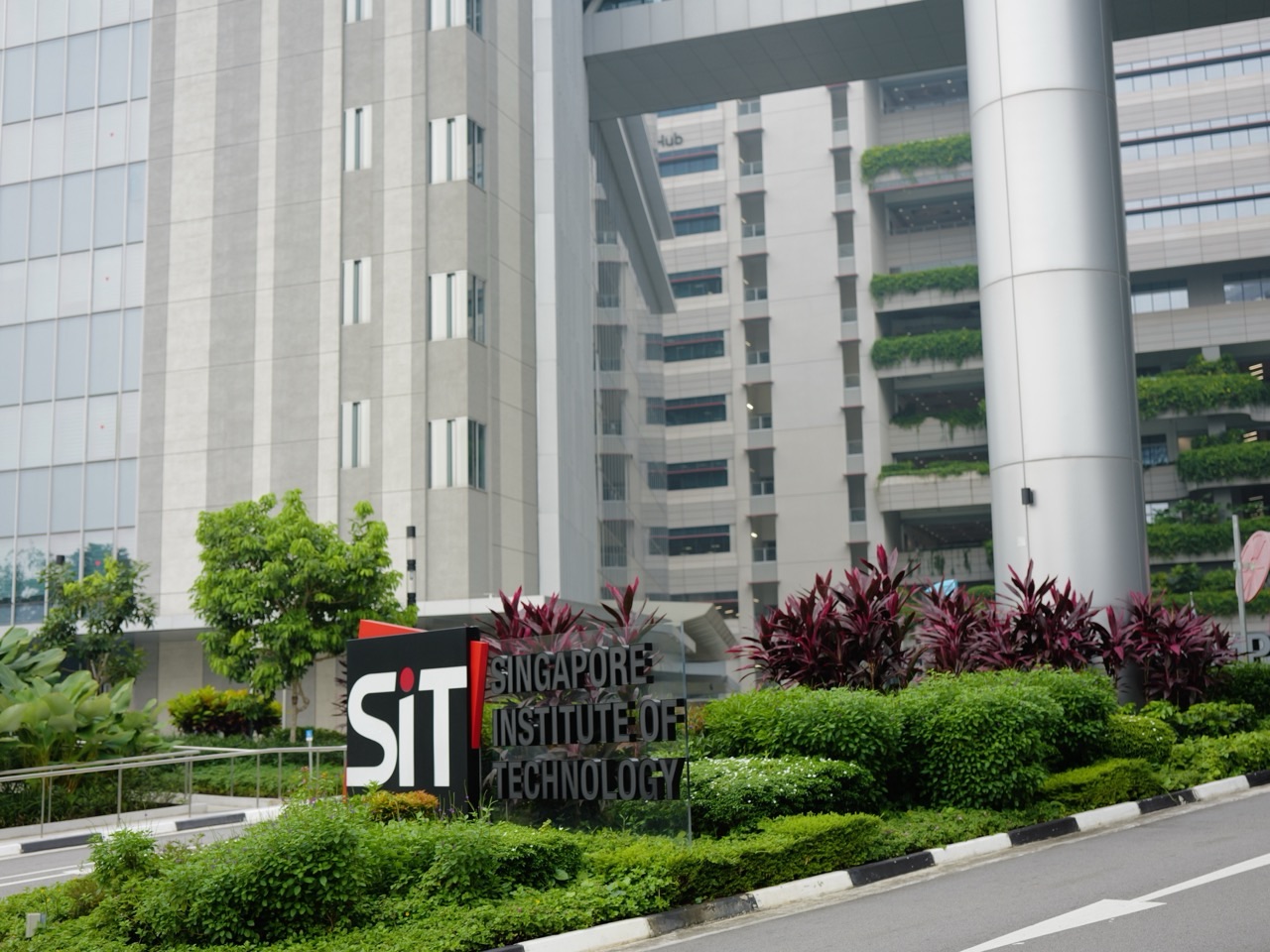
Punggol Events 2027 includes a scheduled professional course on one of the most consequential industrial safety questions: how do engineers recognise conditions that could produce serious fires or explosions, and how are appropriate protective systems evaluated? Singapore Institute of Technology’s CHE6030N02 Fire and Explosion Prevention is listed for Thursday–Friday, 28–29 January 2027, 9am–6pm. It is the second of eight modules in SIT’s Graduate Certificate in Process Safety Operations pathway. See the official course page.
The enrolment status needs caution. Both the individual syllabus and SIT’s 2027 process-safety module calendar publish the January dates, but the individual Course Runs panel currently says “There are no upcoming course runs at the moment.” The precise classroom and venue are not confirmed on that panel. SIT’s institutional campus contact is at 1 Punggol Coast Road; do not assume the January module meets there until joining instructions specify it. No January registration deadline is verified by the reviewed page.
The full published fee is S$1,744 including GST, with conditional funded amounts of S$523.20 or S$203.20 under SIT’s stated eligibility categories. The syllabus introduces fire/explosion hazards, hazardous-area classification, equipment protection concepts, detection and important industrial case studies. This guide, checked 29 October 2026, explains the educational and career context without offering hazardous operational procedures or suggesting that course completion grants a licence to alter live electrical or industrial systems.
January 2027 official course details and safety scope
- Course: CHE6030N02 Fire and Explosion Prevention
- University provider: Singapore Institute of Technology, SITLEARN
- Published date: 28–29 January 2027
- Training window: 9am–6pm both days
- Pathway: Second of eight Process Safety Operations modules
- Credits: Two of the eighteen-credit graduate certificate pathway
- Current individual Course Runs: No upcoming course runs
- Verified registration closing date: Not given on the reviewed booking panel
- Training venue: Confirm directly; SIT’s main contact campus is 1 Punggol Coast Road
- Full course fee: S$1,744 including GST
- Published eligible 70% fee: S$523.20
- Published eligible enhanced-funding fee: S$203.20
- Audience: Managers, engineers, operators, safety advisers and risk practitioners
- Topics: Hazardous-area classification, fire/gas detection, equipment protection concepts and industrial incidents
- Assessment: Credit-bearing assessment plus written portfolio
- Attainment: At least 75% attendance and passing assessment
- Portfolio deadline caveat: Individual page one month; overall pathway two weeks
- Official module: SITLEARN Fire and Explosion Prevention
The 50-second answer for working Punggol residents
SIT has scheduled Fire and Explosion Prevention for 28–29 January 2027, with two full professional training days and an advertised S$1,744 full fee. Conditional subsidies may lower the payable amount for eligible learners. The course teaches how industrial fires and explosions are understood through risk assessment, equipment classifications and safety protections. However, the Course Runs area does not currently confirm an open intake, deadline or classroom. An applicant must ask SIT for those details before claiming admission or arranging leave. The module is not a public fire demonstration or a practical guide to creating hazardous conditions.
Why industrial fire prevention matters
Industrial processes may involve materials and equipment that require specialist safeguards. A severe incident can affect workers, surrounding areas, the environment and continuity of essential operations. The most effective response is not to assume that accidents happen only when someone makes an obvious mistake; failures can involve design assumptions, equipment condition, organisational controls and unexpected interactions. This course addresses professional understanding of such hazards and why protection needs more than a basic checklist. Actual site controls must be designed and operated by competent, authorised personnel.
This is not a household fire-safety class
Public fire prevention advice about smoke alarms, escape plans and safe cooking is important, but it is different from a process-industry workshop discussing hazardous-area classification and industrial protection systems. The FEP and FDM modules at SIT also address building or fire-engineering topics from distinct perspectives. CHE6030N02 belongs to Process Safety Operations, with a focus on industrial plants and associated risks. Residents looking for basic home guidance can consult SCDF public fire-safety resources instead of assuming a specialist course is necessary.
The January 28–29 schedule
The official Schedule table lists two consecutive dates, 28 and 29 January 2027, from 9am to 6pm. That is two training-day windows and a significant commitment for employed participants. Some time may be allocated to breaks or class discussion, but the specific minute-by-minute timetable is not published. An organisation sending an engineer should arrange work cover and clarify any assessment tasks. Because the booking panel currently shows no upcoming course run, verify both the teaching date and venue before taking irreversible steps.
Why a booking panel matters
An institutional page can contain future scheduled dates even while its separate registration system has not yet opened a run. Both statements can be true. SIT currently lists January dates in the course syllabus but no upcoming run in the booking panel. It would be misleading to say a reader can “book now” or apply by a deadline imported from another course. Ask the provider when applications will open and whether the class will still proceed as scheduled. An official date is evidence of planning, not confirmation of a successful enrolment.
What is hazardous-area classification?
Hazardous-area classification is a professional approach used in certain industrial environments to determine where particular hazards may affect the suitability of equipment and controls. It draws on the nature of the process, operating circumstances and applicable technical standards. The course introduces relevant classification methods and consequences of getting them wrong. A resident cannot classify their own industrial site by reading a blog summary or looking at a generic diagram. The analysis must be performed and verified by qualified people using the correct current framework and real project data.
Why classification is not just a label on a map
A zone or classification has consequences for the equipment and practices permitted within its defined scope. Incorrect assumptions can undermine the controls intended to prevent a severe incident. A responsible professional needs to know what information supports the classification, which standards apply and how changes to the installation might affect the original assessment. This article deliberately omits instructions for choosing ignition-capable equipment or recreating hazardous atmospheres. The appropriate course learning is about defensible risk management rather than unsupervised experimentation.
Materials and temperature classifications
The syllabus names materials and temperature classifications among its topics. In professional work, different materials and environmental conditions can change the requirements for equipment and safeguards. A generic product description is not a substitute for understanding its actual use and the relevant standards. Engineers should verify the correct specifications and certification evidence for a real application. A classroom overview builds vocabulary, but cannot tell the public that a specific device is suitable for a hazardous installation without detailed authorised review.
Why a general fire explanation is not enough
A household educational poster may show a simple description of what supports combustion. Industrial scenarios can be more complex, involving equipment, operating conditions and consequences that require specialised analysis. SIT names an expanded fire triangle and hazard assessment in its syllabus. The objective is to help professionals understand risk rather than perform demonstrations. Readers should not treat an explanation of combustion as permission to experiment with industrial substances, ventilation or electrical devices. Appropriate safety education should reduce opportunities for harm.
Risk assessment must consider consequences
A risk is not fully described by whether an event seems likely. A rare event with severe potential consequences may require substantial controls. Professional assessment considers realistic scenarios, who could be affected and what prevents or limits harm. The SIT syllabus includes fire and explosion hazard assessment and lessons from industrial failures. The outcome should be careful interpretation, not sensational predictions that a nearby industrial facility will explode. Nothing about the course schedule identifies a specific new danger in Punggol.
Why detection systems are discussed
The course includes fire and gas detection systems engineering. Detection can be part of a larger protection strategy, helping suitable people or systems identify conditions that warrant action. But installing a sensor does not automatically make an installation safe. Its purpose, reliability, coverage, maintenance and integration with responses matter. An alarm can also be misinterpreted or ignored. The right system design and testing are technical responsibilities that depend on site conditions and professional approval.
Protection and prevention are different ideas
A prevention measure seeks to stop an unwanted event occurring, while protection can help limit consequences if something still goes wrong. This distinction matters because no safeguard should be assumed perfect. The course covers several approaches to controlling risks around industrial equipment. A design may rely on multiple measures that need to be properly selected and maintained. This overview does not specify industrial equipment settings or operational procedures; real engineering requires the applicable standards and authorised personnel.
Equipment protection levels
SIT specifically names equipment protection levels, often abbreviated EPLs. These refer to technical classification concepts within relevant standards. A professional must know the actual standard, equipment certification and intended operating context before interpreting such a designation. A manufacturer label alone may be insufficient if the installation or use conditions differ. The course offers the vocabulary and analytical context for practitioners. This article does not provide a table telling readers which device to use in a particular hazardous zone, because that would require case-specific engineering.
ATEX and the importance of jurisdictions
The syllabus mentions ATEX guidelines, equipment markings and enclosure types. ATEX refers to a European regulatory and standards context that may be relevant to equipment used in industrial environments. Those requirements should not automatically be treated as identical to every Singapore legal duty. Professionals need to establish which standards and certification schemes apply to their actual facility. A useful course helps explain how to read and evaluate requirements without assuming that a familiar acronym alone determines compliance.
The danger of a false sense of security
An organisation might buy equipment marketed as “industrial grade” and believe that the label solves all fire and explosion risk. But suitability depends on the real environment and correct installation, operation and maintenance. Safety evidence should be specific and reviewable. Marketing claims cannot substitute for engineering documentation. The value of professional learning is being able to ask what a protective claim actually means, which standard applies and how ongoing reliability will be demonstrated.
Why maintenance matters after installation
Equipment that was appropriate when installed can change in performance as it ages or as operating conditions change. A management system needs suitable inspection, testing, maintenance and records. A protective device that is not functioning as intended should not be treated as an effective control merely because it remains listed on a drawing. The course connects equipment protection with broader process safety. Learners should bring the principles back to authorised workplace procedures, not independently modify restricted equipment after class.
What industrial case studies can teach
SIT describes how mechanical or system failures have contributed to major accidents. Historical cases help professionals recognise warning patterns, organisational weaknesses and opportunities for prevention. But a case study must be interpreted carefully. It is not always legitimate to copy one facility’s solution into another with different conditions. The better approach is to identify the underlying failure mechanisms, test whether they are relevant and seek appropriate qualified review. A training exercise should improve safety judgement, not encourage dangerous trial-and-error.
Human decisions are part of equipment safety
Equipment classification and protection are technical topics, but people choose designs, write procedures, approve maintenance and respond to alarms. If responsibility is unclear or workloads are unrealistic, technical safeguards may be undermined. This is one reason Process Safety Operations is structured across eight modules, including an April Human Factor course. No single two-day workshop can replace proper leadership, supervision and culture. The value of learning increases when people apply it within a functioning system of accountability.
Why documentation supports safe decisions
Hazard assessments, equipment records and relevant design assumptions need to be available to authorised people. When information is missing or outdated, a team may apply the wrong rule to the wrong situation. Good documentation identifies the intended design, version, responsibilities and relevant evidence. That does not mean paperwork alone guarantees safe operation. It means professionals have a basis for checking whether the plant still operates within the assumptions on which its safeguards depend.
A fictional vendor-selection scenario
Imagine a business reviewing equipment for an industrial process. Two suppliers offer devices with different product descriptions. Rather than choose solely by price, the engineering and safety team checks the actual technical requirements, certification and intended operating conditions through the proper process. They may request further evidence or reject an option that does not meet the relevant standard. This is a hypothetical lesson in qualified procurement, not a specification for any particular hazardous device. It illustrates why accurate classification precedes purchase decisions.
An industrial site is not the same as Punggol housing
The course is relevant to people working across Singapore’s industries. It does not imply that ordinary HDB flats, neighbourhood shops or the SIT campus operate under the same industrial hazard classification. A local education programme should not create fear by pretending its syllabus reports a new safety problem in the estate. The Punggol connection is the university provider and residents who may use specialist skills in their careers. Individual locations and regulatory status require evidence before any claim is made.
Who should consider the two-day module?
SIT names managers, engineers, operators, safety advisers and risk management practitioners. These learners may already work around industrial systems or have professional responsibilities that require them to understand hazard controls. Someone new to the field should ask about prerequisites and technical readiness. A two-day workshop can deepen understanding but is not a complete pathway for authorising hazardous equipment work. The correct level depends on professional experience and the responsibilities the participant actually holds.
The university’s professional teaching team
SIT identifies Associate Professor Lim Kok Hwa and industry practitioners with experience in process safety and risk assessment in its teaching-team section. This supports the programme’s professional character, but is not a guarantee that one named person delivers every class or that all case-study materials are publicly available. The provider can update instructors and arrangements. A learner interested in particular technical standards should ask what background knowledge and professional preparation are recommended.
Does the course include hands-on hazardous demonstrations?
The official description advertises a workshop with technical concepts and case studies, but does not authorise members of the public to handle hazardous materials, operate industrial equipment or attend demonstrations outside controlled arrangements. Do not infer that the class includes an unrestricted laboratory experience because its title contains “Fire and Explosion”. Any practical exercise must follow the organiser’s approved safety procedures. This guide provides no methods for creating fire or explosive conditions; the goal is prevention, mitigation and responsible professional understanding.
What is taught on each day?
SIT’s page lists the course dates and a set of learning outcomes but does not publish a detailed 28–29 January hour-by-hour programme. It would therefore be inaccurate to assert that hazardous-area classification occurs exclusively on Day 1 or gas detection exclusively on Day 2. Applicants can ask the provider for a lesson plan if it affects their preparation. Treat the public syllabus as a scope of study, not a complete timetable. Learning formats and teaching sequences remain under the university’s control.
An applicant must confirm the venue
SIT’s institutional address is 1 Punggol Coast Road, Singapore 828608, but the individual CHE6030N02 module does not give an active January Course Runs venue in its reviewed booking panel. That means the general university address cannot be represented as a confirmed class room. Ask whether the workshop will occur at the Punggol Campus or an approved training site, and obtain its exact reporting instructions. This distinction prevents residents from travelling to a location based on a footer rather than an actual booking notice.
S$1,744 is the full listed fee
The published fee table gives S$1,744 including GST. Its conditional after-funding examples are S$523.20 under eligible 70% categories and S$203.20 for the specified enhanced-funded category. The amounts are not universal entitlements, and a Punggol residential address does not create a discount. Applicant status, course eligibility and funding rules may affect the final quote. Ask SIT to confirm the individual amount before promising employees that their training will cost only the lowest displayed figure.
A conditional employee-training budget
If a workplace sent two people who were individually approved for the S$523.20 payable amount, the combined tuition would be S$1,046.40. This is a hypothetical calculation, not a university team package or proof of eligibility. Employer costs can also include staff coverage, travel and assignment time. A manager sponsoring training should be clear about its objective: perhaps improving the team’s ability to question equipment suitability and interpret safety case evidence within authorised processes.
UTAP, SDUs and PDUs
The module is listed as supported under the Union Training Assistance Programme. The course page also asks applicants to state professional WSH Officer registration if seeking SDUs or PE registration if seeking PDUs. Any such recognition or benefit is conditional and must be verified with the relevant body. Do not automatically add all funding sources together or claim that course attendance grants a professional licence. The correct approach is to establish the applicable arrangements before enrolment.
Credit-bearing assessment and written portfolio
SIT states that a Certificate of Attainment requires at least 75% attendance, passing a credit-bearing assessment and a written portfolio submission. A participant who attends sufficiently but fails the assessment may receive a Certificate of Participation. That is different from a formal engineering registration or authority to classify hazardous facilities. Ask what the portfolio must contain and how it is assessed. Personal learning evidence should never reveal sensitive employer information without proper authorisation.
One month versus two weeks: an official discrepancy
The individual Fire and Explosion Prevention page states that the written portfolio should be submitted within one month of the module. The overall Process Safety Operations pathway states within two weeks. Because both come from SIT, this guide does not assume either period overrides the other for the January run. A participant should obtain the actual deadline directly in current course instructions and plan to meet the stricter confirmed requirement if necessary.
Two credits are not the whole graduate certificate
This module contributes two credits within an eighteen-credit Graduate Certificate in Process Safety Operations requiring eight successfully completed modules. The pathway covers different process-safety perspectives. A person may take an individual module, but a certificate for this one course does not automatically confer the complete graduate qualification. A learner should compare the full eight-course calendar with actual work commitments before treating the pathway as an easy add-on to a busy job.
How this differs from Process Safety Concepts
SIT schedules Process Safety Concepts on 8 January 2027. That foundational module introduces management systems, hazards and layers of safeguards. Fire and Explosion Prevention, on 28–29 January, specialises in hazards, classification and protection principles. They are related but distinct modules with different durations, fees and credit-bearing assessments. A place in one is not a confirmed place in the other.
What is next in the 2027 process-safety sequence?
The university’s official pathway lists Relief Systems – Design Considerations for 18–19 February, Engineering for Safe Operations on 4–5 March, and later analysis and human-factors modules. These are independently advertised subjects, not additional sessions included in the January Fire and Explosion Prevention fee. Anyone following the whole qualification should check each course’s current admission, venue, fee and assessment requirements. A series schedule alone does not guarantee all eight seats will be available simultaneously.
A useful workplace follow-up
After the course, a participant could ask their authorised engineering and safety colleagues how their facility documents equipment suitability, maintains detection systems and manages changes that affect an existing classification. The aim is better professional questions and evidence, not independent reclassification of an actual plant by a newly trained individual. Any real decisions should remain within the organisation’s technical governance and applicable law. A responsible learning outcome is increased clarity about when specialist review is essential.
Frequently asked questions
Dates? 28–29 January 2027, 9am–6pm. Live booking? The individual SIT page currently says no upcoming runs. Fee? S$1,744 full; conditional funded examples S$523.20 and S$203.20. Audience? Managers, engineers, operators and safety/risk specialists. Venue? Confirm with SIT; the site footer’s Punggol campus address is not a module room. Assessment? Credit-bearing plus written portfolio. Portfolio deadline? SIT pages differ: one month versus two weeks. Credits? Two toward the eight-module certificate. Can it certify a hazardous industrial installation? No.
A sensible application checklist
Open SITLEARN Fire and Explosion Prevention and the Process Safety Operations 2027 calendar. Ask whether the January run has opened, which date applications close, where the class is taught and which relevant standards are covered. Obtain the individual payable fee and the actual written-portfolio deadline. Consider whether you have suitable professional background and work authority. Make no unauthorised changes to industrial equipment based on general course knowledge or internet summaries.
Official verification and related Punggol reading
University module: CHE6030N02 Fire and Explosion Prevention, supporting the dates, fee table, syllabus and no-upcoming-course-runs notice. Pathway: SIT Process Safety Operations, supporting the eight-module schedule and 18-credit qualification. Wider safety reference: MOM Workplace Safety and Health. Punggol context: Process Safety Concepts, Punggol Events and SIT Fire Dynamics. Verified 29 October 2026. No active seat, venue, personal subsidy or licence has been invented.
Final thought: prevention depends on people and systems
The 28–29 January 2027 Fire and Explosion Prevention module offers industrial professionals a focused way to understand hazardous environments, protective equipment principles and the importance of credible risk controls. The date is officially published, but the individual SIT page does not currently establish an open booking. Confirm admission, location and the conflicting portfolio deadline before committing. The long-term lesson is that industrial safety cannot be secured through a product label or one training certificate alone; it requires sound design, maintenance, standards, appropriate authority and ongoing verification.


