
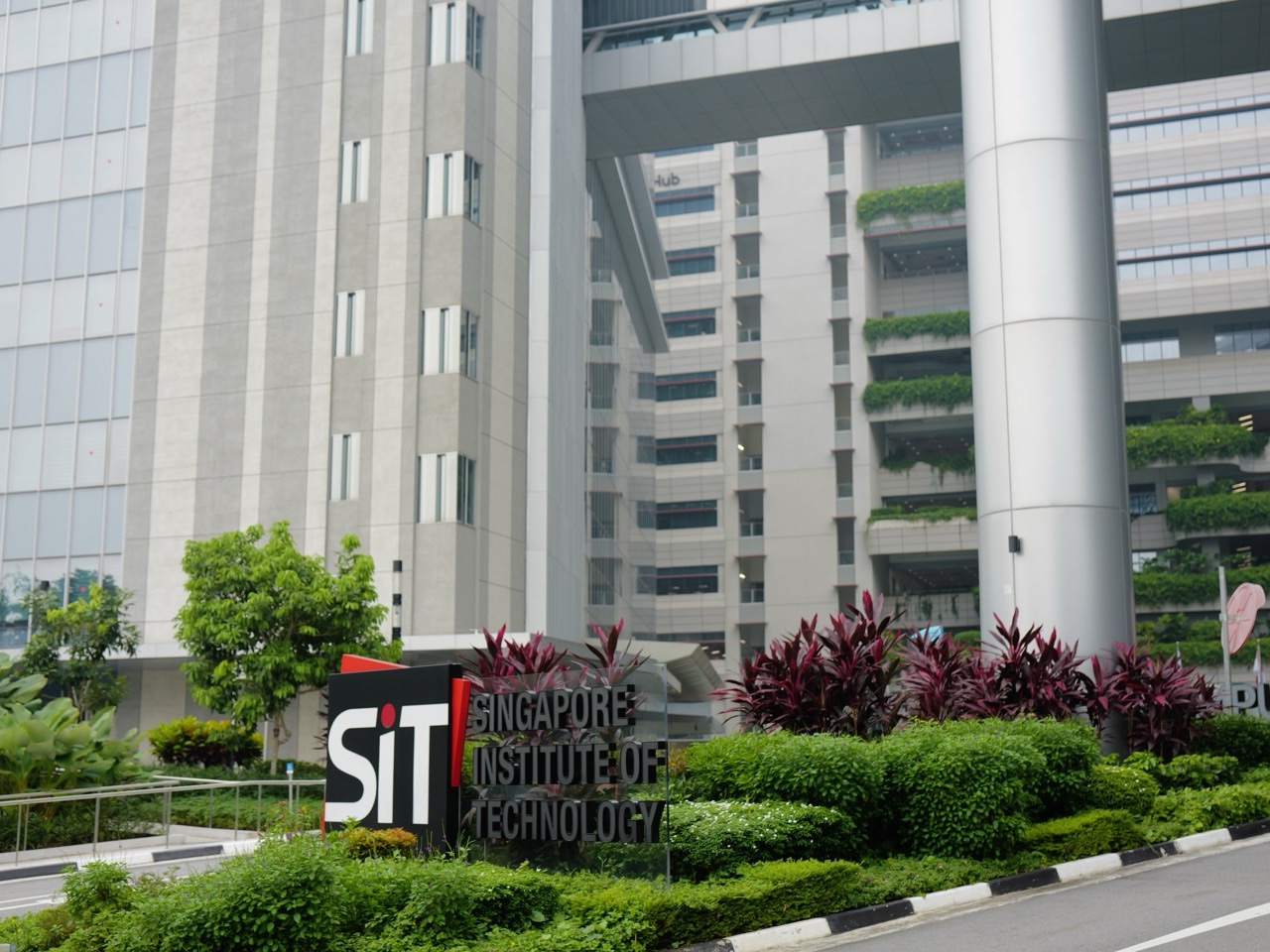
Punggol Events 2027 includes a professional learning programme for people who must evaluate complex industrial hazards using evidence rather than intuition alone. Singapore Institute of Technology (SIT) publishes CHE6020N02 Quantitative Risk Analysis for Monday–Wednesday, 10–12 May 2027, 9am–6pm each day. It is a four-credit module in SIT’s eight-part Graduate Certificate in Process Safety Operations pathway. The official sources are the individual course page and 2027 pathway calendar.
Did you know? Quantitative risk analysis, or QRA, asks how evidence about possible incidents, likelihood and consequences can inform safety decisions. SIT’s syllabus includes event trees, consequence modelling, reliability data, individual and societal risk concepts, and a supervised introduction to ALOHA® modelling software. It also discusses why regulatory risk criteria differ across jurisdictions. Such modelling is specialist, safety-oriented professional work—not an invitation to simulate hazardous releases or operate industrial systems without authorisation.
Booking caution: the detailed SIT page gives the May teaching dates, but its current Course Runs section says “There are no upcoming course runs at the moment.” Therefore 10–12 May is a published planning date, not a confirmed available seat. The exact venue and 2027 application deadline must also be confirmed; SIT’s footer lists the university at 1 Punggol Coast Road, which is not an individual classroom allocation. The full course fee is S$2,616 including GST, with conditional eligible payable examples of S$784.80 and S$304.80. This Punggol guide was fact-checked on 29 October 2026.
May 2027 QRA: official course facts, assessment and funding
- Course: CHE6020N02 Quantitative Risk Analysis (QRA)
- Provider: Singapore Institute of Technology, SITLEARN
- Published 2027 class dates: 10–12 May
- Regular hours: 9am–6pm, Monday through Wednesday
- Duration: Three advertised days
- Programme: Graduate Certificate in Process Safety Operations
- Credits: Four of eighteen, one of eight modules
- Current Course Runs message: No upcoming course runs
- Application closing date: Not confirmed in current individual booking panel
- Course venue: Confirm with SIT; main institutional address is 1 Punggol Coast Road
- Full fee: S$2,616 including GST
- Eligible 70% funded amount shown: S$784.80
- Eligible enhanced funding amount shown: S$304.80
- Audience: Engineers, managers, operators, risk practitioners and safety advisers
- Topics: Individual/societal risk, event trees, consequence modelling, reliability, meteorological inputs
- Named software introduction: ALOHA® for specialist modelling context
- Assessment: Credit-bearing with post-course written portfolio
- Attainment: 75% attendance plus passing assessment
- Portfolio timing conflict: Individual module page one month; general pathway two weeks
- Primary source: SIT CHE6020N02 QRA
The 50-second answer
SIT schedules Quantitative Risk Analysis on 10–12 May 2027, three professional training days at 9am–6pm. The four-credit module teaches how specialists evaluate the possible consequences and estimated likelihood of major industrial incidents using structured methods, evidence and relevant criteria. The full fee is S$2,616 before any confirmed subsidy. But the individual booking panel currently shows no upcoming course run, and no actual May registration closing date or classroom is confirmed. Ask SIT before relying on the schedule. This is training for safety professionals, not public permission to inspect, model or alter hazardous facilities.
Why QRA is different from everyday risk talk
People often use the word *risk* to mean that something feels worrying. Quantitative risk analysis is a more formal discipline concerned with defined scenarios, measured or estimated information, assumptions and numerical comparisons. It does not remove uncertainty or turn every outcome into a certainty. Its value is making assumptions reviewable so that qualified decision-makers can compare options and seek further safeguards where needed. SIT’s module introduces the method for professionals responsible for industrial safety and major hazard installations.
What is an individual risk measure?
At a general level, individual risk concerns the risk to a person at a specified context or location under a defined assessment framework. It depends on the hazards considered, who could be affected and the assumptions used. A reported number cannot be interpreted responsibly without those details. Different standards or authorities may express risk in different ways. This article intentionally does not provide a method for calculating hazardous-release impacts at a real site, because that would require qualified modelling and current case-specific information.
Societal risk asks another question
A societal risk assessment considers the potential impact of incidents on groups or populations under the relevant methodology. Two scenarios might have similar estimated risk for one individual but different possible effects on a larger number of people. This distinction can influence professional planning and risk management. No generic figure should be treated as an automatic permission to develop a plant or to declare nearby residents unsafe. The correct interpretation belongs to qualified practitioners operating under applicable criteria.
Likelihood and consequence are separate
A useful risk conversation distinguishes how likely an event may be from how severe its consequences could be. An event with a low estimated probability may still deserve attention if the possible consequences are substantial. Conversely, a more frequent minor issue can require different controls. QRA combines such questions using an authorised methodology. The result should communicate both the assumptions and uncertainty, rather than produce a false impression that one decimal number captures every dimension of safety.
Why QRA is not a crystal ball
Quantitative methods depend on the information and models used. Equipment performance, human action, changing conditions and incomplete data can all affect a study’s conclusions. The result is an assessment under a defined set of circumstances, not a prediction of the exact date or location of a future incident. A responsible analyst documents limitations and updates work when relevant facts change. A dramatic map or graph does not automatically become accurate because it was produced by sophisticated software.
What is an event tree?
An event tree is a structured way to examine how possible outcomes can follow an initiating event through a series of relevant conditions or safeguards. In a professional risk study, it can help organise reasoning and make assumptions explicit. SIT’s course names event-tree analysis in its learning outcomes. This article explains the concept without providing an operational model for causing or escalating an industrial accident. Real event-tree analysis requires specialist knowledge, appropriate data and authorised use.
A safe fictional event-tree illustration
Imagine a community event organiser considering the possibility of a rainstorm. They might distinguish whether visitors were warned in time, whether a sheltered alternative was available and whether the event was postponed safely. Different combinations could lead to different logistical outcomes. This simple example shows the *logic* of branching scenarios without involving hazardous chemical processes. It is not the specific SIT classroom exercise or a quantitative calculation of industrial risk. The educational value lies in structuring decisions rather than guessing.
How probability appears in a risk study
Probability helps describe uncertainty about possible outcomes within an explicit model. It should not be confused with personal confidence or a manager’s intuition. A probability estimate can be influenced by the quality of historical records and the relevance of those records to a particular installation. If data is sparse, uncertainty should remain visible. A numerical output without a credible basis is less useful than an honest statement that more information is required.
The importance of reliability data
SIT lists equipment reliability information among the inputs relevant to QRA. Reliability data can help a professional understand how likely a component or safeguard is to be available under defined conditions, but historical averages may not describe a particular site perfectly. Maintenance, environment and operating practice matter. A qualified analyst needs to check the provenance and applicability of the data. This article does not provide component failure rates to use in designing any real protective system.
Why local conditions cannot be invented
A study may depend on the actual installation, relevant hazardous materials, surrounding environment and people potentially affected. A generic numerical example from another facility may be inappropriate. SIT names installation, source, substance, meteorological and receptor information as inputs to professional QRA. These are reasons that individual site assessment needs competent practitioners and authorised data. A Punggol event guide cannot infer a real local hazard or risk level from the mere existence of a university course.
What does consequence modelling mean?
Consequence modelling uses suitable scientific or empirical methods to examine what might happen under defined scenarios. Different models have different purposes and assumptions. SIT introduces consequence modelling in the context of major industrial hazards, including fire and toxic exposures. The public should not treat this as instructions for recreating such events. A professional’s responsibility is to evaluate model appropriateness, communicate uncertainty and use results to support prevention and preparedness under the relevant regulations.
What is ALOHA software?
SIT’s syllabus names ALOHA® as a tool introduced for specialist consequence-modelling education. The course discusses setting up and interpreting case-study scenarios with relevant inputs. Mentioning the software does not imply that any reader should perform unsupervised hazardous-release calculations or that a beginner can produce an official risk assessment after one exercise. Software can assist analysis only when the model assumptions, data and application have been reviewed by qualified people. An attractive computer output is not independent regulatory approval.
Why software outputs require professional review
A model can calculate quickly even when the input assumptions are wrong. If the analyst selects unsuitable values or overlooks important conditions, the resulting figure may be precise-looking but misleading. Qualified review asks which inputs matter, whether evidence supports them and how sensitive the conclusion is to uncertainty. This is why a three-day course includes interpretation and structured reasoning, not merely a tour of software buttons. Training in a tool cannot replace judgment about its fitness for the intended decision.
Meteorological information is relevant context
Weather and atmospheric conditions can affect how some events unfold, so professional models may consider relevant meteorological information. The appropriate data, temporal scope and assumptions depend on the actual scenario. The course lists meteorology among its input categories but does not turn the published Punggol weather forecast into an industrial risk assessment. A community information guide should never imply that a reader can infer the effects of a dangerous release at a nearby facility from a generic forecast.
What are receptor data?
In risk analysis, the term *receptor* can refer to people, locations or assets that may be affected under the assessment framework. Identifying relevant receptors helps clarify what the model is intended to protect and what information is necessary. It also raises the importance of responsible handling of geographic or population data. A real study requires an appropriate scope and current information rather than an invented list of affected Punggol blocks or schools. No such local hazard is claimed in this article.
Why risk criteria differ across jurisdictions
SIT explicitly includes the comparison of risk acceptability criteria used in Europe, Hong Kong, Singapore and Malaysia. Different authorities may use different legal and technical frameworks. A number regarded as acceptable under one system should not automatically be copied into another without understanding applicability. The learner needs to know which standards govern the real project and who has authority to approve it. An international comparison is educational; it is not a way to avoid Singapore’s applicable rules.
Regulatory acceptance is not a course outcome
Major-hazard construction and operating proposals may require specialist review and formal approval. A university course cannot grant such approval for an actual site. A participant who passes CHE6020N02 has completed structured learning under SIT’s conditions, not a statutory right to certify every risk study or approve a new industrial installation. Professional responsibilities depend on the relevant legislation, registration and employer authorisation. This distinction protects the community from exaggerated claims about training certificates.
How QRA supports land-use discussions
Professional risk assessment can inform planning decisions where industrial and other land uses interact. Those decisions involve more than a single number: current policies, population assumptions, emergency response and other evidence may be relevant. SIT mentions land-use planning as one application of QRA. It would be irresponsible to conclude that a particular Punggol neighbourhood should be rezoned or is exposed to a specific hazard without an authoritative actual study. The educational relevance of the topic does not itself establish a local problem.
QRA and emergency preparedness
Understanding possible consequences can contribute to proportionate emergency planning and prioritisation, but an assessment is not a replacement for trained response teams, approved emergency procedures or public authorities. A model may help specialists examine scenarios while acknowledging uncertainty. Residents should use official guidance for actual emergencies, not infer an evacuation action from classroom modelling concepts. The course’s objective is stronger professional risk evaluation in industrial contexts.
Why periodic reassessment matters
A plant, its equipment, surroundings and operating conditions can change. A QRA based on older assumptions may need appropriate review to remain relevant. The SIT description emphasises periodic assessment so risk remains controlled according to applicable requirements and governance. A responsible organisation must identify who owns those reviews and what changes trigger them. No one numerical study should be regarded as an eternal certificate that future conditions cannot introduce new concerns.
How QRA complements prevention
Quantitative analysis can identify where risks might matter most, but action requires people and systems that implement appropriate safeguards. Prevention, monitoring, engineering controls, maintenance and emergency preparations remain essential. A beautifully structured risk report that is never used to support a decision has limited value. Training is useful when it improves the ability to ask what evidence justifies a protective decision and how the effect of that decision will be reviewed.
Why communication matters when presenting risk
A risk professional may need to explain findings to managers, regulators or communities who do not work with the underlying models every day. Clear communication distinguishes estimates, uncertainties and recommended follow-up. Avoid overwhelming readers with numbers that lack definitions or encouraging fear through dramatic colours. An ethical report should support understanding and actionable professional decisions, not conceal limitations. The course’s structure can help participants learn to connect quantitative analysis with responsible interpretation.
A safe numerical example of conditional probability
Imagine a fictional quality-check process in which 100 items were reviewed, ten were initially flagged and eight of the flagged items were confirmed to have a particular issue. The share of flagged items confirmed is 8 ÷ 10 = 80%. That is a useful example of conditioning on a subset, but it says nothing about unflagged items or real industrial accident probabilities. It illustrates why analysts must define the denominator and evidence before quoting a percentage. No hazardous scenario parameters are provided.
Why a single risk score can hide differences
Suppose a report offers a risk score of “5” without telling the reader what the scale measures, which events are included or whether five is high or low. The number is not sufficiently interpretable. Real QRA usually uses more defined quantities, but the same principle holds: the context and uncertainty matter. An attractive statistic is not an adequate explanation of consequence severity, probability, vulnerable populations or legal acceptability. Professional judgement remains necessary even after calculation.
The official May 10–12 dates
SIT’s course schedule identifies 10, 11 and 12 May 2027, from 9am to 6pm. That is three weekday training windows. A person with industrial operational duties should arrange suitable replacement cover and allow time for assessments afterward. The individual Course Runs panel currently shows no bookable upcoming run, so do not treat these dates as a confirmed paid place. Request the active application deadline and actual classroom once SIT opens or confirms enrolment.
Course venue: Punggol connection and uncertainty
SIT’s public institutional contact is 1 Punggol Coast Road, Singapore 828608, placing the provider in Punggol. However, the individual QRA course does not currently have an active Course Runs entry with a specific 2027 location. That means it would be misleading to promise all three days are conducted at a named campus block. Ask SIT whether this session will take place at Punggol Campus, an external approved facility or through another arrangement. Travel should be based on a joining notice, not a page footer.
The full S$2,616 fee and subsidies
SIT publishes S$2,616 including GST. Its fee table lists conditional after-funding charges of S$784.80 for specified eligible 70% categories and S$304.80 for the enhanced-funded category. Non-funded applicants may face the full price. These are published examples, not an individual entitlement. A Punggol address creates no special course discount. Ask how citizenship, residency, age and other funding terms apply to you, and obtain a final payment notice before committing.
An illustrative company budget
Suppose a company sponsors two employees who each qualify for the S$784.80 published payable category. The combined tuition would be S$1,569.60, excluding time away from work, travel and portfolio preparation. This is conditional arithmetic rather than a quotation. A manager should also set a professional objective, such as improving the ability to review the assumptions of a risk study or communicate its limits. The business value of training depends on application within authorised work, not merely having two certificates.
Recognition and professional units
The module page asks applicants to state their professional registration as a WSH Officer or Professional Engineer when seeking any relevant SDUs or PDUs. SIT also describes funding possibilities such as Learn for Life. These arrangements are conditional. A person should not assume that a professional unit or token is automatically awarded or that all funding schemes combine without restrictions. The relevant professional bodies and SIT determine the actual recognition and payable fee.
Assessment and the written portfolio
The course requires at least 75% attendance, passing a credit-bearing assessment and submission of a written portfolio for a Certificate of Attainment. Learners satisfying attendance but not passing may receive a Certificate of Participation. The written work should be done under the university’s instructions and should not disclose confidential facility information without proper authorisation. A three-day classroom course can entail additional work afterward, so an applicant should understand the whole commitment before enrolment.
The portfolio submission deadline disagreement
The individual CHE6020N02 course page states that the written portfolio should be submitted within one month. The overall Graduate Certificate pathway says within two weeks. Both come from the university; this guide reports the discrepancy instead of selecting an unsupported deadline. A learner should obtain the actual requirement for the May 2027 cohort, ideally in writing. The difference can affect working adults who need to allocate time for post-course assessments.
Four credits and the eighteen-credit certificate
CHE6020N02 carries four credits, a larger share than the two-credit modules within the same eight-module series. SIT says successful completion of all eight Certificates of Attainment totals eighteen credits and qualifies learners for the Graduate Certificate in Process Safety Operations under the pathway’s current rules. This one QRA module does not automatically confer the whole qualification. The professional and academic commitments must be considered separately from the three classroom days.
How QRA differs from Process Hazard Analysis
SIT schedules CHE6011N02 Process Hazard Analysis for 18–19 March 2027. It introduces methods such as HAZOP and what-if/checklist analysis for identifying and organising potential hazards. QRA, in May, emphasises numerical likelihood and consequence evaluation using relevant data and models. They are related, but cannot be treated as identical courses. A professional may need both structured hazard identification and quantitative evidence in suitable circumstances.
How it differs from Human Factors
The Human Factors in Process Safety guide covers the 22–23 April 2027 module on human performance and work-system design. QRA deals more directly with quantified scenarios and risk criteria. Human factors may still affect how analysts interpret information and how safeguards function in practice, but each module serves a distinct educational purpose. A person should not enrol in QRA merely because it is the longest or highest-credit course in the sequence.
An appropriate career use
Engineers, safety consultants, risk managers and technical operators may encounter QRA reports during project review, safety cases or risk management. Understanding what such a report actually assumes can help them ask better questions and recognise when specialist review is necessary. A three-day course does not automatically qualify someone to lead every complex QRA or sign a regulatory submission. Relevant experience, current methods and any professional authorisation remain important. There is also no promise of employment with any particular Punggol organisation.
When a nontechnical resident is curious
A reader may simply want to understand why quantitative safety studies matter. The key idea is that risk decisions should be grounded in defined evidence and transparent uncertainty rather than confidence alone. A family does not need to run industrial modelling software to understand that principle. Public emergency guidance should come from relevant authorities, while detailed plant modelling belongs to qualified practitioners. The university’s announcement is an educational opportunity, not evidence of a new hazardous event in the neighbourhood.
Frequently asked questions
Dates? 10–12 May 2027, 9am–6pm. Bookable now? The detailed SIT page currently says no upcoming runs. Full fee? S$2,616. Funded figures? Conditional S$784.80 and S$304.80. Credits? Four of eighteen in an eight-module certificate. What is QRA? Quantitative assessment of possible industrial incidents, likelihood and consequences. Is ALOHA mentioned? Yes, as specialist modelling software. Where is training? Confirm with SIT; the institutional Punggol address is not a booked room. Portfolio deadline? Official pages differ between one month and two weeks.
An applicant’s verification checklist
Open SIT CHE6020N02 QRA and the 2027 Process Safety Operations pathway. Ask whether the May run is taking enrolments, which application cut-off applies and where training occurs. Obtain the correct funded fee, assessment details and written portfolio due date. Confirm any required technical background or professional-unit recognition. Use only authorised data during training, and never treat a practice model as a real safety approval. Plan employer work cover after an actual admission confirmation.
Official sources and Punggol connections
University course: CHE6020N02 Quantitative Risk Analysis, identifying 10–12 May, three-day syllabus, software, fees, assessment and current no-upcoming-runs message. Full pathway: SIT Graduate Certificate in Process Safety Operations, listing all eight modules and the two-week portfolio wording. Related Punggol guides: Punggol Events, Process Safety Concepts, Human Factors in Process Safety, and Fire and Explosion Prevention. Checked 29 October 2026.
Final thought: numerical precision must not be mistaken for certainty
SIT has published 10–12 May 2027 as the QRA module dates, making this a concrete 2027 professional-learning option for residents interested in industrial safety careers. The course introduces evidence-based risk assessment, but the current Course Runs panel does not confirm an open intake and two official sources differ on the portfolio deadline. Verify the registration and location first. The lasting professional lesson is that a quantitative estimate becomes useful only when its inputs, assumptions, uncertainty, safeguards and accountability are understood.


