
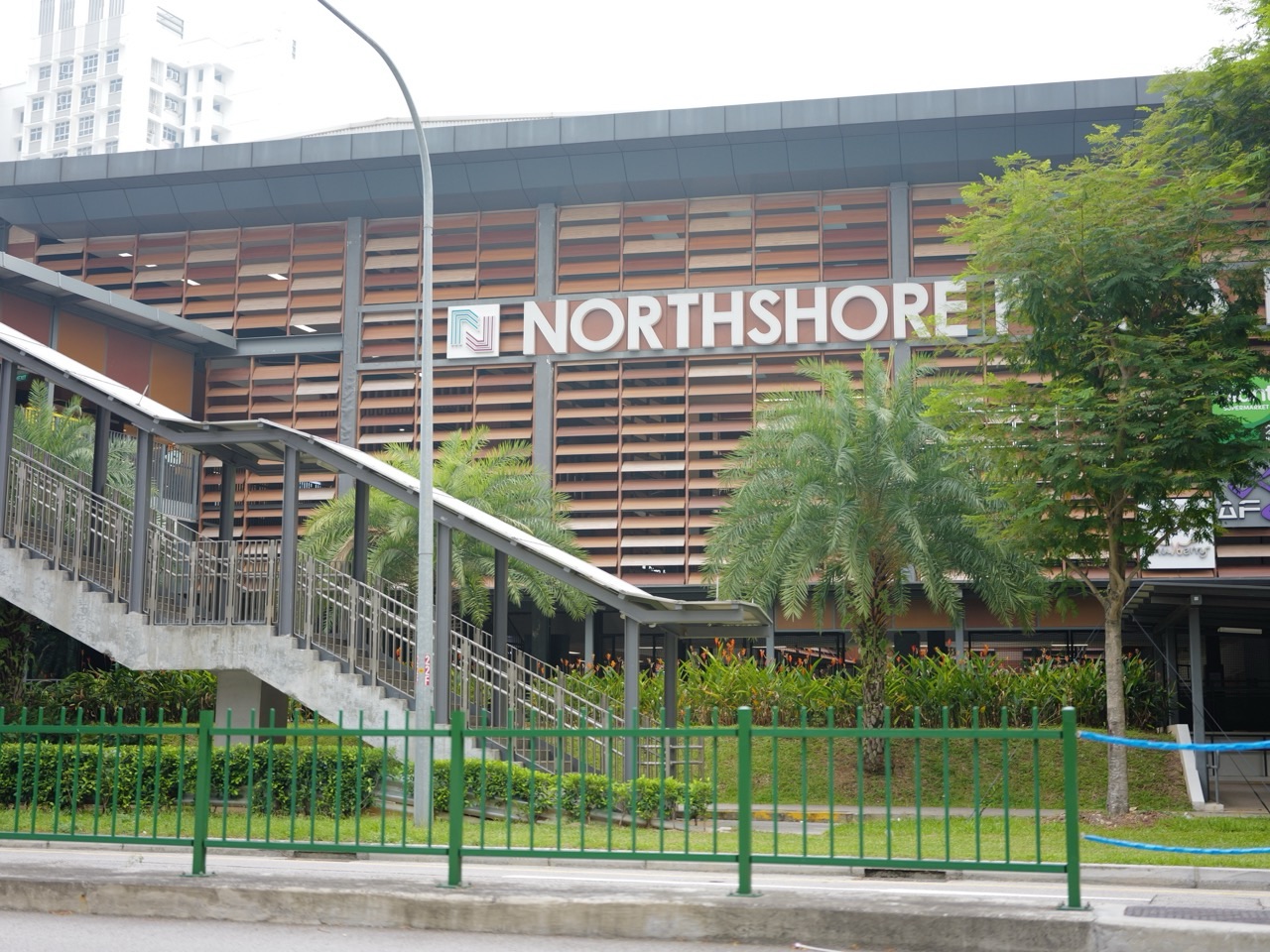
What should Punggol residents expect from autonomous shuttles in 2027? The vehicles are already operating: Grab/WeRide Ai.R opened public rides on 1 April 2026 and ComfortDelGro/Pony.ai’s Zig Driverless launched in June 2026. The important recent change is Grab’s expansion into on-demand, point-to-point journeys, with commercial fares distinct from the temporarily free fixed-route shuttles.
This Punggol 2027 neighbourhood guide explains the three original routes connecting Matilda Court, Punggol Clover, Punggol Plaza, Waterway Sunrise, One Punggol, Northshore, Oasis Terraces and Punggol Coast. It also explains the current booking differences, 2026 feedback, safety oversight and the September 2026 fleet-expansion plan without pretending every proposed service is already running.

Punggol autonomous shuttles: the 2027 status
| Transport service | Confirmed situation and 2027 relevance |
|---|---|
| Grab/WeRide Ai.R Route 1 | Existing Matilda Court–Punggol Clover–Punggol Plaza–Oasis Terraces fixed-route service. |
| Grab/WeRide Ai.R Route 3 | Existing Matilda Court–Punggol Clover–One Punggol–Northshore–Punggol Coast Mall fixed-route service. |
| ComfortDelGro/Pony.ai Zig Route 2 | Existing seven-stop link via Punggol Plaza, Waterway Sunrise I and II, One Punggol, Northshore, Coast Mall and Oasis Terraces. |
| On-demand expansion | Grab updated its information on 5 October 2026 to describe paid direct-route AV bookings; the fixed loops remained free in the interim. |
| Fleet plans | Grab announced an ambition in September 2026 to grow from 10 to 50 vehicles over six months, subject to actual deployment and regulation. |
| Not guaranteed | A free point-to-point ride, pickup at an arbitrary address, a January 2027 fleet size or a fixed travel-time saving. |
Facts reviewed as of 28 October 2026. Use the current operator app, booking screen and LTA notices for exact stops, schedule, seat rules and prices.
Punggol autonomous shuttles are already a reality
Did you know that Punggol residents can already experience autonomous-vehicle transport? Grab and WeRide’s Ai.R shuttles opened public rides on 1 April 2026, followed by ComfortDelGro and Pony.ai’s Zig Driverless public service on 22 June 2026. This is not a future project waiting for a 2027 ribbon-cutting.
The more interesting 2027 story is how the existing routes are evolving: LTA announced a shift towards more direct, on-demand journeys, and Grab began expanding that option during the second half of 2026. For a resident travelling between Matilda, Punggol Plaza, Oasis Terraces, Northshore and Punggol Coast, the distinction between a fixed-route shuttle and a booked point-to-point ride matters.
Public operation does not mean unrestricted travel to any Singapore address. Routes and permitted pickup points are approved and managed, services can vary by date, and a consumer must check the operator’s current schedule, booking requirements and fare.
The exact three initial neighbourhood routes
Grab/WeRide’s original Route 1 is the Punggol West-to-East loop. LTA’s published map lists Matilda Court at Block 234, Punggol Clover Block 204A, Punggol Plaza and Oasis Terraces. This is useful to a family making an errand across Punggol without travelling through the main MRT interchange.
Grab/WeRide Route 3 is the Punggol West-to-North link. Its published stops are Matilda Court, Punggol Clover, One Punggol near Sam Kee LRT, the Northshore Block 420A vicinity and Punggol Coast Mall/bus interchange. It gives a different way to reach northern amenities from western homes.
ComfortDelGro/Pony.ai Route 2 covers the East-to-North side: Punggol Plaza, Waterway Sunrise I at Block 656A, Waterway Sunrise II at Block 653C, One Punggol, Northshore near Block 420A, Punggol Coast Mall and Oasis Terraces. Zig’s present webpage describes its full route as roughly 50 minutes.
These are the initial fixed routes, not an instruction to walk to every stop, and not evidence that a new stop can be used immediately when a public announcement discusses future expansion. Always check the route displayed by the operator for your actual date.
Who runs the service, and why the brand names differ
The Ministry of Transport identifies two operating partnerships. Grab runs the west–east and west–north services through WeRide vehicles; ComfortDelGro runs the east–north service with Pony.ai autonomous technology. The names Ai.R and Zig Driverless are consumer-facing services, not two new train systems.
This arrangement can be confusing if a family searches only for ‘Punggol driverless bus’. One operator may use the Grab app or Ai.R site, while the other directs riders to Zig’s current booking service. Tickets or registrations are not automatically interchangeable.
LTA regulates the rollout and requires vehicles to pass a staged approval and testing process. During the trial, safety operators have been part of the public experience, and operating arrangements may evolve as the technology and regulatory approvals develop.
A driverless system still involves people: vehicle maintenance, remote support, passenger assistance, route design and safety oversight. Autonomous does not mean there are no human responsibilities or no need for passengers to follow instructions.
Free fixed loops versus paid on-demand rides
LTA’s 29 July 2026 service-enhancement announcement said the fixed-route shuttles would remain free while direct-routing services developed. Grab’s updated 5 October 2026 rider information says its existing fixed-route rides remain free in the interim, while the new on-demand option uses commercial fares.
The July announcement described a pilot where a rider selects approved pickup and drop-off points and the vehicle travels directly between them rather than completing the entire loop. That can help someone whose destination is not the loop’s last stop.
Do not apply a fixed shuttle’s free-ride promise to a booked commercial AV. Conversely, do not assume every Grab Route 1 or Route 3 ride costs the older flat fare once on-demand operations have begun. The operator’s checkout or current terms determine the actual charge for the selected service.
The stated March 2026 expectation of an eventual $4 flat fare was an earlier plan. July’s service redesign and October’s paid direct service mean a 2027 traveller should not treat the older launch figure as a universal live price.
What changed after Punggol residents gave feedback
As of 12 July 2026, LTA reported more than 11,500 unique riders on the shuttle services. Its July post-ride surveys included around 900 respondents, of whom 99% indicated that they felt safe and would recommend the experience. That is feedback from survey participants, not a survey of every resident in Singapore.
The same report found a strong preference among respondents for flexible pickup and drop-off choices and routes that run more directly to their destinations. Approximately 60% of a Punggol-resident subset preferred choosing boarding points, while around 40% wanted more direct routing.
Those comments help explain why the next phase is not simply adding longer fixed loops. For a parent with a small child, an older resident visiting Oasis Terraces or someone reaching a transport hub, the total walk and detour may matter more than experiencing the autonomous technology itself.
Transport is useful when it answers a real household problem. A route that is novel but takes longer than an existing bus may be less practical for a regular weekday errand.
The September 2026 fleet-expansion plan
Grab announced in mid-September 2026 that it intended to expand its autonomous fleet from 10 vehicles to 50 over the following six months, working with LTA and the Ministry of Transport. The operator also expressed the ambition to add pickup points and eventually extend services beyond Punggol, subject to regulatory approval.
This is a forward-looking fleet plan. It would be misleading to write that 50 autonomous vehicles were already serving Punggol in October 2026, or that all of them will be available to a specific estate at the beginning of 2027.
Fleet growth, approved routes, actual vehicles on the road and the number of daily seats are separate measures. A larger fleet may improve the service if operating permissions, staffing, charging and demand support it, but the actual 2027 capacity requires real data.
Residents should watch operator and LTA releases for the places served and commercial terms, not only headlines about vehicle counts.
A straightforward way to try a journey
First choose the exact origin and destination. If the trip starts at Matilda Court and ends at Punggol Coast Mall, check whether the currently operating Grab route or on-demand service includes those approved stops. If the trip starts near Waterway Sunrise, look at Zig’s Route 2 stops.
Next identify the booking method. Zig currently tells customers to use its Zig app or public booking channel and to arrive before the reserved time. Grab’s current Ai.R information directs travellers to its own service and app information for routes and on-demand availability.
Check the fare before confirming, and note whether the chosen ride is free, a paid direct ride or another operator offer. A previous promotional period may have ended. For bookings, confirm the actual passenger, time and any cancellation conditions.
At pickup, use the marked boarding area and follow the safety operator’s instructions where present. Remain seated during travel and do not touch equipment. If an item or seat is unavailable, do not improvise access to the vehicle.
Safety, children and vulnerable passengers
LTA says the Punggol autonomous shuttles have undergone testing under Singapore’s regulatory framework and that monitored trials allow adjustments. Operating without a human driver controlling every normal movement does not remove the need for trained staff, vehicle safety systems and passenger discipline.
Zig’s current guidance tells passengers to remain seated, bring their own booster seat when required and follow instructions from the safety operator. It also provides a support number for issues during its service. Families should check the latest operator rules for age, seating and accessibility.
An autonomous shuttle may brake conservatively or make different driving decisions from a human driver. Road users should give it appropriate space and avoid cutting across its path. This advice applies alongside ordinary traffic law and road etiquette.
For a person using a wheelchair or with limited mobility, ask the particular operator about boarding arrangements before booking. It is not responsible to infer universal accessibility from a photo of a five-seater vehicle.
How these vehicles fit with Punggol MRT, LRT and buses
The shuttles are designed to complement existing public transport by connecting residential locations with shopping centres and hubs. Punggol MRT and Punggol Coast MRT are already served by the North East Line, while the East and West LRT loops provide established feeder services.
An AV trip may save a transfer for a particular origin and destination, but ‘up to 15 minutes’ from the original LTA material is a possible comparison for selected routes, not a guaranteed saving for every person or time of day.
During school hours or bad weather, a direct bus or the LRT may still be more reliable. Check availability and compare door-to-door time, including the last walk from the approved AV stop.
Residents who need a particular hospital, school or childcare location must not assume the autonomous ride will deliver to its exact entrance. The operator-approved pickup and drop-off list remains decisive.
What 2027 progress would actually look like
A genuine 2027 update would identify new approved stops, expanded service days, the exact price of a point-to-point ride and whether more vehicles have entered passenger operation. It would not rely solely on a fleet-order press release.
An operator may offer discounted introductory fares or temporary free trials, but promotions can change. Check the displayed fare and current terms instead of citing an old amount with no date.
The existence of a pilot in Punggol also does not mean every town has identical service. Wider rollout requires approvals and testing for new areas.
Ultimately the neighbourhood benefit should be judged by how safely, conveniently and affordably actual residents can reach needed destinations. Autonomous technology is a means to that end, not the end itself.
Before you try an autonomous ride
- Choose a journey between stops currently shown on the operator’s live route map.
- Check whether your selection is a free fixed shuttle or a commercial on-demand booking.
- Verify the correct app, departure time and any reservation requirement.
- Follow the marked pickup point, remain seated and observe child-restraint requirements.
- Plan another transport option if an AV is full, booked or temporarily unavailable.
- Do not treat vehicle fleet ambitions or ‘up to’ time savings as guaranteed 2027 service.
- Use LTA, Grab and Zig updates rather than outdated trial posters.
Frequently asked questions
Are Punggol autonomous shuttles open already?
Yes. Grab/WeRide public rides began 1 April 2026, and Zig Driverless began public rides in June 2026.
Which operator serves Matilda Court and Punggol Clover?
Grab/WeRide’s original Route 1 and Route 3 cover those locations.
Which route covers Waterway Sunrise and Punggol Coast?
ComfortDelGro/Pony.ai’s Route 2 includes Waterway Sunrise I and II, One Punggol, Northshore and Punggol Coast Mall.
Are all autonomous rides free?
No. Grab’s updated October 2026 guidance distinguishes paid on-demand rides from temporarily free fixed-route shuttles.
Is the old $4 announcement the final 2027 fare?
No. It was an earlier expectation and pricing is subject to current service and booking terms.
Can I ask to be picked up at any HDB block?
Only approved pickup and drop-off points are available; service coverage is expanded by the operator and LTA.
Does Zig Driverless need booking?
The operator’s live page describes a booking and arrival procedure. Check current availability before travelling.
Do shuttles have a safety operator?
LTA’s trial arrangements include safety operators and ongoing oversight; always follow the present onboard instructions.
Will Grab have 50 AVs operating on 1 January 2027?
Grab’s September 2026 announcement described expansion towards 50 vehicles over six months, not a guarantee of a January fleet size.
Can a child travel without a booster seat?
Follow the operator’s current child restraint and age rules; Zig asks passengers to bring a suitable booster seat when necessary.
What should residents check before a 2027 trip?
Operating route, approved stops, booking channel, fare, hours, accessibility and any operator change.
Official transport and operator sources
- LTA: 29 July 2026 Punggol AV service enhancements and resident feedback
- LTA: April 2026 start of public Punggol autonomous rides
- MOT: Punggol operators and routes explained
- Grab: 5 October 2026 guide, paid direct rides and temporarily free fixed loops
- Grab: September 2026 plan to expand fleet from 10 to 50
- Zig Driverless: Route 2 stops, current bookings and passenger safety
- ComfortDelGro: June 2026 launch of Zig Driverless
Further eduKatePunggol articles
- Future of Punggol: on-demand shuttles and next steps
- Punggol autonomous shuttle guide with original routes
- 2027 Punggol West and Soo Teck neighbourhood
- 2027 Northshore, public amenities and Punggol Coast links
- Complete Punggol resident guide
Editorial note: Updated 28 October 2026. Operating services, proposed fleet expansion, survey results and operator fares have been kept distinct. Any actual 2027 route, booking and price must be checked from the responsible operator.


