
Punggol Education 2027 precision engineering and additive manufacturing courses show how Mathematics and Science become physical products. A learner who enjoys making things might be drawn to 3D printing, computer-aided design, CNC machining, medical-device production or smart factory systems. But a drawing that looks accurate on a screen is not automatically a safe manufactured component, and a 3D printer operator is not necessarily trained to design a complete industrial process.
Did you know? ITE’s Higher Nitec in Precision Engineering is currently a 12-month full-time Nitec-progression course at College Central, with a minimum 2.8 GPA from specified relevant Nitec courses. It is not a generic one-year direct-entry course for every Secondary school-leaver. By contrast, ITE’s Higher Nitec in Mechanical Engineering runs for 24 months under its published main route, and NYP’s Diploma in Advanced & Digital Manufacturing explicitly combines 3D printing, subtractive manufacturing, metrology and manufacturing analytics. Meanwhile, SIT Punggol’s three-year joint Mechanical Design & Manufacturing Engineering degree explicitly takes its last cohort in AY2026/27 and should not be advertised as an open AY2027/28 intake.
These details are important for a Punggol family choosing education in 2027. A qualification can be real but unavailable to a particular applicant, or a University programme can remain publicly visible after its final intake. This guide explains the actual course differences, how to check professional options, how to explore manufacturing safely and what to do, avoid and think about before committing time or money.
Quick comparison: manufacturing is more than owning a 3D printer
| Field | What the work involves | What skills matter |
|---|---|---|
| Additive manufacturing | Build physical items layer by layer using approved processes | Materials, design, tolerances, post-processing |
| Subtractive manufacturing | Remove material from a workpiece with appropriate tools | CNC setup, geometry, machine safety, dimensional checks |
| Mechanical engineering | Analyse and design mechanisms and components | Physics, Mathematics, CAD, forces and systems |
| Metrology and quality | Measure features, uncertainties and acceptance criteria | Data, calibration, standards, documentation |
| Digital manufacturing | Link engineering data, equipment and operations | Programming, analytics, control, workflow |
| Production planning | Coordinate materials, process steps, cost and delivery | Scheduling, communication, trade-off reasoning |
A 3D-printed object can have the correct outline but unacceptable strength or dimensional accuracy. A CNC-machined component can look shiny but fail a measurement. Engineering education teaches the connection between material, process, measurement, reliability and the intended use.
Punggol connection: from local buildings to engineered products
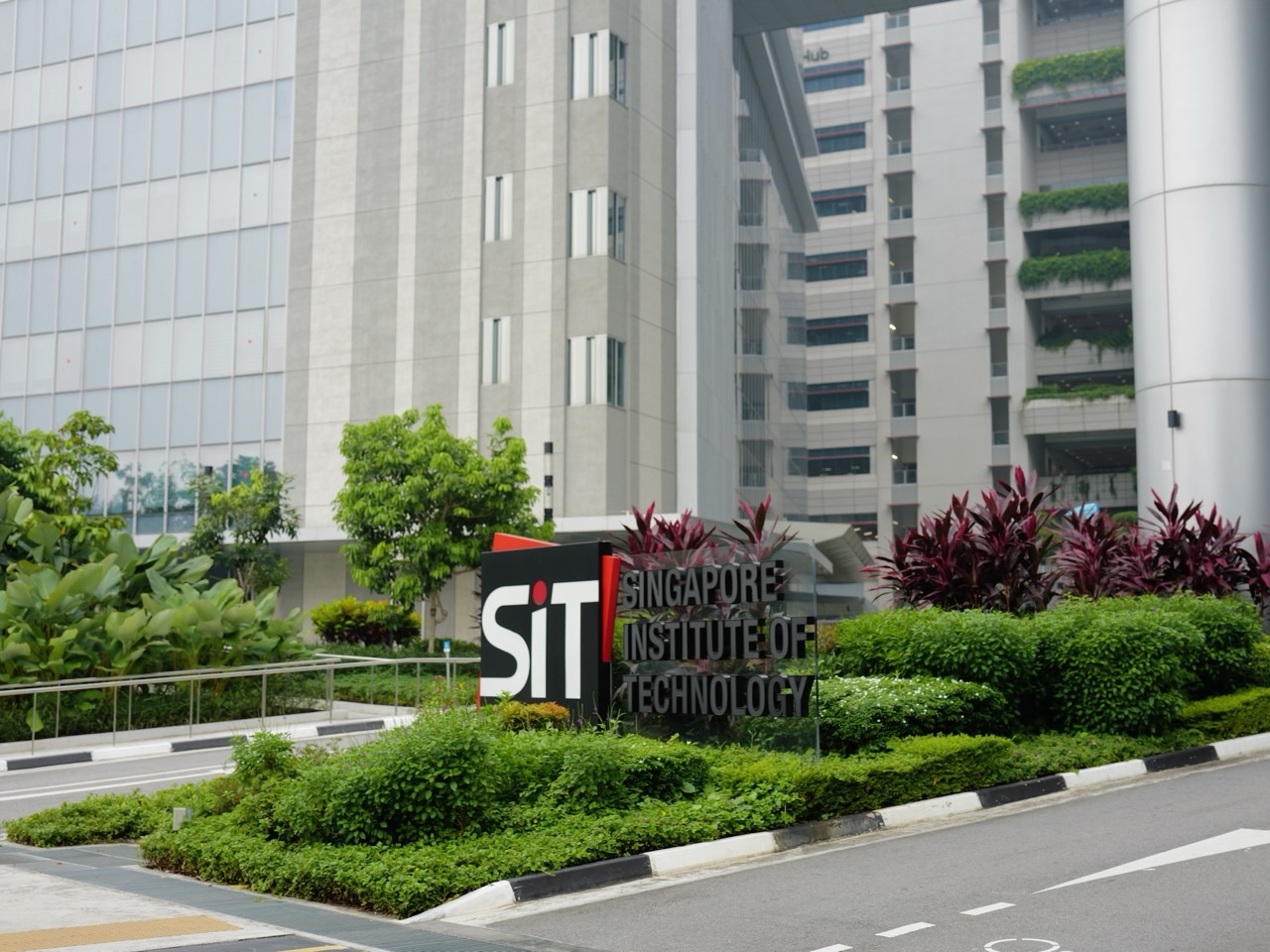
Punggol’s Digital District and SIT campus make applied engineering visible near the neighbourhood. However, manufacturing workshops and machine tools are often located at the actual Polytechnic, ITE college or employer facility. A student living near SIT should not assume that the school’s additive manufacturing laboratories are open for unsupervised public use.
Punggol residents can learn from public examples: how a bicycle component connects to the frame, why a building fixture needs consistent dimensions, or how safe consumer products have specifications. Observing a real object does not mean disassembling transport equipment or copying a manufacturer’s confidential design. For younger learners, careful sketches and hypothetical measurements are enough.
Primary 3–6: build the real mathematical foundations
At Primary level, the important skills include accurate units, measurements, fractions, decimals, ratio, area, volume, patterns and explaining a result. English matters because instructions, specifications and handovers rely on exact meaning. Science matters because materials and processes behave according to physical principles.
A fictional component is specified as a rectangle measuring 12 cm by 8 cm. The design area is 96 cm². A learner can sketch it and then ask how the result would change if the dimensions were measured in millimetres. This teaches why engineering teams do not omit units. A drawing of a rectangle is still not evidence that it fits a real, safety-critical installation.
An age-appropriate model-building activity should use cardboard or ordinary classroom materials. Children do not need to operate laser cutters, machining equipment or heated 3D printers without trained supervision. Learning safe boundaries is part of technical competence.
Secondary G1/G2/G3 and 2027–2028 progression
Under Full Subject-Based Banding, Secondary pupils can offer individual subjects at G1, G2 and G3. The first graduating SEC cohort sits in 2027 and proceeds to the new post-secondary exercise from 2028. A student with 2026 GCE O-Level results and a 2027 post-secondary intake instead follows the corresponding earlier admissions process.
Precision manufacturing needs strong Mathematics and English, with relevant Physics, Design and Technology or approved Science preparation depending on the programme. A pupil might be visually imaginative but still struggle with algebra, coordinate geometry or decimal measurements. Rebuilding the specific prerequisite helps more than assuming expensive design software will automatically solve the problem.
The practical diagnostic is simple: ask the pupil to read a dimensional drawing, explain a stated scale, identify where one component might interfere with another and show the calculation independently. Only after the idea is understood should they attempt a more complex digital model.
The important ITE course distinction: one-year Precision Engineering
ITE’s Higher Nitec in Precision Engineering is a 12-month full-time course at College Central. It develops CNC part-program interpretation and editing, tooling setup, CNC machining and fault troubleshooting. Its published eligibility is specifically for Nitec graduates of named programmes such as Machine Technology, Digital & Precision Engineering, Aerospace Machining Technology, Medical Manufacturing Technology and other relevant technical routes.
The published minimum is Nitec GPA 2.8, inclusive of specified CCA bonus treatment, for the relevant listed Nitec qualifications. It is misleading to tell a Secondary 4 student that they can necessarily enter this one-year Higher Nitec directly with 2026 O-Level results. First check an appropriate accepted Nitec or other ITE route.
ITE also lists a laptop requirement and support subject to eligibility. Students should read the precise course information rather than rely on a generic overview of ‘manufacturing diplomas’ that hides prior-qualification requirements.
Why precision machining is not an unsupervised school craft
CNC machines can be powerful and hazardous if operated incorrectly. Precision manufacturing requires safe tooling setup, controlled procedures, verified machine state, personal protection, trained supervision and documented measurements. A school pupil should never attempt machining or troubleshoot industrial equipment without authorised instruction.
A classroom CAD drawing or cardboard model can demonstrate understanding of dimensions, while a supervised institution project can later build practical equipment skill. Those are different levels of access and responsibility, not opposing forms of learning.
ITE’s broader Mechanical Engineering Higher Nitec
For an applicant who is not yet a qualifying Nitec graduate, the ITE Higher Nitec in Mechanical Engineering is a separate 24-month full-time programme listed at Colleges Central, East and West, with published school-leaver and Nitec entry routes. The curriculum develops machine systems, quality assurance, engineering design support, instrumentation fault diagnosis and programmable-logic-controller integration.
ITE also publishes 36-month and particular 48-month curriculum structures for other candidate profiles. A family should ask which route matches the actual prior qualifications rather than choose by shortest advertised duration.
This pathway can support employment as Mechanical/Manufacturing Engineering Technician, Engineering Assistant, Quality Process Technician or related roles. It can also provide relevant preparation for further learning when programme-specific progression requirements are satisfied.
AY2027 ITE-to-Polytechnic progression: what the GPA rule means
ITE states that from the AY2027 Polytechnic intake, eligible graduates with a net Higher Nitec GPA of at least 2.5 may apply for the first year of related Polytechnic diplomas. Both the Mechanical Engineering and Precision Engineering course descriptions discuss relevant opportunities. But this is an application threshold, not an automatic offer and not a right to transfer to every manufacturing course.
A student should verify the actual Joint Polytechnic Admissions Exercise mapping, acceptable Nitec/Higher Nitec background, academic performance and available places. Some graduates may explore an ITE Technical Engineer Diploma or Work-Study Diploma under different conditions. The 12-month Precision Engineering course itself has a different entry threshold from its future progression rule, and those numbers must not be confused.
Nanyang Polytechnic Diploma in Advanced & Digital Manufacturing
NYP’s Diploma in Advanced & Digital Manufacturing is a concrete full-time Polytechnic route combining precision engineering and contemporary digital methods. Its published competencies include additive manufacturing, subtractive manufacturing, product design, advanced metrology and quality assurance, smart manufacturing implementation, and data analytics for optimisation.
This matters because simply buying a 3D printer does not teach design-for-manufacture or quality control. A Polytechnic student should learn why one geometry is appropriate for printing and another for machining, how material behaviour changes results, what constitutes an acceptable measurement and how the end user will know a product is fit for purpose.
NYP’s current programme uses Professional Competency Model units with project learning and an internship structure. Its page describes industry certifications or collaboration with providers such as Materialise, OPEN MIND and AI Singapore. These are opportunities within the programme, not guarantees of individual employment abroad or immediate professional engineering registration.
The NYP entry table: do not turn 2026 figures into 2027 guarantees
The NYP page lists an O-Level ELR2B2-C historical 2026 JAE net range of 10–26 and a planned intake of 66, with minimum English, Mathematics and approved Science or technical subject grades. It separately describes ITE and PFP routes. Historical ranges may help a pupil gauge previous competition but are not the guaranteed 2027 cut-offs.
For the first SEC graduating cohort moving into the 2028 admissions exercise, the family must use the then-applicable MOE/NYP rules. Do not silently convert historic GCE O-Level aggregate bands into an invented SEC outcome.
A major 2027 pitfall: SIT–Newcastle Mechanical Design & Manufacturing Engineering ends intake
SIT’s Bachelor of Engineering with Honours in Mechanical Design and Manufacturing Engineering, a three-year joint SIT–Newcastle University programme at Punggol, explicitly states that AY2026/27 is its final intake. The public information says SIT and Newcastle have decided to cease this joint degree as part of regular programme review; existing students and alumni are not affected.
This is an important difference between course information remains online and course welcomes new students in AY2027/28. The page still displays a 8 January–19 March 2026 application period and an August 2026 intake; those are not future 2027 application dates. It is incorrect to promote the old degree as a confirmed fresh 2027 entry option.
The degree’s curriculum gives useful examples of what advanced manufacturing involves—Engineering Mathematics, Materials for Sustainable Design, Industrial Automation, Digital Manufacturing, Robotics, Engineering Systems Modelling and Lean Manufacturing. But a student seeking a later intake should ask SIT for currently recruiting successor or adjacent engineering programmes, not infer that a discontinued award remains open.
What should students interested in SIT Punggol investigate instead?
Review the current SIT programme catalogue and identify an actual degree in fields such as Robotics Systems or Engineering Systems where the listed modules fit the learner’s objectives. Those courses are not automatically equivalent to the ceased joint manufacturing degree. Compare accepted Polytechnic qualifications, module structure, work-study and future official intake status.
A student who is determined to enter a dedicated manufacturing programme can also compare other Universities using their current official admission catalogues. The right strategy is to find a genuine current award and verify it, not simply follow an old search-engine result.
A worked manufacturing calculation: the meaning of tolerance
Consider a hypothetical metal part with a specified diameter of 10.00 mm ± 0.05 mm. In this classroom example, the acceptable numerical range is 9.95 mm to 10.05 mm, assuming the tolerance applies symmetrically to that one measured feature. A recorded diameter of 10.04 mm is inside that range; 10.07 mm is outside it.
This does not certify the part as safe or usable. A real acceptance decision could require verified instruments, geometric tolerances, material requirements, surface condition, calibration, sampling plans and the intended assembly fit. The point is to teach that a physical artefact must meet a specification, not just look correct.
Additive versus subtractive manufacturing: compare the reasoning
Imagine an approved classroom project creating a non-safety-critical display stand. The pupil first sketches a design, states its dimensions and chooses a material under teacher guidance. An additive process may build the shape in layers, while a subtractive process removes material from stock. Each choice has different waste, surface, tool access, strength and time considerations.
The educational question is not which technology is always superior. It is which process is appropriate for the desired product and constraints. A design suitable for a display model may not be acceptable for a load-bearing or medical component. Students should never claim their own print is implant-grade, food-safe or structural without legitimate testing and professional approval.
A six-week Punggol engineering portfolio
- Week 1: choose one ordinary fictional product and write a clear statement of its intended use.
- Week 2: create a dimensioned drawing with units and reasonable assumptions.
- Week 3: calculate area, volume or other relevant quantities and check for errors.
- Week 4: compare additive and subtractive methods through authorised educational references.
- Week 5: produce a cardboard or school-supervised prototype, recording every revision.
- Week 6: write a concise quality report stating which measurements were taken, how reliable they are and what remains unverified.
A portfolio is stronger when a student can show a failed first design and a thoughtful revision than when they merely present a beautiful manufactured object with no evidence of independent learning. Avoid using industrial machines without supervision.
What Punggol parents should do, avoid and think about
Do
- Differentiate CNC machining, additive manufacturing, mechanical systems design and quality measurement.
- Recognise ITE’s one-year Precision Engineering route is intended for specified eligible Nitec graduates.
- Investigate the broader Mechanical Engineering Higher Nitec if the student’s prior qualification differs.
- Read NYP Advanced & Digital Manufacturing’s actual competency units and admission requirements.
- Explain why a tolerance figure does not certify a product by itself.
- Note SIT–Newcastle MDME’s published final AY2026/27 cohort and investigate genuinely available alternatives.
- Include equipment, safety, commute, course duration and future study routes in the family plan.
Do not
- Advertise a 12-month Precision Engineering Higher Nitec as automatic direct entry for every Secondary graduate.
- Confuse ITE’s Nitec GPA 2.8 entry condition with the later AY2027 Higher Nitec GPA 2.5 Polytechnic application rule.
- Claim SIT’s discontinued joint MDME programme is recruiting a fresh AY2027/28 cohort.
- Treat NYP’s 2026 admission range as the exact 2027 cut-off.
- Operate industrial tools, CNC machinery or high-temperature printers without authorised supervision.
- Promote an untested 3D-printed model as a medical or safety-critical product.
- Promise that proximity to SIT Punggol gives residents University admission priority.
Think about
Does the learner enjoy making something accurate, checking why it failed and documenting what changed? Are they interested in materials, machines, design, digital systems or quality measurement? Strong manufacturing education requires humility before evidence and careful control of tools, not simply enthusiasm for the newest printer.
Frequently asked questions
Is ITE Higher Nitec Precision Engineering a 24-month direct O-Level route?
No. The official current page lists a 12-month course for specified relevant Nitec graduates with a minimum GPA of 2.8. Other technical routes must be investigated for a fresh school-leaver.
Does ITE have a more general Mechanical Engineering Higher Nitec?
Yes. ITE lists a 24-month course with school-leaver entry routes, plus other duration structures for different applicant profiles. Check qualification and campus.
Is 3D printing included in NYP’s Advanced & Digital Manufacturing diploma?
Yes. NYP describes additive manufacturing alongside subtractive manufacturing, advanced metrology, quality assurance and data analytics.
Can I apply for SIT–Newcastle MDME starting AY2027/28?
Its official programme page states that AY2026/27 is the final intake. Applicants should seek currently open alternative programmes through SIT’s updated admissions catalogue.
Does the minimum AY2027 Higher Nitec GPA guarantee a Polytechnic place?
No. A relevant net GPA threshold permits an eligible application but admission depends on programme mapping, selection and available vacancies.
Is a 3D-printed component safe if its nominal dimension is correct?
Not necessarily. Real applications require material, process, tolerance, testing, safety and other appropriate approvals. Classroom numerical measurements alone do not certify safety.
Official sources and Punggol education links
- ITE Higher Nitec Precision Engineering — the 12-month Nitec-to-Higher-Nitec route.
- ITE Mechanical Engineering Higher Nitec — 24-month route.
- NYP Advanced & Digital Manufacturing — additive, subtractive and metrology.
- SIT–Newcastle MDME — final intake statement.
- SIT current programme catalogue — verify new programmes.
- Joint Polytechnic Admissions — related-course matching.
- Punggol 2027 Robotics and Mechatronics — automation comparison.
- Punggol 2027 Microelectronics — adjacent high-precision industry.
- Punggol Education & Town-Life Article Index.
Research checked 28 October 2026. The SIT final-intake warning is based on its official programme page, and the ITE Precision Engineering entry threshold applies to its stated Nitec progression route. Current course requirements and available later intakes should always be reconfirmed.


