
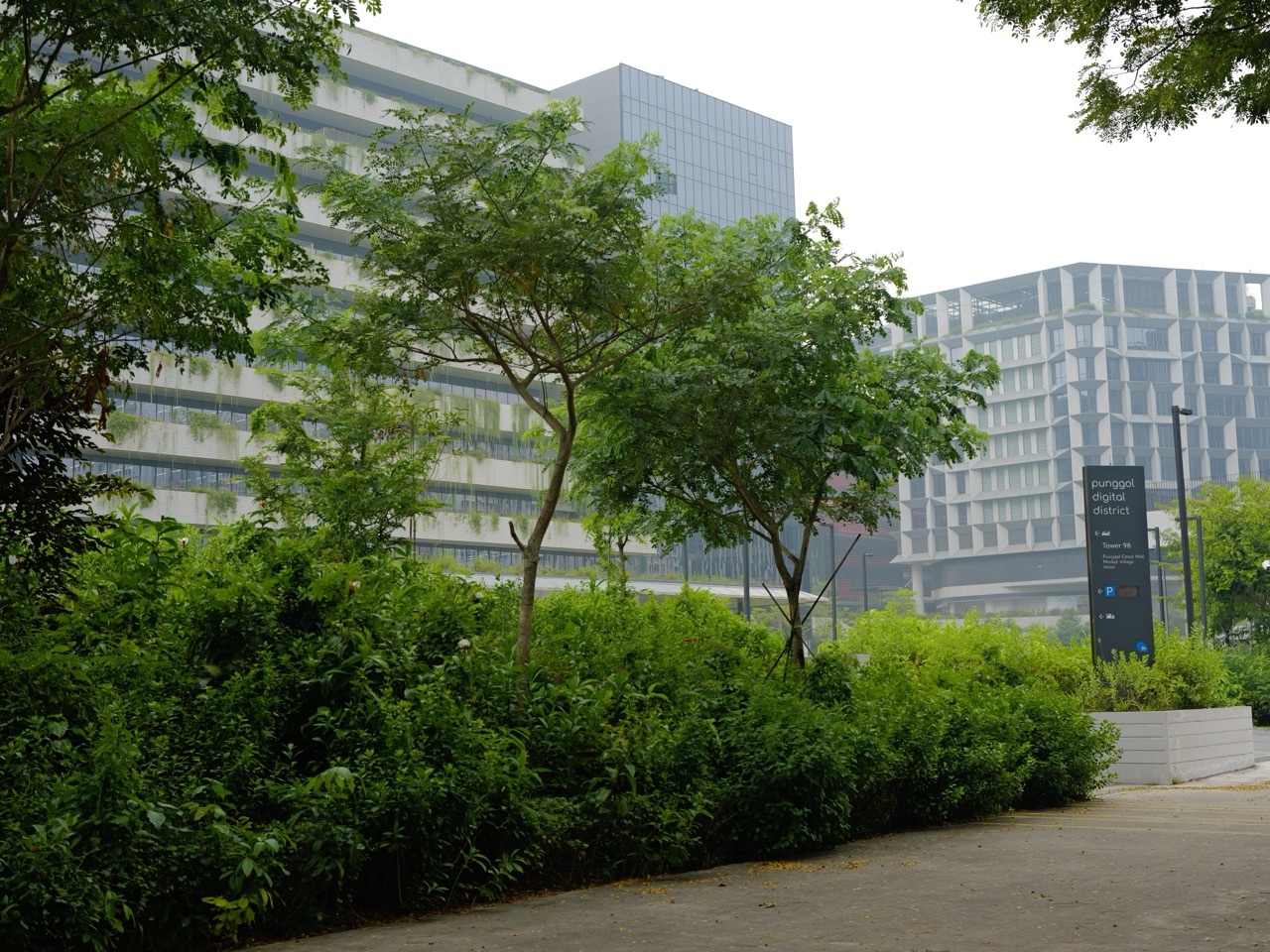
What should Punggol residents expect from LaunchPad @ Punggol Digital District in 2027? JTC announced a new startup cluster to be established in phases from late 2026, focused on smart-city technologies, robotics, cybersecurity and fintech. It will sit within the already operating Punggol Digital District, where SIT, large technology organisations, public transport and a mall are present today.
LaunchPad is intended to help technology startups work with partners and test ideas in real-world conditions. But it is not a public library, a confirmed 2027 startup events calendar or a promise that autonomous robots already deliver to every Punggol flat. This guide distinguishes what has been announced, what may expand in 2027 and what needs formal permission.

LaunchPad @ PDD in 2027: what is known
| LaunchPad question | What JTC has said and what remains to check |
|---|---|
| Location | Inside Punggol Digital District, with Tower 88 identified as the LaunchPad location in published EDB material. |
| Official timeline | JTC plans LaunchPad @ PDD in phases from late 2026. |
| Core focus | Advanced startups in fintech, smart city, robotics and cybersecurity, working near SIT and industry partners. |
| Testbed opportunity | PDD’s Open Digital Platform can support permitted trials linking software with infrastructure such as lifts and access gantries. |
| Example pilot | dConstruct Robotics has been identified for potential autonomous delivery applications. |
| Not guaranteed | All offices occupied in January 2027, a public walk-in lab, unrestricted data access or robots serving every HDB block. |
Status as of 27 October 2026. A proposed trial, available workspace, public event and working service are different stages and should not be reported as interchangeable.
A new startup workplace is planned in a district that already operates
Did you know that JTC is extending the LaunchPad startup concept from One-North to Punggol Digital District? On 2 March 2026, JTC announced that LaunchPad @ PDD will be established in phases from late 2026. That makes 2027 a plausible period of further occupation and activity, but the announcement is not a promise that every office and programme will be available on the first day of the year.
Unlike a public mall, LaunchPad is designed to support startup companies developing technologies and business models. Its function is to give firms space, access to an ecosystem and opportunities to test solutions in a real environment. Some community events may welcome wider participation, but tenancy and research access depend on the organiser’s rules.
Punggol Digital District already contains SIT, technology and government organisations, transport, dining and public routes. LaunchPad adds a startup-focused layer to that environment rather than creating the entire district from scratch.
Where is LaunchPad @ PDD?
JTC identifies the development inside Punggol Digital District, while an Economic Development Board article uses Tower 88 to describe the LaunchPad location. It sits amid the larger district’s commercial and campus spaces near Punggol Coast MRT.
The precise arrival point for a company visit or a startup event will depend on the building, reception and programme. Punggol’s numbered towers include offices, mall facilities and other uses; a visitor should not assume that a room labelled Tower 88 is open to unregistered members of the public.
JTC has published LaunchPad information and a contact route at launchpad@jtc.gov.sg. A founder interested in space should use an official expression of interest and ask for the current eligibility and leasing details rather than rely on a generic co-working listing.
The district is also home to operating public facilities such as Punggol Coast Mall and a hawker centre. Those are useful for residents and workers, but their public status should not be transferred onto LaunchPad’s controlled business space.
Why JTC describes advanced startups as a good fit
Punggol Digital District is oriented towards smart-city services, fintech, robotics and cybersecurity. JTC says LaunchPad @ PDD will provide an environment where more advanced startups can work with businesses and researchers while testing relevant innovations.
Advanced does not automatically mean a certain minimum number of employees, revenue or years in business; those conditions need to come from the actual space or programme criteria. The key idea in JTC’s announcement is that this district contains real operating systems and potential partners, not just desks.
For a startup building warehouse or delivery robots, access to lifts, secured doors and navigation challenges may provide useful pilot questions. For a cybersecurity company, the challenge might concern trusted interfaces and permission controls in smart infrastructure. Neither example establishes that every startup may run an uncontrolled experiment across public buildings.
A company’s ability to join the ecosystem also depends on whether its idea solves a genuine user problem, what resources it needs and whether its tests are safe and authorised. The name ‘LaunchPad’ is not a guarantee of customers, venture capital or commercial success.
What the Open Digital Platform contributes
JTC and GovTech developed PDD’s Open Digital Platform to help integrate data and systems across the district. The platform supports modelling and can connect authorised innovations with infrastructure such as lifts, gantries and doors for live pilot studies.
The platform is important because a startup testing a real service needs more than a prototype on a desk. It may need to understand building geometry, movement between floors, security access and the conditions in which its technology will operate.
However, the Open Digital Platform is a managed system, not unrestricted public data access. JTC’s other announcements describe curated data, permissions and tenant safeguards. A startup must work through the relevant authorities and site operators before receiving access to operational equipment or information.
Success is not proven simply by completing a digital simulation. A viable pilot should assess safety, reliability, user experience, failure modes and whether it provides a real improvement over the existing process.
Autonomous delivery: what was proposed, not universally deployed
JTC’s March 2026 LaunchPad release refers to dConstruct Robotics, a Singapore startup seeking to pilot autonomous delivery within Punggol Digital District. The envisioned application includes robots moving through buildings, passing approved security gates and using lifts to transport parcels or food.
That is an interesting experiment because it combines mechanical movement, digital mapping, sensing, access permission and human interaction. But the source describes a pilot goal, not an announcement that every visitor can already summon a delivery robot in 2027.
Public-space robotics also needs procedures for yielding to pedestrians, operating safely near children, coping with unexpected obstacles and handling faults. A robot that works inside a restricted corridor has not necessarily been validated for a crowded shopping mall.
Residents should judge news about robotic deliveries by its specific location and confirmed deployment. One successful demonstration does not establish a town-wide service covering every HDB block.
LaunchPad @ PDD is not Kampong AI at One-North
A common source of confusion is that JTC’s 2026 refreshed LaunchPad masterplan contains several initiatives. LaunchPad @ PDD is the new startup cluster inside Punggol Digital District, expected to open in phases from late 2026.
The same announcement describes Kampong AI at LaunchPad @ One-North, a different location in the Ayer Rajah area. That separate 14,500-square-metre AI development targets 2028 completion and includes an adjacent residential building concept.
Those details should not be transferred to Punggol. Punggol’s LaunchPad is not the announcement of 200 new residences for local buyers, nor does a 2028 One-North building target become a Punggol opening in 2027.
Correctly separating the two places makes the project easier for founders and residents to understand: one is a district-based startup testing site in Punggol; the other is an AI-centred work-live development elsewhere in Singapore.
What ordinary Punggol residents may notice
More startups using the district could mean additional workers, visitors, talks and occasional demonstrations around the commercial cluster. That may increase demand for meals and services, but no published JTC statement establishes an exact local footfall or retail-sales increase in 2027.
Residents may benefit indirectly if companies develop solutions that improve deliveries, building maintenance or other services. Whether those improvements reach an HDB household depends on contracts, actual deployments and resident-facing access.
People interested in technology careers might learn about job opportunities through participating companies. Yet a masterplan’s projected company and job capacity is not a list of open roles or a guarantee of hiring. Employment applications remain subject to the employer’s actual requirements.
A family can visit established public parts of PDD to understand how education and work share a district. It should not assume that entering a startup office, laboratory or data room is permitted because the campus promotes public engagement.
How a Punggol student could learn from the startup environment
A useful student exercise is to identify a local inconvenience, such as carrying heavy purchases through a complex route or helping older residents navigate shared spaces. Instead of jumping straight to AI, begin by defining the people affected, the conditions and what success would look like.
Then consider whether a digital service, a mechanical tool or a simpler change to a process is the best response. A robot is not automatically an improvement over a well-designed trolley or clearer sign. Problem definition matters more than fashionable technology.
Students can learn about prototyping, measurement, feedback and ethics by reading JTC’s public announcements or attending authorised events when available. They cannot assume an independent school project may use operational sensors or secure doors as a testbed.
The broader lesson is that technology creates leverage when it solves a real problem responsibly. Testing, permissions, reliability and safety are as important as a demonstration that attracts attention.
How founders should assess the opportunity
Founders should first read JTC’s current eligibility and space terms. They should ask what tenancy arrangements are available, which services are included, whether co-working options are offered and what specific testbed access requires.
Second, identify the technology’s readiness. A research project may not yet be safe or mature enough for a public-environment pilot. Some teams may need controlled laboratory testing before attempting a real building.
Third, identify partners. SIT researchers, larger PDD companies, government agencies and industry associations could provide knowledge or operational context, but collaborations need mutual agreement. Being in the same district does not create an entitlement to another organisation’s resources.
Fourth, budget for the actual costs of a startup rather than assume subsidised space solves commercial risk. Staff, equipment, cloud tools, professional advice, testing, insurance and time all matter.
What community programmes have been announced?
JTC says LaunchPad’s refreshed masterplan includes community-building programmes that bring together startups, corporates, mentors and investors. These may take the form of workshops, hackathons, introductions or market-access programmes where organisers define participants and entry conditions.
An announcement that programmes will be curated is not a 2027 calendar. Events require actual dates, locations, registration links, fees if any and places. A public talk at PDD should not be described as confirmed simply because the LaunchPad concept mentions workshops.
Residents can follow JTC’s official LaunchPad pages and business announcements to identify activities suitable for public attendance. Startup founders should use formal programme registration, while school groups may need educator arrangements or organiser approval.
One of the strengths of these programmes could be the opportunity to meet people with different skills and backgrounds, but that depends on the quality and accessibility of the sessions rather than merely the new building.
What 2027 progress would actually look like
A genuine progress report would distinguish completed and occupied LaunchPad space from space still being prepared. It would name tenants where public, list real events when announced and identify which technical pilots have reached controlled testing or actual deployment.
It would also separate the scale of the overall PDD vision—JTC cites capacity for around 28,000 jobs and 12,000 SIT students—from a count of people physically working in LaunchPad on a given date.
Another useful measure is local access: whether residents can safely reach the public venues, whether visitors have clear instructions and whether the new activity integrates with the already operating mall, hawker centre and transit hub.
Projections should remain projections. A neighbourhood becomes informed when every statement has a status, source and date, not when every proposed robot is described as permanently working.
What residents and founders should check
- Use JTC’s official LaunchPad and PDD pages to verify current launch phase and contact routes.
- Check whether a specific business space or programme is available rather than relying on the late-2026 general start.
- Do not assume the public may access offices, robotics labs, private data or university facilities.
- For advertised robots, identify the actual permitted pilot, operator and deployment area.
- Keep One-North Kampong AI’s separate 2028 timetable out of Punggol’s 2027 claims.
- Students should attend only authorised outreach events and use public documentation for learning.
- Jobseekers should apply to named employers and verify individual roles and terms.
Frequently asked questions
Is LaunchPad @ PDD already confirmed to open in 2027?
JTC plans a phased establishment from late 2026; the exact availability of individual spaces in 2027 requires current confirmation.
Where is it?
Within Punggol Digital District, with Tower 88 identified in EDB’s reporting.
Who is developing the LaunchPad network?
JTC.
Does LaunchPad provide ordinary public library desks?
It is intended for startups and relevant programmes; tenancy and event access are not universal walk-in public services.
What kinds of companies are targeted?
JTC mentions smart-city solutions, fintech, robotics, cybersecurity and advanced technology startups.
Can any startup operate a robot in public PDD space?
No. Controlled permission and technical and safety arrangements are required for an actual testbed pilot.
Is dConstruct Robotics delivering to every home already?
JTC describes autonomous building delivery as a pilot ambition, not a town-wide service guarantee.
Is Punggol LaunchPad the same as Kampong AI?
No. Kampong AI is a separate One-North project with a 2028 completion target.
Will every Punggol resident get a technology job?
No. Projected district capacity is not an individual employment promise.
Can students visit a LaunchPad lab?
Only with the relevant organiser’s or tenant’s authorisation and a suitable programme.
How should a founder enquire?
Use JTC’s current LaunchPad information and official contact instructions.
Official sources
- JTC 2 March 2026: LaunchPad @ PDD phased establishment and proposed pilots
- JTC PDD business page: LaunchPad coming in phases from late 2026
- JTC LaunchPad ecosystem and distinctions between districts
- Singapore Economic Development Board: Tower 88 Punggol location
- 2026 Trade and Industry Committee of Supply: LaunchPad PDD and ODP
- JTC Punggol Digital District public areas and access
Related Punggol guides
- Punggol Digital District 2027: smart grid, sensors and AI systems
- Punggol 2027: Digital District’s Campus Heart and public spaces
- Punggol Coast 2027: operating transport and Digital District plans
- Punggol Career 2027: 28,000 jobs and how to interpret them
- Complete Punggol resident guide
Editorial note: 27 October 2026. JTC’s phased late-2026 LaunchPad plan is an establishment target. This article does not assert a specific 2027 opening day for any startup tenancy, event, robotics deployment or hiring programme.


