
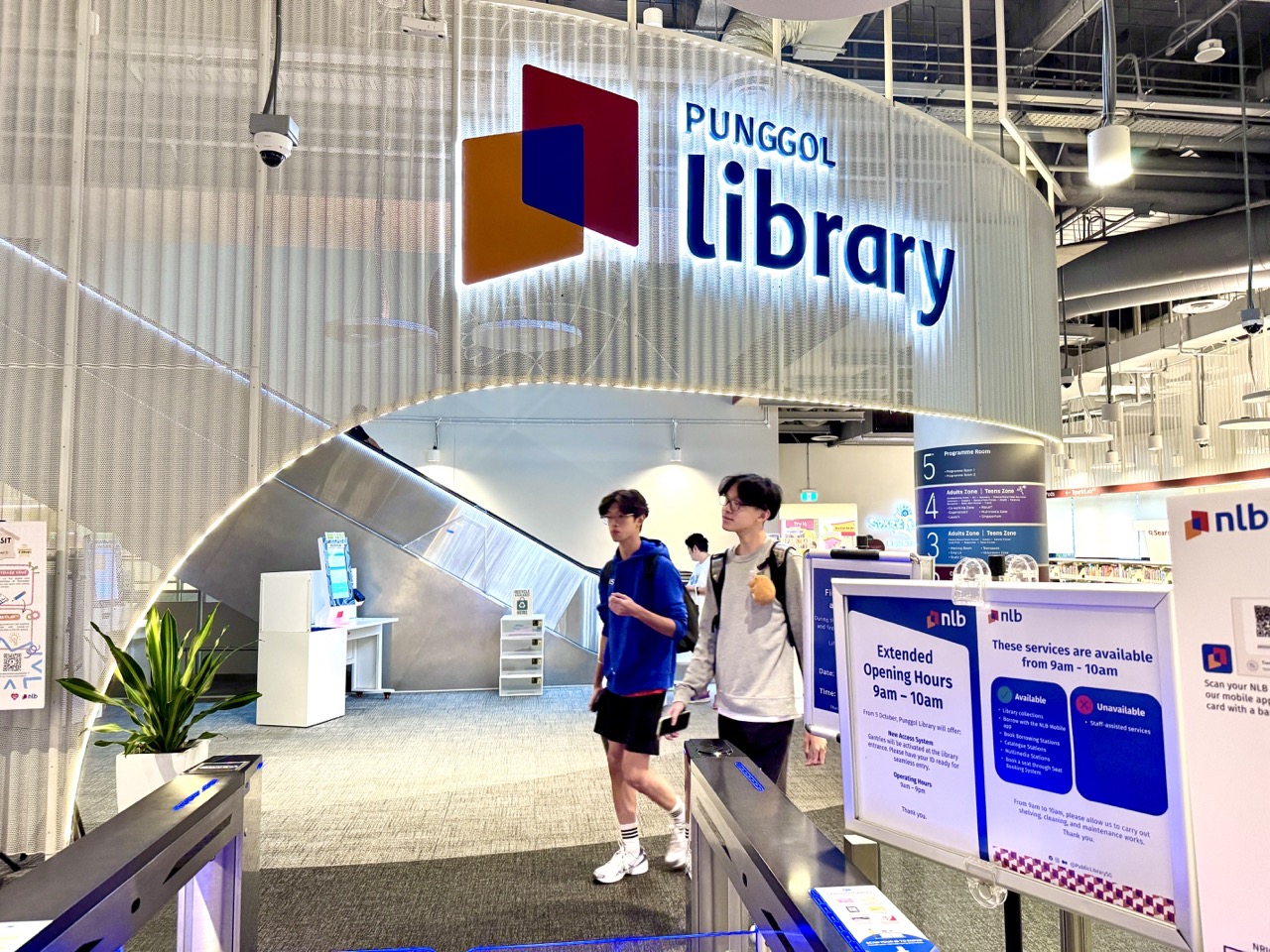
For a Punggol resident who enjoys culture, art, Singapore food history or quiet indoor activities, one of the most interesting events in the early-2027 pipeline is already listed by the National Library Board. Digital Canvas of Yesteryears at Punggol Library is an immersive exhibition based on nostalgic artwork by Singapore artist Yip Yew Chong. The official NLB description says that its Punggol Library exhibition period runs 16 October 2026 to 15 March 2027, although the booking record’s structured calendar fields show an older October 2026 segment.
Here is the important catch. NLB lists closures from 1–7 January 2027 and again on 27–28 February 2027, and the same official page has conflicting general advice about Sunday opening. One timetable line gives Sunday hours; a subsequent note says the exhibition is not available on Sundays and public holidays. Residents should therefore check the actual NLB listing and its linked A Taste of Home programme updates before making a special journey, rather than relying only on a calendar preview.
This Punggol Events 2027 guide separates the published programme period from specific availability, explains what visitors can genuinely expect from the exhibition, and offers parents, grandparents, students and adults practical ways to use a short visit. It was researched on 27 October 2026. The National Library Board, not this local guide, controls the final dates and operating instructions.
Quick answer: what has been announced?
- Programme: Digital Canvas of Yesteryears at Punggol Library, part of the NLB A Taste of Home showcase and Time of Your Life activities.
- Artist: Yip Yew Chong, whose nostalgic artwork depicts episodes of Singapore life, including food scenes.
- Place: Punggol Regional Library at One Punggol; the NLB calendar places this listing at the Stories Come Alive Room, Level 1.
- Descriptive programme period: 16 October 2026–15 March 2027.
- Displayed daily hours: Monday–Thursday 10am–5pm; Friday–Saturday 10am–3pm.
- Sunday conflict: A timetable mentions 10am–5pm, but the note beneath it says not available on Sundays and public holidays. Treat Sunday visits as unconfirmed until the organiser resolves this.
- 2027 closures explicitly named: 1–7 January, 27 February and 28 February.
- Admission and registration: NLB says registration is not required and visitors may walk in. It does not supply a distinct ticket price on the event page; check current terms rather than making an unsupported universal claim.
- Primary source: NLB GoLibrary exhibition announcement.
- Latest programme advice: NLB’s A Taste of Home page.
This is an exhibition, not an officially scheduled lecture by the artist, an art class, a sale or a guaranteed performance. What visitors will encounter is the immersive gallery and related historical themes described by NLB.
Why does this belong in a 2027 Punggol event guide?
Many event notices are tied to a single date. This exhibition is different: it began in October 2026 and NLB’s narrative says it continues into March 2027. That makes it relevant to families returning to school routines in January, working adults looking for a weekend activity and seniors who enjoy revisiting memories of Singapore.
A particularly useful insight is that an event may have several time fields serving different purposes. NLB’s structured calendar object on this record shows 16–31 October 2026, while the event’s written description gives the longer 16 October 2026–15 March 2027 period. We have not invented an explanation for that mismatch. A calendar widget may not represent the whole touring period, or the record may need correction. Readers should use the organiser’s current details rather than treat a single extracted date as sufficient.
For local residents, this is precisely what a practical events guide should do: identify an authoritative source, surface contradictions and show how to verify before leaving home. Repeating “open every day until March” would be attractive SEO copy, but it would be less useful and potentially wrong.
What is Digital Canvas of Yesteryears?
NLB describes an immersive digital gallery of nostalgic Singapore scenes by artist Yip Yew Chong. The visitor experience is built around imagery that invites recognition, curiosity and conversation. Food scenes and everyday cultural details can help people think about how Singapore’s routines, neighbourhood businesses and tastes have changed.
The title Digital Canvas of Yesteryears should not be confused with a permanent collection or a traditional painting class. It names an exhibition with a digital presentation format. NLB says the programme is available in immersive rooms at several libraries, including Punggol, Central, Ang Mo Kio and Harbourfront, according to individual listings and operational dates.
The theme is linked to A Taste of Home, a broader NLB showcase of food culture and heritage. A visitor may enter thinking about favourite dishes and leave with more questions about markets, streets, family memories and how cultural habits survive across generations.
Nothing on the record proves that the artist will be present during a particular Punggol visit. Nor does it identify a live demonstration or promise that every screen or digital interaction will be available at every hour. Keep expectations grounded in the advertised exhibition.
Where exactly is the display?
The GoLibrary page places the event at Punggol Library — Stories Come Alive Room (Level 1). Punggol Regional Library is located within One Punggol, a community hub at Punggol Drive. It is important not to mistake this for the Comics & Games Library at Punggol Coast Mall, which is a different NLB service at a different location.
Residents familiar with One Punggol may already know the main entrance and library. A first-time visitor should nevertheless confirm whether the Stories Come Alive Room is operating under the advertised exhibition timetable on the intended date. Individual programme rooms can have arrangements that differ from the general library’s opening hours.
When travelling with somebody who uses a wheelchair, stroller or mobility aid, consult NLB’s official wheelchair-friendly library routes and social stories and choose Punggol Library. An accessible public building is helpful, but it does not settle every detail of the temporary exhibition layout or queueing situation.
The Punggol Events home guide links to other local events, but the library’s own programme entry is where readers should confirm this venue and its availability.
The January closure that many people might miss
The event description expressly says Digital Canvas of Yesteryears will be unavailable at Punggol Library from 1 to 7 January 2027. That includes a period when some families may still be thinking about school holidays and easy indoor activities. It would be a mistake to recommend the exhibition as a New Year’s Day outing based solely on the longer March end date.
If you are making plans for a specific January morning, begin by excluding the entire 1–7 January period. After that, do not assume every remaining day is available. The listing separately says no operation on public holidays and has a Sunday contradiction, while later unforeseen changes are possible.
For visitors who live nearby, changing plans is usually straightforward. For a family travelling from another estate, a special journey costs more time and effort, so checking one day before can be worthwhile.
The most reliable approach is to open the organiser page close to your chosen visit and look for any new closure notice. Do not treat a shared screenshot dated October 2026 as real-time operational confirmation.
What about 27 and 28 February 2027?
These two dates are also named as unavailable in the NLB Punggol-specific exhibition note. They should be marked in any family plan, especially because a late-February outing may look attractive on a generic events search.
The fact that both dates fall near a weekend does not prove a special event, private booking or maintenance reason. NLB does not state the reason in the excerpt. Reporting an invented reason would make it harder to distinguish facts from speculation.
If your schedule only allows that weekend, consider visiting another day if the exhibition is running, or choose a different library activity. You should not infer that an alternative NLB branch will automatically have the same exhibition hours; each venue may issue separate conditions.
Checking the explicit closed-date list is a small habit that prevents a large proportion of unnecessary journeys.
Sunday hours are internally inconsistent
The official narrative gives Sunday 10am–5pm in its list of opening hours, but immediately after listing unavailable dates it says the exhibition will not be available on Sundays and public holidays. These statements cannot both be relied on as unconditional rules for the same Sunday.
This guide does not silently choose the more convenient one. Until NLB clarifies, a Sunday visit is uncertain. Parents who only have Sundays free should contact NLB or check the freshest A Taste of Home page before promising children an exhibition outing.
This is an important example of what it means to read an official announcement carefully. Even authoritative pages can contain fields copied from earlier event templates or notes that need updating. Residents benefit when reporting acknowledges the discrepancy instead of spreading one half of it.
The practical recommendation is to favour a clearly advertised weekday or Saturday slot, excluding closures, when you can. Even then, recheck for operational changes before departure.
What does “walk in” actually mean?
NLB’s event page states registration is not required and asks visitors to walk in. That is more definite than vague marketing language saying “everyone is welcome”. It means the published programme does not use an advance registration requirement for this exhibition.
However, walk-in access does not guarantee there will never be a queue, temporary room closure, capacity restriction or operational adjustment. The page does not publish a separate crowd-management policy in the excerpt. If the space is busy, follow library staff instructions rather than assuming a right to immediate entry.
Do not confuse an exhibition visit with library book borrowing. Borrowing may involve NLB’s normal membership and collection rules. Viewing a walk-in gallery is a different activity. Similarly, registration for another library workshop should not be assumed from the gallery’s walk-in policy.
If an event aggregator displays a “book” button for the gallery, confirm whether the link is really for this particular NLB programme or an unrelated activity before providing personal information.
Who is the exhibition for?
The GoLibrary calendar metadata lists adults aged 36–49 and seniors aged 50 and above as audiences. That reflects NLB’s Time of Your Life positioning and the nostalgic subject matter. It does not, by itself, establish a formal ban on younger visitors.
Parents considering a family visit should nevertheless ask whether there are age, supervision or immersive-room considerations for children. A room designed for an adult reflective experience may be less suitable for a toddler with limited patience than a dedicated child programme elsewhere in the library.
For older residents, familiar street scenes and food histories can be starting points for conversation. Some people may recognise places, shops or social routines immediately; others may have grown up with different experiences. Nostalgia is valuable, but it is not a uniform memory shared by everyone.
For students, a visit can provide material for English language description, historical inquiry, humanities discussion and visual interpretation—provided the student observes and thinks rather than treating the exhibition as a worksheet-completion race.
Why food history makes a useful local conversation
Food culture is an accessible way to learn about a place. Behind a familiar dish lie ingredients, supply chains, labour, language, family habits, migration and the changes brought by housing and city planning. An artwork that recalls food and street life can open these questions without requiring visitors to memorise dates first.
A grandparent might remember how a favourite stall operated. A parent might compare those memories with the food courts and neighbourhood centres children know today. A young person might ask why certain foods are associated with particular celebrations or times of day.
The exhibition is an invitation to explore such conversations, not proof that every historical detail can be settled from an artwork alone. A painting or digital recreation can express an artist’s experience, perspective and interpretation. If you want to establish an exact date or place, consult archival records or reliable publications as well.
This is where a library matters: the visit can spark curiosity and the books nearby can help answer it. Looking and reading support one another.
What should a family do in 30–45 minutes?
Start without turning the visit into an obligation. Read the exhibition introduction, explore the displayed scenes at the pace that feels comfortable and let each person identify something that attracts their attention.
A child might choose one object from a scene—a food container, sign, piece of clothing or street feature—and describe it in simple English. An adult might remember a similar object from their own childhood. A teenager might ask what changed socially or technologically. These are suggested visitor activities, not tasks required by NLB.
After exploring, choose one question to pursue. Did the artwork make you wonder what a street market once looked like? Are you curious about how people bought meals before major shopping malls became common? Would you like to learn about the artist? The library can be a useful place to find additional material.
Finish before people are exhausted. A shorter, thoughtful experience often produces better conversation than a long visit spent rushing through every available display.
A useful activity for grandparents and grandchildren
A shared visit can become a gentle oral-history conversation. A child may ask: “What food did you buy after school?” “Did you travel far to get it?” “What did the shop look like?” “How was it paid for?” These questions are simple enough to invite vivid memories.
There is no need to insist that every older person remember precisely or that everyone enjoyed the same past. Some memories may be joyful; others may involve hard work or difficult living conditions. Listen without correcting every small detail immediately. Afterwards, the family can check historical claims together if accuracy is important.
Avoid filming or photographing strangers while recording family stories without permission. NLB’s notice says the organiser may photograph or record its programme for publicity, but that does not eliminate the need for respectful visitor behaviour or grant you permission to record other participants freely.
If a family member does not want to discuss a topic, choose another. The purpose is connection, not interrogation.
How a Primary school student can learn from art
Primary-school learning often asks children to connect what they see with what they can explain. A visual exhibition offers rich opportunities to practise observation, descriptive vocabulary, sequencing and comparison.
Try the three-part method: notice, explain, question. Notice three details without guessing. Explain what those details suggest, separating visible evidence from interpretation. Ask one question that could be answered with another source. This habit builds careful reading as well as careful looking.
For example, a student might notice a market stall, a sign and several people in a scene. They should not immediately invent the market’s exact date, price of goods or identity of each person. Instead, they can say: “This appears to depict a busy shopping environment,” and then ask how similar shops operated at that time.
The lesson is not to turn every outing into examination revision. It is to help a child become comfortable saying “I can see this” and “I think this because…” while knowing the difference between the two.
Secondary students: interpretation and sources
Older students can examine visual composition, symbolism, perspective and representation. Why might an artist choose one viewpoint rather than another? What details make a scene feel familiar? What does the picture leave outside the frame?
Then introduce source evaluation. An artwork is valuable cultural evidence, but it is not identical to a contemporaneous government record or a photograph of the same place. Each source type has strengths and limitations. A student can compare the exhibition with archival images, oral histories and published accounts.
A useful reflection has three headings: what the artwork shows, what it suggests and what remains uncertain. This structure reduces overclaiming. It also helps students write more precise explanatory paragraphs across subjects.
For teachers or families doing educational activities, ask about NLB’s visitor guidelines before planning a group trip. A walk-in exhibition is not a guaranteed classroom booking or guided tour.
Why digital presentation matters
Digital exhibitions may present art with motion, scale or immersive environments that differ from an ordinary printed reproduction. That format can draw attention to details and atmosphere, but technology does not automatically make the underlying information more accurate.
Children should know that an attractive image and a historical fact are different. A scene can feel realistic without documenting every element exactly. An adult can enjoy the visuals while remaining curious about how the artist created the work and what sources inspired it.
The value of the gallery is not a claim that screens will replace books. In fact, NLB pairs the experience with invitations to discover related reading. Visual curiosity can lead to a library book, a conversation or a visit to a heritage site.
If certain digital features are temporarily unavailable, do not pressure staff to provide functions not promised at your chosen visit. The organiser’s current operational instructions take priority.
Is there a stamp rally or souvenir?
The NLB listing says A Taste of Home includes a stamp-rally activity involving Digital Canvas of Yesteryears and Bite-Sized Stories at participating libraries. It describes collecting two different stamps from any two exhibition sites for a tote bag while stocks last.
That is an advertised programme, but it is not a guarantee that every visitor will receive a bag, that every redemption point has stock, or that any two random activities count. Carefully review the current A Taste of Home information for the official stamp rules, participating venues and redemption arrangements before making a special trip.
A family primarily interested in the exhibition can enjoy it without a gift. A child who wants a souvenir should be told that “while stocks last” means the reward may no longer be available. Promise the experience, not the merchandise.
Do not buy or exchange stamp cards from unverified third parties. The official organiser is best placed to explain legitimate participation and redemption conditions.
What is the Time of Your Life connection?
NLB frames the exhibition under its Time of Your Life (TOYL) Celebration, spanning October 2026 to March 2027. The programme encourages curiosity, nostalgic reflection and reading, especially among adults and older people.
Punggol is often described as a young town, but residents span multiple generations. A cultural programme aimed at adults and seniors is a useful reminder that a town’s social life should not be reduced to playgrounds, school admissions and children’s enrichment alone.
Learning continues through adulthood. Looking at historical images, revisiting familiar songs or discussing food memories can lead to new questions about Singapore and personal identity. That is an educational benefit, not a clinical claim that attending will prevent disease or improve memory in a specific measurable way.
If you are bringing an older relative, let their interest guide the visit. Not every person enjoys nostalgia, and participation should remain voluntary.
Accessibility and sensory planning
The NLB record links to official wheelchair-friendly routes and social stories. These resources can help visitors who prefer predictable journeys or need to understand the space before arriving. Open the library accessibility page, select the relevant library and check the route that matches your transport.
Some people are sensitive to large digital displays, sound or crowds. The event description does not give a complete sensory profile or a timed quiet-session schedule. If this will determine whether somebody can enjoy the exhibition, contact the library to ask about the actual environment.
For visitors with children, explain simple gallery rules before entering: keep voices considerate, follow any directions about touching equipment, and give other visitors room. Do not assume that everything displayed in a digital exhibition is an interactive touchscreen.
If you need a resting point or restroom, ask library staff about available facilities. A local guide should not invent amenities within a temporary exhibition room.
Photography, filming and privacy
The NLB listing includes a photography and videography notice. It says images or recordings of the programme and participants may be taken for archiving, publicity and related purposes. Read the original notice carefully, especially if attending with a child or someone who is uncomfortable being photographed.
That organiser notice does not itself tell visitors they can film all displayed artworks without restriction. Check gallery rules about recording screens, flash, tripods and distribution of images. Artworks may be protected by intellectual-property rights even when publicly exhibited.
Photographing the surrounding library or visitors also requires ordinary respect. Avoid close-up images of strangers, children or identifying details without appropriate permission. If a person asks not to be in a photo, respect that request.
For a school assignment, a short written observation and an approved reference to the official programme may be more suitable than recording the entire display.
How to handle an event page with conflicting dates
The NLB source includes several layers: an overall narrative period to 15 March 2027, a list of opening hours, specific unavailable dates, a contradictory Sunday note, and structured event fields ending on 31 October 2026.
Each field answers a different question—or exposes an inconsistency. The most useful approach is to cite the complete record, identify the disputed part and check the organiser’s live update page. It is wrong to copy the March end date and ignore the January closure. It is equally wrong to claim the exhibition entirely ended in October when the NLB narrative explicitly extends the programme.
When comparing a secondary events site with the primary NLB entry, give priority to NLB’s latest published clarification. Secondary websites can be useful indexes, but they may import only one of the conflicting fields.
This is a practical media-literacy lesson for residents: even an official announcement should be read in context rather than reduced to one search snippet.
Planning a weekday visit around school and work
A weekday visit can be convenient for some parents with flexible schedules, retirees or adults on leave. The listed Monday–Thursday period is 10am–5pm. That is a stated exhibition window, not permission to enter the library outside normal hours or keep using the room after the programme ends for the day.
Families collecting a child after school should calculate travel and arrival time, not just look at a 5pm closing figure. There may be a last-entry or operational cutoff not stated in the excerpt. Ask if arriving near closing.
For an adult combining the gallery with library reading, separate those two activities in your plan. The library’s general services may have different opening and closing hours, and exhibition rooms can follow a specific timetable.
If there is a sudden change in your household schedule, the exhibition’s multi-month narrative period offers flexibility—but only if the revised date is actually listed as available.
Planning a Saturday visit
The NLB narrative lists Friday and Saturday from 10am to 3pm. A resident who assumes the same 5pm end as a weekday could arrive too late. Check the specific day of the week before making plans.
A Saturday may suit working adults and families, but the available programme page does not guarantee light crowds. Keep expectations reasonable and avoid turning a walk-in exhibition into a stressful appointment. If you have another commitment after 3pm, visit earlier rather than risk arriving just as the room closes.
During February, remember the explicitly unavailable Saturday 27 February 2027. A weekend date can look ideal on a calendar while being excluded by the organiser’s notice.
Consider pairing the outing with ordinary library borrowing or a quiet meal, but avoid claiming an unadvertised special programme or restaurant promotion is part of NLB’s exhibition.
Should you combine this with Punggol’s other attractions?
One Punggol has community facilities, and the surrounding town offers parks, retail areas and public transport connections. A local resident may choose to combine a brief exhibition visit with a library errand or time at home, depending on family energy and weather.
But remember that Punggol Regional Library and Punggol Coast Mall’s Comics & Games Library are different locations. The latter is a separate NLB service; this exhibition record identifies the Punggol Library Stories Come Alive Room. Do not navigate to the wrong library based on the word “Punggol”.
The Punggol Guide provides a wider view of the town, while the Punggol Events page groups dated and ongoing event notices. Those links help with context, but the exact exhibition availability remains a question for NLB.
A flexible itinerary is better than a complicated one that collapses if a room is temporarily unavailable.
Five questions visitors often have
Is the exhibition scheduled for January 2027? The NLB narrative describes a programme continuing through 15 March 2027, but it expressly excludes 1–7 January 2027 and contains other operational inconsistencies. Check the current NLB update before travel.
Is there a ticket? NLB says registration is not required and visitors may walk in. The event page does not publish a separately itemised admission charge. Follow the current official entry instructions.
Is it open on Sundays? The same official page gives conflicting guidance. It lists Sunday hours but also says unavailable on Sundays and public holidays. Do not assume Sunday access without a fresh organiser confirmation.
Can young children attend? The calendar metadata targets adults and seniors, and the public description does not explicitly state an age ban. Parents should confirm suitability and supervision needs for the actual exhibition room.
Will Yip Yew Chong attend? The exhibition features his artwork. The event record does not promise a personal appearance on your chosen date.
A resident’s decision checklist
- Identify the exact programme: Digital Canvas of Yesteryears at Punggol Library.
- Open the official GoLibrary record and A Taste of Home updates.
- Note the narrative end date 15 March 2027, but do not assume every date before it is available.
- Exclude 1–7 January and 27–28 February 2027.
- Resolve the conflicting Sunday guidance directly with NLB before any Sunday visit.
- Plan around the stated weekday or Saturday hours where current information supports them.
- Navigate to Punggol Regional Library, Stories Come Alive Room, Level 1, not Punggol Coast Mall.
- Follow the walk-in and photography guidance displayed at the actual venue.
- Treat the stamp-rally tote bag as subject to separate rules and stock.
- Allow time for a short, thoughtful visit rather than rushing to collect a souvenir.
Official sources and verification
Primary event record: National Library Board — Digital Canvas of Yesteryears at Punggol Library. The narrative gives the March 2027 programme horizon, exhibition theme, venue and intended hours; it also contains the closure dates and contradictory Sunday instructions.
Programme updates: A Taste of Home. Use this organiser-directed link to confirm current opening arrangements, possible changes and any stamp-rally redemption terms.
Library route help: NLB wheelchair-friendly routes and social stories. Select Punggol Library for relevant transport and accessibility information.
Other Punggol information: Punggol Events and the Punggol Guide help residents distinguish this cultural exhibition from community dinners, vendor markets, classes and activities at other addresses.
Fact-check date: 27 October 2026. NLB has authority to amend the programme. No live gallery-access guarantee is made for a specific future day.
Final thought: why an exhibition can be worth the journey
A digital art exhibition is more than a screen showing beautiful pictures. It can help a resident ask how everyday life used to look, why certain memories matter and how Singapore’s food culture connects generations. Those conversations have value whether the visitor is eight or eighty.
The practical rule is equally important: the March 2027 narrative end date is not a blanket opening guarantee. Read the specific closure list, treat Sunday access as unresolved until NLB clarifies, and make the trip only when the organiser’s current information supports it. The best local information helps people enjoy an event without misunderstanding what has actually been announced.


