
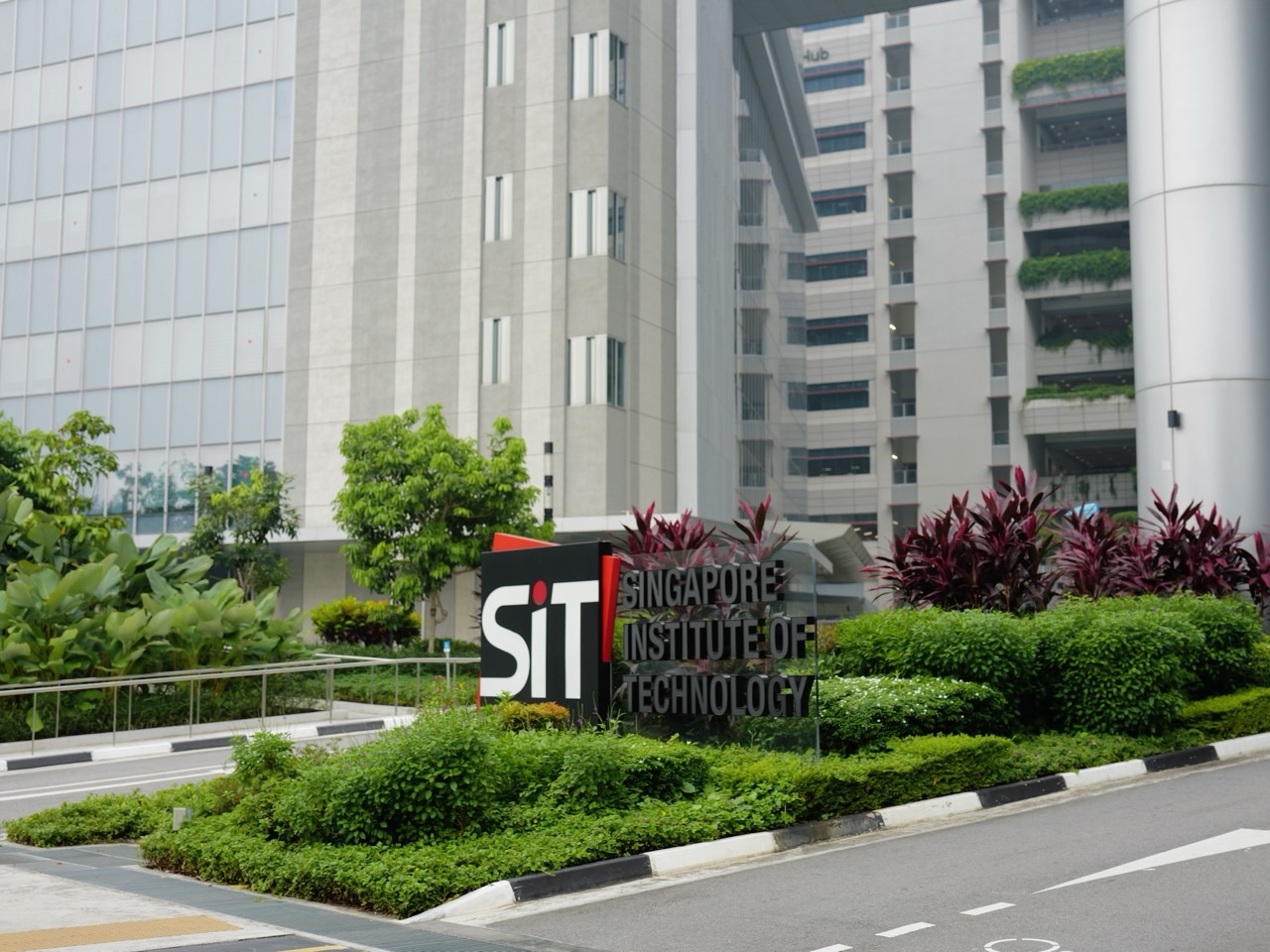
Did you know? A working adult in Punggol may be able to take one university-level micro-credential, earn a Specialist Certificate and decide later whether to stack further credits towards a degree. At the Singapore Institute of Technology (SIT), however, credits and certificates have a five-year validity period for degree stacking under its published Competency-based Stackable Micro-credential (CSM) pathway. That detail changes how a family should budget and plan.
This Punggol Education 2027 guide examines actual SIT/SITLEARN training examples listed for January 2027, the named degree pathways, Recognition of Prior Learning, SkillsFuture funding rules and the important distinction between taking a course, receiving a certificate and becoming enrolled in a degree.
It is designed for Punggol diploma holders, mid-career workers, returning parents, career-switchers and employers. The goal is to make a course decision from the work a person wants to do—not from a short-lived technology trend or the attractive phrase ‘stackable degree’.
Quick Answer: What Is a Stackable Micro-Credential?
A micro-credential is a smaller assessed programme covering defined competencies. Under SIT’s CSM pathway, completing one can lead to a Specialist or Graduate Certificate, depending on the track. For the listed CSM programmes, these credentials may be stacked toward specified SIT bachelor’s or master’s qualifications when their requirements are met.
- Standalone course: learn a useful skill and obtain the relevant credential without committing to an entire degree.
- Stackable pathway: choose future approved micro-credentials in a coherent sequence that can count towards a named qualification.
- Recognition of Prior Learning (RPL): prior diploma study and work experience may receive credit where SIT’s assessment finds them applicable; it is not automatic.
- Degree progression: a separate decision with entry, academic and funding requirements; it should not be equated with course enrolment.
- Five-year stacking validity: SIT says certificates and credits are valid for five years for stacking under the CSM arrangement.
A simple analogy helps. A useful micro-credential is one completed building block. Several approved blocks may contribute to an intended degree, but they do not spontaneously become that degree. The learner must follow the correct pathway, meet standards and progress through the university’s process.
What Is Actually Available to Research for 2027?
SIT’s official CSM pathway page describes four degree programmes across Infocomm Technology, Engineering and Health Sciences. Its published examples include pathways towards a Bachelor of Science (Honours) in Applied Computing, Bachelor of Engineering (Honours) in Electrical & Electronic Engineering, Bachelor of Engineering (Honours) in Infrastructure & Systems Engineering, and a Master of Health Sciences pathway.
This is the programme-level picture at the time of writing, not a claim that all courses admit every applicant or that every micro-credential stacks into all four qualifications. The specific page must name the exact destination degree, level, cohort and requirements.
Example 1: Modern Software Engineering Practices
On the official CSM listing checked in October 2026, Modern Software Engineering Practices is shown as a January 4, 2027 blended micro-credential lasting more than three months. It introduces areas including Agile, DevOps, Lean user-experience work and full-stack development, and is listed as stackable towards the BSc (Honours) in Applied Computing through CSM.
The page lists a course price of SGD 9,868.86 and a potential SkillsFuture funding level of up to 90%. That is not a quotation for any particular learner’s net payable fee. Eligibility, funding cap, tax details, schedule and programme requirements must be checked before enrolling.
Example 2: Machine Learning
SIT also lists a Machine Learning micro-credential beginning January 4, 2027, taught using Python and covering areas such as supervised and unsupervised learning and recommender systems. It is another Applied Computing CSM example. A learner should already consider whether they can handle programming, data and mathematical reasoning, rather than enrolling simply because ‘AI’ appears in a job advertisement.
The same official listing indicates more than three months of blended learning, a listed course price of SGD 9,868.86 and up to 90% funding subject to eligibility. Verify the live course page and planned intake before making work or childcare arrangements.
Example 3: Semiconductor Manufacturing and Process Control
For residents interested in industrial technology, SIT lists Semiconductor Manufacturing and Process Control, beginning January 4, 2027, as a blended, more-than-three-month micro-credential. Topics include semiconductor fabrication and process control; listed stacking routes relate to its Engineering CSM programmes.
Its published headline price is SGD 10,006.20, with funding described as up to 90% for eligible learners. A prospective student should inspect entry prerequisites, laboratory or in-person demands and how the course relates to their actual workplace role. A technical course is not automatically suitable for a complete beginner.
Example 4: Smart Maintenance and Operations Improvement
SIT lists Smart Maintenance, relating to sensors, data and equipment reliability, and Operation Excellence and Process Improvement, which addresses operational efficiency. These can make sense for workers already in facilities, engineering, maintenance, manufacturing or operations roles. The official CSM catalogue shows January 2027 examples; check each approved stacking destination separately.
A maintenance supervisor who wants to make better decisions from equipment signals may benefit from such applied content. Someone trying to move into financial analysis may be better served by a different course. Match the course to an actual task, not a fashionable umbrella word.
Why Five Years Is Not a Small Print Detail
SIT’s current CSM FAQ says learners retain the Specialist or Graduate Certificate they earn even if they stop, while their certificates and credits are valid for five years for stacking towards a degree. Those are related but distinct ideas: you do not lose proof of having completed a course simply because you choose not to progress; however, the ability to count it toward the named degree is time-limited under the published rules.
Imagine a worker completes one micro-credential in early 2027, then pauses for several years to care for family or change jobs. They should ask SIT when the stacking clock runs, whether later programme changes affect mapping, and what happens if they do not complete further requirements in time. Do not build a vague ten-year degree plan on a five-year credit-stacking rule.
- Record the micro-credential title, completed date and formal credential awarded.
- Save the syllabus, assessment evidence and official course-to-degree mapping.
- Ask the institution to confirm current credit validity and applicable conditions in writing.
- Keep the target qualification and realistic completion timetable visible.
- Re-check the pathway before paying for the next certificate, especially after a long pause.
Does Past Diploma Study or Work Experience Count?
SIT says Recognition of Prior Learning may credit existing diploma learning and professional experience towards the CSM pathway. ‘May’ matters. Prior experience must be evaluated against actual competency and programme requirements. Years spent in a role are not automatically equal to university credit.
A practical preparation file could include a relevant diploma transcript, module descriptions, industry certificates, role descriptions, project reports, safely anonymised work artefacts and supervisor-confirmed learning where permitted. Check exactly what SIT’s RPL process accepts before uploading confidential documents or making assumptions about exemptions.
If recognition is granted, ask which specific modules or competencies it covers and how it changes total study time and costs. If recognition is not granted, the applicant can still compare whether the route offers sufficient career value without exemption.
Funding: SkillsFuture Subsidy Is Not the Same as Degree Funding
The published SIT CSM FAQ distinguishes standalone micro-credential funding from the funding that applies after a learner formally progresses into a degree. Eligible learners may receive SkillsFuture subsidies and relevant training allowances while stacking; a different maximum number of subsidised micro-credentials may apply depending on the target degree.
After formal degree progression, other support such as the relevant Tuition Grant or public bursaries may apply under their own eligibility criteria. One headline ‘up to 90%’ figure cannot be used to calculate every course’s net fees or the total cost of a degree. Confirm your status, funding cap, account eligibility and payable amount on the actual course and funding pages.
See SITLEARN funding information or the current official funding link from the programme page, and MySkillsFuture. Before paying, take a dated copy of the exact fee and funding breakdown presented to you.
How a Punggol Working Adult Should Compare Routes
Suppose a mid-career technical professional wants to move towards smart-building systems. They could be considering a three-month maintenance credential, a part-time diploma, an engineering degree or a short vendor certificate. The best route depends on what the target role demands, what qualifications the employer recognises and how much study is needed.
- Single skill gap: a targeted short course or micro-credential may be enough to improve day-to-day performance.
- Multiple related gaps: stackable study may help form a coherent capability portfolio, if the module sequence and recognition are valid.
- Profession requiring a degree or licensing: verify whether the proposed qualification satisfies the actual entry, accreditation or registration rules.
- Unclear career interest: start with a smaller experiment or job-shadowing conversation before making a large financial commitment.
- Family constraints: confirm in-person sessions, online workload, assessment windows, transport and childcare support before enrolling.
The nearby Punggol Campus helps make applied learning visible, but do not assume every course meets at Punggol or that all university facilities are open to the public. Some micro-credentials are blended with scheduled in-person elements; verify the actual location and attendance conditions.
SITLEARN’s New School and Planned 2027 Hub
On 12 October 2026, SIT announced the establishment of the SIT School of Lifelong Learning and Career Development (SITLEARN), linking skills assessment, continuing education, career development and industry partnerships. It also said a dedicated hub at the Punggol Campus is being developed for 2027. The planned hub is not evidence that every announced service or event is already operating.
The announcement also described industry collaborations and a planned early-2027 Master of Science in Safety & Risk, subject to the institution’s launch and admissions information. For residents, this means there are multiple learning routes to examine. It does not mean one training centre can promise a job, a degree or a regulated professional title simply from participation.
Read the 12 October 2026 SIT announcement and our Punggol SITLEARN career-transition guide for the broader institutional context.
A Seven-Question Course Decision Test
- 1. Target job: which real responsibilities require new competence?
- 2. Entry fit: does my prior qualification and experience meet this micro-credential’s criteria?
- 3. Learning content: which specific methods, tools and assessed skills will I gain?
- 4. Recognition: is it standalone, stackable under CSM or only a course-completion record?
- 5. Degree mapping: exactly which target degree recognises this credit, and for how long?
- 6. Personal costs: what is the verified net fee, workload and opportunity cost after eligibility is assessed?
- 7. Evidence: what artefact or performance will prove I can use the new skill at work?
Write the answers before enrolling. If a question cannot be answered from the course page, contact the university rather than relying on a reseller, social-media post or a friend’s fee calculation.
What to Do, What Not to Do and What to Think About
Do
- Confirm the actual January 2027 intake date, module details and entry criteria on SIT’s live course page.
- Differentiate a completed Specialist or Graduate Certificate from formal admission to a degree.
- Read the five-year stacking rule and make a realistic progression calendar.
- Prepare evidence for a possible RPL assessment without assuming automatic exemptions.
- Calculate the total course cost and separate standalone funding from degree-level support.
- Ask how the learning improves a real workplace task or a documented career requirement.
Do not
- Assume every SITLEARN course stacks into any SIT degree.
- Take the words ‘up to 90% funding’ as a guaranteed discount for your household.
- Interpret a future Punggol learning hub as proof that a course or public facility is already open.
- Commit to years of study before testing whether the field genuinely interests you.
- Assume an industry employer will hire you for completing one micro-credential.
- Ignore credit validity, qualification prerequisites, accreditation or professional requirements.
Think about
What do I want to be able to do differently in six months? If I stop after one certificate, is the standalone learning still valuable? If I pursue the full degree, can I realistically meet the time limit and costs? Which path leaves me with both better skills and a sustainable family life?
Frequently Asked Questions
Can I take just one SIT CSM micro-credential?
SIT says standalone study is possible: you can earn the relevant certificate and later decide whether to stack, subject to the pathway’s requirements.
Will my certificate disappear after five years?
SIT says you retain the earned certificate even if you stop. The published five-year validity applies to using certificates and credits for stacking towards the degree.
Does a Diploma automatically provide RPL exemptions?
No. Recognition of Prior Learning may apply after evaluation; the institution determines what prior study and experience can be credited.
Is a January 2027 course listed now guaranteed to remain unchanged?
No. The date, fees, modules, mode of delivery and availability can change. Confirm the live registration page and terms before acting.
Can a graduate certificate qualify me to practise a regulated healthcare profession?
Do not assume so. Regulated professions have separate entry, training and registration requirements. Ask the relevant programme and regulator.
Are the four CSM degree routes available to every applicant?
No. Each has subject-specific and qualification requirements. The four-programme description is a pathway overview, not an automatic offer of degree admission.
Official Sources and Related Punggol Guides
- SIT CSM Pathway — official degree mapping, course examples, funding FAQ and five-year validity.
- SIT 12 October 2026 SITLEARN announcement — school and proposed 2027 hub.
- MySkillsFuture — check eligible training and support.
- Punggol Education 2027: SIT degrees and career course planning — stage-wide advice.
- SITLEARN 2027 career change guide — choosing courses after a skills audit.
- Punggol engineering stackable learning — further technical context.
- Punggol Education & Town-Life Article Index — related guides.
Checked 27 October 2026. Course price figures and 4 January 2027 examples reflect SIT’s published listings at this date and are not personalised enrolment quotes. Verify 2027 fees, funding, availability and degree rules with SIT before applying or paying.


