
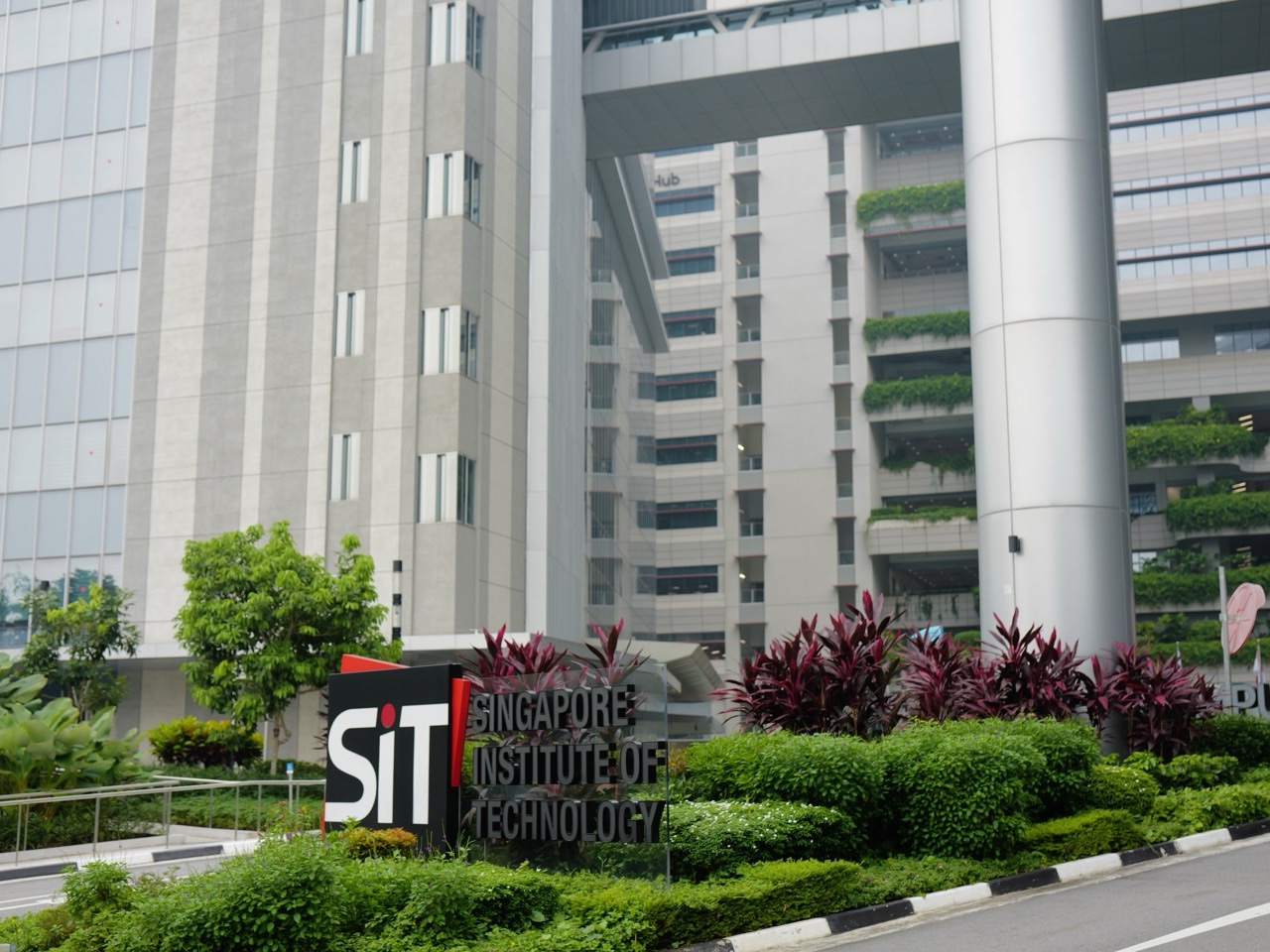
Quick answer: Punggol is gaining a more structured route to adult learning. On 12 October 2026, the Singapore Institute of Technology (SIT) announced the SIT School of Lifelong Learning and Career Development, known as SITLEARN. Rather than offering courses alone, the new school aims to connect skills assessment, continuing education, employer needs, career support and research on how adults learn. A dedicated SITLEARN hub is being developed at SIT’s Punggol Campus, with a reported target in the first half of 2027. That future hub is not proof that every course or service already operates there.
For working adults living in Punggol, the practical opportunity is to ask a better question than ‘What course should I take?’: What ability do I need, how can I demonstrate it, which qualification or programme fits that gap, and how would a new employer know I can perform the work? The official SIT announcement explains the new institutional model. The SITLEARN course catalogue and SkillsFuture Career Transition Programme page provide actual courses, schedules and funding information. A family should verify details for the specific programme before paying or resigning from work.
This guide is for a Punggol resident who may be returning to work after a break, looking to remain employable in an existing industry, or considering a move into data, digital business, sustainability or professional services. It does not promise that a certificate will secure employment. It explains the differences among short courses, stackable learning, longer programmes and industry credentials so the person can make a realistic decision.
What actually changed in October 2026?
The university’s announcement describes a more integrated continuing-education school. One part maps learning to industry needs; another focuses on skills assessment and validation; a third aims to connect training with career development; and a fourth studies which adult-learning methods produce useful results. The new dedicated hub at Punggol is intended to bring these activities together physically, but the school is already an organisational initiative and existing courses may be offered at different venues or online.
| Aspect | What SITLEARN describes | What not to assume |
|---|---|---|
| New school | Established in October 2026 for lifelong learning and career development | Every programme began on 12 October |
| Skills assessment | Tools and frameworks for recognising capability gaps and attained competence | Every individual can book every employer assessment |
| Course delivery | Short professional courses, stackable routes, career transition and executive education | One certificate is automatically a degree |
| Employer links | Partnerships for workforce intelligence, guidance and training | A course provides guaranteed hiring |
| New Punggol hub | Dedicated learning and career-development hub planned for 2027 | All facilities or appointments are open before completion |
| Research | Work on measuring adult digital-learning quality | Every advertised online course is proven superior |
| Funding | Eligible courses may carry SkillsFuture support | Every learner gets the maximum advertised subsidy |
One valuable difference is the emphasis on assessment. Adults often accumulate training attendance records without a clear way to show what changed. A skills assessment can make the gap more precise. But a proprietary tool or a workforce survey is not a substitute for a recognised professional qualification, and a trained assessor must use a method appropriate to the context.
The first step: diagnose the work before choosing the course
Imagine a Punggol resident working in administration who wants to become a digital business analyst. They may already be good at listening to colleagues, writing requirements and organising information, yet lack experience with formal process mapping, technical testing or data analysis. Enrolling in an advanced AI course because it is popular might not address the gap. A sound plan maps the desired job to actual tasks and assesses the person’s current evidence against those tasks.
Start by examining a small set of current role descriptions and write down repeated requirements: business-process analysis, stakeholder interviewing, basic data reporting, Agile methods, quality assurance or product testing. Do not choose the role solely because a salary headline looks attractive. Then create a skills inventory that distinguishes experience, confidence and observable demonstration.
| Desired task | Example of current evidence | Gap or question |
|---|---|---|
| Write a clear requirement | Meeting notes from an authorised past project | Can it be converted into testable acceptance criteria? |
| Analyse a dataset | Simple Excel workbooks | Can the learner explain missing data and check formulas? |
| Map an operating process | Informal knowledge from current job | Can the learner create a clear flowchart with exceptions? |
| Support software testing | Experience reporting glitches | Can they design reproducible test cases? |
| Explain a finding | Short workplace reports | Can they separate an observation from a recommendation? |
The inventory should be candid without becoming a judgment of personal worth. A learner may be excellent at one part of a role and inexperienced in another. That is exactly what targeted training is for. The important distinction is that saying ‘I have attended a module on SQL’ is different from demonstrating that you can write, test and explain a useful query.
What does a skills-first pathway look like?
Skills discovery
Identify the type of work you want to do and the abilities involved. A broad label such as ‘work in AI’ is not yet a useful target. Some people need to manage AI-assisted workflows; others need data engineering, governance, cybersecurity or user research. Their prerequisites differ significantly.
Assessment and gap identification
Collect evidence of previous work, suitable tests or course diagnostics. Where a formal assessment is offered by an actual provider, confirm its scope, duration, cost, privacy conditions and how employers interpret it. It should help choose training—not generate a mysterious score with no practical next step.
Training with authentic practice
Choose a programme where the work produced resembles the job. A learner hoping to perform analytics should create and explain a reproducible analysis, not simply listen to slides. A person moving into project management should practise milestones, risks and stakeholder communication. Practical assessment is often more relevant than promotional descriptions of sophisticated technology.
Evidence and recognition
After study, keep the assessed work, certificate or transcript, and a short explanation of what was demonstrated. Check whether the award is a course participation record, a certificate of attainment, a professional certification or academic credits that can actually be stacked toward another qualification. The names may sound similar but have different requirements.
Career translation
Rewrite a CV and interview examples in terms of the actual tasks the learner can perform. Some programmes offer career coaching or industry connections, but they do not guarantee employment. Continue testing whether the acquired skill matches current job needs and whether further study is justified.
How to compare five common learning options
| Option | Typical intention | Check before committing |
|---|---|---|
| Short course | Address a narrow skill gap quickly | Prerequisites, actual assessment, venue and recognition |
| Professional certification preparation | Prepare for a named professional examination | Separate course attendance from examination and licensing |
| Stackable micro-credential | Accumulate specified assessed modules where a pathway recognises them | Formal credit rules, expiry or progression conditions |
| SkillsFuture Career Transition Programme | Support substantial reskilling and job-search preparation | Eligibility, duration, funding, career support and no-job-guarantee rule |
| University degree or postgraduate course | Obtain a larger academic qualification | Admissions, workload, curriculum and total cost |
A micro-credential is not simply a marketing phrase meaning ‘small course’. The valuable questions are which competency is assessed, which institution awards it, how the record is verified and whether it carries actual credits toward a named qualification. If a provider says several certificates stack into a degree, ask for the written articulation rules and current programme handbook, including any conditions for later entry.
Conversely, a learner who only needs to improve a single workplace task may not require a full new degree. The scale of training should match the scale of the gap. That is how adult education becomes a practical plan rather than accumulating badges indefinitely.
What new skills does SITLEARN’s October 2026 announcement emphasise?
SIT discusses AI, green data centres, advanced safety, workforce diagnosis and employer partnerships. Among the named collaborations are industry-related AI pathways with Straits Interactive, skills work with Singtel and Nxera, and a professional safety-and-risk master’s pathway developed with the Singapore Civil Defence Force. These examples illustrate the direction of the school’s development. They do not mean all proposed programmes have begun, are available to every adult or share the same entry requirements.
The university also describes an AI Maturity and Readiness (AIM-R) Assessment that examines willingness, relevant knowledge and adoption behaviours within organisations. SIT reported a pilot involving roughly 400 Singtel employees and collaborations with more than 40 organisations. These are examples of organisational workforce work, not a promise that an individual Punggol resident can freely take the same assessment.
A second strand is the proposed Digital Adult Learning Quality Index, which aims to study the effectiveness and value of live-online, self-paced and hybrid digital continuing education. This matters because flexibility is useful only when adults actually learn and can transfer skills. Watching videos at home may be convenient, but a course still needs good assessment and support.
A practical pathway for someone curious about AI but not trained in computing
SITLEARN’s official AI-course listing currently describes introductory programmes for professionals who are new to AI. For example, its Artificial Intelligence in Broad Strokes course lists a two-day in-person run at SIT Punggol Campus on 10–11 December 2026, with the important caveat that course dates, places and funding are subject to provider confirmation.
Such a course is a plausible starting point for someone who needs to understand what AI can and cannot do in their job. It is not a substitute for specialist machine-learning engineering training. Someone who needs to build a production AI system will face additional mathematics, computing, testing and operational requirements.
Before enrolling, a working adult should prepare one safe, work-like problem using fictional or authorised data. For example, a customer-service supervisor might want to classify anonymous issue descriptions into themes. They can compare a manual rule, an AI-assisted draft and a human review. Record errors and privacy limits. Then decide whether the introductory programme addresses an actual capability gap.
A practical pathway for a career changer interested in digital business
SITLEARN’s SCTP page currently lists a Digital Business Analyst programme scheduled for 4 January to 30 April 2027, subject to the provider’s updates. It describes learning in user experience, business analysis, IT solutioning, Agile and quality-assurance testing, with preparation relevant to an entry-level business-analysis certification. This is a longer programme than an introductory two-day workshop.
The more demanding time commitment can be appropriate for someone seeking a major career shift, but it should not be romanticised. A learner needs to check the weekly schedule, pre-assessment, course projects, likely work after training and family commitments. The published ‘train-and-place’ design includes career advisory or support; it is not an employment guarantee.
A potential applicant can practise a simple business-analysis exercise before paying. Write a fictional requirement for a community club booking form. Draw the current workflow, identify two errors users might make and propose acceptance tests. If that kind of thinking is engaging, further exploration makes sense. If the learner finds the work tedious, that is useful information before committing months of time.
A practical pathway for operational excellence and process skills
Not every career change leads into programming. Process improvement, inventory control and service design are valuable in logistics, healthcare, hospitality and administration. A learner may need to understand flow, variation, root causes and data rather than a fashionable AI label.
Use a harmless model: track how long a fictional team takes to sort ten forms using two different desk layouts. Repeat trials, record the time for each and ask whether the second layout genuinely improves the process. If one student worked faster only because they already knew the forms, the comparison is confounded. Learning to identify that weakness is the beginning of disciplined operational analysis.
A person considering Lean or Six Sigma-related certification should verify the exact credential, assessment provider, prerequisite knowledge and whether the employer values it for the intended role. Completion of a training programme and award of a separate professional certificate can be distinct milestones.
A practical pathway for green technology and data centres
SITLEARN’s published catalogue includes courses on Sustainable and Resilient Data Centres and related building-energy topics. Data centres offer a strong example of the trade-off between reliable service and efficient resource use. Energy measurements, cooling, risk and maintenance must be considered together, not reduced to one headline percentage.
For example, a student might calculate the energy of a fictional 5 kW device operating for 8 hours: 5 × 8 = 40 kWh. But the operational question is whether it performs the needed service and whether the workload, cooling and other infrastructure have been included. Correct arithmetic is only the first step in an energy assessment.
Punggol has another related learning development: SIT’s Energy Efficiency Training Facility. That guide explains formal industrial training and safe school-level mathematics. A working adult should compare the actual course and institutional prerequisites before assuming laboratory access.
A practical pathway for healthcare and community care
SITLEARN’s announced work includes assessment approaches for care professionals, such as collaboration with the Agency for Integrated Care on tools connected with a Certificate of Accomplishment in Basic Dementia Care. This illustrates how skills-first learning can address practical competence in a field where safe procedures and human judgement matter. It does not make a short course a substitute for professional registration or clinical supervision.
For someone considering community care, the correct first step is to read actual job descriptions, accredited training criteria and relevant registration or employer requirements. Their prior experience in hospitality, caregiving or administration may contribute transferable communication skills, but formal tasks still need proper training and assessment.
A Punggol adult with family caregiving responsibilities may also need flexible schedules and realistic travel arrangements. The best course on paper may be unsuitable if its attendance requirements conflict with essential care. A viable plan includes support at home as well as academic motivation.
Worked example 1: the real cost of a career-transition course
Suppose an eligible learner is considering a purely hypothetical S$5,000 course with an assumed subsidy of 70%, leaving an illustrative tuition payment of S$1,500. If travel and materials add S$300, the direct budget rises to S$1,800. If taking unpaid leave results in S$1,200 of lost earnings, the simplified economic cost becomes S$3,000. These are invented figures—not SITLEARN’s tuition, a personal funding determination or a promise of benefit.
| Illustrative cost | Amount | Qualification |
|---|---|---|
| Published gross tuition assumed for example | S$5,000 | Fictional starting figure |
| Hypothetical 70% subsidy | −S$3,500 | Eligibility must be confirmed for a real course |
| Remaining tuition | S$1,500 | Calculated gross minus subsidy |
| Travel and materials | S$300 | Fictional personal expenses |
| Income forgone | S$1,200 | Only relevant if this hypothetical schedule causes that loss |
| Simplified full opportunity cost | S$3,000 | S$1,500 + S$300 + S$1,200 |
The exercise shows why a discounted fee is not the whole decision. Adults may lose earnings, childcare time or rest. Conversely, a person may gain flexibility or employer support that changes the budget. Always distinguish confirmed funding from potential funding and do not count a training allowance as certain until its eligibility and application status are verified.
Worked example 2: how to decide whether a short course is enough
Imagine a person already works with spreadsheets but cannot build a reliable report from inconsistent records. They could choose a very short course in spreadsheet validation and data cleaning, followed by a controlled workplace-style project using fictional records. If they can then complete the needed job task accurately, a costly multi-month programme may not be justified for that narrow gap.
Now imagine a person wants to leave a non-technical role for a specialist software engineering job. A two-day introduction will not supply all the foundations required for professional systems design. The need may include formal programming, mathematics, collaboration and substantial assessed practice. The appropriate route could be a longer learning programme or a full qualification, depending on the person’s starting point and employer requirements.
A helpful decision rule is to evaluate task complexity, prior knowledge, evidence required by employers and the time available. Course duration should follow from that assessment, not from the belief that longer always means better or that short always means efficient.
Worked example 3: measuring whether training helped
A manager sends ten employees on a communication workshop and receives ten attendance certificates. Has performance improved? The certificates show participation, not necessarily changed behaviour. A reasonable evaluation identifies a specific task, establishes a baseline where possible and measures the outcome under comparable conditions afterward.
Suppose a fictional service team makes an average of eight incomplete handovers per 100 cases before training and five after. The observed rate declines from 8% to 5%, an absolute reduction of 3 percentage points. Relative to the initial 8% rate, the decline is 3/8, or 37.5%. These are illustrative data, not results from SITLEARN or a real Punggol organisation.
The result still does not prove the course caused the change. Staffing, case complexity, new software or revised procedures may also matter. The organisation should examine these factors and the reliability of its measurement. Strong impact evaluation is the opposite of promotional arithmetic: it actively seeks reasons why an attractive conclusion might be wrong.
How to understand ‘up to 95% funding’ without being misled
SITLEARN’s SCTP page describes up to 95% course-fee funding and potentially up to S$3,000 monthly training allowance for qualifying learners or programmes. ‘Up to’ signals ceilings and conditions, not a universal entitlement. The actual amount depends on course status, learner eligibility, current funding rules and relevant application requirements. Consult SITLEARN’s current SCTP listing and the funding authority rather than applying a promotional maximum to your own situation.
Compare net tuition, other costs, timing of payments and whether a training allowance would replace only part of forgone income. Some learners may remain employed and study in evenings; others may need larger work changes. Funding schemes also have rules about what is covered and when an application should be made.
A family should never resign from employment because a brochure displays a large subsidy percentage. First verify a course place, timetable, actual personal funding approval or eligibility status, household financial commitments and a realistic post-training plan.
Stackable micro-credentials: when do small modules add up?
A stackable pathway is valuable only if there is an explicit map from its assessed parts to a recognised larger qualification. Ask whether modules carry academic credits, which programme accepts them, whether the next stage has separate admissions, and what happens if the pathway changes. Without that information, five attractive certificates may remain five separate certificates.
SITLEARN describes competency-based stackable micro-credential and modular certification pathways among its offerings. Their academic and professional implications are not identical. A learner should save the exact course code and credential description, not rely on a generic description such as ‘university-backed’.
It is also possible for a short assessed course to be extremely useful without being stackable. A worker may acquire a validated capability that improves their present role, while having no interest in a degree. The value of learning should be judged against the person’s objective rather than a single ranking of credential prestige.
What working adults should ask before enrolment
- What specific role or workplace task am I trying to perform after this programme?
- Which entry skills or qualifications are necessary before I can benefit from it?
- Is the course delivered at SIT Punggol, another venue, live online or self-paced?
- What dates and compulsory attendance apply, and can the timetable change?
- Will I receive a record of attendance, a certificate of attainment, a professional credential or recognised academic credits?
- What independent assessment demonstrates that I have actually learned the skill?
- Does the credential officially articulate into any larger SIT qualification, and under what conditions?
- What is the full gross price and my confirmed personally applicable funding?
- Which additional costs and possible income effects should I include?
- What employer or career-support services are included, and what are their limits?
- Are job outcomes reported for the exact programme rather than the provider as a whole?
- Can I complete a small diagnostic project before committing to the full course?
A skills audit worksheet for the Punggol adult learner
| Question | Weak answer | More useful answer |
|---|---|---|
| What role do I want? | Something in technology | Entry-level digital business analyst or operations reporting role |
| What can I do now? | I know Excel | I can clean a defined sales table and explain two formulas |
| What is missing? | More AI | I cannot document process requirements or test missing-data cases |
| How will I learn it? | Any nearby course | A programme with those assessed outcomes and suitable prerequisites |
| What evidence will I show? | A certificate screenshot | Assessed project, explanation and institution-issued award |
| How will I validate the choice? | Course marketing | Current role descriptions, credible provider terms and employer feedback |
| What happens if the plan changes? | I have no alternative | A smaller module or adjacent job task that still uses acquired skills |
Completing that worksheet may reveal that a person needs a basic course first, or that their prior professional strengths are more relevant than they believed. An adult should not be pushed toward a fashionable career merely because the district hosts many digital firms. Punggol can provide options without dictating the choice.
Returning to work after caring for family
Someone returning after a caregiving break may have substantial abilities in coordination, communication and problem-solving that are not documented in an employment reference. Those transferable skills deserve acknowledgement, but they should not be inflated into specialist technical qualifications. A useful first project might involve organising a fictional service schedule, creating a clear spreadsheet or explaining a simple workflow.
A course may help refresh workplace software, practise interviews and regain routine. However, childcare, eldercare and transport must fit the timetable. A flexible course is still demanding if it requires fixed examinations, group work or substantial independent study. Adults benefit when family members discuss how those commitments will be shared before enrolment.
Choose achievable evidence goals rather than comparing the person with younger graduates who have different obligations. A completed, well-documented project is progress; a title on a course list is not. If the learner’s goals change, a plan should be revisable.
A Punggol parent supporting an adult child or spouse
Career transitions are family decisions when they affect income, time and caregiving. Support does not mean selecting a course on behalf of the learner. Ask what kind of work they enjoy and which abilities they want to build. Offer help examining the schedule, comparing costs or testing a small project. Let the adult learner own the decision.
Parents sometimes assume a university short course must function like a degree. The correct distinction is outcome-based: what does the programme teach and assess, what credential is awarded and who recognises it? An adult may need industry certification, software evidence, academic credentials or simply stronger communication. One provider can offer different routes for different aims.
The employer’s perspective: what workplace diagnosis should change
For an organisation, skills-first learning should connect training to a business requirement. If a customer-support team struggles with complex cases, the manager should investigate whether the cause is knowledge, poor software, weak handover or unclear authority. Sending the entire team to a generic AI course may not address a broken process.
A structured diagnostic identifies tasks, current performance, desired standard and a suitable evaluation method. Some gaps can be solved by job redesign, better instructions or equipment rather than education alone. Where learning is needed, a programme should produce evidence that the target work improved and remained safe.
SITLEARN’s university announcement describes enterprise partnerships and workforce capability assessment. Individual firms should confirm what services are available, what data will be used, confidentiality arrangements, costs and how results will be interpreted. An employer-facing organisational pilot is not necessarily a public assessment service.
A 90-day adult reskilling plan without premature financial commitment
Days 1–15: decide the target and find real job evidence
Choose one primary career or performance goal. Read several actual job descriptions, noting common requirements and qualifications. Compare them with current experience. Reject the temptation to apply blindly to unrelated digital job labels.
Days 16–30: complete a diagnostic project
Use fictional or authorised data to attempt a small piece of the desired work. Record where you get stuck. A business-analysis learner can write a user story and tests; a data learner can clean a table; a process learner can investigate a simulated workflow. Gaps revealed by doing are more useful than guesses about confidence.
Days 31–45: shortlist programmes using the actual gap
Compare SITLEARN options with appropriate other providers where useful. Look at the stated syllabus, prerequisites, assessment, total duration, course format and award. Contact the provider about unclear entry requirements or recognition. Do not use outdated promotional screenshots as a substitute for current information.
Days 46–60: verify financial and family feasibility
Prepare a real household cash-flow plan with tuition, transport, study materials and foregone time. Check funding through the correct official channels. Establish whether support at home is adequate and when the course ends. Ask an employer about reasonable adjustments or learning support only through a suitable and consensual workplace process.
Days 61–75: enrol only after conditions are clear
Where the programme is suitable and a place is available, follow the actual registration and assessment steps. Save admission documents and verify course dates. Create a realistic weekly study schedule that includes assessment preparation and rest.
Days 76–90: build evidence and career materials
If training has begun, organise assessed work and ask for specific feedback. If the course has a later start, continue a relevant small project. Update a CV and discuss actual learning with a potential mentor or career adviser. Progress should be documented rather than asserted.
Assessing an online course: flexibility versus learning quality
The proposed DALQI research is a reminder that a flexible format and a high-quality format are not automatically identical. A self-paced course may suit shift work but fail if participants lack feedback or a clear structure. A live course may offer interaction but impose attendance constraints. Hybrid learning can combine benefits and complications. Students should evaluate what actually helps them practise and receive correction.
Useful questions include whether examples resemble the intended role, whether there is opportunity to attempt a task independently, whether the assessment tests the stated capability and whether support is available when someone gets stuck. A glossy video library is not the same as a demonstrated skill gain.
Try not to judge a programme only by total hours, headline funding or a long list of technologies. Ask instead what the learner can reliably do at the end that they could not do before, and how that claim is verified.
SkillsFuture Credit, funding and the risk of a misleading headline
Singapore’s continuing-education funding arrangements differ across courses and individuals. Eligibility can depend on citizenship, age, specific approved programme, education level, employment circumstances and current policy. SITLEARN’s catalogue may list possible maximum funding, but the individual award needs to be checked for the exact learner and run.
Distinguish a subsidy from a training allowance. A subsidy reduces an eligible course fee; an allowance may help with time or income impact when particular conditions are met. The two can have separate applications and approval processes. A learner should not treat an advertised ‘up to’ amount as cash already in the bank.
For the broader background, see Understanding Punggol: SkillsFuture and Career Guidance. For details of a selected course, consult the provider’s actual current page and the relevant SkillsFuture funding authority.
Frequently asked questions
Is SITLEARN a new university?
No. It is a school within SIT focused on lifelong learning and career development, rather than a separate university.
When was the new SITLEARN school announced?
SIT announced it on 12 October 2026. It builds on continuing-education programmes and partnerships.
Does its new Punggol hub open immediately?
No. A dedicated hub at the SIT Punggol Campus has been planned for 2027. Confirm the actual opening and service arrangements when announced.
Can Punggol residents enrol in any SITLEARN course?
Course eligibility, prerequisites, availability and funding depend on the specific offering. Residence in Punggol is not a substitute.
Do I need a degree before taking a short course?
Not necessarily. Requirements vary by course, so check the current formal prerequisite list.
Is a micro-credential equivalent to a university degree?
No automatic equivalence exists. Some assessed micro-credentials form parts of explicitly defined stackable pathways with conditions.
Will a SkillsFuture Career Transition Programme guarantee a job?
No. Career guidance and employment assistance are not an assurance of placement or salary.
Does ‘up to 95% funding’ mean I pay only 5%?
Not necessarily. It represents a possible ceiling, dependent on the course and your personal eligibility.
Is the S$3,000 training allowance available to everyone?
No. It is an advertised upper limit for particular eligible learners and programmes, with separate conditions.
Are all SITLEARN courses taught at the Punggol campus?
No such universal rule should be assumed. Check the named course’s venue and delivery mode.
Can older adults who have never used AI enrol?
Some introductory courses are intended for professionals without technical backgrounds, but suitability and eligibility are specific to each course.
Can I take a course while still employed?
Some programmes use evening or weekend formats, while others require significant weekday attendance. Check the actual timetable.
Does completing a course automatically grant a professional certification?
No. Some certifications involve separate examinations, assessment or membership requirements.
What is the AIM-R assessment?
SIT describes it as an organisational AI readiness tool assessing willingness, domain capability and adoption behaviour. It is not automatically a public individual test.
What should a career changer do first?
Define the target work, examine real job requirements and complete a small diagnostic project before selecting a course.
The education opportunity for Punggol families
SITLEARN’s new model makes adult learning more visible within Punggol’s growing education and industry district. Its significance is not a promise that every resident can retrain overnight. It is the development of a nearby institutional ecosystem that increasingly connects skills, assessment, applied work and career questions. People can use that environment well only if they choose a goal, understand their starting point and evaluate evidence.
An adult learner may need a short course, a longer career-transition programme or a formal degree. Sometimes the correct choice is to practise a skill before enrolling anywhere. The common principle is to make learning purposeful: know what job the knowledge must do, complete assessed work and verify the real opportunities rather than accepting a marketing shortcut.
Official sources and relevant eduKatePunggol guides
- SIT — establishment of SITLEARN, 12 October 2026
- SITLEARN official courses and pathways
- SITLEARN — SkillsFuture Career Transition Programmes
- SITLEARN — AI course listings, dates and prerequisites
- SITLEARN — Sustainable and Resilient Data Centres course
- SkillsFuture Singapore — eligibility and training information
- eduKatePunggol — SITLEARN school and planned 2027 hub
- eduKatePunggol — energy-efficiency training and green skills


