
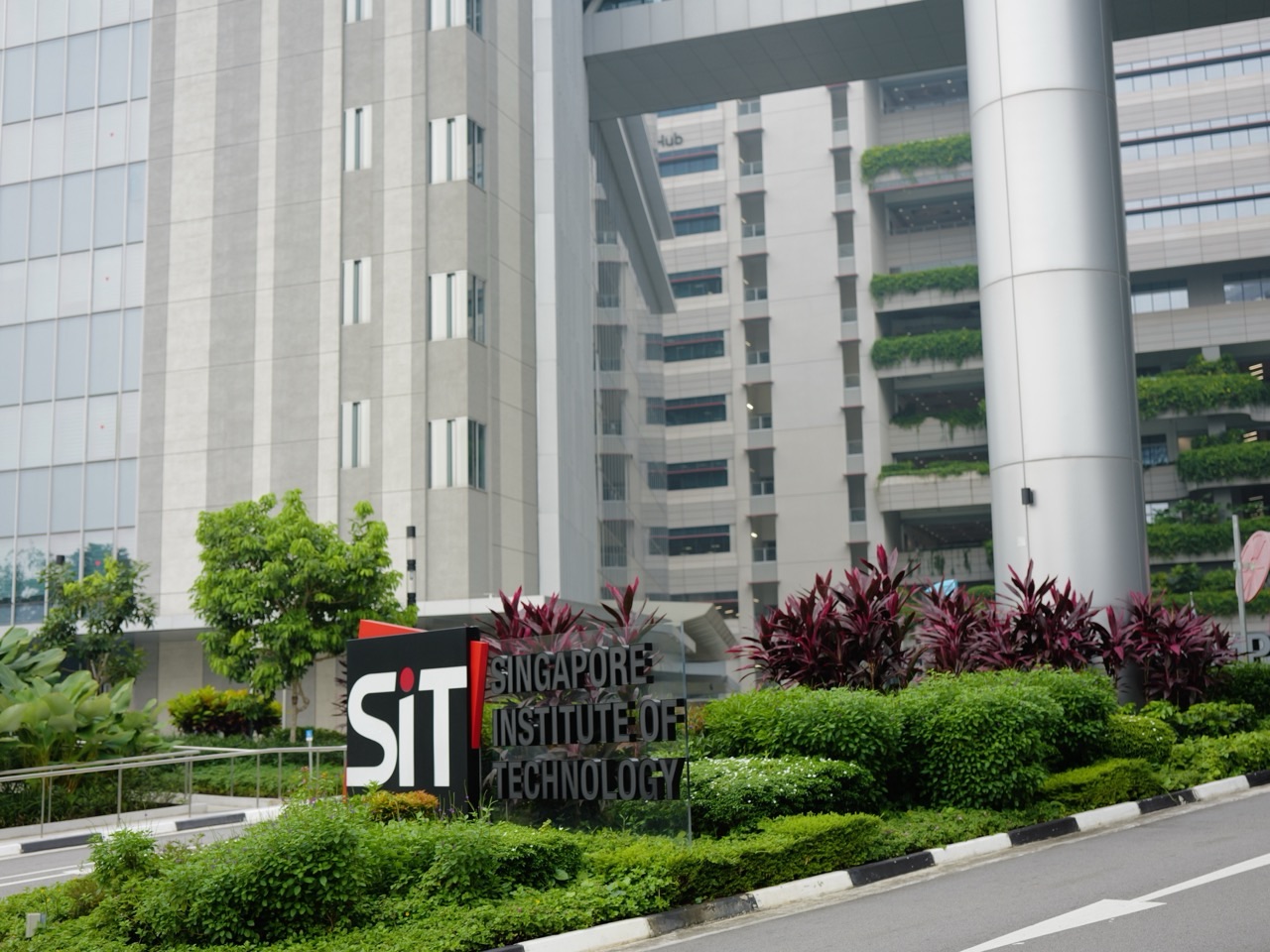
Punggol Education 2027 is no longer only about school results. Punggol residents now live next to the Singapore Institute of Technology (SIT) and the growing Punggol Digital District. That puts higher education, applied research and technology employers into the neighbourhood. But the useful family question remains: what degree, diploma, professional training or short course is right for this person’s actual goal?
Did you know that a campus near your home does not create automatic university admission, and a technology district does not guarantee a technology job? Admission still depends on qualifications and selection; employment depends on relevant skills, evidence, opportunities and the labour market. The nearby campus is an opportunity to explore learning—not a shortcut around entry conditions.
This guide is for school-leavers choosing university degrees, ITE or polytechnic graduates considering further study, parents weighing costs, and working adults investigating mid-career courses in 2027. It connects fields of study to the day-to-day work people actually do and explains what to do, what not to do and which uncertainties to check.
What University and Lifelong-Learning Options Should Punggol Residents Investigate?
- SIT: an applied-learning university with its Punggol Campus; investigate its published undergraduate programmes, industry projects, work-study components and continuing education through SITLEARN.
- Other Singapore universities: NUS, NTU, SMU, SUTD, SUSS and specialist institutions may offer different academic or professionally oriented routes. Location, teaching approach and eligibility differ.
- Polytechnic and ITE progression: diploma, Higher Nitec and work-study qualifications can provide stepping stones into further education or industry, subject to programme requirements.
- Working-adult courses: university continuing education, SkillsFuture-supported programmes, recognised certificates and employer training can develop targeted skills without always requiring a full degree.
- Professional and regulated careers: healthcare, certain engineering functions, social services and other occupations may have requirements beyond the name of a qualification.
The question is not ‘Which institution is most impressive?’ but ‘What competence or qualification do I need, and which recognised path develops it sustainably?’
What Makes SIT Punggol Relevant in 2027?
SIT’s Punggol Campus is part of the Punggol Digital District, where university learning is designed to interact with industry, applied research and real-world technologies. For nearby residents, it provides a visible example of higher education sitting beside workplaces, smart infrastructure and innovation projects. It does not mean that all campus facilities are open to the public or that every SIT programme holds all teaching activities at the Punggol campus.
SIT describes its education as applied and industry-oriented. Its programmes may include an Integrated Work Study Programme (IWSP), industry projects and discipline-specific practical learning. The duration, placement arrangements and assessment requirements differ by course. Ask about the exact programme rather than assuming every undergraduate student receives identical industry exposure.
Punggol students who enjoy engineering or computing can investigate current SIT courses through the official undergraduate programme directory. Residents interested in healthcare, food science, communication and design, or business should examine those clusters too. The Digital District is closely associated with technology, but education in Punggol extends beyond coding.
Which SIT Course Areas Are Worth Understanding?
Infocomm Technology: software, cybersecurity and intelligent systems
Computing-related degree study can involve programming, systems, data, cloud infrastructure, networking, software engineering or security. The difference between wanting to ‘work in AI’ and being ready for a demanding technical curriculum can be large. Strong Mathematics, logical reasoning, writing, teamwork and persistent problem-solving are useful foundations.
A realistic first test is to build a small working project, document why it failed and improve it. For a security-minded learner, ethical simulations and secure coding are better evidence of learning than vague claims about being ‘good at computers’. Check actual module lists before choosing between overlapping degree names.
Engineering: systems, hardware, energy and built environments
Engineering pathways involve using mathematical and scientific models to design, make, test and maintain reliable systems. Punggol Digital District’s smart-building and infrastructure projects make useful examples of control systems, energy management, sensors and operational safety—but seeing those applications nearby does not imply that a particular degree automatically provides access to a specific laboratory or employer.
Ask about laboratory workload, Mathematics prerequisites, specialisation, accreditation where relevant and the professional steps required for regulated engineering functions. A student who enjoys building a robot but struggles with algebra may need to strengthen fundamentals before the desired engineering programme becomes realistic.
Health and Social Sciences: people, science and safe practice
Healthcare and social-care fields blend technical knowledge with communication, ethics and interpersonal responsibility. Some degrees lead towards professions with required clinical education or registration conditions. Interest in helping people is an important start, but applicants must check prerequisites, occupational demands, supervised practice and the appropriate regulator’s requirements.
Relevant pathways may include nursing, allied health or community-focused work, depending on the current offerings. Do not assume that a general health-sciences certificate qualifies a graduate to practise a regulated healthcare profession.
Business, Design, Food and Chemical Technologies
Business and design programmes can develop service understanding, user research, enterprise, visual communication and evidence-based decision-making. Food and chemical technology fields may include laboratory science, manufacturing, process quality and sustainability. These areas also require careful attention to first-year modules: an attractive career label can hide a very different day-to-day learning experience.
Use SIT’s programme catalogue for the current list of degrees and each programme’s campus arrangements, entry qualifications and selection methods. Institution-wide marketing is not a substitute for the course’s own official page.
How Do Students Reach University from JC, Polytechnic and ITE?
A JC student may apply using A-Level qualifications; an eligible Polytechnic graduate can apply with a diploma; holders of International Baccalaureate and other recognised qualifications have additional institutional application routes. Programme-specific prerequisites, grades, interviews, aptitude evidence and selection requirements vary.
For ITE graduates, progression can involve relevant Polytechnic diplomas and work-study qualifications, followed by further study if the later entry requirements are met. The pathway can be longer, but it can also build meaningful occupational experience. No family should interpret the availability of a route as a guaranteed university place.
SIT and other universities may evaluate applicants through academic and aptitude-based processes. A project portfolio, interview or relevant experience can be helpful where the programme uses them, but not every applicant or course is assessed identically. Read our university application overview and aptitude-based admissions guide.
A Course-to-Career Map: What Will You Actually Do at Work?
Instead of searching ‘highest-paying course 2027’, reverse the decision. Start with several concrete job tasks, then identify the knowledge and qualifications that support them. The examples below are directions to investigate rather than hiring promises.
- Cybersecurity analyst: read logs, investigate suspicious activity, document incidents and improve defences. Explore computing, networking, security operations and ethical practice.
- Data analyst or AI developer: clean information, check assumptions, write code and evaluate results. Explore Mathematics, statistics, software development and responsible data use.
- Smart-building or energy engineer: understand sensors, controls, energy efficiency, equipment and safety. Explore electrical, mechanical, building systems and sustainable engineering.
- Healthcare practitioner or care coordinator: assess needs, follow professional standards and communicate clearly with people. Explore the properly recognised health or social-care training route.
- Supply-chain professional: plan inventory, coordinate vendors, detect bottlenecks and use data. Explore logistics, operations, business systems and process improvement.
- Designer or entrepreneur: research users, prototype an idea, test its feasibility and explain decisions. Explore design, digital media, business and technical collaborations.
What connects all six? Employers often need people who can identify a problem, communicate the evidence, use appropriate tools, work safely and improve a result. Those capabilities can grow through multiple legitimate learning paths.
University Degree, Micro-Credential or Short Course: Which Is Worth the Cost?
A full degree is a substantial investment in time, academic depth and opportunity cost. It may be appropriate for a profession with formal degree requirements or for someone seeking broad disciplinary expertise. A short course or micro-credential may be more sensible for a working adult who needs one new capability such as data visualisation, equipment maintenance or workplace process improvement.
However, not every short course is stackable towards a university qualification. A course carrying the words ‘certificate’, ‘specialist’ or ‘micro-credential’ does not automatically have the recognition or transferability the learner imagines. Read the issuing institution’s terms and ask whether credit transfer, industry recognition or exemption is formally documented.
For Punggol residents, investigate SIT lifelong learning and MySkillsFuture to identify relevant offerings and support. Eligibility for SkillsFuture Credit, subsidies and training support depends on the applicant and course; do not calculate a household’s bill from a headline subsidy figure.
Working Adults in Punggol: A Practical 2027 Reskilling Plan
Suppose a Punggol operations executive wants to transition into business analytics. Buying a long, costly programme immediately may not be the first step. Start with an honest job-skill inventory: spreadsheet modelling, SQL, data cleaning, visualisation, writing conclusions and presenting to colleagues. What can this person already do? What can they demonstrate today?
Next, test the goal with a small project using non-sensitive or openly licensed data. If they enjoy investigating a problem and explaining a useful finding, compare short courses that cover the missing parts. Read actual analyst job descriptions and speak with practitioners. A broader diploma or degree may make sense later, especially where the desired job requires it.
- Week 1: select two realistic target roles and list the common capabilities requested.
- Week 2: identify present competence with one short, reproducible task.
- Week 3: compare three course outlines for teaching depth, assessment, schedule, credentials and total cost.
- Week 4: choose the smallest credible next learning commitment and set a review date.
A similar plan works for a mid-career worker interested in care services, advanced manufacturing, cybersecurity, facility management or sustainable operations. The course is a tool for changing what you can actually do, not a substitute for evidence of competence.
How Should Parents Budget for a Degree or Career Course?
Compare total cost, not tuition fees alone. A useful list includes tuition, materials, devices, transport, food, placement costs if relevant, forgone income, additional examinations and the time required to complete the programme. Then check available bursaries, grants, scholarships, payment schedules and terms of repayment or service obligations, if any.
For an undergraduate, consider whether a degree requires expensive software, specific equipment or unpaid time for intensive study. For a working adult, evening and weekend commitments have a family cost too. Build a realistic calendar around work shifts, school pickups and sleep rather than assuming education can expand into every free hour.
The correct payment and eligibility source is the university or official programme’s current admissions and fees page. Do not treat a previous year’s tuition grant, subsidy band or promotional price as an unconditional 2027 entitlement.
A Punggol University Open-House Checklist
- Ask for the first-year and advanced module lists, including Mathematics and programming demands where relevant.
- Find out how teaching is assessed: examinations, laboratory practice, project work, studio critique or clinical placements.
- Check whether professional accreditation or registration is relevant to the intended job.
- Ask how industry placements are arranged, which responsibilities students hold and whether a placement is guaranteed under the programme rules.
- Verify where classes actually run and whether campuses, specialist labs or partner workplaces require travel.
- Compare total cost and support services rather than just scholarships mentioned in advertisements.
- Request examples of graduates’ real work and typical learning difficulties, not just promotional job titles.
- Prepare an alternative university or education route if the initial application is unsuccessful.
What to Do, What Not to Do and What to Think About
Do
- Translate a career interest into specific job tasks and required competencies.
- Verify the published entry criteria and exact 2027 application schedule for each programme.
- Inspect teaching, project work, placements and recognition before committing money.
- Build a portfolio of genuine work where the institution or employer values evidence of aptitude.
- Speak to school ECG counsellors, university admissions staff or course advisers when the decision depends on a rule.
Do not
- Assume a Punggol postal code gives admission priority to SIT or access to restricted campus facilities.
- Treat a digital district’s planned jobs as guaranteed employment for every graduate.
- Buy a course based only on salary headlines, trend words or a certificate badge.
- Confuse course completion with a regulated professional licence or industry accreditation.
- Take on a debt or subsidy obligation without reading the full terms.
- Assume a micro-credential automatically stacks into a diploma or degree.
Think about
What sort of work can this learner sustain on an ordinary Monday? Which skills remain useful even if an industry changes? What is the next credential really for: licensing, a new job, advancement, deep study or curiosity? Could a smaller experiment answer an expensive question before the family commits to years of study?
The future of Punggol brings more visible learning and industry activity. The more valuable response is neither to chase every new technology nor to ignore it, but to build portable skills and make decisions with evidence.
Frequently Asked Questions
Can Punggol residents apply to SIT just because they live nearby?
Punggol residents can explore SIT like other eligible applicants, but proximity does not grant admission priority. Apply under the official requirements of the specific degree.
Does every SIT course teach entirely at the Punggol Campus?
Do not assume so. Check the programme’s current campus information, partner arrangements and placement locations directly with SIT.
Can a Polytechnic diploma lead to a university degree?
Yes, eligible diploma graduates can apply to universities, subject to course prerequisites and selection. Acceptance is not automatic and a relevant diploma does not replace every programme’s additional requirements.
Is a short AI course enough to become an AI engineer?
Usually the role demands more than a short course’s completion badge. Employers may expect programming, mathematics, data handling, software engineering, model evaluation and practical experience. Use a short course to assess or close a genuine gap, not as a job guarantee.
Can an adult use SkillsFuture funding for any course?
No. Funding depends on course eligibility, the applicant’s circumstances and applicable rules. Confirm the provider, recognised course and payable amount on the official platform before enrolment.
Should every school-leaver pursue a university degree immediately?
No. The right timing and qualification depend on career requirements, readiness, costs and meaningful alternative routes, including work-study and applied education.
Official Sources and Related Punggol Reading
- SIT Punggol Campus — official campus information.
- SIT undergraduate programmes — current degree names and curriculum.
- SIT admissions — entry and selection requirements.
- SIT lifelong learning — continuing education.
- MySkillsFuture — skills, courses and support information.
- Punggol SITLEARN and adult-learning guide — questions to ask before enrolling.
- Education and Career Guidance — making an informed transition.
- Punggol Education & Town-Life Article Index — related Punggol guidance.
Information checked 27 October 2026. Degrees, admission routes, campus locations, licensing requirements and funding eligibility can change. Verify the current official course and admissions information before acting.


