
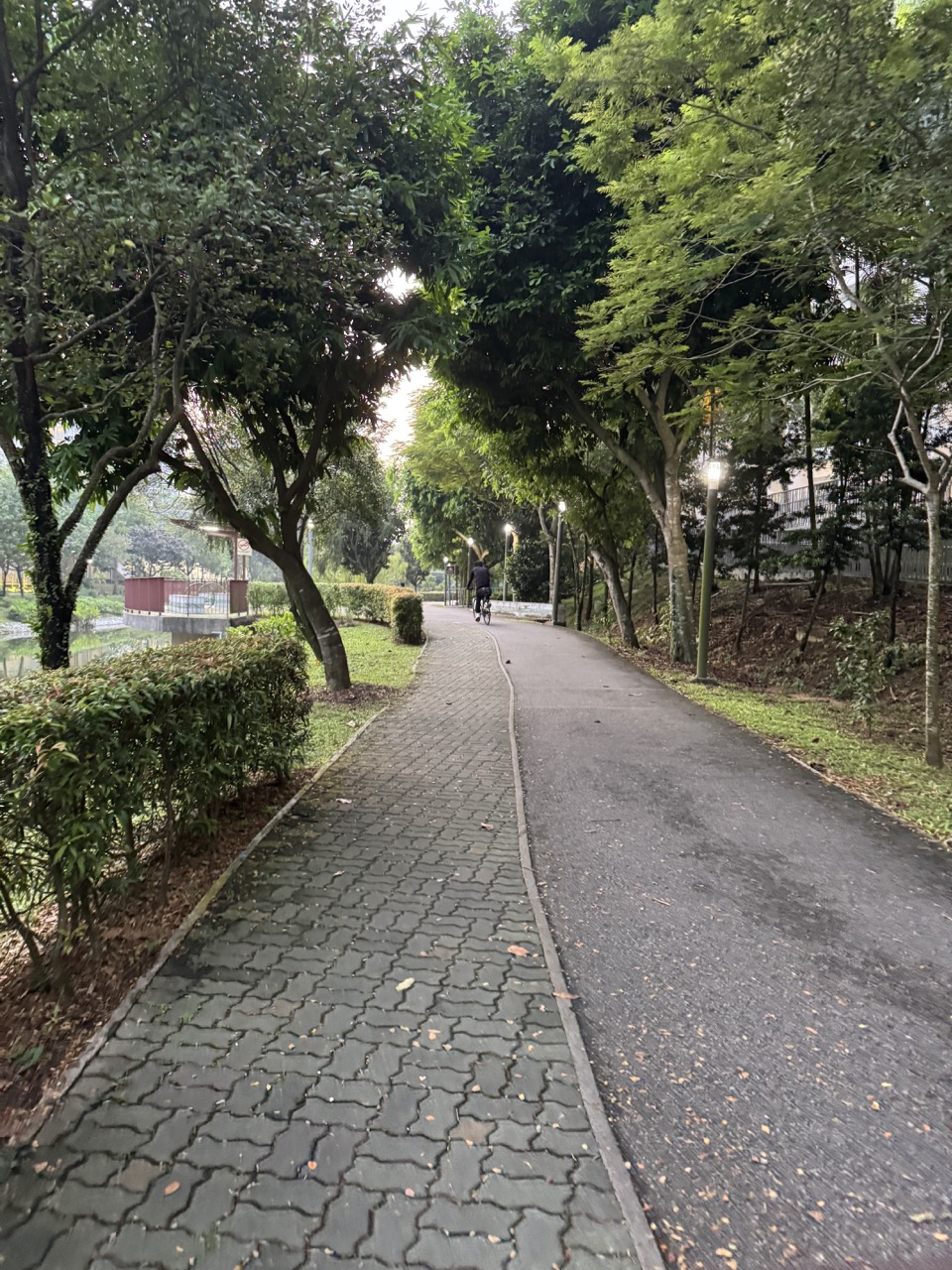
Punggol Education 2027 maritime courses can be understood from a neighbourhood where families see water, bridges, tidal movement and coastal infrastructure. But marine engineering, nautical studies and maritime business are not interchangeable. A student fascinated by the shape of a ship may enjoy naval architecture. A student who likes machines may prefer propulsion and maintenance. A student who enjoys trade, languages and finance may prefer maritime business or logistics. The right course comes from the actual work—not merely liking the sea.
Did you know that ITE offers Higher Nitec in Marine & Offshore Engineering in both two-year and three-year full-time structures at ITE College Central? Singapore Polytechnic’s Maritime Academy offers three distinct diplomas in Marine Engineering (S63), Nautical Studies and Maritime Business. SIT Punggol lists a joint SIT–Newcastle University degree in Naval Architecture and Marine Engineering, while NTU lists a BSc Maritime Studies focused on shipping business and operations. They involve different qualifications and sometimes different professional certification.
This Punggol Education 2027 guide connects Primary numeracy and environmental understanding, Secondary G1/G2/G3 Mathematics and Science, ITE learning, Polytechnic diplomas, JC and University degrees, and adult conversion routes. It explains exactly what the published programmes teach, what a family must verify for 2027 or 2028 admission, and what to do, what not to do and what to think about when choosing a maritime future. It does not assert an unannounced 2027 university deadline, an automatic professional licence or a guaranteed marine job in Punggol.
Quick answer: which part of the maritime industry interests you?
| Route | Core work | Useful questions |
|---|---|---|
| Marine engineering | Design, operate, repair and diagnose machinery, propulsion and ship systems | Do I enjoy physics, machinery, controls, fault-finding and safety? |
| Naval architecture | Understand vessel design, stability, hydrodynamics, structural behaviour and design trade-offs | Can I use mathematics and mechanics to explain why a design works? |
| Nautical studies | Navigation, watchkeeping, cargo operations and seamanship | Would I enjoy and meet the requirements of structured sea training? |
| Maritime business | Shipping economics, freight, marine insurance, finance, agency and port operations | Do I enjoy planning, commercial reasoning and coordinating complex systems? |
| Marine robotics | Sensors, autonomy, remote inspection, control and data | Do I prefer coding, electronics and underwater-system challenges? |
| Environmental maritime work | Ship emissions, ballast water, coastal sustainability and safer operations | Can I distinguish measured impacts from promotional claims? |
These disciplines overlap in a shipyard or port, but they are not the same qualification or working week. A marine engineer may work with engine systems and commissioning; a navigating officer faces a different statutory and safety framework; a shipping analyst may spend more time comparing routes and contracts than touching a vessel.
Why Punggol is a useful learning context—but not a maritime campus
Punggol’s waterway, promenade and proximity to the coast make familiar examples for measuring distance, currents, weather, navigation and responsible environmental design. SIT’s presence in Punggol Digital District makes marine-related University programmes and research more visible. Existing local stories on SIT underwater robotics can help families distinguish school inquiry from industrial projects.
However, Punggol is not automatically the location of a Polytechnic maritime school or a sea-going cadetship. The Singapore Maritime Academy is at Singapore Polytechnic’s Dover campus, ITE’s Marine & Offshore Engineering qualification is listed at College Central, and a marine placement may take place at a shipyard, offshore site or aboard an authorised vessel. The student’s commute and training location should be checked separately.
No pupil should enter a restricted pier, operate a vessel, handle moving machinery or attempt underwater fieldwork to create a portfolio. Safer activities include public-route observations, accurate charts, published data and classroom models, with the distinction between real industry and school approximation kept clear.
Primary 3–6: how mathematics becomes maritime reasoning
Before pupils understand buoyancy equations or navigation charts, they need control of ratio, measurement, area, volume, geometry, coordinates and estimation. A child who can explain why litres and kilograms are different, or why a map scale matters, is learning foundations that later appear in engineering and navigation.
Imagine a fictional route on a plan where a straight waterway segment is drawn as 4 cm, and the map scale is 1 cm representing 250 m. The indicated segment represents 4 × 250 = 1,000 m. That arithmetic does not establish an actual route, walking distance or boating distance in Punggol; it teaches what a scale means and why the real path, access and hazards must still be checked.
An English task can ask a pupil to compare two short descriptions of a coastal project. What is an observed fact? What is a promised benefit? Which sentence contains a number without a source? These questions develop evidence-based reading rather than turning engineering into a list of exciting words.
Secondary school: Full SBB and the first SEC generation
Under Singapore’s Full Subject-Based Banding, Secondary pupils may offer different subjects at G1, G2 or G3 levels. The first graduating cohort takes the common SEC in 2027, while the new Post-Secondary Admissions Exercise begins in 2028 for that cohort. A 2026 O-Level school-leaver applying for a Polytechnic or ITE place in 2027 is a different intake with different current-year rules.
Marine Engineering requires mathematical reasoning, mechanical physics, systems explanation and reliable technical English. Maritime Business additionally values commercial mathematics, structured writing, teamwork and communication. Nautical Studies involves calculations and precise operational procedures. Having a specific Secondary Computing or Design and Technology elective can be useful where offered, but a school’s subject-combination list is not itself a universal Polytechnic prerequisite.
Parents should compare the Punggol SEC and subject-level guide with the exact programme’s eligibility page. Course requirements may differ across General levels or after the 2028 admissions transition, so do not invent score conversions in advance.
ITE’s two-year Higher Nitec in Marine & Offshore Engineering
ITE’s official two-year Marine & Offshore Engineering is a 24-month full-time programme at College Central. Published competencies include quality-control inspection, marine pipe and structural fabrication, propulsion and auxiliary-system troubleshooting, electrical and HVAC design, basic naval-architecture drawing, commissioning, sustainability and Industry 4.0 tools.
This is practical, assessed technical education. Students are not simply watching videos of ships. They must read technical drawings, understand safe procedures, follow specifications, inspect components and explain what was found. Someone who enjoys physical systems and methodical fault investigation may find the course more appealing than a purely commercial maritime programme.
ITE publishes specific GCE O-Level, approved subject or Nitec requirements for this route. It also states that learners need a laptop in addition to fees, with eligibility-based support through the ITE Opportunity Fund. Do not assume the word ‘Higher Nitec’ guarantees the same entry route for every graduate or that a laptop purchase is optional.
The three-year ITE version is a different applicant route
ITE separately publishes Higher Nitec in Marine & Offshore Engineering (3 years). The programme develops related engineering competencies but uses a 36-month structure and different prior qualification requirements, including an entry route relevant to specified GCE N-Level holders.
A parent comparing an O-Level applicant and a student applying through a prior N-Level qualification should read the correct pages, not just compare the course titles. Course duration and starting position have practical implications for tuition, commuting, training time and how the student approaches the Polytechnic progression window.
Progression from ITE: a minimum application threshold is not an offer
ITE states that from the AY2027 Polytechnic intake, relevant Higher Nitec Marine & Offshore Engineering graduates with net GPA 2.5 and above may apply for the first year of a related Polytechnic diploma. It also lists a Work-Study Diploma in Marine & Offshore Engineering – Production (Repair & Maintenance), among possible further pathways. Eligibility, programme matching, vacancies and merit selection still matter.
If a child wants to progress from ITE to SP Marine Engineering, write down the published conditions for the actual graduation and application year. Meeting a minimum requirement allows an application; it does not reserve a place. An employer-based Work-Study Diploma also carries different work and sponsorship arrangements from a conventional full-time Polytechnic diploma.
Singapore Polytechnic Maritime Academy: three diplomas, three different purposes
The Singapore Maritime Academy offers full-time diplomas in Marine Engineering, Nautical Studies and Maritime Business. All three introduce maritime operations, but each course is built around different technical or commercial competencies and different practical commitments. It is not sound advice to select one solely because a sibling studies in the same academic school.
Diploma in Marine Engineering
The SP Diploma in Marine Engineering (S63) develops engineering skills for ships and maritime facilities. Students should examine its mathematics, mechanics, propulsion, electrical systems, maintenance, simulations and practical experience. Professional options may involve sea-going and shore-based roles, but applicants should check precisely which certificates and sea-service arrangements apply to the intended role.
A pupil who enjoys determining why an engine component failed may favour this course over Maritime Business. Someone who dislikes technical drawing, physical science and equipment maintenance should investigate those demands before applying, even if the word ‘marine’ sounds adventurous.
Diploma in Nautical Studies
The SP Diploma in Nautical Studies is distinctive because its published programme includes a 12-month sea-training phase and preparation related to a Class 3 Deck Certificate of Competency. Modules include navigation, ship knowledge, seamanship, meteorology, safety, cargo work, mathematics and onboard training.
The Certificate of Competency and any subsequent professional licence, examination or seagoing appointment are not the same as simply attending a diploma programme. Applicants must read the actual certification pathway, medical or fitness requirements, cadetship placements and onboard responsibilities. A child who enjoys sailing for leisure should not assume they will necessarily enjoy months of professional sea service.
Diploma in Maritime Business
The SP Diploma in Maritime Business includes maritime economics, shipping finance and accounting, port agency, cargo management, ship operations, law, marine insurance and industry software. SP describes a six-month shore-based internship as part of practical exposure.
This pathway may appeal to students who enjoy statistics, international trade, project coordination, business writing and managing complex supply chains. Not everyone working in maritime needs to repair engines or spend months at sea. Conversely, a commercial qualification does not automatically certify an applicant to act as a licensed ship’s engineer.
University option at SIT Punggol: Naval Architecture and Marine Engineering
SIT’s Naval Architecture and Marine Engineering is a joint SIT–Newcastle University BEng (Honours) programme associated with SIT Punggol Campus. The currently published overview gives a duration of two years and eight months, and discusses technical domains including vessel design and marine engineering. It identifies accreditation by the Royal Institution of Naval Architects and the Institute of Marine Engineering, Science and Technology.
The title signals higher-level Mathematics, mechanics and engineering analysis. The course is different from a short maritime-business certificate or a general shipping operations diploma. Students need to check which prior qualifications, modules and exemption rules are accepted, and how the curriculum prepares them for engineering rather than merely maritime administration.
The SIT page checked in October 2026 still displayed an 8 January–19 March 2026 application period and 31 August 2026 intake. These are not claimed as 2027 deadlines. A student planning 2027 must obtain the updated SIT admission cycle before applying, paying or making travel plans.
NTU’s BSc Maritime Studies: shipping business is not naval architecture
NTU’s Bachelor of Science in Maritime Studies focuses on shipping economics, maritime management, business and operations. It includes professional internship and industry-aligned learning. It is academically and professionally distinct from an engineering degree in designing ships.
NTU’s admissions page explains subject prerequisites, including certain Mathematics passes for its standard programme and more demanding Mathematics for some second-major arrangements. For example, the Maritime Studies admissions page distinguishes requirements for the Data Analytics second major. Do not assume that all specialisations follow identical Mathematics criteria.
A family deciding between NTU Maritime Studies and SIT Naval Architecture should ask what the learner enjoys: shipping contracts, markets and risk, or mechanics, fluid systems and structural design? Both can connect to maritime employment, but the academic tasks and future professional roles are different.
Working adult: SP’s Maritime Business conversion programme
Singapore Polytechnic has published a Diploma (Conversion) in Maritime Business Management running 19 October 2026 to 30 September 2027, with evening classes and modules in Maritime Law and Insurance, Shipping Economics, Ship Management, Port and Cargo Management and Finance.
The same course listing gives a 13 September 2026 registration deadline for that particular run. The fact that the course runs during 2027 does not mean enrolment remains open for a new applicant in late October 2026. Check the institution for subsequent intakes and whether the learner already holds the required background qualification.
This is a valuable distinction for adults who cannot leave paid employment. A course may be a good fit academically but not available in the desired month, or it may require three evenings weekly, travel and assessment work. Before resigning or paying, compare an eligible upcoming route with the actual family timetable.
A worked maritime Mathematics example: distance, speed and assumptions
Imagine a fictional vessel travelling 18 nautical miles at a constant speed of 9 knots in calm conditions. Because one knot means one nautical mile per hour, the travel time is 18 ÷ 9 = 2 hours. This is only a textbook calculation; it is not travel advice or an estimated trip in Punggol.
Professional navigation must also account for actual route, current, wind, safe depth, traffic, vessel constraints, weather and regulatory procedures. The classroom calculation teaches a unit and a relation; it does not authorise a student to operate a craft. Likewise, a shipping analyst can use the same data to discuss scheduling risk and economic consequences of delay.
The sustainable-maritime promise: what skills actually matter?
Modern maritime employers may investigate alternative fuels, emissions reduction, electrical systems, automation, vessel efficiency and safety. Those themes do not make every programme a green-engineering programme. A marine engineer may need thermodynamics and system reliability; a shipping analyst may need compliance and fuel-cost modelling; a port operator may need operational safety and logistics data.
The right course gives the student methods to test claims, compare trade-offs and follow safety requirements. ‘Cleaner shipping’ is a goal, not a qualification. Look for actual modules and supervised projects rather than selecting a course because its brochure says ‘green’. For adjacent choices, see our Punggol 2027 Green Engineering guide.
Three fictional students, three different good choices
Hana enjoys ship machinery
Hana is confident with school Science and likes fault-finding. Her family compares ITE Marine & Offshore Engineering and SP Marine Engineering. They use the student’s actual subject profile to check 2027 admission requirements. They read about practical workshops and assess whether a maritime mechanical career genuinely fits her interest.
Ben enjoys geography and coordinating trade
Ben is strong in English, Mathematics and organising group work. He may prefer SP Maritime Business or NTU Maritime Studies later rather than marine machinery. He tries a fictional cargo-tracking spreadsheet and writes an explanation of a delayed shipment. The project reveals whether he enjoys commercial reasoning and careful documentation.
Mira wants to work aboard ships
Mira is attracted to navigation and leadership. She studies SP Nautical Studies’ sea-training requirement, watchkeeping responsibilities and professional certification steps before applying. Her parents consider the physical, social, medical and travel realities as well as academic eligibility rather than assuming that a love of the waterfront predicts comfort at sea.
What to do, what not to do, and what to think about
Do
- Choose between marine engineering, naval architecture, nautical studies and maritime business by the tasks the student wants to practise.
- Study current ITE entry requirements for the correct two-year or three-year Higher Nitec.
- Check SP’s precise diploma modules and training obligations, including Nautical Studies’ sea phase.
- Verify SIT or NTU admissions against the applicant’s actual degree and intake year.
- Treat maritime internships, industry training and statutory Certificates of Competency as separate conditions.
- Include campus journeys, vessel training, devices, equipment, fees and rest in the family budget.
- Use safe classroom models and published data rather than restricted waterfront facilities.
Do not
- Confuse a sea-going deck officer qualification with a shore-based shipping business degree.
- Claim 2026 SIT degree application dates are the confirmed 2027 exercise.
- Assume an ITE net GPA 2.5 automatically secures a Polytechnic marine diploma.
- Conclude that Punggol residence gives local admission priority or a maritime placement.
- Visit shipyards, restricted piers or operate craft for an unauthorised school project.
- Use a simple distance/speed exercise as navigation or personal boating guidance.
- Select a course merely because it promises new green jobs without checking its actual modules.
Think about
Do I want to design, operate, repair, navigate or manage marine systems? Would I enjoy long practical sessions, technical reports, outdoor or sea-based duties, and safety discipline? Which school subjects genuinely matter for the specific qualification? The better course is the one that fits the work and can be completed well—not the one with the most impressive name.
Frequently asked questions
Is the Higher Nitec Marine course taught at ITE College East near Punggol?
The current ITE course pages list College Central for the two- and three-year Marine & Offshore Engineering routes. Confirm the applicant’s actual intake and campus before travelling.
Are SP Marine Engineering, Nautical Studies and Maritime Business identical?
No. The engineering diploma, seafaring/navigation training and shipping business diploma have different curricula, practical requirements and professional progression.
Does every Maritime Studies university student need H2 Mathematics?
Not for every published variant. NTU’s page distinguishes its regular programme requirements from certain second-major routes such as Data Analytics, which has a different mathematics condition.
Can a 2027 applicant apply using the January–March 2026 SIT application window?
No. Those dates describe the previously published 2026 intake. The institution must confirm the relevant new admissions exercise.
Does a nautical diploma automatically authorise someone to captain a ship?
No. The relevant competency certification, sea service, examinations and subsequent professional requirements are separate and must be satisfied.
Do maritime employers hire only people who spend time at sea?
No. Maritime business, logistics, marine engineering and port-related activities include shore-based professional work, though individual jobs have distinct qualifications and obligations.
Official sources and related Punggol guides
- ITE 24-month Marine & Offshore Engineering.
- ITE 36-month Marine & Offshore Engineering.
- Singapore Maritime Academy — Marine Engineering, Nautical Studies and Maritime Business.
- SP Nautical Studies — sea training and certificate requirements.
- SP Maritime Business — shipping, law and finance.
- SIT Naval Architecture and Marine Engineering — joint degree and admissions.
- NTU Maritime Studies admissions — academic and subject conditions.
- SP Maritime Business Conversion Diploma — the stated 2026–2027 run.
- Punggol 2027 ITE, JC and Polytechnic choices — qualification comparison.
- Punggol Education & Town-Life Article Index — navigate other routes.
Research checked 27 October 2026. Admissions years, course offerings, sea-training and professional certificate requirements can change. Historical 2026 application dates are not claims of open 2027 enrolment.


