
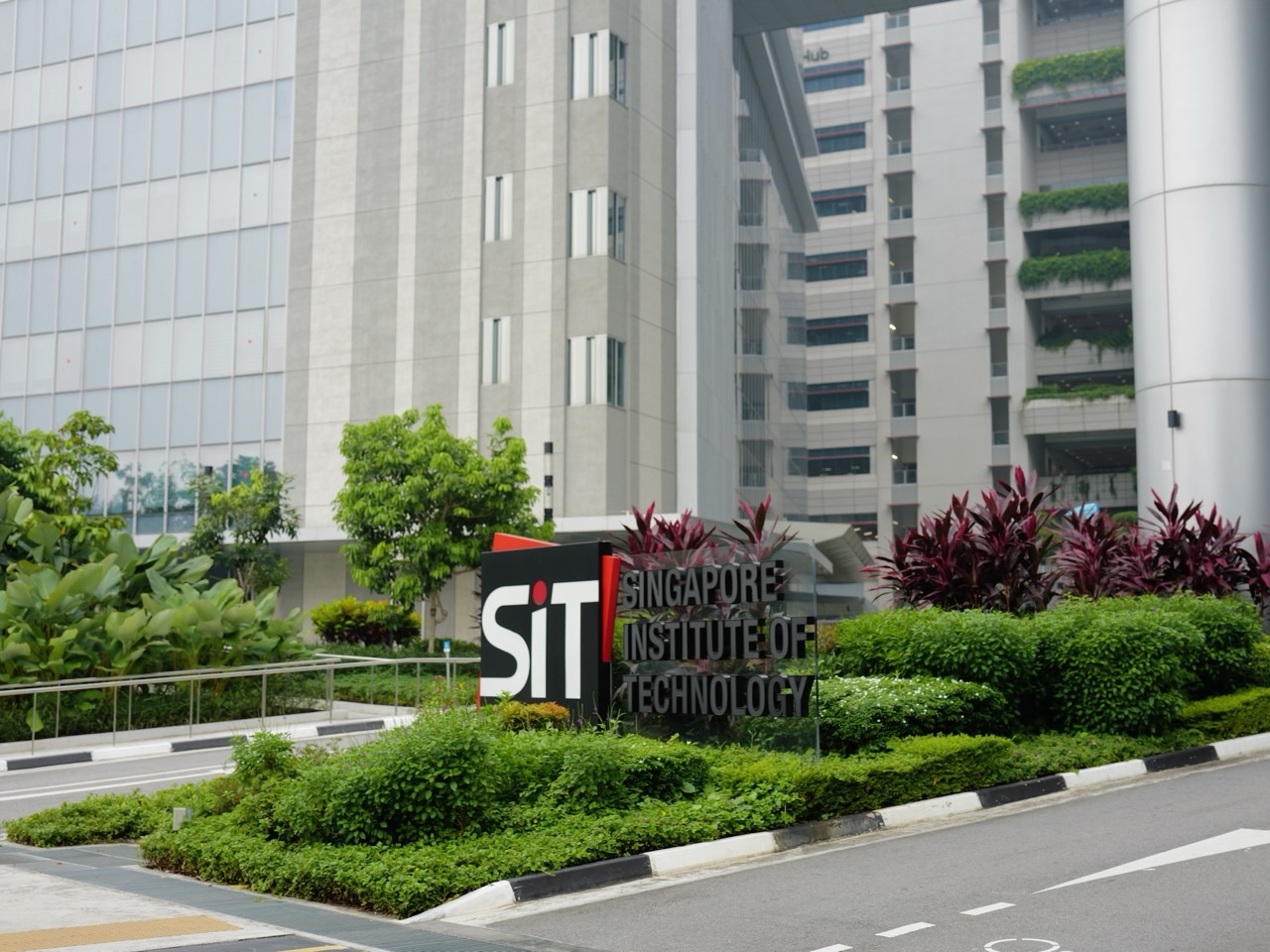
Punggol Education 2027 green engineering courses connect an everyday Punggol experience—air-conditioned buildings, sheltered walkways, water systems and electricity—with Primary and Secondary learning, ITE technical education, Polytechnic engineering diplomas and university study at SIT Punggol. The district’s smart infrastructure creates real questions worth investigating, but a visible technology project is not itself a guaranteed training place or a future job.
Did you know that SIT Punggol’s Sustainable Built Environment degree and its Electrical Power Engineering degree are different paths into a low-carbon economy? The first is concerned with the performance of building services, facilities and sustainable urban systems; the second includes electrical generation, grids, power quality, renewable integration and electrification. Both use Mathematics and Science, but they develop different kinds of engineering competence. Meanwhile, ITE’s Facilities Management & Engineering and Singapore Polytechnic’s specialist energy programmes offer other entry points.
This 2027 Punggol article explains what courses exist to investigate, what students would actually learn, which qualifications have different prerequisites, what skills matter at school and what households should not assume about admissions and subsidies. It includes worked learning examples, a path from Primary through Secondary G1/G2/G3 to ITE, JC, Polytechnic, SIT and adult education, and official links rather than invented course availability.
Quick answer: green engineering is several different kinds of work
- Building energy systems: measure, design and improve cooling, ventilation, lighting, controls and energy use.
- Electrical power engineering: analyse electrical networks, safety, protection, storage, renewable generation and electric transportation.
- Water and environmental engineering: investigate water quality, infrastructure, treatment and resource recovery within safety regulations.
- Facilities and maintenance: keep complex building systems working reliably, use sensors responsibly and respond to faults.
- Environmental science and ecology: study habitats, climate, biodiversity and environmental evidence; not every role requires an engineering degree.
- Carbon management and reporting: quantify and explain emissions, assumptions and disclosures; this is different from designing an air-conditioning plant.
- Urban planning, architecture and design: shape how places work for people, taking account of constraints, accessibility and sustainability.
A teenager who likes protecting wetlands may prefer ecology or environmental science to electrical engineering. Someone who enjoys sensors and fault detection may be attracted to smart-building maintenance. The family should begin with the daily tasks, not only the attractive phrase ‘green jobs’.
Why Punggol is a useful place to ask these questions
Punggol Digital District incorporates industry, university learning and smart infrastructure. SIT Punggol highlights projects involving the campus microgrid, renewable electricity, condition monitoring and applied industry collaboration. At the same time, local parks, waterways, housing estates and public transport make resource use and climate resilience part of daily life.
These are opportunities to observe and learn, not permission to enter restricted technical areas. A student should not attempt to open electrical cabinets, tamper with building sensors, measure water quality without appropriate safety controls, or use a university laboratory without authorisation. Safer learning includes public information, models, school investigations and verified educational programmes.
Punggol can become a fieldwork starting point: where does shade change a pedestrian’s experience? How do different surfaces respond to rain? Why is a building designed with mechanical ventilation and thermal management? What does the electricity grid need to do when solar output changes? Each question links to a discipline and a possible course.
Primary 3–6: build green literacy through English, Mathematics and Science
Young pupils do not need to memorise an engineering undergraduate curriculum. They need strong foundations in observation, comparison, measurement, interpretation and clear communication. Mathematics helps quantify differences, Science helps build causal explanations, and English helps communicate evidence and uncertainty.
Try a simple classroom-style exercise: use published weather data to compare temperatures across days, calculate a mean and explain why it would be misleading to claim that one day’s weather proves a long-term climate trend. Ask how measurement location and time could affect a result. The point is honest evidence, not dramatic slogans.
For an outdoor learning activity in Punggol, observe from public routes and record where there is shade, shelter or vegetation. Discuss how these features might affect comfort, while distinguishing personal observations from scientifically measured cooling effects. Avoid disturbing wildlife or entering restricted areas.
Secondary 1–2: distinguish understanding from memorised ‘green’ vocabulary
A Secondary student may know terms such as renewable energy, decarbonisation and net zero without understanding quantities. Introduce electrical energy in kilowatt-hours, power in kilowatts, percentages, ratios, charts and sources of uncertainty. Teach students that a proposed solution is incomplete until someone checks its scale, cost and practical conditions.
For Full Subject-Based Banding, G1/G2/G3 describe subject levels; they do not define a pupil’s whole identity or career. A student strong in spatial reasoning and Design and Technology might need to improve algebra to pursue some engineering routes. Another may enjoy Science but discover that environmental management work needs more communication and data interpretation than expected.
The first SEC graduating cohort sits examinations in 2027 and is expected to use the 2028 post-secondary admissions system. Families need to read course-specific subject requirements for the correct year and qualification. A 2026 Polytechnics’ O-Level entry-page should not be treated as a permanent map for every future SEC applicant.
A worked calculation: why percentages need a baseline
Suppose a school estimates a hypothetical facility consumed 20,000 kWh in a comparison period and an efficiency measure could reduce this by 15%, assuming comparable operating conditions. The estimated saving is 20,000 × 0.15 = 3,000 kWh. The estimated new consumption is 17,000 kWh. This is an arithmetic illustration, not a measured Punggol building or verified project saving.
The engineering questions start after the arithmetic: Was the original consumption for one month or one year? Were operating hours unchanged? Does the baseline include unusual weather? Does a reduction in cooling demand shift electricity consumption elsewhere? Are the measurement instruments calibrated? Does this claim account for occupancy and comfort requirements?
A student who can explain those questions is beginning to think like an engineer or an honest sustainability analyst. Repeating ‘15% more efficient’ without a stated baseline may make a weak report, however attractive its graphics.
ITE pathway: Facilities Management & Engineering and other applied options
ITE lists Higher Nitec in Facilities Management & Engineering among engineering routes, alongside Electrical Engineering, Mechanical Engineering, Landscape Management & Design and other related programmes. Its published curriculum materials for Facilities Management & Engineering include smart-building concepts, energy saving, sustainability practices, basic electrical systems, IoT for Engineering and Green Building Technology.
An ITE learner may prefer applied work: examining an actual fault safely under supervision, reading a schematic, recording equipment data and documenting a repair. This is not ‘less intelligent’ than academic research; it develops a different mix of applied knowledge and professional habits. Practical competence, safety and accurate communication matter greatly.
Check the current ITE Higher Nitec course directory and the exact course’s study duration, intake and entry requirements. Not every Higher Nitec has identical application routes. Programme pages sometimes distinguish two-year and three-year curricula; the qualification name by itself is not enough to establish eligibility.
What can a school student do before applying?
Try drawing a safe schematic of a simple low-voltage classroom demonstration, taking photos of permitted public building-design features, organising data in a spreadsheet or writing a maintenance checklist for a non-electrical household object. Avoid any live electrical experimentation, roof access or unsafe equipment repairs. An authentic portfolio should show reasoning, safety choices and the pupil’s own contributions.
Polytechnic routes: what to search, not what to assume
Prospective learners can explore Diploma programmes involving sustainable built environments, architectural technology and building services, electrical/electronic engineering, mechanical engineering, environmental systems and related disciplines. The right choice depends on the actual institution’s module list. A diploma whose title sounds ‘green’ may be heavily focused on software, construction coordination, energy modelling or business processes; another may require laboratory and mathematical strength.
Compare first-year Mathematics, physical-science content, circuit or fluid-system basics, design work, field projects, industry attachments and eventual job descriptions. Use MOE CourseFinder and each Polytechnic’s live course pages. Do not use a course’s previous JAE net aggregate range as a prediction of future admission.
If the student enjoys calculations and designing systems but not site work, ask about simulations and software tools. If the learner prefers repairing equipment and practical operations, examine hands-on modules and work-study progression. Both routes can be valuable, but they are not the same job and may have different safety certifications.
JC and pre-university: how academic preparation connects to engineering
JC students may study H1 or H2 Mathematics and relevant Sciences according to their school’s offered subject combinations and prerequisites. These qualifications can prepare students for university engineering courses, but admission to a particular degree depends on the institution’s actual minimum requirements, selections and any relevant subject prerequisites.
Mathematics is not merely an admission hurdle. It is the language of rate, flow, circuit analysis, energy balance, systems and optimisation. Physics and Chemistry can support understanding of materials, electricity and environmental processes. A JC pupil should know what kind of engineering they want to explore before choosing an academically demanding combination on reputation alone.
Do not treat every sustainable career as requiring H2 Physics or H2 Further Mathematics. Ecologists, planners, designers, maintenance specialists and carbon accountants use different forms of expertise. Investigate the qualification actually required for the role.
SIT Punggol: Sustainable Built Environment is a concrete degree option
SIT’s Bachelor of Engineering (Honours) in Sustainable Built Environment is listed as a three-year direct honours degree taught at SIT Punggol Campus. Its published specialisation options include Integrated Facility Management, Green Building Design and Agritech and Aquaculture. The programme emphasises mechanical engineering, building systems, decarbonisation, energy efficiency and applied industry learning.
A learner should ask whether they enjoy fluid systems, heat transfer, mechanics, building services, data-driven operational decisions and practical design challenges. If they mainly want to study birds and habitats, an ecology programme may fit better. Course titles are best understood through compulsory modules, not only promotional projects.
The official programme page viewed for this guide listed a January–March 2026 application period and an August 2026 intake. Those dates are not presented as the 2027 application window; applicants must consult SIT’s current admissions update.
SIT Punggol: Electrical Power Engineering is different
SIT and Newcastle University jointly offer Electrical Power Engineering, a direct honours engineering degree currently associated with SIT Punggol. Published areas include power generation, transmission and distribution, smart grids, sustainable generation, energy storage, electric transport and protective systems. The course involves advanced Mathematics, electrical engineering and integrated industry work.
The programme description highlights an extended Integrated Work Study Programme and modules including Engineering Mathematics, Programming, Circuit Theory, Electrical and Magnetic Systems, Power Electronics, Control Engineering and Power Systems Operation and Protection. Those demands distinguish it from a general climate-awareness course.
A student who dislikes mathematical abstraction and circuit reasoning should understand that before applying, even if solar power sounds exciting. Another who loves mathematical modelling and physical systems may find the curriculum rewarding. Ask SIT about acceptable qualifications, subject requirements, exemptions and the next confirmed admissions period.
Adult learning: specialist energy, carbon and facilities qualifications
Working adults may need a narrower qualification than a full degree. Singapore Polytechnic lists a Specialist Diploma in Air-Conditioning & Energy Sustainability, with a published course run from October 2026 to September 2027 and evening study. Its course content includes air-conditioning, mechanical ventilation, energy modelling and intelligent building management.
The registration period for that particular run was published as ending in September 2026, so the fact that the course continues into 2027 does not mean a new applicant in October 2026 can join automatically. Check the provider for subsequent intakes and entry criteria.
Nanyang Polytechnic also describes a Specialist Diploma in Carbon Management for Sustainability Reporting, addressing carbon accounting, reporting frameworks and related analysis. This is not equivalent to qualifying as an electrical power engineer. Choose based on the intended job responsibilities.
A safer Punggol student project: assess a public building’s sustainability claims
A school project can begin with a public description of a sustainable building and ask students to identify evidence. What does the design say it aims to save? Does the source provide measured or modelled results? Are the units clear? What uncertainties remain? Which person or authority could verify the claim?
The student can create a simple diagram, calculate an illustrative percentage saving, compare reputable sources and write a paragraph distinguishing aspiration from measurement. The exercise develops scientific argument and media literacy. It must not present hypothetical figures as proven benefits of a named Punggol building.
For an older student, compare three roles: energy auditor, electrical power engineer and facilities operations technologist. List their duties, constraints and qualifications, then decide which one best matches their interests.
A five-stage course decision roadmap
- Primary: build numeracy, observation, Science reasoning and communication without imposing a career choice.
- Secondary: use the actual G1/G2/G3 subject levels and school offerings to build Mathematics, Science, design and practical foundations.
- ITE or Polytechnic: investigate real modules, safety training, recognition, employer exposure and eligibility, not prestige rankings.
- JC or University: verify the particular degree’s Mathematics and Science prerequisites, course content and workload.
- Working adult: identify whether a specialist diploma, short course, work-study training or full degree best closes a documented skills gap.
What to do, what not to do and what to think about
Do
- Compare actual first-year modules and later specialisations rather than relying on the word ‘green’.
- Separate environmental science, sustainable building operations, electrical engineering and carbon reporting.
- Rebuild Mathematics, Physics or technical-drawing foundations where they are required.
- Use safe school-approved observations and honest units in student projects.
- Check current ITE, Polytechnic and SIT admissions requirements and application dates.
- Look at transport, laboratory time, internships, equipment costs and workplace safety.
- Treat future Punggol Digital District jobs as possibilities requiring genuine competence and hiring, not guaranteed graduate placements.
Do not
- Assume every environmental career needs the same Engineering degree.
- Describe a project estimate as a measured carbon or water saving.
- Allow students to touch live electrical systems, pumps or restricted infrastructure for a school project.
- Assume an October 2026-to-September 2027 course remains open for new enrolment.
- Use a 2026 admissions application window as though it were confirmed for 2027.
- Confuse a short sustainability reporting course with professional engineering qualification.
- Treat a past Polytechnic cut-off or a job forecast as a promise of a place or salary.
Think about
Which system would the learner enjoy understanding at a very detailed level? Could they work patiently with measurements, diagrams, stakeholders and safety constraints? Would they prefer to design new technology, keep existing systems reliable, investigate ecology or communicate verified information about emissions? ‘Green’ is an aim; the course must develop a capability.
Frequently asked questions
Does SIT Punggol teach Sustainable Built Environment?
SIT’s official course page lists a Bachelor of Engineering (Honours) in Sustainable Built Environment at its Punggol campus. Confirm the applicable 2027 admission period and eligibility directly.
Is Electrical Power Engineering the same as Facilities Management?
No. The former focuses on electrical power systems, networks and related engineering; facilities management emphasises operating and maintaining built assets and systems. Some capabilities overlap, but qualifications and work differ.
Can an ITE learner later apply to Polytechnic?
There are progression arrangements for relevant qualifications under published conditions. Eligibility, course matching, assessment and vacancies still apply; no qualification automatically guarantees another.
Is a carbon-management certificate enough to be a professional electrical engineer?
No. Carbon reporting and engineering practice are different qualifications and professional responsibilities. Always check the role’s educational and regulatory requirements.
Can Primary children learn green engineering safely?
Yes, at an age-appropriate level through observation, simple calculations, public information and school-approved models. They do not need access to live electrical or industrial infrastructure.
Does a Punggol smart-building project guarantee a job in the Digital District?
No. Employers make their own hiring decisions, and student projects do not replace recognised qualifications or demonstrated job skills.
Verified sources and related Punggol guides
- SIT Sustainable Built Environment — degree scope and specialisations.
- SIT Electrical Power Engineering — systems and course modules.
- ITE Higher Nitec courses — applied Engineering options.
- SP Air-Conditioning and Energy Sustainability — example of a published 2026–2027 adult course.
- NYP Carbon Management — reporting and finance-oriented sustainability skill.
- MOE CourseFinder — programme discovery and entry requirements.
- University, SIT and career course planning — wider Punggol guide.
- Secondary subject prerequisites — course-readiness crosswalk.
- Punggol Education & Town-Life Article Index — other local guidance.
Research checked 27 October 2026. 2027 course offerings, programme requirements, funding, admissions dates and job availability must be confirmed through official institutions. Illustrative calculations are not measurements of Punggol infrastructure.


