
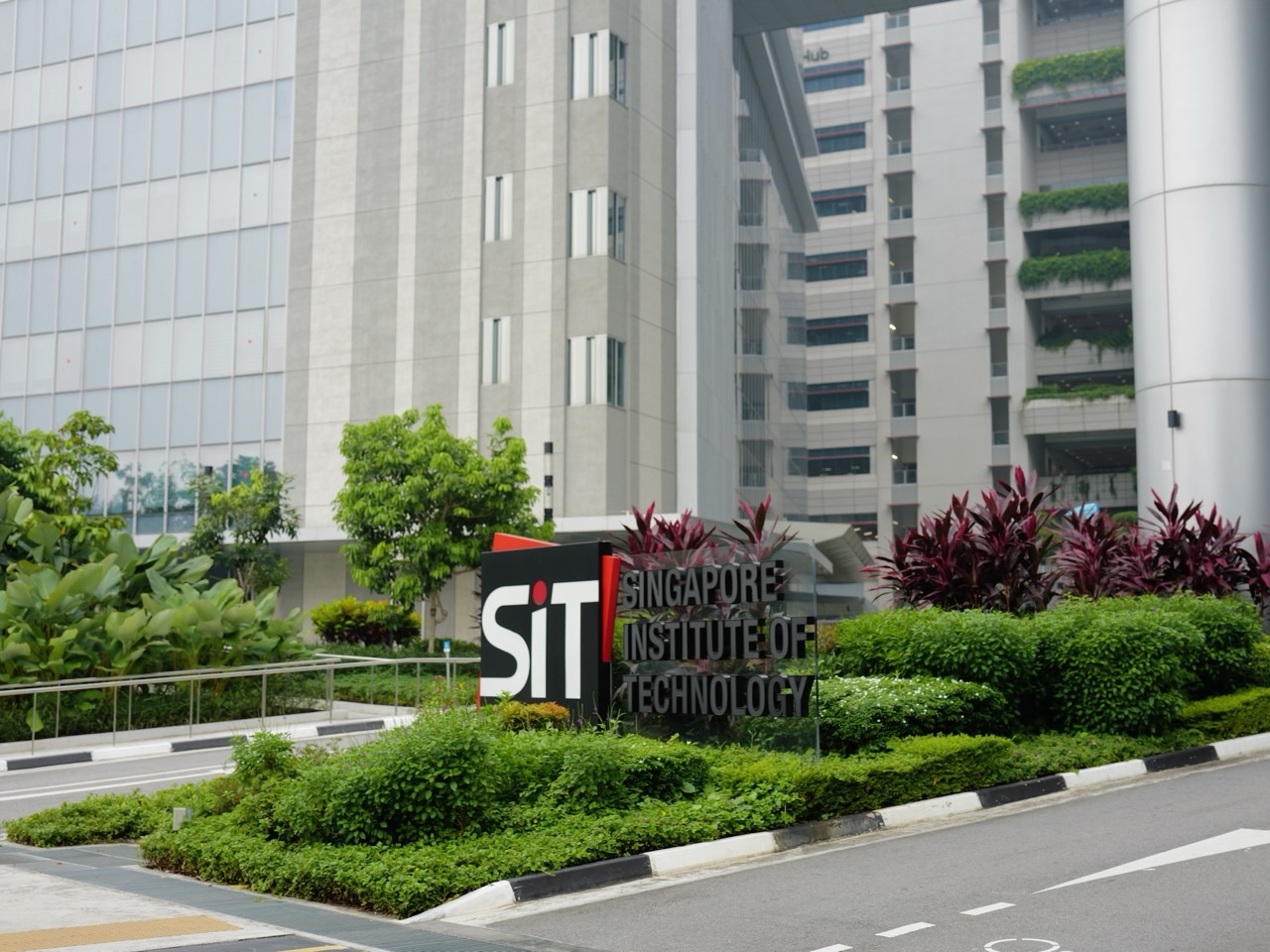
Quick answer: SIT and BeeX opened an Autonomous Marine Foundry at SIT Punggol Campus on 18 June 2026 for applied underwater robotics, coastal-monitoring research and university–industry learning. Official pathways include SIT IWSP, capstone and mentorship opportunities; these are not unrestricted public laboratory entry or guaranteed student placements. The main education opportunity for Punggol families is to understand and safely model the mathematics, physics, environmental science and computing behind marine robotics.
What changed at SIT Punggol on 18 June 2026
The Singapore Institute of Technology (SIT) and underwater robotics company BeeX opened the Autonomous Marine Foundry at SIT Punggol Campus on 18 June 2026. The partnership centres on applied marine robotics, underwater inspection and monitoring, and coastal resilience. For relevant SIT students, the official announcement identifies Integrated Work Study Programme attachments, capstone projects, mentorship and participation in student-led robotics initiatives. The laboratory is not a publicly open playground and the announcement does not establish independent secondary-school entry to its equipment.
The learning opportunity is significant because underwater robotics draws together Physics, Mathematics, Computing, Geography, environmental monitoring and precise scientific communication. A pupil can study how a system might navigate, measure and report an observation without entering restricted facilities, touching working robots or conducting experiments in open water. The correct educational question is not merely whether a robot looks advanced, but what evidence makes its measurements trustworthy and its intended mission safe.
The official source is SIT’s 18 June 2026 press release. This guide interprets the confirmed education pathways and provides original, explicitly hypothetical school projects. It does not advertise a BeeX enrolment programme that has not been announced.
Why this is a real education story rather than a technology slogan
Autonomous marine research is not the same as a robot demonstration in a shopping mall. A system may need to work while visibility is poor, currents are changing, sensing is uncertain and direct communication is limited. Engineering decisions therefore involve trade-offs between observation quality, energy use, navigation, maintenance and the consequences of error. These conditions make marine technology a powerful example of applied learning.
In Punggol, SIT is situated in JTC’s Punggol Digital District, where businesses, teaching and research are intended to interact. BeeX contributes autonomous underwater vehicle expertise while SIT contributes applied-learning, research and industry connections. The collaboration creates an opportunity for suitable university students to encounter real engineering constraints, but it does not mean every nearby child may enter the laboratory or join a professional dive.
For families, the transferable achievement begins earlier: learn to make a reliable diagram, calculate with units, ask which source supports a claim, and distinguish an observation from a conclusion. Those habits are valuable for students who later choose marine engineering, data science, environmental studies or other fields.
What exactly was announced—and what remains uncertain
The Autonomous Marine Foundry is intended as a platform for research and applied technology related to maritime robotics, underwater autonomy, coastal protection and infrastructure monitoring. SIT describes exploration of BeeX underwater drones as sensor platforms for observing coastal protection assets and identifying possible anomalies. Such research could eventually assist inspection and maintenance, but an abnormal sensor result is not automatically a verified structural defect.
The official announcement also mentions SIT’s participation in the 2026 Maritime RobotX Challenge through Team OtiPrime, with BeeX mentorship. It anticipates future technical workshops, hackathons and applied-learning activities. These are announced collaborations and intentions. Do not infer that a public workshop timetable, school admissions scheme or guarantee of a university placement already exists.
A parent should ask three different questions: Does the institution offer a formal degree that suits the student? Is a relevant project open to applicants within that degree? Is there a separately advertised public activity with a real registration route? The answers can differ. Simply living in Punggol does not bypass institutional selection, technical safety requirements or event eligibility.
AUV versus ROV: definitions students need
An autonomous underwater vehicle (AUV) undertakes aspects of a mission under onboard control and navigation, with the precise degree of autonomy depending on its design. A remotely operated vehicle (ROV) is normally controlled from elsewhere, often through a tether. The term marine robot includes diverse types of systems. A student’s model boat, a remotely controlled pool device and an industrial underwater inspection platform should not be treated as interchangeable.
The distinction can be explored on paper. Give one fictional vehicle a fixed list of actions that it performs unless an obstacle appears. Give another a remote human operator. Ask students who decides the next step, how a failure is noticed, what communications are necessary and when stopping is safer than continuing. That comparison shows why software control is only part of engineering: permission, recovery and uncertainty matter too.
Underwater navigation differs from ordinary maps on a phone. Satellite positioning does not work normally while submerged, so marine systems may rely on other measurements and techniques that introduce different uncertainties. An accurate route on a drawing does not establish that a robot can reliably locate itself in a real ocean.
Mechanical engineering: weight, displacement and buoyancy
A marine vehicle must carry sensors, electronics, batteries and propulsion while maintaining controlled movement through water. Buoyancy depends on the weight of displaced water, but a working system also requires suitable distribution of mass, balance, structural protection and maintenance. The design cannot simply maximise the number of features. Each new sensor adds cost, power demand, possible mass and an extra failure point.
A safe school activity compares several everyday objects in a shallow bowl of water under supervision. Record which float or sink, make predictions, and discuss why size alone does not determine behaviour. Students can then draw a fictional underwater instrument with labelled sections: outer structure, energy storage, sensors, propulsion and recovery. The drawing is not a certified design and must never be presented as safe for deployment.
Do not encourage children to build sealed pressurised vessels, use mains-connected devices near water, dive for measurements or release homemade devices into Punggol waterways. Classroom physics can be rigorous without creating physical risk or disturbing the environment.
Physics of pressure: a fully worked school example
Pressure increases with depth in a fluid. In a simplified hydrostatic calculation using freshwater density 1,000 kilograms per cubic metre and gravitational acceleration 9.81 metres per second squared, the additional pressure at five metres is density multiplied by gravity multiplied by depth: 1,000 × 9.81 × 5 = 49,050 pascals, or about 49.1 kilopascals. At ten metres the simplified additional pressure doubles to about 98.1 kilopascals.
These are hypothetical school calculations, not the operating depth or pressure rating of a BeeX vehicle. The calculated value represents a hydrostatic contribution relative to the surface, not the entire absolute pressure. Actual seawater density differs from the freshwater assumption, and engineering must account for real structures, seals, dynamic loads and safety factors.
Students should include units at every stage, name the physical assumptions and explain why correct arithmetic alone cannot prove that a device is safe. The habit of distinguishing a classroom model from operational certification is central to good engineering.
Why underwater light and sound complicate observation
Light is absorbed and scattered in water. Suspended particles can obscure details that would be easy to see in clear air, while colour and illumination depend on depth and conditions. Cameras therefore do not always supply a reliable picture of a submerged structure. A learner might assume that improving camera resolution solves every inspection problem, but that overlooks the physical conditions determining what reaches the camera.
Acoustic methods can provide useful underwater measurements because sound propagation differs from light propagation. Even so, interpreting acoustic returns requires equipment-specific understanding, environmental context and calibration. A pattern on a sensor display is not in itself a statement about the condition of a seawall or asset.
A classroom may compare photographs of objects in clear and murky water under controlled conditions, but only with ordinary safe containers and without claiming to recreate professional sonar. An excellent report specifies what can be observed, which variable changed and how the result limits the conclusion.
Navigation: the shortest route can be the wrong one
Imagine a fictional monitoring route A of 800 metres and route B of 950 metres. At an assumed constant 0.5 metres per second, route A takes 1,600 seconds, about 26.7 minutes, and route B takes 1,900 seconds, about 31.7 minutes. The second route requires roughly five additional minutes. These figures are invented to practise time = distance divided by speed; they are not measured from a Punggol marine mission.
Whether a real underwater vehicle should choose the shorter route depends on navigational uncertainty, currents, obstacles, restricted zones, mission objectives and the ability to return safely. A mathematics question can compute travel time, while an engineering question must justify the overall decision. Keeping the two problems separate protects against overconfident claims.
Students should practise describing a route using coordinates, plotting a safe-looking option on a fictional map and adding a stop rule when the assumed information becomes unreliable. Do not attempt to test those ideas by launching a toy or entering the sea.
An energy budget that includes the return journey
Consider a paper simulation with a fictional battery budget of 100 units. The outward journey uses 26, observation uses 18 and the estimated return uses another 26. Total planned use is 70, leaving 30 units in the simplified model. A younger student can calculate the remainder; an older student should ask what uncertainties were ignored.
Water current, time spent searching, sensor power, reduced battery performance and a failed navigation attempt could increase actual energy consumption. Professional systems need validated reserves and recovery plans. A school exercise cannot determine a safe universal reserve percentage for marine operations.
The transferable lesson is that a mission budget must include its safe conclusion. This habit applies to planning a school experiment, developing software, estimating a project budget and choosing travel arrangements.
Synthetic monitoring data: an anomaly is not a diagnosis
Give students a fictional sensor log for a coastal structure with readings across ten dates. One unusually large reading may be a real environmental change, a sensor problem, an innocent operational change or something requiring further investigation. Students should graph the values, identify which reading differs and list possible explanations before proposing action.
The report must use cautious language: “The model flagged an unusual observation at the fifth measurement” is stronger than “The seawall is collapsing” when no professional diagnosis has been made. This precision matters in infrastructure work because exaggerated or unsupported statements can mislead decision-makers and the public.
Synthetic data must be labelled as synthetic. Students must not seek confidential inspection records or map the detailed vulnerabilities of real infrastructure without authorisation. Credible learning can happen with invented but internally consistent data.
A confusion-matrix example for future data analysts
Suppose a fictional detector tests 100 simulated observations. Ten contain known synthetic defects. The detector flags eight of those, misses two, and incorrectly flags four of the 90 normal observations. The confusion-matrix entries are: eight true positives, four false positives, two false negatives and 86 true negatives.
Precision is eight divided by twelve, approximately 66.7%. Recall is eight divided by ten, or 80%. Overall accuracy is 94 correct classifications divided by 100, or 94%. That apparently impressive overall accuracy hides the fact that two of the ten actual defects were not flagged and one third of the alerts were false.
The figures are purely educational and not BeeX or SIT performance data. Their importance is mathematical and ethical: professionals need to consider the costs of missed defects, false alerts and imperfect labels rather than relying on a single flattering percentage.
The 2026 RobotX competition and university learning
SIT’s official press release says Team OtiPrime was participating in the 2026 Maritime RobotX Challenge, supported by BeeX engineers. The event is scheduled for 8–14 November 2026 at The Promontory at Marina Bay, and is described as an international university-level autonomous robotics competition. The location is Marina Bay, not the SIT Punggol Campus.
A competition teaches integration and responsibility because multiple subsystems must operate together under defined rules. A team must plan, test, communicate, troubleshoot and document failures. But simply reading about the team is not the same as entering it. Parents should consult the organiser’s official event page for current participation or spectator conditions, rather than assuming children can join a university team or attend every activity.
The event source is RobotX 2026’s official programme. As of 23 October 2026, its November dates are still in the future and arrangements must be confirmed from the organiser.
PUB’s new coastal research funding: an important distinction
On 21 October 2026, PUB announced a further S$135 million under RIE2030 for coastal protection and flood-resilience research. The national investment includes sustainable infrastructure methods, improved operation of tidal gates and pumping stations, and digitally enabled monitoring and maintenance. This makes coastal data and reliable inspection an important national capability area.
The funding announcement is separate from SIT’s June collaboration with BeeX. It does not mean the S$135 million belongs to the foundry or that every underwater robotics proposal has received financial support. Publishing responsibly requires clearly identifying the institution, date, purpose and scope of each announcement.
PUB also issued a June 2026 Code of Practice on Coastal Protection covering relevant design, operation, inspection and maintenance standards. Monitoring is only part of protecting infrastructure. Equipment observations must be interpreted within a broader engineering, governance and maintenance process. The official sources are PUB’s 21 October announcement and the June coastal code release.
How subject choices connect to a marine career
School Mathematics supports measurement, graphs, trigonometry and handling uncertainty. Physics explains forces, pressure and energy. Computing supplies navigation logic, simulations and testing. Geography contributes coastline and environmental understanding, while English makes results accessible and precise. These are complementary rather than competing specialisations.
A student who loves marine life may ultimately choose environmental science rather than robotics. Another may prefer software engineering, marine safety, electronics or risk assessment. The future is open enough that a young person should build fundamentals instead of selecting a degree at age twelve merely because a new research laboratory is nearby.
At post-secondary level, applicants should read the actual programmes offered by ITE, polytechnics, JCs and universities. The Autonomous Marine Foundry is a partnership in applied research and education, not a separate publicly advertised undergraduate degree.
Safe school project: build a paper underwater mission
A secondary class can use a ten-by-ten paper grid. Mark a fictional start position, two inspection areas, a no-entry section and a recovery point. Learners propose a route, calculate its length, and explain where the vehicle should stop if its position estimate becomes uncertain. They may work with pencil and ruler before writing any code.
An assessment could reward five elements: correct plotted route, distance calculation, explicit constraints, a failure-response rule and a reflection on what the model excludes. The strongest work will mention currents and sensing limitations without falsely claiming the class has experimentally reproduced them.
All routes must be fictional. This is a learning simulation, not a survey or navigation proposal for real coastal structures. A school’s report should make that distinction prominent.
What a careful portfolio should contain
Keep a dated project brief, sketches, measurement assumptions, code or diagrams, test cases, failed attempts and a short conclusion. If working with teammates, name each person’s contribution. If a generative tool is used, declare it according to school rules and avoid representing its output as personally developed technical capability.
University-level applicants benefit from showing how they revise a design after evidence contradicts an earlier belief. A report that admits a sensor model failed under a new test condition is often more intellectually informative than one that claims everything worked perfectly.
Do not publish commercially sensitive material, real infrastructure weaknesses or photographs taken in restricted areas. Students can learn engineering ethics by protecting information they are not authorised to share.
Six weeks of maritime problem-solving for secondary students
Week 1 begins with reliable sources. Each student reads SIT’s June 2026 foundry announcement and PUB’s October 2026 research update. They highlight past-tense statements about what opened, future-tense statements about research ambitions and programme details that have not been announced. This is a valuable English exercise: a press release can report a real launch while also listing intentions that should not be rewritten as completed services.
In Week 2, the class chooses one narrow physics question: pressure at depth, buoyancy or how poor visibility can affect sensing. Week 3 introduces an invented route and calculates distances and times with units. Week 4 builds a synthetic set of sensor observations, graphs the results and explains potential measurement uncertainty. Week 5 compares two hypotheses and asks what additional evidence would distinguish them. Week 6 ends with a clear report explaining limitations and the human role in any safety decision.
The unit succeeds when students can defend the connection between evidence and a claim. It does not require permission to use BeeX hardware. A simple original model carefully documented is a genuine educational result, whereas a grand presentation claiming to have “solved coastal protection” without data is not.
A better way to evaluate a science project
A science fair display often looks convincing when it includes a poster, a prototype and several charts. But the reader needs to know what each element proves. Give students a rubric with questions about reproducibility, controlled variables, stated assumptions, appropriate units, honest failure reporting and whether the result follows from observations.
For example, a paper route model might be correct only when the obstacles are fixed and the grid is fully known. An excellent student makes that limitation explicit. A weaker submission may state that the model could automatically inspect Singapore’s coastline. Without real navigation, verified sensing and risk assessment, that claim is unsupported.
Feedback should address the mechanism of learning rather than the appearance of sophistication. A child who discovers that the answer changes when the current direction changes has made progress, even if the first route was incorrect. Intellectual honesty, careful revision and clear explanations matter more than the number of technical words on the display.
Understanding the difference between an observation and an inference
Imagine an underwater camera detects a dark patch on a fictional concrete surface. The observation is that a dark patch appears in the recorded image under given conditions. An inference might be that the material has changed, but the image could also reflect lighting, shadows, suspended sediment or sensor settings. A conclusion that the structure is unsafe would require substantially more evidence.
Students can practise this using ordinary photographs taken in a safe classroom. Ask them to list what they can see, what they suspect and what they would need to establish before a confident claim. The exercise is transferable to source-based questions in History, Science practical reports and assessing information online.
Professional inspection is more than collecting images. It may involve calibrated sensors, repeatable measurements, engineering criteria, independent checks and documented follow-up. A robot may help collect evidence, but the public should not be asked to trust a consequential decision merely because it was generated automatically.
Why exact coordinates matter in underwater monitoring
An inspection finding without a reliable location may be hard to revisit. If an underwater observation is associated with uncertain coordinates, another inspection may examine a different part of the structure and reach a misleading comparison. Locating a measurement is therefore part of its quality, not a decorative map detail.
A paper exercise can represent location on an x–y grid. Give a fictional sensor a point, an uncertainty region and a second observation. Ask whether the two regions overlap and what that means. A student may find that a precise-looking coordinate does not imply a precise actual position. That is an introduction to uncertainty without requiring advanced marine navigation algorithms.
It is essential not to request, display or publish sensitive real infrastructure data as part of a school activity. Synthetic coordinates and invented maps allow the class to explore the mathematics without creating risks for public assets.
Currents, speed and the temptation to oversimplify
Students learn that speed is distance divided by time. Marine navigation introduces the distinction between movement relative to water and movement relative to the surrounding environment. A current can assist or oppose progress, meaning a vehicle’s effective movement may differ from a simple still-water calculation.
In an invented one-dimensional example, a hypothetical vehicle moves at 1.2 metres per second relative to still water while an opposing current has a speed of 0.3 metres per second. Under the simplified assumptions, progress against the ground is 0.9 metres per second. With a following current of 0.3 metres per second, it would be 1.5 metres per second. These illustrative numbers ignore changing currents, steering, water depth and vehicle limitations.
Students should explain that this arithmetic is conceptual, not a recommendation for safe operating speed in the sea. The purpose is to see why environment conditions can change a calculation that was perfectly correct for a classroom diagram.
A simplified sensing decision tree
A beginner-friendly logic exercise starts with the question “Has the simulated sensor provided a usable reading?” If not, the fictional program records uncertainty and stops or requests human guidance. If yes, it asks whether an observation falls within the defined region of interest. If not, it continues the permitted simulated route. If the observation is unusual, it logs the event without immediately declaring a defect.
Students can draw the flowchart with boxes and decision diamonds. The final branch should recognise human review and that a reported anomaly is not a confirmed failure. A more sophisticated learner can write a small program operating on invented test cases, including missing readings and inconsistent timestamps.
An important lesson is to make the system fail predictably. An intelligent-looking system that silently invents a missing value may be less trustworthy than one that stops and admits uncertainty. Engineering education should reward safe failure handling alongside successful completion.
What coastal protection research can—and cannot—achieve
Singapore’s coastline has diverse locations, land uses and physical conditions. PUB’s site-specific studies describe examining local vulnerabilities and potential measures with stakeholders. A measure that suits one stretch may not be appropriate somewhere else, so researchers compare options against physical risk, function and community effects.
Marine robotics might assist information gathering as one part of this broader process. It does not construct barriers, decide national policy or replace landowner responsibilities. Reliable decisions require integrated knowledge about drainage, tides, weather, design, inspection, operation and maintenance.
For students, this illustrates that solving a public problem requires collaboration across fields. Even an excellent robot cannot provide a complete answer without civil engineers, planners, environmental specialists, authorities and members of the affected community. Recognising this complexity is a sign of maturity, not a reason to abandon a useful technical idea.
What an Integrated Work Study Programme experience may teach
SIT’s IWSP links academic learning to supervised professional experience, subject to the arrangements of a particular degree and industry partner. In the BeeX collaboration, the press release identifies potential exposure to real-world systems work, robotics integration and maritime applications.
A student working on a genuine engineering problem may need to read a project brief, propose a test, work within safety procedures, organise results and explain limitations to a supervisor. Success involves meeting operational standards and responding to feedback, not only building something that moves.
Prospective applicants should check the current degree’s published curriculum, eligibility and placement process. A research collaboration cannot be used to guarantee that every SIT student will be assigned to BeeX, that all projects will involve sea trials or that a particular module exists for every intake.
SIT research, a competition team and a public workshop are different
Families commonly group every university activity under the label “programme”, but the conditions can vary greatly. A laboratory may be available only to appointed researchers and authorised students. A competition team may select eligible enrolled university students. A public talk might allow external registration, while a research demonstration may be restricted for safety.
The June 2026 foundry announcement distinguishes actual collaboration from future plans for workshops and hackathons. Parents should not infer an open application form from the phrase “talent development”. Instead, locate the exact named activity, organiser, audience and confirmation channel.
A good family decision may simply be to attend a verified public STEM talk, use an ordinary library resource or build a safe model at home while the student develops prerequisites. There is no educational need to enter restricted infrastructure or pretend the child is already part of an industry research team.
A month-long home research plan without hardware
Week 1: the student explains, in ordinary language, what an autonomous underwater vehicle is and what the June 2026 SIT–BeeX partnership proposes to investigate. They must distinguish factual claims from goals and plans. Week 2: solve two appropriately levelled Mathematics questions, checking all units and interpretations. Week 3: design a hypothetical route or sensor record with an explicit source note stating that the numbers are invented.
Week 4: seek feedback from a teacher or technically knowledgeable adult. Revise at least one claim that is too strong and describe the next test that would be required. A final report should not include any unapproved real asset data or photographs of restricted facilities.
The learner can then decide whether maritime engineering still interests them. If it does, they might deepen foundations in Physics or programming. If it does not, the same scientific reasoning remains valuable for many other subjects and career paths.
How parents can discuss engineering ambitions realistically
A parent may assume that proximity to a university research lab gives their child a direct advantage in admissions. It is more realistic to regard the development as an example the child can explore. Admissions still require the actual academic qualifications and relevant skills. A course may have a project component without giving every student access to the same partner organisation.
Ask what the learner genuinely enjoys: designing a mechanism, solving mathematical problems, writing code, observing the environment or explaining science. These interests point to different pathways. Do not push a child toward marine robotics solely because the field appears fashionable or Punggol has a newly announced facility.
The strongest encouragement is to make appropriate resources available, respect a child’s evolving interests and reward careful work. A teenager who documents an unexpected result and tries again is practising the patience needed for advanced study.
Frequently asked questions
Does the foundry operate from Punggol? SIT’s announcement places it at the SIT Punggol Campus. That location does not confer unrestricted access.
Are RobotX trials held at Punggol? The cited November 2026 competition is scheduled at The Promontory at Marina Bay. SIT’s participation does not change the event location.
Are there general-public BeeX workshops listed? The partnership describes plans for workshops and hackathons, but an applicant needs a later confirmed event notice with dates and eligibility.
Can a child’s school project include underwater pressure? Yes, as a calculation with named assumptions. Do not use the result to certify or deploy hardware.
Can AI detect defects without an engineer? Automated systems may flag patterns, but interpretation and consequential safety decisions require validated procedures and appropriate human oversight.
Does PUB’s S$135 million coastal research announcement pay for the foundry? No such allocation is established in the cited statements; they are different announcements with different scopes.
What subject should a secondary student prioritise? Strong Mathematics, Science, English and, where available, Computing are broadly transferable foundations.
Can any Punggol student get an SIT IWSP with BeeX? No guarantee is given. Student eligibility and placement are governed by SIT’s academic and industry processes.
A complete scientific-report format
An effective report begins with a short answer: what question did the student study, and what result was obtained in the hypothetical or classroom setting? It then lists materials, input values, units and assumptions, followed by the procedure and all trial results. The discussion should identify anomalies, sources of uncertainty and how the conclusion could be challenged by a further test.
Finally, a source section must distinguish the SIT press release, the PUB policy and funding updates, and any invented data or proposed classroom investigation. This source distinction prevents readers from mistakenly assuming the student’s numbers were produced by the actual marine foundry.
The standard is deliberately high because real-world monitoring matters. If future engineers learn early not to exaggerate, they are better prepared to work responsibly when the measurements affect infrastructure, public spending or environmental decisions.
Why this matters to Punggol’s future education
The SIT–BeeX partnership makes a difficult engineering domain visible within the Punggol Digital District education landscape. It demonstrates how university learning can connect with industrial expertise and national environmental questions. Yet the greatest lesson for school-age residents is not the promise of seeing a robot: it is understanding that engineering combines physical constraints, data quality, uncertainty, safe operation and honest communication.
An interested student can start with a transparent paper model, progress to supervised school work and later investigate actual qualifications that could lead to applied university research. That is a more reliable educational route than buying sophisticated equipment or making premature career promises. Punggol provides a compelling local example, but evidence and skill are what turn the example into lasting capability.


