
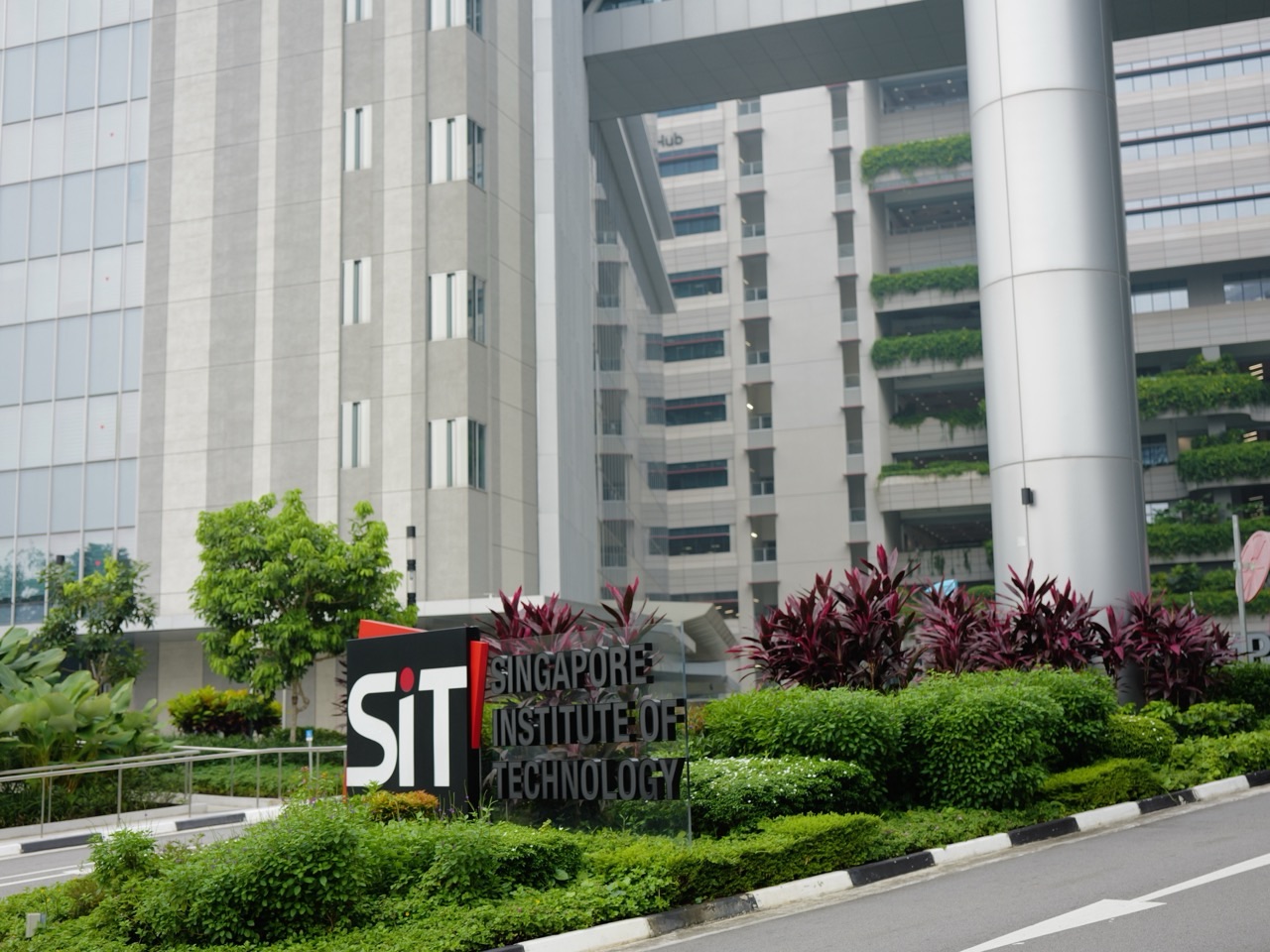
Punggol Education 2027 for working adults is much wider than one new university campus. Residents exploring a career move can compare ITE’s Work-Study Diploma, Polytechnic part-time and post-diploma courses, Workforce Skills Qualifications (WSQ), short courses, SkillsFuture Career Transition Programmes and SIT continuing education. Each serves a different purpose. Some provide an accredited qualification; some build a targeted competency; some involve an employer and paid work.
Did you know that ITE’s published 2027 Work-Study Diploma course listing already names courses such as Cloud Management & Operations, Facilities Management and Cyber Security & Forensics, while specifically marking certain specialisations as not offered for the 2027 intake? An impressive course catalogue is not the same as an active intake. As of the official ITE admissions page updated 13 October 2026, its 2027 Work-Study Diploma application had not yet commenced. That is a useful example of why adults should verify an actual opening instead of assuming they can apply immediately.
This Punggol Education 2027 guide explains the important distinctions, entry criteria, course costs, income-support limits and what to do before resigning from work or committing family savings. It also shows how to connect learning to real jobs in engineering, IT, healthcare, hospitality, operations and community services without promising that the Digital District will automatically employ every graduate.
Quick Comparison: Which Adult Education Route Solves Which Problem?
- Short course or WSQ module: useful when one well-defined workplace skill is missing and a recognised training arrangement can address it.
- Part-time Polytechnic Diploma: useful when someone needs broader formal technical or professional knowledge while continuing other commitments.
- Specialist or Advanced Diploma: may suit diploma or degree holders seeking deeper or new professional expertise, subject to the programme’s criteria.
- ITE Work-Study Diploma (WSDip): an apprenticeship-based diploma involving an eligible employer and substantial work-based learning.
- SkillsFuture Career Transition Programme: a structured skills-conversion route for an eligible learner targeting a different occupation.
- SIT continuing education or stackable micro-credentials: may suit a learner pursuing university-level specific competencies or a mapped degree pathway, where the course and admission conditions fit.
The correct selection begins with the target competence and qualification, not the longest course or the highest headline subsidy. A three-month programme may be enough for an existing analyst needing one new tool, while someone entering a regulated profession may require a formally recognised longer qualification.
What Is ITE’s Work-Study Diploma in Practical Terms?
ITE describes its Work-Study Diploma as a 2.5-year apprenticeship-based continuing education programme, typically involving 70%–80% on-the-job training and 20%–30% off-the-job training at ITE. The published FAQ notes a different three-year duration for its Nursing WSDip. Learners are employees of participating organisations, not simply full-time classroom students.
The employer must provide meaningful workplace learning, while ITE handles the complementary teaching and assessments. A participant may earn a salary and employee benefits and receive course sponsorship under the programme, but will also have duties at work, training obligations and possible employer-specific contractual terms.
Who is eligible?
ITE’s admissions information updated 13 October 2026 lists a route for fresh or employed ITE graduates who are Singapore Citizens, Permanent Residents or eligible LTVP+ holders with a relevant Nitec GPA of at least 2.0 or a relevant Higher Nitec qualification. It also describes an in-service worker route for eligible employer-nominated applicants with equivalent qualifications such as WPLN Level 5, age at least 18, a minimum of two years of relevant full-time work experience and strong employer endorsement.
Those are national admissions descriptors, not a guarantee of a course or job. Applicants must check the relevant feeder qualification and any course-specific requirements. ITE additionally warns that National Service-liable applicants may need appropriate deferment clearance before enrolment.
What if a working adult has years of experience but no relevant Nitec?
The in-service route may be worth discussing if the person has an eligible employer and meets its conditions, but a job title alone is not proof of equivalence. Ask ITE’s admissions or ECG team which evidence or recognised qualification is required, then decide whether a preparatory course is necessary. Do not assume that every adult will be able to bypass the standard academic route.
The 2027 WSDip Course Catalogue: Read the ‘Not Offered’ Labels
ITE’s A–Z 2027 course listing includes subjects in Business, Engineering, Built Environment, Digital Technology, Health Science and community-oriented disciplines. Examples shown in the October 2026 list include Accountancy, Community Engagement & Development, Cloud Management & Operations, Cyber Security & Forensics, Facilities Management, Rehabilitation Care and Special Needs & Job Coaching.
The same catalogue explicitly marks some entries as not offered in 2027, including the AI & Data Intelligence (AI) specialisation and Agriculture & Aquaculture Technology. It separately lists AI & Data Intelligence (Data Engineering). A student cannot safely replace one specialisation with a similarly titled one and assume the same modules, employer opportunities or eligibility conditions apply.
Each listing has a specialisation code that matters when applying. Keep the course name, code and eligible intake together. As of the cited ITE page updated 13 October 2026, the WSDip 2027 application was noted as not yet commenced; monitor the official page for any later opening, rather than inventing a registration deadline.
Before Accepting a Work-Study Position, Read the Employment Arrangement
Work-study education can be attractive because it joins real work with formal learning. However, it has risks and responsibilities. Under ITE’s published FAQ, the course fee is borne by the participating employer, but a trainee’s employment contract and any applicable bond, exit conditions or repayment of incentive may affect the decision.
ITE states that a successful candidate must go through employer selection and be hired as a full-time employee before joining WSDip. Salary levels vary by employer and are shown through the relevant WSDip Connect process. Some positions may have commitment or bond conditions; these should be read before acceptance.
The published FAQ also explains that a trainee who resigns or is terminated may have to return a disbursed sign-on incentive and comply with employment exit requirements. That is why a family should not treat the advertised sign-on incentive as unrestricted cash or a substitute for a sustainable job match.
How to interpret the incentives
ITE’s programme information describes a possible $5,000 sign-on incentive for eligible Singapore Citizen fresh graduates from relevant feeder courses within a specified graduation or ORD window, and a $10,000 CPF Ordinary Account top-up under the ITE Progression Award for eligible younger Singaporean ITE graduates pursuing a diploma issued by an MOE-funded institution. Eligibility and disbursement conditions are important; these are not guaranteed payments to every WSDip enrollee.
A 47-year-old worker switching fields should not build a financial plan around an incentive specifically conditioned on being aged 30 or below. Read the official qualifying rules instead of assuming that a headline total is the actual personal benefit.
How Part-Time Polytechnic Diplomas Differ
Singapore Polytechnic’s PACE Academy publishes part-time diploma and post-diploma courses for working adults. Its overview states that part-time diplomas typically take around two to three years, while many post-diploma programmes take around one to one-and-a-half years. The course pages combine online and face-to-face elements as appropriate to each programme, and applications are connected to the institution’s specified April and October intakes.
For example, its published information describes part-time diploma learning for adults with appropriate GCE, ITE or WSQ backgrounds, while Specialist and Advanced Diplomas often serve people already holding a diploma or degree. Those are broad routes, not proof that any particular applicant meets a given course’s prerequisites. Check the individual course page and whether its next intake is actually open.
Part-time Diploma or Specialist Diploma?
A part-time Diploma may be suitable when an adult needs a broad technical or professional foundation for a new role. A Specialist Diploma may be suitable for an existing diploma holder who wants deeper skills in a narrower area such as cybersecurity, energy management, industrial safety or digital marketing. An Advanced Diploma can sometimes provide broader advanced professional development.
The names are not interchangeable and do not imply automatic progression to a University degree. Before enrolling, examine the qualification’s recognition, module outcomes, assessment standards, completion timeframe and documented further-study possibilities.
Explore the official SP PACE part-time and post-diploma overview. Punggol residents may also compare continuing education options at other polytechnics rather than limiting themselves to the nearest or most advertised provider.
WSQ and Short Courses: Valuable When the Skill Gap Is Specific
Workforce Skills Qualifications (WSQ) and short programmes may be appropriate for training in specific job competencies, including operational safety, customer service, digital tools or technical practice. Their value depends on the specific qualification, assessment standard and employer requirement. A brief course completion record does not have the same meaning as a recognised diploma.
Suppose a Punggol operations executive needs better data presentation to make decisions each month. A short, assessed data-visualisation course may be a more proportionate response than leaving work for several years of full-time study. But if the target job formally requires an engineering qualification, a software workshop alone cannot replace that requirement.
Ask the provider to explain exactly what is assessed, who recognises the credential, the required prerequisites and whether any credits can later be transferred. Treat claims that ‘all certificates are nationally accredited’ or ‘every course stacks into a degree’ with scepticism until the issuing body confirms them.
SIT at Punggol: The University-Level Alternative
SIT has developed a School of Lifelong Learning and Career Development, SITLEARN, with continuing education options and a competency-based stackable micro-credential model. The official CSM arrangements may allow approved courses to contribute towards named degree programmes, subject to admission rules and credit validity.
This is different from ITE WSDip and different from a Polytechnic Specialist Diploma. A SIT micro-credential does not automatically become a University degree, and a part-time programme’s delivery location may differ from the main Punggol Campus. Inspect the current programme page, its recognised pathway, the credit validity window and the exact intended qualification.
For details, read our Punggol SITLEARN stackable degrees and five-year credit rule guide. The current article instead compares all major adult learning choices so residents can decide whether University-level credits are even necessary.
SkillsFuture Mid-Career Training Allowance: Avoid a Misleading Calculation
Singapore’s SkillsFuture Level-Up measures provide additional support for eligible Singapore Citizens aged 40 and above pursuing approved substantial training. But a training allowance is not automatically paid for any course, and the rules depend on study mode, course eligibility, attendance and personal circumstances.
Singapore Polytechnic’s current funding explanation describes a $300 monthly part-time training allowance for eligible long-form courses, capped at 24 months over a person’s lifetime. It notes that applications require the specified official portal and may need to be renewed for each modular certificate or post-diploma certificate component. This differs from the income-linked full-time allowance arrangements.
Do not add a full-time allowance and the part-time amount together, assume both are available at the same time, or multiply $300 by a guessed course duration. Check whether the specific intake and modules qualify and whether the trainee meets the criteria. Read SP’s current funding information and the SkillsFuture Singapore website.
Four Punggol Adult Learners: Worked Decision Examples
Example A — a 24-year-old Higher Nitec graduate who enjoys repairing systems
This learner wants an employer-based technical route and already holds a relevant Higher Nitec. The ITE WSDip deserves investigation because it combines a diploma with paid structured work. They should check the 2027 catalogue, feeder qualification, job interviews, actual employer duties, National Service requirements where relevant, and the contract rather than selecting a course by incentive value alone.
Example B — a 35-year-old logistics coordinator with strong workplace experience
This worker wants to move into supply-chain planning and analytics while retaining a salary. A part-time Polytechnic Diploma, short data course or employer-backed learning route may be more practical than resigning for full-time study. The decision should begin with employer expectations, evidence of current skills and whether a recognised formal qualification is required.
Example C — a 45-year-old parent returning to employment
A returning parent may have substantial organisational, service or caregiving skills but limited recent formal qualifications. A sensible first step is to identify two realistic job roles and check their mandatory credentials. Next, compare short assessed skills courses, relevant part-time diplomas and possible SkillsFuture support, including the strict course and age eligibility requirements for mid-career allowances. Study schedules must fit actual family responsibilities.
Example D — a 52-year-old technical supervisor moving toward data-centre work
The supervisor already understands safety, maintenance and workplace systems. A targeted recognised diploma, specialist programme or stackable University-level course could strengthen a specific job-transition case. The right decision depends on whether the target employer expects equipment operations, network skills, facilities management or software knowledge. Buying a fashionable AI course without checking job requirements may not solve the problem.
These four people should not all be given the same answer. Education advice is effective when it diagnoses an existing ability gap and chooses a programme proportionate to the desired work.
Your Ten-Point Course Due-Diligence Checklist
- 1. Name the job task: describe what you want to perform differently, not just a new title.
- 2. Verify the course’s status: an A–Z catalogue entry is not proof of an open 2027 intake.
- 3. Check personal eligibility: qualifications, relevant experience, citizenship and employer nomination can matter.
- 4. Read the award: Certificate, WSQ Statement of Attainment, Diploma, Specialist Diploma and degree are not equivalent.
- 5. Examine the assessment: lectures, projects, practical work, employer evaluation or formal examinations have different demands.
- 6. Inspect the actual schedule: training days, work shifts, travel, childcare, exam periods and rest.
- 7. Calculate net costs: only after approved subsidies, contractual sponsorship and personal eligibility are verified.
- 8. Read exit consequences: possible bonds, repayment obligations, repeat-module fees and missed-work implications.
- 9. Check progression: is the credential recognised for a later qualification, and under which conditions?
- 10. Plan evidence of learning: identify the project or workplace task that will demonstrate new capability.
What Does a Good Training Outcome Look Like?
A meaningful training outcome is more than a framed certificate. A facilities technician might diagnose a repeated equipment failure, document the root cause and propose safe corrective steps. A business learner might improve a forecast and present its limitations. A healthcare support worker might demonstrate reliable procedures and respectful communication within the scope of training.
The course should help the learner explain the problem, select appropriate methods, carry out the work safely, check the result and improve after feedback. This mirrors the diagnose–teach–practice–retrieve–apply framework used in eduKate’s school learning content, but here the context is adult employment.
When comparing providers, ask to see a representative assessment or real project. If the provider cannot explain what graduates will be able to do independently, the learner should reconsider before paying.
Common Mistakes Before a Mid-Career Switch
- Resigning from a job before checking whether the new course or employer will accept the application.
- Assuming an ITE WSDip is only classroom study and overlooking its employer-based nature.
- Applying for a specialisation explicitly marked ‘not offered’ in the current intake.
- Confusing a Polytechnic part-time Diploma with a Specialist Diploma or a standalone short-course certificate.
- Treating an advertised subsidy as a guaranteed personal fee calculation.
- Enrolling because a field is fashionable without understanding its basic Mathematics, language or technical requirements.
- Assuming training guarantees a job or a salary increase.
- Failing to read employer commitment, repeat-module and withdrawal clauses.
- Overestimating the household’s available time for work, childcare and study.
A Four-Week Education Search That Protects Family Income
- Week one — evidence: compare two target job descriptions and list the skills you can already demonstrate.
- Week two — course research: shortlist one small training option, one formal qualification and one work-study route, if eligible.
- Week three — reality test: check the official provider’s intake, credential, recognition, cost, location and career support. Speak with an adviser or employer where appropriate.
- Week four — decision: choose the smallest credible next commitment with a review point. Keep working income where possible until the training and financial plan are reliable.
This is a planning exercise, not a four-week government application window. An official course may have a much longer admissions cycle, an employer interview or a future start date. Families should not force an artificial timetable onto an education decision.
What to Do, What Not to Do and What to Think About
Do
- Verify 2027 course availability and dates on the official institution’s website.
- Ask which actual work skills, projects and assessments a course develops.
- Compare certificates, diplomas, work-study and university-level options by purpose.
- Read the WSDip employer contract and the programme’s incentives and withdrawal conditions.
- Check SkillsFuture and any part-time training allowance for personal eligibility.
- Budget travel, family support, devices, work hours and recovery time.
- Build one genuine piece of portfolio or workplace evidence during training.
Do not
- Assume every course listed in a 2027 catalogue is offered in that intake.
- Treat a sign-on incentive as universal or unconditional.
- Assume all adult training programmes have the same official recognition.
- Confuse a full-time training allowance with the part-time $300 arrangement.
- Commit to a paid course before checking the actual qualification and entry prerequisites.
- Assume a single short AI workshop qualifies a person for a regulated engineering or clinical role.
- Believe a successful enrolment guarantees employment in Punggol Digital District.
Think about
Would this course remain valuable if the target employer changed? Does the learner enjoy the everyday tasks of the new field? Is a formal credential legally required, commercially useful or merely fashionable? What would a sustainable work-and-study week look like? The right education improves a person’s ability while preserving a viable household life.
Frequently Asked Questions
Is the ITE Work-Study Diploma only for fresh ITE graduates?
No. ITE has a route for eligible in-service workers nominated by their employers, subject to experience, qualification and other requirements.
Can someone work while completing the WSDip?
The programme is employer-based and includes full-time employment, work-based learning and ITE teaching. Applicants must meet the employer and programme conditions.
Did ITE open its 2027 WSDip application in October 2026?
The official admissions page updated 13 October 2026 stated that applications for the 2027 intake had not commenced. Check the live page for subsequent opening announcements.
Does the 2027 course list offer every AI specialisation?
No. ITE’s October 2026 list labels certain 2027 specialisations as not offered, including AI & Data Intelligence (AI), while listing other related options separately.
What is the difference between a part-time Diploma and Specialist Diploma?
A part-time Diploma provides broader formal education and may accept applicants with specified earlier qualifications. A Specialist Diploma typically develops deeper specific expertise and may require an existing diploma or degree. Confirm actual prerequisites and recognition.
Can anyone over 40 receive $300 monthly while studying part-time?
No. It applies to eligible Singapore Citizens in qualifying long-form training and is subject to course, application and attendance requirements. It is not a universal allowance for every short course.
Does completing a micro-credential automatically grant a degree?
No. Only approved stacking arrangements apply to named qualifications and have their own credit, admission and time-limit rules.
Official Sources and Further Punggol Reading
- ITE WSDip admission — eligibility and latest application status.
- ITE 2027 WSDip course list — specialisation codes and ‘not offered’ markers.
- ITE WSDip FAQs — sponsorship, employers, bonds and incentives.
- SP PACE part-time and post-diplomas — qualification and delivery comparisons.
- SP PACE funding — part-time training allowance details.
- SkillsFuture Singapore — eligible training and support information.
- Punggol SITLEARN degree-stacking guide — University micro-credential pathway.
- Punggol Career 2027/2028: Skills-first hiring — work skills and labour market decisions.
- Punggol education financial assistance — household support and cost planning.
- Punggol Education & Town-Life Article Index — wider educational choices.
Research cut-off: 27 October 2026. WSDip 2027 courses are drawn from ITE’s published October 2026 catalogue; dates, offerings, employment arrangements, costs and support can change. Confirm the live institution and funding pages before applying or leaving employment.


