
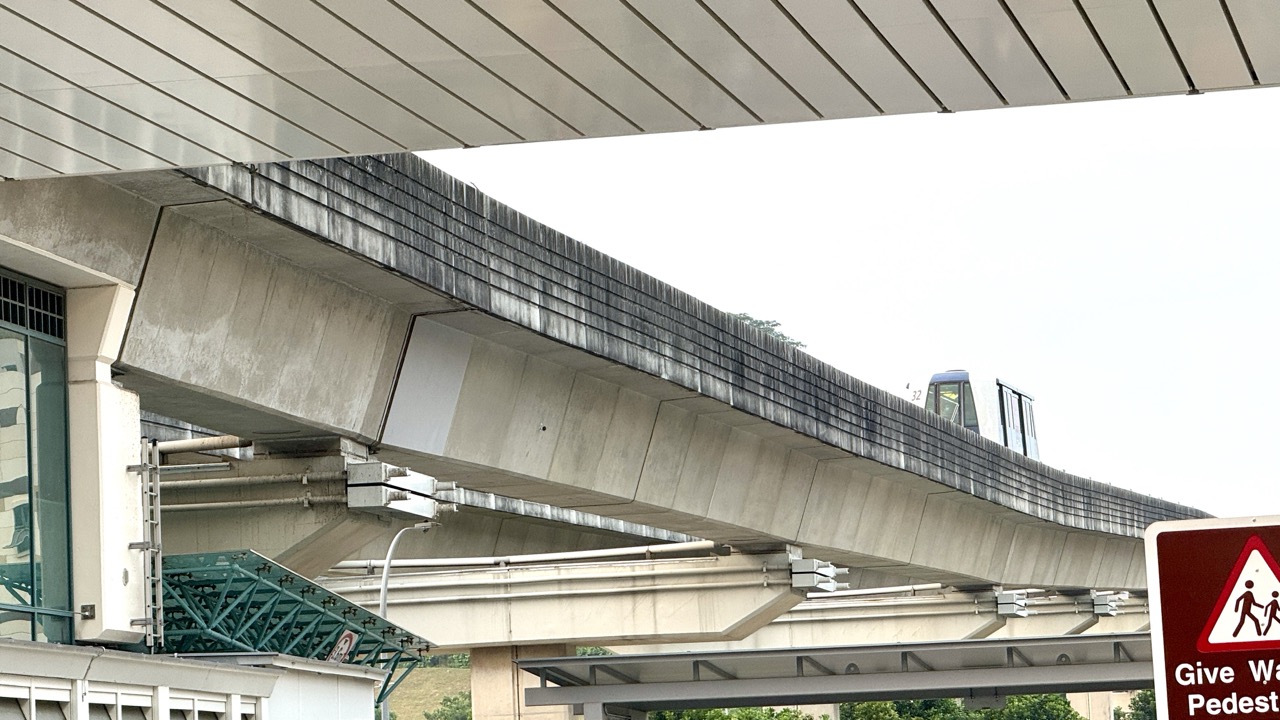
Quick answer, 27 October 2026: Punggol residents considering rail careers in 2027 and 2028 should pay attention to two separate announcements. LTA says the shared Sengkang–Punggol LRT depot expansion remains targeted for 2027. On 24 October 2026, LTA and the two rail operators announced a stronger Singapore Rail Academy with new operations and maintenance certification pathways to be introduced progressively from early 2027. These are real developments—not guarantees that a certain number of new Punggol jobs or vacancies will appear.
Did you know that an automated train still depends on maintenance, safety and operations professionals? Someone checks fault reports, inspects equipment, assesses train availability, manages records, maintains passenger information and coordinates responses when a service cannot run normally. The most valuable future rail worker may be able to combine careful practical skill, data interpretation and calm teamwork.
This article separates infrastructure milestones from job-market forecasts, explains the different types of rail work, explores ITE, polytechnic and university learning routes, and helps Punggol households decide what to investigate before committing to a course or career switch.
The real rail forecast versus the headline
| Confirmed milestone | Official timing | What it means—and what it does not |
| Shared SPLRT depot expansion | Targeted completion in 2027, per LTA’s 2 October 2026 update | Physical capacity for train servicing; not a count of new vacancies |
| Two-car train fleet | LTA’s plan is a total of 41 two-car light rail vehicles by 2030 | The year 2030 is not 2027; trains are not employees |
| Train technology | Third-generation vehicles have diagnostic panels and access improvements for maintenance | Better diagnostics do not eliminate professional oversight |
| Singapore Rail Academy | Joint LTA/operator administration from 1 November 2026 | Institutional training change, not automatic admission |
| New railway WSQ certification | Basic Certificates in Railway Operations and Maintenance planned progressively from early 2027 | Course schedules and acceptance rules still need official confirmation |
Evidence: LTA’s SPLRT update of 2 October 2026 and its rail academy agreement of 24 October 2026. The first describes hardware and construction; the second describes professional capabilities. Neither estimates Punggol-only annual recruitment.

What actually changed in October 2026?
The Sengkang West Inner Loop resumed regular passenger service on 4 October 2026, two weeks ahead of the previously indicated 18 October date. This followed the careful sequencing of track and signalling work at connections to the shared depot. However, an earlier passenger-service restoration is not the same as completion of the whole depot expansion.
LTA has described the depot expansion from about 3.5 hectares to 11.1 hectares. Additional stabling and workshop capacity helps accommodate the progressively renewed two-car fleet. Because the system serves Sengkang as well as Punggol, a headline about the depot should never be rewritten as ‘new Punggol depot employment guaranteed’.
The government’s fleet plan involves third-generation two-car vehicles replacing older trains alongside continuing second-generation vehicles. LTA announced eight additional third-generation vehicles beyond the existing renewal order, giving an overall target of 41 two-car LRVs by 2030. Commissioning, maintenance preparation and reliable running all take time.
Why driverless rail still needs people
Rolling-stock technicians and engineers
An LRV contains doors, brakes, motors, controls, communications, lighting, air-conditioning and many interconnected components. Maintenance work may involve scheduled checks, recorded faults and authorised repairs. The technician must understand basic physical mechanisms, follow safety procedures and distinguish a reported symptom from a confirmed cause.
LTA says the latest LRVs include onboard diagnostic panels and improved access to equipment. Those tools may assist fault detection, but reading an alert does not by itself prove the root cause. Engineering teams need measurement, checks and evidence that the system has returned to service safely.
Signalling and control-system staff
Driverless operation depends on signalling and safe control interfaces. Teams involved with signalling may investigate faults, monitor system condition or participate in approved testing after changes. These roles can demand electrical, electronics, software and systems knowledge. The public must never attempt to test or enter control infrastructure.
Rail operations and incident response
When a service is disrupted, staff manage information and coordinate approved alternative arrangements. An operations role might involve service continuity, control-room monitoring, clear announcements or coordination with buses and station teams. People working under pressure need to distinguish confirmed facts from speculation and communicate decisions precisely.
Depot and inventory planning
A train may remain unavailable if a component cannot be sourced even when the fault is identified. Depot operations rely on maintenance scheduling, parts management, inspections, workshop availability and good asset records. This creates opportunities for people whose strengths lie in logistics, operations and technical documentation, not only mechanical repair.
Passenger accessibility and customer care
LRT passengers include children, commuters with disabilities, older residents and workers travelling at unusual hours. Good service includes readable signs, assistance, safe transfer arrangements and truthful disruption communication. This is technical and human work together: the system must be safe, but also comprehensible.
What is the new Singapore Rail Academy pathway?
On 24 October 2026, LTA announced that it would jointly administer the Singapore Rail Academy with SBS Transit Rail and SMRT Trains from 1 November 2026. The academy will seek more consistent training standards and competency assessment for operations and maintenance, including skills linked with AI, condition monitoring and simulation-based learning.
From early 2027, SGRA aims to progressively introduce a railway WSQ framework beginning with Basic Certificates in Railway Operations and Railway Maintenance. This is a programme-development commitment, not confirmation that every certificate is currently enrolable or that any one course allows unsupervised safety-critical work.
SGRA also signed agreements with ITE, Nanyang Polytechnic, Republic Polytechnic, Singapore Polytechnic and SIT to work on clearer education routes and possible work-study arrangements. These are useful to monitor, especially for adults exploring technical careers; verify what each institution actually offers before paying a course fee.
A practical pathway for Punggol students
| Stage | Relevant learning | Realistic evidence |
| Secondary school under Full SBB | Mathematics, English, Science, logical reasoning and teamwork across G1/G2/G3 where appropriate | Clear explanations of a fictional system, graphs and documented errors |
| ITE | Practical electronics, mechanical systems, safety and technician work | Supervised workshop competency and legitimate industrial experience |
| Polytechnic | Engineering, mechatronics, maintenance planning, systems integration and data | Industry-backed project or verified internship, including tests and limitations |
| University or SIT | Control, reliability, engineering design and human factors | Research or applied project with transparent methods and supervision |
| Mid-career worker | Existing experience in maintenance, transport, facilities, customer service or planning | Mapped transferable skills and current recruiter requirements |
A safe practice project: the fictional door alert
Imagine a teaching dataset showing a passenger door reporting ‘not closed’ at three different times. The student records the timestamp, simulated electrical status, environmental information and what additional inspection information is missing. Could a sensor be malfunctioning? Could something physically obstruct the door? Could a communications issue delay confirmation?
The correct lesson is not to ‘fix the door’ using an online trick. It is to describe the competing hypotheses, explain why the data do not prove one cause, record an appropriate escalation and propose that only authorised trained staff perform tests. This reasoning habit transfers to other engineering and service careers.
What a 2027 or 2028 vacancy could actually be
| Possible vacancy family | Employers might seek | What should be checked |
| Vehicle maintenance | Mechanical/electrical practice, documentation and safe tests | Shift timing, authorised scope, progression and exact depot |
| Signalling technician | Electronics, system verification, troubleshooting | Training, security procedures and role prerequisites |
| Rail operations | Service communication and disciplined escalation | Roster, work location and responsibility during incidents |
| Maintenance planner | Record-keeping, scheduling, reliability analysis and parts coordination | Experience requirements and actual employer |
| Service officer | Accessibility, calm customer communication and accurate advice | Hours, stations assigned and contract conditions |
These are categories to investigate, not a representation that an employer has opened all these posts. Work may be based elsewhere in the northeast or across Singapore. The operator, statutory authority and supplier can employ different categories of staff.
Two forecast scenarios worth comparing
Scenario A: More diagnostic technology and new fleet assets lead operators to refresh technical training while hiring selectively. A good candidate combines established engineering fundamentals with test evidence and familiarity with modern digital records. Progress depends on published employer vacancies, not a district promise.
Scenario B: Much of the transition is managed by existing trained staff, with some targeted outside hires or vendor contracts. The system becomes more capable, but net new jobs grow slowly. In that case, taking an expensive course purely for the 2027 depot milestone may be financially risky.
Both scenarios fit the information presently available. Neither assumes an exact hiring rate or monthly salary. Training pathways can improve access without producing a guaranteed vacancy.
What families should ask before applying
- Is the vacancy posted by LTA, a rail operator, an authorised supplier or a recruitment agency?
- Does this position require shifts, night maintenance or travel across rail sites?
- Which practical qualifications are mandatory, and which may be acquired after hiring?
- Who certifies competence for safety-critical duties?
- How is experience assessed for ITE, polytechnic and university applicants?
- Where exactly does the successful candidate report to work?
- What is the contract duration, basic salary, allowance structure and progression route?
Common mistakes
- Treating 41 planned vehicles by 2030 as 41 new job positions in 2027.
- Confusing the shared Sengkang–Punggol depot with a new facility inside every Punggol neighbourhood.
- Assuming a driverless train requires conventional onboard driver staffing.
- Assuming the 2027 WSQ pathways are already available or guarantee employment.
- Entering railway facilities or testing equipment without permission.
- Counting temporary project contractors and permanent railway employees as identical roles.
Frequently asked questions
Will Punggol LRT definitely hire in 2027?
The official sources confirm renewal and training projects, not an exhaustive 2027 Punggol vacancy list. Recruitment must be verified through the employer’s own advertisements.
Is it possible to work in rail without becoming a professional engineer?
Yes. Rail systems also depend on technicians, operations, service, planning and support roles, each with different qualifications and duties. Check the actual position and authorised work scope.
Is the 41-train upgrade completed in 2027?
No. LTA’s October 2026 notice gives 2030 as the target for 41 two-car LRVs; 2027 is associated with the depot expansion.
What if a course claims to guarantee a railway job?
Ask for written evidence of employer participation, intake, recruitment rules and placement conditions. An introductory course alone does not establish a job offer.
Sources and connected articles
- LTA: 24 October 2026 rail academy agreement
- LTA: 2 October 2026 SPLRT works and fleet renewal update
- LTA: official Sengkang–Punggol LRT description
- eduKatePunggol: 2027 depot and 2030 train-fleet plan
- Punggol Career: engineering and reliability skills
- Punggol Career: evidence of experience for first-time applicants
Conclusion: transport is a technology and a public responsibility
The future of Punggol’s rail network has genuine official milestones. The sensible career response is not to assume a hiring boom. It is to understand how safety, engineering, operations and professional training intersect, then make a course or employment decision using verified role requirements.


