
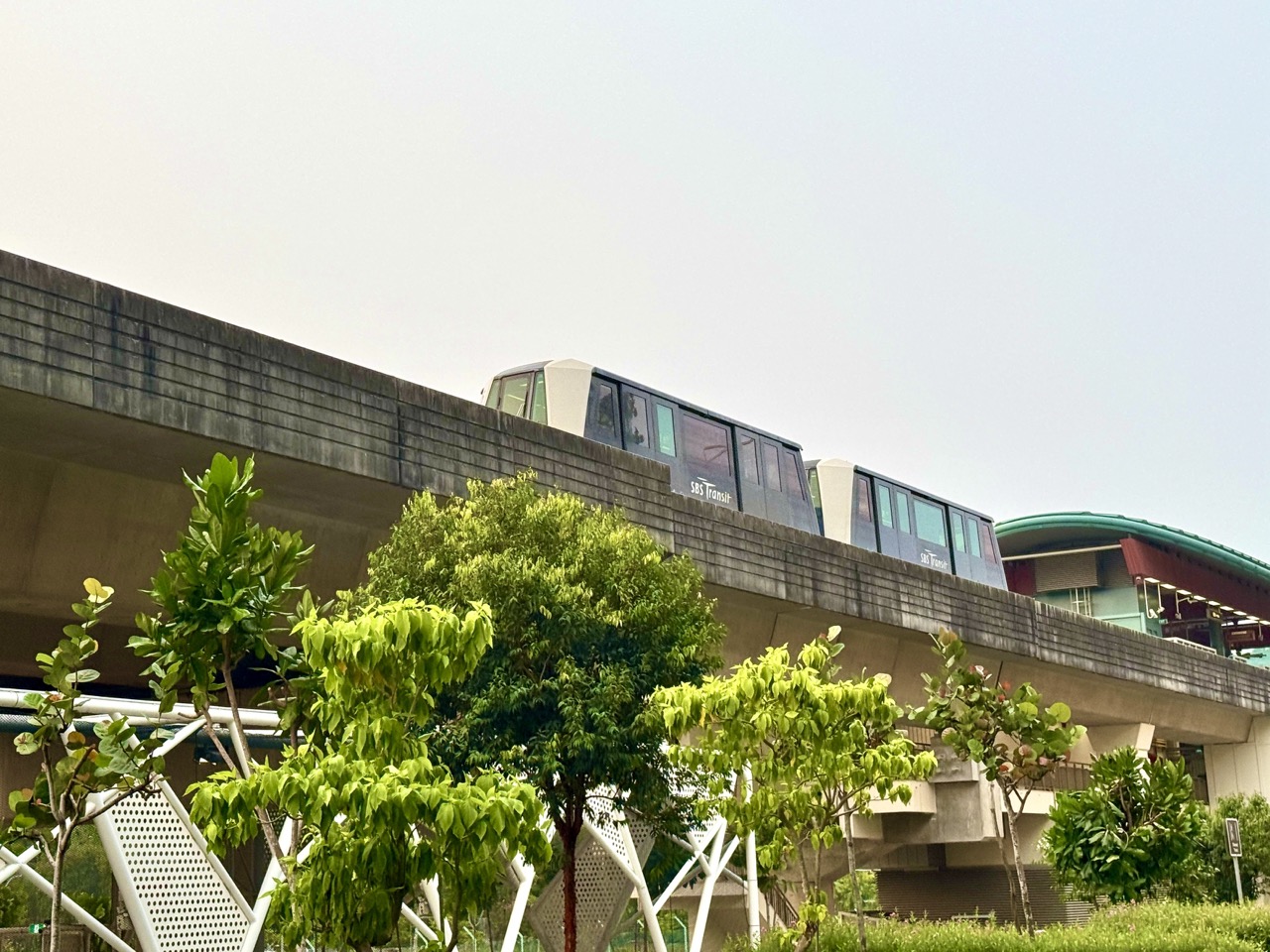
Punggol’s LRT network has a bigger renewal plan than many older articles show. In October 2026, LTA announced an extra eight two-car trains, lifting the eventual shared Sengkang–Punggol fleet target to 41 by 2030. A bigger depot, new vehicle features and carefully sequenced works are the less visible pieces of that transformation.

The quick answer: the fleet plan was expanded again in October 2026
Updated 23 October 2026. The Land Transport Authority announced on 2 October 2026 that it will procure eight more third-generation, two-car Light Rail Vehicles for the Sengkang–Punggol LRT (SPLRT), taking the fleet to a planned 41 two-car LRVs by 2030. That is a newer, larger target than the earlier 33-two-car fleet plan. The additional eight are on top of the 25 third-generation two-car vehicles already being introduced to replace older first-generation trains. The depot expansion remains targeted for completion in 2027.
The practical meaning is a higher-capacity shared system for Sengkang and Punggol. The planned 41-vehicle total serves the combined SPLRT network; it does not mean Punggol East Loop, Punggol West Loop, or any individual station receives 41 trains on its own. It also is not an announced promise of a particular waiting time, guaranteed seat, or operating schedule for every trip.
Parents, students, office workers and older residents can use the fleet plan to understand how future capacity is being built. But they should continue to plan today’s journey using actual current services, not a headline about vehicles expected by 2030.
A simple timeline: 2025, 2026, 2027, 2028 and 2030
In July 2025, the first two third-generation two-car SPLRT trains began passenger service. The new train programme was originally announced as a replacement of 25 first-generation vehicles with 25 new two-car units, while existing second-generation two-car trains would continue. The planned resulting fleet was 33 two-car LRVs by end-2028, as explained in LTA’s July 2025 release.
In 2026, depot construction and related track and signalling work required temporary service changes on the Sengkang West Inner Loop. On 2 October, LTA announced that normal service would resume from 4 October—two weeks earlier than the original date of 18 October—and that it would buy eight additional two-car trains. The total planned fleet therefore became 41 by 2030.
The depot expansion is expected by 2027. Fleet renewal continues progressively, rather than all new vehicles appearing on one day. The original 33-vehicle fleet ambition belongs to the earlier phase, while the additional eight raise the longer-run target. Keeping these milestones separate avoids the false impression that 41 vehicles will all be commissioned when the depot works finish.
How the 41-vehicle arithmetic works
Before renewal, LTA’s February 2026 account described the SPLRT fleet as 25 single-car and 16 two-car vehicles. The two-car group comprised older first-generation and second-generation vehicles. Renewal involves removing the 25 one-car and eight first-generation two-car vehicles, replacing those 33 first-generation units with 25 modern two-car trains, and retaining the eight existing second-generation two-car trains.
That yields 25 new third-generation plus eight retained second-generation, or 33 two-car LRVs in the original renewal plan. The October 2026 purchase of eight further third-generation two-car LRVs increases the eventual total to 41. This is a fleet composition statement, not a guarantee that all trains will be simultaneously on the tracks. Some must be maintained, inspected, or held as operational spare capacity.
A good article should not simply add 25 and eight to the original 41 or say that 41 new trains are being purchased. Only 33 of the targeted 41 are described as new third-generation units; eight are retained second-generation two-car LRVs.
What a two-car LRV changes for boarding
A two-car vehicle offers more passenger space than a one-car vehicle, potentially easing crowding when demand is concentrated around station entrances or school travel. Longer trains do not eliminate queues because available capacity still depends on how frequently vehicles arrive, how passengers distribute themselves, and whether station systems can move people safely.
For a parent travelling with children, the practical experience matters: is there room to stand securely, are doors visible, and can the family board without rushing? A more spacious train can help, but passengers should still keep doorways clear and allow others to alight before boarding. A family should never separate an accompanying adult from a young child merely to catch a departing train.
A published fleet size is a network resource. The outcome a commuter notices may be a more comfortable ride or improved resilience, but the actual change should be assessed after enough new trains are deployed.
What the newer cabins include
LTA describes ergonomic seating, brighter energy-efficient LED lighting, clearer LCD passenger-information screens, more visible door-closing light strips, and improved air-conditioning. These are concrete equipment features of the third-generation LRVs, not decorative ideas drawn from an artist’s impression.
Passengers with different needs may find different features valuable. A person who struggles to hear an announcement can benefit from clear visual information; someone sensitive to heat may appreciate more reliable cooling; an older rider can benefit from a visible warning before doors close. Yet cabin comfort is influenced by maintenance and crowding after trains enter service, not only by the initial specification.
The safest interpretation is that the newer trains have been designed with these enhancements. This does not imply identical experience in older trains that remain in service during transition.
Why inter-car doors matter during an emergency
Third-generation trains include inter-car doors intended to assist safer and quicker evacuation during emergencies. Their purpose is distinct from giving passengers a place to play or roam while the train moves. In abnormal situations, operator instructions and safety procedures govern what to do.
Ordinary passengers should avoid blocking train exits and should not interfere with onboard safety systems. Children can be taught to listen for instructions and remain with caregivers rather than improvise a response. The presence of better inter-car access supports operations; it is not evidence that every incident will be resolved immediately.
For a student studying engineering, this design feature demonstrates how vehicle equipment supports rare but high-consequence events alongside everyday comfort.
The expanded depot: from 3.5 to 11.1 hectares
LTA’s project expands the Sengkang–Punggol LRT depot from 3.5 hectares to 11.1 hectares. The larger footprint is intended to provide space for train stabling and maintenance and to support a bigger fleet. A growing network needs infrastructure that passengers do not see when buying a ticket.
The depot expansion includes new reception tracks, additional maintenance arrangements and power infrastructure. LTA’s 2025 statement identified two new reception tracks and three additional traction-power substations. These are intended to support train deployment, movement and energy requirements. Depot completion in 2027 is a project milestone, but operational training and fleet deployment will continue beyond it.
Residents should not treat the depot as a public tourist attraction. Rail facilities can be hazardous and have controlled access, while nearby works may involve temporary arrangements. The value to commuters comes from the system’s operating performance.
Why the depot needed disruptive track work
The Sengkang West Inner Loop required a temporary closure beginning in April 2026 so workers could connect new reception tracks to the main line and install and test signalling equipment. LTA originally expected the adjustment to last until 18 October. The revised plan allowed the affected service to resume on 4 October.
This is a useful example of the difference between work to improve future transport and the inconvenience experienced during construction. A service adjustment has a real impact on people travelling to school or work, even when the long-term project is beneficial. LTA provided temporary alternatives during the closure, and the relevant temporary shuttle services ceased with the restoration of normal service.
Past diversion instructions should not continue circulating after the service is restored. A current commuter needs the live operating information, while an article about project history should preserve the earlier dates as historical context.
What the early October 2026 resumption actually means
LTA and SBS Transit announced the full resumption of Sengkang West Inner Loop service on 4 October 2026, following faster-than-expected completion of key works. This concerns a particular Sengkang loop, not proof that the depot expansion was fully completed or that every train in the future 41-vehicle fleet had entered service.
For Punggol residents, the relevance is indirect but important: Sengkang and Punggol share the broader LRT fleet and depot renewal programme. System construction can affect different lines in different stages. A timetable notice naming Cheng Lim and Sengkang West should not be converted into a statement that Punggol East Loop was closed.
The lesson for future transport reporting is specificity: identify the affected loop, dates, replacement service and what remained operational. Generalising from one segment can mislead thousands of passengers.
Punggol East Loop and West Loop are not interchangeable
The Punggol LRT serves neighbourhoods through two loops, each with its own stations and travel directions. A person visiting Riviera or Oasis on the East Loop has a different journey from someone travelling toward Nibong or Punggol Point on the West Loop. Vehicle renewal may improve overall available fleet capacity without creating a new direct route between any arbitrary pair of stations.
A student should learn to read the destination signage and train direction rather than board whichever carriage looks less crowded. An enlarged fleet cannot fix a passenger boarding the wrong direction. Families can practise route reading at a quiet time, identify the correct platform and confirm the destination before entering.
The future Cross Island Line interchange at Riviera is a separate rail development targeted for 2032. It must not be confused with the 2027 depot upgrade or the planned 2030 LRT fleet size.
Why 41 trains do not promise a fixed three-minute frequency
Service frequency is an operational decision affected by demand, running time, station dwell time, tracks, signalling, maintenance and vehicle availability. Having more trains available can support capacity, but it does not require the operator to run all of them continuously or maintain identical headways throughout the day.
A headline that converts the planned fleet into a universal wait time would need a published service schedule or announcement supporting that conclusion. LTA’s October 2026 release does not establish one. The correct reader expectation is greater potential passenger capacity and flexibility once fleet deployment progresses.
For practical journeys, use currently published frequency information and allow a buffer where transfers or school reporting times matter.
The technology behind maintenance improvements
LTA says the third-generation LRVs have onboard touch-screen diagnostic panels for faster fault detection during testing and maintenance, as well as more ergonomic access to equipment. This illustrates an important aspect of service quality: problems are easier to manage when technicians have reliable information and safe access to the components they inspect.
The panel does not eliminate all faults. Components still wear, sensors can fail and unexpected conditions arise. A maintenance system is judged over time by whether staff identify and correct issues effectively, and whether spare parts and procedures are adequate.
A student learning engineering might compare reactive maintenance—fixing after breakdown—with preventive and condition-based practices. The distinction helps explain why depot investment can matter as much as a visibly new train interior.
How the depot expansion supports reliability
Additional stabling and workshop capacity allows operators to maintain a larger fleet. Reception tracks also influence how vehicles enter and leave the mainline for service. This matters because a train that cannot be prepared, inspected or deployed efficiently does not contribute to the peak-period passenger experience.
The relationship between depot size and reliability is not linear. Doubling physical space does not guarantee half the breakdowns. Technology, staffing, maintenance planning, operations and system integration all play a role. A larger depot creates the conditions for improved fleet management rather than automatically determining the result.
The eventual effect should be assessed through official service-performance data when available, not only the opening of a new maintenance shed.
What the 2030 fleet means for residents near PDD
Punggol Digital District is attracting more workers and students, adding journeys to and from the northeast. Some use Punggol Coast MRT and its bus interchange; others travel through neighbourhood LRT stations. A larger SPLRT fleet is part of preparing for these varied travel needs, even though the project serves both Sengkang and Punggol rather than the business park alone.
A resident employed near Punggol Coast may rely mainly on the North East Line, while another may transfer from a West Loop station. Not everyone gains the same direct benefit from LRT renewal. The household’s real route and service timing remain the key factors.
It would be misleading to say that new trains will automatically eliminate crowds generated by all future workplaces or guarantee a seat on school mornings.
A parent planning the Secondary 1 school journey
Imagine a child travelling from a Punggol West neighbourhood to a secondary school near the East Loop. The parent should establish a realistic route now, identify any transfer and check how long the journey takes on an ordinary weekday. The planned larger fleet can provide longer-term reassurance, but it cannot substitute for the actual timetable the child will use in 2027.
The family could practise reading platform signs, waiting behind the safety line and allowing others to alight. They should prepare a simple alternative if a temporary disruption occurs, with clear instructions about whom to contact and where to wait. The exercise builds independence without making the child responsible for improvising in an unsafe situation.
A new train design may make the ride more comfortable. The child’s confidence still comes from understanding the route and appropriate behaviour.
A senior commuter’s questions
An older resident may be less concerned with fleet accounting than whether information is legible, air-conditioning works and it is comfortable to board. LTA’s new trains include brighter lighting, LCD displays and ergonomic seats, all designed to help passenger experience. But actual crowding and service patterns vary by time and station.
A household can help by identifying stations with suitable step-free access, allowing a realistic walking pace and choosing a time that avoids rushing. Accessible travel should be assessed door to door, including the path from the block to the station and the destination after alighting.
The fleet upgrade is a positive infrastructure direction without being a promise that every station or vehicle has identical conditions during the transition period.
A commuter’s arithmetic worksheet
A good learning exercise is to distinguish trains, carriages and seating. If a fleet has 41 two-car LRVs, it contains 82 carriage units in those vehicles. That arithmetic does not establish how many are in service, how many passengers can fit in each, or how many reach Punggol on a particular hour.
Students can model hypothetical operating availability: if some vehicles are undergoing maintenance, fewer than the full fleet are available for deployment. They can also compare single-car and two-car capacity using invented classroom assumptions, marking those assumptions explicitly. The important point is that fleet capacity and passenger throughput require different information.
This is an accessible Secondary Mathematics application in ratios, multiplication, estimation and interpreting what a source number really measures.
A simple network-science lesson
On a map, draw Sengkang and Punggol LRT loops, the shared depot location and the future Riviera Cross Island Line interchange as separate elements. Solid lines can denote current services, with a dotted annotation for projects not yet operating. Students should use official station names and avoid inventing new track connections.
The diagram helps explain why improving a depot may benefit several services without adding a new passenger station. It also shows why a new interchange in 2032 is a different type of capacity change from having more vehicles available in 2030.
A thoughtful student can identify missing information such as train timetables and passenger demand, rather than assuming a map alone predicts travel time.
The actual experience of a train transition
A fleet replacement takes place over years, so commuters may encounter different generations of vehicles on different days. That is normal and not evidence that the programme has stalled. Vehicles require delivery, testing, safety approval and training before entering passenger service. Older vehicles may remain until replacements can take over reliably.
Passengers should distinguish a visible new vehicle from a system-wide completion announcement. A social-media photo of one train does not demonstrate that all 25 replacement vehicles have entered service or that the eight additional 2030 units have arrived.
For the most reliable status, use dated LTA and SBS Transit announcements, noting whether they speak about procurement, delivery, commissioning, passenger service or retirement of older LRVs.
Can any older trains be preserved or repurposed?
LTA has invited community partners to consider reusing decommissioned first-generation LRT vehicles or parts as part of sustainability efforts. Similar projects elsewhere have turned retired rail vehicles into learning or community installations. This is a separate initiative from the operating fleet target; a repurposed old train would not count as a vehicle serving passengers.
Schools and organisations interested in repurposing need to contact the authority and satisfy practical requirements such as transport, safety, maintenance and space. A child who wants to see an old Punggol train in a future museum should not be promised that such a display will definitely exist in the town.
The wider idea is useful: replacing equipment can create opportunities for educational reuse while retaining strict control over operational safety.
How to measure the project’s success after 2028
A useful public assessment should consider whether planned LRVs have entered passenger service, whether the depot is commissioned, how passengers experience waiting and crowding at comparable periods, and what reliability information the operator publishes. The goal is an accurate account of actual service, not celebration of a fleet size in isolation.
Commuter observations should be dated and compared fairly. A rainy weekday, a school holiday and a weekend event can create very different loads. A single photograph of a busy platform cannot prove the long-term renewal has failed, just as an empty midday carriage cannot prove it has fully solved capacity.
The strongest future guide will replace projections with confirmed operating milestones while preserving the timeline of the earlier plan.
What not to infer from the new investment
Do not say that 41 new trains have been bought to replace 41 old ones. The announced final fleet includes eight retained second-generation vehicles, 25 replacement third-generation vehicles, and eight further third-generation units. Do not say that the 2027 depot opening guarantees every new train is running, or that a fleet-wide 2030 target belongs exclusively to the Punggol loops.
Do not invent specific headways, hours, prices, seating counts or station closures. A current service advisory controls actual journeys. If a later announcement changes the procurement or commissioning dates, use its date and scope instead of silently editing earlier statements.
The programme’s real promise is to support more passengers and better system resilience over time. That is substantial without being unlimited.
Frequently asked questions
How many trains are targeted for 2030? LTA says 41 two-car LRVs across the combined Sengkang–Punggol network. Why did the number change from 33? Eight additional third-generation two-car vehicles were announced on 2 October 2026. When is the depot expansion due? LTA targets completion in 2027. How big will the depot be? It is expanding from 3.5 to 11.1 hectares.
Are the trains all new? No. The planned 41 includes eight retained second-generation LRVs. Is the new fleet Punggol-only? No, it serves Sengkang and Punggol. Are the trains already all running? No; renewal and expansion are progressive. Will fares drop? The fleet announcement does not promise a fare cut.
Was Sengkang West still closed in October? LTA confirmed normal service resumed on 4 October 2026. Does the new fleet create a Cross Island Line interchange? No; Riviera’s planned CRL connection is a separate future rail project. Will I always get a seat? Passenger experience varies with actual demand and operations.
A longer fleet does not automatically solve station crowding
A station can feel congested for reasons unrelated to how many trains an operator owns. Passengers may gather at a narrow entrance, queue near an escalator, or concentrate at one end of the platform even when there is space elsewhere. The rate at which people enter, pay fares, wait and board forms a sequence of potential bottlenecks. Adding vehicle capacity helps only the parts of that system it can actually affect.
A practical future assessment should therefore look at boarding conditions, signage, platform use and safe circulation rather than simply divide the town’s population by 41. A commuter at Riviera may experience a different crowding pattern from someone at Sam Kee or Punggol MRT. Commuter volumes also vary before school, after work and during community events.
When analysing changes, identify which intervention occurred: a new train, a timetable adjustment, a station improvement or an unrelated change in demand. Otherwise a reader might credit or blame the vehicle purchase for outcomes it could not directly determine.
Eight additional vehicles are a capacity reserve as well as a passenger story
The eight further third-generation LRVs announced in October 2026 expand the planned eventual fleet to 41 two-car units. It is natural to imagine every new vehicle filled with riders all day. In real rail operations, however, some vehicles must be withdrawn for inspection, repair or other operational requirements. A larger fleet can also offer more flexibility in allocating vehicles when others are unavailable.
The practical contribution is therefore not limited to visible cabin space. Maintenance teams, stabling tracks, signalling and roster planning jointly determine whether an operator can provide dependable service during peak periods. A procurement release does not reveal the precise number held as spare capacity, and a local article should not invent one.
A good reader takeaway is to distinguish total fleet, available fleet and in-service fleet. Those three counts can differ legitimately on the same day. They describe different aspects of operational readiness rather than contradictory reports.
Why the depot needs additional power substations
LTA has linked three additional traction-power substations to the higher power needs of the new two-car fleet. Rail vehicles use electricity for movement and onboard systems, and the network must be designed to deliver power safely under realistic load conditions. A larger capacity fleet may involve different electrical demand patterns from older single-car vehicles.
A traction substation is not a general public electric-car charger or a residential power station. It serves specialised railway electrical infrastructure under controlled conditions. The substations’ capacities, protection arrangements and operating limits require qualified engineering oversight.
This is an example of hidden infrastructure determining whether a visible improvement succeeds. Buying rolling stock alone is insufficient without safe power, tracks, depot space and tested integration. School students can study energy and basic circuit ideas without approaching restricted railway equipment.
More visible warnings cannot replace platform safety
Door-closing indicator light strips on the new vehicles make a warning more visible. Clearer LCD information can also help riders confirm a destination. These are improvements to communication within the passenger environment, but they cannot compensate for someone trying to board when a door is already closing or rushing along a crowded platform.
Children can be taught to stop when the warning activates, allow others to alight first and remain behind marked safety boundaries until boarding is appropriate. Caregivers should have a simple plan if a group becomes separated, seeking staff assistance rather than making dangerous attempts to hold a closing train.
The future measure of effectiveness is that riders understand and respond to warnings appropriately. Equipment should support safe decisions; it does not absolve people from paying attention.
New vehicles and their environmental footprint
LTA highlights energy-efficient LED lights and improved equipment on the third-generation LRVs. Railway operations can benefit from efficient systems, but a claim about overall environmental savings would need information about vehicle electricity use, maintenance, materials, disposal and passenger journeys. An improved lamp does not by itself determine the emissions of an entire network.
Repurposing retired vehicles may also extend the usefulness of some materials, depending on the application. Yet moving a full train to a display site, installing safety arrangements and maintaining it involve costs. Reuse is meaningful when benefits are properly evaluated rather than assumed from the word “upcycling”.
For a future-of-Punggol series, the wider point is that sustainable transport requires more than an efficient motor. Long-term service reliability, passenger access and responsible asset management contribute to whether people can choose public transport confidently.
What actual station-frequency evidence would look like
Suppose a parent notices that trains arrive more frequently after a particular fleet milestone. To attribute that to the procurement, they would need relevant published operating information or a sufficiently careful study. Informal observations can reveal personal experience but are vulnerable to differences in day, time, holidays and disruption.
An appropriate route comparison could record actual departure and arrival times across several ordinary school or workdays, with the same origin and destination. It should note whether the journey includes an MRT transfer or bus connection, because those parts of the trip can dominate the total waiting time.
If a later LTA timetable or service announcement identifies a frequency change, that provides a stronger basis than trying to infer the schedule from how many trains were photographed. The 2030 target is a capacity plan, and the local experience needs its own evidence.
What 2030 means for today’s Primary 3 student
A child in Primary 3 in 2026 will be at a very different schooling stage by 2030. That is one reason transport plans matter to families beyond the immediate commute. A larger fleet could support the region’s growing demand when children begin more independent journeys, but it cannot predict where that child will study or which line they will use.
Parents can use the intervening years to teach safe travel habits, knowledge of different LRT loops, and how to seek assistance. A student who can read a journey planner and distinguish Punggol Coast MRT from Punggol town-centre interchange develops useful independence whether or not their usual train is a new generation model.
The lasting gain should be greater travel confidence built alongside improvements to public infrastructure, not a promise that a single railway purchase solves every family’s mobility needs.
A cross-system comparison with the 2027 bus upgrade
Punggol Bus Interchange is separately included in an LTA upgrading programme scheduled to begin in 2027. That project focuses on facilities such as accessibility, family amenities, seating, ventilation and staff working conditions. The LRT renewal concerns trains, depot capacity, signalling and operating resilience. Both can affect a complete public transport journey, but they are different projects with different milestones.
Someone transferring from a bus to a train benefits when the whole chain is manageable: the bus is on time, the boarding point is clear, the pedestrian route is accessible and the LRT has capacity. A strong transport policy must consider all those links rather than judging each headline separately.
For details of the other project see the 2027 Punggol Bus Interchange inclusive-upgrades guide. Keeping two canonical pages avoids collapsing unrelated announcements into one misleading schedule.
Three evidence tests for every future LRT headline
First ask whether the number describes procurement, delivery, commissioning or regular passenger service. An ordered vehicle may not arrive for some time. A delivered vehicle may require testing. A commissioned vehicle is still subject to operating allocation.
Second ask whether the figure applies to the combined Sengkang–Punggol system or to a specific loop. The announced 41 is a shared fleet target, not a Punggol East Loop vehicle count. Third, ask which source is newer: the October 2026 expansion to 41 supersedes the older final-fleet figure of 33 as the longer-term target, but it does not erase the earlier renewal programme.
Those simple checks protect readers from both outdated information and exaggerated promises. They also make the town’s future transport story more informative for parents planning real journeys.
A small practical audit after the new trains arrive
When a commuter first encounters an updated vehicle, they can note the actual changes rather than assume the whole system has already transformed. Is the destination shown clearly on the onboard display? Are door-closing indicators easy to see? Is the air-conditioning comfortable at the time travelled? These questions describe personal experience; they should not be turned into statistical claims based on one ride.
A family can record the date, route, trip time and any verified vehicle information from official signage. A later comparison over several comparable journeys may reveal useful patterns. But all measurements should be made without blocking doorways or taking intrusive photos of other passengers. Better evidence begins with safe and respectful observation.
The result can be a genuinely useful local transport diary: confirmed improvements, persistent problems and questions for the operator. It connects the national fleet announcement to ordinary Punggol travel without pretending a procurement target determines every journey.
Primary sources and further Punggol reading
The controlling recent source is LTA’s 2 October 2026 announcement: resumption, depot and eight additional LRVs. Compare it with LTA’s 11 July 2025 rollout of the first third-generation LRVs and LTA’s February 2026 track and depot works explanation to see exactly why the fleet target changed.
For local station context, read the Punggol LRT East Loop guide and the separate future Riviera interchange explainer. This article uniquely covers rolling-stock renewal and the depot, not a new station or a route guide.
Editorial boundary: Future fleet figures are LTA targets. Station headways, crowding and individual journey benefits require current operating information. The featured photograph shows an existing Punggol LRT vehicle in October 2026 and is not independently identified as one of the future third-generation units.
| Milestone | Verified interpretation |
| July 2025 | First two new third-generation two-car trains begin passenger service |
| 2 Oct 2026 | LTA announces procurement of eight more two-car trains |
| 4 Oct 2026 | Sengkang West Inner Loop service resumes ahead of schedule |
| 2027 | SPLRT depot targeted for completion (3.5 to 11.1 ha) |
| 2028 | Earlier original 33 two-car fleet milestone |
| 2030 | Newer combined target: 41 two-car LRVs |
| Future train makeup | 25 third-generation replacements + 8 existing second-generation + 8 extra third-generation |
| Not guaranteed | Specific platform frequencies, seat availability or fare changes |


