
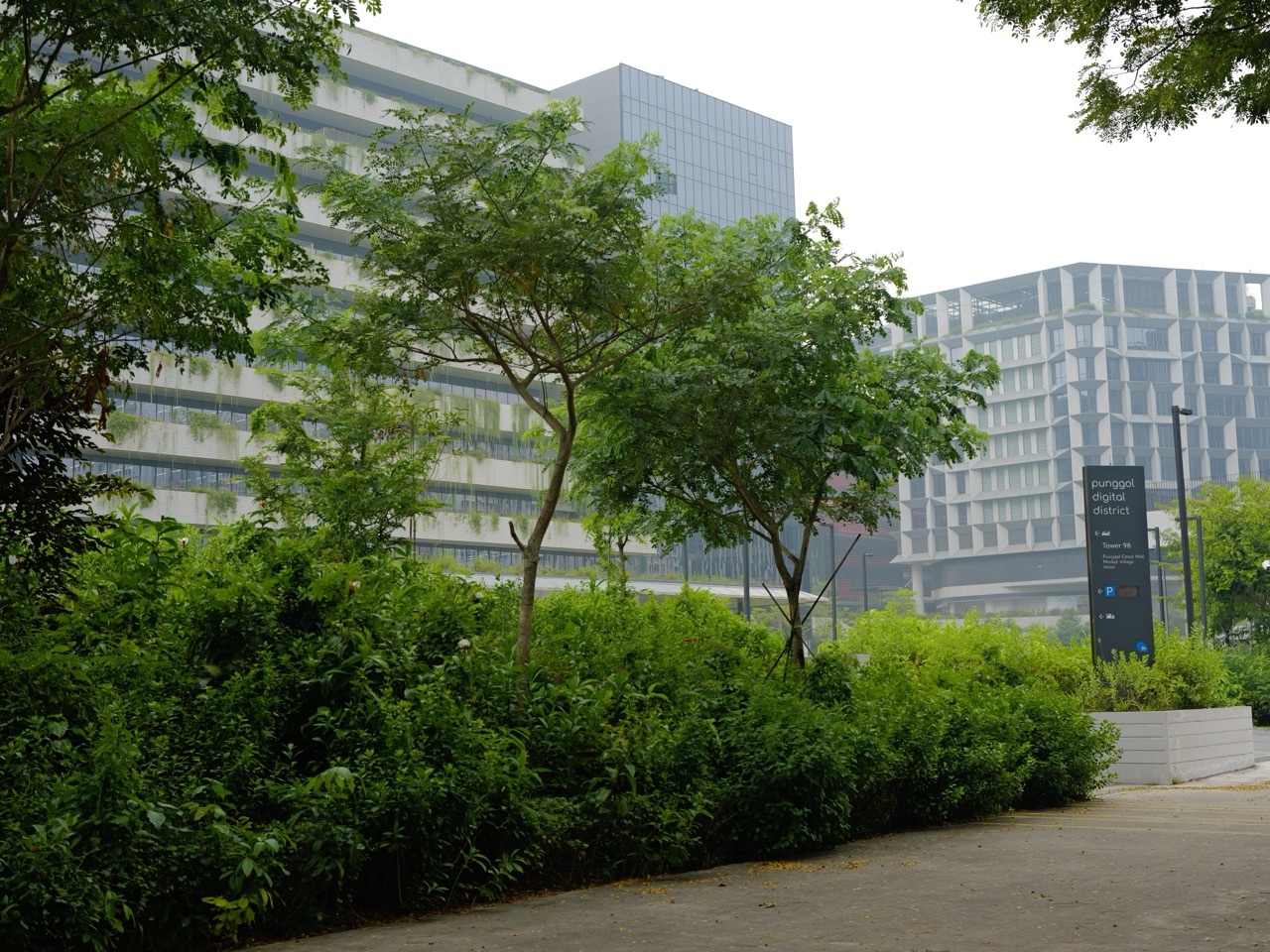
Educate Punggol 2027: Did you know that the Urban Redevelopment Authority (URA) lists a three-hour ‘Building a Sustainable Singapore’ secondary-school workshop, running until March 2027, developed with City Sprouts? Students work through a green-city design, land-use decisions and a simple urban-farming activity. For a teenager growing up beside Punggol Waterway and Punggol Digital District, it presents a useful question: who decides how Singapore’s limited land should serve homes, jobs, transport, green spaces and different communities?
Quick answer: The official URA school-programmes page, last updated 22 June 2026, says the workshop runs until March 2027. Schools should enquire through the City Sprouts organiser page to confirm actual sessions, venue, school eligibility, price, transport and available capacity. The programme is aligned to Geography, Social Studies, Character and Citizenship Education, and related eco-stewardship learning. It is not guaranteed as a public walk-in session for every Punggol family.
An important 2027 complication: URA separately states that the Singapore City Gallery is partially closed from 1 December 2026 to 30 April 2027 for a revamp, then fully closes from 1 May 2027 until a planned reopening in Q4 2027. Do not mix up the workshop’s advertised availability with unrestricted access to every gallery exhibit. The workshop organiser says many school sessions take place at City Sprouts @ Henderson, and actual venue arrangements must be confirmed directly.
The three facts a school should verify before booking
- Programme: ‘Building a Sustainable Singapore’ is a City Sprouts partnership with URA, described as three hours and scheduled by URA through March 2027.
- Venue: City Sprouts says the majority of its school programmes currently take place at City Sprouts @ Henderson, with venue capacity depending on the selected site. Do not assume a particular booking is inside the URA Centre or at the City Sprouts Punggol location.
- Gallery access: The Singapore City Gallery at 45 Maxwell Road has its own partial/full closure dates, group-booking requirements and visiting rules for 2027. Confirm whether a gallery element is included and accessible on the proposed visit date.
The distinction can prevent an entire cohort from arriving at the wrong address or expecting a full tour of exhibits under renovation. A school should obtain the exact written itinerary from the organiser before arranging transport and consent.
What does the programme actually teach?
URA describes students stepping into the role of urban planners to design a green city, make land-use decisions through role play and assemble a simple DIY urban-farming system. City Sprouts’ official programme description divides the work into responsible stewardship, inclusive decision-making and sustainable urban development. These are connected but different skills.
Responsible stewardship asks what consequences a land choice will have for future users. Inclusive decision-making asks whose needs have been heard and what conflicts remain. Sustainable urban development asks how housing, environment, mobility, economic opportunity and public wellbeing can be balanced under limited space and resources.
A child who can draw a beautiful neighbourhood but cannot explain where people will work, how water is managed or who can access the green spaces has not yet solved the planning problem. The workshop matters because it asks students to move from preferences to justified trade-offs.
Activity 1: design your own green city
The organiser describes a planning activity in which students identify types of land use and suggest sustainability measures. The central challenge is scarcity: the land available for one purpose cannot always be used for another, so design requires priorities, evidence and reasonable compromises.
In Punggol, young people can observe examples of connected planning questions without accessing restricted sites: residential precincts, public transport, parks, schools, job areas and walking connections. But the existence of a facility does not prove planners will build its equivalent everywhere else. Students need to explain local conditions and constraints rather than simply copy familiar features.
An original Mathematics exercise: divide 60 hectares fairly
Imagine a fictional 60-hectare planning site. A team proposes 20 hectares for homes, 15 for parks, 10 for education, 10 for workplaces and 5 for mobility and supporting uses. The area totals 20 + 15 + 10 + 10 + 5 = 60 hectares. The respective shares are one-third, one-quarter, one-sixth, one-sixth and one-twelfth.
Now ask: Is 5 hectares for mobility enough? How many residents will live here? Where are the schools and safe crossing points? Can green space be part of rooftops or roadside corridors? Is employment land accessible? The arithmetic is correct, but a good plan requires more than the correct total.
The next test is to change the constraints. Suppose an authority needs more accessible transport space or additional public amenities. Where would the land come from? Which group benefits, and who bears the cost? This makes ratio, percentage and area into tools for actual reasoning.
These invented numbers are a classroom teaching example, not URA’s actual Punggol land allocation, official zoning percentages or a prescribed workshop exercise.
Activity 2: Community Voices and the discipline of listening
City Sprouts’ programme includes a role-play where students represent different stakeholders, discuss an existing plot and work towards an appropriate land-use choice. The educational challenge is not to win by speaking loudest. It is to recognise legitimate competing concerns and make a decision whose reasoning can be explained.
A fictional scenario might place five students in roles: parent of a young child, older resident with mobility needs, small-business owner, environmental advocate and transport planner. Each has a reason to prefer a particular design. A productive group identifies their most important needs, non-negotiable safety issues and places where a compromise is possible.
Worked role-play: a park or another carpark?
Suppose a hypothetical neighbourhood has a small piece of land beside housing. One group wants a shaded park, another an additional parking area, and a third a sheltered public walking connection. Students must ask what evidence is missing: actual parking use, transport options, tree cover, accessibility, costs, flood exposure and the needs of residents with different abilities.
Do not let pupils decide by a popularity vote alone. Invite them to propose a mixed design and explain what would be lost. It is reasonable for the class to conclude that further evidence or professional evaluation is needed. Urban planning is not made accurate by a fast answer.
An actual road, park or public space cannot be changed by a school role-play. If students want to learn about real proposals, they should consult authoritative planning materials and follow the proper public feedback process.
Activity 3: urban farming without the fantasy of unlimited yield
URA and City Sprouts describe a DIY urban-farming system using recycled materials and relevant technology. The exercise can prompt questions about food resilience, light, water, nutrients, energy, maintenance and limited land. It should not be marketed as a guaranteed household food supply or a shortcut to a farming business.
For a classroom comparison, ask students which of two fictional growing systems uses less floor space, which needs a pump, which uses sunlight and which requires ongoing maintenance. Without measured inputs, the group should not claim one has lower lifetime environmental impact. A device that looks compact may still consume electricity and materials.
The best takeaway is to develop evidence-based curiosity: how would you measure water use, plant growth and power consumption under controlled conditions? A single photograph of a thriving plant cannot establish the most sustainable method.
How the workshop connects to secondary Geography
URA identifies curriculum connections including Geography in everyday life, tourism, climate and Singapore. Students practise reading places as systems: climate conditions affect design, transport shapes access, land-use choices have social consequences and different populations need different services.
A Punggol student can independently sketch a permitted observation route within their familiar neighbourhood: where are the shade, ramps, crossings and paths? Which observations are clear, and which conclusions would require counts or official data? For example, seeing a crowded walkway once does not prove it is overcrowded every day.
This method is useful for G2 or G3 Geography learning and everyday civic literacy. But the programme’s general curriculum alignment does not make attendance a substitute for the learner’s precise SEC examination syllabus.
How it connects to Social Studies and English
Social Studies often asks students to reason about citizenship, governance, diversity and evidence. The role-play creates a controlled example of those ideas. A student must consider what a source says, whether it is relevant, what alternative perspectives exist and how a public decision may affect different groups.
English learning is involved too. The learner needs to ask clear questions, listen accurately, summarise another person’s argument and write a recommendation. A powerful statement such as ‘Every resident deserves green space’ can express a value, but a robust proposal still needs a feasible layout, accessibility measures and justified trade-offs.
The approach emphasises the difference between assertion and reason. In a successful explanation, a student identifies a choice, gives evidence, explains the effect and acknowledges an unresolved limitation.
How it connects to Character and Citizenship Education
City Sprouts also maps the experience to becoming one’s best self, building connections and making choices. Responsible planning asks students not only what they personally prefer but how they would treat a resident whose needs differ. The aim is empathy joined with practical judgment.
For example, young planners may favour cycling routes but overlook people who cannot cycle. Others may favour efficient access for drivers while overlooking children who need safe walking routes. Including different needs produces more honest reasoning than allowing one group to speak for everyone.
The 2027 City Gallery closure: a separate itinerary risk
URA’s visit page updated 5 October 2026 provides the decisive gallery schedule: partial closure 1 December 2026–30 April 2027, full closure from 1 May 2027, with reopening targeted for Q4 2027. Gallery admission is ordinarily free, but the full-revamp period changes what can be visited.
That gallery entry condition is separate from City Sprouts’ three-hour programme fee or booking arrangement. A teacher cannot infer that a workshop is free merely because URA gallery admission is free. Nor should a parent book a 2027 self-guided gallery trip using a 2025 map of exhibits without checking which spaces are accessible.
URA requires advance time-slot booking for gallery groups of more than 20 visitors and caps a booked slot at 50 visitors. These are gallery group conditions, not necessarily the City Sprouts workshop’s student capacity. City Sprouts says that its Henderson site supports up to 80 students per session excluding accompanying teachers, depending on the venue actually selected.
An organiser’s practical enquiry checklist
- Are sessions still offered on the proposed February or March 2027 date, and does the school qualify?
- Which site will host the three-hour activity: Henderson, another City Sprouts venue, or somewhere else confirmed by the organiser?
- What are the total price, participant minimum and maximum, educational materials, taxes and cancellation terms?
- Is any part of the Singapore City Gallery included, and if so which exhibits remain open?
- Who supervises students and what are the organiser’s risk, first-aid, allergy and accessibility provisions?
- What equipment and suitable clothing should the students bring?
- How are wet-weather arrangements handled for farming or outdoor components?
- Does the school need separate transport, consent, group booking or insurance arrangements?
- Which curriculum learning outcomes will students be expected to explain afterward?
The organiser’s current page directs schools to an enquiry form or email. It says most school programmes currently take place at Henderson and that the precise site influences capacity. Only the actual booking response can settle a specific school’s arrangements.
A Punggol student who cannot attend: a classroom alternative
The programme’s educational value can be approached through a small, original paper project without presenting it as an official substitute or award. Give students a map of a fictional neighbourhood with ten land parcels, identify transport and environmental constraints, and invite different groups to argue for two feasible layouts.
Require each team to provide one numerical calculation, one evidence-based planning reason, one consideration for an underserved user and one unresolved question. Ask them to revise their proposal when a new constraint is introduced.
The project requires no trip and need not expose children to machinery or fieldwork hazards. It strengthens an important general skill: changing one’s plan when evidence and human needs demand it.
Punggol-specific extension: reading a model at the Discovery Cube
Punggol’s Discovery Cube and public precinct models can prompt similar questions about layout and land use, where displays and public access are currently available. Students can observe relationships among waterway, homes, transport and open space. They should not infer precise planning dimensions from an illustrative model without its documented scale.
Our connected guide on Punggol scale-model Mathematics offers an example of calculating lengths and areas using valid scales. A parent can extend that into a discussion of why a scale model cannot fully show noise, heat, human comfort and the lived experience of walking through a town.
A four-week learning sequence after a workshop
Week 1: describe the trade-off accurately
Students write down one choice they faced, two credible alternatives and why the chosen solution was preferred. They distinguish group opinion from facts the activity actually established.
Week 2: test a mathematical assumption
Recalculate a selected land-share percentage or review an area estimate. Ask whether the scale or denominator was stated correctly.
Week 3: seek the perspective of another user
Write a short argument from a different stakeholder’s point of view. The learner should not stereotype older residents, wheelchair users or families; they should articulate an actual need and how the proposal would address it.
Week 4: communicate a revised solution
Produce a concise explanation with a diagram, the main evidence, an environmental consideration and one limitation. Ask whether the solution is understandable to someone who did not attend the session.
Common planning mistakes worth correcting
- Treating green space as the only definition of sustainability while ignoring transport, services and access
- Assuming that a workshop registration automatically includes unrestricted entry to the gallery during renovation
- Believing that the programme must be held in Punggol because City Sprouts has a Punggol location
- Promising a free workshop on the basis of the gallery’s free-admission rule
- Confusing a hypothetical urban-farming demonstration with real food-security impact data
- Using a lovely model as proof that a proposed layout satisfies actual planning laws
- Treating the government’s March 2027 programme-end listing as a promise of sessions in every week of March
Frequently asked questions
Is the URA school workshop scheduled through March 2027?
Yes. The URA page lists ‘Building a Sustainable Singapore’ as running until March 2027. Exact sessions and openings must be checked with City Sprouts.
Is it at the Singapore City Gallery?
Do not assume that. City Sprouts says most school programmes currently use Henderson, and venue depends on booking. The URA Gallery is also undergoing a 2027 revamp.
Can a parent register one child without a school?
The listed programme is framed as a secondary-school learning journey. Ask the organiser whether a suitable public session exists; do not assume the school enquiry form provides individual entry.
Is the gallery closed for all of January 2027?
URA says it is partially closed during January–April 2027, not fully closed. Confirm accessible exhibits and hours; full closure begins 1 May 2027.
Does URA Gallery’s free admission mean the workshop costs nothing?
No. Gallery admission and a partner-operated workshop are separate services with different terms.
Does the workshop guarantee Geography exam improvement?
No. It can support learning about sustainable planning and reasoning; examination outcomes depend on syllabus-based instruction and other factors.
Verified sources and further Punggol reading
URA’s secondary-school ‘Building a Sustainable Singapore’ workshop and March 2027 programme period; City Sprouts’ three-hour curriculum, activities, venue and enquiry conditions; URA gallery closure schedule and booking conditions for 2027; Singapore City Gallery. Related eduKatePunggol: scale models at Punggol Discovery Cube and place-based Geography learning.
Reviewed 27 October 2026. The land allocation, student cases and family activities are original examples, not real URA zoning figures, a booking confirmation or the official workshop’s task sheet. Sessions, exact site, cost and 2027 gallery access must be reconfirmed with the appropriate organiser.


