
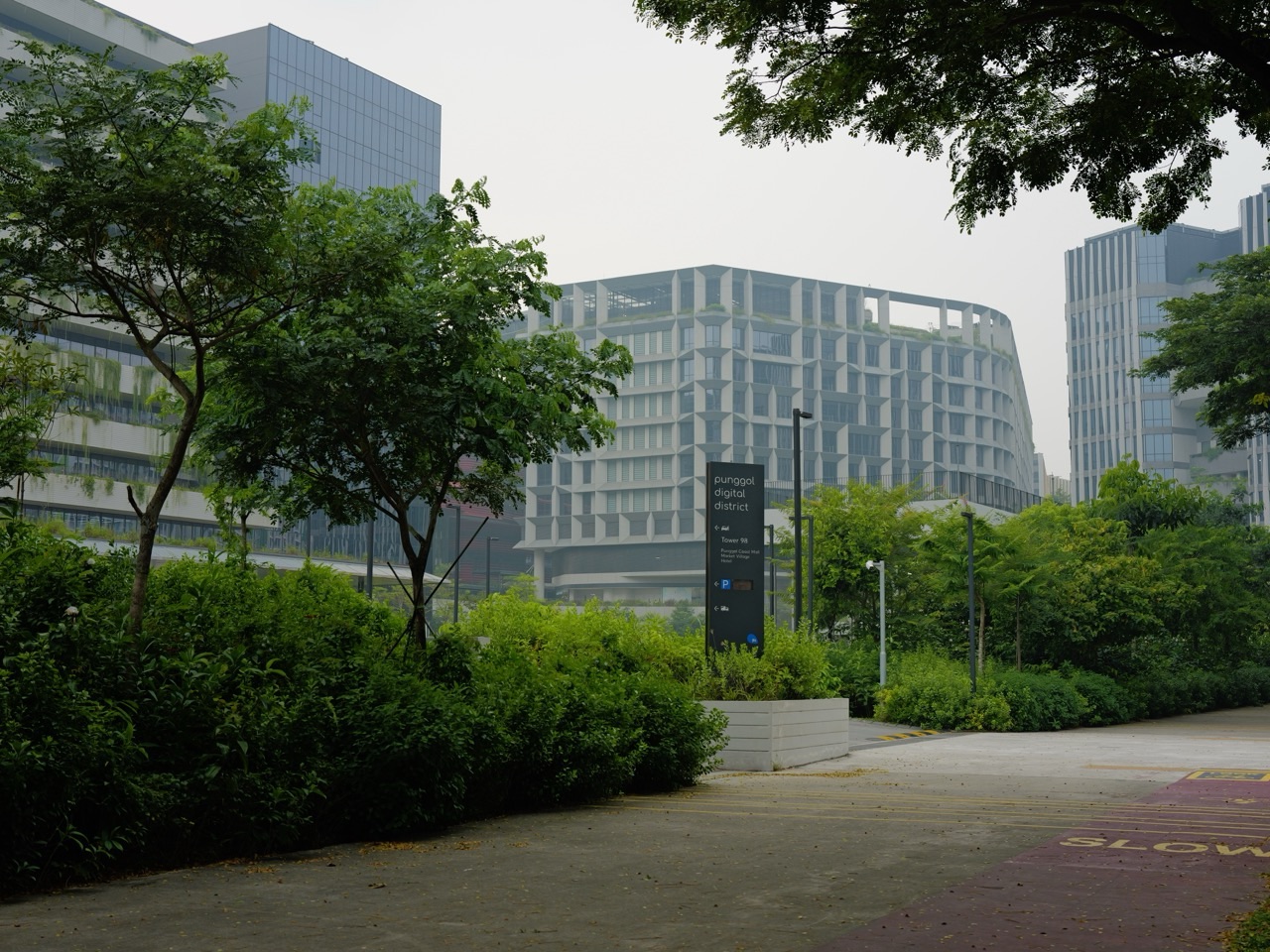
A facilities management career in Punggol begins with understanding how buildings remain safe, usable, efficient and properly maintained after construction is finished. Facilities technicians, technical officers, facilities executives and managers work with equipment, contractors, records, occupants and safety procedures. The job is not just “fix whatever breaks”, and the title “building engineer” should not be confused with holding every specialist licence or professional registration.
Singapore’s Building and Construction Authority (BCA) updated its Facilities Management (FM) industry guidance on 31 July 2026. It places FM within the refreshed Built Environment Industry Transformation Map, connecting design for maintainability, integrated or aggregated services, smart building technology and sustainable operation. Its Careers in Facilities Management page was updated on 15 July 2026 and describes the practical combination of hands-on problem-solving and strategic planning.
If you want this type of work from Punggol, use the sequence job level → necessary competence → authorisation and safety → relevant real vacancies → supervised experience → better diagnostic and digital skills → progression. A building’s smart-technology label does not mean any applicant can immediately work on electrical, lift or fire-protection systems without proper training and authority.
Facilities management jobs at a glance
| Job or question | Main focus | First thing to verify |
|---|---|---|
| Facilities technician | Approved inspections, fault reporting, routine technical work | Trade competence, supervision and permitted tasks |
| Technical officer | Coordinating specified maintenance work and records | Discipline and role scope |
| Building or facilities officer | Operations, service requests, contractors and reporting | Actual site and responsibilities |
| Facilities executive | Planning, vendors, budgets and work-quality follow-up | Employer’s grade and experience requirements |
| Facilities manager/engineer | Integrated building performance, safety, contractors, lifecycle plans | Professional and technical qualifications |
| Smart FM analyst | Building-system data, monitoring, anomaly review | Data access and fault validation |
| Energy or sustainability work | Monitoring consumption, identifying approved efficiencies | Engineering knowledge and verification |
| Is every role in Punggol Digital District? | No | Real employer and reporting site |
| Do I need a licence to perform every task? | Requirements differ by regulated activity | Relevant professional and equipment rules |
| Can diploma holders start? | Some roles have diploma or technical pathways | Actual job advert |
| Can a career switcher enter? | Potentially, with relevant training and supervised duties | Employer pathway and qualifications |
| Can I take a course at SIT Punggol? | Relevant degrees and CET courses are advertised | Intake, admission, location and cost |
For official role families consult BCA’s Skills Framework for Built Environment and BCA’s FM career page.
Facilities management is what happens after construction
A building’s first day of occupation is not the end of its engineering story. Air-conditioning, ventilation, lighting, pumps, water systems, lifts, access controls, fire-protection equipment and physical spaces all require suitable operation and maintenance.
Facilities management coordinates that ongoing service. It combines people who need a functional environment with systems that require inspection and contractors who need safe access and clear instructions.
A worker may spend part of the day examining a service report, part accompanying an authorised technician and part explaining an issue to an occupant. Some tasks are routine, while others require escalation to a licensed specialist.
A useful candidate is not merely someone willing to work with tools. They should recognise safety boundaries, understand records and communicate how a fault affects the people who use the building.
BCA’s 2026 guidance positions these activities as important to livability and sustainable operations in commercial, institutional and residential settings. The sector serves all of Singapore, not a Punggol-only job market.
Why Punggol is a useful example
Punggol includes housing estates, community facilities, public transport infrastructure, educational buildings, retail premises and new business spaces. These represent different facilities-management environments, even when they are near one another.
One Punggol has public-facing spaces with heavy community use. SIT Punggol Campus combines teaching, laboratories and energy-intensive technical systems. Punggol Digital District incorporates commercial and technology-oriented buildings.
The buildings can make facilities work visible, but they do not identify which company employs a technician or which service contracts are currently open. The owner, manager and outsourced FM provider may all be different legal entities.
JTC describes Punggol Digital District as a 50-hectare district integrating industry and education. Its 28,000-jobs figure is district-scale potential, not a live FM vacancy count.
A good job search follows the actual employing firm and named role instead of treating the district’s development plan as an offer.
The BCA 2026 Built Environment industry roadmap
The refreshed Built Environment Industry Transformation Map, updated in March 2026, takes a whole-lifecycle approach: planning and design → construction and delivery → operations and maintenance.
Facilities management is firmly in that final stage, but early design decisions affect future maintenance. Equipment access, sensor placement and replacement methods can determine how difficult a repair becomes ten years later.
BCA identifies Design for Maintainability (DfM), Integrated Facilities Management, Aggregated Facilities Management and Smart Facilities Management as important transformation areas.
For a jobseeker, these terms need translation into real work. DfM may require feedback about service access. Integrated FM may involve coordination across building services. Smart FM may use data to detect problems earlier.
A career in the field therefore offers both practical technician roles and opportunities to develop project, data and supervisory skills. The role’s exact pathway depends on the employer.
What an entry facilities technician may actually do
The Skills Framework for Built Environment identifies facilities technicians and related technical and supervisory occupations.
A technician may inspect permitted equipment conditions, record readings, identify anomalies, update maintenance logs, support approved planned maintenance and report faults to the responsible specialist.
The essential phrase is within training and authorisation. Some electrical, lift, fire-protection and other tasks require regulated personnel. An entry technician should not open live electrical panels, override safety interlocks or attempt an unauthorised lift rescue because the building manager is under pressure.
Job advertisements can differ. One may focus on mechanical and electrical services; another on physical estate upkeep, contractor scheduling or cleaning-service quality.
Read duties rather than assuming the word “technician” gives everyone identical tasks. Ask which systems will be encountered and who signs off technical work.
Facilities officer versus technician
A facilities officer may spend more time coordinating service calls, work permits, contractor entry, maintenance schedules, documentation and occupant communications. A technician may focus more on specific approved inspection and repair-related activities.
In a small operation, responsibilities can overlap, but the necessary technical authorisations do not disappear. A person who coordinates a specialist service provider is not automatically qualified to carry out that provider’s regulated work.
For someone with previous administration or customer operations experience, a suitable facilities-coordination role may provide a practical entry point into the sector, followed by technical training where appropriate.
For someone with relevant mechanical or electrical training, a technician pathway may be more natural. Both need clear handovers and the ability to identify safety issues.
The correct career route depends on how the real employer defines a position. A job title cannot by itself establish professional competency.
Facilities manager and facilities engineer are broader roles
BCA’s career map includes Facilities Manager/Facilities Engineer, Senior Facilities Manager and other more senior roles. These involve coordinating people, contractors, budgets, technical performance, compliance and longer-term asset needs.
A manager should be able to distinguish urgent life-safety issues from routine comfort complaints, understand how work orders are prioritised and know when independent qualified specialists are required.
Budgeting is part of the role. A cheap but unreliable repeated repair may cost more over the equipment’s life than a planned replacement, but such decisions need evidence and appropriate approval.
A facilities engineer can require a stronger technical background. The exact title and tasks do not make every holder a statutory Professional Engineer or Licensed Electrical Worker; those are distinct regulatory statuses.
Ask employers which professional registrations or licences are genuinely mandatory for the job and which skills can be developed through structured supervision.
Understanding planned maintenance
A well-run building does not wait for every component to fail. Planned maintenance uses manufacturer recommendations, statutory inspection requirements, technical assessments and real operating conditions.
A maintenance schedule should state asset, task, frequency, responsible party, safety method, record and follow-up action. It should not consist solely of an automated calendar reminder.
Suppose an approved ventilation system inspection is due. The employee checks the scheduled date, confirms authorised contractor access and ensures that relevant work permits and isolation procedures are in place where required.
After the work, the record should show what was inspected, any observations, outstanding issues and the person responsible for closing them. A box marked “done” without evidence can hide unresolved risk.
Planned maintenance protects users and extends asset reliability, but it must follow actual technical and statutory rules rather than a generic internet checklist.
Understanding corrective maintenance
Corrective maintenance begins when a fault occurs: a water leak, a damaged door, an air-conditioning problem or an unreliable sensor reading.
The first step is to classify urgency and risk, not to dispatch whichever worker happens to be closest. A leaking ceiling near electrical infrastructure may need immediate isolation and qualified intervention; a minor cosmetic issue can often be scheduled.
Good FM staff record who reported the fault, when it was observed, which area is affected and what safe containment has been arranged. The incident may also need notifying occupants or building management.
The person coordinating the repair must ensure the work is allocated to an authorised provider with suitable access, procedures and tools. Do not ask an unqualified employee to improvise because the specialist is delayed.
After the repair, verify that the issue has actually been resolved and that the record reflects work done, rather than closing the ticket because someone reported feeling better.
Worked example: an air-conditioning complaint
Consider an invented Punggol office building where three rooms are reported to be warmer than usual. An inexperienced coordinator might instruct someone to turn every cooling setting lower and declare the issue solved.
A better method records affected zones, times, current room readings and recent changes, then asks the authorised maintenance team to inspect the relevant system according to its procedure.
The team might discover a scheduling change, sensor error, airflow issue or another cause. This article does not diagnose the fault; a real technical investigation is needed.
The coordinator keeps occupants informed, separates verified facts from hypotheses and records the approved corrective action and follow-up readings.
This example shows the difference between a complaint, a plausible explanation and a verified resolution. That distinction is a core professional skill in facilities work.
Worked example: a recurring water leak
A fictional maintenance team receives repeated reports of water appearing below one section of corridor ceiling. The first two responses involve temporary containment but no documented investigation.
A third incident suggests the need to review the underlying cause with the appropriate specialist. The FM officer can compile previous work orders, dates, locations and observations, then request an authorised technical assessment.
It would be irresponsible to claim that the source is definitely a particular pipe without inspection. Likewise, leaving a slippery public corridor open without suitable controls could create immediate hazard.
The team separates making the area safe now from fixing the recurring cause, and checks the solution after the approved work is complete.
The scenario is invented. It does not describe unsafe conditions at any named building in Punggol.
A work order is an evidence record
Digital work-order systems often contain fields for asset ID, location, fault description, priority, assigned technician, contractor, dates and closure evidence.
The quality of this record affects decisions. If a pump is recorded only as “broken again”, it may be difficult to recognise a recurring pattern. If the team records which asset, which symptom and what action was taken, later review becomes more informative.
A first-time worker should learn which fields are mandatory and how to document uncertainty. Do not fill blank fields with invented values simply because the software requires them.
A supervisor can assess whether repeated work arises from underlying asset problems, inappropriate usage or incomplete previous repairs. The system supports analysis only when its inputs are trustworthy.
The ability to create accurate, concise work records is a valuable employability skill even in an entry support role.
Smart FM: a sensor does not replace maintenance judgement
BCA describes Smart Facilities Management as integration of systems, technologies, people and processes to improve building operations through data.
Possible tools include building management systems, condition monitoring, automated work orders, data dashboards and sensor alarms. These can help staff notice abnormal patterns, but a single alarm may reflect genuine equipment trouble or a measurement issue.
A worker needs to understand the normal operating range, data quality, system access and the safe escalation procedure before acting on a dashboard. An AI-generated prediction is not proof that a component has failed.
Some systems require cyber and data protection controls. A person should not connect personal devices to building infrastructure or export control logs without permission.
A good FM team combines digital information with approved physical verification and trained professional judgement. The aim is safer and more efficient operation, not automation for its own sake.
How building-system data can mislead
Suppose a hypothetical building dashboard shows a 20% rise in daily electricity consumption. That alone does not prove faulty air-conditioning.
The building may have extended opening hours, more occupants, changed weather, additional equipment or a sensor or reporting problem. A proper analysis compares like-for-like periods and checks the relevant drivers.
An FM analyst can normalise for operating hours and other known factors, investigate the largest contributors and ask qualified personnel to inspect an actual fault when justified.
A misleading conclusion could result in shutting down equipment needed for user safety or comfort. The analyst should therefore state what the data establishes and what remains uncertain.
This is where data literacy becomes useful. It protects buildings from both waste and hasty decisions.
Worked energy example: do the arithmetic without claiming savings
Consider fictional weekly electricity readings of 28,000 kWh before a documented operating-schedule change and 25,900 kWh afterward.
The observed difference is 2,100 kWh, which is 2,100 ÷ 28,000 = 7.5% of the initial week. However, two weeks of data do not prove a lasting 7.5% efficiency improvement.
An FM team should ask whether hours, weather, tenants or equipment loads changed, and whether the readings cover comparable periods. The cost saving also depends on the applicable tariff and other charging components, not simply a universal dollar-per-kWh assumption.
A responsible report might say: “Consumption was lower by 2,100 kWh between the two periods; further normalised monitoring is needed before attributing the difference to the intervention.”
All figures are invented and are not readings from SIT, Punggol Digital District or any other local building.
The sustainability pathway is real, not a decorative label
BCA’s 2026 Built Environment transformation work links operations to Singapore’s wider decarbonisation and energy-efficiency aims. Facility teams can influence performance through correct maintenance, data analysis, procurement and building-system improvements.
That does not mean every cleaner, building officer or technician automatically becomes a sustainability consultant. Different roles require different technical competence and authority.
A practical entry skill may be recognising avoidable resource waste and accurately reporting it. A more advanced role may design energy analysis, coordinate authorised system optimisation or verify improvement against appropriate standards.
Building managers must avoid compromising indoor comfort, safety or accessibility just to reduce an electricity number. Sustainable performance is a balanced outcome.
People interested in this work should look for demonstrated competencies in energy management, building services and data evaluation, not merely fashionable green vocabulary.
SIT Punggol offers relevant degree education
SIT’s Bachelor of Engineering (Honours) in Sustainable Built Environment is a three-year direct honours degree listed at SIT Punggol Campus.
SIT describes a mechanical engineering base with specialisation electives involving Integrated Facilities Management, Green Building Design and other sustainable built-environment topics.
For the published 2026 intake, the website listed an application period of 8 January to 19 March 2026 and an intake date of 31 August 2026. These dates are past as of October 2026 and should not be reused as if enrolment remains open today.
A degree programme can prepare students for relevant engineering careers, but a graduate must still satisfy any professional licensing or employer requirements for the actual role.
Check SIT’s current admission and curriculum pages for future intakes. Do not assume living in Punggol creates automatic admission.
SIT continuing education for existing technicians
SIT’s Electrical System and Energy Management micro-credential describes learning for engineering professionals in building services, facilities and data centre environments.
It uses mainly online self-paced study with in-person sessions at SIT Punggol Campus, and lists relevant polytechnic diploma background as an entry requirement.
For experienced professionals, SITLEARN’s low-carbon building assessment programme also uses the campus as a learning environment and covers energy-efficient building design and operation.
These are actual education options, not guaranteed employment. Fees, government subsidies, course runs and eligibility can change, and a named past 2026 intake is not evidence that a seat is available now.
Choose training because it addresses an actual skills gap in the target role, not because the course happens to have a Punggol address.
How BCA’s career map helps career switchers
The Built Environment Skills Framework maps job roles and competencies in the sector. It is a career-planning reference, not a professional licence.
A person moving from customer operations into building services might find transferable skills in complaint tracking, service coordination, basic reporting and contractor communication.
But a technically restricted task still requires appropriate competence and authorisation. A short project-management course does not authorise someone to work on high-voltage systems.
Map your present skills against the targeted role: records, stakeholder communication, budgeting, physical inspections, equipment knowledge, data analytics and safety.
Select the smallest credible training path that addresses the relevant gap. Then seek supervised experience from genuine employers.
A realistic entry route for a polytechnic or ITE graduate
A recent graduate with relevant engineering or built-environment training can begin by targeting specific technician, officer or junior coordination roles.
Read at least five genuine adverts and separate essential qualifications from preferred software familiarity. Identify whether the role demands specific authorised electrical or mechanical work, routine site coordination or a mix.
Prepare examples from coursework and internships that show accurate measurements, testing, safe work and documentation. Label an academic simulation as such rather than claiming it was real commercial plant operation.
A practical interviewer may ask what you do when a reading appears unsafe. A credible answer explains that you would follow site safety procedure, avoid unauthorised action and escalate to the correct qualified person.
Do not treat the first job title as a lifetime ceiling. Technical competence, responsible practice and further training can support progression.
A realistic route for an experienced administrator
Someone who maintained vendor schedules, processed customer tickets and reconciled service invoices may be able to enter facilities administration or coordination more quickly than a highly technical engineering role.
Their CV should highlight real communication, recordkeeping, escalation and service-operations skills. A short targeted introduction to building systems could help them understand terminology without suggesting that they can perform regulated repairs.
Ask employers what technical instruction is provided. A building office that expects a new administrator to personally inspect dangerous equipment without training is not a sound entry environment.
Once employed, the person can build familiarity with asset records, maintenance processes and service-level agreements under supervision, then consider suitable professional development.
A career switch can be gradual and still successful. It does not require pretending that previous work was already facilities engineering.
Contractors and building owners have different roles
A building owner can contract a facilities services company to maintain parts of a site. Another contractor may handle lifts, fire systems, cleaning or security under separate arrangements.
This means the person supervising an FM worker may not be employed by the landlord. A worker’s employment rights depend on the actual contracting entity, while site-safety responsibilities can involve several parties.
Read the employment agreement and confirm who pays salary, provides insurance and authorises work. A uniform bearing a property name is not proof of the legal employer.
For higher-risk tasks, clarify which contractor is responsible and who has technical authority. The facilities coordinator should not casually assign restricted work to someone whose qualification is unknown.
Our Punggol employment contract checklist helps verify employer identity, wages, site and reporting duties.
Safety around lifts, electrical systems and confined spaces
Some building systems create serious risk. Electrical isolation, lift maintenance, work at heights, confined-space entry and other tasks can be subject to specific safety or licensing requirements.
A junior worker should never improvise a lift rescue, defeat a safety device, enter a hazardous area or attempt live electrical repairs without the required authorisation and procedures.
A role advertisement using general language like “all M&E duties” should be clarified. Which work does the employee coordinate? Which work are they licensed or trained to perform? Who provides permits and supervision?
If a system appears immediately dangerous, the appropriate response is to keep people safe, follow site emergency procedure and alert authorised professionals. A well-run team does not reward reckless improvisation.
For broader legal duties, refer to MOM’s Workplace Safety and Health Act stakeholder responsibilities.
Work injury reporting and maintenance records are connected
A workplace injury can occur while moving materials, using ladders, maintaining equipment or dealing with unsafe access. An employer may have reporting and compensation obligations under the applicable WICA and WSH rules.
Accurate maintenance records can show what was inspected, which hazards were known and which actions followed. They should not be altered retrospectively to avoid scrutiny.
A worker injured on the job should seek appropriate medical care, notify the employer promptly and preserve lawful records. Employers should assess reporting duties and suitable preventive action.
Do not confuse a “no lost time” label with a guarantee that no report is needed. MOM’s reportability rules use defined categories, including certain cases involving MC or light duty.
Our Punggol work injury and WICA guide covers the separate claims process in detail.
Digital controls need cybersecurity awareness
Smart FM systems may connect sensors, control platforms, dashboards and outsourced vendors. Poor access management can create a security problem as well as a maintenance problem.
A worker should use authorised accounts, protect credentials and report unusual system behaviour. Connecting a personal laptop or installing a remote-access tool without permission can create risk.
An AI assistant may help summarise approved non-sensitive maintenance instructions, but confidential network diagrams, building-security information and personal occupant data should not be uploaded to an unapproved service.
Companies need role-based access, logging, change management and technical review appropriate to their systems. A facilities technician should not be made responsible for architecture-level cybersecurity decisions beyond training.
The Punggol AI and data protection guide explains general workplace data boundaries, which also matter in modern building systems.
Job interviews: what evidence is persuasive?
Employers can ask about a fault you investigated, a safe procedure you followed, a vendor handover you coordinated or a report you prepared. Choose examples appropriate to your actual experience.
A good technician answer distinguishes symptom → authorised checks → evidence → escalation → verified result. An FM coordinator can explain how they maintained a service log and ensured pending actions were assigned.
A candidate should avoid pretending to have repaired equipment independently if they only observed a qualified specialist. The observation may still be useful when the role is correctly described.
If you have a work sample, ensure it contains no protected drawings, security credentials, private occupant details or former employer records that you lack permission to share.
For a general role, our Punggol interview guide offers a concise evidence structure.
An example of a fair technical question
A hypothetical interviewer says: “The building system reports that one pump is running outside its expected range. What do you do?”
An unhelpful answer is, “I would override the alarm and keep it running until the problem disappears.” That could create risk.
A better answer: “I would verify the asset and alarm information using approved systems, check for immediate safety concerns, follow the relevant procedure and refer technical checks to authorised personnel. I would document what is confirmed, not guess a root cause from one alert.”
This answer does not require someone to be a specialist in every pump. It demonstrates safe boundaries, record accuracy and escalation judgement.
The exact real-life response depends on the equipment, alarm and site plan and should be performed only by qualified workers under applicable procedures.
A six-week FM readiness routine
Week one: read BCA’s FM career guidance and identify technician, officer or coordination roles that match your present skills.
Week two: select real advertisements and record essential qualifications, site type, shifts and the actual employer. Check whether the job includes regulated tasks or only coordination.
Week three: practise accurate maintenance-log documentation using completely fictional data. Write a report that separates observations from unverified causes.
Week four: learn basic building-services concepts from a suitable authorised course or reliable textbook; avoid attempting hazardous repair experiments.
Week five: prepare work evidence and role-specific interview answers, including safety and escalation. Ask employers what training and supervision they provide.
Week six: compare written offers for pay, location, safety, learning and work schedule. Choose a role whose real requirements you can meet and develop within.
This is an editorial job-preparation plan, not a BCA-approved certification or guaranteed placement period.
How to avoid paying for the wrong course
Before buying a technical course, obtain the real job description and ask which qualification is mandatory or preferred. Compare the answer against the BCA Skills Framework.
A facilities-coordination applicant might need record systems, contractor administration and basic technical literacy. An electrical specialist may need formal trade qualifications and regulatory requirements that cannot be replaced by a general FM course.
A course provider’s claim of “guaranteed employment at Punggol Digital District” should be independently verified. A recognised qualification does not itself create a vacancy.
Check programme awarding body, assessment, total payable fees, subsidy eligibility and actual venue. A past schedule is not proof of a current intake.
Our career-switch course decision guide explains a wider method for evaluating training.
Progression can be technical or managerial
Not everyone who starts in FM wants to become a manager. Some professionals develop deeper technical expertise in building systems, reliability, energy, safety or diagnostics.
Others focus on facilities administration, contractor management, procurement, lifecycle costing and strategic planning. BCA’s career pathways accommodate different types of development.
A worker can discuss progression through evidence: tasks successfully completed, technical competencies assessed, service quality and relevant qualifications. A simple seniority count should not substitute for capability.
An employer can support this with mentoring, supervised practice and clear criteria for advanced responsibility. A promotion that gives someone unsafe unsupervised duties is not good development.
Different positions have different salary scales and contractual arrangements, so do not assume the word “engineer” guarantees a particular wage without a genuine published offer.
Facilities work is a service profession
The end user is someone trying to study, shop, work, receive care or get home safely. Building systems are a means to support that outcome.
A technically perfect maintenance log is less useful if a person cannot reach an accessible entrance. A dashboard showing energy efficiency is incomplete if indoor comfort or safety is compromised.
Good FM staff understand the relationship between facilities, people and the organisation’s primary purpose. They communicate changes clearly and take accessibility seriously.
A Punggol resident entering the sector can build a career around making ordinary spaces dependable. The work may be largely invisible when done well, but its effect is experienced by thousands of people.
The most sustainable professional identity is not “I fix everything”. It is “I help the right people maintain safe and useful buildings through evidence and competent procedures.”
Frequently asked questions
What is facilities management?
The coordinated operation and maintenance of buildings and related services so spaces remain safe, functional, efficient and suitable for users.
Does a facilities technician need to be an engineer?
Not every technician role requires an engineering degree. Exact technical qualifications and authorisations depend on the job and regulated tasks.
Does FM only involve air-conditioning?
No. It can involve many building services, maintenance, vendors, safety, occupants, energy, asset information and operations.
What is Smart Facilities Management?
BCA describes using integrated systems, technology, data, processes and people to improve building operations and performance.
What is Design for Maintainability?
Considering long-term inspection and maintenance needs during planning and design so equipment can later be maintained safely and efficiently.
Are there FM jobs in Punggol Digital District?
The district has facilities and tenants, but a specific opening must be confirmed through a genuine employer. A development-scale jobs figure is not a live vacancy list.
Can a diploma holder enter FM?
Some roles have relevant diploma and technical pathways. Read actual employer requirements and any compulsory professional registrations.
Is the SIT Sustainable Built Environment degree taught at Punggol?
SIT’s published programme identifies SIT Punggol Campus as its location and includes Integrated Facilities Management and related specialisation areas.
Are 2026 SIT applications still open in October?
The programme’s published 2026 application window ended in March. Check current announcements for later intakes rather than assuming open admissions.
Can I learn FM by watching online repair videos?
Videos can inform general understanding but do not authorise regulated or hazardous repair work. Proper training and supervision are essential.
Does a sensor alarm prove equipment failure?
Not by itself. Data quality and context matter, and qualified personnel may need to verify the condition safely.
Can I use customer records or building-security drawings in a portfolio?
Not without appropriate authorisation. Use original or synthetic examples and respect confidentiality and privacy rules.
Does every facilities role require shift work?
No. Schedules vary by employer and worksite, though some operations require after-hours or emergency availability.
How can an administrator enter the field?
Target genuine facilities-coordination or support roles requiring records, scheduling and service communication, then identify necessary technical training.
Are building energy savings guaranteed after one system change?
No. Measure comparable periods and relevant conditions before claiming an observed difference is a lasting causal result.
What should I ask a facilities employer?
Ask about job duties, technical authority, safety, supervision, regular site, roster, training and the way performance is assessed.
Source desk and important boundaries
Verified 2026 sources: BCA’s refreshed Built Environment Transformation Map and FM role guidance, BCA’s career and skills frameworks, SIT’s Sustainable Built Environment degree and continuing-education resources, and JTC’s description of the Punggol Digital District ecosystem.
Illustrations: all building faults, readings, energy numbers, CV examples and work schedules are fictional. The article does not establish a defect, job vacancy, permit or maintenance condition at any named Punggol building. Qualified personnel and actual employer processes govern technical work.
- BCA: Facilities Management, updated 31 July 2026
- BCA: Careers in Facilities Management, updated 15 July 2026
- BCA: Built Environment Industry Transformation Map
- BCA: Skills Framework for Built Environment
- BCA: Built Environment professional development
- SIT: Sustainable Built Environment degree
- SIT: Electrical System and Energy Management micro-credential
- SIT: Low-carbon buildings course
- JTC: Punggol Digital District
- MOM: Workplace Safety and Health responsibilities
- eduKatePunggol: Employment contracts
- Working in Punggol: Series archive
Working in Punggol: related career pathways
Compare the distinct qualifications, safety responsibilities and career pathways behind community care, social work, facilities management, nursing, early childhood and data analytics. The Working in Punggol series archive lists all published chapters and their practical employment guides.
- How to become a Community Care Associate
- How to become a social worker and earn SASW accreditation
- How to become a data analyst with Excel, SQL and dashboards
- Nursing: SNB registration and practising certificates
- Preschool teaching: ECDA and NIEC careers
- Workplace safety and WICA claims
- Career switch training: avoid buying the wrong course
- Interview preparation for verified roles
- Responsible AI and customer personal data
- Punggol Digital District job opportunities


