
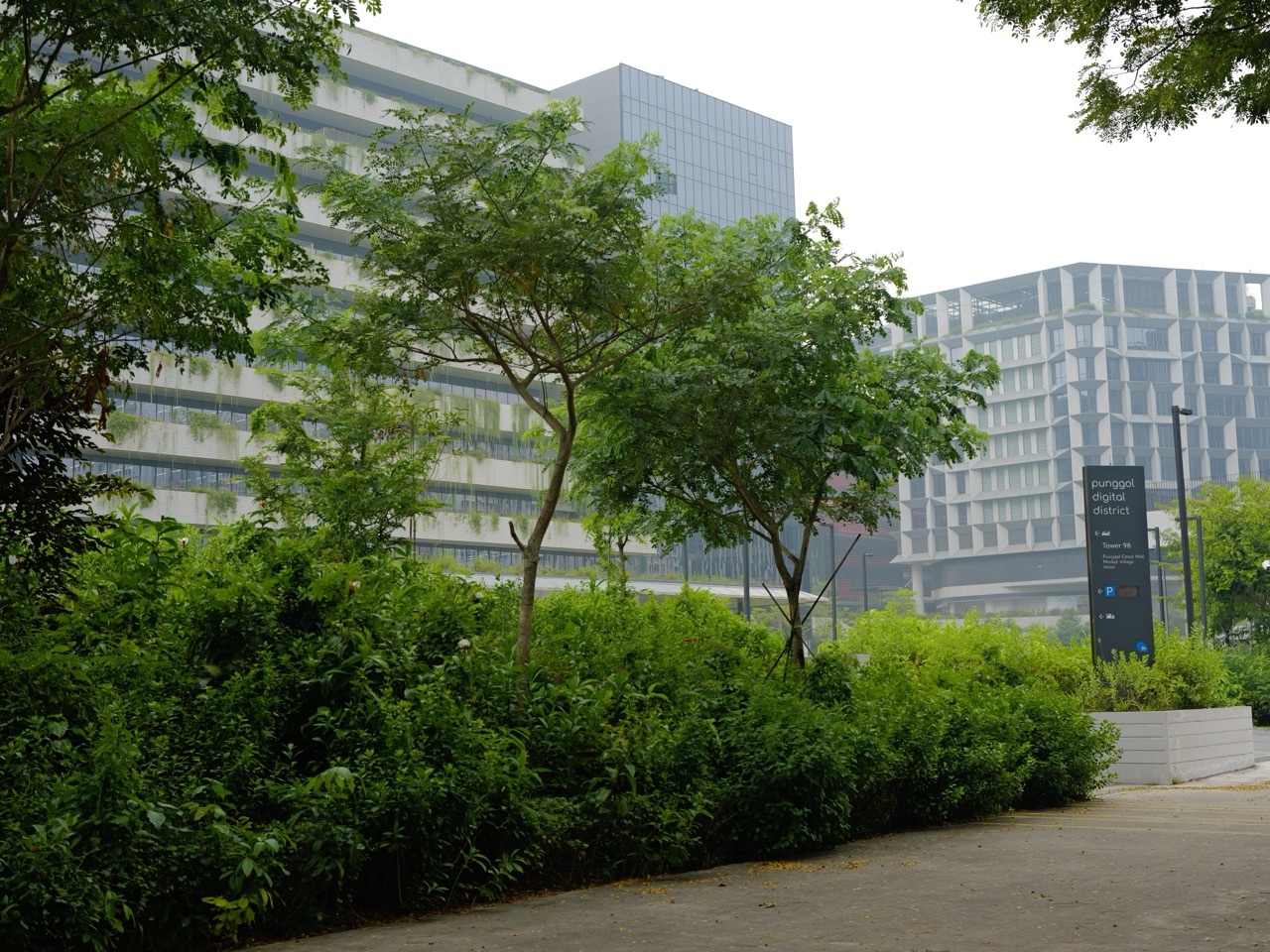
Pathlight School 3 is planned to move to a purpose-built permanent campus in Punggol in 2032, near Punggol Digital District. The important word is planned. As at 23 October 2026, the school is not operating at its future Punggol site; Pathlight School 3 continues to serve students at its interim Ang Mo Kio location. Punggol families must use the school’s present admissions procedure rather than waiting for an imaginary new 2027 Punggol intake.

That is the practical answer to the question many parents are asking: Is a new special education school coming to Punggol, and when? Yes, a permanent Pathlight School 3 campus is projected for 2032. No, a permanent-site timetable is not an admissions offer, a guaranteed place, or a reason to postpone support for a child who needs a suitable school now.
The 2032 Plan: What Is Confirmed, What Is Still a Projection
The Ministry of Education’s school planning information identifies Pathlight School 3’s projected permanent location in Punggol in 2032. MOE’s March 2026 Committee of Supply announcements also explicitly count Pathlight School 3 in Punggol in the planned expansion of special education capacity. These are meaningful planning signals, not rumours.
The location was announced as part of an effort to better distribute school places across growing towns in Singapore’s north-east. The proposed permanent site is near the Punggol Digital District, connecting the school geographically to housing neighbourhoods, general education institutions and a growing employment and technology precinct.
A long-horizon school development can still change as land, procurement, building works, manpower and student demand evolve. For that reason, 2032 is a projected year, not a published date for a school tour, first day of lessons or first Primary 1 enrolment at the Punggol site. Any subsequent official revision should supersede this guide.
The distinction matters. A family with a child entering Primary 1 in 2027 needs a 2027 decision. That family cannot plan as though a school site projected for 2032 were already accepting local applications. A family with a younger child may reasonably follow the site’s development, while still discussing suitable current pathways with qualified school and healthcare professionals.
What Pathlight School Does — and What It Does Not Mean
Pathlight is an autism-focused special education school that provides Singapore’s national academic curriculum alongside structured life-readiness support. Its programme is intended for students on the autism spectrum who can access the curriculum but need an environment with autism-informed teaching, smaller classes, tailored supports and more explicit teaching of social, executive-function and daily living skills.
That description should not be confused with a claim that all autistic children require Pathlight. Children on the autism spectrum have different strengths, needs and suitable school settings. Some attend mainstream schools with support. Others need special education programmes with different curricular emphases. A child’s profile—not the prestige of a school name, a new building or a parent’s hopes—must guide a placement decision.
Pathlight’s published criteria address formal diagnosis, cognitive and language abilities, readiness for structured group learning, age and other considerations. There is a school screening assessment and an admissions committee. Eligibility to be considered is not a promise of placement; vacancies and programme suitability matter too.
Equally, a Punggol home address does not by itself establish an entitlement to the future campus. At the time of writing, no separate permanent Punggol campus admission allocation or neighbourhood priority has been established in the official sources reviewed for this article.
Where School 3 Is Operating Before Punggol Opens
One easy mistake is to read “Pathlight School 3, Punggol” in a future planning document and assume school buses are already travelling there. Pathlight School 3 currently operates from an interim location in Ang Mo Kio. The present address listed in MOE’s published school information is 2 Ang Mo Kio Street 44, Singapore 569250.
Pathlight’s own 2027 admissions material identifies currently available application routes for its Ang Mo Kio and Tampines schools. Its published application information must be read for the specific academic year. The future site in Punggol is not described as an additional available 2027 choice.
If you are considering a transfer, note the distinction between a child entering school for the first time and a child transferring out of a mainstream school. Pathlight’s published information says requests to transfer from mainstream schools are facilitated through the child’s current mainstream school, rather than through a direct private application by parents.
Addresses, application windows and availability can change. Before acting, check Pathlight’s admissions process and its admission criteria, rather than relying on an undated social-media post.
Why Punggol Is a Significant Location for Special Education
A permanent SPED campus in Punggol is about more than another school building. It reflects the need to match the distribution of education capacity to where families live. A student might benefit from shorter or more predictable travel, but the actual effect depends on the home location, chosen programme, transport arrangements, school timing and individual support needs.
Punggol already has mainstream Primary and Secondary schools and a large population of school-age children. The surrounding town is expanding its university, industry and community facilities. A specialist school within such an environment could create opportunities for community exposure, learning partnerships and purposeful inclusion, if those activities are designed and resourced appropriately.
However, proximity is not integration by itself. A student should not be asked to tolerate an overwhelming experience merely because it occurs in a busy new district. Inclusive education works when activities have a clear purpose, accessible routes, trained adults, appropriate communication support and a realistic way to pause or withdraw.
Being near SIT or a digital district also does not imply that Pathlight students will automatically participate in a particular university module, robotics lab or corporate internship. Any such partnership would need its own verified announcement, eligibility criteria and safeguards.
How the 2032 School Plan Fits MOE’s Wider 2026–2030s Changes
MOE announced a broader expansion of SPED capacity in March 2026. Its plans include additional interim campuses for several existing SPED schools, work on three further schools for students with autism and intellectual disability, and expanded capacity across Singapore.
This requires a careful distinction. Pathlight’s national-curriculum-focused programme and the additional ASD-ID schools mentioned in MOE’s expansion announcement serve different educational profiles. Parents should not assume that all new SPED school places are interchangeable, or that one school type is intrinsically “better” than another.
MOE said the wider programme is expected to increase government- and community-funded SPED capacity from approximately 9,000 to 12,000 student places. That is a national planning figure across school profiles. It is not a number of additional Punggol places, nor a reservation list for Pathlight School 3.
For a family comparing choices, the first question remains: what curriculum, support environment, therapies or practical-skills instruction can this child meaningfully access? The second question is which institutions have places and are suitable. Geography matters, but it should not overwrite either answer.
The Student’s Experience: Academic Learning and Life Readiness
A high-quality special education placement should help a learner make progress in at least two connected domains. One is academic: comprehension, numeracy, writing, inquiry and the ability to pursue appropriate qualifications. The other is practical: communication, self-management, relationships, flexibility, daily routines and increasing independence as appropriate to the individual.
Consider two hypothetical students. One reads at grade level but struggles with noisy transitions, group instructions and sudden timetable changes. Another has strong interests in technology but finds independent organisation and generalising skills across different settings difficult. Both may appear capable on a worksheet, yet face quite different school-day obstacles.
The educational response should be specific. Useful measures might include whether the student knows how to seek help, copes with a change in classroom, can make a supported choice, participates in a manageable group activity, or applies a skill practised in one room to another context.
A new campus could offer improved or different facilities. But a floor plan cannot replace experienced teachers, sound assessment, a workable Individual Education Plan or regular school–home communication. Parents should ask about these living parts of a programme, not only the building.
A Family Planning Timeline: 2026 to the Projected 2032 Opening
2026–2027: Families who need placement now should use existing official admissions arrangements and support routes. Request updated assessment information where appropriate, examine the current curriculum and ask the existing school about whether it can meet the student’s documented needs.
2028–2030: Families with younger children can follow MOE and Pathlight announcements for formal design, construction, capacity and school-transition information. Do not infer registration dates from construction photos. The expected national expansion of SPED capacity should be tracked separately from the exact Punggol programme.
2031–2032: If the projected timetable remains in place, official notices may eventually explain the permanent campus’s address, operational commencement, student movement and specific admissions rules. Until notices are issued, none of these details should be treated as decided.
This is an observation schedule, not a prediction of milestones. A useful calendar reminder says “check official school and MOE notices”; an unhelpful one says “enrol in new Punggol school in January 2032” before the school has published that process.
What Parents Should Check Before Making a Placement Decision
Begin with the student’s present learning needs and existing evidence. Gather developmental and educational assessments, school reports, examples of learning in different environments, communication needs, self-care information and any professional recommendations relevant to placement.
Then separate four decisions that sometimes become tangled: suitability of the curriculum, suitability of the daily environment, the admissions pathway, and the family’s ability to manage the routine. A convenient campus may still be educationally unsuitable. A promising programme may be hard to sustain if the daily journey causes distress or exhaustion. A potential future campus may be relevant to a long-term plan but irrelevant to the immediate year.
Ask the current school or admissions team questions that lead to verifiable answers. What is the required application route? Which reports are needed? Is an assessment of readiness involved? Are placements based on vacancies as well as suitability? Which campus is actually operating in the intended admission year? What happens if the application does not succeed?
Avoid letting other families’ experiences become an unofficial admissions rule. One family may have entered through a particular pathway, in a particular year and school profile. The procedure and outcome for another child can differ.
The Difference Between Inclusion and Simply Being Nearby
Punggol’s future educational landscape places mainstream schools, SIT, public facilities and Pathlight’s proposed campus within one evolving town. That closeness creates an opportunity, but it is an invitation to thoughtful design, not proof that participation will be automatic.
Take a community project about urban transport. A good inclusive version might provide a quiet briefing, illustrated maps, predictable travel steps and supported ways to participate in a small group. A poorly designed version might take a large group into a loud public space without warning, call it “real-world learning”, and measure success by whether everyone stays for the whole visit.
The difference lies in access and agency. Inclusion is meaningful when learners can contribute, understand the activity’s purpose and receive support appropriate to their needs.
There is also a cultural lesson for neighbours. An autism-focused school is not a visitor attraction. Children and young people should not be filmed, questioned or treated as spontaneous demonstrations of a disability. Respectful community participation begins with privacy, consent and ordinary courtesy.
How to Read School Planning Announcements Properly
When a headline says “new campus announced”, ask which of four stages it describes. Is it a policy intention, a confirmed site decision, a construction milestone, or an operational admissions notice? These are different events.
The 2032 Pathlight Punggol information supports a planned permanent-site movement. It does not, by itself, supply an exact opening day, cohort size, confirmed individual placement or a map of student transport routes. An education guide becomes less useful when it fills those unknowns with confident-sounding imagination.
The same discipline applies to other future Punggol schools. For example, Catholic Junior College’s planned move to Punggol has its own facts, timeline and admissions pathways. Those belong to the existing CJC 2034 campus guide, rather than being mixed into this SPED admissions article.
Four Cases That Show Why the Distinction Matters
Case one: a child needs a school place next year. A parent sees a picture of Punggol Digital District and assumes Pathlight’s permanent campus will soon be accepting students. The corrected action is to check the current official Pathlight admissions page and the child’s recommended pathway, not to wait for 2032.
Case two: a family is considering a move to Punggol. The parents may factor the projected school into long-term planning. They should not assume catchment priority, door-to-door bus service or a guaranteed transfer. Current support provision and travel conditions remain part of the decision.
Case three: a student is already at Pathlight. A planned future campus does not automatically mean every existing student will move or will be assigned to the Punggol site. School-level transition arrangements require a later official statement.
Case four: a mainstream school organises a shared project. Collaboration can be valuable when it is jointly designed to suit participants. Simply inviting students because another institution is nearby is not evidence of an appropriate, supported activity.
The common lesson is to distinguish a school’s planned physical footprint from a learner’s actual entitlement, programme and experience.
Common Mistakes and How to Correct Them
Mistake: “Pathlight Punggol has opened.” Correction: the official sources examined for this guide describe a projected 2032 permanent campus, while existing admissions continue elsewhere.
Mistake: “A new building guarantees more places for my child.” Correction: capacity planning is not the same as an individual admissions outcome. Programme fit, screening, vacancies and school decisions remain important.
Mistake: “All SPED schools teach the same curriculum.” Correction: schools serve different profiles and may offer different educational programmes. Verify the school type before drawing conclusions.
Mistake: “Every nearby school or company will partner automatically.” Correction: proximity creates opportunities; partnerships require specific arrangements and evidence.
Mistake: “The latest headline is enough.” Correction: return to the institution publishing the rule. News may be useful context, but applications should rely on Pathlight and MOE.
Frequently Asked Questions
When is Pathlight School 3 expected to open in Punggol?
Its permanent campus is projected for 2032. This is a planning date, not a confirmed first-day timetable or current admissions window.
Is Pathlight School 3 already in Punggol in 2026?
No. Current published school information places its interim operations in Ang Mo Kio. Families should confirm the current address before travelling.
Will Punggol children get priority because they live nearby?
Do not assume that. Pathlight publishes admissions criteria and an assessment process; a special Punggol residential catchment entitlement was not established in the official information checked here.
Is Pathlight suitable for every child with autism?
No. Educational placement depends on a child’s needs, abilities, curriculum access and support requirements. Parents should seek an appropriate individual assessment and consult the current school or relevant professionals.
Can my child apply now for the permanent 2032 site?
The available 2027 Pathlight admissions information does not offer an independent Punggol campus application route. Follow the latest official school instructions for the intended academic year.
Does the Punggol school replace every other Pathlight school?
There is no basis to say that. The projected development concerns Pathlight School 3’s move to a permanent site, not a closure announcement for all other campuses.
Will the school teach only academic subjects?
Pathlight describes a curriculum that combines national academic education with life-readiness skills and individualised support. Check its current official curriculum for details.
What if my child is in a mainstream school and needs to transfer?
Pathlight’s published process states that transfers from mainstream schools are facilitated through the student’s existing school. Speak with the school’s leadership and read the current official guidance.
Where to Find Reliable Updates
For the official current procedure, consult Pathlight’s admissions page, Pathlight’s eligibility criteria and MOE. For the 2026 national expansion context, see the MOE Committee of Supply 2026 announcements. A CNA account of the 2032 Punggol site plan provides additional dated context.
For the wider school landscape, read our Punggol special education explainer and browse the Punggol Education and Town-Life Article Index. These are neighbouring guides; the 2032 Pathlight campus, its status and its family planning implications are the specific purpose of this page.
The Longer View
A new educational institution changes a town when it improves the choices and lived experiences available to real learners. Pathlight School 3’s projected Punggol move is an important part of the north-east’s future education map, especially for families who need suitable support beyond the mainstream school environment.
But the right response to a future school is not to turn a forecast into certainty. Make the current schooling decision on the best available evidence, check future changes at their official source and treat the child in front of you as more important than the building that may be ready six years from now.
Information reviewed on 23 October 2026. The 2032 date is projected; school-specific admissions conditions and operational details are subject to official updates.


