
A free robotics challenge for Punggol parent–child teams
Quick answer, fact-checked 23 October 2026. PlayFACTO School, in collaboration with JTC, has advertised the Robotics for Families Challenge 2026 around the Punggol Digital District Opening Festival. It offers free, two-hour parent–child robotics workshops on 24 and 25 October and 21 and 22 November 2026, with morning 10 am–noon or afternoon 2–4 pm sessions at PlayFACTO School @ Punggol Coast, 98 Punggol Way, #03-217/218. The announcement identifies teams of one parent and one child aged 6–12, using VEX GO robotics activities. It also advertises a 13 December grand final at Punggol Digital District’s Nexus Atrium.
The programme is described in the organiser-originated Robotics for Families Challenge announcement, reproduced by Tickikids, and is consistent with PlayFACTO School’s official Punggol Coast centre information. The listing says places per session are limited and encourages registration, but it does not provide a live seat count or guarantee a team’s entry to the grand final. Parents should check the current sign-up route and eligibility directly with PlayFACTO before travelling.
This is a specific, practical education development for Punggol families. Unlike a generic article about learning to code, it links a real location, published dates and a hands-on activity to the town’s emerging technology district. The best reason to attend is not to turn a six-year-old into a robotics engineer in one afternoon. It is to help parent and child practise building, testing, explaining and improving a simple design together.
Dates, sessions, location and important limitations
Workshop dates: Saturday 24 October, Sunday 25 October, Saturday 21 November and Sunday 22 November 2026. Session choices: 10 am–12 pm or 2 pm–4 pm. Venue: PlayFACTO School @ Punggol Coast, Tower 98, Punggol Way, #03-217/218, Singapore 829857. Team: one parent plus one child aged 6–12. Advertised price: free. These facts come from the event listing; places, capacity and the precise reporting procedure require confirmation.
Grand final: the announcement lists 13 December 2026 at Punggol Digital District, Nexus Atrium. A workshop participant should not assume that joining a preliminary session automatically reserves a place in the final. The organiser needs to clarify selection criteria, rules, whether preliminary performance matters and how families will be informed. A headline about a final is not the same as an individual invitation to compete.
Because the first workshops begin the day after this 23 October article, families should not treat online listings as evidence that last-minute slots remain. Ask the host directly; where a session is full, enquire about the November dates without assuming there is a waiting list. Travel and registration are separate decisions.
What will families actually build?
The announcement names VEX GO, a building and introductory robotics system, and promises hands-on building, basic coding and an in-house challenge. The precise robot model, course of play and judging rules have not been established by the public listing, so they should not be invented here. The educational concepts are nevertheless clear: connect physical components, give instructions, test whether the result behaves as expected and adjust the design based on evidence.
A robot is not ‘smart’ merely because it moves. It follows some combination of programmed instructions, control inputs and physical mechanisms. A well-designed lesson can use simple commands to make cause and effect visible. The child predicts that a programmed sequence will move a robot in a certain way and then compares the prediction with what happens. The discrepancy becomes an opportunity to learn rather than a reason for embarrassment.
For parents, the challenge is to resist completing the entire task for the child. The adult can help read instructions and handle unfamiliar pieces while inviting the child to decide what to try and explain why. Robotics is especially useful for collaboration when both people have meaningful roles.
Why the location matters
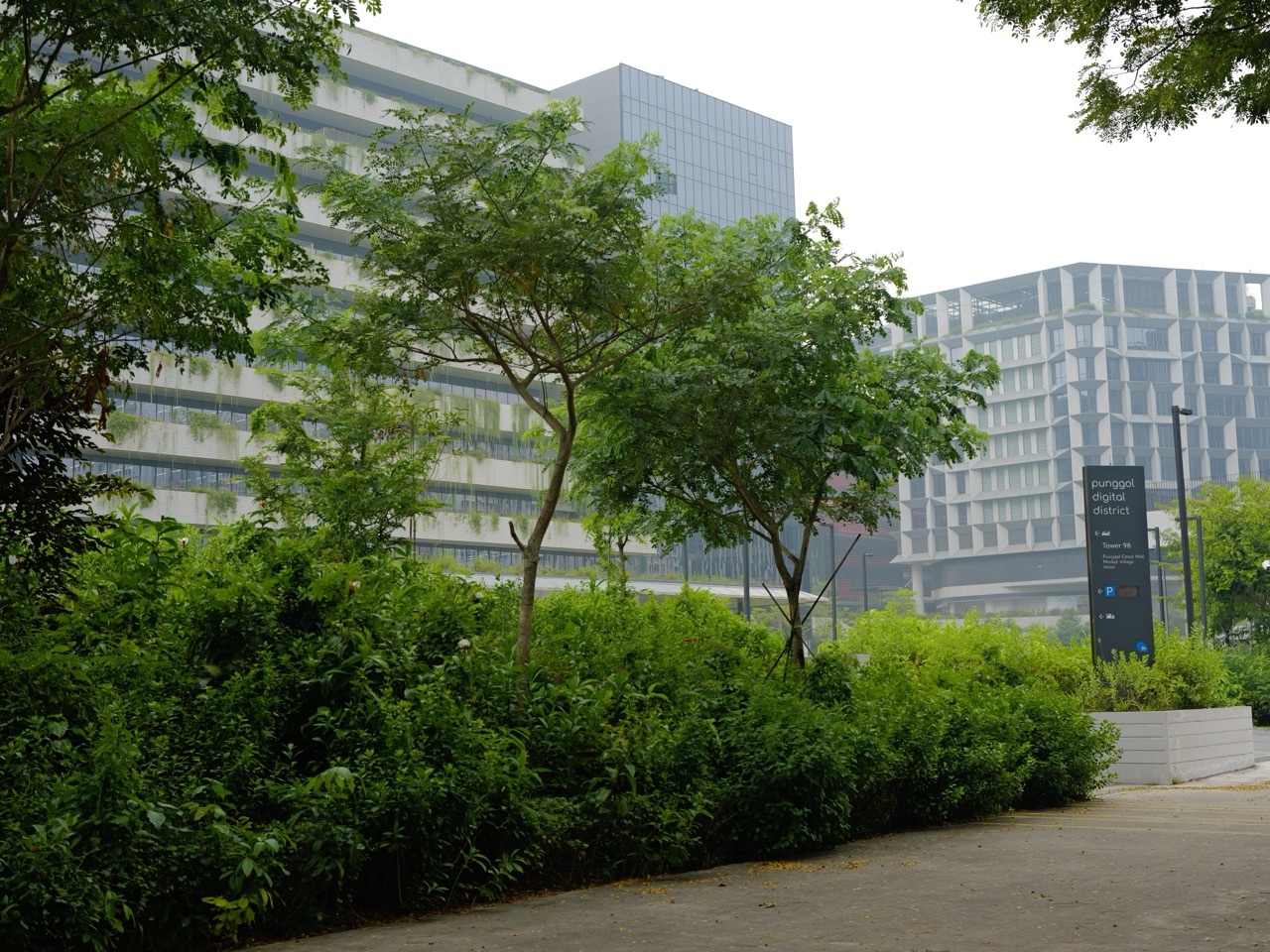
PlayFACTO School’s Punggol Coast centre is located within the wider Punggol Digital District environment and operates as a student-care and enrichment centre. The larger district is master planned by JTC to bring the Singapore Institute of Technology and technology-focused workplaces closer together. A robotics challenge at this location can show children that technology is something people investigate and build, not just content they consume on screens.
The event’s collaboration with JTC and association with the opening festival do not grant visitors unrestricted access to businesses, university laboratories or engineering testbeds. The advertised workshop takes place at PlayFACTO’s named centre, and the grand final is advertised at Nexus Atrium. Families should use only the event’s authorised entrances and follow instructions about photography, child supervision and equipment handling.
The same local ecosystem includes adult engineering courses, university degrees, public demonstrations and community activities. They share themes but have different age limits, standards and purposes. The robotics event is a two-hour family learning opportunity, not an admissions route to SIT or a professional qualification.
A parent–child team should be a real team
The listing specifies one parent and one child. That detail is more than administration: shared activity can help children practise communication while adults learn to let a younger learner test ideas. In a well-balanced team, the child could assemble a part and explain its intended function while the adult checks that the instructions have been understood. Roles can then switch when an unfamiliar programming concept appears.
One common failure is for the adult to chase the quickest result and take over, leaving the child watching. Another is to insist the child figure out everything independently while visibly anxious. Neither builds a comfortable learning process. Parents can ask simple questions: ‘What do you think will happen?’, ‘What could we change?’ and ‘How can we tell whether it worked?’
Winning a challenge is optional to the deeper educational value. A team that learns to speak respectfully, test an idea and record a correction has gained a durable habit, even when a robot does not perform perfectly.
What VEX GO can teach without advanced programming
The event announces VEX GO as its building platform. Introductory robot work allows learners to connect parts and control actions in a constrained environment. Children need not already know professional programming languages to encounter core ideas. A sequence of instructions is an algorithm; repeating an action illustrates iteration; responding to a condition can introduce conditional logic where the chosen lesson supports it.
A particularly useful beginner problem is to explain the difference between a command and a result. The program may contain a forward movement instruction, but the robot’s actual movement depends on motors, wheels, friction, power and the environment. The physical outcome can differ from the simplified mathematical expectation. This teaches that code is one component of a wider engineered system.
Parents should avoid promoting robotics as an effortless route into artificial intelligence. A child can learn valuable logic and measurement from a simple moving mechanism without encountering machine learning at all. Correct terminology protects the learner from confusion as their education progresses.
An algorithm is an instruction sequence, not magic
Imagine telling a child to move two steps forward, turn right and move one step more. A robot program may express a similar sequence in a suitable representation. The important lesson is to define the starting point and the meaning of each instruction. A vague instruction such as ‘go over there’ is insufficient without a destination or a rule for reaching it.
This is closely related to writing clear instructions in English and solving multi-step Mathematics problems. A student who skips a condition in a word problem may obtain a wrong answer even when their arithmetic is correct. Likewise, an instruction sequence that omits a turn can produce the wrong path while every motor functions properly.
A good mentor asks the child to predict the result before running the program. Prediction makes learning testable. If the robot differs from the prediction, compare each instruction with the actual behaviour instead of immediately replacing the entire design.
Build, test, observe, improve
Design iteration is central to engineering. A first prototype is a way of asking a question. When a robot tips, stops or turns incorrectly, the team can investigate mechanical balance, wheel placement, power, connections or instructions as appropriate to the authorised workshop. A failed test can be useful evidence, provided people remain safe and the response is methodical.
Ask the child to identify exactly what went wrong. ‘It is bad’ offers little information, but ‘it turned sooner than we expected’ defines a measurable discrepancy. A careful adjustment changes one plausible cause at a time, then tests again. The lesson resembles a fair experiment in Science: changing several variables simultaneously makes it harder to know which change mattered.
Real robotics professionals use far more sophisticated tools, but the principle transfers. They must distinguish observations from assumptions and record enough information to learn from tests. A beginner robotics kit makes that thinking concrete.
A worked Mathematics example: distance and wheel turns
Suppose a fictional robot has a wheel that travels 20 cm per complete rotation under simplified conditions. If the goal is to move 80 cm in a straight line without slipping, the model predicts 80 ÷ 20 = four rotations. This is classroom arithmetic, not an event rule or a measurement of the actual VEX GO robot used by PlayFACTO.
If the robot travels only 72 cm in a trial, the observed distance is 8 cm below the simplified prediction. The difference could reflect several causes, including how distance was measured, floor interaction or the simplifying assumptions. It would be premature to diagnose the motor as faulty from this number alone.
The child can calculate the discrepancy while the parent asks what new observation would clarify it. This joins ratio reasoning with scientific inquiry and prevents the activity from becoming only a contest of speed.
A worked example: compare speed honestly
Two fictional robots travel the same 1.2-metre track. Robot A takes 6 seconds and Robot B takes 8 seconds. Under the simple average-speed model, A’s speed is 1.2 ÷ 6 = 0.20 metres per second and B’s is 1.2 ÷ 8 = 0.15 metres per second. These numbers say A had the higher average speed in the stated trials.
They do not prove A is always better for the challenge. A faster robot may be less stable or less accurate when turning, and rules might reward several criteria. A fair comparison would use the same start and end positions, track and measurement method and might repeat trials.
This is an opportunity for a Primary learner to connect distance, time, rate and careful language. A child who explains the limitation of a calculation demonstrates real understanding beyond pressing the right button.
A worked example: why stability can matter
Imagine two safe toy robots with different widths of support. One may appear fast but tip during a turn. The other may be slower but complete the task reliably. The correct design choice depends on what the task requires and how stability is affected by configuration and movement. No universal conclusion can be drawn from size alone.
At home, a child can sketch two imaginary designs and list likely trade-offs without constructing hazardous moving parts. They can ask whether a lower centre of mass might help, how wheels contact the floor and whether an attachment changes balance. These are introductory Physics questions rather than a formal mechanical design assessment.
An engaging competition should teach children to evaluate several constraints instead of treating the highest speed as the only sign of engineering skill.
The role of debugging and checking assumptions
Debugging is the disciplined investigation of why a system does not behave as intended. It is not proof the child is ‘bad at coding’. In a simple robot exercise, the team can check whether instructions were entered correctly, whether components are connected as required and whether the starting conditions match the model. A useful record separates expected behaviour, actual observation and attempted change.
Parents can model a calm response by saying, ‘We expected two turns, but observed one. Which instruction should we inspect first?’ That sentence replaces blame with evidence. It also teaches that a mistake can reveal something about the system. The goal is not to make every test succeed immediately; it is to improve the method of reaching a reliable result.
These habits support later learning in Computing, Mathematics, laboratory Science and other fields where multi-step reasoning is important.
Programming is also a language lesson
A robot follows instructions that must be expressed with sufficient precision. The same need appears when students explain a mathematical method, write a recipe or prepare a Science procedure. Words such as before, after, repeat, if and until help communicate order and conditions. A child who learns to state a sequence clearly is building both computational and language skills.
Ask the participant to explain the team’s approach to a relative who did not attend. Can the child name the problem, the attempted solution and one result? The explanation need not use advanced terminology. Clear everyday words may show greater mastery than copied jargon.
An educator can extend this into English writing: describe a design problem in one paragraph, document what happened in another, then state a justified next step. It is evidence-based communication in a concrete setting.
How the event connects to school Science
Robotics involves forces, motion, energy, friction, electrical circuits, sensing and control, depending on the platform and exercise. Primary students may work with observation and direction while Secondary learners develop quantitative explanations. The event does not promise instruction on every topic, and families should avoid presenting a two-hour workshop as a substitute for the MOE Science syllabus.
A useful classroom transfer is a fair-test question: if the robot’s path changes after a wheel adjustment, what other conditions were kept constant? Could the starting position or surface explain the difference? The child learns that changing one factor at a time can make an investigation more informative.
A real-world machine is more complex than the learning-kit model. Still, the habit of comparing prediction with measured result helps students understand why engineers do not rely solely on intuition.
Why Punggol Digital District makes robotics locally meaningful
JTC describes Punggol Digital District as an education-and-industry ecosystem involving SIT and emerging technologies including robotics, artificial intelligence and cybersecurity. Real robotics systems in a district can involve delivery, building services or other applications that require safety, sensing and human oversight. The larger context gives a family workshop relevance without implying that the child will operate a commercial robot.
The event’s grand final is advertised as part of the district opening festival. A grand final can celebrate learning and teamwork, but its exact rules and eligible teams belong to the organiser. It is not evidence that a workshop participant will automatically be invited into a robotics company or a university.
When writing about technology, distinguish a demonstration, a prototype, a limited testbed and a fully deployed service. Children can grasp this distinction by asking whether a robot has been tested in one controlled activity or is operating reliably in different public conditions.
The 13 December grand final: ask before promising attendance
The programme announcement gives Sunday, 13 December 2026 for the grand final at Punggol Digital District, Nexus Atrium. It does not set out complete public qualification rules or a personal place assignment. A family that hopes to compete should ask PlayFACTO how teams are selected, when confirmations are issued and whether a separate registration or consent process applies.
There may be instructions about robotics equipment, supervision, reporting time and photography. Those details cannot be inferred from the general workshop invitation. Similarly, a location inside the district does not identify the precise entry point and security procedure. Wait for the organiser’s joining instructions before treating a calendar entry as an access pass.
A child can still find meaning in the workshop even if not selected for a later event. Parents should describe the final as a possibility governed by organiser rules rather than a reward they can guarantee.
Costs: free workshop does not mean every expense disappears
PlayFACTO advertises the two-hour workshops as free of charge. Families may nevertheless incur ordinary travel or personal costs. The announcement does not establish that transport, meals, additional sessions or commercial student-care enrolment are included. Do not assume the free robotics activity requires signing a separate long-term tuition or care contract; verify any condition directly with the organiser.
The event’s free admission and limited places are both material facts. A person should avoid paying a third party who claims to reserve a guaranteed session when the official programme is advertised as complimentary. Use a verified organiser contact and keep any confirmation private.
If the event is full, a parent may still use the learning ideas in this article with safe paper-based activities without purchasing a robotics kit.
A safe paper-programming activity before the workshop
Draw a four-by-four grid and mark a start square and a destination. Let the child write a sequence of forward steps and turns for an imaginary robot. The parent acts as the robot, following each command literally. If the route misses the target, compare the intended path with the sequence rather than silently correcting the child’s instructions. This creates a simple debugging exercise without any electronics.
To add challenge, draw an obstacle and ask for a new route. The child can count steps and compare alternatives. Ask what information must be known first: starting orientation, allowed directions and the grid layout. This strengthens spatial reasoning and conditional planning.
The activity is an independent educational suggestion, not a statement that PlayFACTO will use a particular grid or assess this content.
A parent–child debrief after the session
After returning home, ask the child to describe the robot’s task and one adjustment the team made. Avoid starting with ‘Did you win?’ A better set of questions is ‘What did you expect?’, ‘What happened?’, ‘What did you change?’ and ‘What would you do next?’ The answers reveal whether the child understood a method or simply followed directions.
If the child enjoyed the programme, consider gentle continuation through school Computing opportunities, approved library resources or a modest supervised project. If they did not enjoy it, that does not mean they are incapable of Mathematics or engineering. Interests are diverse, and a single session cannot define a child’s future identity.
The wider lesson is that learning can be social, iterative and creative. Punggol’s technology setting makes the activity memorable, but the underlying skills remain useful in ordinary schoolwork.
A responsible robotics learning portfolio
A participant can keep a short record: photograph a permitted model if organisers allow it, draw the team’s design from memory and write two or three sentences about what changed after a test. Children should not publish photos of other participants or private registrations without permission. The record is for reflection, not an attempt to prove professional competence.
An older child might include a table of hypothetical trial times and note the limitations of the test. A younger child could simply draw the route and explain what the robot was supposed to do. Both are legitimate evidence of learning when supported by honest explanation.
A learning portfolio improves when the student can revisit an earlier project and name what they would now do differently. That is a more durable goal than preserving only a trophy photograph.
Frequently asked questions about the robotics challenge
Who can join? The announcement specifies one parent and one child aged 6–12 per team. Is it free? The workshops are advertised as free, with limited places. Where? PlayFACTO School @ Punggol Coast, 98 Punggol Way, #03-217/218, Singapore 829857. When? 24–25 October and 21–22 November, with listed two-hour morning and afternoon sessions.
Does joining a workshop guarantee a grand-final place? The public listing does not establish that; ask the organiser about selection. Do we need coding experience? The activity is presented as introductory building and basic coding, but any precise prerequisite should be verified directly. Can two children share one adult ticket? The published team format is one parent plus one child. Ask the organiser before assuming a different combination is allowed.
Can visitors watch the 13 December final? The grand-final date and location are advertised, but spectator admission and event access arrangements require confirmation. Do not invent a public ticket link.
What if the first workshop date is fully booked?
The 24 and 25 October sessions occur immediately after this article’s 23 October publication date. The announcement advertises limited places and additional sessions on 21 and 22 November. If a family cannot obtain an accepted booking for October, they can ask PlayFACTO whether November registration remains available. A public event listing is not evidence of vacancy, and a telephone conversation should not be represented as a confirmed place until the organiser gives appropriate acknowledgement. Families should avoid travelling to a class expecting admission simply because the location is a familiar student-care centre.
A fair challenge rewards more than speed
A robot might move quickly but fail to complete a task accurately, while a slower design may finish reliably. Actual competition rules determine how performance is judged. If an exercise measures time, teams should begin from the same start conditions. If it measures accuracy, the scoring needs a clear definition. Children can learn that fairness requires consistent rules and transparent observation, not simply awarding victory to the loudest or most confident team. This is an independent educational discussion, not a statement about PlayFACTO’s unpublished final judging criteria.
Accessibility and age differences in a family workshop
A six-year-old and a twelve-year-old may read instructions, handle components and cope with setbacks differently. Parents should adapt explanations without turning the task over entirely to the adult. A younger child might focus on identifying a component and predicting a simple movement; an older one might record trial results or compare alternative sequences. If a family needs accessibility support or a different participation arrangement, it should ask the organiser beforehand. The general event listing cannot establish which specific accommodations are available, and sensitive information should be shared only through an appropriate private channel.
Avoid converting a challenge into a family competition
Some parents become preoccupied with earning a place in the grand final. That may lead them to direct every move or compare a child’s progress with older participants. A healthier educational goal is to let the child make a meaningful choice, test it and explain the result. A team can learn even when a design does not succeed in the first attempt. The workshop’s family format provides an opportunity to practise collaboration, and that value should not be erased by an expectation that every participant must win recognition.
A short experimental record for older children
An older pupil can draw a table with columns for trial number, predicted route, observed route and one change. The record should use the child’s own observations rather than made-up figures. If the robot reaches the target on trial three, ask which modifications were made and whether the result was repeated. A single successful run is encouraging but may not show complete reliability. This illustrates the distinction between testing a prototype and proving a design works across many conditions. The same principle appears in school Science, Computing and mathematical problem-solving.
What robotics does not reveal from one lesson
A successful VEX GO activity does not prove that a child has mastered artificial intelligence, advanced coding or mechanical engineering. It can demonstrate early skills such as following a sequence, observing cause and effect or working with another person. Conversely, difficulty with a new kit does not settle the child’s long-term ability in Mathematics or Science. Parents should use the workshop as one informative experience among many rather than turning a short event into a permanent label about future career aptitude. Curiosity can deepen through appropriate future learning.
Official and organiser-derived references
- Robotics for Families Challenge 2026 — event details reproduced from PlayFACTO
- PlayFACTO School — official Punggol Coast centre
- PlayFACTO School — complete location directory
- JTC — Punggol Digital District and industry–education context
- eduKatePunggol — physical AI and robotics learning projects
- eduKatePunggol — robotics enrichment foundations
Editorial check: 23 October 2026. Dates, price, location, ages, platform and grand-final listing are event-advertised details, not live availability confirmation. Worked distance and speed examples are fictional and not the organiser’s competition rules. Confirm registration and attendance instructions directly with PlayFACTO.


