
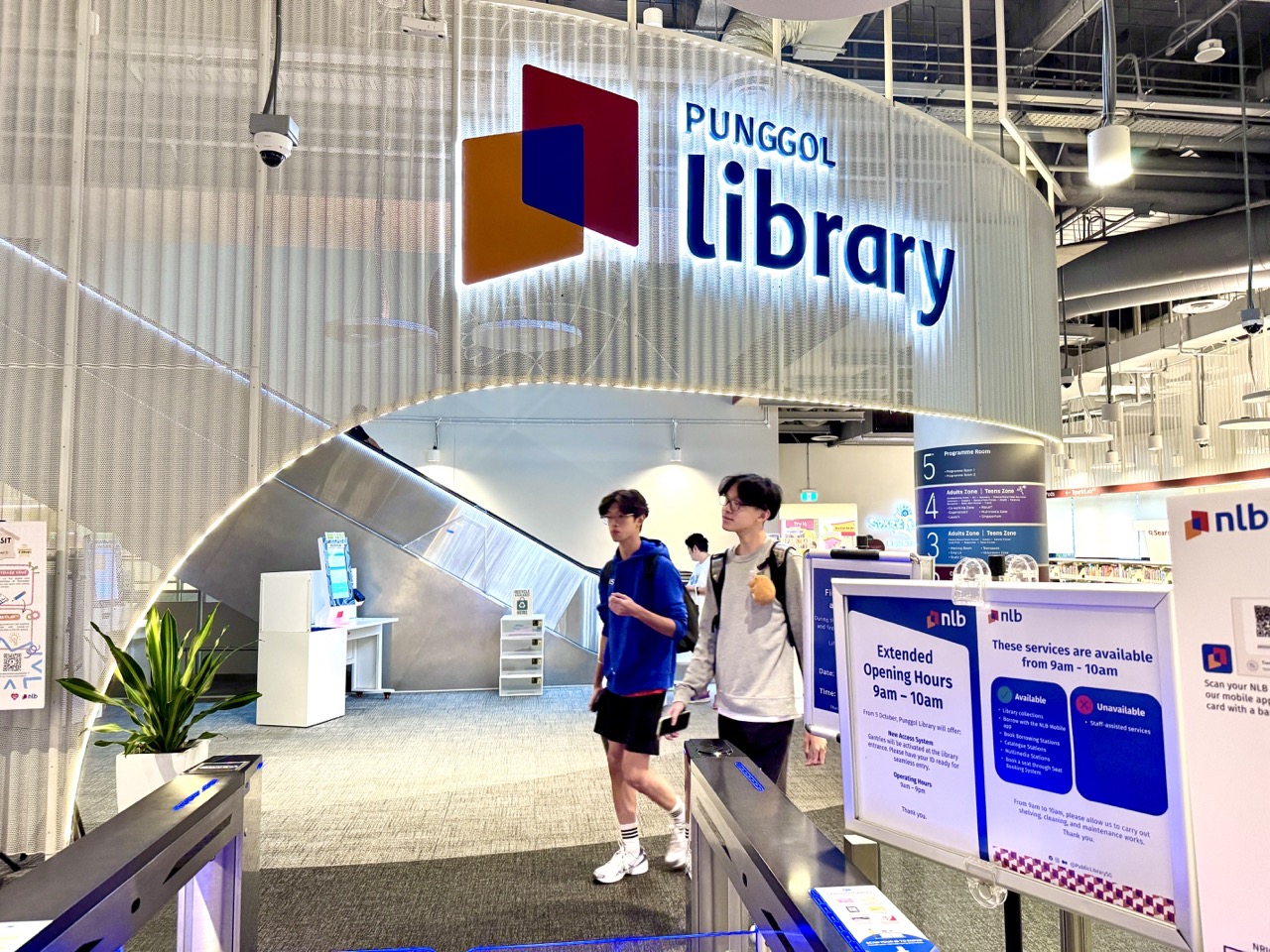
**Teachers looking for useful Punggol learning opportunities can begin with one clear question and one nearby public setting.** Punggol Regional Library’s Punggol Stories exhibition supports source-based local history; Punggol Waterway Park offers observable plant and bridge design; PUB has official student and trainer materials for Lorong Halus Wetland; and JTC documents public-facing urban technology around Punggol Digital District. These resources are rich enough for teaching, but visiting them with a class requires a plan that respects access, supervision and what pupils can realistically learn.
The top ten things to do in Punggol for teachers are a Punggol Stories historical-evidence walk; a multilingual poem and perspective lesson at The Lens of Literature; a safe plant-and-waterway field observation; a bridge geometry and engineering sketch; a properly planned PUB Lorong Halus inquiry; a public Heritage Trail source-criticism exercise; a digital district sustainability claims check; a One Punggol civic-services mapping activity; an inclusive public-route design audit; and a library-based research or maker-lesson preparation session. They are ten professional preparation tasks, **not ten school excursions already approved or commercially bookable**.
The teaching job here is different from a student’s leisure outing. A teacher needs outcomes, an appropriate age level, evidence-quality rules, permission checks, safeguarding, group management and an assessment that genuinely reveals learning. A twenty-minute visit with one well-supported inference may be stronger than an ambitious route through several districts. A class should not be promised access to SIT labs, private buildings, library maker machines, protected water or future park paths simply because those facilities appear in nearby official plans.
In 2026, NLB lists Punggol Stories as a permanent exhibition on Levels 1, 3 and 4 of Punggol Regional Library, generally 10am–9pm with some individual component hours. NParks distinguishes its **4.2km Waterway Park nature walk** from the separate **8.4km Waterway Park Connector**. JTC identifies the first **400 metres** of the main Punggol Heritage Trail alignment as open, with later phases planned. Teachers should preserve those distinctions before turning a map or activity brochure into a worksheet.
Teacher’s quick planner: ten different lesson-preparation jobs
- 1. Design a local-history evidence investigation at Punggol Stories — Singaporium, Level 4, Punggol Regional Library at One Punggol.
- 2. Prepare a multilingual literature and perspective lesson — The Lens of Literature, Level 3 Sing Lit area of Punggol Regional Library.
- 3. Create a safe plant-observation protocol at Waterway Park — One selected public waterside viewpoint in Punggol Waterway Park.
- 4. Build a bridge geometry inquiry without obstructing pedestrians — Lawful public views of Jewel Bridge, Kelong Bridge or another Waterway Park crossing.
- 5. Use PUB’s Lorong Halus Wetland trainer materials for proper field inquiry — PUB Lorong Halus Wetland public learning trail, eastern bank of Serangoon Reservoir.
- 6. Teach heritage credibility using the first opened Punggol Heritage Trail section — Current public 400-metre main trail segment near Campus Boulevard and Punggol Coast MRT.
- 7. Design a critical-reading task about smart-district sustainability — Public areas of Punggol Digital District near Punggol Coast MRT.
- 8. Use One Punggol to teach how civic services share one building — Public levels of One Punggol, 1 Punggol Drive.
- 9. Prepare an accessibility-focused observation with no invented user testing — Lawful Waterway Park paths, Punggol Coast Integrated Transport Hub or One Punggol public routes.
- 10. Prepare a genuine library research or maker activity with source-checking — Punggol Regional Library and authorised MakeIT at Libraries services.
A teacher’s first decision is not how many sites can fit on the bus. It is whether this activity gives pupils a question, legitimate evidence and an opportunity to improve their reasoning. Several stops are useful for teacher-only reconnaissance or desk-based preparation before any class visit is proposed.
How to make Punggol’s settings teach something worthwhile
Define the question and learning outcome
Choose a curriculum-linked outcome that a pupil could actually demonstrate. ‘Appreciate nature’ is a broad intention; ‘observe two plant growth forms and distinguish direct observations from NParks explanations’ gives a more useful task. For History, an evidence table can differentiate archival captions and oral recollections. For Mathematics, pupils can compare official route figures without inventing measurements. Each task should match the class and the correct current syllabus rather than borrowing generic exam claims.
Reconnoitre access and get the right approvals
Carry out a teacher reconnaissance before proposing a group visit. Confirm the legitimate public entrance, suitable gathering place, toilets, safe turn-back, weather fallback, transport and the actual host’s visitor policies. A public library’s general opening does not establish a place for thirty pupils to work together noisily, and a scientific trail’s online guide is not a standing booking. Obtain all school and venue approvals applicable to the actual visit.
Teach the source-evidence-inference distinction
Create a source ladder. An official NParks park description can identify named plants or bridges; a personal photograph can show what was visible on a particular date; a student’s inference can propose why a design might work; and a numerical performance claim requires appropriate measurement. Explain the ladder clearly so pupils do not call a hypothetical model an observed fact. A question mark is often a better outcome than a false discovery.
Safeguard and supervise by actual school requirements
Safeguarding should be designed before the field exercise. School staff determine supervision, consent, pupil medical and access needs, weather and emergency arrangements under school requirements. The ratio published in an older PUB trainer guide is historical guidance for that particular design and should not be assumed a universal legally prescribed ratio for every 2026 class. Group arrangements require current school risk assessment and permission.
Keep a manageable geographical cluster
Use a one-cluster rule. Central Punggol MRT is suitable for One Punggol and Waterway Park. Punggol Coast MRT serves public parts of Punggol Digital District and its opened Heritage Trail. Lorong Halus is a separate eastern excursion needing its own route and return. Coney Island is rustic and gated 7am–7pm. Combining all of them into one two-hour field trip risks teaching more about rushing than inquiry.
Use the result as assessment for learning
End with assessment for learning rather than a photo album. Ask pupils to show a labelled sketch, short explanation, source comparison, revised hypothesis or clear claim-evidence-limitation paragraph. A teacher can notice a misunderstanding and plan a follow-up question. No outdoor site automatically raises examination grades; the pedagogy lies in how evidence is used before, during and after the activity.
Ten detailed Punggol opportunities for teachers
1. Design a local-history evidence investigation at Punggol Stories
Setting: Singaporium, Level 4, Punggol Regional Library at One Punggol.
What is reliably documented
NLB’s permanent Punggol Stories includes Punggol Pioneers, Seaside Solace, Farm to Fable and Winding Waterways and a Memory Map of recollections. The display uses National Library collections to connect older kampungs, farming, recreation and waterfront development. This is a strong archive-literacy resource, not proof that pupils may handle historic objects or gather in a restricted gallery for an unannounced formal lesson.
How to prepare a legitimate teaching activity
Visit as a teacher first, examine two publicly accessible exhibition panels and record dates, image credits and what the caption can establish. Build a simple source comparison: one historic image, one current official description and one attributed memory. For pupils, ask which claim each source supports and where uncertainty remains. If a group visit is proposed, contact the library about current visit arrangements and manage quiet shared space responsibly.
Worked classroom misconception and repair
A Secondary learner sees a picture of agricultural land and writes ‘every part of today’s Punggol was once a pig farm’. The teacher asks how far the image’s evidence extends. The pupil revises the statement to explain that farming formed part of Punggol’s history, while an exact location and period need documentary verification. The correction is more valuable than memorising a romantic narrative.
Safeguarding, operation and source limits
NLB displays include archival works subject to attribution and copyright. A Memory Map recollection may be an important primary memory without determining exact dates. Quiet areas, other patrons and interactive screens require respect. The main exhibit’s opening does not guarantee every station is operating.
Adapting for different age groups
Use visual then-and-now description in Primary years; add provenance and corroboration in Secondary; discuss oral-history limitations and historical geography with older students. Adjust the question rather than sending every cohort the same long worksheet.
A useful evidence of learning
A three-source table with claim, evidence, uncertainty and one revised question. Include the exact NLB source rather than anonymous internet images.
Official reference: Current authority or service page. A public webpage documents a place, not automatic group admission or an approved lesson.
2. Prepare a multilingual literature and perspective lesson
Setting: The Lens of Literature, Level 3 Sing Lit area of Punggol Regional Library.
What is reliably documented
NLB describes The Lens of Literature as an interactive experience presenting Singapore writing in English, Chinese, Malay and Tamil, addressing themes such as village life, interruption, change and future. Visitors may compose an original poem using its table when operating. It is an opportunity to discuss language and viewpoint, not an obligation for every student to interpret all four languages perfectly.
How to prepare a legitimate teaching activity
Choose a very short excerpt or thematic panel and identify who is speaking, which image represents place and how the wording affects mood. Prepare a scaffold with ‘I notice’, ‘I infer’ and ‘Another reading could be’. Let pupils draft two or three original lines about an observed Punggol scene. Ask NLB about any organised visit arrangements and respect copyright and room capacity.
Worked classroom misconception and repair
A teacher initially asks the class to produce one ‘correct’ poem about Punggol’s development. In preparation, they recognise that creative writing requires personal perspective. The task changes to two original lines using one observed image and one memory, with pupils explaining their choice. The assessment now values precision and voice rather than imitating a model answer.
Safeguarding, operation and source limits
Do not reproduce entire copyrighted passages in an open website. The interactive table may be under maintenance or occupied. Students requiring language support should have an accessible alternative; do not use unfamiliar mother-tongue literature as a public embarrassment exercise.
Adapting for different age groups
Young learners can pair picture and word; older pupils can compare images and diction; Secondary students can examine narrator reliability, language choice and the limits of a textual source.
A useful evidence of learning
A short original poem with author attribution to the inspiration and a one-sentence explanation of what the writer chose deliberately.
Official reference: Current authority or service page. A public webpage documents a place, not automatic group admission or an approved lesson.
3. Create a safe plant-observation protocol at Waterway Park
Setting: One selected public waterside viewpoint in Punggol Waterway Park.
What is reliably documented
NParks names Red Thalia, Bulrush and Swamp Cabbage among aquatic plants used for environmental planting at the park. Its designated nature walk is 4.2km with an easy classification and one-to-two-hour estimate. The park’s full 25.79 hectares contain several themed zones. A named plant in official materials is not guaranteed to be visible at the class’s exact viewpoint on a particular day.
How to prepare a legitimate teaching activity
For preparation, locate one safe, appropriate public observation area and decide whether an entire class can use it without blocking paths. Build a worksheet distinguishing plant shapes actually seen from the environmental role explained by NParks. The task should need no sample collection, microscopes or water access. If weather is unsuitable, replace the field element with official photographs and a classroom evidence exercise.
Worked classroom misconception and repair
A pupil labels a plant ‘Red Thalia’ because a guide mentions it, but the leaf shape in a distant photograph is unclear. Instead of rewarding a guess, the teacher asks for visible field marks and a confidence rating. The pupil writes ‘tall broad-leaf aquatic plant, identification uncertain’ and cites NParks for the larger planting context.
Safeguarding, operation and source limits
Do not enter water banks or planted beds, remove leaves or ask children to collect water. Shared paths need to remain open. Heat, insects, haze and thunderstorms change safe outdoor conditions. A school group cannot assume a casual visitor’s route is suitable for all mobility needs.
Adapting for different age groups
Primary groups can sort shapes and describe habitats; Secondary groups can separate natural and designed environmental systems and discuss why performance claims require measurements.
A useful evidence of learning
One annotated sketch plus a claim-evidence-limitation statement, without inventing a pollutant reduction number.
Official reference: Current authority or service page. A public webpage documents a place, not automatic group admission or an approved lesson.
4. Build a bridge geometry inquiry without obstructing pedestrians
Setting: Lawful public views of Jewel Bridge, Kelong Bridge or another Waterway Park crossing.
What is reliably documented
NParks identifies several landmark Punggol Waterway bridges, including Jewel, Wave, Sunrise and Kelong. Their geometry offers a visible setting for shape, repeated features, perspective and structural reasoning. Kelong Bridge refers to fishing heritage but is not an original kelong. A field photograph does not provide a civil engineer’s load calculations.
How to prepare a legitimate teaching activity
Select an appropriate bridge viewpoint and draw the main line of its silhouette. In class, allow learners to create a simplified diagram of symmetry, span and visible supports. Where a measurement is not safely available, provide an explicitly fictional classroom dimension. Compare the maths model with the real structure and identify what was simplified.
Worked classroom misconception and repair
A group sees an arched form and assumes the whole bridge is perfectly symmetrical. A teacher prompts them to consider viewing angle and perspective. Pupils build a mirror-symmetry drawing on paper and label it as an idealised model rather than claiming the real structure meets that geometry exactly.
Safeguarding, operation and source limits
Never stop the class in a narrow cycle lane, climb railings, attach measuring tapes or cross a closed bridge. A site can be open generally while a crossing has works. Pupils with mobility needs require a checked accessible approach, not a generic promise.
Adapting for different age groups
Primary geometry can focus on angle and reflection; Secondary can compare sketches with coordinate representations, forces and limitations of 2D modelling.
A useful evidence of learning
A before-and-after sketch: what the pupil saw, what they modelled, and one assumption needed for the calculation.
Official reference: Current authority or service page. A public webpage documents a place, not automatic group admission or an approved lesson.
5. Use PUB’s Lorong Halus Wetland trainer materials for proper field inquiry
Setting: PUB Lorong Halus Wetland public learning trail, eastern bank of Serangoon Reservoir.
What is reliably documented
PUB describes Lorong Halus Wetland as treating water passing through the former landfill before it enters the reservoir. It provides a self-guided ABC Waters learning trail with student and trainer resources. An older trainer guide suggests lower-secondary age, roughly two hours and a facilitator-to-student ratio for its historic programme design. Teachers must determine current group arrangements and school risk-management requirements rather than adopting an old ratio as universal law.
How to prepare a legitimate teaching activity
Read PUB’s current site page and trainer resources before making an itinerary. Select one inquiry question about source water, planted treatment landscape and protected reservoir. Verify transport, safe path access and the current policy for group use or educational testing. If hands-on water testing is desired, obtain the proper equipment, training and approval; a public webpage is not blanket permission to collect samples.
Worked classroom misconception and repair
A class draws a wetland and writes that the plants remove all pollution. The teacher asks what was observed and what would need measuring. Pupils revise to ‘PUB describes a treatment function for water from the former landfill; our visit did not measure treatment efficiency.’ Their second diagram includes an arrow for the intended system but no invented result.
Safeguarding, operation and source limits
Do not enter technical infrastructure, stand on reservoir edges or direct children into wetland vegetation. PUB activity packages may be designed for supervised schools and contain dated technology assumptions. Heavy rain or lightning requires a real alternative, not a shelter under a tree.
Adapting for different age groups
Upper Primary groups might use the site for basic water systems if appropriately planned; lower Secondary can practise inquiry; older learners can critique sampling methods and limitations.
A useful evidence of learning
A conceptual water-flow model with problem, intervention, intended benefit and one variable that a permitted scientific assessment would measure.
Official reference: Current authority or service page. A public webpage documents a place, not automatic group admission or an approved lesson.
6. Teach heritage credibility using the first opened Punggol Heritage Trail section
Setting: Current public 400-metre main trail segment near Campus Boulevard and Punggol Coast MRT.
What is reliably documented
NParks opened the first 400 metres of the main Punggol Heritage Trail alignment in August 2025, retaining features of Old Punggol Road’s terrain and greenery and incorporating recreated interpretation such as a former-style bus shelter. JTC’s current community listing still identifies the first section as open; the larger planned alignment is not automatically a public class route. This is ideal for teaching the difference between preserved, reconstructed and new.
How to prepare a legitimate teaching activity
Do a teacher-only reconnaissance of the open section, the entrance and any fencing. Select one retained feature and one clearly modern addition, using official documentation to distinguish them. Ask pupils to write a source-based caption: what survives, what has been recreated and what remains unknown. Limit the group to lawful open paths and follow school safety and accessibility procedures.
Worked classroom misconception and repair
A pupil calls the recreated bus shelter ‘the original 1930s bus stop’. The teacher directs them to the NParks heritage announcement and asks what ‘recreated’ means. The pupil rewrites the description and explains why a modern reconstruction can communicate historical significance without itself being the original object.
Safeguarding, operation and source limits
Public interpretation signs are not proof that every reported event happened at that exact signpost. Future trail phases, private university spaces and Punggol Point Park upgrading areas must not be entered. Avoid creating a large unapproved photography group that obstructs public circulation.
Adapting for different age groups
Primary Social Studies can compare before and after; Secondary History can evaluate provenance and conservation language; interdisciplinary groups can consider urban-planning trade-offs.
A useful evidence of learning
A three-column retained/recreated/new table with an evidence reference and a question whose answer remains uncertain.
Official reference: Current authority or service page. A public webpage documents a place, not automatic group admission or an approved lesson.
7. Design a critical-reading task about smart-district sustainability
Setting: Public areas of Punggol Digital District near Punggol Coast MRT.
What is reliably documented
JTC’s sustainability information describes passive solar design, district cooling and smart-grid systems with solar generation and storage. Some claims are presented as projections or estimated benefits at the time of publication. The public precinct contains working offices and SIT academic buildings, not walk-in technical laboratories, so the class can observe shade and public-space design while relying on operator material for system details.
How to prepare a legitimate teaching activity
Prepare a two-stage activity: a safe public observation of one shade or pedestrian-design feature, followed by reading a JTC system explainer. Ask pupils to classify statements as direct observation, published operator claim, estimate or hypothesis. If a number such as energy savings appears, require the source date and denominator. Do not promise access to cooling plants or private business networks.
Worked classroom misconception and repair
Students see solar equipment in a rendering and write that Punggol Digital District produces all its own electricity. The teacher asks which authority stated that and whether it describes a design goal, capacity or actual annual supply. The claim is corrected into a precise sourced description of the smart-grid concept without an unsupported energy-independence conclusion.
Safeguarding, operation and source limits
No rooftop, service corridor, university laboratory or office is freely accessible because it lies within a digitally promoted district. Do not photograph staff screens or security features. A school should obtain the appropriate permissions for any technical tour, rather than promising one from an ordinary brochure.
Adapting for different age groups
Primary learners can compare shaded and exposed urban design; Secondary Science or Geography can evaluate sustainability systems; older students can assess energy accounting and data governance.
A useful evidence of learning
A four-row evidence table that distinguishes what is visible, what JTC states, which number is an estimate and what would require measurement.
Official reference: Current authority or service page. A public webpage documents a place, not automatic group admission or an approved lesson.
8. Use One Punggol to teach how civic services share one building
Setting: Public levels of One Punggol, 1 Punggol Drive.
What is reliably documented
PA describes One Punggol as a community-focused integrated hub combining a Community Club, Regional Library, ServiceSG Centre, hawker centre and other services. The building illustrates co-location and public access. It also contains medical, childcare and other protected services, whose doors and personal information are not part of a school tour without approval.
How to prepare a legitimate teaching activity
Build a public-service map from PA’s current facility directory. Ask pupils to identify which services are public browsing spaces, which involve appointments and which serve specific groups. Observe only from legal public circulation areas, or complete the whole exercise using official maps without visiting. Focus on wayfinding, accessibility and why some services need privacy.
Worked classroom misconception and repair
A pupil thinks a public community hub must allow the whole class into any room. By sorting spaces into public, shared and controlled categories, the pupil learns that inclusive public service and privacy are not contradictory. The class proposes a better sign without entering a consultation room.
Safeguarding, operation and source limits
Do not block clinic queues, photograph patients, treat child-care areas as displays or ask pupils to approach members of the public for personal data. PA room bookings, library programmes and ServiceSG appointments have separate rules. An educator must decide whether a field visit is appropriate at all.
Adapting for different age groups
Younger children can learn civic facilities and respectful behaviour; older pupils can discuss public-sector co-location, accessibility and how service design balances openness and privacy.
A useful evidence of learning
A simple level diagram showing public service, controlled service and one design principle to help a first-time visitor.
Official reference: Current authority or service page. A public webpage documents a place, not automatic group admission or an approved lesson.
9. Prepare an accessibility-focused observation with no invented user testing
Setting: Lawful Waterway Park paths, Punggol Coast Integrated Transport Hub or One Punggol public routes.
What is reliably documented
NParks describes Waterway Park as broadly wheelchair accessible and elderly-friendly, while LTA’s Punggol Coast Integrated Transport Hub announcement lists barrier-free entry, priority boarding seating and accessible facilities. Those are operator statements about features; individual route conditions, lifts and temporary works can change. A class can examine how designers signal accessibility without treating strangers with disabilities as study subjects.
How to prepare a legitimate teaching activity
Choose one route and prepare a checklist of surface, crossing, ramp or lift, signage, shelter and seating. Use permitted public observations and official facility documentation. Discuss hypothetical users respectfully without asking a stranger to demonstrate their mobility difficulty. Consider how a stroller, wheelchair or older pedestrian might experience the same route, while noting that a real user would have to judge suitability personally.
Worked classroom misconception and repair
A student draws the shortest straight line from station to hub but the route includes stairs. Another identifies a public lift connection. The class learns that ‘shortest’ and ‘accessible’ are different route objectives. The final map lists unknowns such as whether a lift is operating today instead of claiming universal accessibility.
Safeguarding, operation and source limits
Do not obstruct tactile markings, priority queues or lifts. Avoid photographing identifiable people without consent. A route cannot be called fully accessible solely from one distant image, and changes may make previous surveys obsolete.
Adapting for different age groups
Primary learners can identify respectful shared-space rules; Secondary Design & Technology or Humanities students can explain access trade-offs; older cohorts can consider inclusive-design methods and their ethical limits.
A useful evidence of learning
A route card with entry, observed access features, one barrier, alternative and an explicit date of verification.
Official reference: Current authority or service page. A public webpage documents a place, not automatic group admission or an approved lesson.
10. Prepare a genuine library research or maker activity with source-checking
Setting: Punggol Regional Library and authorised MakeIT at Libraries services.
What is reliably documented
NLB’s Regional Library offers reading, research, exhibitions and inclusive resources. NLB MakeIT at Level 4 has separate digital-making services for which some equipment requires certification, and its usual operating pattern is Wednesday–Sunday noon–8.30pm. A maker room’s presence does not guarantee an entire school class can enter, book machines or complete the same project in one session.
How to prepare a legitimate teaching activity
Choose one information problem from an earlier Punggol field topic, then identify two credible sources a pupil can compare. Alternatively prepare a small design brief and contact NLB about an authorised MakeIT group learning journey, which is subject to case-by-case assessment. For a public-library research visit, maintain quiet and protect general visitor access. Offer a desk-based backup if a programme is full.
Worked classroom misconception and repair
An educator plans a class 3D-printing workshop because they read that MakeIT has printers. After checking NLB, they learn that group visits, age suitability and equipment training are not automatically available. They convert the initial lesson to sketching and testing paper prototypes, and apply for an authorised future session rather than promising a physical print that may not be possible.
Safeguarding, operation and source limits
Do not bypass membership, room bookings, age rules, machine certification or safeguarding. The library’s public collection hours differ from the MakeIT schedule. Source-reading activities should avoid copying copyrighted material or sharing pupils’ private data.
Adapting for different age groups
Primary pupils can compare two age-suitable information sources; lower Secondary can create an evidence note; older students can pursue an authorised digital-making design brief linked to real constraints.
A useful evidence of learning
An enquiry-to-evidence worksheet with citations, or a maker brief stating user, material, constraints, expected test and what remains unverified.
Official reference: Current authority or service page. A public webpage documents a place, not automatic group admission or an approved lesson.
Three teacher preparation itineraries
A two-hour library evidence-recce, without bringing a class yet
Visit Punggol Regional Library during its actual opening and concentrate on Punggol Stories and one accessible literature exhibit. Record the location of information panels, their source captions and any space or noise constraints. Build two small worksheets and use an NLB enquiry for any formal group visit. Avoid assuming that an ordinary browsing admission entitles an unannounced whole-class programme.
A controlled central Waterway Science and Mathematics preparation walk
Choose one short public park section and inspect its actual entrance, path, observation point and return. Prepare a plant-observation sheet and a bridge-sketch task that require no touching of water or fixtures. Compare the planned route with the group’s mobility needs and forecast weather. The optional full 4.2km nature walk is not a requirement for a class with a shorter objective.
One Punggol Coast design-and-heritage source investigation
Arrive at Punggol Coast MRT, identify a lawful public Digital District viewpoint and the actual open Heritage Trail path. Use JTC and NParks statements to distinguish retained landscape, newly built infrastructure and planned future phases. Sketch a potential inquiry and a safety route. Do not use private campus spaces as a convenient shortcut or advertise an unbooked technical lab visit.
A lesson sequence built around the Clementi principle of precise correction
Begin with a plausible initial response rather than a long lecture. For example, a pupil might say that all green waterway plants ‘clean the water completely’. The teacher asks what evidence would prove the word completely, and students notice they have only observed plants and read a general NParks purpose statement. Their first answer is revised into a qualified explanation. The learning occurs at the exact mistaken mental step.
The same principle works in History. A recreated bus shelter is not the original historical shelter. A correct lesson does more than demand that students memorise the word ‘recreated’: it shows how to recognise provenance, make a claim that follows from the source and notice where an assumption was added. This is transferable to news, advertising and online history posts.
For Mathematics, a published 4.2km nature-walk distance and an 8.4km connector length describe different routes. Pupils who assume they are interchangeable have made a labelling mistake before calculation even begins. Correct the source and unit selection first; only then estimate time with an explicitly stated hypothetical speed. Good maths instruction includes the reason the inputs are valid.
Use staged practice after the local example. Students could first sort four statements into observation, official source claim, hypothesis and unsupported assertion; then explain one more example without prompts; then revisit a fresh Punggol claim independently. Ask them to show what evidence would change their mind. A single completed outing is not proof of lasting mastery; revisit the skill in normal classwork.
A practical teacher risk and access checklist
- Specify the intended cohort, subject and exact learning question.
- Confirm the date, public entrance and actual operating area.
- Get the required school, parent and venue permissions for the format.
- Plan transport, toilets, water, weather, emergency and accessibility arrangements.
- Follow current school supervision and risk-assessment requirements.
- Do not treat an older trainer-guide ratio as a universal legal requirement.
- Avoid sampling public water or handling park plants without suitable authority.
- Protect pupils’ identities, health information and images.
- Have a realistic indoor or desk-based learning alternative.
- Assess one sourced claim or revised understanding after the visit.
Five common errors in local educational outings
First, a learning journey can become a sightseeing tour without a learning job. If pupils merely copy ten signs, a teacher may have little evidence that they understood anything. Choose one important question and design the response that would show understanding.
Second, planning documents can be mistaken for current access. The Digital District and Heritage Trail include phases and private spaces. A construction rendering or ambitious 2025 masterplan is not authority to enter a fenced 2026 work zone. Actual site signs and current operator guidance are decisive.
Third, a scientific observation can turn into unsafe experimentation. PUB’s educational resources are useful for understanding water treatment, but a teacher may not improvise water sampling at a protected site. School protocols, approved equipment and site permission matter.
Fourth, inclusive design can be taught poorly when learners are asked to treat strangers with disabilities as involuntary test subjects. Instead, use verified public-access features, ethically designed hypothetical users and authorised consultation where appropriate. The lesson should protect dignity and privacy.
Fifth, a library maker session or community event is not guaranteed simply because the room is listed. Check NLB’s actual booking, ages and machine permissions. A paper prototype or classroom source comparison can still be a strong fallback and may fit the learning outcome better.
Frequently asked questions
What is the best first Punggol learning-journey stop for a teacher?
Punggol Regional Library’s Punggol Stories exhibition is an easy source-based starting point for many age groups, subject to class arrangements, visitor policy and appropriate supervision.
Can an entire school class use NLB MakeIT without booking?
No. NLB describes separate maker-service eligibility and authorised group-learning journeys reviewed case by case. Check actual booking and equipment requirements.
Does PUB offer a Lorong Halus Wetland trainer guide?
Yes. PUB has student and trainer resources on its official site. Some documents are older and do not override current school risk assessment, site access or equipment rules.
Can children sample the water at Lorong Halus?
Do not assume so from an online activity guide. Water sampling requires appropriate programme, safety supervision, equipment and permissions.
How long is the Punggol Waterway Park nature walk?
NParks identifies a 4.2km easy nature walk with an estimated one to two hours. The named Waterway Park Connector is a separate 8.4km route.
Is the full Punggol Heritage Trail open for school excursions?
JTC currently identifies the first 400m main section as open. Future stages must be checked before route planning.
Can students enter SIT labs in Punggol Digital District?
Not as ordinary visitors. University and business premises have separate access rules; a technical visit requires an actual authorised arrangement.
Does a public park group always need the same NParks permit?
No. NParks’ organised-group permit framework is site- and activity-specific; school and host rules also apply. Check the actual route and event format rather than assuming a universal threshold.
What should a Punggol field worksheet assess?
It should ask for a clear observation, sourced explanation, limitation or revised claim appropriate to the subject, not just ten photographs or a copied Wikipedia paragraph.
How can Primary and Secondary teachers use the same place differently?
Adjust the question. Younger learners may describe plants and public services; older learners can evaluate evidence, models, different perspectives or unintended consequences.
How do teachers protect pupils’ privacy on learning journeys?
Follow school consent and safeguarding requirements, avoid disclosing student records, and do not photograph strangers or publish identifiable pupils without appropriate authority.
What if haze or lightning interrupts the excursion?
Follow school and NEA safety advice. Use an approved indoor alternative or postpone rather than continuing on exposed reservoir paths.
Official teaching resources and related Punggol guides
The linked primary sources establish NLB, NParks, PUB, JTC, PA and LTA services and routes. They do not replace school-specific excursion risk management or approvals. The connected eduKatePunggol guides provide narrower subject detail, while this article’s job is lesson design and evidence-based teaching.
- NLB Punggol Stories permanent exhibition
- NLB Punggol Regional Library
- NLB MakeIT group learning guidance
- NParks Waterway Park nature walk
- NParks Waterway Park public routes
- PUB Lorong Halus Wetland educational materials
- JTC Punggol Heritage Trail current access
- JTC sustainable district design
- PA One Punggol civic services
- LTA Punggol Coast transport hub accessibility
- NParks organised group permits
- Related Punggol school learning journeys
- Punggol Social Studies Students companion
- Punggol Geography Students companion
- Immutable Clementi qualitative model
The next useful educator action
Choose one Punggol setting and write the exact misconception you hope a pupil will learn to correct. Verify the source, design a safe and accessible way to investigate it, and decide what a successful explanation looks like. Once that is clear, logistics and permissions can be planned responsibly. That is a stronger beginning than a list of scenic stops.


