
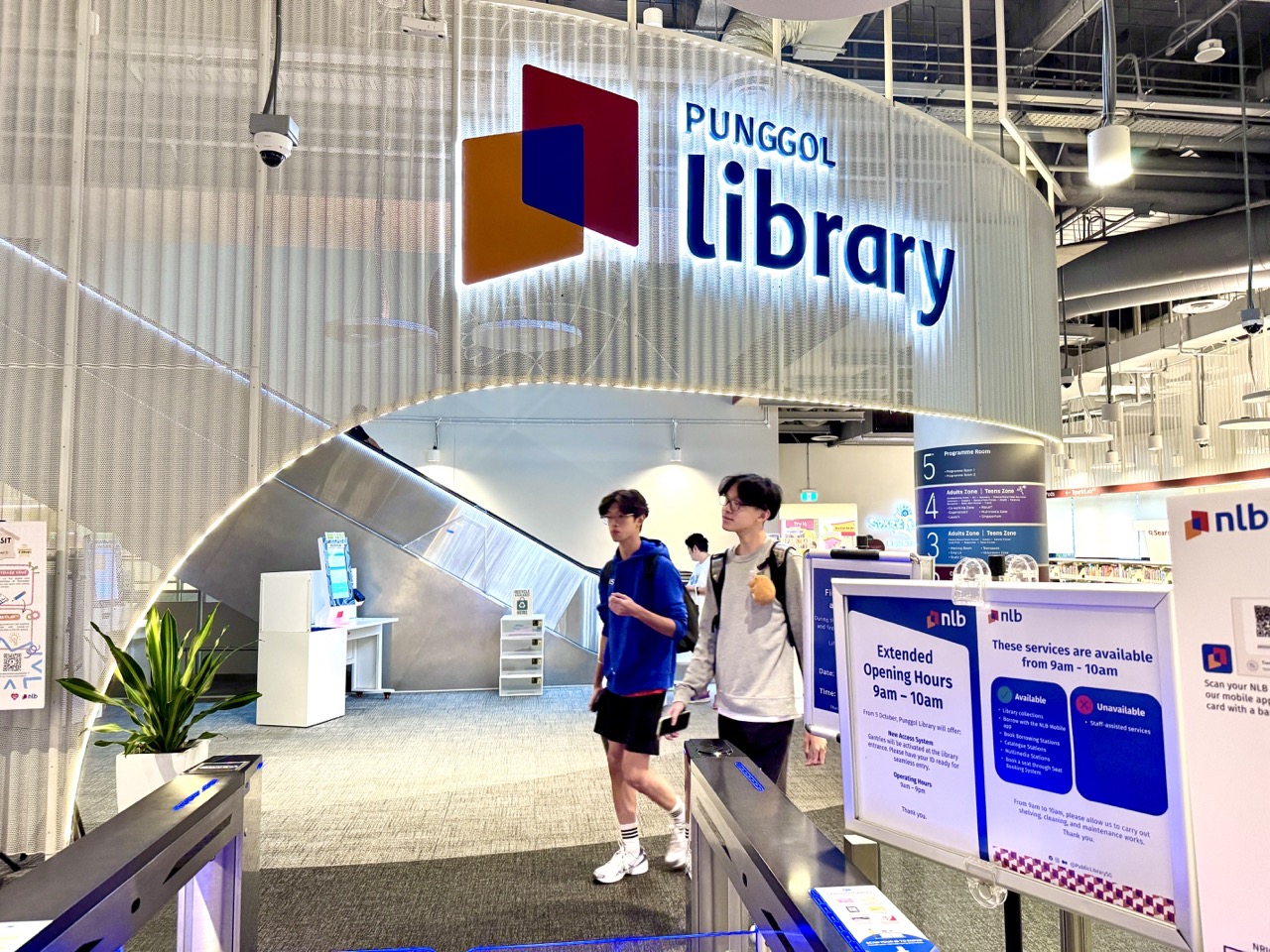
Punggol’s strongest starting place for board-game lovers is the National Library Board’s **Comics & Games Library** at Punggol Coast Mall. It is a real self-service library with a dedicated tabletop games area, a Singapore showcase and more than 7,000 comics, graphic novels and game-related titles. A different local option is the **One Punggol Chess Meetup**, listed by the Singapore Chess Federation. The newer Punggol Coast Mall also has **The Go Academy**, and onePA lists a **Punggol Gems Rummy-O interest group**. These are distinct choices for different kinds of players, not ten commercial game cafés that can all guarantee an empty table.
This guide covers ten ways to enjoy tabletop games in Punggol: browse a local board game at the Comics & Games Library; explore Singapore-made tabletop design through the library’s Origame partnership; hold a cooperative family game with age-suitable equipment; enquire about the One Punggol Chess Meetup; learn Go through an appropriate Go Academy programme; check the Punggol Gems Rummy-O interest group; register for a genuine dated NLB board-game event such as Board Games B.F.F.; research comic and game design through NLB’s reading collection; organise a legitimately reserved small group session through PA; and host a modest private tabletop-and-story evening at home. Each has a specific purpose and clear permission limits.
**Immediate location facts:** The Comics & Games Library is at **Punggol Coast Mall, Tower 7, 88 Punggol Way #01-140**, with advertised **10am–10pm** daily opening. NLB requires a suitable ID, eCard or QR day pass to enter, and it cannot guarantee a particular game or table. The Go Academy’s current mall listing identifies **#01-224 at 98 Punggol Way**, with class participation governed by the business. The Singapore Chess Federation describes a Friday evening meetup at One Punggol’s Multi-Purpose Rooms 1 and 2, normally **6.30pm–9.30pm except the last Friday of the month**; confirm directly before travelling.
Game enthusiasm should leave space for beginners and other library patrons. A library’s shared game tables are not private corporate booking rooms, and a paid Go class is not a free open board-game demonstration. Larger groups need a permitted venue and clear arrangements. Choose one real activity, check its current entry and schedule, and enjoy the actual decisions, stories and people around the table.
Ten quick choices for Punggol board-game fans
- 1. Explore a local or regional board game at the Comics & Games Library — NLB Comics & Games Library, Punggol Coast Mall #01-140.
- 2. Discover Singapore-made game design through the Origame partnership — Comics & Games Library game-area and reading shelves at Punggol Coast.
- 3. Use one cooperative family game to practise inclusive turn taking — Appropriate publicly available library game table or a properly hosted private family space.
- 4. Check the One Punggol Chess Meetup before attending — One Punggol Multi-Purpose Rooms 1 and 2, 1 Punggol Drive.
- 5. Enquire about a Go lesson at The Go Academy in Punggol Coast Mall — The Go Academy, Punggol Coast Mall #01-224, 98 Punggol Way.
- 6. Look for the Punggol Gems Rummy-O community interest group — Punggol Gems Residents’ Network; confirm actual activity room and current onePA listing.
- 7. Register for a real NLB Board Games B.F.F. event when one is offered — NLB’s current GoLibrary / Punggol Library event listings, at the named event venue.
- 8. Learn tabletop storytelling and mechanics through books and comics — Punggol Regional Library or Comics & Games Library reading collections.
- 9. Book an appropriate PA room for a larger game gathering rather than occupying library tables — One Punggol Community Club reservable seminar or interest-group rooms, if permitted.
- 10. Host a modest private game-and-story night that welcomes different players — An appropriate private Punggol home with the host’s consent and suitable noise rules.
Use this as a map of formats rather than a list of ten guaranteed game tables. A public library collection, community interest group, paid school, scheduled event, privately hired room and game night at home are different ways to play. Choose according to the people, desired learning and actual permissions before visiting.
How to choose a tabletop activity that includes everyone
Choose strategy, cooperation, narrative or social play
Decide which tabletop experience you want: learning rules, strategic competition, cooperation, family conversation, game design or community participation. Chess, Go, Rummy-O and modern cooperative games have different rhythms. A novice may enjoy a short tutorial; a skilled player may want a strong opponent or an organised group. Do not judge a person’s enthusiasm by how many complicated rulebooks they know.
Match the activity to its real access model
Distinguish four kinds of access. The Comics & Games Library is an NLB shared public node requiring eligible entry. The Chess Federation lists a community meetup whose organiser sets attendance conditions. The Go Academy is a commercial course provider with its own fees and age bands. A onePA interest group has membership and programme arrangements, which cannot be inferred from a label saying membership is free. The venue must match the chosen purpose.
Meet at the correct Punggol station
Plan around the correct part of Punggol. The Comics & Games Library and The Go Academy are within Punggol Coast Mall near Punggol Coast MRT. One Punggol Community Club and Punggol Regional Library are near central Punggol MRT. A group cannot reasonably assume those spaces are adjacent just because both use the town’s name. State the station, entrance and exact meeting point in invitations.
Teach rules without gatekeeping
Make rule explanations welcoming. If one person has played a game for years and another has never heard of it, start with the objective and one legal example turn. Let newcomers make choices, ask questions and finish a trial round without ridicule. A cooperative title may offer shared problem solving, while a competitive game can still reward friendly conduct and honest agreement.
Keep public gaming resources shared
Protect shared public resources. NLB games, books and tables are for all eligible visitors. Do not monopolise a table, spread pieces across circulation areas, bring food into prohibited zones or treat a lively library as a private noisy club. A group with a fixed tournament agenda or many participants should seek a legitimate reservable venue instead of occupying communal play tables for hours.
Avoid financial stakes and hidden charges
Budget correctly and keep games separate from gambling. A commercial lesson or venue room can cost money and have terms; a public library typically has no arcade credits but may require membership or day-pass eligibility. Do not use money or valuables as stakes in a social activity or advertise prohibited gambling. The purpose is enjoyment, learning and connection, not a contest for financial gain.
The top ten Punggol board-game experiences
1. Explore a local or regional board game at the Comics & Games Library
Where: NLB Comics & Games Library, Punggol Coast Mall #01-140.
What the operator or association confirms
NLB’s current official node page lists a dedicated board-games area, tables and seats, a collection of more than 7,000 comics and game-themed items, and a partnership with JTC and Singapore board-game company Origame. The node is fully self-service, operates under NLB’s 10am–10pm schedule and requires an eligible ID, eCard or QR day-pass method. This establishes a real tabletop library; individual game titles and seat availability still vary.
How to plan a genuine game
Confirm that everyone can satisfy the current entry process before travelling. Once inside, choose an age-appropriate game with a manageable playing time and return the materials in accordance with posted rules. Read the objective before choosing a difficult strategy and keep voices within the library’s acceptable level. If every table is busy, browse the game-themed books and use the visit to learn a title rather than demanding a seat.
Worked local example
Three friends arrive expecting a particular board game featured in an old photo, but the game is already being used. They select a different accessible game after checking its rules, play one short round and leave the materials in good order. Their evening succeeds because they wanted to play together, not collect proof that a specific title was on the shelf.
Limits, inclusion and play etiquette
Public self-service access is not a guaranteed reservation. The library may limit use of pieces, games, borrowing or table duration, and entry is not necessarily available to every foreign visitor without an appropriate process. Keep food and drinks where permitted and respect patrons wanting a quiet space.
Who will enjoy this most?
Best for a small group willing to discover an unfamiliar tabletop title in a shared civic space. A formal private competition would need a different venue.
One practical game insight to keep
Write a two-minute explanation of the game’s objective and one interesting decision that appeared during play, attributing the creator if known.
Source and real-world limits: Official reference. NLB sets the entry and communal-game rules at its Punggol Coast node. Verify the accepted credential, game selection and availability directly; neither a large collection nor a seat photograph constitutes a reservation.
2. Discover Singapore-made game design through the Origame partnership
Where: Comics & Games Library game-area and reading shelves at Punggol Coast.
What the operator or association confirms
NLB identifies Origame, a local board-game company, as a partner in creating the Comics & Games Library concept and curating access to regional tabletop play. This offers a distinctive way to learn how a locally conceived game can express themes, rules or storytelling differently from familiar mass-market board games. The partnership does not guarantee that one particular Origame product or designer will be physically present during a casual visit.
How to plan a genuine game
Look for an available local or regional game and read the creator information carefully. Ask what makes its objective clear, how it limits turns and how it helps people interact. If no suitable physical game is available, use the library’s game-related reading material and the partner’s public catalogue as reference. Avoid filming games or copying component artwork for commercial use.
Worked local example
A visitor assumes every original Singapore game must be a variation of a familiar Western classic. After examining one local game’s design, they notice how theme, symbols and rules change the experience. They record observed mechanics and research the actual credits rather than making an unsupported claim about where a game originated.
Limits, inclusion and play etiquette
A game from a Singapore publisher does not mean every edition is designed or manufactured entirely in Singapore. Respect copyright in art, rules and components, and do not treat library copies as merchandise available to take home without the proper borrowing process.
Who will enjoy this most?
Best for designers, students, curious collectors and people wanting local culture through tabletop mechanisms rather than a standard mall purchase.
One practical game insight to keep
Prepare a design note separating theme, core action, choice, feedback and social interaction, plus one respectful idea for improving usability.
Source and real-world limits: Official reference. The documented Origame partnership establishes the library’s local game-design context. Check actual creator credits and physical copies instead of assuming a particular title is permanently available.
3. Use one cooperative family game to practise inclusive turn taking
Where: Appropriate publicly available library game table or a properly hosted private family space.
What the operator or association confirms
NLB’s Comics & Games Library supports shared tabletop play across different ages, including a children’s collection. A game session can become an enjoyable family activity even without any educational guarantee. However, the library does not confirm that a particular cooperative title or child-sized table is available on demand. Choosing an age-suitable game and proper supervision is the actual responsibility of caregivers.
How to plan a genuine game
Check the youngest participant’s ability to understand and safely handle pieces. Prefer a clear short objective and the option to pause without penalty. Explain one example turn, then let the child make a meaningful choice rather than having an adult solve everything. If the child becomes overwhelmed or pieces are unsuitable, stop or switch to a simple safe game in a private space.
Worked local example
A grandparent, parent and child choose a game whose rules initially sound complicated. The adults reduce the first play to a supervised practice round, letting the child point to one move and ask what happens next. The group has fun despite not finishing a long full game, and the child can leave without embarrassment.
Limits, inclusion and play etiquette
Small gaming pieces can create choking hazards for young children. Shared public play is not private childcare, and a library is not a place for loud celebrations or scattered tokens. Do not force a participant to compete or handle pieces they cannot see or manipulate comfortably.
Who will enjoy this most?
Best for multigenerational families prioritising connection, communication and a low-pressure shared activity. An older group seeking strict competitive rules may prefer chess or Go.
One practical game insight to keep
At the end, ask each person to identify one move someone else suggested that helped. The outcome is a conversation, not a claim that one game improves exam scores.
Source and real-world limits: Official reference. Parents should use the library’s real game and conduct guidance alongside the child’s developmental needs. A communal board-game area is not a childcare service and never guarantees age-suitable pieces.
4. Check the One Punggol Chess Meetup before attending
Where: One Punggol Multi-Purpose Rooms 1 and 2, 1 Punggol Drive.
What the operator or association confirms
The Singapore Chess Federation’s public ‘Where to Play Chess’ guide lists One Punggol Chess Meetup on Fridays from 6.30pm to 9.30pm, except the last Friday of the month. It also gives the meetup organiser’s contact route. The listing is a valuable grounded lead for chess lovers but does not replace confirmation of the next actual session, registration or room availability.
How to plan a genuine game
Check the current organiser announcement and confirm whether visitors, beginners or children may attend. If accepted, bring a board or clock only if instructed. Be ready to play courteously at a level appropriate to your confidence, and allow established participants to finish matches without interruption. Do not assume every Friday is a tournament with spectators or cash prizes.
Worked local example
A visitor wants to join on the final Friday of October and sees that the national listing excludes the last Friday. Instead of travelling and finding a dark room, they contact the organiser for an eligible date and ask if beginner pairing is possible. A small schedule check prevents a wasted trip.
Limits, inclusion and play etiquette
The Singapore Chess Federation listing can change, and an informal meetup is different from a sanctioned rated tournament. Do not record opponents or post ratings without consent. Room numbers and entry may be affected by community events, so check the live organiser notice.
Who will enjoy this most?
Best for people interested in human chess opponents and a repeatable neighbourhood gathering. The library game area is more flexible when the group merely wants to try one title without organised attendance.
One practical game insight to keep
After playing, record one position where you considered two candidate moves and why you chose one, rather than focusing only on a win or loss.
Source and real-world limits: Official reference. The Chess Federation’s meetup listing gives the normal Friday structure and an exception for month-end. Confirm with the current organiser before travelling and avoid assuming an informal session is rated competition.
5. Enquire about a Go lesson at The Go Academy in Punggol Coast Mall
Where: The Go Academy, Punggol Coast Mall #01-224, 98 Punggol Way.
What the operator or association confirms
The official Punggol Coast Mall operator directory lists The Go Academy as a provider of Go programmes for children and adults. The named centre is open within the mall’s advertised retail framework, but the operator controls lesson schedule, class level, teacher and fees. Its 2025 opening promotion expired in January 2026, so that old discount should not be offered as a current deal.
How to plan a genuine game
If interested in learning Go, visit the academy’s official site or ask staff about a genuine available introductory class, age band, materials and registration. Start with the board, liberties, captures and the objective rather than trying to master full-board professional strategies immediately. Request a clear timetable before paying for a package.
Worked local example
A curious adult hears that Go is just ‘chess with stones’ and enters expecting the same rules. The teacher or approved introductory material explains territory and capturing on a grid. The adult spends the first lesson understanding liberties, accepts early mistakes and decides whether the ongoing course suits their schedule.
Limits, inclusion and play etiquette
A physical tuition centre is not necessarily an open free-play area for passers-by. Class capacity, privacy of students and photography rules apply. A time-expired promotion is not a present price; ask for actual terms before registering.
Who will enjoy this most?
Best for somebody deliberately seeking structured Go instruction rather than a one-off communal game. Choose the public NLB tabletop library for wider game discovery.
One practical game insight to keep
Sketch a small 9×9 board with a legal simple situation, explain liberties and identify one reason a move matters. Keep this as a learning note, not evidence of mastery.
Source and real-world limits: Official reference. The official Punggol Coast directory documents The Go Academy’s business premises. Only the school can confirm fees, trial policies, teacher, class level and an actual available place.
6. Look for the Punggol Gems Rummy-O community interest group
Where: Punggol Gems Residents’ Network; confirm actual activity room and current onePA listing.
What the operator or association confirms
onePA’s Intellectual & Board Games directory lists Punggol Gems RC Rummy-O Interest Group with reference I000023444. The listing establishes a named neighbourhood community-game pathway, separate from the NLB game area or a commercial Go school. It does not establish that the group meets weekly at a particular time or that every visitor can join without eligibility and organiser approval.
How to plan a genuine game
Use onePA to find the current group and ask about the meeting location, schedule, membership, suitable level and whether beginners are welcome. Learn the basic Rummy-O tile and set rules beforehand if advised. Arrive only after a clear accepted arrangement; be considerate of people who use the game as a social gathering rather than a competitive tournament.
Worked local example
A resident sees a onePA page labelled free and assumes it means a guaranteed free Rummy-O session that evening. Contacting the organiser reveals whether the next activity has spaces and whether membership differs from programme charges. The resident plans the real date rather than arriving at the wrong Residents’ Network room.
Limits, inclusion and play etiquette
Interest groups can change meeting days or require age, neighbourhood or membership eligibility. Do not make financial wagers in a social game; ordinary board-game participation is different from gambling. Respect other members’ privacy and rules.
Who will enjoy this most?
Best for people who enjoy repeated casual tile-based strategy and getting to know neighbours. A small NLB library game may be easier for a one-time visitor without a local membership connection.
One practical game insight to keep
Make a community-contact note containing the exact onePA group name, reference number, organiser and the last date you checked availability.
Source and real-world limits: Official reference. onePA’s Punggol Gems Rummy-O entry documents the interest group’s name and reference. The managing Residents’ Network determines current membership, next session and any programme requirements.
7. Register for a real NLB Board Games B.F.F. event when one is offered
Where: NLB’s current GoLibrary / Punggol Library event listings, at the named event venue.
What the operator or association confirms
NLB’s Punggol Regional Library programme list in October 2026 includes an event called Board Games B.F.F. on 26 October 2026. Its presence is a dated example of library game-related programming. An event page establishes that a session is advertised but does not guarantee current vacancies, walk-in access or repeated sessions every Monday. Registration and venue rules must be checked for that exact programme.
How to plan a genuine game
Open the current NLB event listing, confirm the correct floor, age band, time, remaining registration places and whether the session is free. Follow the booking instructions and respect any organiser guidance for materials. If this specific October event fills up or passes, use the current programme calendar for a later appropriate event instead of copying the old date.
Worked local example
A family notices the 26 October listing and invites eight relatives without checking capacity. After reading the NLB registration requirements, they select only eligible participants and wait for confirmation. The family treats an organised event as an actual booking, distinct from browsing a public library on another day.
Limits, inclusion and play etiquette
Programme content, host, capacity and rules can change or be cancelled. A scheduled session should not be represented as a permanent club without evidence. Do not enter a children-only programme as an adult participant or treat the event room as privately reserved for your friends.
Who will enjoy this most?
Best for somebody wanting an organiser-led social activity at a specific time, rather than deciding which communal game to play independently. Choose the NLB pop-up library for a flexible self-directed alternative.
One practical game insight to keep
Use a simple event checklist: title, organiser, date, age, registration outcome, exact meeting point and one clear takeaway after attending.
Source and real-world limits: Official reference. NLB’s 26 October Board Games B.F.F. entry is dated, so check eligibility and the actual current vacancy. It should not become a fictional every-week event after that date passes.
8. Learn tabletop storytelling and mechanics through books and comics
Where: Punggol Regional Library or Comics & Games Library reading collections.
What the operator or association confirms
NLB’s Comics & Games Library carries game-themed fiction, nonfiction, graphic novels and regional comics, while the wider Punggol Regional Library has research collections. These are legitimate places to study the relationship between narrative, rules and player choice even when no game table is free. A published book may be temporarily borrowed or held at another NLB branch; use the catalogue before travelling for one exact title.
How to plan a genuine game
Choose one topic such as co-operative mechanics, history of chess or how comics communicate movement through panels. Read a manageable source and sketch how a tabletop game could translate that narrative into choices. Record the author, date and source rather than copying whole copyrighted rulebooks or comic pages. Later, test the idea with a willing private group.
Worked local example
An aspiring designer reads a graphic novel and wants to make a game about it. Instead of recreating the artwork and characters without permission, they build an original fictional setting and identify one general mechanical insight from the book. The resulting design respects creative rights while using the library as inspiration.
Limits, inclusion and play etiquette
A library copy may be unavailable, borrowing rights vary and detailed book content is copyrighted. Do not photocopy or publish a full game system or protected illustrations simply because they are on public shelves. The reading experience is not an NLB-endorsed commercial game-development course.
Who will enjoy this most?
Best for designers and readers who enjoy thinking about why games feel fair, surprising or social. It works even in bad weather or when a group cannot gather.
One practical game insight to keep
Write a one-page original game idea with objective, player choices, two constraints, end condition and one possible failure in the rules.
Source and real-world limits: Official reference. The NLB game-related reading collections support a research visit, but specific books or comics may be on loan. Use the catalogue and cite real creators rather than copying protected material.
9. Book an appropriate PA room for a larger game gathering rather than occupying library tables
Where: One Punggol Community Club reservable seminar or interest-group rooms, if permitted.
What the operator or association confirms
The People’s Association’s current rental page explains that Community Club rooms may be hired for approved personal, community and company activities. One Punggol’s directory lists seminar and interest-group spaces. A suitable room could support a legitimate larger board-game gathering, but the operator controls whether the proposed use is permitted, along with price, capacity, access, setup and cancellation terms.
How to plan a genuine game
Decide participant number, table layout, game type, whether children will attend and the noise expected. Ask the CC for current permissions and a written quote or booking path. Provide your own legitimate game copies where required and explain any food, equipment or event format. Invite people only after a valid booking is accepted, rather than assuming an empty room is available for use.
Worked local example
A local hobby group wants to host twenty people playing strategy games. They initially plan to occupy the Comics & Games Library’s shared tables. On considering the public users and space limits, they enquire about a dedicated CC room and design a reasonable group setup with appropriate capacity, cleanup and a clear finish.
Limits, inclusion and play etiquette
The PA facility list is not a universal price list or unrestricted commercial rental licence. Some games or tournaments may require additional permissions or safeguarding. Do not advertise gambling, use unauthorised amplification or block public pathways with tournament equipment.
Who will enjoy this most?
Best for organised groups wanting a private timetable, seating and an explicit host. A two-person casual game can generally use a smaller authorised setting rather than hiring a room unnecessarily.
One practical game insight to keep
Produce a brief venue enquiry covering group size, use, furniture, equipment, accessibility, food, total cost and exit plan.
Source and real-world limits: Official reference. PA’s rental guidance is a permission-and-booking pathway, not a fixed rate or guaranteed private games room. A larger group should obtain venue acceptance before advertising tables or taking payment.
10. Host a modest private game-and-story night that welcomes different players
Where: An appropriate private Punggol home with the host’s consent and suitable noise rules.
What the operator or association confirms
A home tabletop evening is a self-organised activity rather than an NLB or PA programme. It allows the group to choose games that suit participants, adjust timing and discuss strategies without monopolising public library tables. The legitimacy of the setting comes from the private host’s permission and respect for neighbours, not from pretending it is an officially supported public game club.
How to plan a genuine game
Invite only a manageable group and offer two game choices: a short beginner-friendly option and a longer strategic one for people who want it. Explain rules in plain language and make participation voluntary. Agree on noise and finishing time, ensure children use age-appropriate pieces, and keep food away from shared playing materials when sensible. Do not use money or valuables as stakes.
Worked local example
Four neighbours meet for a simple Friday game. One person has never played, so the host runs a practice round and keeps the score secondary to conversation. Another prefers to watch and join later, which is accepted. The evening finishes at a considerate time with everybody understanding that joining was a choice, not a test of social ability.
Limits, inclusion and play etiquette
Do not turn a private social gathering into public advertising for an unauthorised commercial event. Food hygiene, neighbours’ quiet hours, fire safety and consent matter. Game intellectual-property rights still apply if producing copies or broadcasting full content online.
Who will enjoy this most?
Best for friends, families and mixed-experience groups wanting control over pacing and comfort. Choose an organised club when regular opponents or a formal learning structure matters most.
One practical game insight to keep
After the evening, ask what one rule was hardest to explain and how to make it clearer for a newcomer. That constructive reflection helps the next gathering run smoothly.
Source and real-world limits: Official reference. A private home gathering is organised by the host, not by NLB or PA. Keep social play lawful and considerate; the linked onePA material provides community alternatives, not official sponsorship of this home event.
Three weekend game plans that do not overload the group
A beginner-friendly Punggol Coast games afternoon
Arrive at Punggol Coast MRT and use the Comics & Games Library’s legitimate entry method. If a suitable table and game are available, choose one clear short play session. Allow time for a graphic novel or food nearby, but do not make extra purchases compulsory. Finish before the library’s posted 10pm close and leave public resources available to other players.
A strategy-learning day for chess or Go
Choose the actual purpose before travelling. For human chess opponents, confirm the One Punggol Chess Meetup date with its organiser and allow for the last-Friday exclusion. For structured Go instruction, enquire about The Go Academy’s real class options and fees. These are different locations and formats. Learning one opening principle or capturing rule is enough to make a first visit worthwhile.
A planned gathering with space for more players
If the group needs tables for a dozen or more people, find a permitted private space. PA’s Community Club rental channels allow the organiser to enquire about an appropriate room. Once booked, plan seating, materials, noise, a short rule briefing and a fair finish. Do not use the shared NLB game area as an unconfirmed private event hall.
A first-principles method for learning a board game
Start by asking who wins or when play ends. This gives meaning to every other rule. Next ask what a legal turn looks like and what information is visible or hidden. Only then discuss scoring, special abilities and strategy. Teaching a newcomer in this order avoids the common experience of hearing ten complicated exceptions before understanding why anyone wants to play.
For chess, the objective and consequences of checks guide decisions, while an opening move is only the beginning. For Go, the ideas of liberties, territory and capture matter before full-board plans. For a Rummy-O-style tile game, sets, runs and turn limits help people understand legal combinations. Each game can require a different introduction, and the organiser should use the actual edition’s rules rather than vaguely asserting all strategy games work the same way.
A good learning round is not a formal competition. Let the new player ask to rewind a move for explanation, explore a possible alternative or watch another participant demonstrate a turn. After a practice round, restart fairly if desired. Players who enjoy competition should agree on the rules and any timing method before the real match, not halfway through a disagreement.
A small game-design exercise from Punggol life
Think of one familiar Punggol situation that could inspire an original game: planning a route between Punggol MRT and Punggol Coast, balancing the budget for a day out, protecting wildlife along a park connector or cooperating to maintain a community garden. Pick a problem with meaningful trade-offs. Each player should have a simple decision that changes something; otherwise the activity may be a quiz rather than a game.
Prototype with ordinary paper and safe household pieces. Begin with no more than two or three actions per turn, one clearly stated victory or ending condition and a modest play time. Ask a friend who has never seen the rules to test the first version. Do not explain the hidden intentions while they play; observe where the instructions are confusing and revise. This is a genuine creative process, even when no polished board or printed cards are produced.
Be careful with intellectual property. You can learn from general ideas such as set collection, drafting, cooperation or spatial strategy, but do not reproduce a publisher’s copyrighted illustrations, brand identity or full protected material for commercial distribution. The best Punggol game design has its own setting, language and rule decisions. Library collections are for inspiration and lawful use.
Ten-point checklist for a good Punggol games day
- Decide whether the aim is learning, community, competition or family play.
- Choose Punggol MRT for One Punggol activities or Punggol Coast MRT for the game library.
- Read NLB’s real ID, eCard or day-pass requirements.
- Do not promise a specific game or table without confirmation.
- Check Chess Meetup dates and the last-Friday exception.
- Verify Go Academy class availability, fees and age suitability.
- Ask onePA about Rummy-O interest-group eligibility and schedule.
- Book a legitimate separate venue for a large organised gathering.
- Keep rules, noise, privacy and shared equipment respectful.
- Finish with one lesson about decisions or communication, not money won.
Common mistakes that make a tabletop outing less enjoyable
The first is turning a board-game library into an imagined unlimited arcade. NLB’s node is a public self-service library with legitimate entry requirements and shared facilities. Availability depends on other patrons. A games enthusiast should be flexible when their preferred title is borrowed or the table is occupied.
The second is mistaking published group information for a confirmed appointment. Chess Federation meetup hours are helpful but should be checked for the actual week. onePA interest groups have eligibility and real schedules. A game centre may offer classes but not a free walk-in demo. Each source needs to be read for the type of access it actually supports.
The third is pressuring newcomers into complicated play. A good host explains the goal and first turn, allows questions and uses a practice round. Someone who prefers to watch or play a simpler game should remain welcome. Social connection is lost when a hobby becomes a test of intelligence or belonging.
The fourth is allowing a fun gathering to become an unauthorised event. A group may want to host a tournament, record matches or install boards and banners. Public library tables, CC rooms and private homes all have different permission and behaviour rules. Arrange the suitable venue rather than assuming all shared rooms are free for private use.
Finally, avoid describing money-staked play as an ordinary library activity. Keep events focused on legal social gaming, fair rules and enjoyment. A budget should cover only legitimate venue or lesson costs and any optional food or transport, not a wagering scheme.
Frequently asked questions
Where can I play board games in Punggol without a commercial arcade fee?
NLB’s Comics & Games Library at Punggol Coast Mall has communal board games, subject to the library’s entry process and table or game availability. It is not a private booking guarantee.
What time does the Comics & Games Library open?
NLB advertises 10am–10pm daily including public holidays, subject to operating notices.
Does the Punggol Coast library require a card?
NLB specifies a library-compliant ID, eCard or eligible QR day pass. Check the accepted method before visiting.
Is there a chess meetup at One Punggol?
The Singapore Chess Federation lists an One Punggol Chess Meetup in Multi-Purpose Rooms 1 and 2, generally Fridays 6.30–9.30pm except the last Friday of the month. Confirm with the organiser before travelling.
Can beginners learn Go in Punggol?
The Go Academy has a listed Punggol Coast Mall location and programmes for children and adults. Actual class level, price and availability come from the provider.
Is the Go Academy opening discount still valid in October 2026?
The operator’s 2025 opening offer ended on 4 January 2026, so it should not be presented as a current promotion.
What is the Punggol Gems Rummy-O group?
onePA lists a community interest group with reference I000023444. Membership and actual event availability require organiser confirmation.
Are there organised NLB board-game events?
NLB’s October 2026 Punggol Library listing includes a dated Board Games B.F.F. event. Check its exact registration, age and vacancy; do not assume weekly sessions.
Can a group of twenty reserve tables in the Comics & Games Library?
A public library does not guarantee a private company or hobby group reservation. Enquire about a permitted PA room or a suitable venue for a larger organised event.
Can young children use any board game?
No. Age guidance, small parts, supervision and ability to follow rules matter. Choose appropriate pieces and accept that a short trial round may be enough.
What if the board game I want is already being used?
Choose an available alternative or browse NLB’s comics and game-themed books. Do not pressure patrons to surrender shared materials early.
Can I play chess or Go for money in a library?
Do not turn ordinary social gaming into gambling or use financial stakes. Follow venue and Singapore legal rules.
What makes a good first tabletop game?
A clear goal, simple first turn, manageable duration and consent to stop. Good rules support people rather than making them feel embarrassed for learning.
Can I bring my own board games to a Punggol Community Club room?
Only if your actual booking and operator permit the activity and materials. A facility directory does not create automatic room access.
Official game venues and local companion guides
NLB, the Singapore Chess Federation, onePA, PA and the Punggol Coast Mall operator establish the game venue and organiser information. Before a date-specific visit, check entry, registration and current availability directly. Older promotions and archived events are not live bookings.
- NLB Comics & Games Library official entry and hours
- Punggol Coast Mall Comics & Games Library store
- Singapore Chess Federation One Punggol Chess Meetup
- Punggol Coast Mall The Go Academy
- onePA Punggol Gems Rummy-O interest groups
- NLB Punggol Library current events
- PA One Punggol Community Club rooms
- PA community club rentals
- JTC Punggol Coast amenities
- Punggol friends group-activity companion
- Punggol book lovers guide
- Punggol Coast reading and games local guide
The simplest first board-game day
Go to Punggol Coast’s Comics & Games Library with the correct entry arrangements and a flexible idea of what to play. For regular competitive or structured interests, enquire about One Punggol chess, Punggol Gems Rummy-O or The Go Academy on another day. Start with one good match, respect shared space and leave the next session for the future.


