
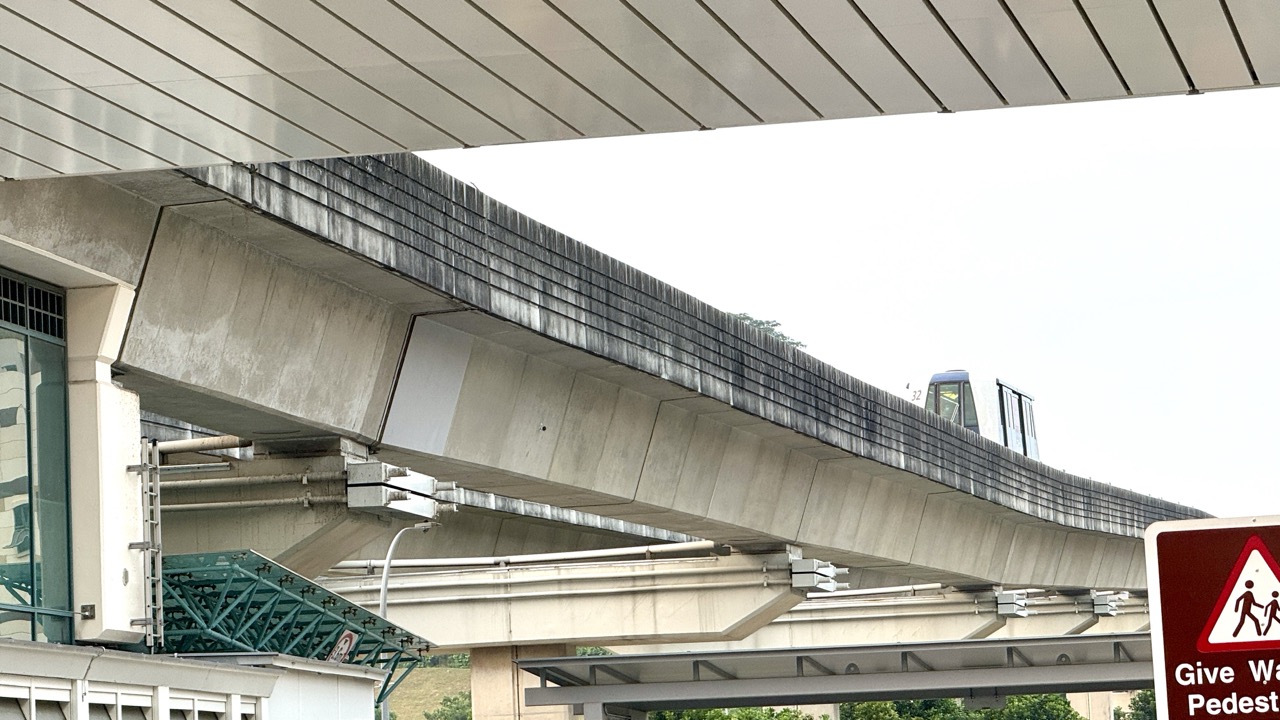
Quick answer, updated 23 October 2026: Riviera in Punggol East is planned to become an interchange between the existing Punggol LRT East Loop (PE4) and the future Cross Island Line–Punggol Extension (CP3). The 7.3-kilometre, four-station extension is targeted for passenger service in 2032 and will link Punggol, Riviera, Elias and Pasir Ris. That is not a claim that the underground Riviera station is open now, and it is not a guarantee of an exact opening month.
The practical change is easy to miss on a map. Today the LRT distributes commuters around Punggol’s neighbourhoods and feeds them toward Punggol MRT on the North East Line. When the new interchange is commissioned, people at Riviera could gain a second rail transfer into a line running toward Pasir Ris and the eastern corridor, instead of backtracking through the town’s central MRT station for every eastbound journey. It will not make every commute shorter, but it could give Punggol East residents a genuinely different choice.
The key numbers and what they really mean
| Question | Confirmed facts or correct interpretation |
| Existing stop | Riviera LRT station, PE4, on Punggol LRT East Loop |
| Future interchange | Riviera station CP3 on CRL–Punggol Extension; connection to the existing LRT planned |
| Other extension stations | Punggol, Elias and Pasir Ris |
| Length | Approximately 7.3 km, for the whole Punggol Extension, not only the segment at Riviera |
| Target opening | 2032, subject to the construction and commissioning programme |
| Engineering | LTA awarded the Riviera civil contract and describes a new underground station by Punggol East and Punggol Central |
| Travel-time illustration | LTA projected Punggol–Pasir Ris at about 15 minutes versus a then-estimated 40-minute bus trip; this is a corridor forecast, not a Riviera-to-Pasir-Ris timetable |
| What remains unconfirmed | Exact 2032 opening date, final station exit choices, fares at the future opening and live inter-station train times |
The Land Transport Authority’s live Cross Island Line project page still identifies 2032 as the target for the Punggol Extension. Its design and construction are in progress, so a resident should distinguish a temporary worksite or road diversion from a completed station entrance.
Why Riviera matters, rather than just Punggol MRT
The future line will connect to the North East Line at Punggol and the East–West Line at Pasir Ris. Riviera is different because it links an underground cross-island corridor to the existing local LRT loop. This creates a network benefit: residents who live near East Loop stations such as Coral Edge, Kadaloor or Oasis might eventually use the LRT to meet the Cross Island Line at Riviera, depending on their origin, direction of travel and the transfer layout at opening.
Today, journeys from Punggol East to a job in eastern Singapore may involve a bus or an LRT–MRT connection that first heads toward Punggol station. A future Riviera interchange adds another possible decision point. For travel toward Pasir Ris, Elias, Loyang or a corridor served by the eventual Cross Island Line, it may make more sense to enter the MRT at Riviera. For destinations westward on the North East Line, Punggol MRT could still be the better connection. One interchange should not be presented as the best route for all destinations.
A useful mental picture is of a local road meeting a trunk road. The LRT is the neighbourhood distributor; the CRL is the higher-capacity cross-regional rail corridor. The value comes when the change between them is clear, convenient and reliable. Future route quality will depend on walking distance inside the interchange, lift and escalator access, transfer information and train frequencies, details that should be verified closer to 2032.

Where does the extension actually run?
The planned sequence is Punggol (CP4) – Riviera (CP3) – Elias (CP2) – Pasir Ris (CP1). At Pasir Ris, the branch will connect with the main Cross Island Line, while Pasir Ris is also an interchange with the East–West Line. At Punggol, travellers can change to the North East Line, and at Riviera they can change to the Punggol LRT. Elias adds rail access to an area that has relied more heavily on buses. The extension is therefore not only a shortcut: it redistributes access to the network across several neighbourhoods.
The Cross Island Line itself is being built in phases. The first phase is intended to link eastern locations such as Aviation Park through Pasir Ris and onward to interchanges including Hougang, Ang Mo Kio and Bright Hill. Additional phases extend the line further west. It would be a mistake to claim every planned CRL segment will open together in 2032. According to the latest LTA information, Phase 1 targets 2030, Phase 2 and the Punggol Extension target 2032, and Phase 3 targets the late 2030s. These are related projects with distinct timelines.
For someone choosing a home, school or long-term job, this matters. The 2032 Punggol Extension may improve access to the eastern corridor well before later western-end segments are complete. A future line map can be accurate about its ultimate shape but misleading if it is treated as a fully usable network today.
How much time could people save?
LTA has published example savings for the corridor. In its October 2023 announcement, it projected Punggol to Pasir Ris at 15 minutes by rail, compared with around 40 minutes by bus under the then-current comparison. It also gave an example of Punggol North to the Loyang Industrial Area reducing from around 45 minutes by bus to 20 minutes by train. These are official planning illustrations, not promises that every door-to-door journey will match those figures.
That distinction is especially important for Riviera. A person at Riviera may not begin their journey at the same point used in LTA’s Punggol Central illustration. Their trip includes reaching the station, passing fare gates, waiting for trains, transferring where necessary and walking to the destination. The official 15-minute headline should not be relabelled “Riviera to Pasir Ris in 15 minutes” without a Riviera-specific source.
For a better family calculation, write out the full trip in segments. Estimate the walk from home to the LRT, platform waiting, LRT movement, change at Riviera, CRL journey, final walk and any buffer for congestion. When the line opens, replace guesses with the transport operator’s real timetable and accessibility information. The strongest benefit may be reliability and choice as much as raw speed.
What happens between now and 2032?
An underground rail interchange requires large-scale engineering before the public sees a station. LTA awarded the Riviera station civil contract in September 2022. It described an underground station near Punggol East and Punggol Central, phased traffic diversions and ground improvement to support safe excavation. The project also involves a large-diameter Earth Pressure Balance tunnel-boring machine to construct a 4.3-kilometre, twin-track tunnel section under the contract. None of this means the public can access the worksites.
Construction periods bring interruptions: footpaths can shift, junction layouts can be adjusted, and entrances to nearby businesses may be temporarily routed differently. Contractors and LTA may revise traffic arrangements in phases as excavation proceeds. Residents should respond to the latest signs and official notices rather than relying on a route memorised in 2023 or photographed in 2025. A safely fenced site is an active work area, not a walking shortcut.
It is also important not to confuse a roadwork milestone with an opening announcement. A visible tunnel launch or station roof does not establish that fare systems, passenger lifts, platform doors, signalling, ventilation and emergency procedures have completed the tests required for passenger service. Major rail projects have many interdependent stages, and an exact opening date is generally announced nearer completion.
What families near Riviera should do now
1. Keep planning journeys using the existing transport network
The existing Punggol LRT and buses remain the practical system for daily travel. If a child attends school in 2027, parents should calculate routes and transfers that function in 2027, not build a school routine around the projected 2032 interchange. The future project is useful long-term context, but it does not shorten tomorrow’s morning journey.
2. Understand both Punggol East Loop directions
LRT routes can feel complicated because the system operates circular loops with train services distinguished by route information. For an unfamiliar commute, always inspect the destination and route shown on the current platform display or an official journey planner. The eventual Riviera CRL interchange may make a particular East Loop stop attractive for eastbound travel, but the best LRT direction will still depend on how services are operated when CRL opens.
3. Observe pedestrian conditions near the construction area
A good neighbourhood-level task is to note which crossings, shelters and ramps remain safely usable after any diversion. Parents with strollers and residents using wheelchairs may be especially affected by temporary narrow routes or an extra crossing. Report damaged barriers, blocked pedestrian access or unsafe crossing arrangements through official channels; do not improvise through the site.
4. Build a realistic 2032 update checklist
Track the operator’s announcement on interchange exits, lift access, transfer direction, first and last train schedules, station opening and fares. The presence of a railway on a map is not enough to choose a route that fits childcare collection or an evening shift. Actual accessibility can make a meaningful difference to a family with limited mobility or a very young child.
5. Avoid making a major financial decision from one travel-time headline
A home purchase should account for affordability, remaining lease, household needs, existing transport, schools and local services. Future connectivity can be a benefit, but it is not a guaranteed rise in resale price or rent. Forecast savings do not establish a specific property’s value, especially years before trains operate. Use official planning information as one factor among many.
School runs may not change in the way parents imagine
Suppose one parent works in Pasir Ris while a child attends primary school in central Punggol. A future faster Punggol-to-Pasir Ris journey can make commuting more manageable, but the school run still occurs at a fixed time and may require a separate trip in the opposite direction. The family should compare the entire morning sequence, not simply the time spent between two MRT stations. A good route includes the possibility that a train or an elevator is temporarily unavailable.
For older students attending courses in the east, the extension could provide another transport choice. A student at a school or polytechnic served by an onward bus from Pasir Ris might eventually reach that bus interchange by rail from Riviera. This is a plausible option, not a promise of one-seat travel to any specific institution. Check the actual destination and service routes when enrolment occurs.
University and internship travel has similar complexities. Punggol Digital District and SIT are already reachable using current services, including Punggol Coast MRT on the North East Line. Riviera’s future Cross Island connection does not replace those existing links. It expands the network for people who are heading across eastern Singapore or approaching Punggol from the east.
Why the project could help working adults
The northeast is home to substantial numbers of people who work in business districts beyond Punggol. A rail link to Pasir Ris can be relevant to airport-area work, logistics, industrial estates, offices and services reached through onward connections. LTA explicitly points to growth areas including Punggol Digital District and Changi Aviation Park. However, a railway is not direct evidence that a particular employer will relocate or hire.
For a shift worker, travel-time variability is particularly important. Early and late journeys may not line up with rail operating hours, and a role could require travel to a workplace beyond the nearest station. The future extension could be a strong improvement for some shifts but not for others. Check first and last train times, bus feeder arrangements and the actual shift roster once the line is in service.
For a caregiver, choice of route can be valuable even when it is not the quickest on a normal day. If one line is disrupted, a connected network may offer an alternative. Network resilience is a legitimate potential benefit of an interchange. But it should not be overstated: a disruption at a key interchange or a separate line can still affect multiple routes.
A simple route-comparison exercise for older children
A secondary-school student can learn useful mathematics from the future Riviera interchange without relying on made-up fares. Start with two hypothetical routes for a 2032 journey. Route A has 8 minutes of walking, 5 minutes of waiting, 16 minutes in vehicles and 4 minutes of transfer. Route B has 5 minutes of walking, 11 minutes of waiting, 14 minutes in vehicles and 7 minutes of transfer. The first totals 33 minutes; the second totals 37 minutes. Although Route B spends less time moving in vehicles, it is slower overall.
Ask which variable is most uncertain. Waiting time can change from one day to another, and a missed connection can alter the result. What if a wheelchair user needs a lift route rather than stairs? What if the person has a stroller? This turns time calculation into a real problem about constraints and uncertainty. The figures above are purely illustrative classroom numbers—not train schedules for Riviera in 2032.
Extend the exercise by modelling time intervals rather than one number. If waiting at a stop varies between three and nine minutes, total journey time is also a range. The student can learn why a timetable, a median journey and a worst-case travel buffer answer different questions. These skills are useful in school Mathematics and real-world trip planning.
Accessibility: the most important unknowns
A new interchange should be assessed not only by its location on a map but by the quality of movement through it. A parent managing a stroller needs step-free access and lifts; someone with a vision impairment benefits from tactile guidance and clear announcements; a commuter with a mobility limitation may need a shorter level-transfer route. Even when a station has accessible infrastructure, walking distance and the arrangement of platforms can affect how easy a transfer feels.
LTA’s planning confirms the link between Riviera LRT and the CRL, but detailed opening-day operational guidance should come from the authorities rather than local speculation. It would be premature to publish the exact future lift entrances, the distance between platforms or a claim that one side of a road will offer the fastest step-free route unless an official detailed station plan supports it.
What the extension does not solve
A faster regional journey cannot eliminate every transport problem in Punggol. People may still be far from an LRT station; some jobs may be inconvenient by rail; childcare and shift timing may limit how useful a connection is. The project’s construction can also temporarily make certain local walks longer before the permanent public infrastructure is ready. A useful assessment therefore compares the longer-term benefit against current disruptions without assuming either is permanent.
The extension is also not a replacement for safe streets. Pedestrian crossings, sheltered paths, cycle parking, neighbourhood buses and clear signs remain important at both new and existing stations. A rail system works well when the first and last segments of the journey work well too.
A 2032 decision framework for Riviera-area residents
| If your priority is… | Focus on this |
| A job in Pasir Ris or eastern Singapore | Look for official CRL opening, travel times, interchange walking and onward local transport |
| A child’s school journey | Use routes available for that school year; review future rail options only after they are operational |
| A parent with a stroller | Step-free transfer guidance, lift locations and station crowd management |
| A frequent airport-area worker | Actual onward connections and shift-time first/last trains, rather than assuming a direct airport train |
| A home purchase | Affordability, present-day needs, physical location and independent financial checks |
| An elderly family member | Walking distance, shade, access alternatives and reliable rest opportunities |
| A local merchant | Verified construction notices and eventual observed customer movement, rather than projections |
Frequently asked questions
Will Riviera LRT become an MRT interchange?
Yes. The Cross Island Line–Punggol Extension is planned to connect at Riviera, adding the future underground CP3 station beside the existing Punggol LRT PE4 stop. Passenger service is targeted for 2032.
Is Riviera CRL already open in October 2026?
No. The underground station and extension are under construction. The existing LRT station continues to operate according to the current network arrangements.
Which stations are on the Punggol Extension?
Punggol, Riviera, Elias and Pasir Ris. The line will connect to the North East Line at Punggol, Punggol LRT at Riviera and the East–West Line at Pasir Ris.
How long will Punggol to Pasir Ris take?
LTA’s planning example gives approximately 15 minutes by rail, compared with a 40-minute bus journey under the baseline used in its announcement. Door-to-door time and journey conditions may differ.
Does the 15-minute estimate apply to Riviera?
Not as a published Riviera-specific timetable. Do not substitute a corridor-level Punggol-to-Pasir Ris example for a precise journey that begins at Riviera or an individual home.
Is there a confirmed date in 2032?
The year is a target for the extension. An exact passenger-opening day should only be treated as confirmed when LTA or the relevant operator issues an official notice.
Will a new interchange remove the need for Punggol MRT?
No. Punggol MRT is still an important interchange with the North East Line and the other end of the extension. The best transfer depends on destination and the local route from home.
Where is the future Riviera station being constructed?
LTA identifies the site along Punggol East and Punggol Central, with road traffic and site works managed in phases. Use current traffic and footpath signs rather than entering fenced work areas.
Will the CRL make property values go up?
No specific change is guaranteed by the rail announcement. Property decisions depend on many factors including price, lease, demand, financing and the actual convenience delivered by the finished network.
Official sources and local reading
- Land Transport Authority: Cross Island Line project page — current phases, interchange plan and 2032 target.
- LTA: Construction of CRL–Punggol Extension commences, 10 October 2023 — corridor benefits and travel-time examples.
- LTA: Riviera station civil contract, September 2022 — location and engineering arrangements.
- LTA: Next Phase of Rail Development, March 2026 — updated phase progress and target dates.
- Ministry of Transport: Punggol Extension groundbreaking speech — benefits for residents and planned time savings.
- eduKatePunggol: Cross Island Line Punggol Extension overview — full route background.
- eduKatePunggol: Living near Riviera LRT — existing neighbourhood context.
- eduKatePunggol: Stations along Punggol LRT East Loop — explore the current local system.
Editorial status as of 23 October 2026: CRL Punggol Extension’s 2032 date is a planned completion and passenger-service horizon, not a confirmed date of sale of tickets or public access to an underground worksite. Photographs show the current Punggol LRT network and are labelled accordingly; none is passed off as a photograph of the unfinished Riviera CRL station.


