
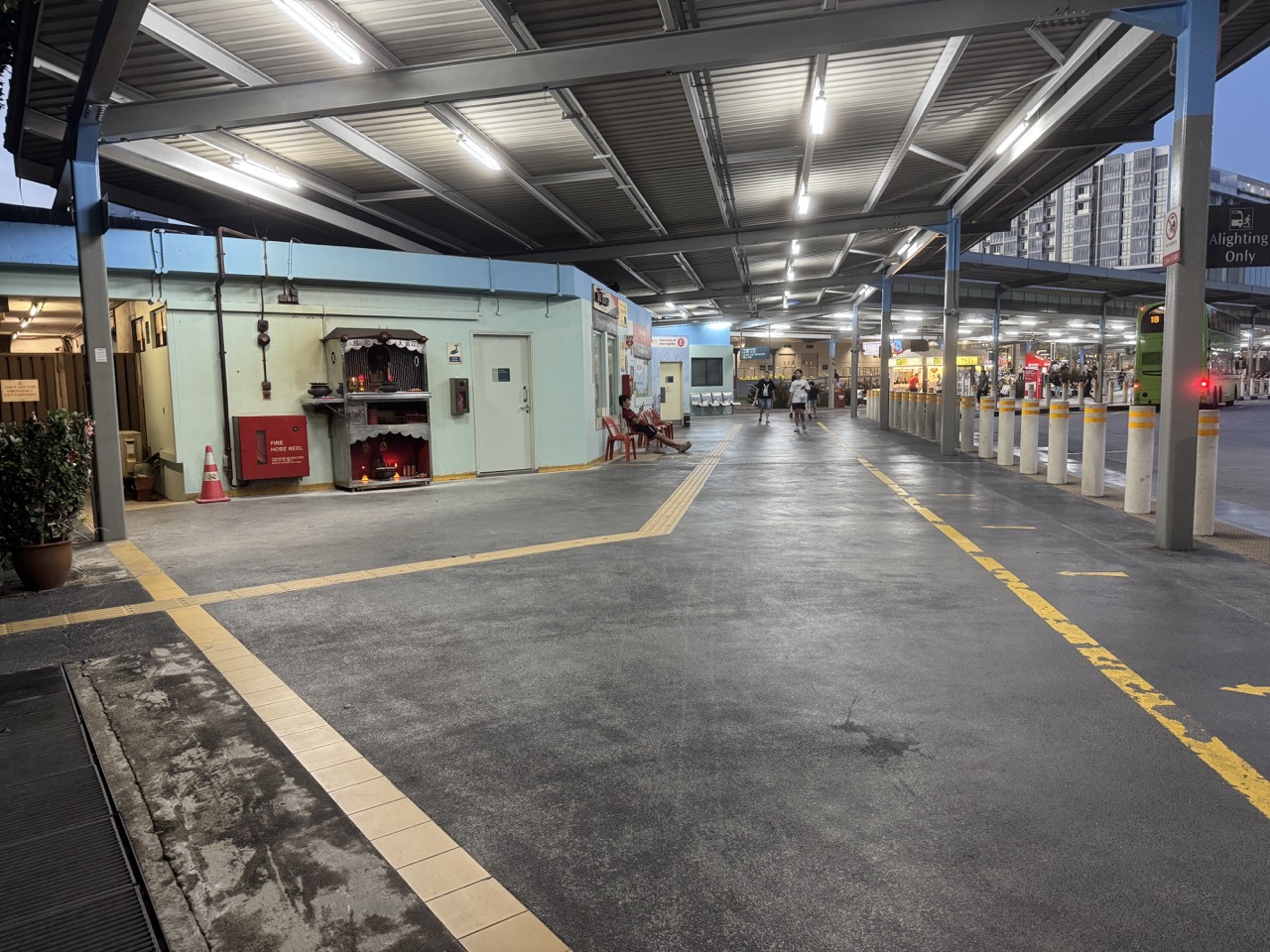
Punggol’s established town-centre bus interchange is scheduled to join a nationwide facility upgrade programme beginning in 2027. LTA’s plans centre on the practical experience of waiting, caring for children, navigating with disabilities and supporting frontline staff. The new work is distinct from the already operating Punggol Coast Bus Interchange.

The answer first: Punggol is in LTA’s 2027 renewal programme
Updated 23 October 2026. The Land Transport Authority announced on 18 August 2026 that enhancement works will begin in 2027 at six bus interchanges: Bishan, Bukit Batok, Bukit Merah, Eunos, Punggol and Tampines. The stated goals are a more comfortable, accessible, family-friendly and inclusive commuting experience, alongside better working conditions for frontline staff. The announcement identifies a project start year—not a completed floor-by-floor plan or confirmed finishing date for Punggol Bus Interchange.
The programme includes categories of measures such as improved lighting and ventilation, priority queuing, more seating, family and baby-care facilities, accessible toilets, commuter care rooms, tactile guide paths, Braille handrail signs and refurbished staff amenities. Do not assume that every individual feature has been confirmed for every one of the six interchanges. LTA’s release states the types of improvements across the programme, while site-specific implementation details must come from actual works notices.
For Punggol residents, the immediate value of the news is practical. The town centre interchange connects bus users with Punggol MRT and LRT, serving commuters making everyday school, work and household journeys. A family with a stroller or an older adult who needs a seat may experience an upgrade very differently from a regular passenger simply changing routes. This guide explains how the announced future works may affect those different users without inventing an opening day or unapproved internal layout.
Know which Punggol interchange is being upgraded
The affected site in LTA’s August 2026 list is Punggol Bus Interchange, the established town-centre facility beside Punggol MRT/LRT at Punggol Place. It is not the same as Punggol Coast Bus Interchange, the integrated transport facility that opened on 29 June 2025 near Punggol Coast MRT, SIT and the digital district.
That distinction matters because both interchanges are now part of Punggol travel. A person arriving for a bus that starts at the town centre can be sent to the wrong place if someone casually calls both facilities “Punggol interchange”. An improvement announcement for one should not be republished as a notice of closure or renovation at the other.
Older signs and historic photographs may still include the word “Temporary” in the Punggol town-centre interchange name. The facility itself continues to operate and is specifically identified in LTA’s newer upgrading programme. Our separate interchange comparison guide owns the route-location distinction; the present article covers the future inclusive-renewal measures.
Why a bus interchange is more than a waiting room
A bus interchange is a workplace, transfer point and public-facing service facility. Bus captains need safe movement and rest facilities; passengers need clear queues, accessible routes, suitable seating and understandable information; support staff need a way to assist someone who has lost their bearings or requires additional care.
The quality of those everyday interactions can determine whether an otherwise convenient network is manageable. A person who can travel on an accessible bus may still struggle if the route between a taxi drop-off, information desk and boarding queue has obstacles. A child on the way to school may need easy-to-read boarding information more than an attractive ceiling.
This is why LTA’s announcement groups building systems, passenger inclusivity and staff welfare together. A successful upgrade needs those pieces to function as one service environment, not as unrelated installations chosen for a promotional photograph.
Priority queue zones: who might find them useful?
The programme identifies priority queue zones among the inclusive features to be enhanced. The intention is to make bus boarding more manageable for commuters who need additional assistance, such as persons with mobility limitations, pregnant commuters and some older adults. The exact eligibility signs, placement and boarding practice should be confirmed on site after works.
Priority arrangements work only when other passengers respect them and when signage makes their purpose clear. A commuter should not push forward assuming priority without checking the rules, while staff need suitable discretion to manage people whose need may not be immediately visible. Disability and care needs are not always obvious from appearance.
A school learning journey can use this topic to discuss design for different users: fairness does not always mean everyone requires exactly the same waiting arrangement. It means creating an orderly way for people to board safely.
Why more seating matters
Waiting areas serve people of different ages and abilities. A healthy adult can usually stand comfortably for a short period, but another commuter may have pain, fatigue or difficulty maintaining balance. More appropriate seating, where provided, can reduce the pressure to sit on unsafe ledges or leave the queue just to rest.
Seating needs careful location. Placing benches in the middle of pedestrian flow can create obstructions for wheelchair users, stroller users or passengers walking quickly between services. A good design provides resting opportunities while preserving clear routes to boarding points and services.
LTA’s programme announcement does not publish the exact number or model of new seats at Punggol. A future local audit should count actual seats and assess their accessibility, rather than claiming that a particular quantity has already been approved.
Baby-care and family washrooms: a real mobility concern
Parents travelling with infants may need a safe place to change a baby, while a caregiver assisting a family member might need additional room and privacy. LTA identifies baby-care and family washroom facilities among its upgrading measures. These facilities can make public transport more practical for households that otherwise plan around a mall or another nearby venue.
But a sign marked ‘family’ does not answer every practical question. Access to changing facilities, hygiene, emergency support, queueing and whether a caregiver can accompany another person all depend on the actual design and operating policy. Families should confirm availability at the upgraded site when the features are commissioned.
The programme improves the possibility of a supportive environment. It does not guarantee that every type of care requirement can be handled in one room.
Commuter care rooms: a space that needs sensitive management
LTA lists commuter care rooms among the inclusive facilities in the six-interchange enhancement programme. Such spaces can support travellers who need particular assistance, such as someone feeling overwhelmed or requiring a more private place for care. The exact permitted uses and staffing arrangements will be defined by the responsible operator.
It would be misleading to describe a commuter care room as a medical clinic or a guaranteed childcare service. If someone has a life-threatening medical emergency, appropriate emergency services remain necessary. A care room provides a facility within a transport interchange; it does not replace a hospital or formal assessment of health needs.
Good care design requires discreet signs, thoughtful location, privacy and staff who know how to assist respectfully. Its quality cannot be measured solely by whether a door with a new label appears during renovation.
Wheelchair-accessible toilets: how to assess more than the sign
An accessible toilet requires the right dimensions, clear approach path and functional fittings. Simply installing an accessibility symbol is not enough if a stroller, wheelchair or mobility aid cannot reach the entrance, turn or use the fixtures safely. LTA’s renewal programme names wheelchair-accessible toilets as a category of improvement.
A caregiver planning a journey may also need to know whether the toilet is open during the hours required and whether its entrance is unobstructed. A feature that is available only during part of a construction period may be unsuitable for an essential trip. Current signs and operator information should always prevail.
Once works are complete, a useful independent review will document the actual step-free route and usage rules. It should avoid photographing people inside care or sanitation spaces or making intrusive judgements about disabilities.
Tactile paths and Braille signs: design that communicates differently
The programme includes tactile guide paths and Braille signs on handrails. These are significant because not everyone navigates by reading large overhead signs. Tactile surfaces can provide guidance to some visually impaired commuters, while correctly placed Braille information can communicate information in another accessible format.
These features need continuity and accurate alignment. A tactile route that stops at an obstacle, leads ambiguously across a crowded space or is blocked by furniture may perform poorly despite being newly installed. Building management and passengers both have a role in keeping the designated paths usable.
A sighted resident should not assume that touching a tactile tile briefly reveals how a blind person experiences a journey. The best design process includes consultation with people who use the facilities and appropriate specialist expertise.
Lighting: visibility, energy use and comfort
LTA says lighting systems will be upgraded to improve passenger comfort and energy efficiency. Well-designed lighting helps commuters see route information, changes in level and other people. At night, it can affect the feeling of being able to move safely without excessive glare.
Energy-efficient lights also need suitable placement. A bright fixture that creates reflections on a display may make information harder to read, while uneven lighting can leave important corners unclear. The total operating effect depends on controls, maintenance and the amount of light that is actually needed.
An article should not claim a particular percentage of energy savings at Punggol without verified before-and-after measurements. The announcement establishes an intent to improve systems, not a completed operational audit.
Ventilation and air-conditioning: the experience of waiting
Singapore’s heat and humidity make waiting-area comfort important, especially for seniors, children and people travelling during hot afternoons. LTA has identified replacement or upgrading of air-conditioning and ventilation systems among the programme measures. The aim includes comfort and energy efficiency.
A change in equipment does not necessarily mean every queue or walkway will be enclosed and air-conditioned. Interchanges have different layouts and airflow requirements. A practical evaluation should consider the actual waiting zones and the routes between them, including whether heat and rain protection are sufficient.
During construction, temporary ventilation or cordoned areas may affect comfort. LTA has said the works will be phased to minimise disruption, but individual commuters should check live signs rather than infer that nothing will change.
Why the bus captain’s workplace is part of commuter service
The renewal programme includes refurbishment of passenger service offices and staff lounges. These are not simply hidden amenities unrelated to passengers. Frontline staff must manage route enquiries, unexpected delays, accessibility needs and the practical requirements of operating public transport.
A workplace that supports adequate rest and effective communication can help staff carry out their duties. The exact effect on service reliability is not established by the renovation announcement, but the operational logic is sensible: a large interchange needs appropriately supported people as well as visible passenger facilities.
Readers should not assume a new lounge implies longer breaks, fewer trips or a change in staffing levels. Those are separate operating decisions for employers and transport authorities.
Phased construction in 2027: what it means for your journey
LTA says enhancement works at the six interchanges will be carried out in phases to minimise disruption to bus services. That is a commitment to managing the project, not a guarantee that every queue, toilet and walkway remains in its original position throughout construction.
Passengers may need to follow temporary pedestrian routes or boarding signs in areas where work takes place. But no specific Punggol bay relocation or temporary interchange closure has been established by the August announcement. Publishing invented bay changes would risk sending commuters to the wrong place.
A sensible household routine is to check current operator notices near a trip, allow time for changed wayfinding and rely on staff directions when the physical environment is different from an older photograph.
What the 2027 start date does not tell us
The August 2026 release says works begin in 2027. It does not specify a day or month for the Punggol site, a total duration, a confirmed completion year or a final layout. Another group of bus interchanges being upgraded under an earlier programme is on track to complete in 2027; that should not be misread as the completion target for the new Punggol group.
For future reporting, each date should be attached to the correct programme. Starting in 2027 is different from finishing in 2027. A procurement notice or contractor mobilisation would also be separate evidence from full public reopening of newly installed facilities.
A reliable local guide should mark the first confirmed site works and later commissioning notices when they are actually published, leaving present unknowns clearly labelled.
Why older interchange photographs are useful but limited
The eduKatePunggol media archive includes photographs of passengers waiting and buses boarding or alighting at the current town-centre interchange in October 2026. Such photographs are valuable because they document the pre-upgrade environment, signage and everyday use of the space.
However, a photograph does not prove the future interior arrangement, how many priority queue spaces will be added or the new ventilation specifications. Those details require plans or observation after the work is completed. A dated photograph should be used as historical evidence rather than passed off as a 2027 completed rendering.
When a local article eventually compares before and after, photographs should use accurate dates and similar vantage points where safe and permitted.
School journeys: preparing children for temporary changes
A primary-school pupil may know exactly where the bus queue begins today. Construction can alter that mental map, making a clear plan important. Caregivers can practise reading route signs, identify the passenger service office and explain whom a child can ask if the boarding point changes.
A child should not be encouraged to cross staff-only or bus-only lanes as a shortcut. If a familiar queue is blocked, follow temporary public signs and ask an authorised staff member. For young children, an adult may need to accompany them until the changed route becomes familiar.
These routines have value even if the interchange works proceed without moving the family’s usual bus bay. They teach calm response to an unfamiliar public environment.
A senior’s route: from MRT to bus
An older resident may transfer from Punggol MRT to a neighbourhood bus. The complete journey includes concourse travel, any level change, signs, seating and the final boarding step. Better amenities can help only if the path between them remains clear and manageable.
Before a medical appointment or another time-sensitive trip, the family can make a practice visit and record where an accessible route is actually available. During the upgrade, check temporary directions rather than relying on past habits. The goal is a journey that preserves independence and dignity.
The eventual facility should be assessed against these real journeys rather than only the count of newly installed signs.
A parent with a stroller and two children
Imagine a parent carrying a bag, pushing a stroller and accompanying a school-age child. They need a safe route without awkward stairs, a place to wait without obstructing others and clear information about the correct service. If a family room becomes available, it may help with a baby-care need, but it should not become a substitute for supervising children in public areas.
The parent can plan an alternative route to nearby facilities during construction if a particular room is temporarily closed. Such flexibility matters during a phased renovation. No one should interpret the programme as guaranteeing that a new baby-care room will be available on every trip from January 2027 onward.
The design question is how several small decisions—signage, seating, path width and access—combine to make one ordinary outing manageable.
A person who finds busy environments overwhelming
Some commuters experience significant difficulty navigating noise, crowds or unfamiliar layouts. Clear signs and orderly queuing can help, while a commuter care room might offer an appropriate support setting under the operator’s eventual rules. The goal is respectful assistance rather than public scrutiny of why someone needs help.
A caregiver can prepare a simple route note showing entrances, service number and where to seek assistance. During construction, changes should be communicated clearly and checked shortly before travelling. Accessibility sometimes means predictability as much as a ramp or toilet.
It is not appropriate to diagnose a commuter’s condition from how they behave in a queue. Staff guidance should preserve privacy and dignity.
What frontline staff may need during the works
Staff will be expected to serve passengers while the physical environment changes in phases. Clear procedures, internal communications and manageable temporary arrangements are important. A passenger may arrive with an outdated photograph and ask for a queue location that no longer exists; staff need reliable current information to redirect them.
The public can help by allowing extra time and following posted instructions instead of creating unofficial shortcuts. However, the operator is responsible for providing appropriate directions, especially for users with accessibility needs. A renovation should not depend on every commuter already knowing an unfamiliar temporary route.
A thoughtful public guide can document only officially confirmed changes and direct people to live announcements when bay arrangements are uncertain.
How to judge whether a priority queue works
A priority queue is successful when those intended to benefit can find and use it, the process remains orderly and other commuters understand what to do. A brightly marked area may underperform if it is far from accessible paths or staff cannot explain how boarding works. The test is functional, not decorative.
A school Social Studies project can examine the principles of fairness and universal design using public explanations of transport accessibility. It should not observe or record individual passengers’ disabilities or personal needs without consent. Designing for vulnerable users requires empathy and respect.
Once the new interchange features are in operation, official user feedback and carefully described observations can provide useful evidence of their performance.
How to evaluate ventilation and lighting after completion
A meaningful performance assessment could compare comfort, maintenance reliability and electricity use over suitable periods. It should account for outdoor temperature, occupancy and operating hours. One hot afternoon or one photograph of a bright ceiling does not prove the system is effective or energy-efficient.
The new equipment may make the interchange feel different from the older facility, but operational tuning and maintenance matter after installation. A report that documents both design intentions and later measured results offers greater public value than declaring a renovation successful on opening day.
The work can also introduce students to how engineering affects daily life beyond glamorous bridges and trains.
A worked example: choosing the correct interchange
A student plans to visit a programme at the Punggol Digital District, while a parent intends to take a bus from the older Punggol town-centre facility. The names are similar, but the trips begin at different interchanges. LTA’s 2027 renovation at the town-centre Punggol Bus Interchange does not automatically apply to Punggol Coast’s existing integrated transport hub.
Before departure, both should check the service number and boarding location through a current transport source. The route from Punggol MRT to the town-centre interchange is not the same as the route from Punggol Coast MRT to its bus interchange. Clear naming avoids the mistake without assuming either facility is permanently ‘temporary’.
A short exercise in school can ask students to label the two transport nodes accurately and explain what makes an interchange different from an MRT station.
A practical commuter checklist for 2027
Check whether the work has actually started at Punggol, then look for current signs relating to entrances, boarding bays, toilets and accessible routes. Distinguish temporary arrangements from the intended final layout. Allow a buffer for a time-sensitive connection or school arrival, and use an official journey planner for current services.
If a required accessible facility is closed, ask staff for the available alternative instead of assuming another signed route is step-free. If an area is cordoned off, do not move barriers or cross vehicle circulation lanes to reach a familiar queue.
The goal is to keep daily journeys working safely while public infrastructure improves.
Four questions residents can use to provide useful feedback
Where does a passenger become confused? Which route is difficult for someone using a stroller or mobility aid? Is there enough seating without blocking pedestrian flow? What happens when a care facility is temporarily unavailable? These questions are more actionable than simply stating that the interchange should look newer.
A feedback report should describe the exact place, direction of travel and time observed. Use the relevant operator’s or LTA’s official channels. Avoid publishing identifiable images of vulnerable passengers to make a point about design.
Public feedback is strongest when it focuses on the function of an amenity and proposes a practical change.
Frequently asked questions
When do the Punggol upgrades start? LTA said the six-interchange programme begins in 2027; a specific Punggol start date must be confirmed later. Is Punggol Coast Bus Interchange involved? The announcement names the older Punggol Bus Interchange, not Punggol Coast. Will services stop? LTA said works will be phased to minimise disruption, and did not announce a blanket closure.
Will Punggol definitely receive every listed feature? The measures are listed for the six-interchange programme; exact site-specific provision needs confirmation. Is there a confirmed finishing date? Not in the August 2026 release. Will the buses change numbers? No general service renumbering follows from the building upgrade announcement.
Are wheelchair-accessible toilets and care rooms included? They are among the announced inclusive-facility categories. Will fares change? The renovation statement does not establish a fare change. What should passengers do during works? Follow site notices and ask authorised staff if a boarding location is unclear.
A future family-room audit that respects privacy
When a family washroom or baby-care facility becomes available, practical usability matters more than a glossy photograph. A caregiver may need to manoeuvre a stroller, keep a child in sight and reach fittings safely. The room should have understandable directions from the waiting area and a layout that does not force users into a staff corridor. A good evaluation can note signage, route continuity and operational hours without intruding on anyone’s privacy.
This is especially important during a phased renovation. A room may be finished but not yet commissioned, or an existing facility may be temporarily unavailable while work continues. Families should follow the operator’s actual directions rather than depend on a planned amenity list. A later published visitor guide can document the accessible approach once it has been verified.
The quality of an inclusive facility is how well it serves people with real needs—not whether the building can announce the installation of a new door.
What an effective commuter care room should communicate
A care room may sound self-explanatory, but its usefulness depends on information about whom it serves and how assistance can be requested. A visitor in distress should not have to guess whether the room is available, what privacy is offered, or whether a staff member can help. The responsible operator needs to define the permitted uses and guide staff appropriately.
For public reporting, it would be wrong to promise that the Punggol room will provide counselling, medical treatment or dedicated childcare without an official notice. Those are separate services requiring specific expertise and arrangements. A labelled room can provide a supportive environment while leaving its scope narrower than those activities.
Residents can ask whether signs and help points are accessible, but they should not record or publicise identifiable users of the facility to illustrate a complaint. Privacy is part of inclusive design.
A real-world transfer audit from bus to train
A bus–rail interchange works as a sequence. A passenger leaves the bus, identifies the MRT or LRT route, travels through the pedestrian environment and reaches the correct platform. If one part of that process is unclear or physically difficult, the presence of a new toilet or information desk may not resolve it.
After the works, an audit could follow several lawful routes from a bus bay to Punggol MRT and record points where someone with a stroller or mobility aid might need an alternative. It should note resting opportunities, lifts where available and the consistency of signs. Any journey-time comparison should use the same origin, destination and suitable day.
The objective is to assess whether a complete trip has become more comfortable. Transport integration is experienced one step at a time rather than through the interchange’s official name.
Why construction notices need a clear date
When a work area changes, the operator may introduce a temporary route or move a waiting point. An undated photograph of the old route can then become misleading even though it accurately represented the earlier arrangement. Local media and community groups should put dates on such information and update it when conditions change.
A responsible post should say “as of this date” and specify which section or service is affected. It should avoid making blanket claims about the whole interchange when only one corridor has been closed. If later notices revise the arrangement, the newer operating guidance should take precedence over an older static map.
This matters most for travellers with little time to improvise, including children making school connections and people who require a step-free route.
An accessibility workshop for Punggol students
A class can study the future interchange through published LTA materials without interfering with commuters. Students could draw two fictional versions of a waiting area: one with seating that obstructs the tactile path and another that preserves clear circulation. They can discuss how those choices affect different users, including a parent with a stroller and someone who relies on tactile guidance.
The exercise does not require students to imitate a disability or make assumptions about how a particular person lives. Better learning comes from listening to appropriate disability-access resources and applying the principles respectfully. Explain which features come from the actual LTA programme and which elements are student proposals.
An inclusive-transport project can teach design, ethics, measurement and clear English communication, all without claiming access to confidential interchange plans.
Staff welfare and resilience in busy periods
A public transport facility can face sudden pressure when rain begins, a train service changes or an event sends many passengers toward the same bus bay. Frontline staff then need clear information, working communications, somewhere to manage enquiries and appropriate rest arrangements across shifts. Refurbished staff facilities may support that operating environment, although the specific effect at Punggol should be assessed after completion.
Passengers also play a role. Following instructions, keeping accessible paths clear and treating staff respectfully reduce friction when a journey is disrupted. This is not a reason to excuse poor communication from an operator; users still deserve clear, current guidance. It recognises that a transport system is a partnership between infrastructure, workers and road users.
The inclusion of staff amenities in LTA’s renewal programme shows that improving public transport is as much about maintaining service capability as replacing visible finishes.
How the upgrade differs from new bus service planning
An interchange renovation changes the environment through which existing and future buses operate; it does not itself publish a new route, timetable or fare. LTA separately adjusts bus routes and service levels in response to changing demand. For example, Service 381 was extended toward Punggol Coast in September 2026 under a different connectivity initiative. That should not be presented as a consequence of the future 2027 facility refurbishment.
This distinction helps residents evaluate change correctly. A passenger might benefit from a new bus route before any building work begins, while another may encounter temporary interchange diversions when the renovation starts. Their journeys involve related but separate programmes.
When planning a future trip, consult a current bus service listing and then check any local facility works notices. Do not use the interchange renovation article as a bus schedule.
An evidence checklist for the first completed phase
When LTA or the operator confirms an upgraded area is ready, the next report should identify exactly what was delivered. Are new priority queue zones operating? Are tactile paths continuous to useful destinations? Are family facilities available, and how can someone request a commuter care room? Which waiting areas received lighting or ventilation improvements?
A writer should not answer these questions by assuming the national programme list became an identical package at every interchange. Each claim needs the relevant site evidence. If only one phase has opened, report it as one phase. If a feature remains under construction, retain its future status.
This creates an honest record of the improvement as residents actually experience it.
Bus and LRT renewal belong to different timetables
The LRT system is being renewed through a 2027 depot expansion and a longer-range plan for 41 two-car vehicles by 2030. The bus interchange programme, by contrast, concerns inclusive amenities and staff facilities and is scheduled to begin in 2027. Their dates should not be conflated, even though a commuter may use both facilities on one journey.
Our separate Future of Punggol LRT fleet guide explains the train purchase and shared depot. Read that alongside this interchange article when planning the longer-term changes to a bus-to-rail trip, while continuing to use today’s operating timetables.
Official sources and related local guides
The primary source is LTA’s 18 August 2026 six-interchange enhancement announcement. For the separate Punggol Coast facility, see LTA’s integrated transport hub overview and its June 2025 opening information. These are the official sources for the different sites.
For the present town-centre bus environment, see the existing photo-based Punggol Bus Interchange guide. For avoiding a wrong terminus, read Punggol versus Punggol Coast Bus Interchange. This Future of Punggol article uniquely explains the 2027 programme’s inclusive-design implications, not today’s bus departure list.
Editorial boundary: Future site-specific amenities, phasing and completion require later official confirmation. The included archive photograph documents Punggol Bus Interchange before its 2027 enhancement, not a completed renovation.
| Item | Grounded status |
| Project owner | Land Transport Authority |
| 2027 milestone | Works at six interchanges, including Punggol, will begin |
| Station affected | Punggol Bus Interchange, town centre |
| Separate station | Punggol Coast Bus Interchange opened June 2025 |
| Programme features | Improved lighting/ventilation, accessibility, family facilities, commuter care and staff amenities |
| Works approach | Phased to minimise service disruption |
| Not confirmed | Punggol-specific allocation of every facility or a final completion date |


