
Singapore’s Ministry of Education announced a six-school classroom redesign pilot starting in 2027. It will explore how smaller classes where appropriate, changes to teachers’ non-classroom duties, learning-space design and technology can support better learning. The important Punggol fact is easy to miss in a headline: none of the six named pilot schools is in Punggol. The 2027 trial is a national education development to watch, not an announced immediate reduction in class sizes at Punggol Primary or Secondary schools.

The pilot schools reported after the 16 September 2026 Schools Work Plan Seminar are St Anthony’s Canossian Primary, Woodgrove Primary, Zhangde Primary, Commonwealth Secondary, Deyi Secondary and Jurongville Secondary. These names help families distinguish a confirmed experiment from an assumption that every Singapore school will change its timetable or staffing in January 2027.
So why does the pilot matter to Punggol? It tests ideas that may influence future classroom practice after evidence is collected. Punggol families can learn what a successful redesign would involve, how to interpret eventual MOE announcements and which improvements they can reasonably discuss with their own schools now. This guide explains the actual proposal, its limits and what a learner’s experience—not simply a classroom headcount—should tell us.
What MOE Said in September 2026
At the Schools Work Plan Seminar on 16 September 2026, Education Minister Desmond Lee outlined a plan to explore classroom redesign and reduce unnecessary burdens on teachers. MOE’s official press release was titled Redesigning Classrooms, Reimagining Learning: Strengthening Students’ Holistic Development. Major Singapore news organisations also reported the pilot and the names of the six schools.
One focus is whether more students may benefit from smaller classes when the educational purpose justifies the resources required. Another is whether teachers can focus on fewer competing responsibilities outside classroom teaching. Reports described a possible approach in which teachers concentrate on two of the three major areas of form-teacher duties, co-curricular activities and committee work, rather than routinely carrying all three.
The pilot also involves looking at learning environments and support for the teaching role, including flexible spaces, non-teaching staff and appropriate technology. These ideas belong together. Reducing a class by a few learners is not a complete redesign if the teacher’s time, classroom methods and support systems remain unchanged.
The trial is planned to begin in 2027. The specific results, later extension, revised national class-size policy and timetable for Punggol schools have not been established by the information used here. Treat those as unknown until MOE publishes findings or operational decisions.
Which Six Schools Are in the 2027 Pilot?
The named Primary schools are St Anthony’s Canossian Primary School, Woodgrove Primary School and Zhangde Primary School.
The named Secondary schools are Commonwealth Secondary School, Deyi Secondary School and Jurongville Secondary School.
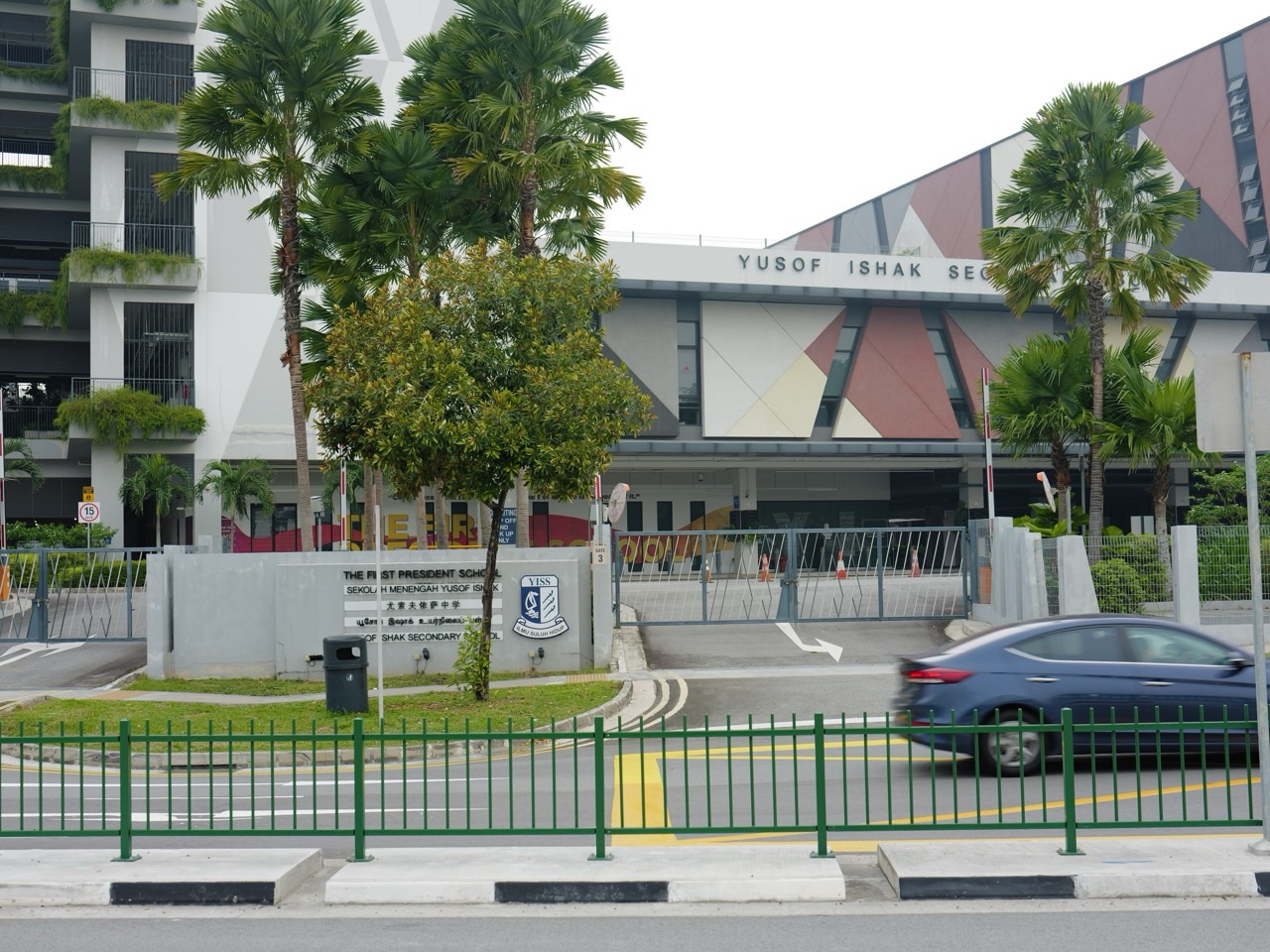
These six names matter because proximity and shared school stage are not enough to establish participation. Punggol View Primary, Edgefield Primary, Punggol Cove Primary, Oasis Primary, Punggol Secondary, Edgefield Secondary, Greendale Secondary and Yusof Ishak Secondary are not on that announced six-school list.
That statement does not imply these Punggol schools lack differentiated teaching or smaller teaching groups for particular needs. Individual schools can have existing subject-level, support or programme arrangements within current policy. It means only that they are not among the schools named in this particular 2027 redesign pilot.
An honest local guide should not dress a national trial up as a Punggol campus opening. If a new school or extra pilot site is later announced, its own official notice should establish that change.
Why Smaller Class Size Attracts Attention
Parents often notice when a child sits among many others and struggles to ask a question. A smaller class may create more opportunities for the teacher to notice misconceptions, hear explanations and adjust practice. However, the educational value depends on what happens with the time and resources.
Imagine a classroom in which twenty students understand a new topic while a smaller group is confused about a basic step. Simply presenting the same explanation to everybody more slowly may not help the confident learners or the group with a specific gap. A redesign could enable the teacher to identify the misconception and provide targeted help while other students practise independently.
But this requires thoughtful task design and appropriate staffing. An empty desk does not teach algebra. If class numbers fall but lessons remain dominated by copying answers, students may not gain the expected improvement. Conversely, a larger class with strong teaching and effective feedback can support meaningful progress, even though individual needs may be harder to identify.
The aim should be to create conditions for better instructional decisions rather than make class size a competition between schools. The actual measure is whether more students understand, participate, retain and apply what is taught.
What ‘Where Needed’ Means for Interpretation
News reports of the pilot say MOE will explore smaller classes where they could make the greatest difference. That language is narrower than a rule requiring every class to be the same new size.
Different subjects and learning activities place different demands on teachers. A group exploring literary inference might benefit from structured discussion. A practical Science activity requires attention to safety, equipment and supervision. A learner who struggles with decoding may need a short targeted reading session. A student prepared for extension may need difficult, unfamiliar problems with feedback on reasoning.
There is no responsible basis to claim that MOE has already chosen one universal ‘ideal’ number of students for every Punggol class from 2027. Such a number would need to be published and explained in the relevant official announcement.
As the evidence emerges, parents should ask what the pilot changed in practice. Was a smaller group created for a clearly defined learning need? Did teachers receive more time to plan and assess? Was the classroom routine different? Did students who were previously quiet begin participating? These questions explain educational effect more fully than a headline number.
The Second Half of the Pilot: Teachers’ Other Responsibilities
A school teacher’s job includes teaching, but the working day may also involve pastoral care, CCA guidance, administrative committees, parent communication, assessment design, marking, collaboration and professional development. Time spent on one task competes with time available for another.
The 2027 pilot will explore ways to focus teachers’ major non-classroom roles. Public reports describe a study of whether a teacher could concentrate on two of three broad duty categories—form-teacher responsibilities, CCA duties and committee work—rather than having all three as substantial ongoing commitments.
This does not mean that students stop receiving form-teacher care or that CCAs disappear. It concerns the distribution and management of responsibilities. An appropriate system still needs adults accountable for student wellbeing, activities and school operations.
A parent looking ahead should be interested in whether clearer allocation of roles allows better feedback, more coherent support and sufficient teacher preparation. The mere removal of a job label would not be useful if the underlying work is simply transferred invisibly to someone already overloaded.
Why Teacher Time Can Change a Student’s Learning
Consider two possible lessons on the same Secondary 1 Mathematics concept. In the first, the teacher demonstrates an equation and distributes twenty routine questions. Several students complete the worksheet, but some use a fragile memorised trick and repeat the same sign error.
In the second, the teacher has time to examine a sample of student solutions before class. The lesson begins with a diagnostic question revealing the misconception. Students who understand the concept receive extension tasks; those who do not get a clearer explanation and a short independent retry.
The second lesson is not automatically better because it is smaller. It is better because the teacher used information about student understanding to choose the next instructional move. Planning time, feedback design and opportunities for conversation all contribute.
Reducing competing duties may help teachers make such decisions more consistently. Whether a specific pilot achieves that needs evidence, not wishful thinking. Families should be interested in learning outcomes as well as teacher workload.
Worked Example: Repairing One Algebra Misconception
A fictional Secondary 1 student, Amir, sees 3(x + 2) and writes 3x + 2. The result looks plausible because he has multiplied the first term, but he has not distributed the factor across both terms in the bracket.
A teacher who can inspect the student’s first line can find the misconception quickly. One method is to ask Amir to substitute x = 1. The original expression gives 3(1 + 2) = 9. Amir’s expression gives 3(1) + 2 = 5. The mismatch reveals that the transformation was not equivalent.
The teacher then models 3(x + 2) = 3x + 6 and asks Amir to check another value independently. Finally, Amir tries an unfamiliar expression such as 2(y + 4) to show that he understands the rule rather than copying the answer.
In a redesign study, relevant measures might include how many learners receive this kind of timely diagnosis, whether the error recurs and whether teachers can adapt tasks without sacrificing the rest of the class. Class size is one possible condition; precise teaching is the learning mechanism.
Worked Example: Reading Inference Without Guessing
A fictional Primary student, Aisha, reads: ‘The sky darkened. Mei placed the kite back in her bag and began walking home.’ Asked why Mei packed the kite, Aisha replies: ‘She was angry with her friend.’ That motive might be imaginable, but the passage gives no evidence for it.
The teacher points to the weather detail and asks the student to distinguish what the passage states from what the reader can reasonably infer. Aisha revises her answer to suggest that Mei expected unsuitable weather. The teacher asks what wording supports that explanation.
The class could use a simple routine: identify the clue, state the inference and check whether the clue actually supports it. A later passage tests the same method with different surface details.
Smaller teaching groups might allow a teacher to hear more explanations. However, the design matters: replacing a discussion with the teacher announcing the correct inference to a small group would not necessarily develop the student’s reasoning.
Worked Example: A Science Fair Test
Suppose a Primary Science group is asked whether a toy car travels farther down a steeper ramp. Students enthusiastically change the ramp height, car weight and surface material at the same time. Their results cannot isolate the effect of ramp steepness.
A teacher can help by asking which variable they are testing, which variable they will measure and what must remain constant. The students run a cleaner investigation using the same car and surface and varying only the ramp setting, within safe classroom conditions.
A good redesign might create an environment where students can explain those decisions in smaller groups, have access to appropriately organised apparatus and receive timely corrections. The success criterion is improved understanding of a fair test, not simply a more attractive classroom.
A classroom with fewer students but insufficient equipment or unsafe arrangements might not solve the problem. Space, supervision, resource planning and assessment must be considered together.
Worked Example: Supporting a Quiet Learner
Not every student announces confusion. A fictional Secondary 2 student, Mei, follows instructions and submits tidy work, but rarely asks questions. Her teacher notices that she can reproduce examples and cannot begin when the question changes.
A useful intervention might involve a predictable check-in: before receiving help, Mei writes what the question asks, the first step she thinks is relevant and the exact point where she becomes uncertain. The teacher then helps her name that point and sets a small retry.
A smaller class may allow more frequent opportunities to hear from quiet students, but the teacher still needs a participation structure. Some learners are comfortable with written explanations before speaking; others benefit from paired discussion or a brief private conversation.
The goal is not to force every quiet child to talk constantly. It is to ensure that silence is not mistaken for understanding and that students have appropriate ways to seek help and demonstrate thinking.
Flexible Learning Spaces Are Not a Guaranteed Learning Outcome
A flexible classroom might support group discussion, quiet work, hands-on projects or individual feedback more easily than a fixed arrangement. But flexibility is a design choice, not an educational outcome. Furniture that can move does not automatically improve a child’s comprehension.
Imagine a class studying local transport. The teacher might start with a common explanation, then ask one group to examine a timetable, another to review a map and a third to describe the information needed by a person with mobility difficulties. The room must support movement and accessible participation without losing order or safety.
If the activity becomes noisy or confusing, a student who needs clear structure may struggle. A thoughtful design includes predictable instructions, appropriate sensory conditions, supervision and options that let different learners participate purposefully.
When MOE later evaluates the pilot, it would be useful to understand what spaces made possible, for whom and under which conditions. Pictures of colourful classrooms are not substitutes for evidence of better learning.
How Technology Fits Without Replacing Teaching
Education technology can reduce repetitive administration, help organise feedback and provide practice at different levels. It can also create new burdens if teachers must manage unreliable systems or students become dependent on automatic hints. The role of technology in classroom redesign needs to be judged by its contribution to the learning task.
Consider a formative quiz that highlights a common misconception before class. The teacher might use results to plan an explanation rather than marking every item manually. This could be valuable if the quiz is well designed and the teacher interprets results carefully.
But a system that labels a learner ‘weak’ after a few ambiguous questions could misdirect support. An AI-generated answer that sounds fluent can be wrong. Teachers and students need the ability to check evidence, identify errors and explain the method independently.
The relevant question is not whether a school has purchased a new application. It is whether the tool gives teachers and learners better information while preserving privacy, educational judgement and accessibility.
Why a Punggol School May Already Use Smaller Groups
Some schools group students for specific learning tasks or offer differentiated support while keeping their normal class structures. Under Full Subject-Based Banding, Secondary learners can take subjects at different levels according to the relevant arrangements. Support can also vary by subject, learner need and school resources.
None of that means the school is part of the September 2026 six-school pilot. It illustrates why parents should distinguish an existing small-group arrangement from a new national test of overall classroom and staffing design.
For example, a school may arrange targeted reading support for younger learners while keeping a larger main class. An older student may attend different Mathematics subject-level teaching. A learning support session could be much smaller than a regular lesson without changing the official size of every form class.
When parents hear the phrase ‘smaller class’, ask whether it means a permanent form-class adjustment, a short intervention group, a practical learning group, a subject class or an external tuition class. These are different environments with different purposes.
School Versus Tuition: Two Different Systems
A family may encounter small-group tutoring outside school. That environment can provide more individual attention, but it does not replace a school’s national curriculum duties, safeguarding systems, CCA provision, peer relationships or broader student development.
The original eduKate Secondary 1 Mathematics reference, for instance, describes a three-student tutorial in which the tutor can inspect working and correct misconceptions. That is one specific private teaching model. MOE’s six-school redesign pilot is a separate public-school policy study, and the two should not be described as if they share one set of regulations or announced class-size targets.
Parents deciding whether their child needs support should identify the learning problem first. A child who is progressing well may need no extra lessons. A child with a recurring specific gap might benefit from better school feedback, home practice, targeted support or additional teaching, depending on circumstances.
Do not assume that the existence of a national pilot establishes a new requirement to purchase private tuition. It does not.
What Would Count as Evidence That the Pilot Worked?
Better student outcomes are broader than a single average examination score. Useful evidence might include whether students participate more meaningfully, whether misconceptions are identified earlier and whether learning transfers to unfamiliar tasks. It could also include retention, attendance, engagement and manageable classroom conditions.
Teacher outcomes matter too. A redesign that looks effective for a short demonstration but requires unsustainable preparation will be difficult to maintain. MOE would need to consider available manpower, support personnel, planning time and the real cost of implementation.
Equity is important. Did benefits reach learners who struggle, those needing extension, students who are quiet and those facing disadvantage? Did any group lose opportunities because the new arrangement diverted resources? Did the structure remain accessible to children with different support needs?
There may be difficult trade-offs. A smaller group in one class could require changes elsewhere. A rearranged teacher role may create new responsibilities for other staff. Any decision to expand a pilot should therefore be grounded in evidence and system capacity.
What Punggol Parents Should Do in the 2027 School Year
The first step is simple: do not expect a blanket local class-size change unless your child’s school or MOE publishes one. Check school communications for real timetable, subject or support information applicable to your child. The six named pilot schools are elsewhere.
If your learner is struggling, ask a precise question now rather than waiting for national pilot findings. Is the difficulty reading comprehension, numeracy, independent organisation, classroom participation, emotional adjustment or something else? Gather schoolwork and teacher feedback that show the pattern.
If a child is doing well, continue to value participation, effort, independent learning and wellbeing. Avoid creating unnecessary anxiety by constantly comparing a Punggol class with a pilot school on the other side of Singapore.
A parent can also ask about the ways the current school supports different learners. That is reasonable. It is not reasonable to demand that an individual school implement an unannounced national staffing model or disclose confidential information about other children.
Three Useful Parent–Teacher Questions
Question one: ‘Where does my child first lose understanding?’ This invites an evidence-based conversation about the work rather than a broad argument about class size. Bring two or three examples if possible.
Question two: ‘What small adjustment can we test over the next few weeks?’ The answer might involve feedback timing, a short practice sequence, a clearer instruction or a different way to ask questions. It should fit the teacher’s actual capacity.
Question three: ‘How will we know whether the support has worked?’ The answer should involve independent performance on a new example, reduced recurrence of an error or another meaningful sign of progress. Simply completing more tasks is not proof of understanding.
These questions work even if no 2027 pilot changes reach Punggol. They help direct attention to the learner’s actual needs.
How This Relates to Full Subject-Based Banding and the SEC
Full Subject-Based Banding and the 2027 Singapore-Cambridge Secondary Education Certificate are confirmed national changes with their own guidance. They influence subject levels, learning pathways and examinations. They should not be mixed up with the separate six-school classroom redesign pilot.
A Punggol Secondary student may study different subjects at different G1, G2 or G3 levels as applicable. The teacher still needs to use the enrolled subject level and syllabus. A classroom redesign cannot erase formal subject requirements or give every learner the same examination paper regardless of registration.
One possible future conversation is whether different learners get sufficiently clear explanations and feedback within those pathways. Another is how to make transition information understandable for parents. These are relevant educational questions, but they are not claims about decisions already taken through the pilot.
Families should consult MOE and SEAB for examination rules and the school for specific implementation. Unverified social-media diagrams are a poor basis for subject or admissions decisions.
Will Punggol Receive Smaller Classes Later?
That is not established by the September 2026 announcement. The future may involve adapting some practices to other schools, revising the pilot or taking a different approach based on evidence and available resources. As of the review date, there is no published commitment identified in the sources here that every Punggol school will enter the trial in a specified year.
The useful response is not to speculate about a future school list. Follow official announcements after the pilot begins, distinguish a nationwide policy decision from an individual school’s practice, and look for concrete information about the learning model rather than a single appealing headline.
If a later news report says ‘more schools joining’, verify the actual school names, year, student groups and scope. A school may adopt one teaching practice without being part of the original six-school pilot. The wording matters.
This discipline is especially important in a fast-growing town where families also follow future developments such as a projected special education campus and Catholic Junior College’s announced move in 2034. Those have separate official plans and should not be combined into a fictional one-year school expansion.
What the Pilot Could Teach About Student Wellbeing
Students learn in the context of sleep, friendships, confidence, emotional health and family routines. A learner who is consistently exhausted may struggle even in a well-designed small class. Another might feel secure in a larger familiar group and uncomfortable when asked to move between several groups.
A redesign should consider belonging and predictable relationships. Form teachers often notice patterns that go beyond marks. CCA adults see different strengths. Student support staff can help with additional needs. Redistributing roles must preserve appropriate communication among these adults so a student does not fall through the gaps.
A school’s success cannot be judged solely by whether students say lessons feel easy. Appropriate challenge remains important. A good learning environment helps students attempt demanding work with support, feedback and a realistic route to improvement.
For families, this means student wellbeing and academic understanding should be discussed together, without treating every struggle as caused by class size or every adjustment as evidence of failure.
A 2026–2028 Timeline of What Is Known and Unknown
16 September 2026: MOE announces the classroom redesign direction and a six-school pilot to start in 2027. Public reporting identifies the participating Primary and Secondary schools, none of which are Punggol schools.
October–December 2026: Families can understand the difference between pilot arrangements and existing school provisions. The public has no basis to assert a new standard Punggol class size from the announcement alone.
2027: The six-school pilot is planned to begin. Any actual outcomes should be read through later official information rather than inferred from isolated photographs or casual comparisons.
2028 and beyond: Whether, when and how particular measures expand will depend on further decisions. A later official extension could create new information for Punggol, but it should not be described now as a completed policy.
In parallel, existing school policies and separately announced reforms continue. The start of one pilot does not suspend other arrangements or excuse families from using current, official instructions for their children.
How to Read Claims About Class Size Responsibly
A claim such as ‘all schools will have 20 students per class in 2027’ needs a direct official source. Without one, it should not guide major schooling decisions. A headline saying MOE will ‘explore smaller classes’ is not equivalent to a binding maximum of twenty.
A claim that ‘teachers will no longer run CCAs’ also misunderstands the reported duty redesign. The pilot concerns how major responsibilities may be distributed, not a declaration that student activities vanish.
A claim that ‘Punggol is a pilot town’ would be misleading when the named schools are elsewhere. The right claim is that Punggol families may have an interest in the outcomes of a national trial, and could see broader implications only after later decisions.
Finally, beware of turning correlation into causation. If one pilot school reports better outcomes, investigators must consider which combination of class structure, teaching, staffing, learner mix or resources contributed. Smaller size may be one factor but not the sole cause.
Worked Parent Scenario: A Child Who Is Quiet in a Large Group
A fictional Punggol parent notices that her child rarely asks questions during class and returns home saying everything is ‘fine’, while schoolwork reveals repeated errors. She reads about the 2027 pilot and initially thinks a class-size change is the only possible solution.
Instead, she asks the teacher which concepts are difficult and how the child demonstrates understanding. The teacher suggests writing down the first confusing step in each task before asking for help. Over the next few weeks, the student begins bringing clearer questions to class.
This does not prove that class size is irrelevant. It shows that practical support can begin before a national restructuring and that a precise learning routine may solve the immediate problem.
The parent can still follow pilot developments and contribute to national discussion about how quiet students are noticed. But she does not tell the child to wait two years for a hypothetical smaller class.
Worked Parent Scenario: A Child Ready for Greater Challenge
Another fictional student completes routine work easily and becomes disengaged. The family asks whether a smaller class would help. A teacher may respond that the more useful change is appropriately challenging tasks, reasoning-based questions and opportunities to explain different solutions.
In Mathematics, the student might move from solving standard equations to comparing methods and constructing a counterexample to a false claim. In Science, they might design a controlled investigation rather than simply repeat vocabulary. In English, they might compare interpretations supported by different details in a text.
A smaller class can make some discussions easier to manage, but challenge comes from task selection and feedback. The 2027 pilot’s value will partly depend on whether redesigned teaching supports learners at different readiness levels, not only those who are already struggling.
The family should examine current school offerings and the child’s actual learning needs rather than assume one new national policy will be the correct answer for every strong student.
Worked Parent Scenario: Teacher Communication and Overlapping Duties
A third family receives messages from several staff members about the same school event, each with slightly different details. The parent wonders whether teacher workload and administrative coordination are affecting clarity.
An appropriate local request is to ask the school for the current confirmed instruction and an accessible point of contact. For a broader policy conversation, the family could describe how duplicated messages create confusion and suggest streamlining routine notices so teachers spend less time repeating information.
This is connected to the theme of non-teaching duties, but it should not be used to accuse a particular teacher of carelessness. School operations are complex; procedures often involve several adults and constraints. The useful question is what arrangement would reduce confusion while preserving accountability.
Better communication may help parents, students and staff even if class numbers do not change. It is another reason why classroom redesign should be evaluated as a system rather than a furniture or headcount exercise.
Frequently Asked Questions
What changes in Singapore schools in 2027?
Among several national developments, MOE plans to start a six-school classroom redesign pilot exploring smaller classes in appropriate situations, teacher duties and learning conditions. Other 2027 reforms have separate official schedules.
Is Punggol part of the six-school pilot?
None of the six schools named in September 2026 public reporting is located in Punggol.
Which Primary schools are in the pilot?
St Anthony’s Canossian Primary, Woodgrove Primary and Zhangde Primary.
Which Secondary schools are in the pilot?
Commonwealth Secondary, Deyi Secondary and Jurongville Secondary.
Will all Punggol classes become smaller in January 2027?
No such general requirement is established by the announced six-school pilot.
Is MOE guaranteeing a specific new class size?
The reported pilot will investigate the benefits of smaller classes where appropriate. This guide does not identify a national fixed class-size limit arising from that announcement.
Are CCAs being abolished?
No. The discussion concerns how teachers’ major responsibilities might be distributed, not the abolition of student CCAs.
Are teachers going to stop being form teachers?
The pilot explores role distribution. It is not an announcement that schools will cease providing form-teacher care.
Does using more technology mean AI will replace teachers?
No. The announced redesign examines technology as part of teaching and work processes, not a general replacement of teachers.
Does a flexible classroom guarantee better grades?
No. Outcomes depend on how learning activities, support, feedback and teaching are actually designed.
Is a small-group tuition class the same as MOE’s pilot?
No. Private tuition and the public-school pilot have distinct purposes and arrangements.
Can my child get help before the pilot ends?
Yes. Speak with the current school about a specific learning difficulty or support need rather than waiting for an uncertain future rollout.
How can parents judge whether teaching is working?
Look for independent understanding, ability to correct mistakes, meaningful participation and progress on unfamiliar tasks, alongside appropriate wellbeing.
Will the pilot affect 2027 SEC exam rules?
The SEC is a separate national examination framework. Use official MOE and SEAB information for subject and examination requirements.
When will MOE decide whether to expand the pilot?
The sources reviewed here do not establish a binding expansion timetable. Follow future official announcements rather than guessing.
What should parents do if they read a dramatic class-size headline?
Check whether the claim refers to a proposal, a six-school trial, a school-level support group or a confirmed nationwide rule. Find the exact source before acting.
Where to Check the Official Story
Start with MOE’s 16 September 2026 announcement. Dated reporting by Channel NewsAsia and The Straits Times identifies the pilot’s schools and context. See MOE’s 2026 Committee of Supply announcements for other confirmed changes, which should not be mistaken for this pilot.
For relevant local background, use our Punggol Education and Town-Life Index. The Education Conversations guide explains how parents can make constructive contributions to national discussion. This page’s specific purpose is to distinguish the named six-school 2027 classroom redesign pilot from an unannounced local change.
What Punggol Families Can Take from the Pilot Today
The most useful idea is not ‘smaller is always better’. It is that teaching conditions, teacher attention, appropriate differentiation and time for feedback all matter. A national trial may reveal better ways to organise those conditions. Whether those practices later reach Punggol as policy remains a question for future announcements.
Meanwhile, Punggol parents can act on what is already knowable. Understand the child’s real difficulty, ask the school precise questions, notice whether feedback transfers into new work and keep track of authentic school-level communication. Do not postpone support for a child because a different school is joining a pilot next year.
The future of education should be measured in students who understand more, teachers who can teach well and classrooms where different learners participate meaningfully. The 2027 experiment is worth following precisely because it may teach Singapore how to make more of those outcomes possible—provided the evidence justifies the next step.
Fact review: 23 October 2026. The pilot’s announced school list and planned 2027 start are based on dated official and reported information. Later expansions, outcomes and Punggol-specific participation are not confirmed; student examples are fictional.


