
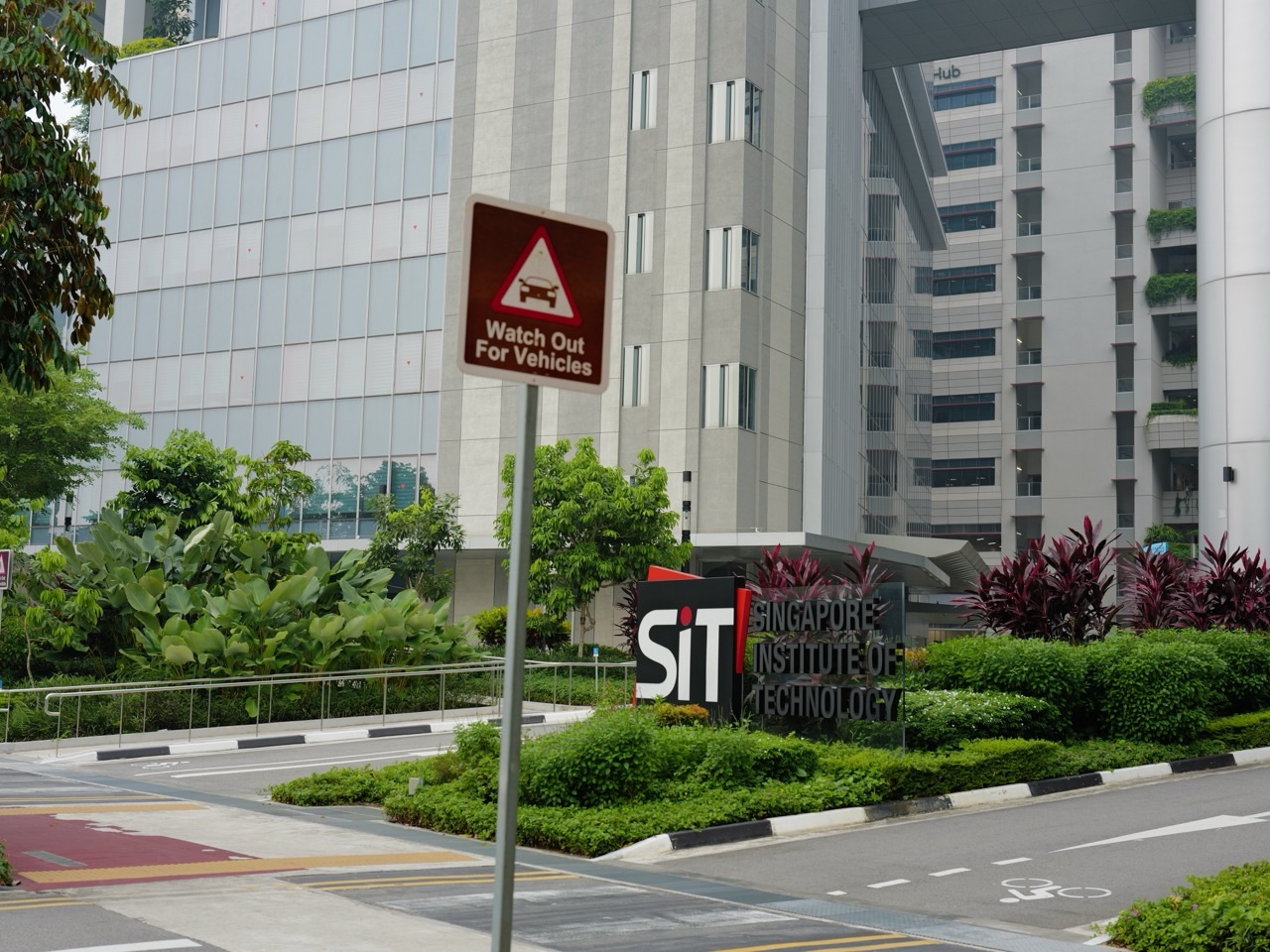
Quick answer — verified 23 October 2026. On 12 October 2026, the Singapore Institute of Technology (SIT) announced the SIT School of Lifelong Learning and Career Development, or SITLEARN. It is designed to connect skills assessment, continuing education, career guidance, employers and applied workforce research rather than offer courses as isolated products. SIT also says a dedicated SITLEARN hub is being developed at its Punggol Campus for 2027. The school is an announced institutional initiative; the purpose-built hub is a future facility. They are not the same opening event.
This is a significant Punggol education development for adults who want to keep learning after a diploma or degree, workers facing technology change and employers who need to build capabilities. It also gives students a glimpse of something important: education does not end when they leave school. Later in life, someone may need to show what they already know, learn a new skill, prove competence and apply it at work.
The primary source is SIT’s 12 October 2026 announcement. This article is the dated news owner for that school launch and its proposed Punggol hub. For the broader established system, read our guide to lifelong learning, SkillsFuture and SIT; for course-by-course comparison, use our SITLEARN short-course guide.
The October 2026 announcement: five facts worth knowing
- 12 October 2026: SIT publicly announced a new school combining continuing education, skills assessment, career services, industry links and applied research.
- Official name: the SIT School of Lifelong Learning and Career Development, known as SITLEARN.
- Who it serves: working adults, selected learners in longer continuing-education programmes and enterprises developing workforces; eligibility for individual services varies.
- Punggol future: SIT is developing a dedicated hub at SIT Punggol Campus, intended to be ready in 2027. SIT’s announcement does not identify a public opening date or promise that every programme is held at that hub.
- New programme directions: AI capability and governance, green data-centre skills, safety and risk, applied assessment, career transition and industry-supported teaching are among the areas described.
The important phrase here is skills-to-career connection. A short course can improve knowledge, but a learner may still be unsure what job task that knowledge proves, how it relates to previous experience, or whether more education is necessary. SITLEARN’s proposed model attempts to make those relationships clearer.
What is new, and what was already happening at SIT?
SIT already had degree programmes, an applied-learning model, work-study arrangements and continuing education activities. The 2026 announcement does not mean the university has suddenly begun teaching adults for the first time. The change is organisational: SIT has established a school intended to join capabilities that might previously have felt separate to a learner.
Imagine a technician who has spent ten years diagnosing electrical faults. A generic training catalogue might show dozens of interesting options. The technician’s real questions are more personal. Which existing skills count? Which new roles require competencies they lack? Which programme is a sensible bridge? How will an employer judge the result? Can a learner accumulate qualifications without pausing full-time work for years?
SITLEARN frames a connected learner journey. The individual can begin with assessment and recognition of existing capabilities, move toward relevant training, obtain career guidance where the service applies, and connect learning to real employment needs. Employers receive a parallel route, diagnosing workforce gaps and co-developing training rather than buying an identical workshop for everyone.
This model is an aspiration and institutional design announced by SIT; it is not a guarantee that every visitor will receive a free assessment, a bespoke career coach or a job placement. Ask which services are actually available for the programme and learner category you choose.
When will the dedicated SITLEARN hub at Punggol open?
SIT says it is developing a one-stop SITLEARN hub at its Punggol Campus and that the facility is expected in 2027. Reports published after the convocation described a first-half-of-2027 target, but the university’s own press release does not provide an exact opening day. Until a dated university notice exists, describe the hub as planned rather than open.
The campus is part of the Punggol Digital District environment. That geography matters because SIT’s approach combines education and nearby industry opportunities, but proximity is not a right to enter every lab, meet every employer or enrol in every programme. Students and adults must check the access rules for the specific space or course.
The planned hub is meant to bring learning, assessment, career development and industry engagement together. It is not accurate to say all SITLEARN teaching will stop until 2027. Existing courses and learner activities are already carried out through SIT facilities or appropriate programme venues; the hub is an additional physical step in an existing education journey.
If you are thinking of travelling to a course, use the confirmed location printed on that particular enrolment notice. SIT Punggol Campus is a large university environment, and the future hub’s internal room or entry point should not be guessed from a public building photograph.
The learner journey: first find out what you can do
A more useful adult education conversation starts with demonstrable capability, not just a desired course title. An experienced office coordinator may be good at explaining customer problems, validating records and improving processes, even without formal credentials in data analysis. A course can build on those strengths when the missing technical skills are clearly identified.
Try a simple competency map with three columns: task performed; evidence available; next capability needed. For the coordinator, a task may be preparing a weekly operations report. Evidence could include accurate spreadsheets and examples of fixing discrepancies. The next capability could be using a dashboard to communicate patterns and risks.
SITLEARN’s model aims to support this kind of skills discovery and validation. Do not confuse a self-made map with an official SIT assessment result. The family’s worksheet is a way to prepare informed questions; only the recognised programme’s actual assessment process determines what qualification or validation is issued.
This distinction protects a learner from paying for training merely because the title sounds modern. If a person’s real problem is presenting recommendations, another generic software course may not be the best next step. If the task depends on a safety certification or regulated professional qualification, a casual online tutorial will not necessarily satisfy that requirement.
The first future-skills area: AI capability with real-world judgment
SIT says SITLEARN is working with Straits Interactive on programmes covering applied AI capability, governance, risk, assurance and the human side of adoption. The point is not simply to give everyone an AI account. Real workplace adoption raises questions about personal data, accuracy, accountability, bias and whether a proposed output can safely enter a consequential workflow.
Consider a social-service administrator preparing a draft appointment reminder. Using AI to suggest friendly wording is different from pasting confidential client notes into an unapproved service. A responsible professional checks the organisation’s privacy policy, verifies the draft and decides whether any automation is permitted. These are questions of literacy, governance and human responsibility, not just prompt-writing fluency.
For secondary-school students in Punggol, this has an immediate foundation. Learn to read instructions closely, check numerical claims, distinguish evidence from an assertion, and explain where a conclusion came from. Those habits remain useful when the software tools change. They also matter in English, Humanities, Science and Mathematics exams.
For working adults, the programme-level questions are more specific. Who is the intended audience? Does the course cover governance or only tool usage? What practical work must be submitted? Are there workplace scenarios and feedback? What certificate, if any, is awarded? A course can be appropriate without solving every professional need.
Our separate Punggol adult AI skills and readiness guide is the right place for broader preparation. This article explains why SIT’s October 2026 institutional launch changes the surrounding learning infrastructure.
The second area: green data centres and energy management
SIT announced that it and Nxera, Singtel’s data-centre business, are developing specialist learning pathways for sustainable digital infrastructure. Two named areas are Electrical Systems and Energy Management and Data Centre Cooling System Design. The university describes stackable learning concepts rather than asking professionals to acquire all required skills in one uninterrupted programme.
Why do these matter? A data centre uses electrical energy and must keep equipment within reliable operating conditions. Better cooling, monitoring and energy planning may improve efficiency without compromising resilience. The challenge brings together Physics, Mathematics, engineering practice, data, safety and operational judgment.
A simple illustration, not a real SIT or data-centre measurement: imagine equipment drawing 10 kilowatts continuously for eight hours. Electrical energy used is 10 kW multiplied by eight hours, which equals 80 kilowatt-hours. At an illustrative energy tariff of S$0.30 per kWh, the energy component would be S$24. Now consider a system improvement that genuinely reduces average demand by 1 kW over those same eight hours: the saving would be 8 kWh, or S$2.40 at that hypothetical tariff.
The arithmetic is simple; the real engineering is not. Before recommending a change, a professional needs reliable measurement, an understanding of thermal load and safety limits, evidence that the lower demand can be maintained and a comparison under consistent operating conditions. This is the kind of disciplined applied reasoning that future technical education needs.
Parents of younger children need not enrol a teenager in adult professional courses to benefit from this connection. Strong algebra, fractions, units, graphs, scientific methods and precise communication are the foundation. Later study can be informed by actual course entry requirements and career realities.
The third area: safety and risk, with a planned 2027 master’s programme
SIT describes a collaboration with the Singapore Civil Defence Force to develop a Master of Science in Safety and Risk, targeted for launch in early 2027. The university says the proposed 60-credit programme combines three stackable graduate certificates and a research project, initially with specialisations in Fire Safety Engineering or Process Safety.
A target launch does not equal an open application, confirmed fee or admission offer. Potential learners should verify the formal programme page, prerequisites, professional recognition and published start date when details are released.
Why would a technically capable person study risk? Because knowing how to make a system work is not the same as understanding how it might fail. Emerging energy technologies, storage systems and complex buildings need professionals who can examine hazards, uncertainty, maintenance responsibilities and the consequences of poor decisions.
A simple school-level example makes the difference visible. Two teams design a device that moves objects along a desk. Team A demonstrates speed. Team B also measures reliability, checks how to stop the device safely and identifies where fingers could become trapped. Both have used engineering ideas, but the second team is beginning to think like a safety engineer.
The skill is not fear. It is careful anticipation, proportionate testing and documentation. Students who learn to state assumptions and design fair tests in secondary Science are already building part of that habit.
Skills assessments: what SITLEARN says it will measure
SIT reports that its AI Maturity & Readiness, or AIM-R, assessment looks beyond technical knowledge toward willingness, relevant domain capability and adoption behaviour. It is being piloted with Singtel; the university’s announcement also describes work with more than 40 organisations across industries on AI-readiness and workforce projects.
That is not an announcement of a publicly available quiz for every Punggol resident, nor proof that a favourable score will secure a job. Corporate pilots have their own participants, methods and responsibilities. Adults should distinguish an employer-run assessment, a professional course assessment and a casual online self-test.
The wider idea is that capability has multiple dimensions. A person might understand an AI tool but refuse to question a dubious result. Another person might be cautious and ethical yet still need practical training to use approved tools effectively. Good preparation asks what task needs improvement and what evidence will show that the change has occurred.
SIT also announced a collaboration with the Agency for Integrated Care to develop technology-supported assessments of basic dementia-care competencies. The provider’s published project period runs from November 2026 through December 2027, with a planned pilot involving at least 50 learners. This is a specific sector initiative, not a universal certification service now offered to every adult.
It is particularly useful as an example because high-stakes care involves human judgement, empathy, observation and consistency. An online assessment can help measure some competencies, but the quality of care still rests on professional practice and robust standards.
Companies participating in education: NCS, Adecco and other partners
Under SITLEARN’s Corporate Adjunct Professorship Scheme, NCS is identified as an early industry partner. Staff from participating firms may teach, mentor or coach while remaining active in their professional careers. SIT says NCS chief executive Sam Liew is taking an adjunct professor appointment.
The appeal is clear: an educator who still works with current systems can describe recent professional trade-offs, not merely textbook theory. The constraint is equally important. Being an excellent industry specialist does not automatically mean being an excellent teacher; SIT says it provides preparation in adult-learning facilitation and teaching methods for practitioners in the scheme.
SIT also identifies Adecco as an industry partner exploring links around career transition, employer engagement and workforce intelligence. This describes an institutional collaboration, not a promise that an individual enrollee will be placed by Adecco. A good applicant still needs relevant capabilities, evidence, eligibility and a suitable opportunity.
For Punggol secondary students, the broader principle is that school and industry have different but complementary jobs. School builds foundations and ways of thinking. Applied learning provides practice using those abilities. Employers offer real constraints and the possibility of work, but do not remove the need for sustained preparation.
SITLEARN and a lifelong-learning economy: what is different for adults?
A young graduate may be choosing a first specialisation. Someone aged 45 may already possess valuable knowledge but need to update methods and show a future employer what they can do. A parent returning to work after several years may need both confidence and specific current tools. A senior employee may be preparing to mentor others rather than change professions entirely.
A single education route cannot fit all four. The SITLEARN model brings together short modules, stackable options, skills assessment and career-related services to respond to different needs. This is a direction of travel, not a claim that the same benefit and funding will apply to every applicant.
The word stackable should be read carefully. It can mean learning units designed to accumulate into defined credentials or a pathway. It does not mean every course from every provider counts toward every SIT qualification. Ask for the specific module relationship, assessment, credit policy, maximum time allowed to complete the sequence and prerequisites before spending money.
A person with limited time could choose a short trial of one relevant competency, examine whether the course met the need and only then commit to further modules. If the objective is professional accreditation, check recognition independently. A course certificate is evidence of some learning, not a substitute for every licence or regulatory requirement.
How to compare a course with a real career goal
Start with a job task, not a brochure image. Suppose a facilities supervisor wants to supervise energy systems more effectively. Write down the tasks expected: interpreting power data, checking anomalies, communicating incidents, following safety procedures and coordinating with engineers. Now note the current evidence for each task.
Next identify the actual gap. If data interpretation is weak, a module on analytics may help. If regulations and safety procedures are unfamiliar, a different programme may be necessary. If the person already possesses the technical knowledge but struggles to report incidents clearly, professional communication might be the better investment.
Then compare programmes on five facts: audience and entry rules; teaching and assessment; venue and schedule; total fee after confirmed funding; and what credential or progression the programme documents. Do not select a course simply because a company logo appears on its brochure.
Our SITLEARN short-course article goes further into this decision. This dated report should not try to replace the constantly changing official course catalogue.
A practical 30-day skills-readiness plan for a working adult
- Week 1: choose one concrete work task you want to perform better, and write down how you currently do it.
- Week 2: inspect two real examples of your own work and identify recurring errors or missing knowledge. Protect all employer and client confidential information.
- Week 3: use SIT’s official learning pages to compare relevant programmes and ask about prerequisites, assessment, delivery format, start date and funding.
- Week 4: test one small change at an appropriate scale, gather feedback, and decide whether formal training, more basic preparation or workplace mentoring is the next sensible step.
This is an optional study routine, not a published SITLEARN admissions requirement or a promise of career advancement in 30 days. The goal is better diagnosis. Adults often waste effort by buying more learning material without deciding how a work task should improve.
Even where a formal learning pathway is appropriate, a modest first step can help a person identify whether they enjoy the subject and can sustain the time commitment. Longer courses become easier to choose when the purpose is concrete.
Why this matters for Punggol students from Primary school onward
A Punggol Primary pupil may not need to know the term continuing education. But the student can learn something more enduring: adults change what they know throughout life. A software tool introduced today may be different in ten years, while the need to read precisely, explain reasoning, test claims and work with people will remain.
For Primary Mathematics, accuracy with units, percentages and graphs becomes useful later in budgets, energy management and performance measures. For English, clear writing helps in everything from describing a faulty device to explaining a recommendation to a colleague. For Science, a fair test teaches why evidence should guide a decision. For secondary-level computing, safe handling of data and debugging matter more than memorising one product name.
A small family example: compare two journeys to a school activity. Measure the door-to-door times on different days rather than trusting one lucky trip. Record the variation, calculate a typical duration and explain what makes the estimate uncertain. That is data literacy at a scale a child understands.
The future of Punggol education is not a straight ladder ending at the first degree. Institutions like SIT increasingly present education as a repeated process of building skill, testing it, receiving feedback and applying it in changing circumstances. Students who see learning as a recoverable, improvable skill will be better prepared for that world.
What the planned 2027 hub does not mean
It does not mean every adult learner in Punggol can walk into a free career consultation without booking. It does not mean a course is free because some SkillsFuture support may exist. It does not mean NCS, Singtel or Adecco guarantees a job, internship, placement or admission. It does not mean every school pupil can enter SIT teaching spaces or join a corporate assessment.
It also does not mean the hub’s precise public opening date is known. A 2027 target is still future information. If a 2027 location, programme date or official funding rule changes, the university’s current notice must replace older descriptions.
SIT is situated within Punggol Digital District, but not every programme in a district is open to every resident. Distinguish open public events from enrolled teaching, employer-restricted pilot studies and university-controlled facilities.
Questions Punggol residents may be asking
Is SITLEARN a new university?
No. It is a newly announced school within the Singapore Institute of Technology, focused on lifelong learning and career development. The university’s existing Punggol Campus and its academic programmes are broader than SITLEARN.
Has SITLEARN already started, or will everything begin in 2027?
SIT announced the school in October 2026, and relevant continuing-education activities already exist. The separately planned dedicated Punggol hub is targeted for 2027. Its future building readiness should not be confused with the existence of the school.
Is the SITLEARN hub definitely opening in January 2027?
No specific day was provided in SIT’s official release. It describes a 2027 target; contemporary reporting cited the first half of 2027 as the expected period. Verify any confirmed opening announcement nearer the time.
Can a Secondary 3 student enrol in the professional programmes?
Do not assume so. Individual courses have defined audience and eligibility rules; most examples described in the October announcement are for adult or professional learning. Secondary students should focus on their current academic foundations and officially eligible activities.
Will an AI-readiness assessment guarantee employment?
No. An assessment can guide learning or help an employer diagnose workforce readiness. Job selection depends on many additional factors, and the cited corporate pilots do not automatically become public admission routes.
Will there be new green data-centre credentials?
SIT and Nxera announced work on two named specialist certificate pathways involving energy management and cooling design. For published intake, prerequisites and fees, check the official course pages. Development announcements are not equivalent to guaranteed course start dates.
Is the MSc in Safety and Risk available to apply for right now?
The official 12 October announcement describes the course as targeted for early 2027, with planned specialisations. Applicants should wait for and consult current admissions details rather than assuming dates, requirements or fees.
Does a SkillsFuture Credit balance pay for any SITLEARN course?
No universal assumption is safe. Funding depends on course eligibility and the learner’s circumstances under current rules. Confirm the actual programme listing and applicable funding before enrolling.
What to watch in the months ahead
Look for the university to publish a firm opening announcement for its dedicated SITLEARN hub at Punggol Campus; new confirmed programme schedules; the availability and entry conditions of its emerging certificates and postgraduate offerings; and the progress of industry assessment and teaching partnerships.
For the Agency for Integrated Care collaboration, the announced November 2026–December 2027 project window supplies a specific future period. For the Safety and Risk master’s programme, early 2027 is a target. For the physical hub, 2027 is the university-stated year. These timelines refer to different things and should never be merged into one imaginary grand-opening date.
Families with children can simply follow how the local university builds new links between foundational knowledge, professional skills and responsible technology. No urgent school choice needs to be invented from a university press release.
What is verified, and what is not
Verified in SIT’s 12 October 2026 release: the establishment of SITLEARN; its integrated learning, assessment, employer and research approach; the 2027 planned Punggol hub; named directions with Straits Interactive, Nxera, SCDF, AIC, NCS, Singtel and Adecco; and particular future project targets. Not established by that release: a precise public hub opening day, universal course access, guaranteed subsidies, automatic admissions or promised employment outcomes.
This is what a future-education story should leave readers with: meaningful change, an understandable route to action and clear limits on what the announcement proves.
Primary sources and next reading
- Singapore Institute of Technology — SITLEARN launch announcement, 12 October 2026
- SITLEARN — Current executive education and programme directory
- SIT — Punggol Campus overview
- JTC — Punggol Digital District, university and industry context
- eduKatePunggol — SITLEARN short-course guide for working adults
- eduKatePunggol — Lifelong learning, SkillsFuture and SIT explained
- eduKatePunggol — Adult AI skills and assessment context
- eduKatePunggol — SIT living labs, work-study and industry projects
Editorial information checked 23 October 2026. Future hub and programme dates are targets unless a later SIT notice confirms them. This is independent Punggol education reporting, not a university admissions or employment guarantee.


